Plants
Botanical reference pages with growing conditions, seasonal care and related practical guides.
106 entries
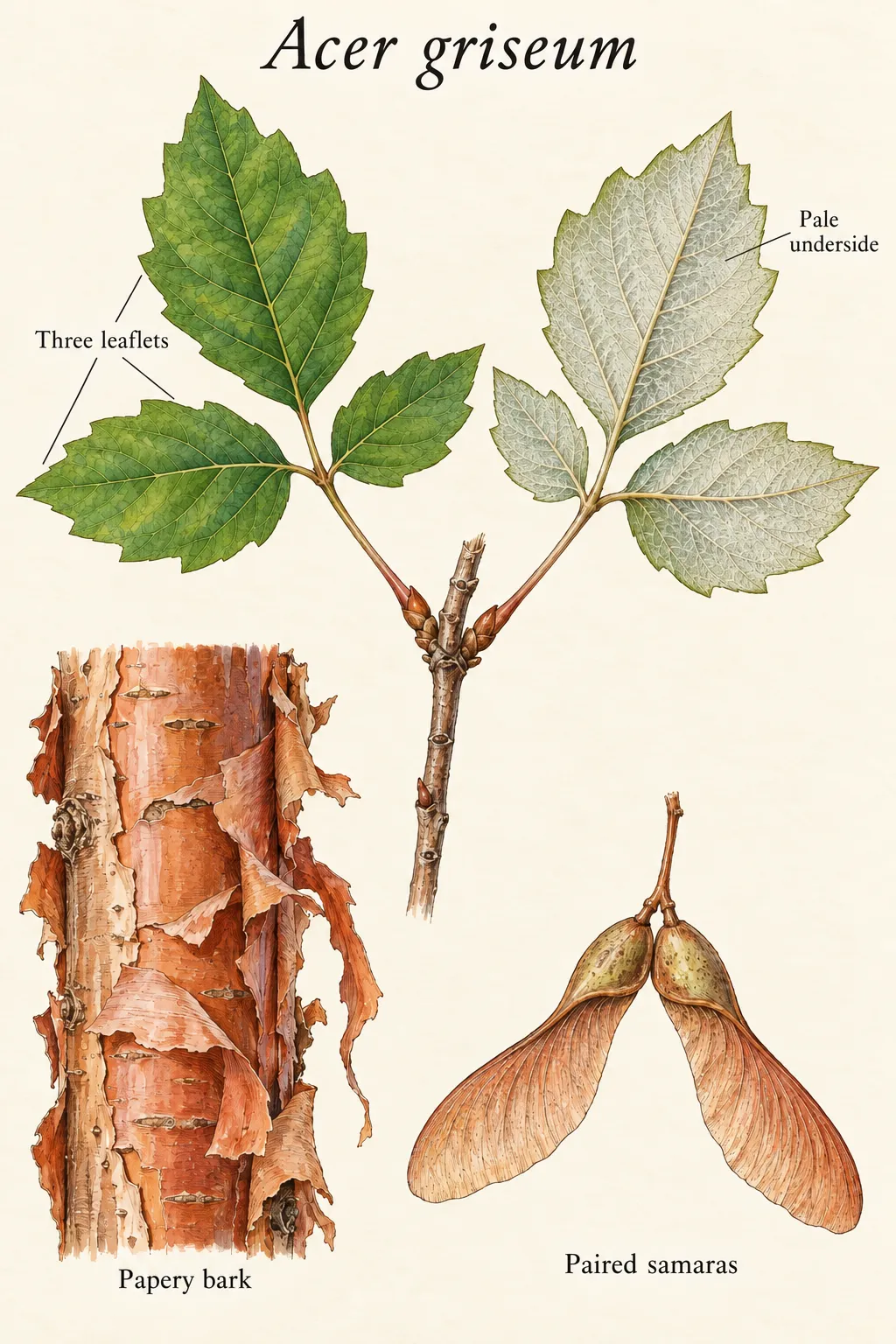
Paperbark Maple
A slow-growing Chinese maple with three-leaflet foliage, variable red-orange autumn color and curling cinnamon bark that remains conspicuous after leaf fall.
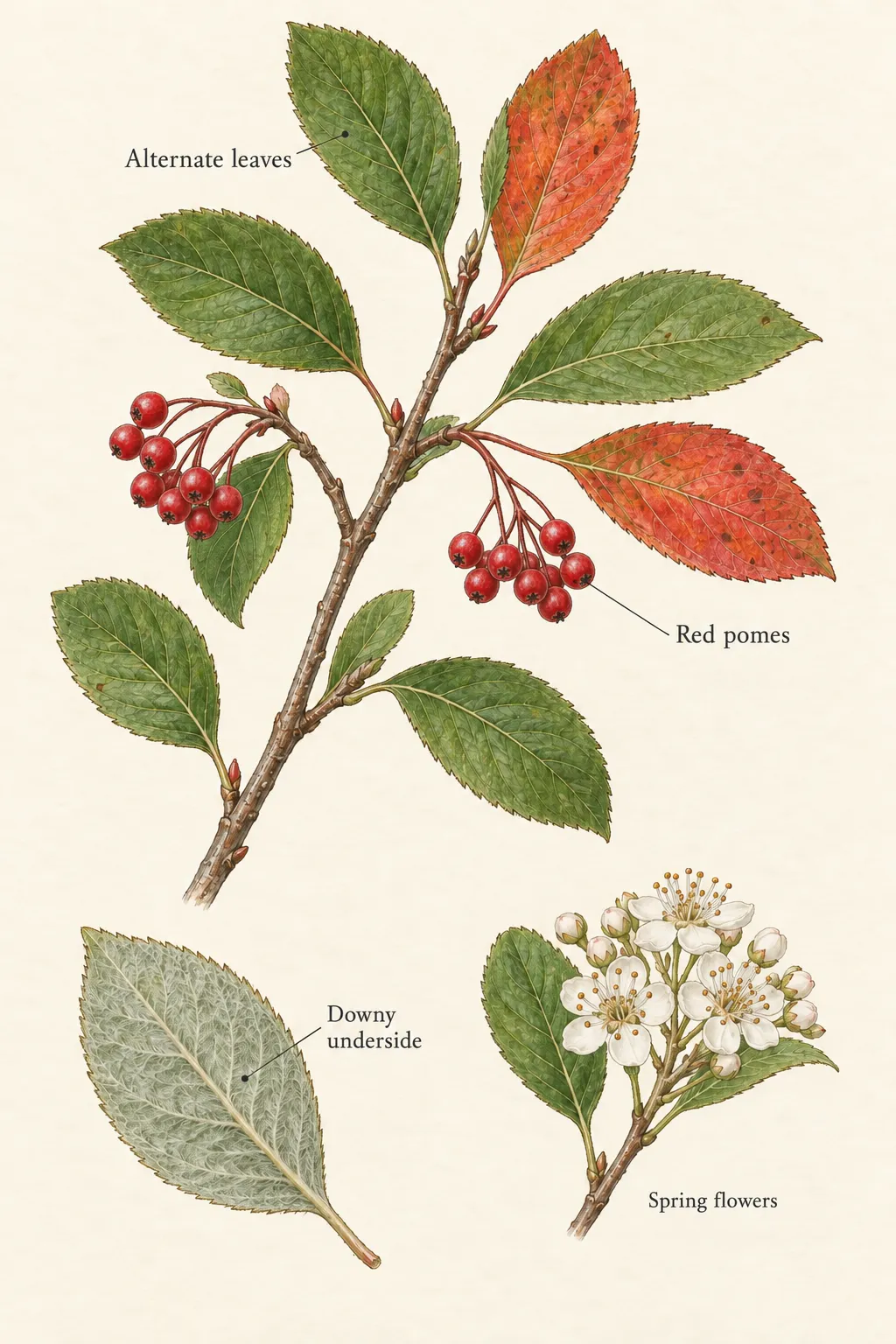
Red Chokeberry
A suckering native shrub with orange-red autumn leaves and red fruit clusters, suited to moist borders where its mature height and spreading colony have room.
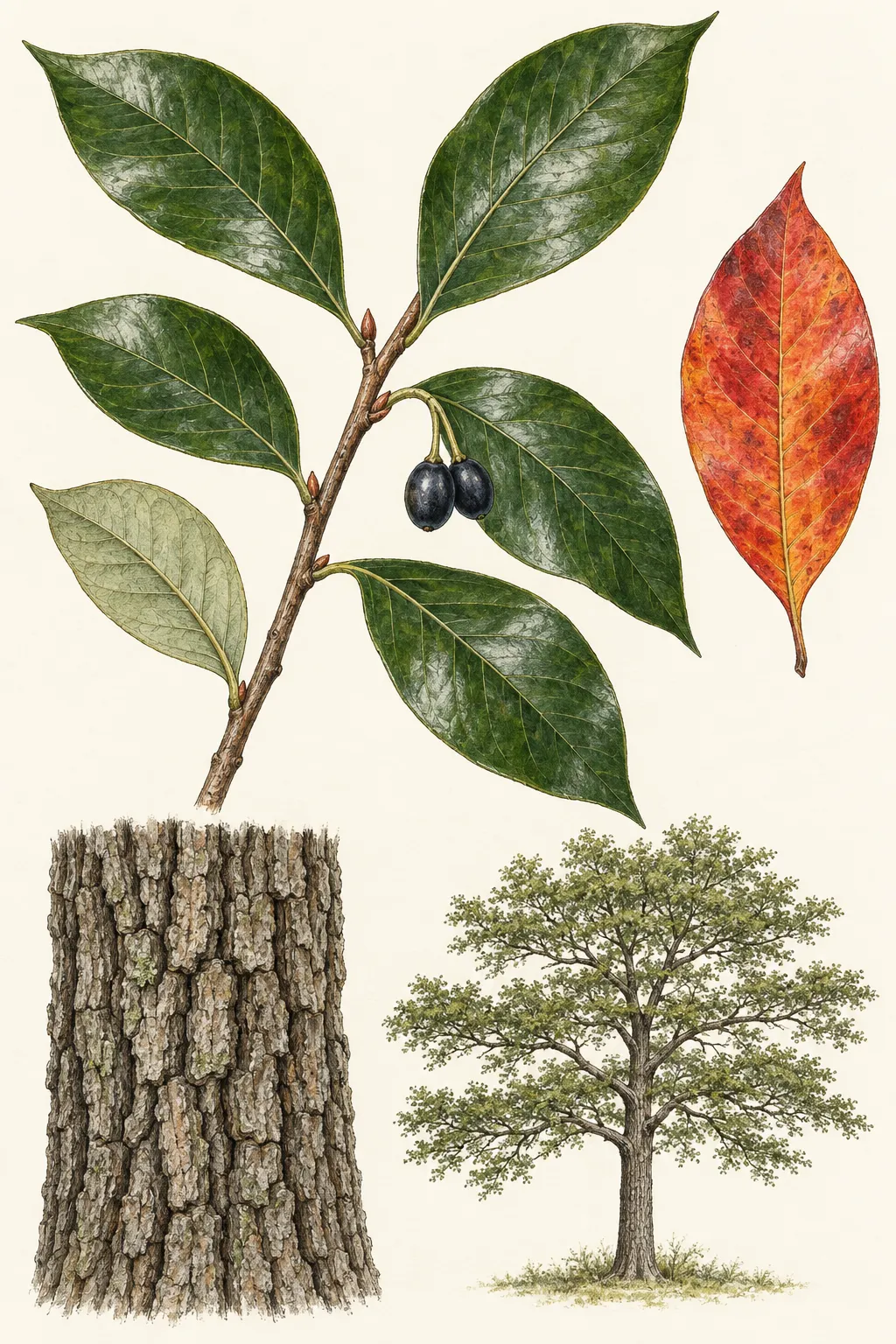
Black Gum
Identify black gum and choose a lasting garden site for its autumn foliage, with acidic soil, mature crown space and spring planting for sensitive roots.
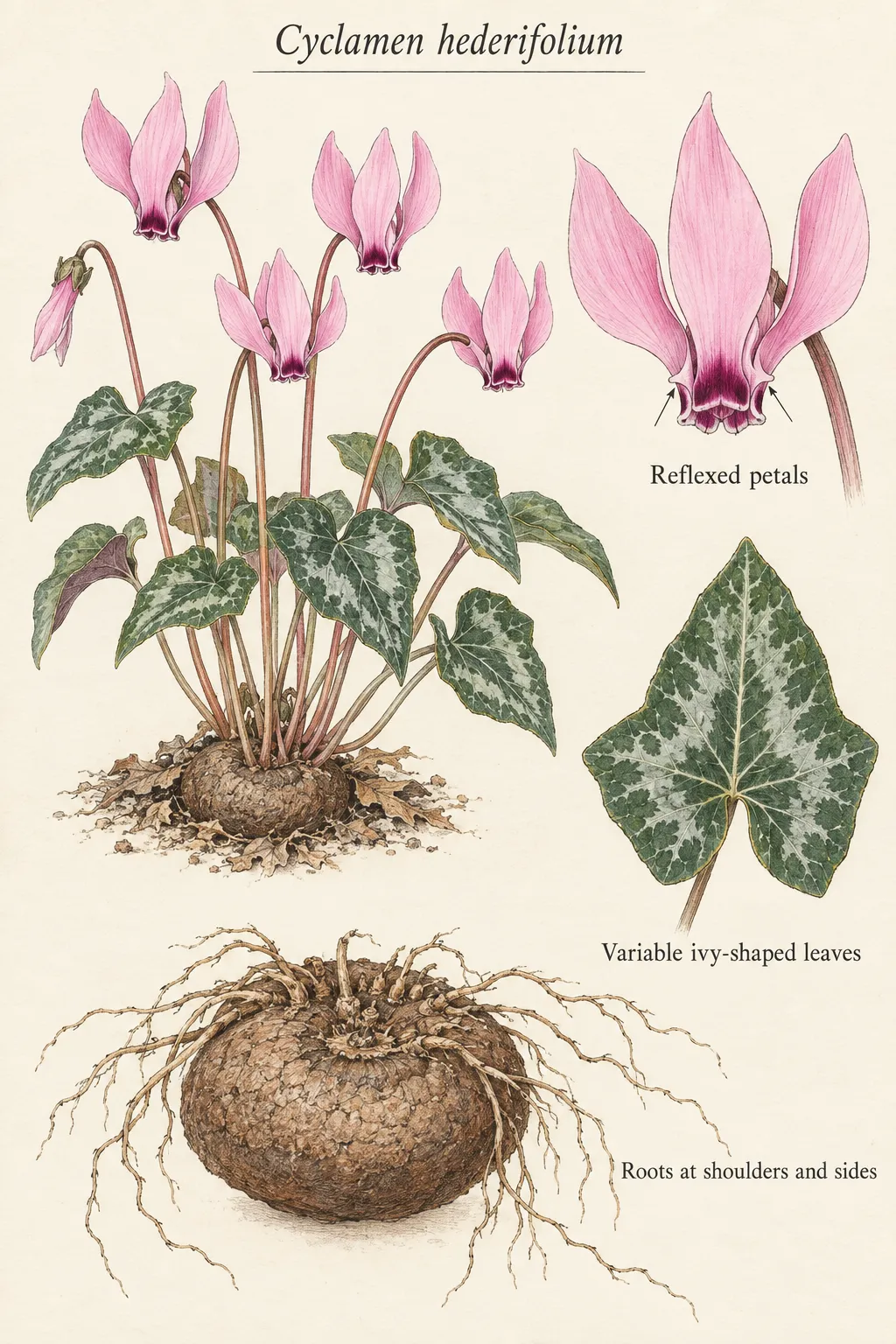
Ivy-Leaved Cyclamen
Identify autumn-flowering Cyclamen hederifolium and grow it in drained partial shade, with shallow tuber planting and care through summer dormancy.
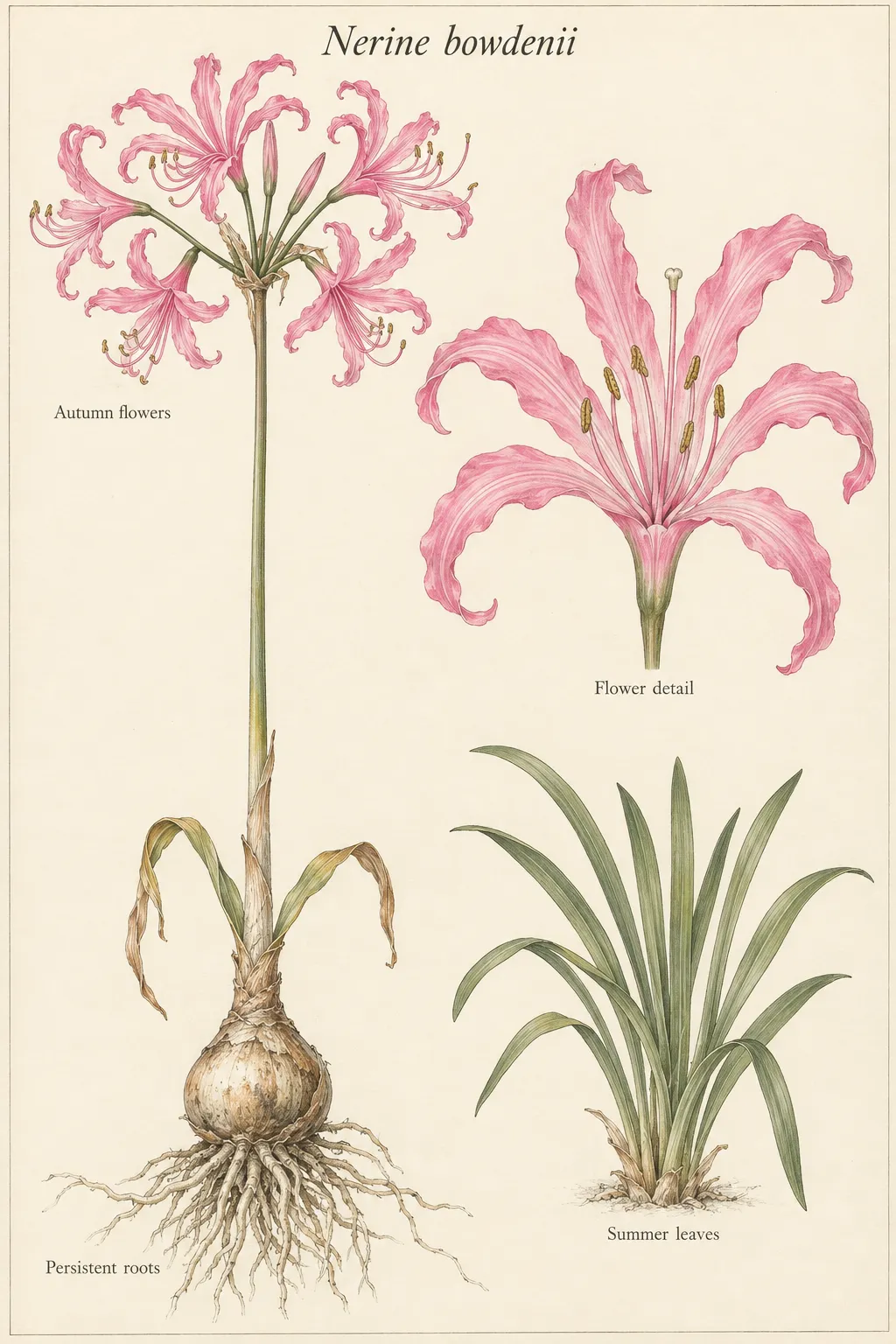
Bowden Lily
Identify Bowden lily and grow its autumn pink flowers in a sunny, well-drained border, with bulb depth, seasonal watering and cold-climate limits.
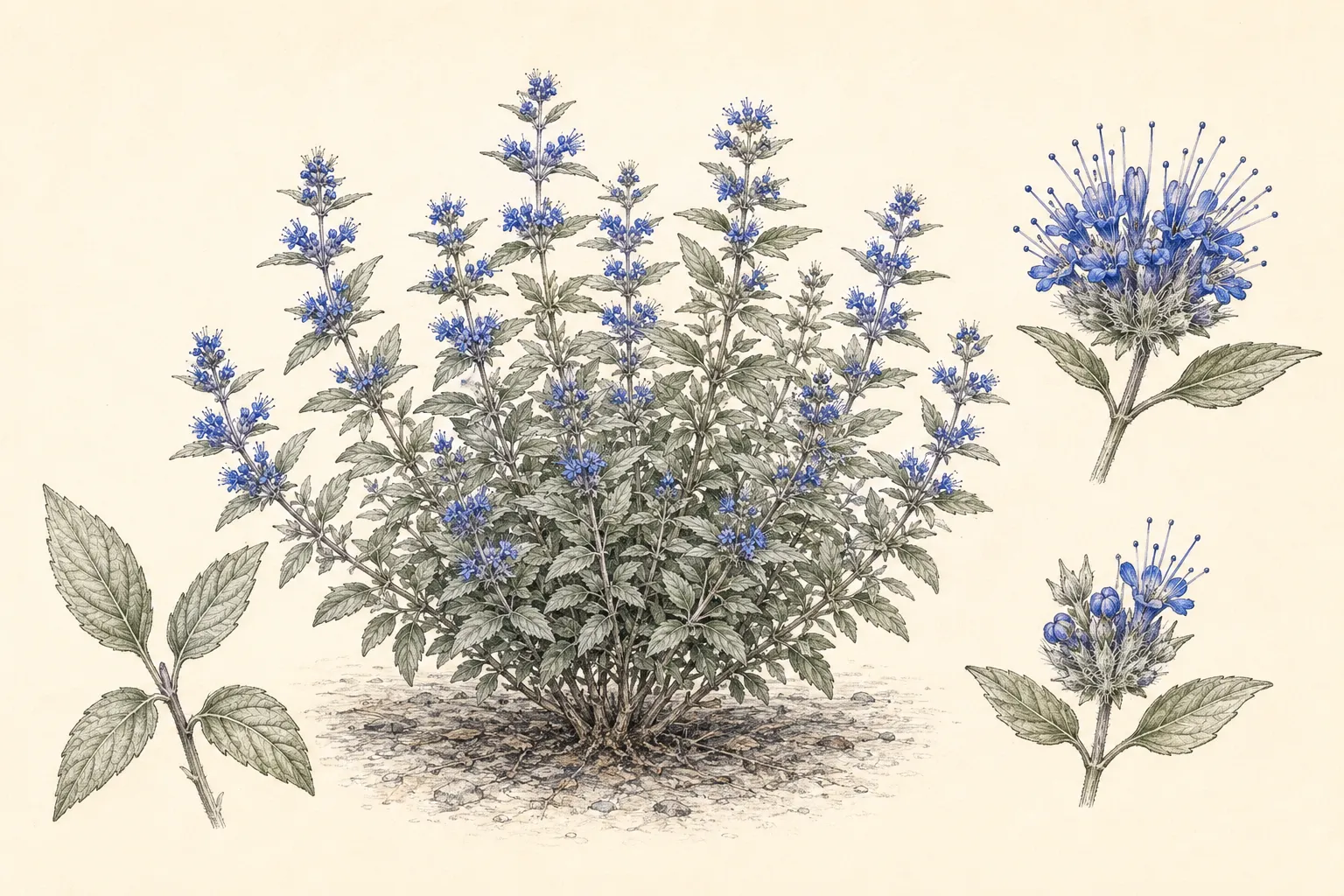
Bluebeard
A Caryopteris × clandonensis profile for late-summer blue flowers, with identification, full-sun placement, sharp drainage, spring pruning and hardiness limits.
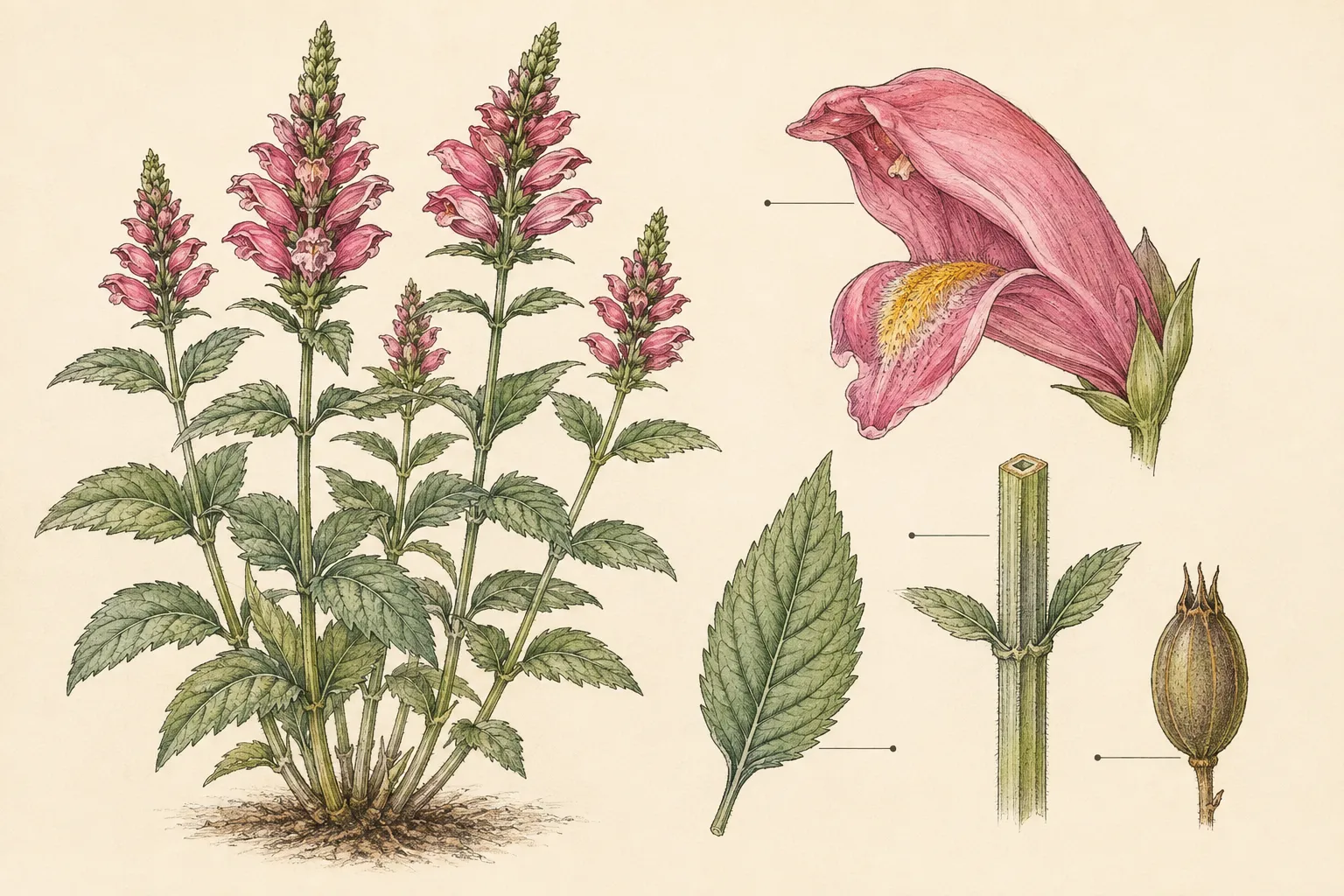
Pink Turtlehead
A late-summer Chelone lyonii profile for moist woodland edges and rain-garden margins, with identification, mature scale, siting, seasonal care and spring maintenance.
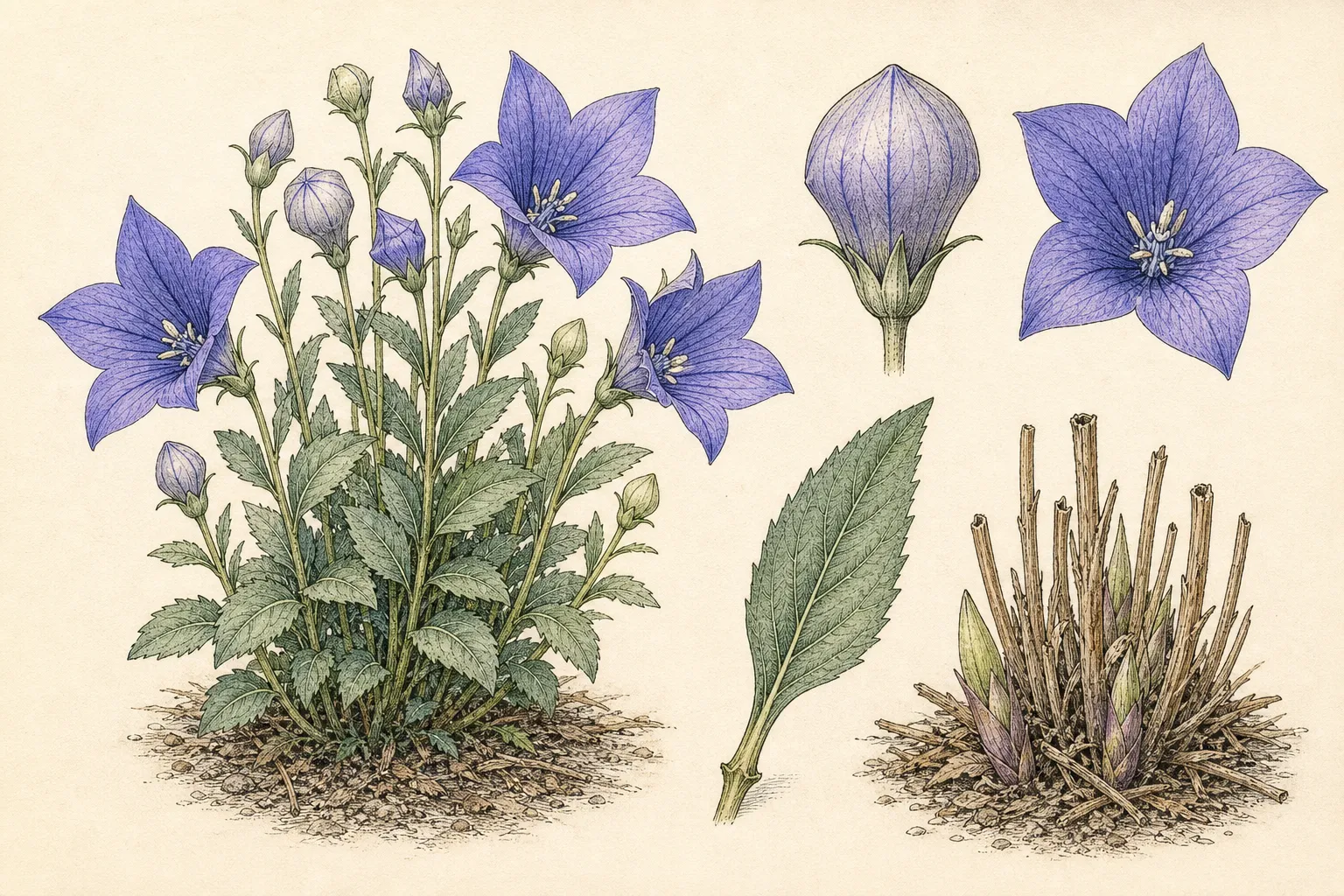
Balloon Flower
A late-summer Platycodon grandiflorus profile for sunny to lightly shaded borders, with balloon-like buds, careful siting, slow spring emergence and low-disturbance care.
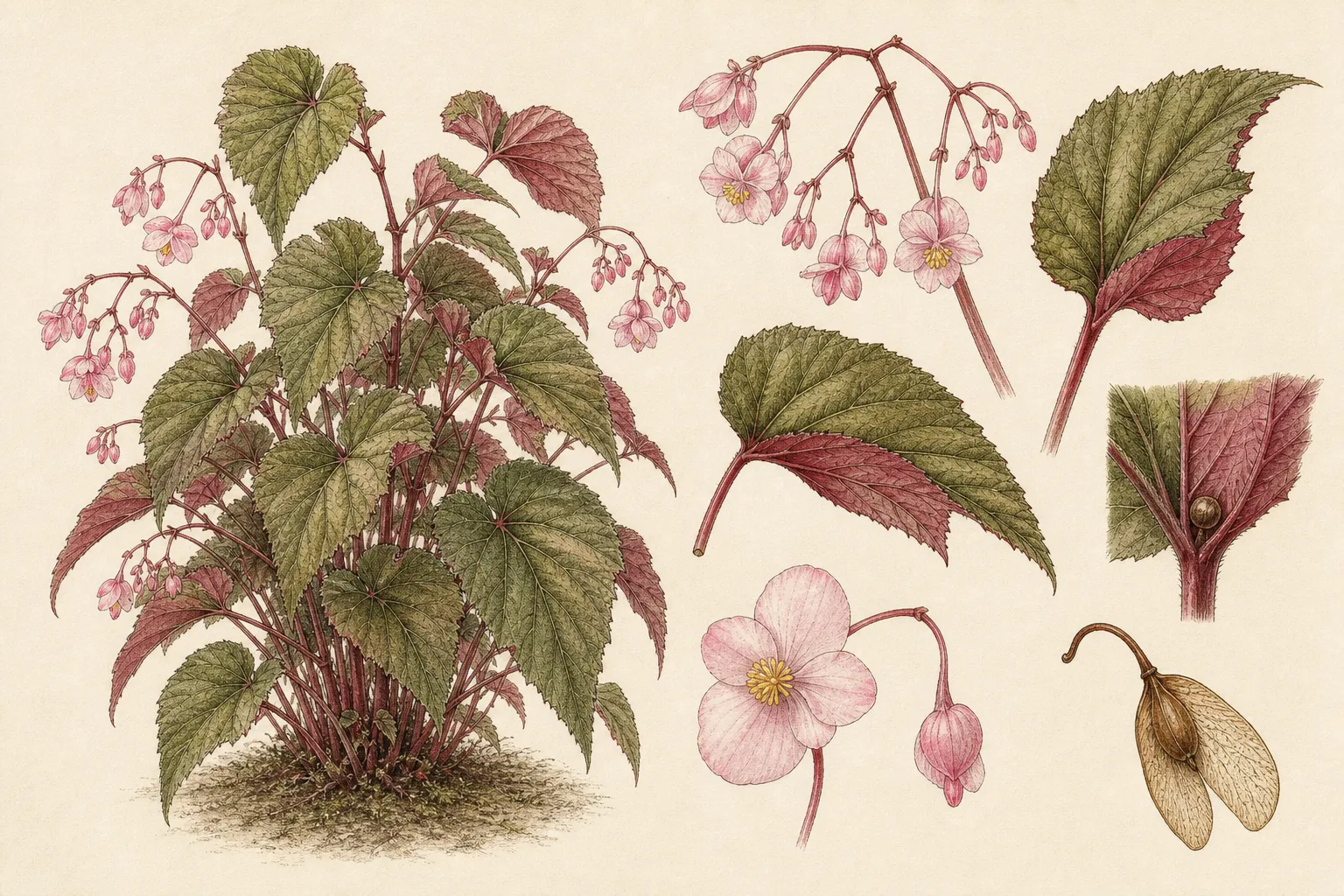
Hardy Begonia
A late-summer to early-autumn Begonia grandis profile for moist shade, with identification, spreading habits, winter limits and practical placement guidance.
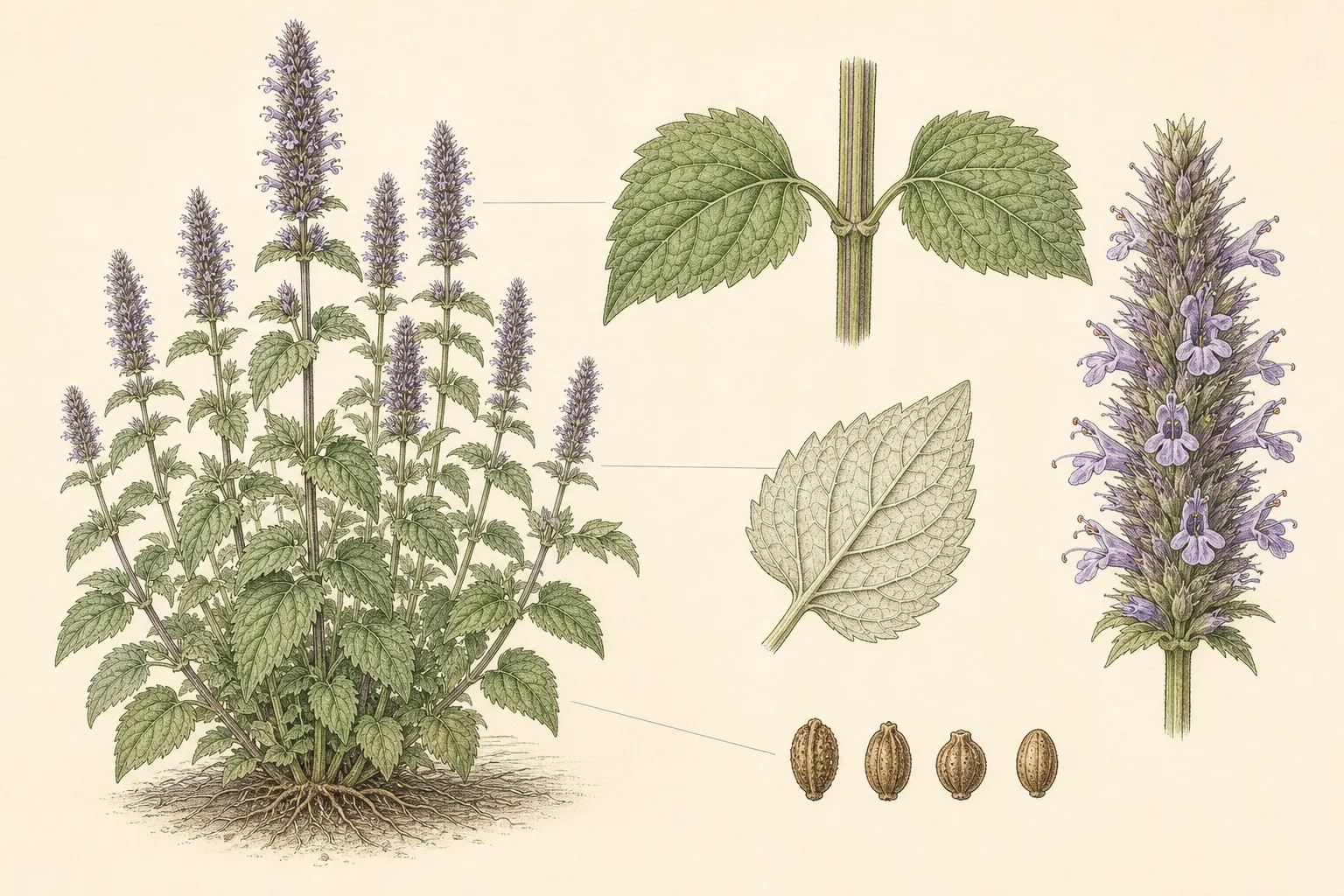
Anise Hyssop
A practical garden profile of Agastache foeniculum, covering identification, mature spacing, drainage, self-sowing and seasonal care.
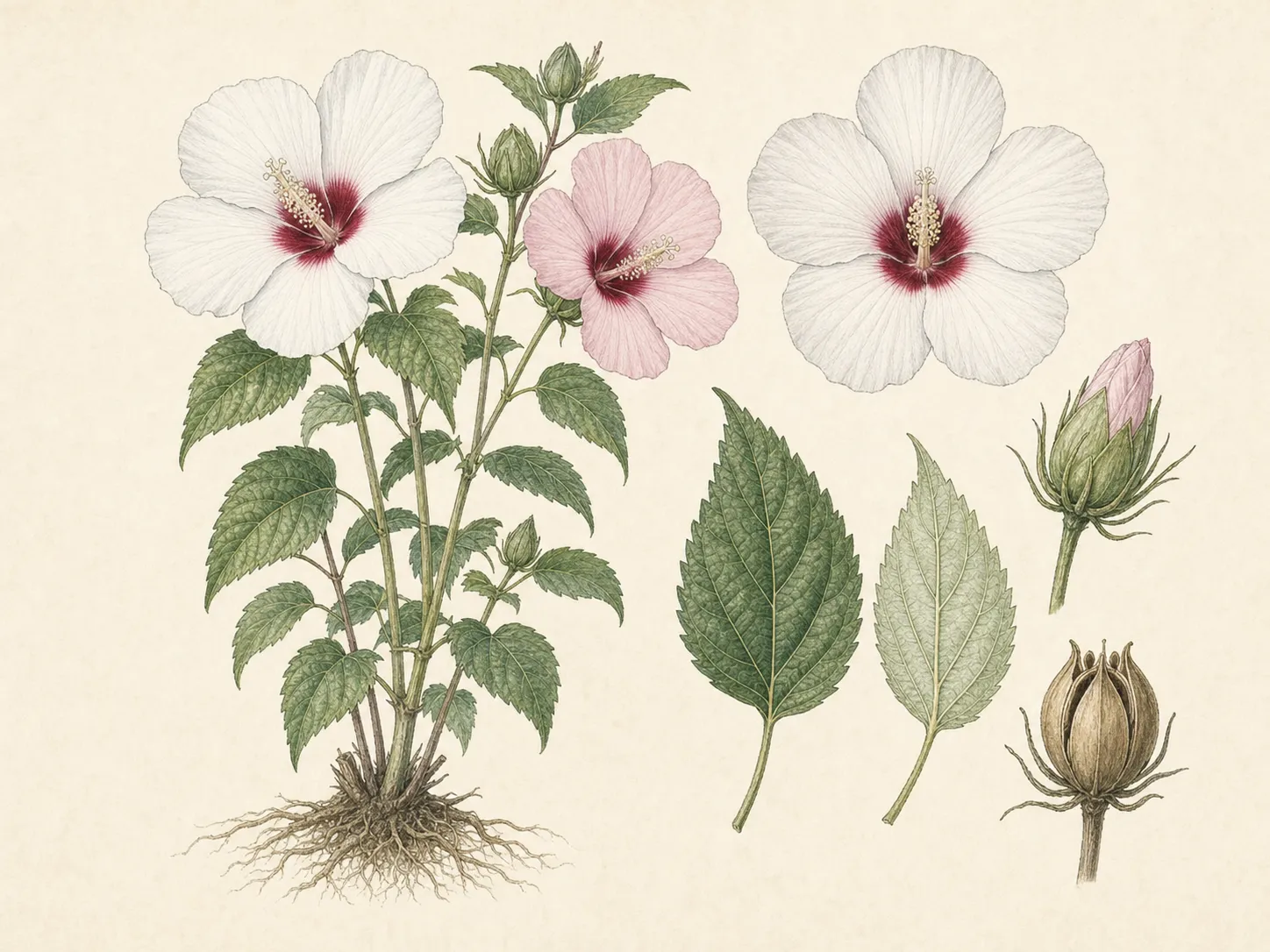
Hardy Hibiscus
A moisture-loving North American perennial with immense late-summer flowers, a bold leafy habit and roots that return after winter dormancy.
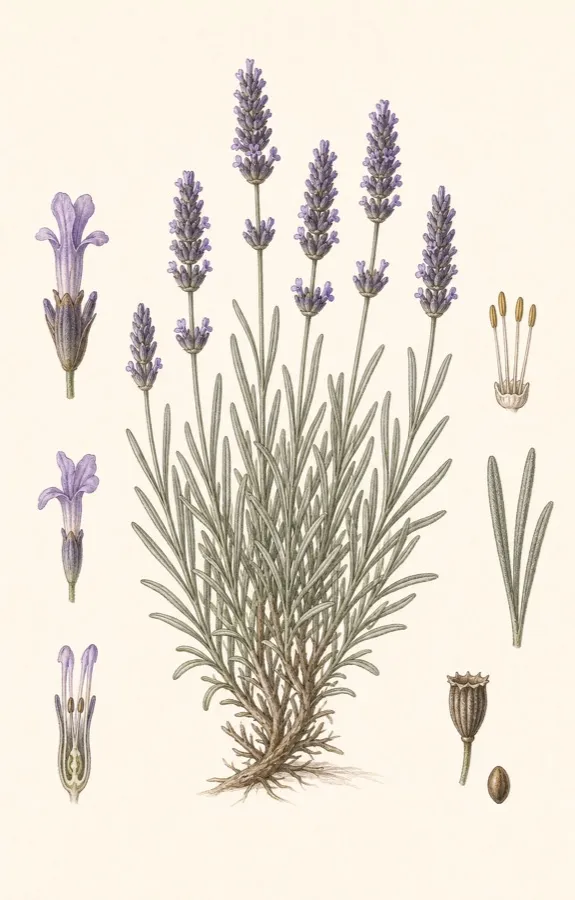
Lavender
A species-focused profile of English lavender, with clear guidance on identity, drainage, establishment water, mature spacing, woody pruning and winter limits.
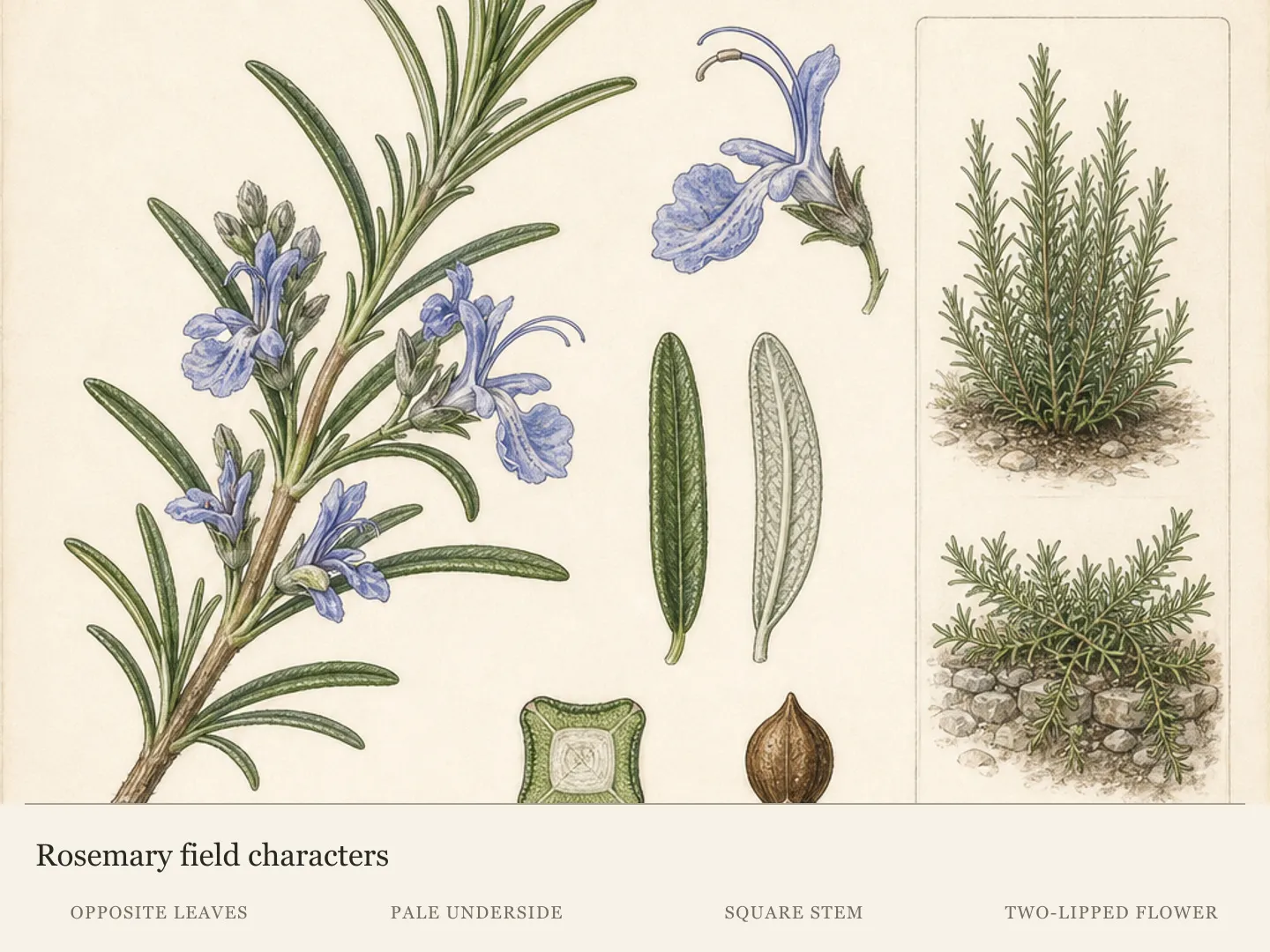
Rosemary
A field guide to rosemary in beds and containers: full sun, a freely drained root zone, measured watering and a winter plan matched to cultivar hardiness.
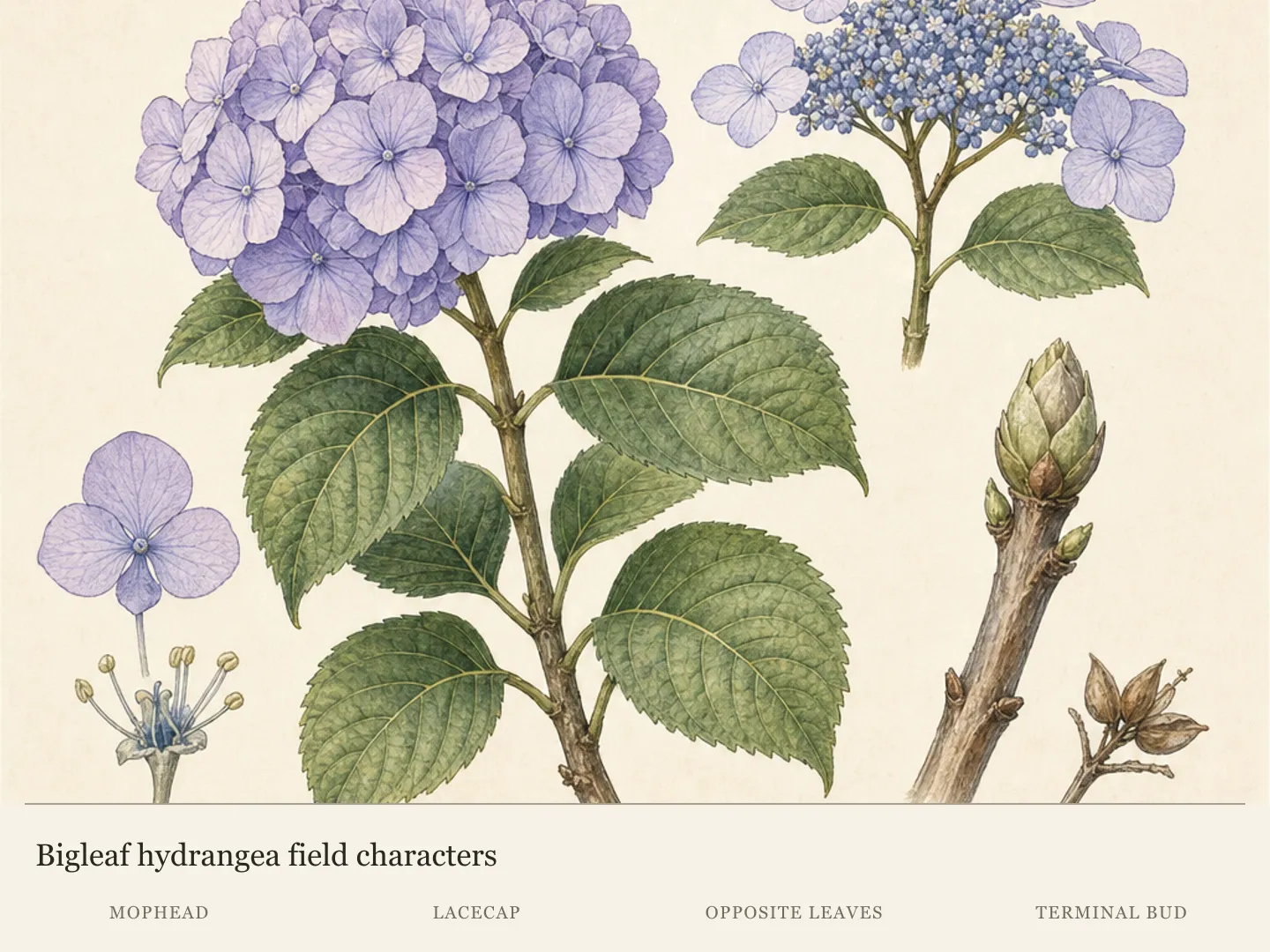
Bigleaf Hydrangea
A field guide to bigleaf hydrangea: identify its bud-bearing wood, provide morning light and steady moisture, and protect the framework that carries summer flowers.
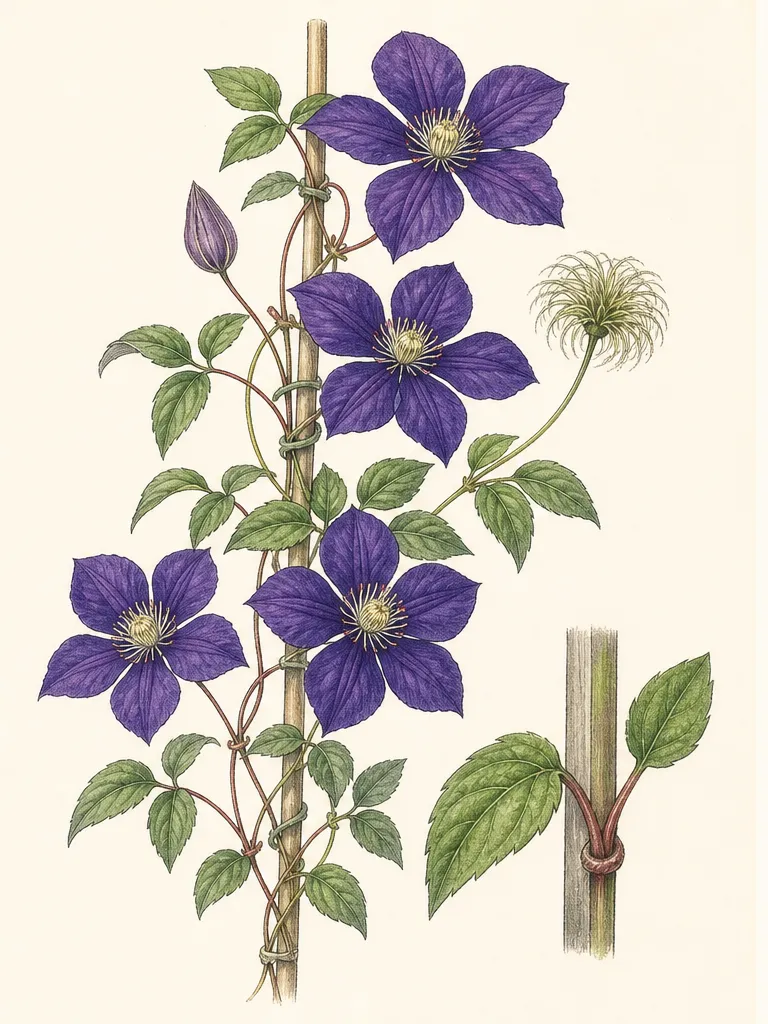
Jackman’s Clematis
A garden-origin deciduous climber represented by Clematis × jackmanii, with velvety violet summer flowers, leaf-stalk climbing, and pruning that must follow its label and actual bloom pattern.
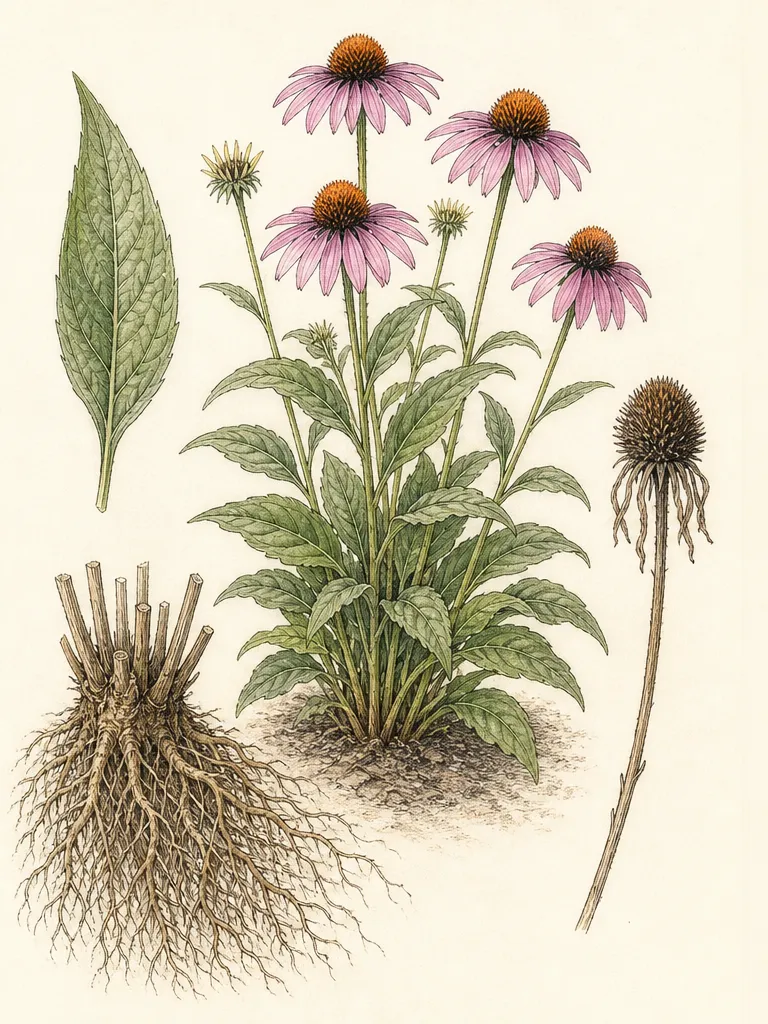
Purple Coneflower
A coarse-textured eastern North American perennial with rough leaves, sturdy summer stems, purplish rays, and a prominent bristling central cone.
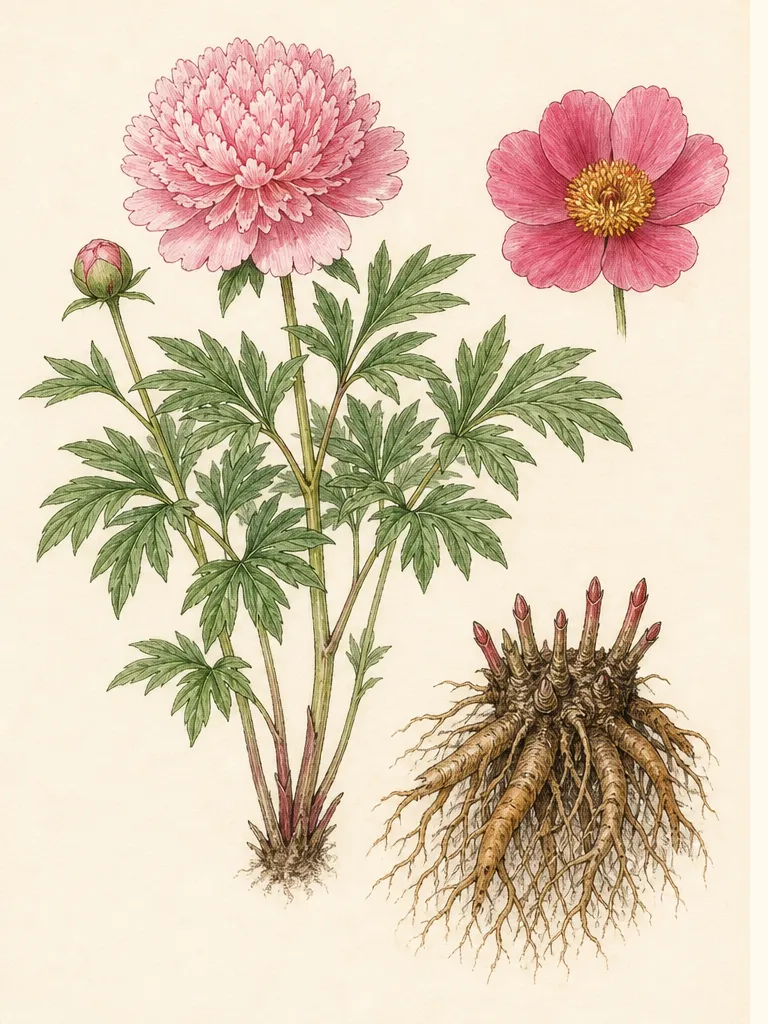
Garden Peony
A field guide to Paeonia lactiflora and its named cultivars: identify the herbaceous crown, site it for cold dormancy and drainage, and preserve shallow eyes and healthy foliage.
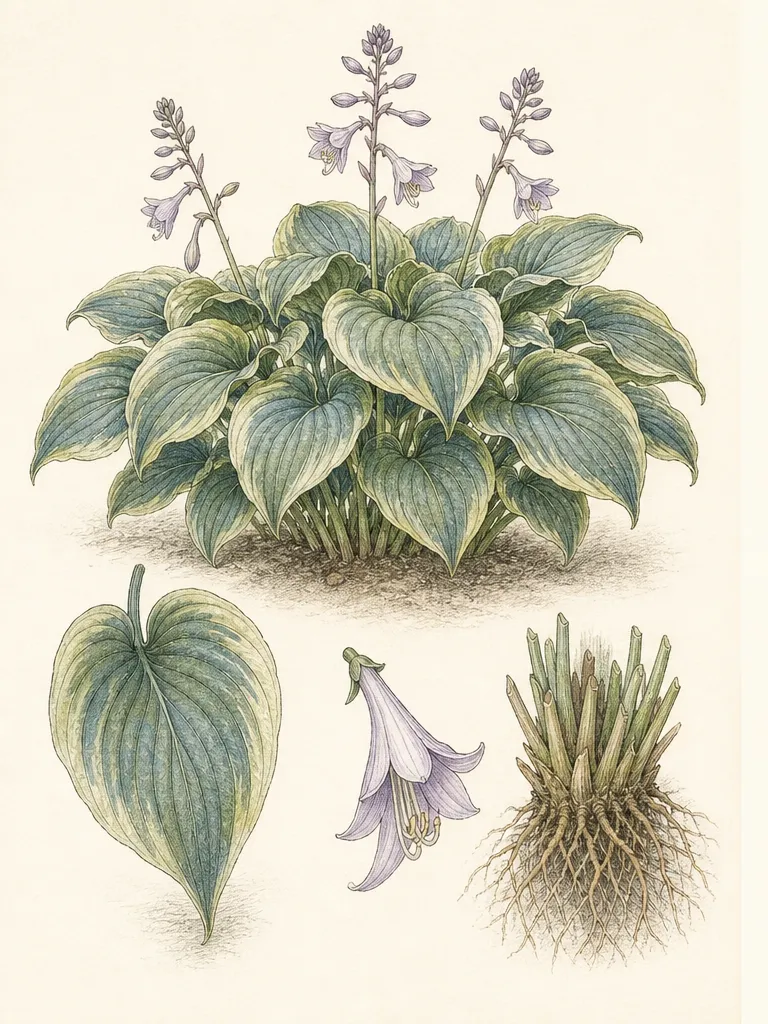
Hosta
A species-led profile of fragrant Hosta plantaginea, with clear limits for the far more variable garden hybrids sold simply as hostas.
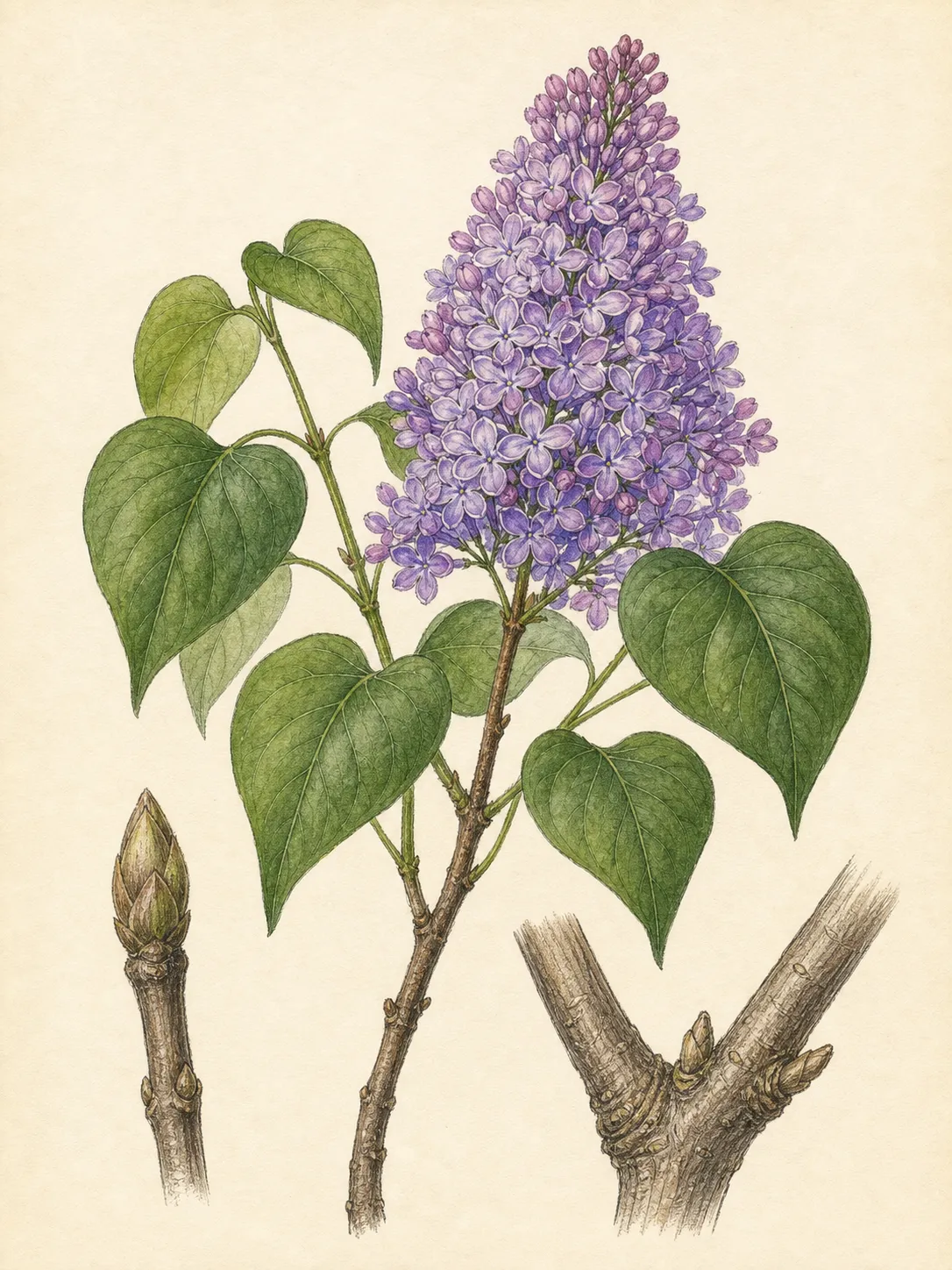
Common Lilac
A substantial guide to identifying, siting, planting, pruning, renewing, and containing Syringa vulgaris, with cultivar and regional flowering limits.
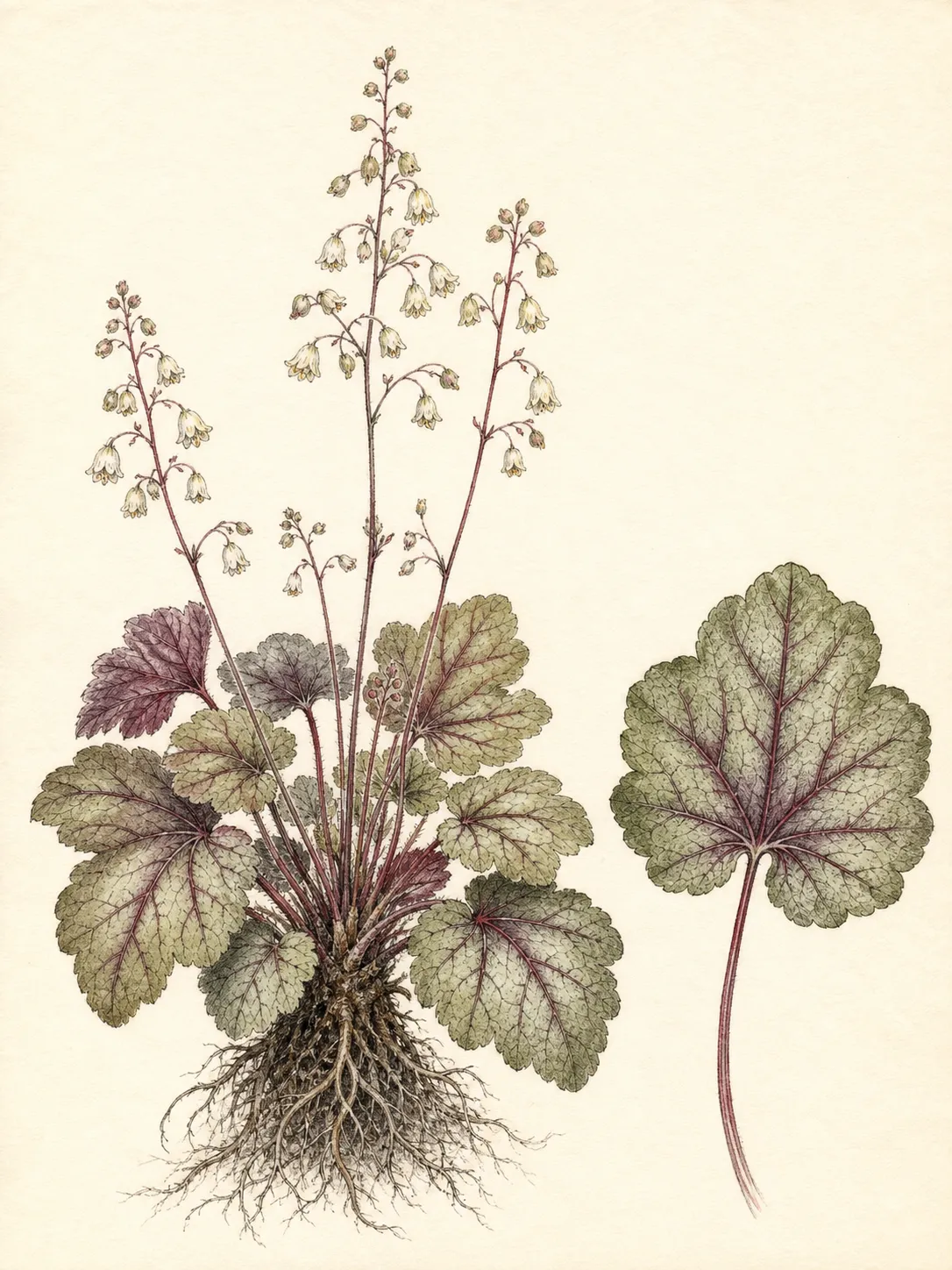
Coral Bells
A species-led profile of Heuchera americana, with identification, planting and four-season care separated from the far more variable garden hybrids sold as coral bells.
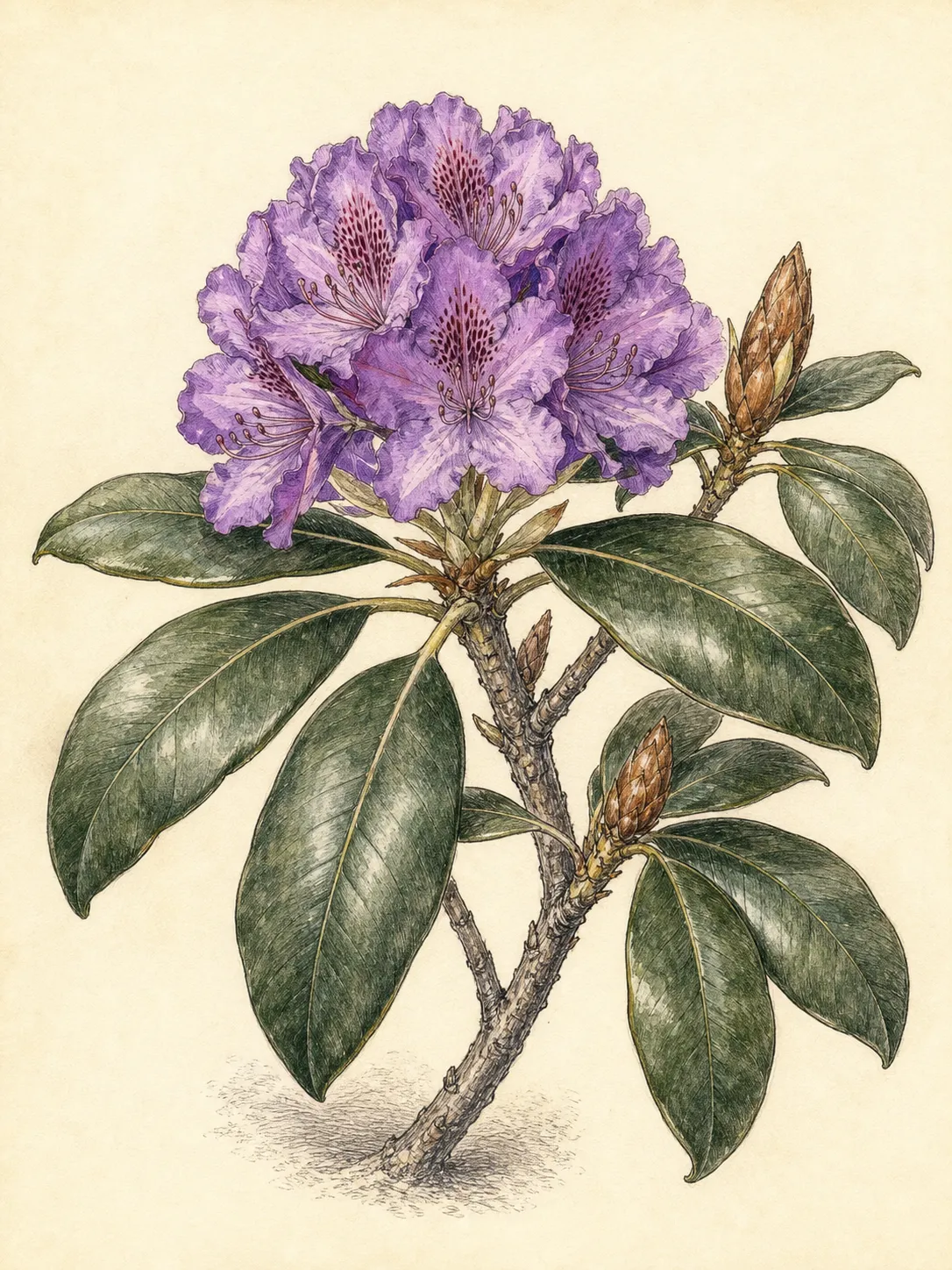
Catawba Rhododendron
A species-led profile of Rhododendron catawbiense, the broadleaf evergreen of southern Appalachian woodland edges, with explicit cultivar, climate, soil, and toxicity limits.
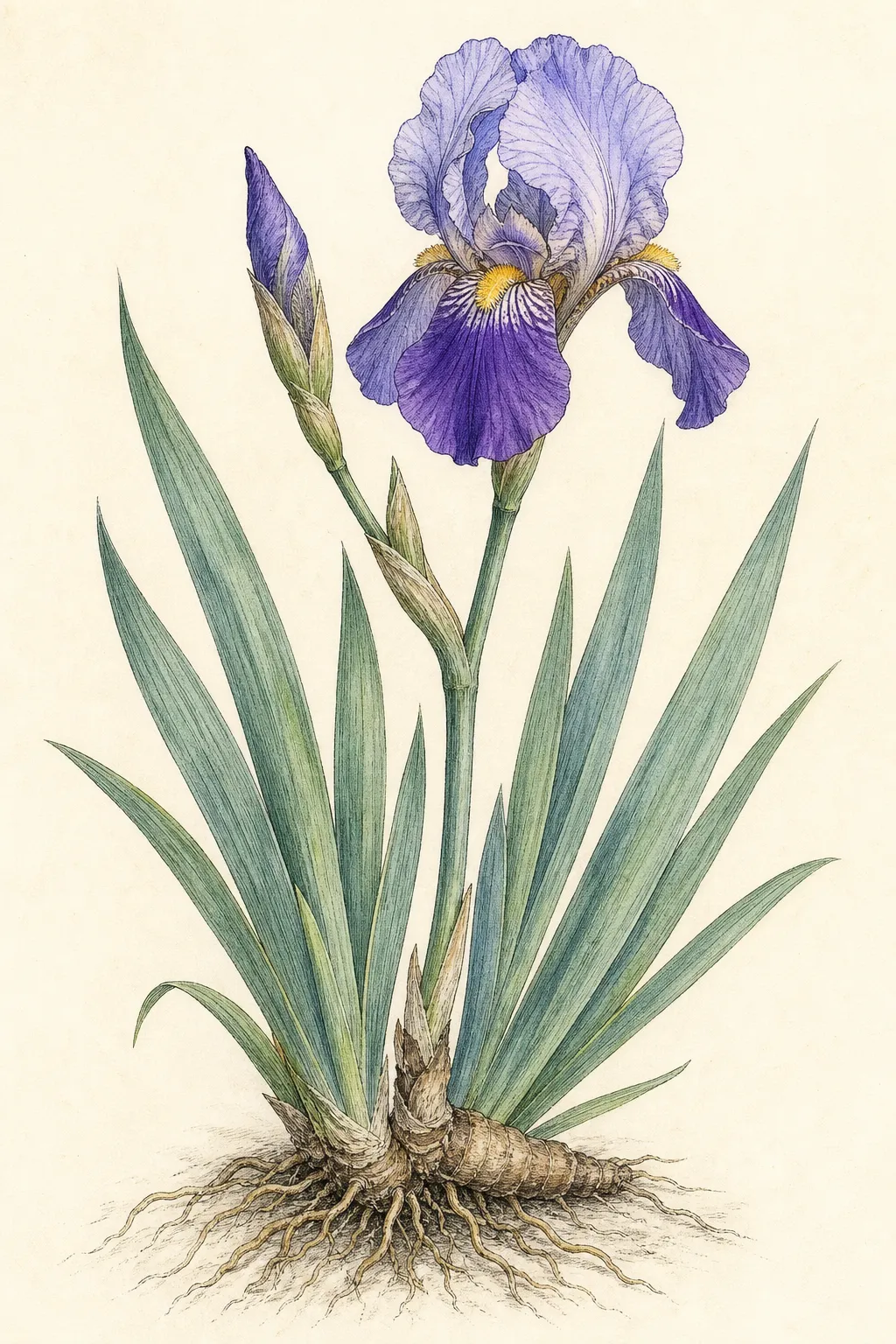
German Bearded Iris
A Botanical Index guide limited to German bearded iris, Iris × germanica: identify its bearded flower and rhizome, plant shallowly, preserve drainage and divide an aging clump.
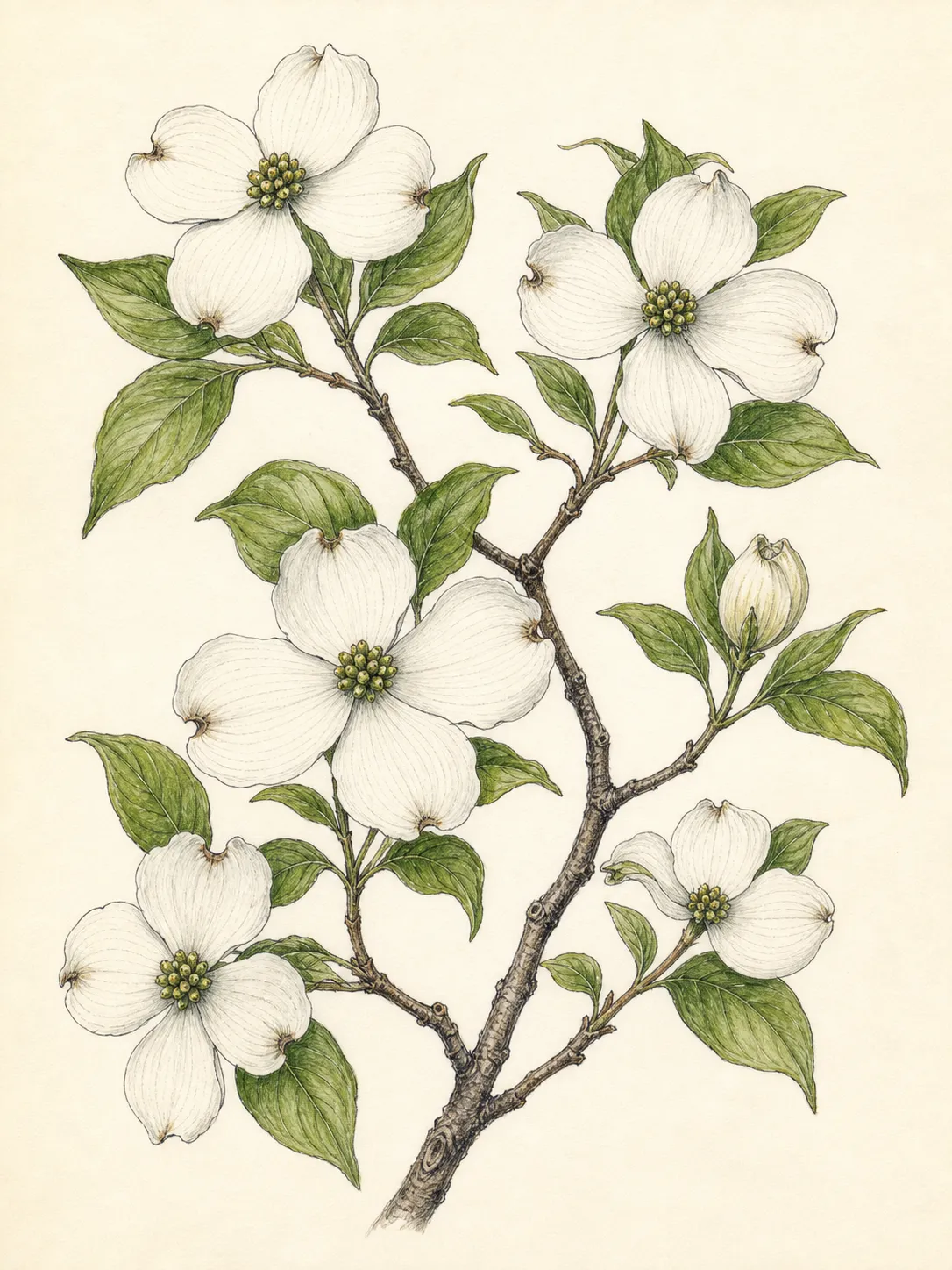
Flowering Dogwood
Identify Cornus florida, site its shallow root system for cool moisture and drainage, and choose cultivars with regional hardiness and disease limits in mind.
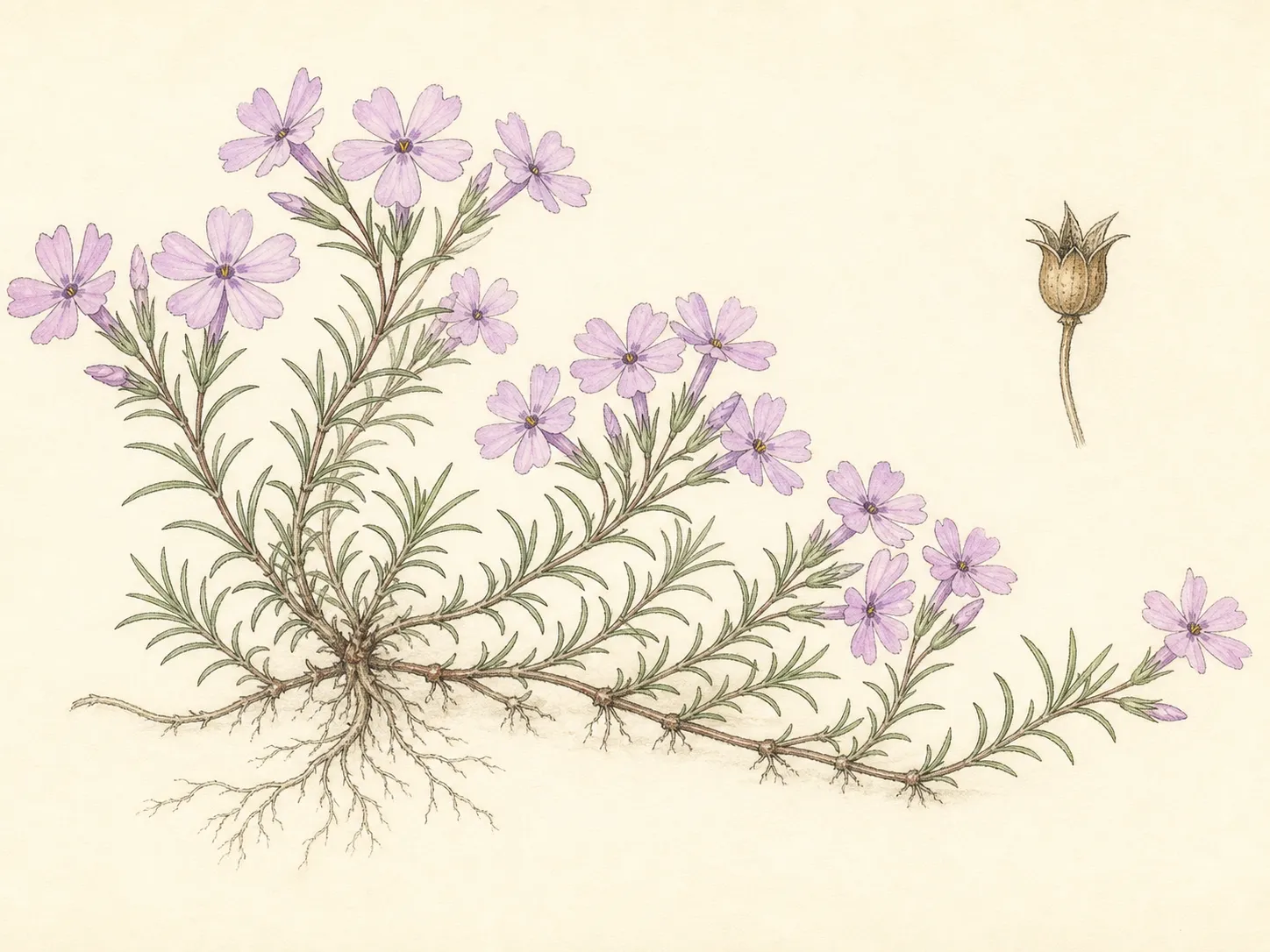
Creeping Phlox
A low evergreen to semi-evergreen mat-forming perennial that covers sunny, draining edges and rock gardens with starry spring flowers.
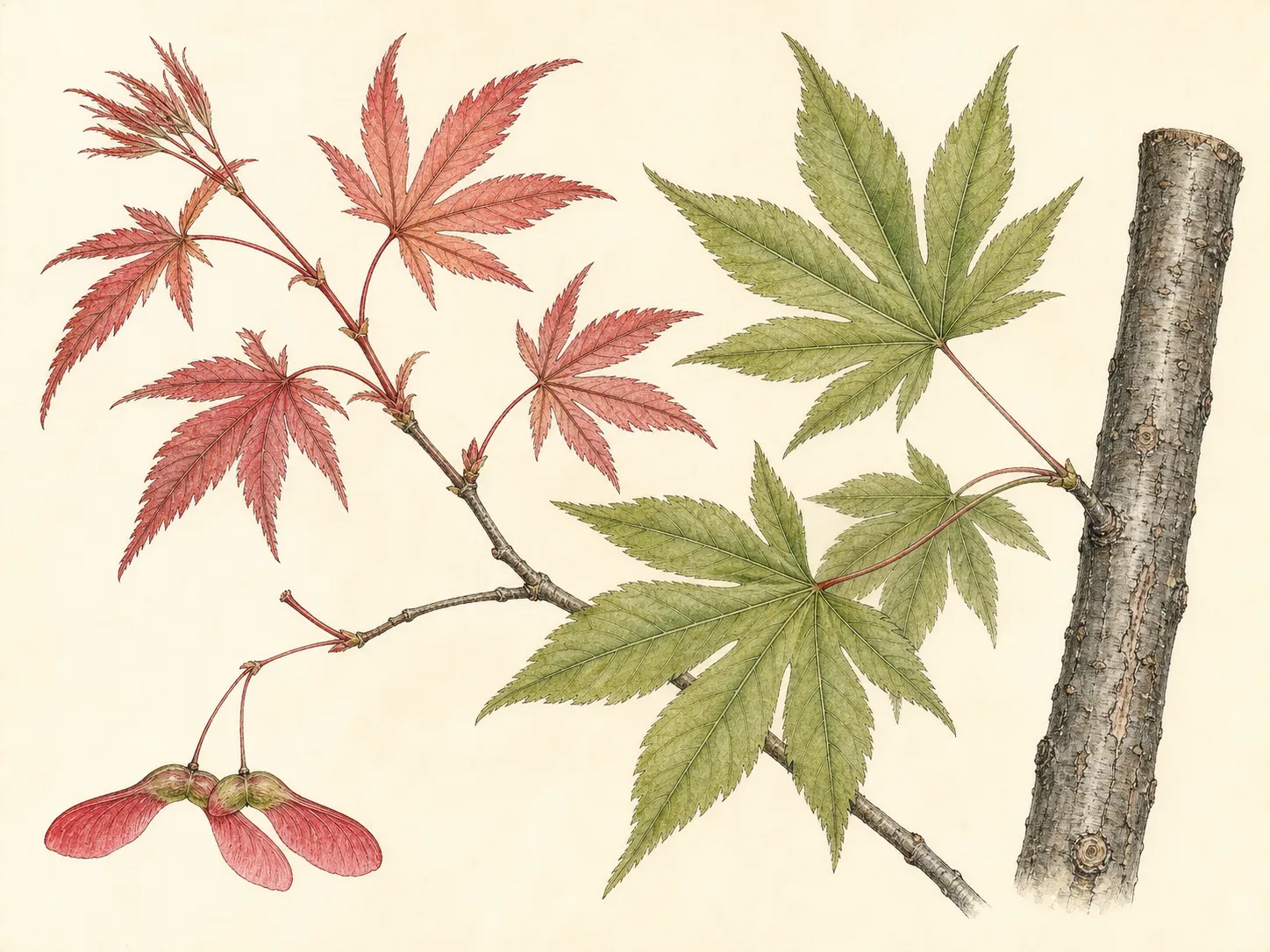
Japanese Maple
A highly variable small deciduous tree valued for layered branching, finely shaped leaves, and autumn color, with cultivar form and exposure deciding its garden fit.
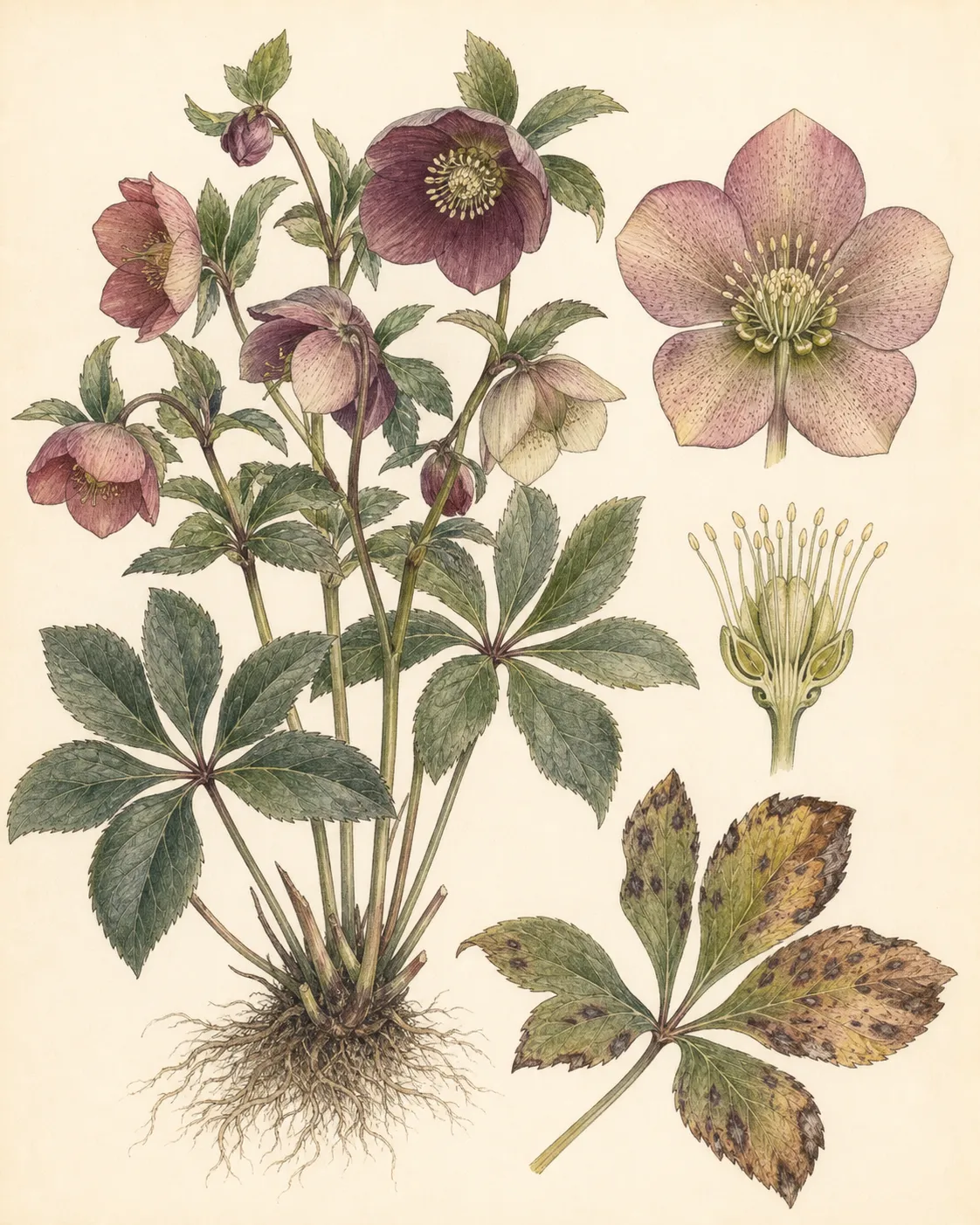
Lenten Rose
A long-lived hybrid hellebore with leathery divided foliage and nodding bowl-shaped flowers that open from late winter into spring in sheltered shade.
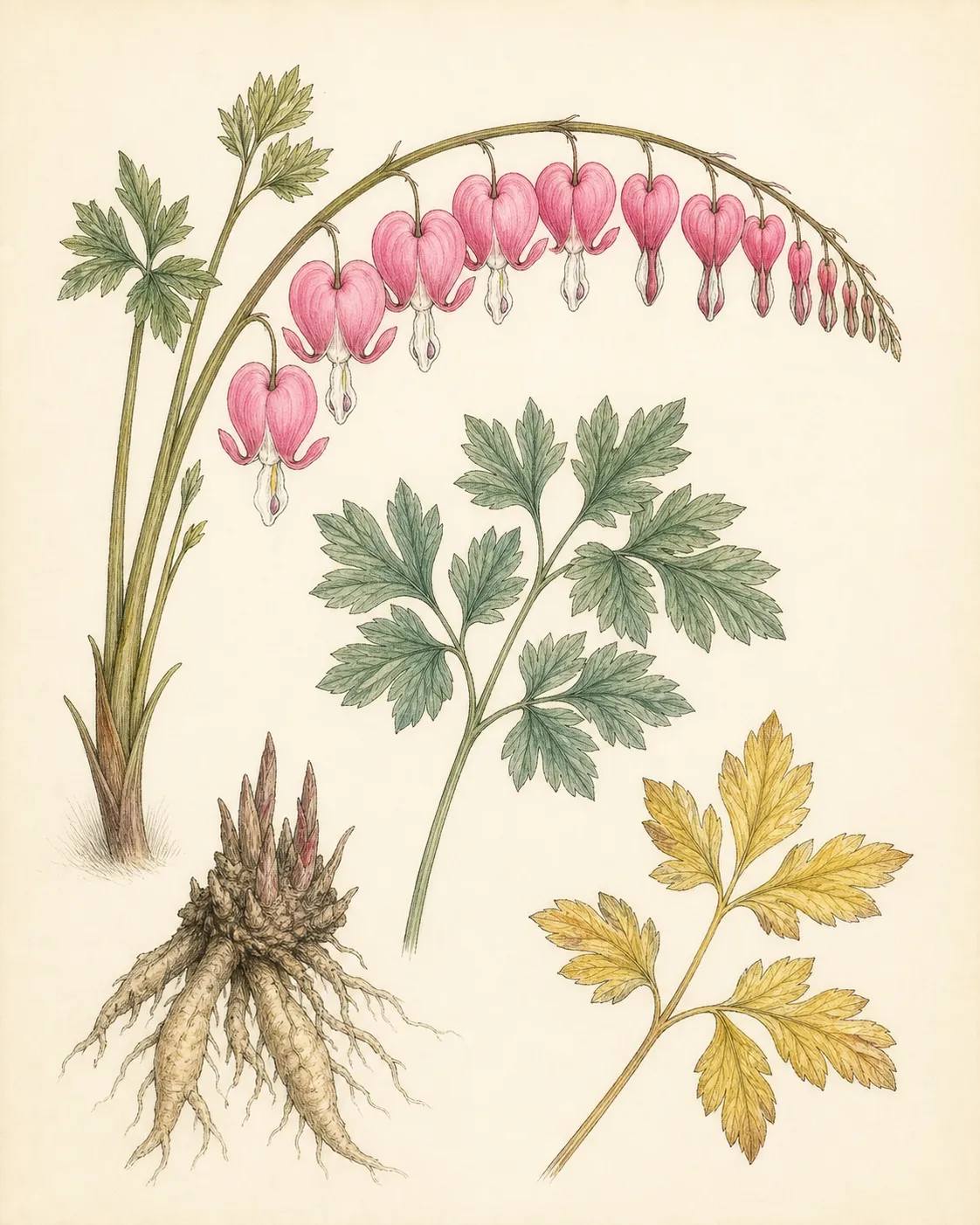
Bleeding Heart
An old-fashioned woodland perennial with arching stems of pendent heart-shaped flowers and a natural summer dormancy that should shape its companions and care.
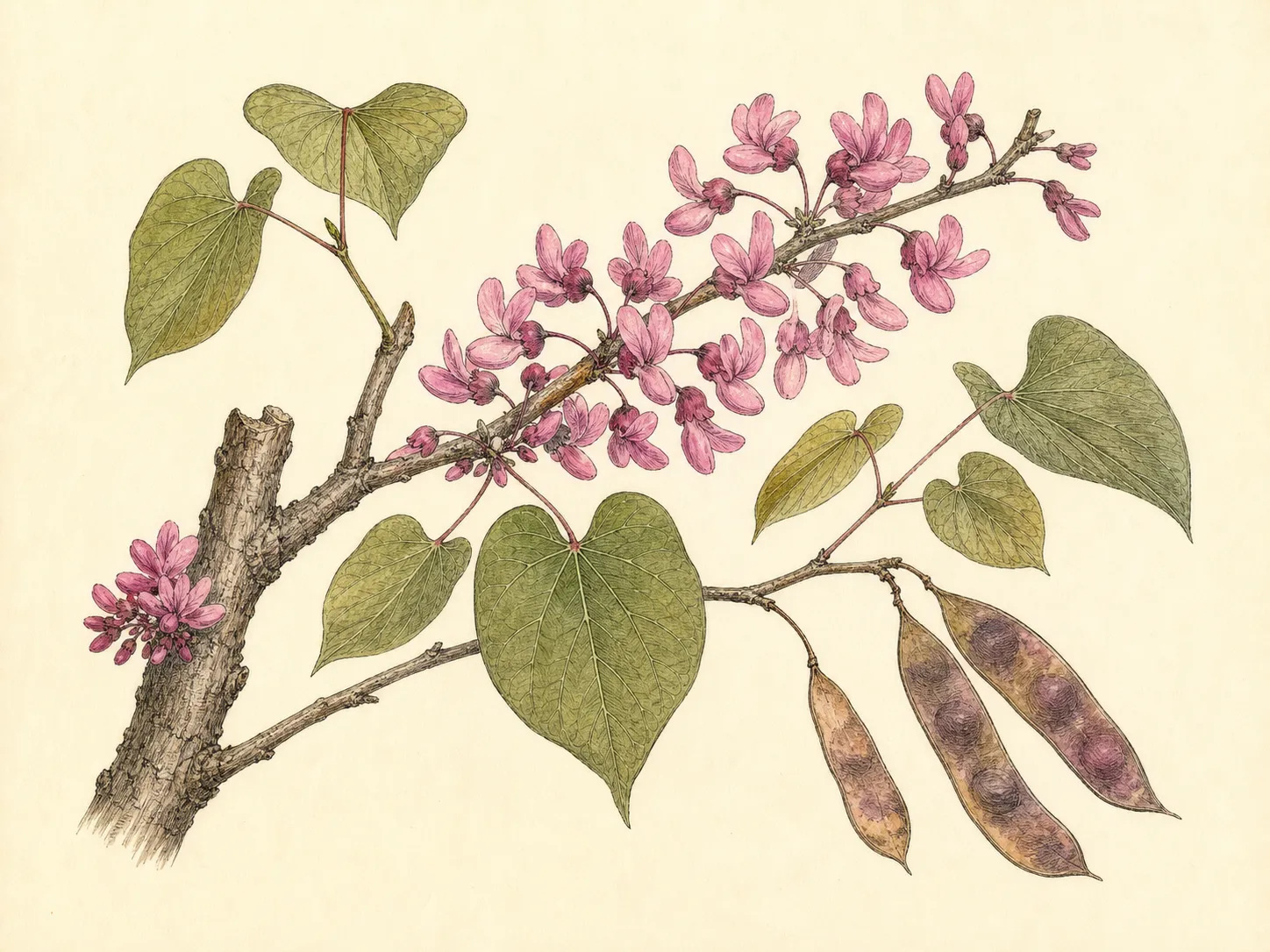
Eastern Redbud
A small eastern North American understory tree with pea-like flowers on bare wood, heart-shaped leaves, and a broad garden presence that needs room to mature.
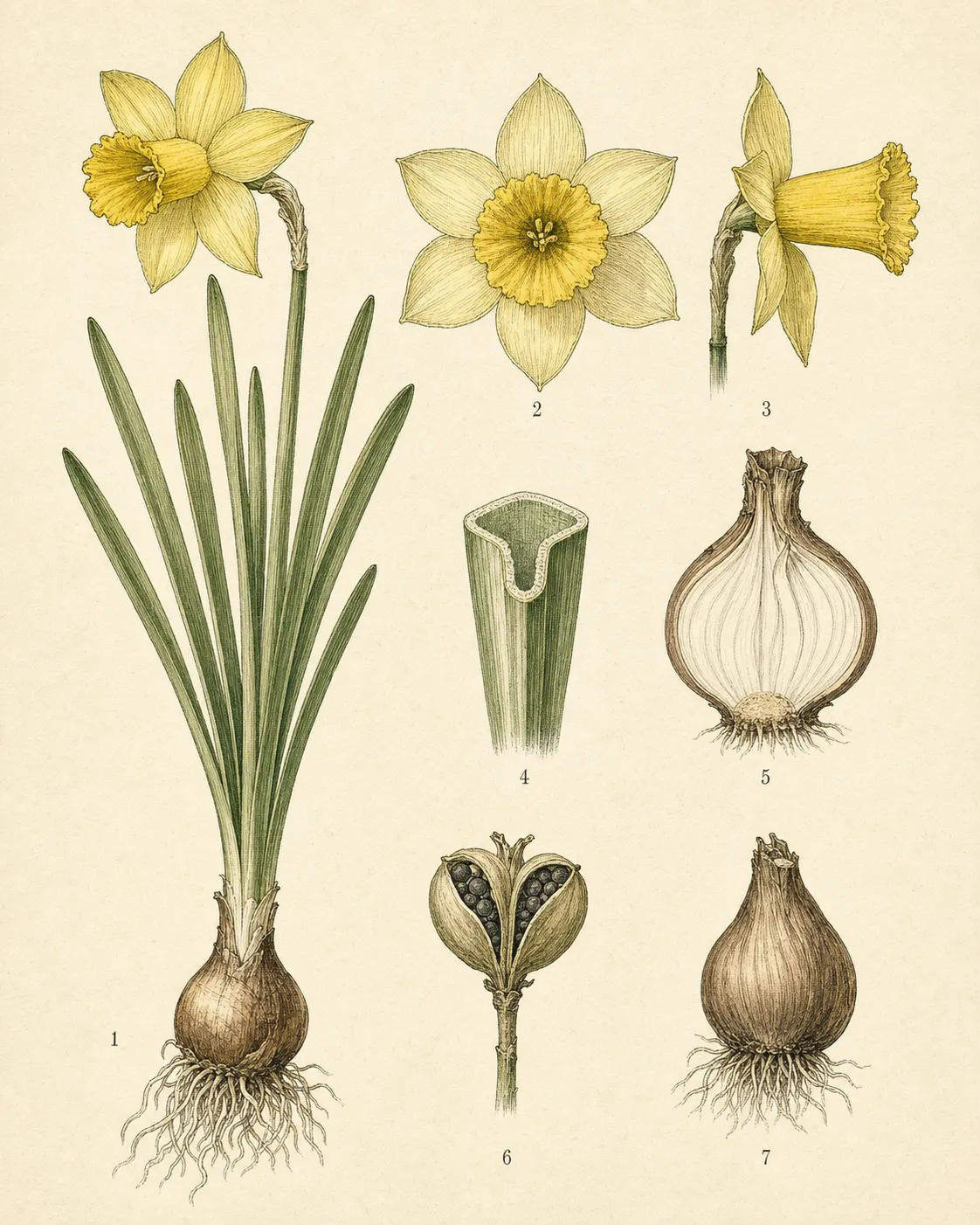
Common Daffodil
A profile of Narcissus pseudonarcissus, the western European trumpet daffodil with a true bulb, spring foliage, and summer dormancy.
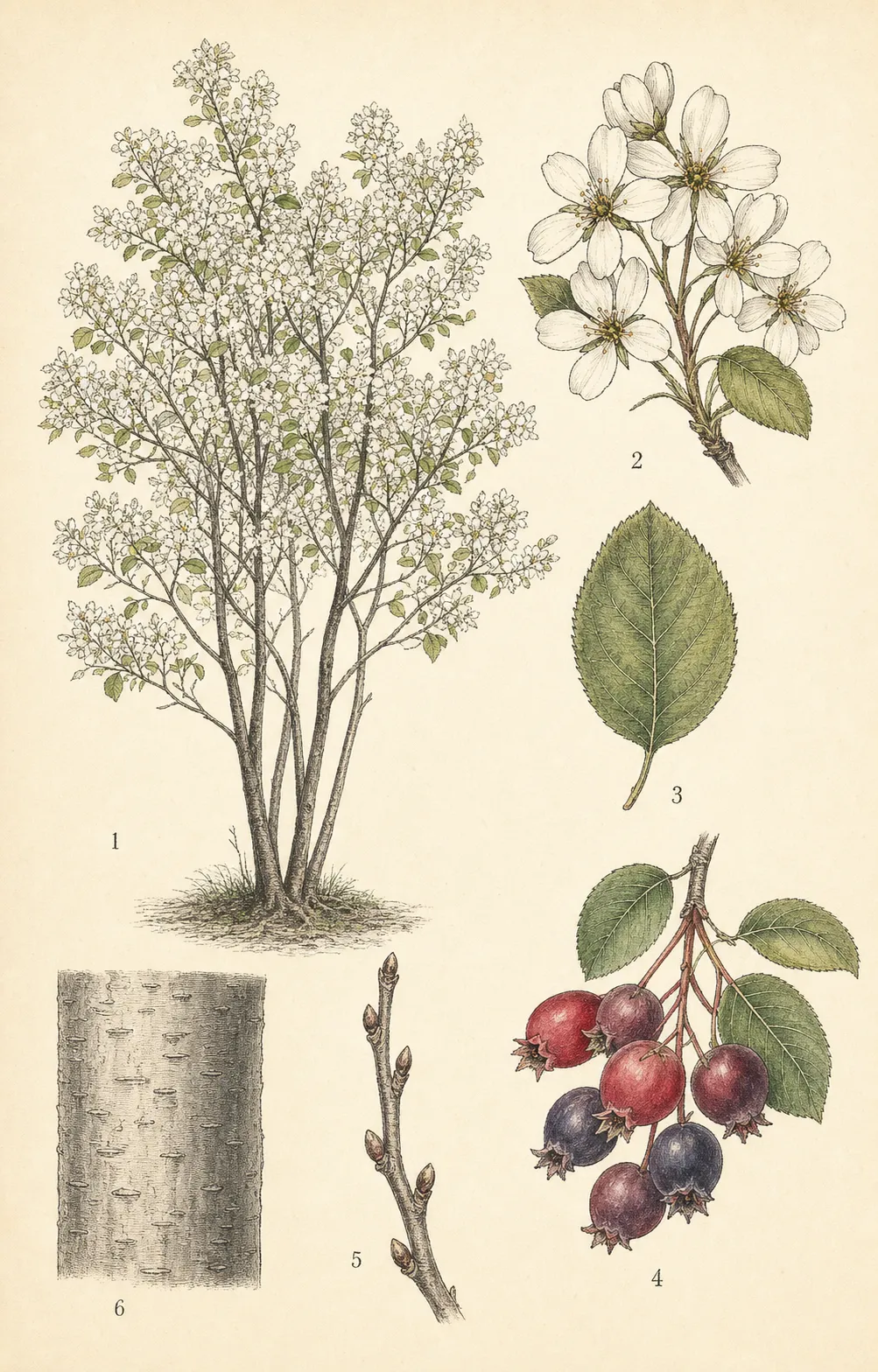
Canada Serviceberry
A profile of Amelanchier canadensis, the eastern North American multi-stem shrub or small tree with spring flowers and summer pomes.
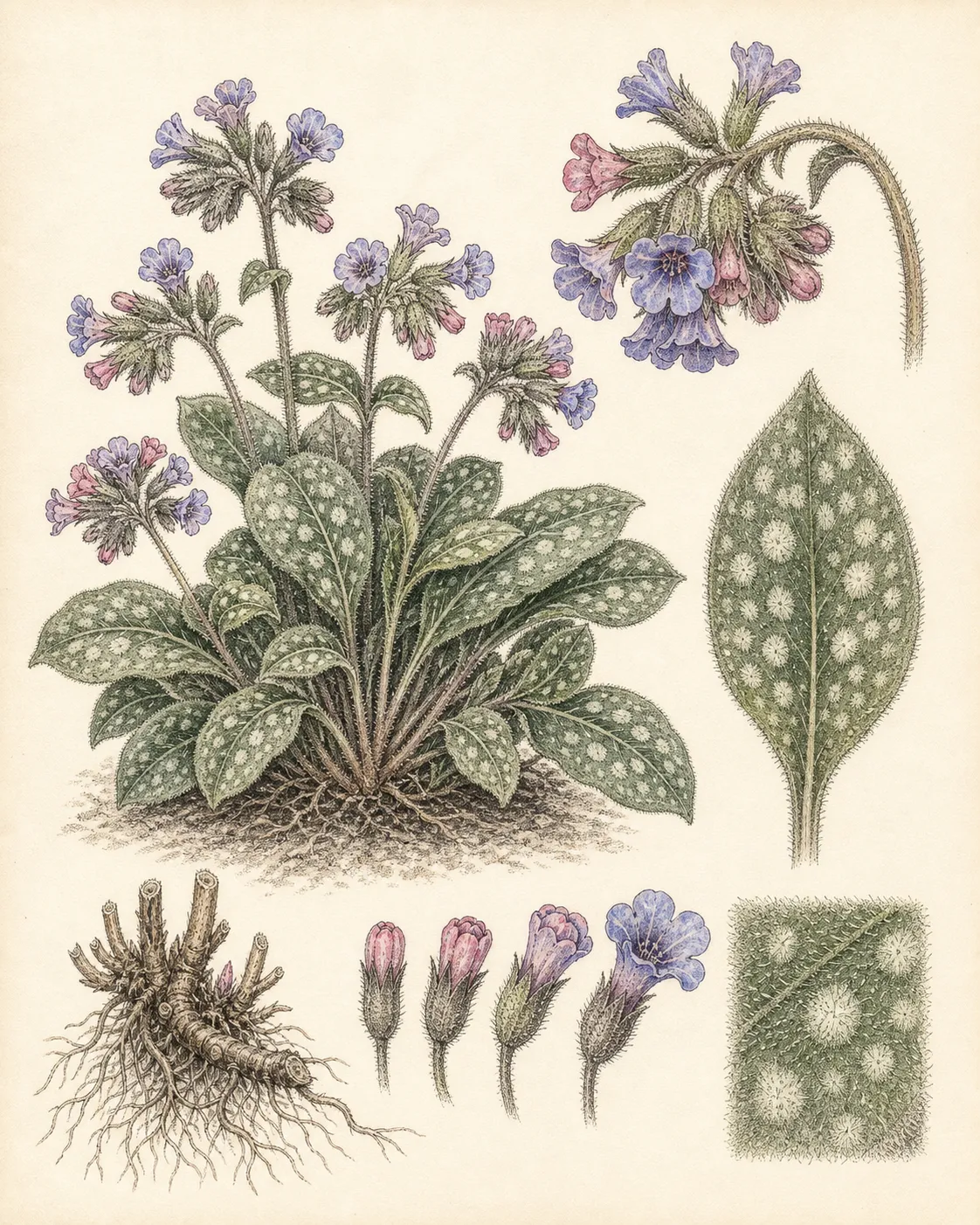
Lungwort
A profile of Pulmonaria saccharata, the spotted-leaved rhizomatous perennial for cool, evenly moist shade.
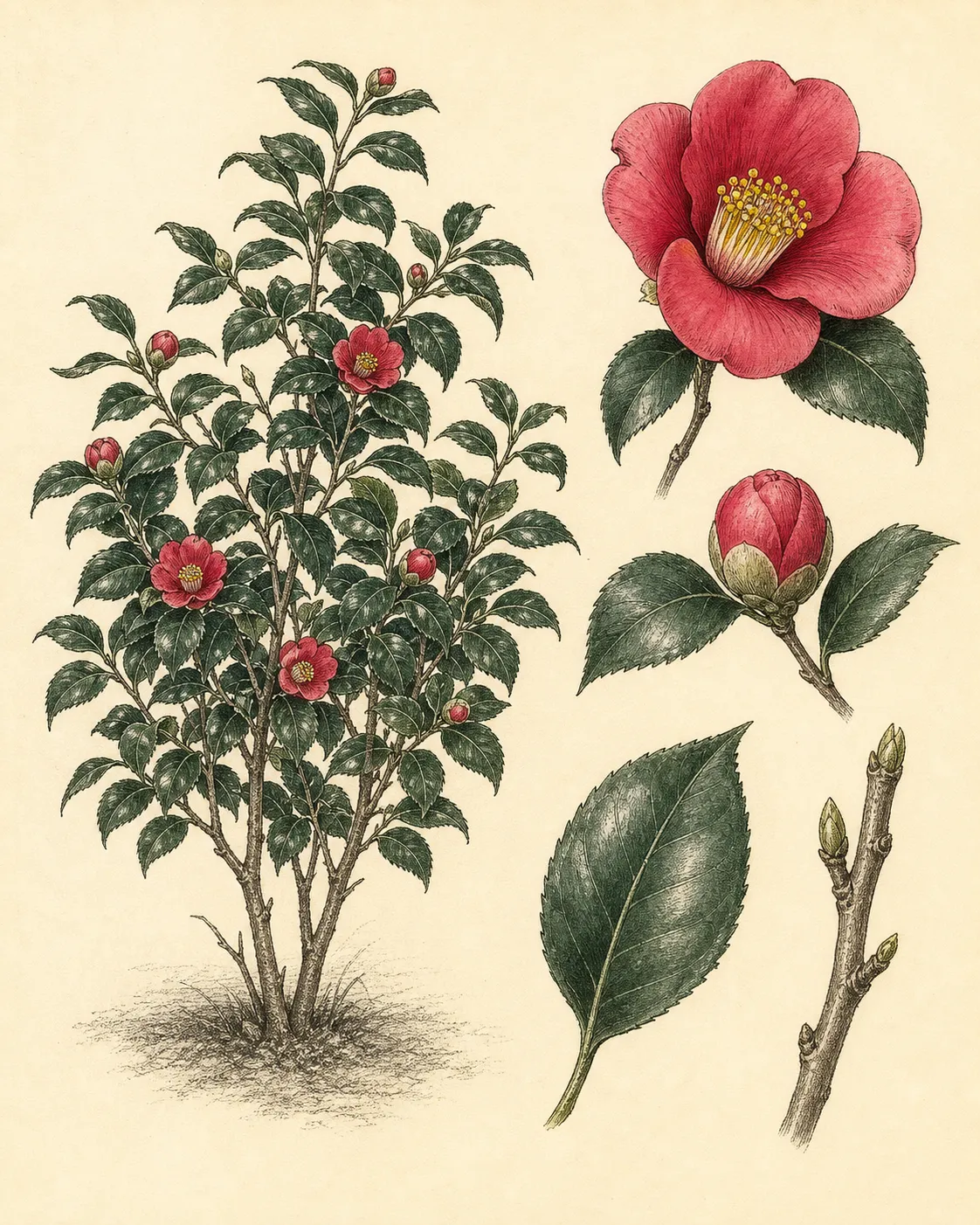
Japanese Camellia
A profile of Camellia japonica, the long-lived evergreen shrub with glossy leaves and cultivar-dependent winter or spring flowers.
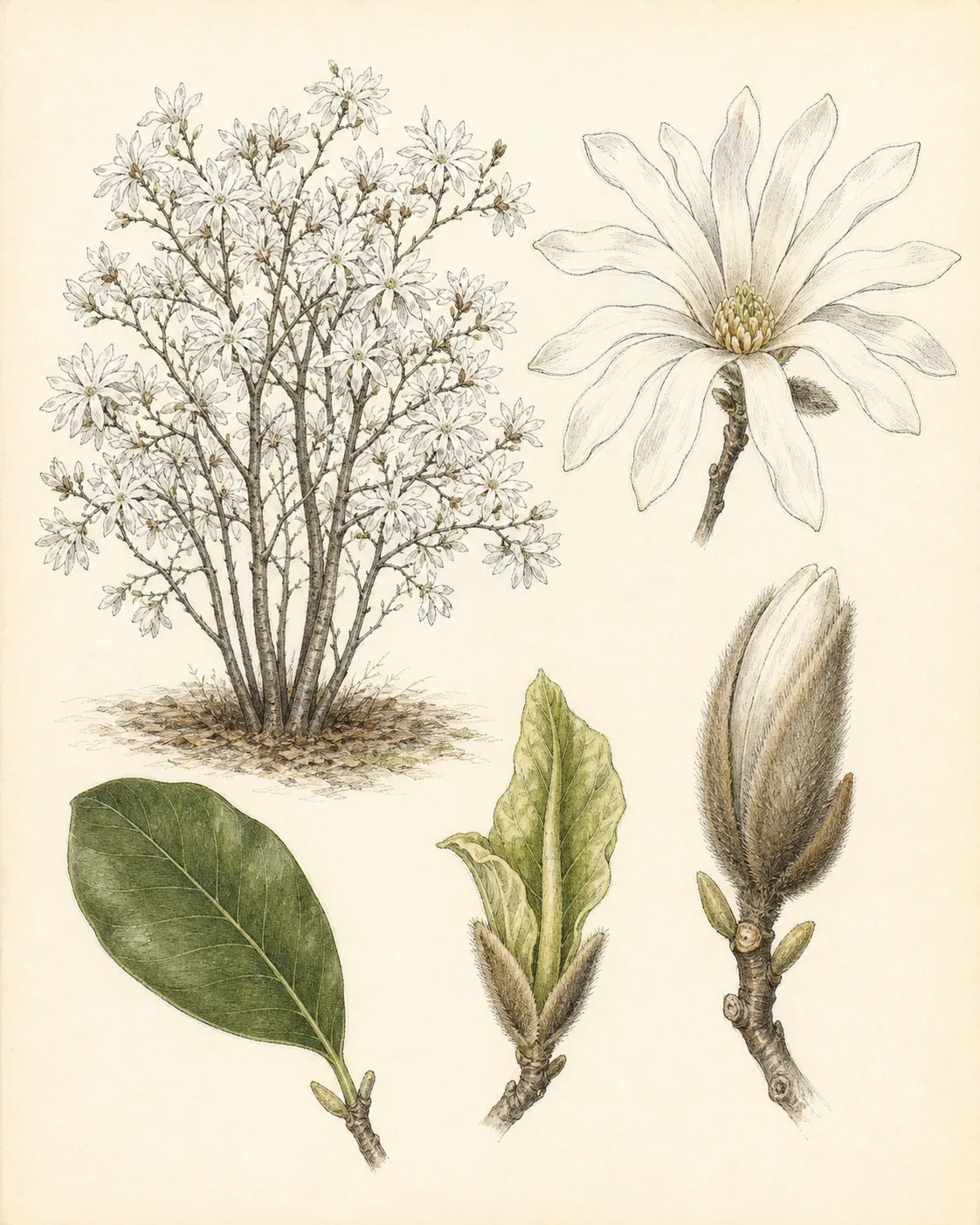
Star Magnolia
A profile of Magnolia stellata, the compact Japanese shrub or small tree with fuzzy buds and starry flowers before leaf-out.
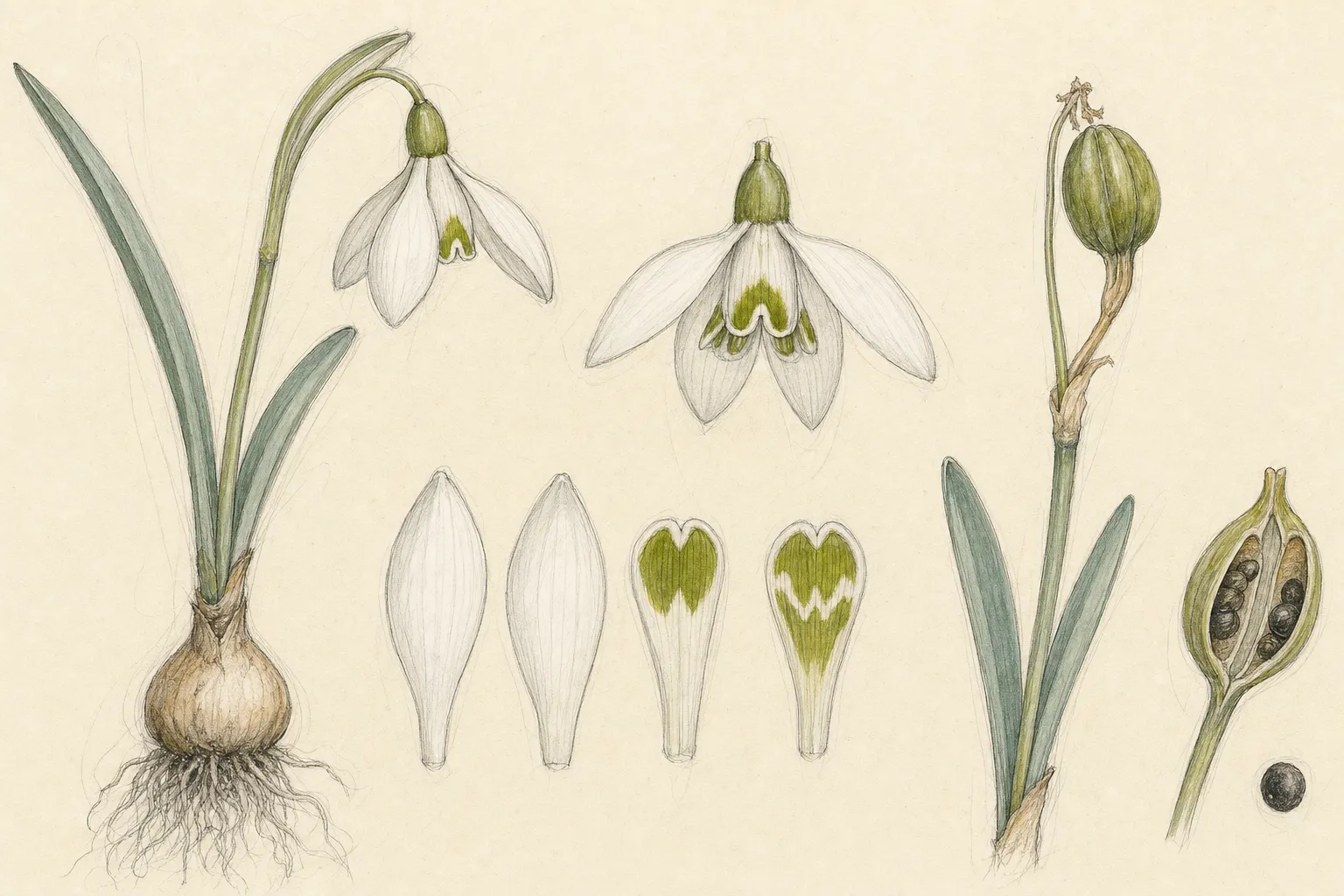
Common Snowdrop
A species profile of Galanthus nivalis, the small white late-winter bulb for moist, well-drained soil beneath deciduous shrubs and trees.
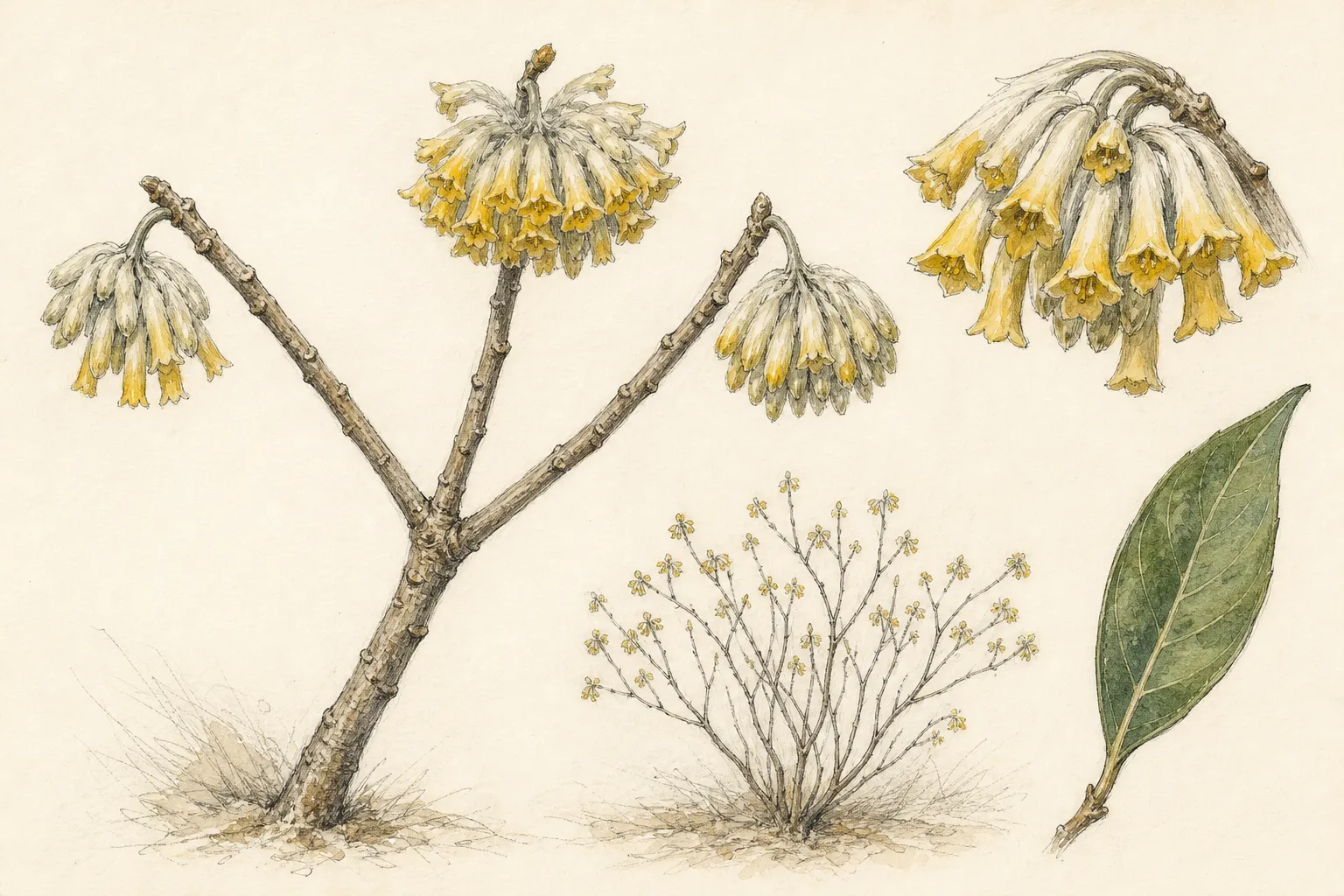
Paperbush
A garden profile of Edgeworthia chrysantha, the sheltered deciduous shrub with three-forked stems, silky buds, and fragrant late-winter flowers.
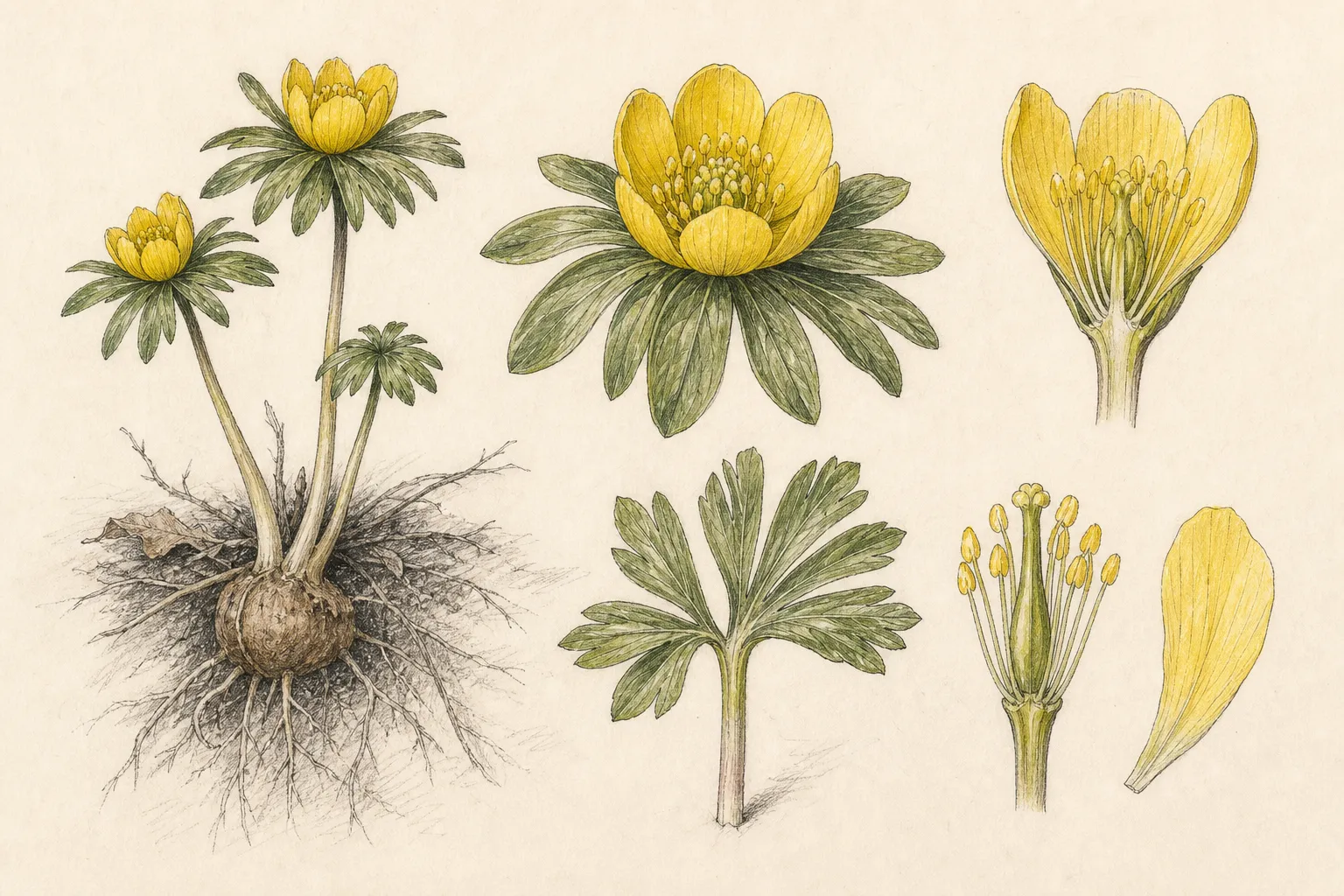
Winter Aconite
A species profile of Eranthis hyemalis, a tiny yellow late-winter tuber for humus-rich soil beneath deciduous trees and shrubs.
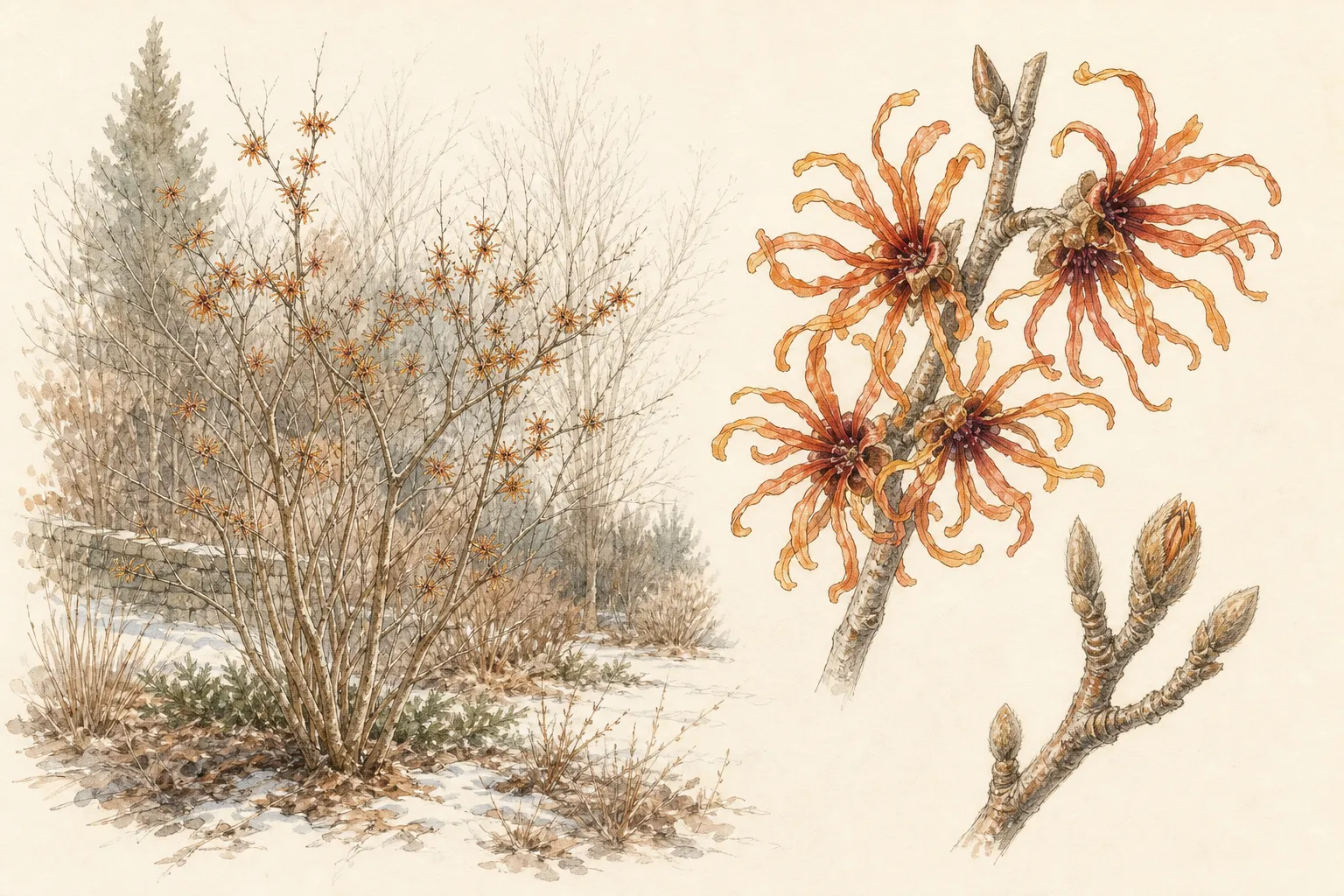
Ozark Witch Hazel
A practical species profile of Hamamelis vernalis, the broad, fragrant winter-flowering shrub native to gravelly Ozark stream corridors.
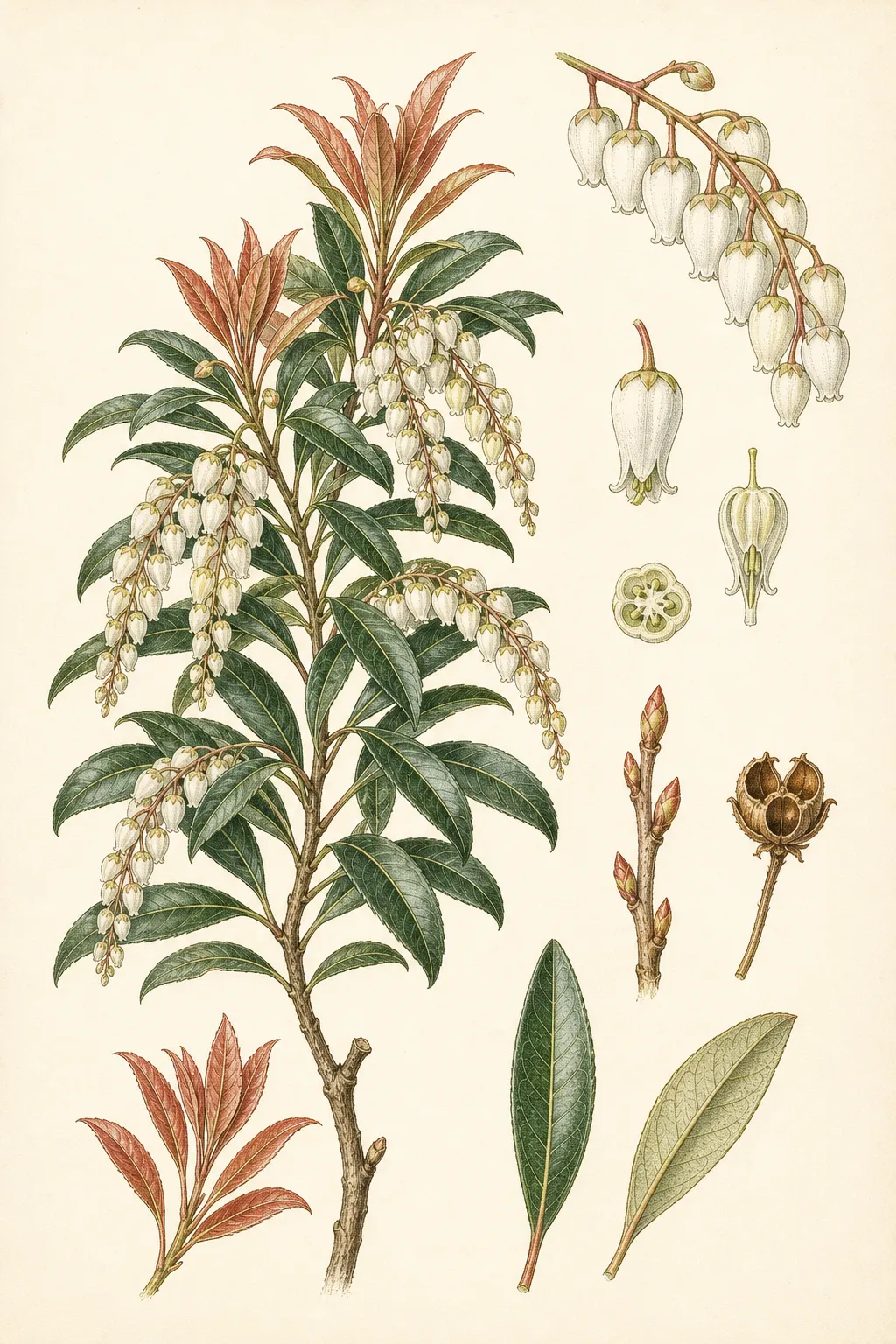
Japanese Andromeda
Grow Pieris japonica as a broadleaf evergreen for spring flower panicles and colored new growth in sheltered, acidic, moist but well-drained ornamental beds.
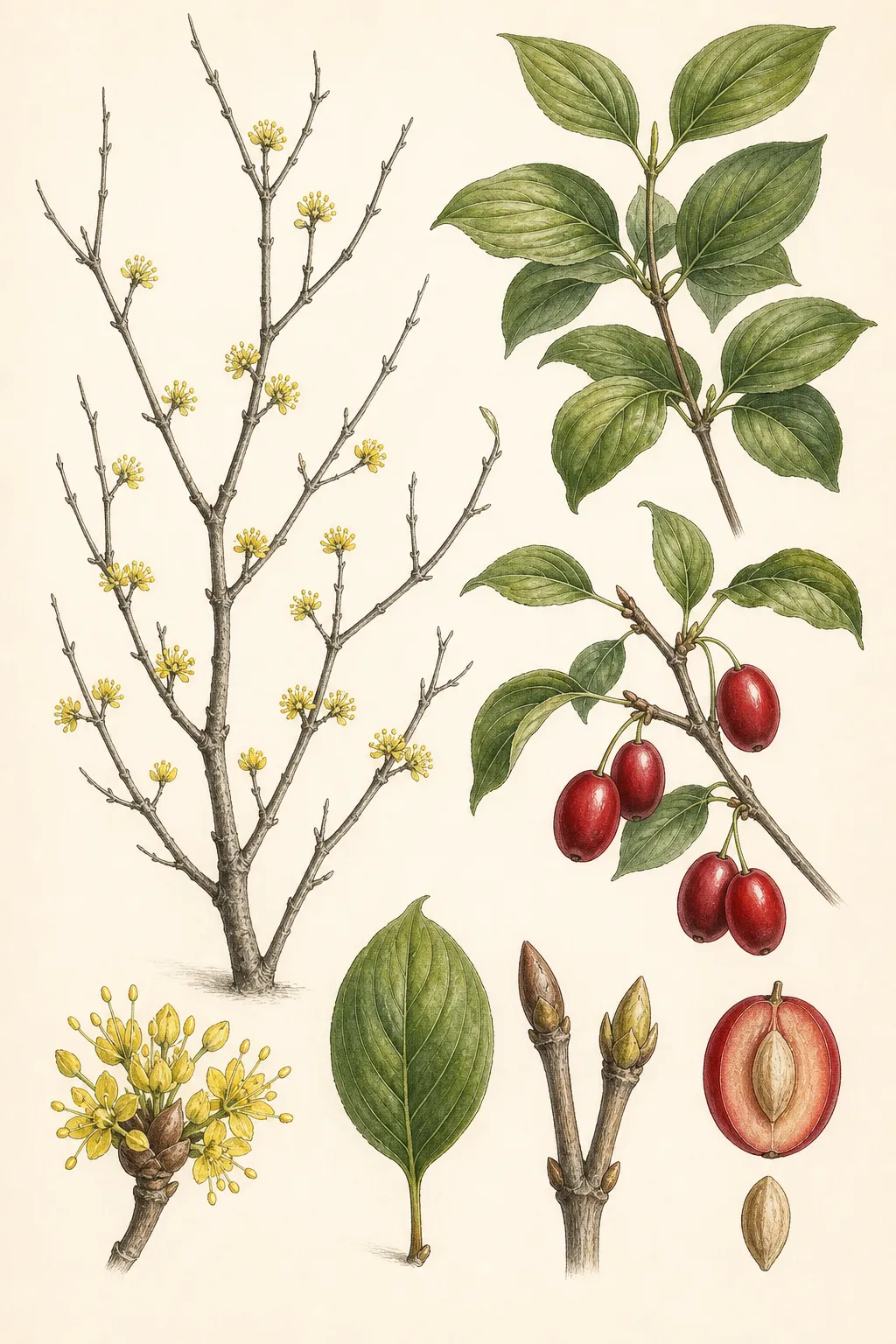
Cornelian Cherry Dogwood
Grow Cornus mas as a durable late-winter flowering small tree or large shrub, allowing its broad mature crown, early yellow bloom, fruit, and multiseason structure to shape the site.
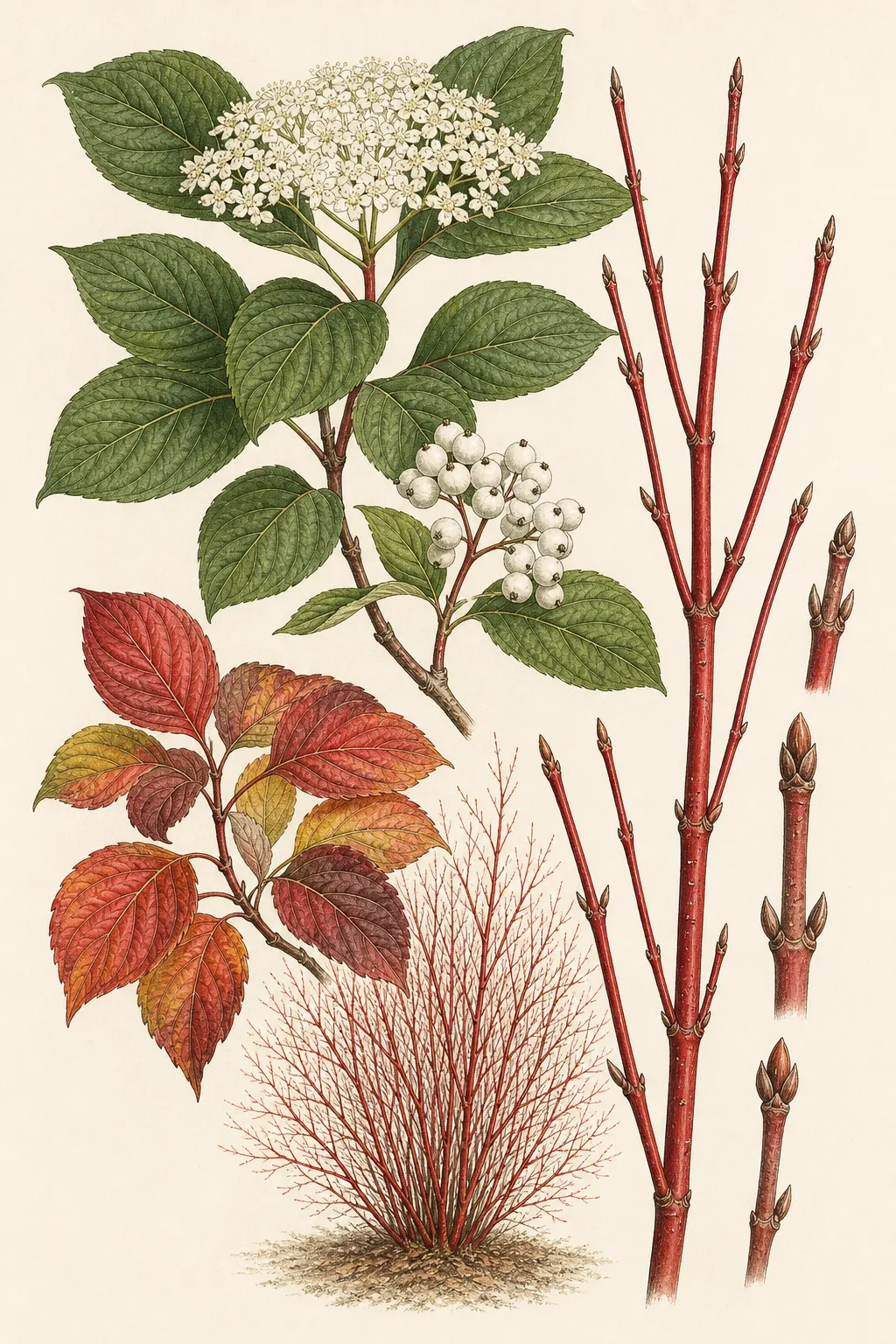
Red Twig Dogwood
Grow Cornus sericea for vivid young winter stems in moist ornamental plantings while planning its broad suckering habit, selective renewal, summer foliage, and site access.
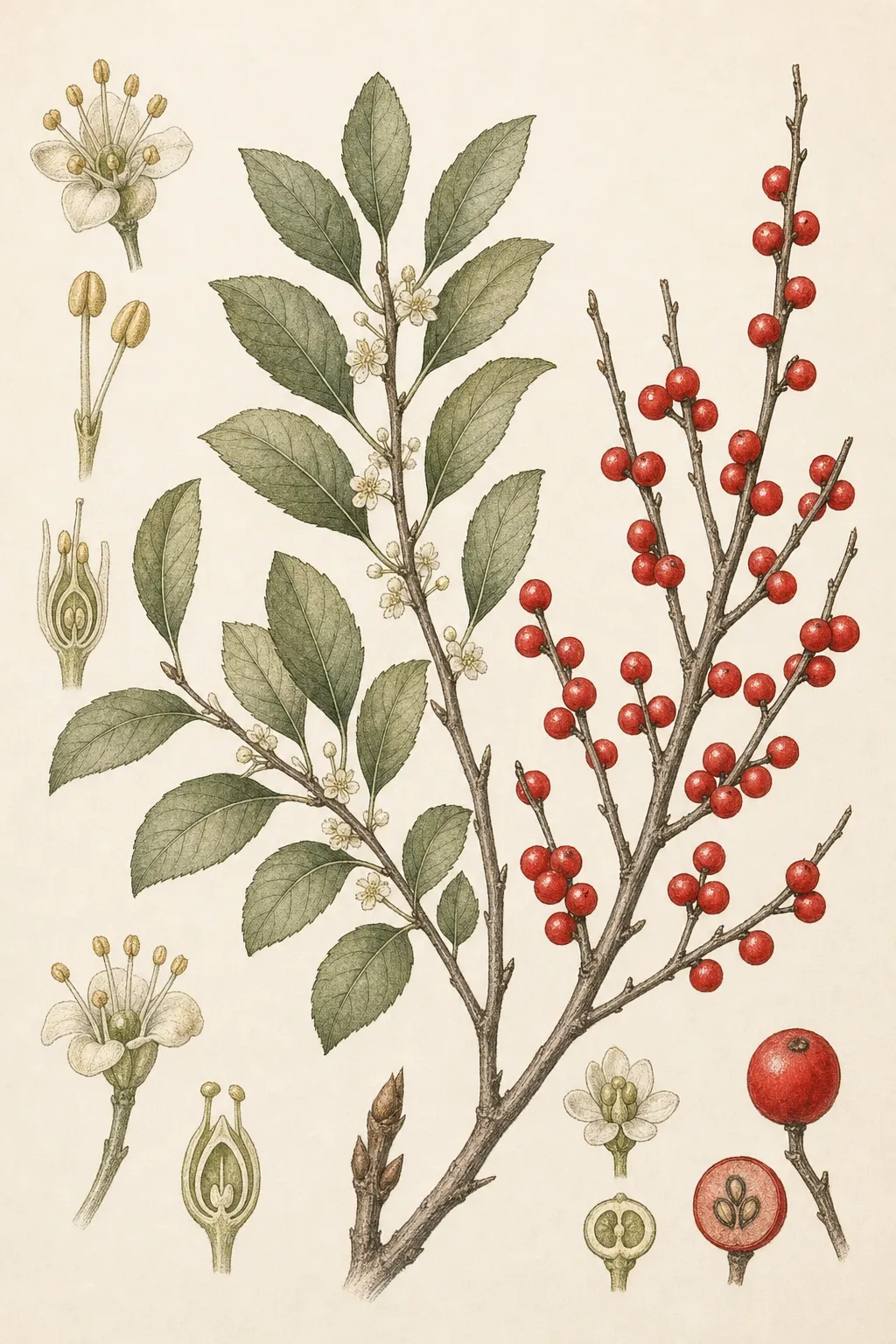
Winterberry Holly
Use the deciduous native holly Ilex verticillata for brilliant winter fruit where moisture, space, and a compatible male pollinator can be planned together.
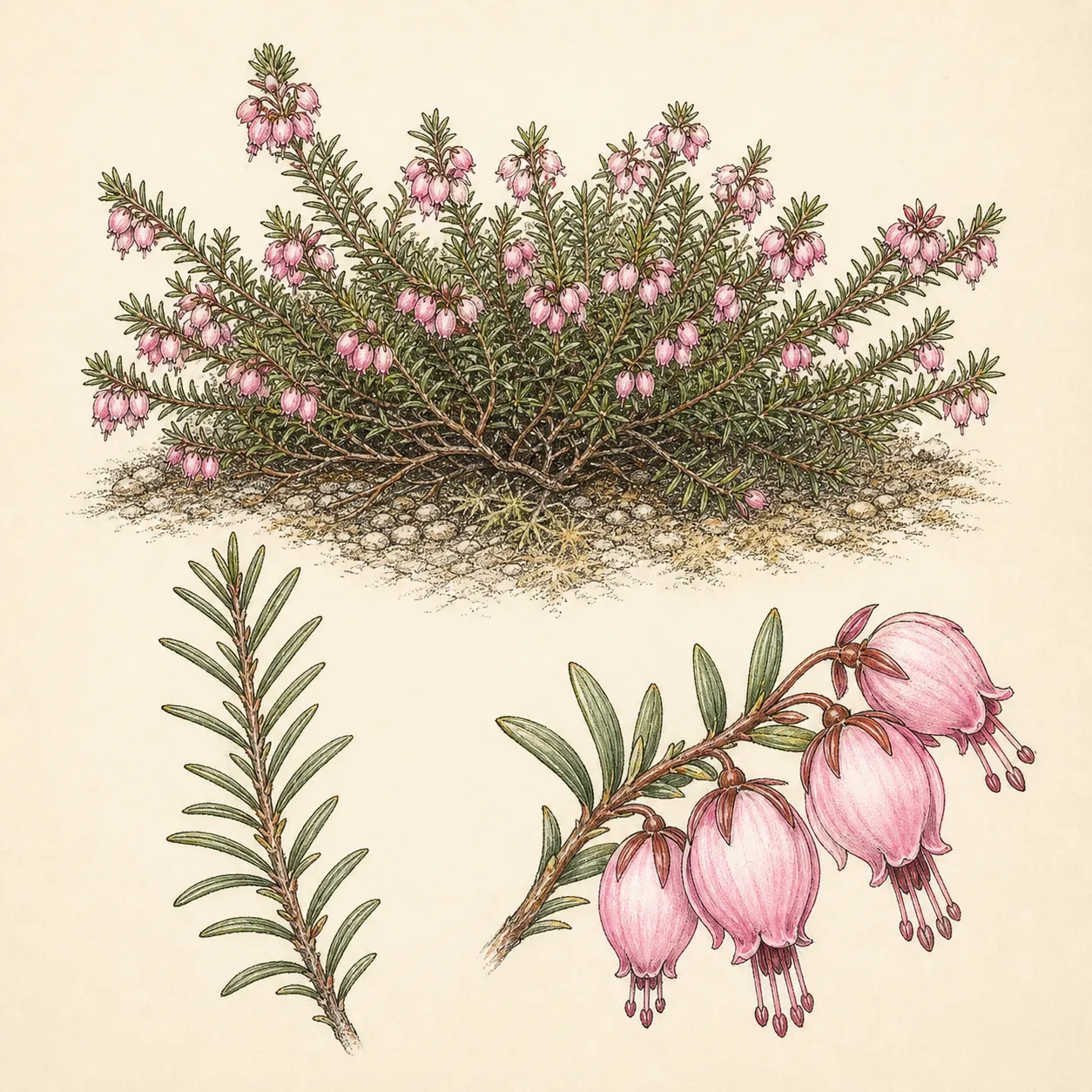
Winter Heath
A field guide to Erica carnea: identify the fine evergreen mat and urn-shaped winter flowers, then use drainage, sun and light post-bloom trimming to keep it dense.
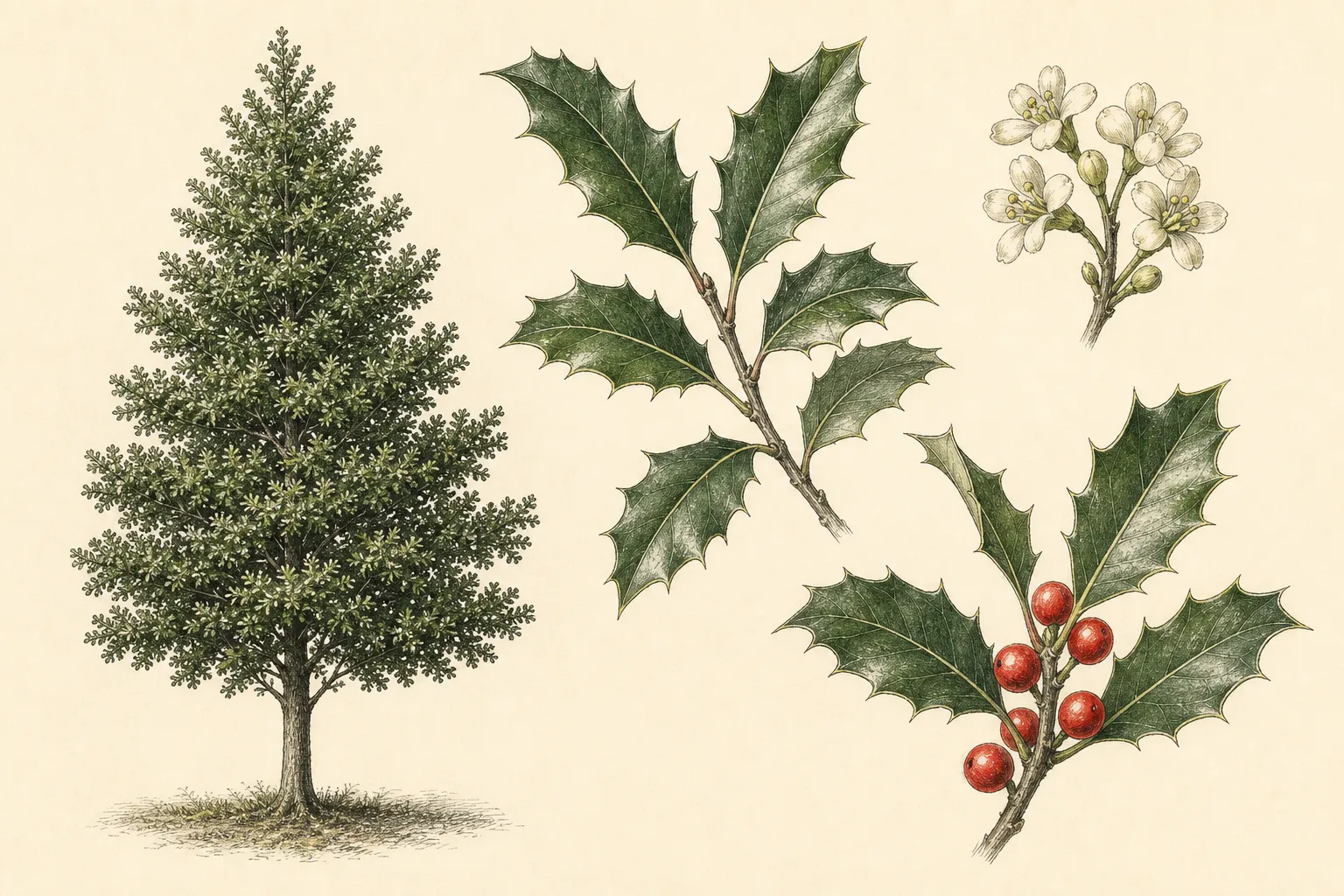
American Holly
A field guide to Ilex opaca: identify its native evergreen form, plan for male and female plants, and give the slow-growing tree acidic drainage and winter shelter.
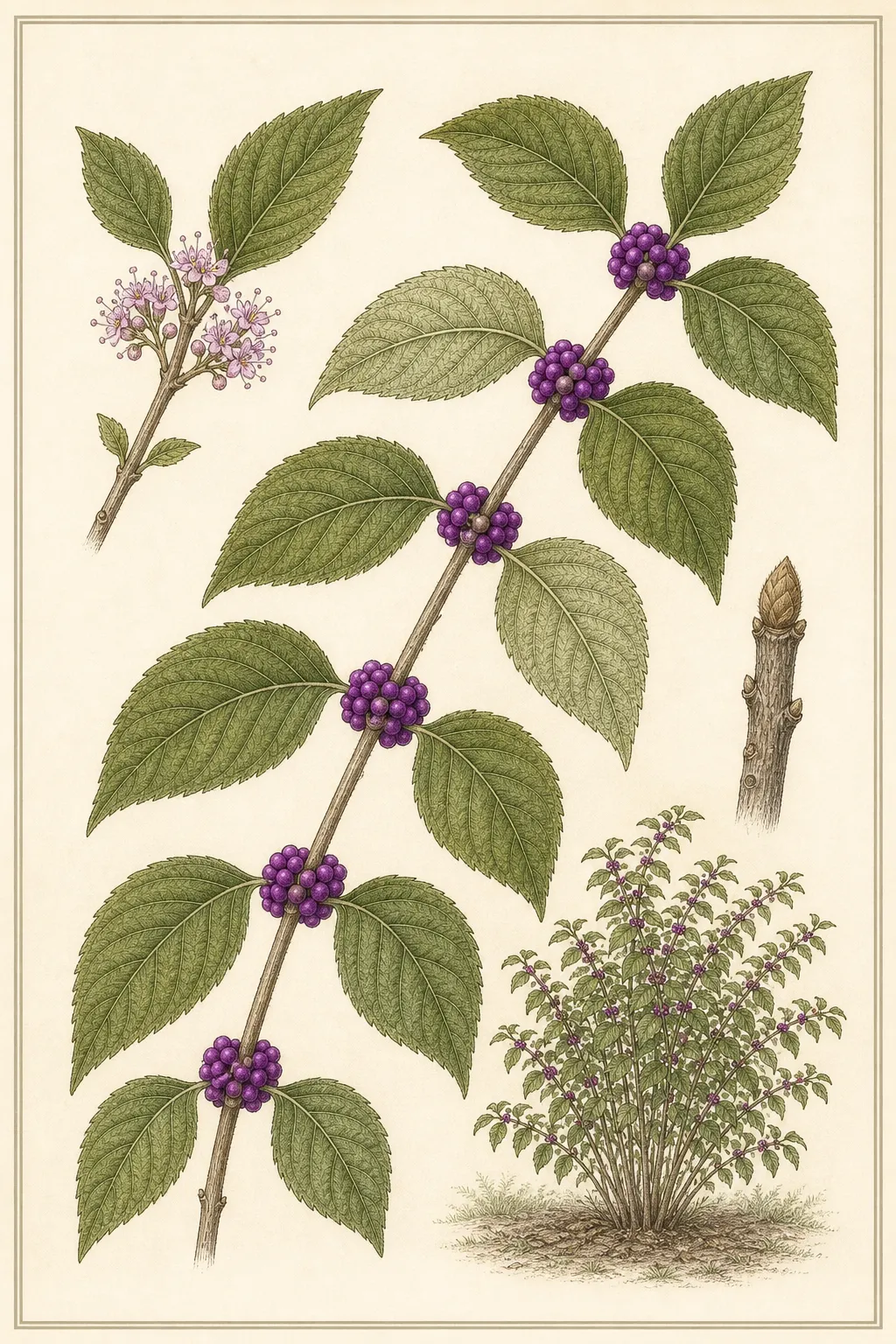
American Beautyberry
A species-led guide to the open native shrub whose opposite leaves, small axillary flowers and vivid stem-hugging fruit clusters reward a generous garden footprint.
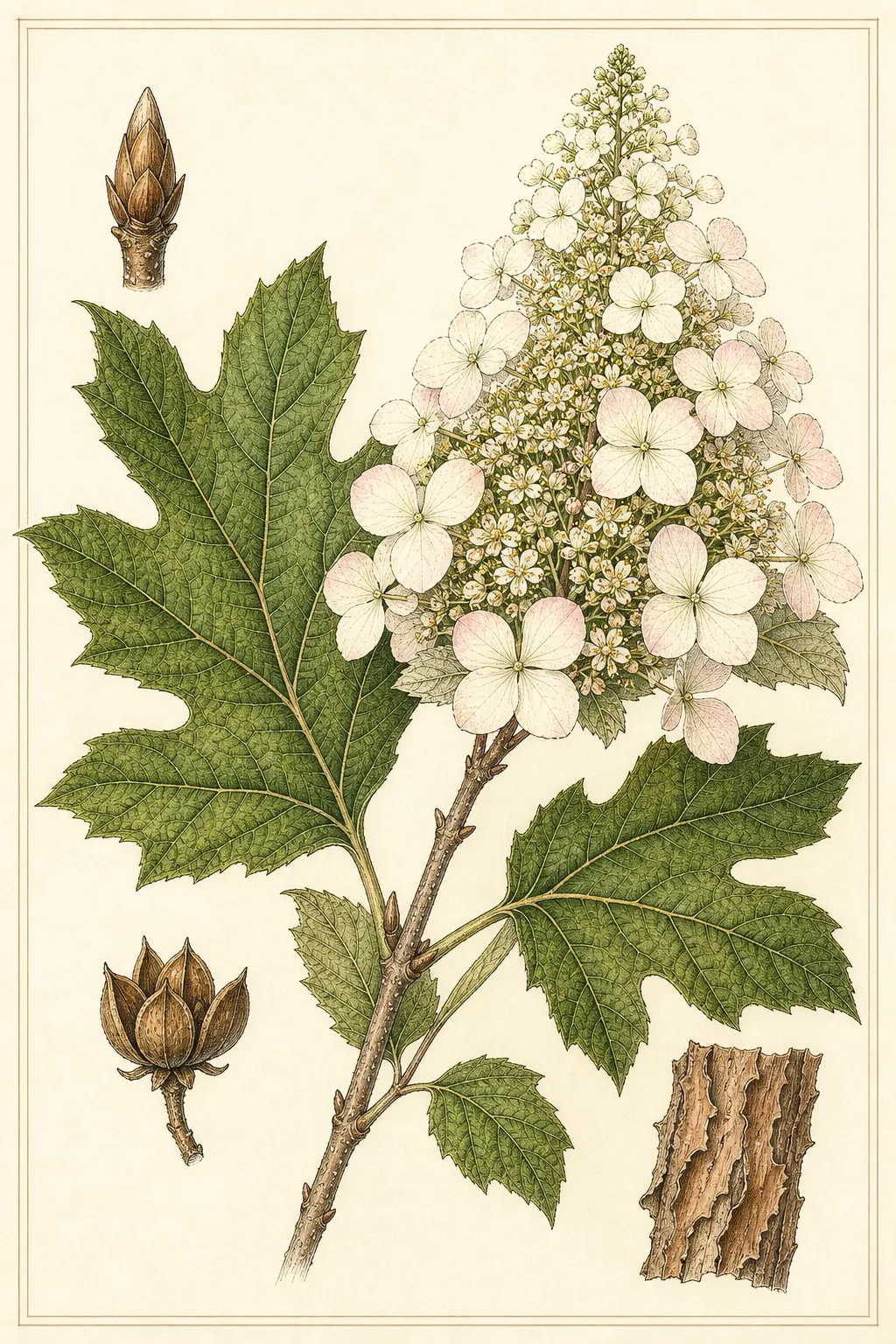
Oakleaf Hydrangea
A species-led guide to the southeastern native shrub with lobed foliage, pyramidal summer flowers, burgundy fall color and exfoliating winter bark.
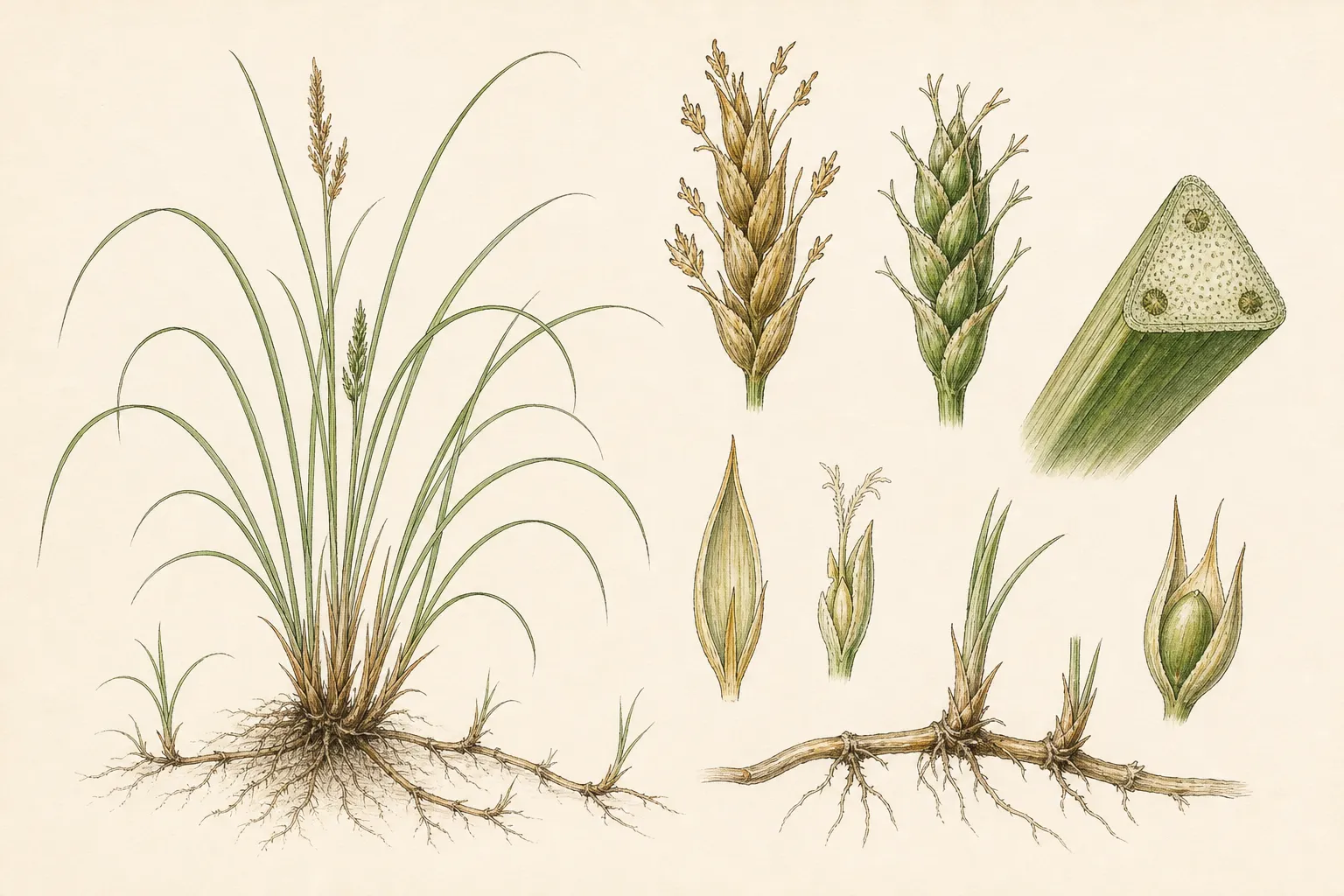
Pennsylvania Sedge
A cool-season, rhizomatous native sedge that makes soft semi-evergreen mats in dry shade, with early spring spikes and little need for mowing.
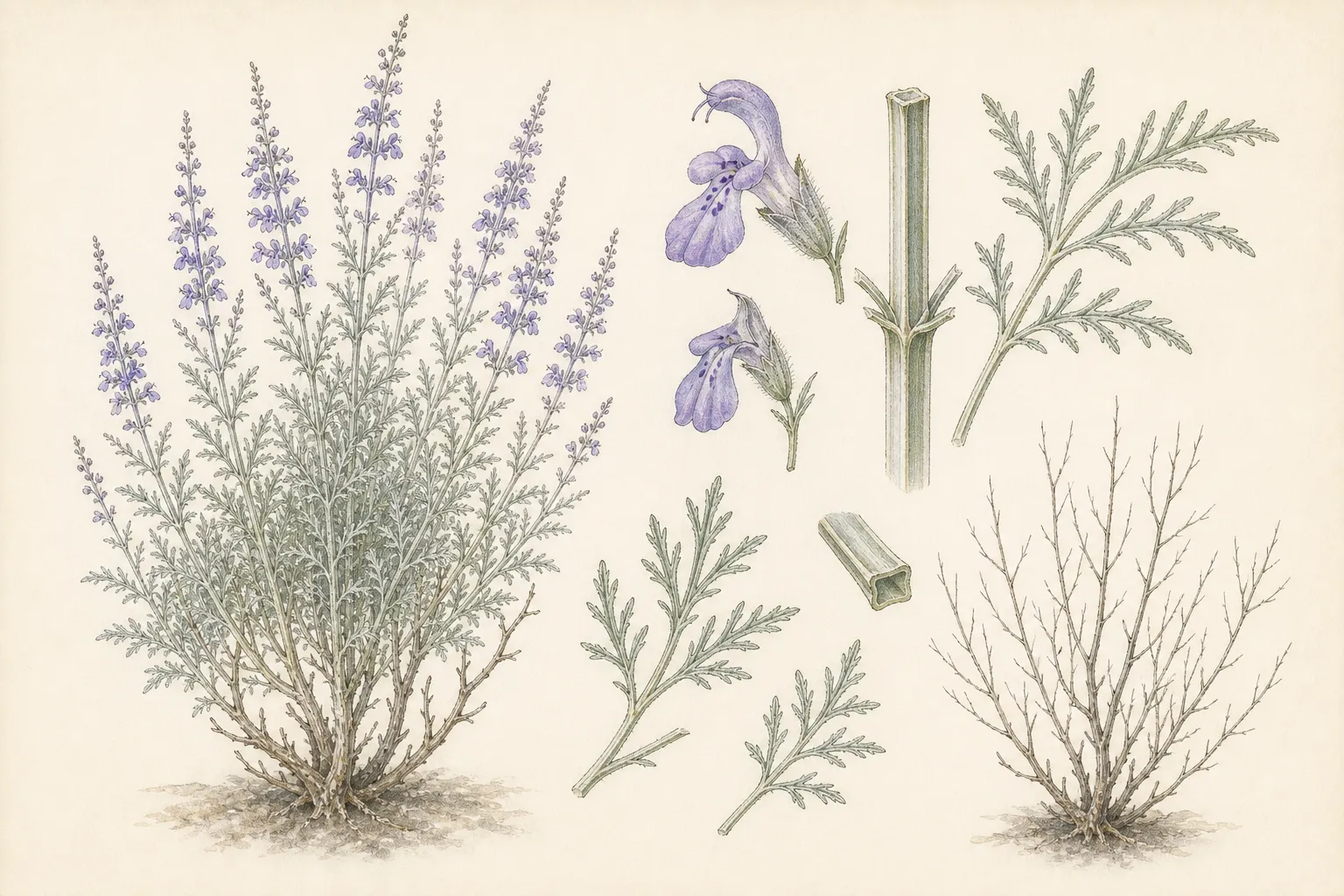
Russian Sage
A Central Asian deciduous subshrub with silver aromatic stems and a long haze of blue flowers, built for full sun, lean soil, and dry summers after establishment.
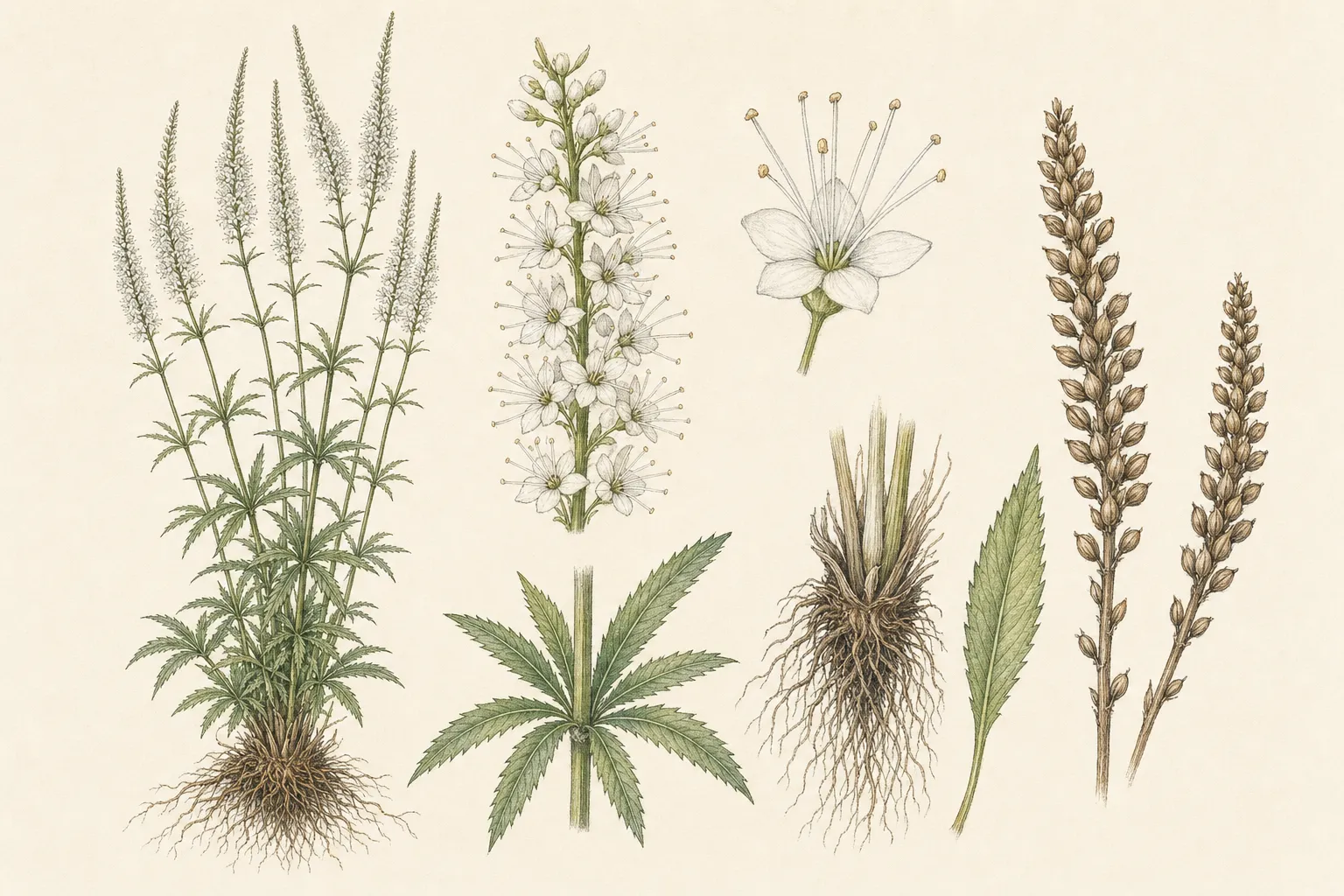
Culver’s Root
A tall native perennial with whorled leaves, candelabra-like flower spikes, and a taproot-rhizome system suited to sunny, moist meadows and borders.
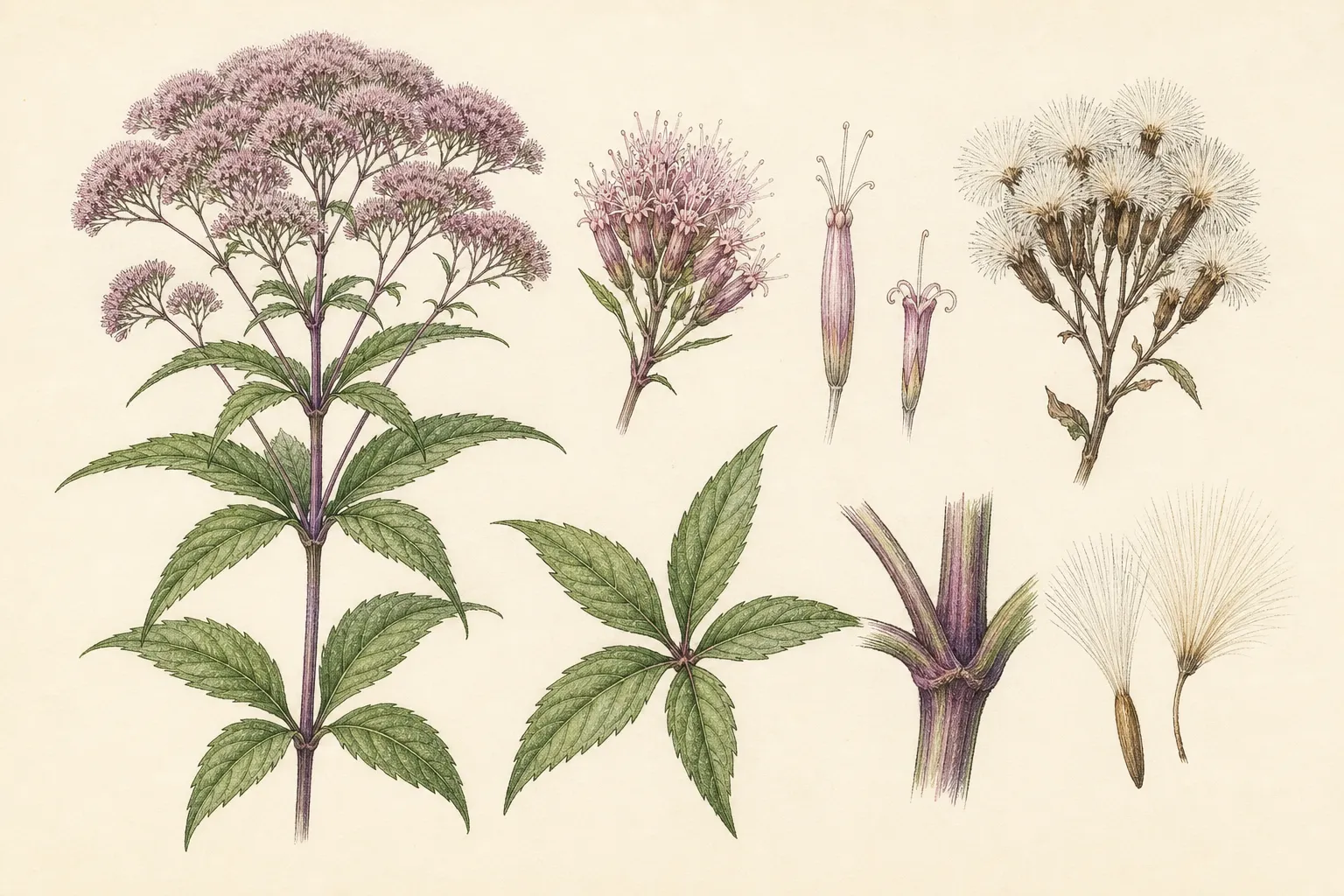
Sweet Joe-Pye Weed
A tall, moisture-loving native perennial with whorled leaves, purple stem nodes, and vanilla-scented pink domes that feed late-summer pollinators.
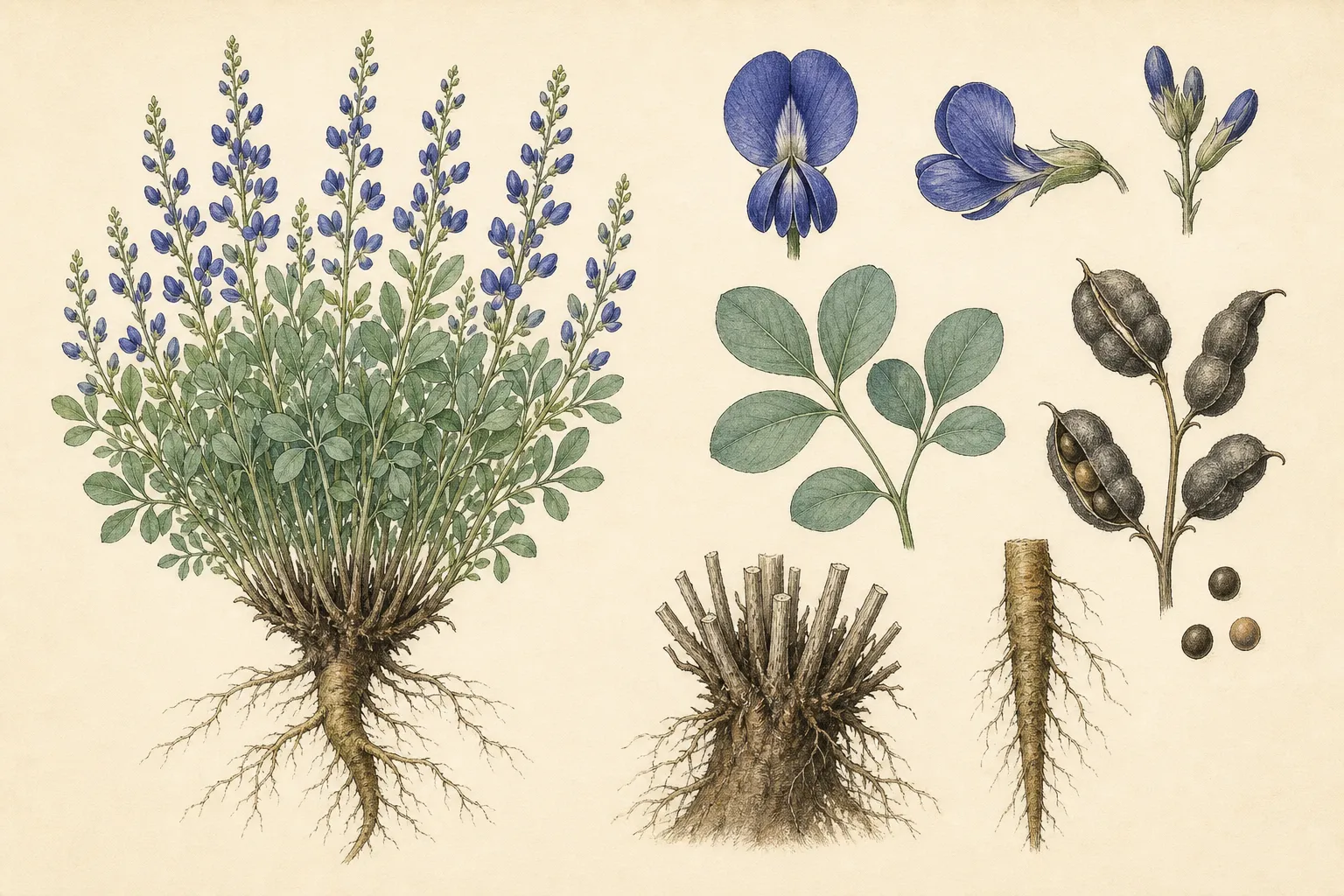
Blue False Indigo
A deep-rooted, long-lived native perennial with indigo pea flowers, blue-green leaves, and black seedpods, best placed once in sunny, well-drained soil.
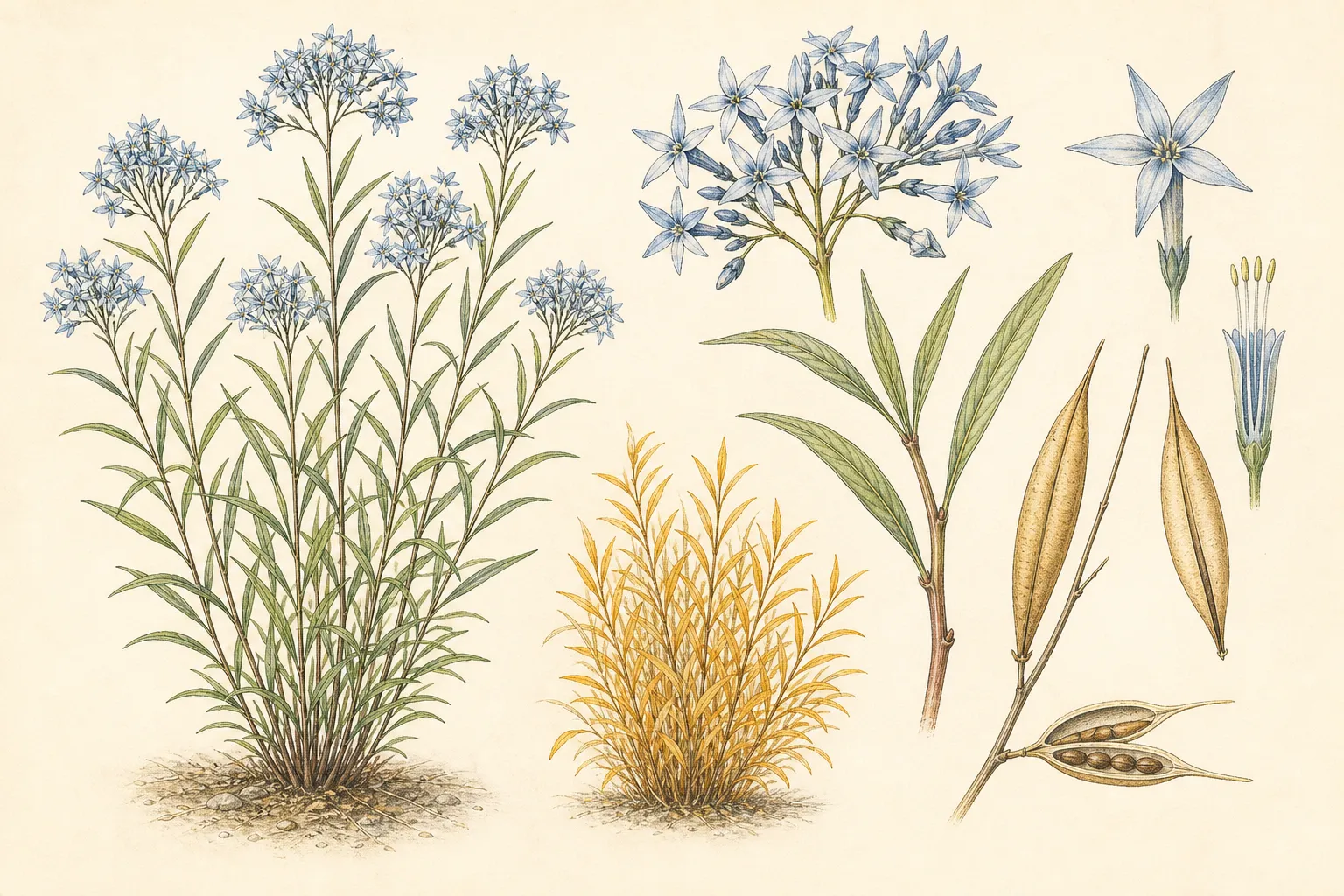
Eastern Bluestar
A long-lived eastern North American perennial with pale blue spring stars, willow-like leaves, yellow fall color, and milky sap that requires careful pruning.
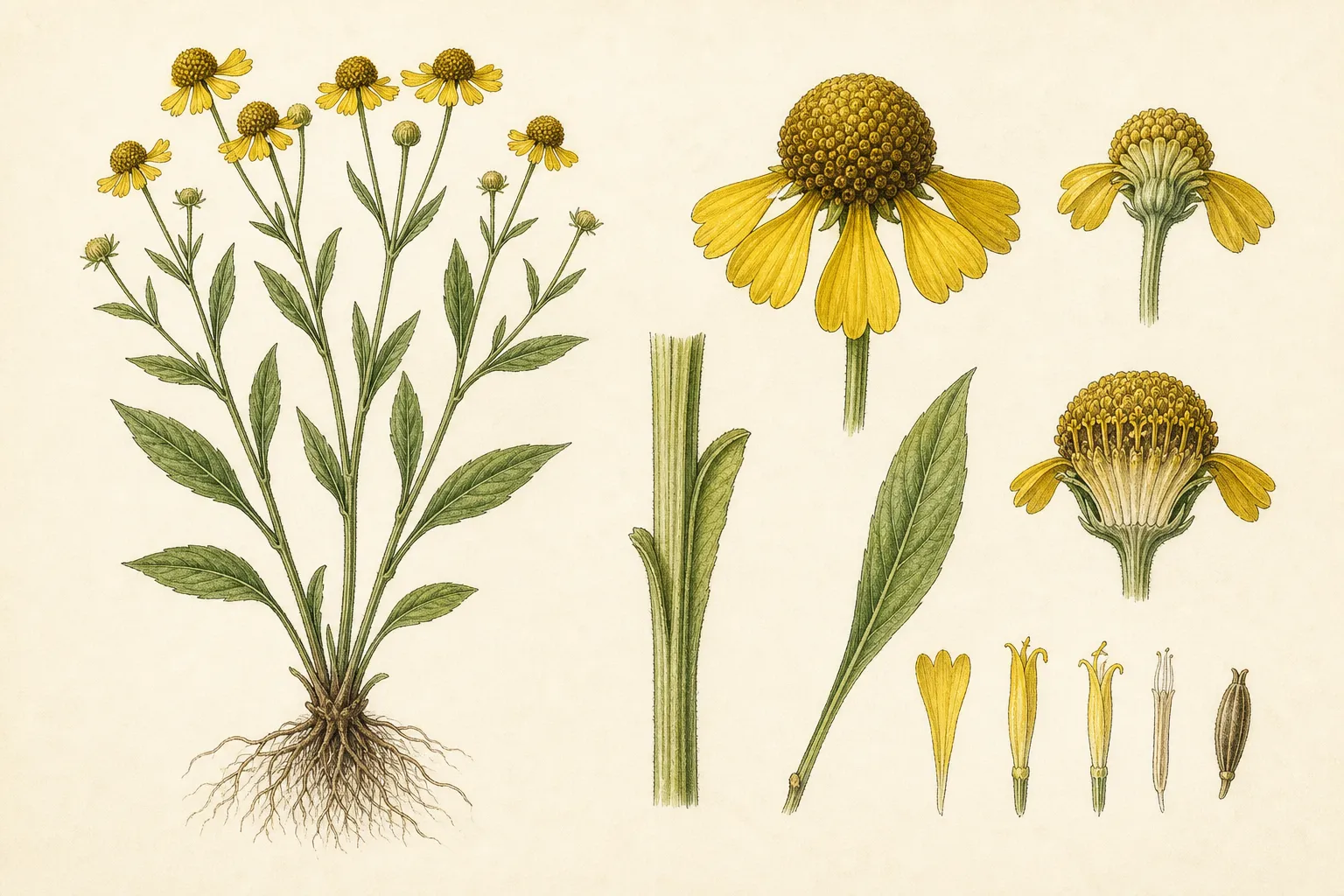
Sneezeweed
A moisture-loving North American perennial with winged stems, late yellow flower heads, and practical guidance for moist borders, cutback, and safe handling.
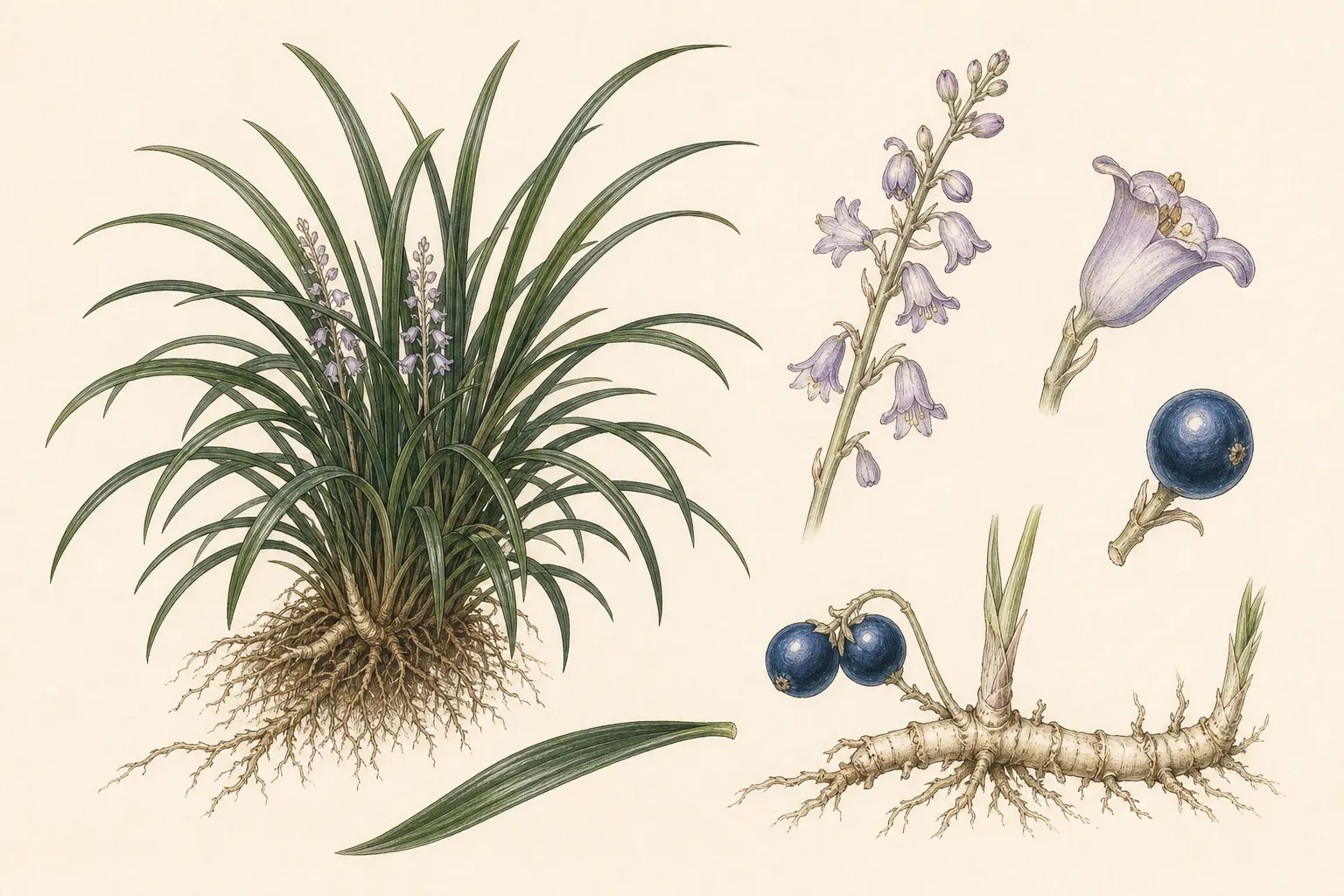
Mondo Grass
A species-focused guide to mondo grass as a stoloniferous evergreen ground cover, with crown-level planting, division and early-spring foliage care.
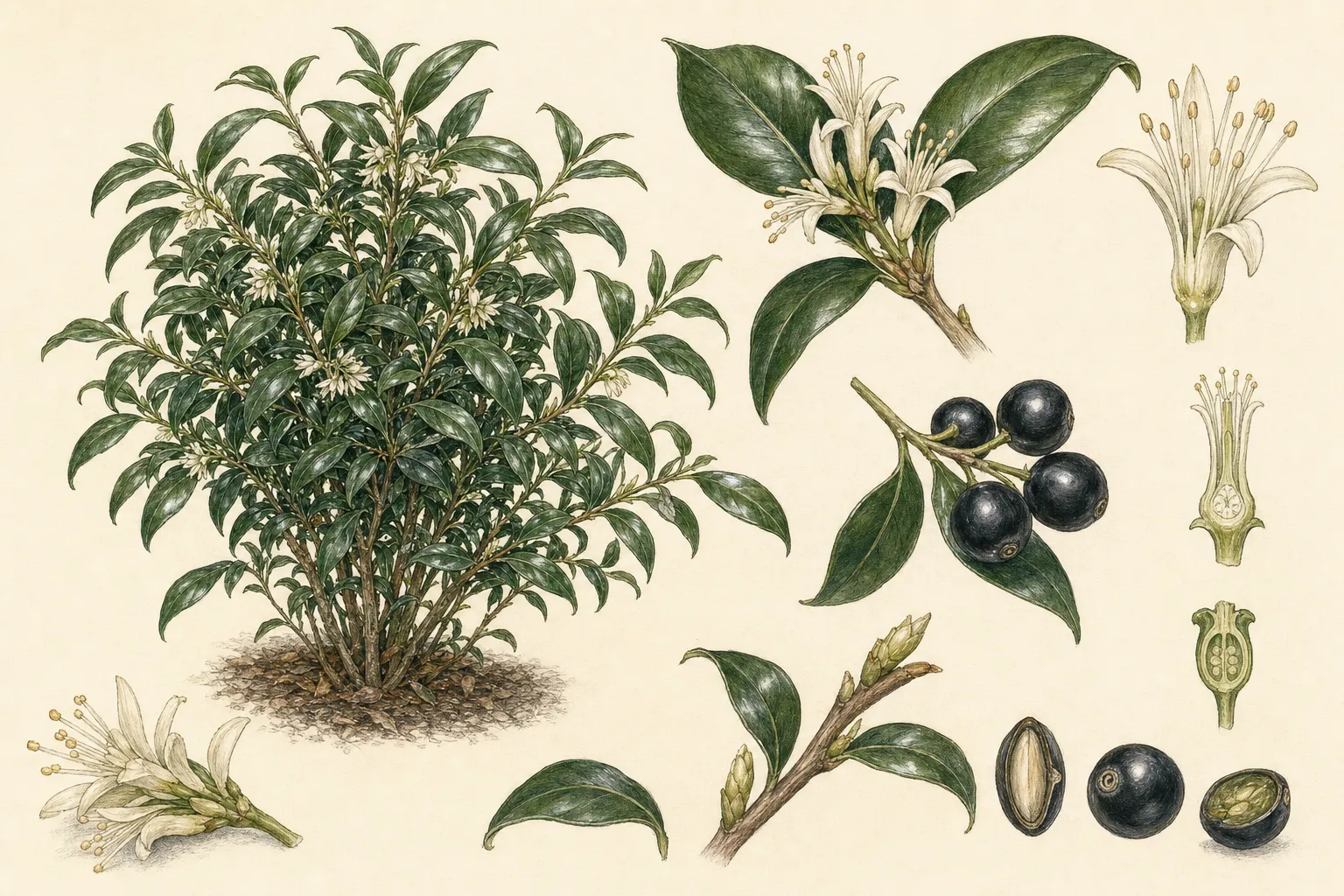
Sweet Box
A species-focused guide to sweet box's fragrant winter flowers, sheltered-shade placement, underground shoots, black fruit and light spring pruning.
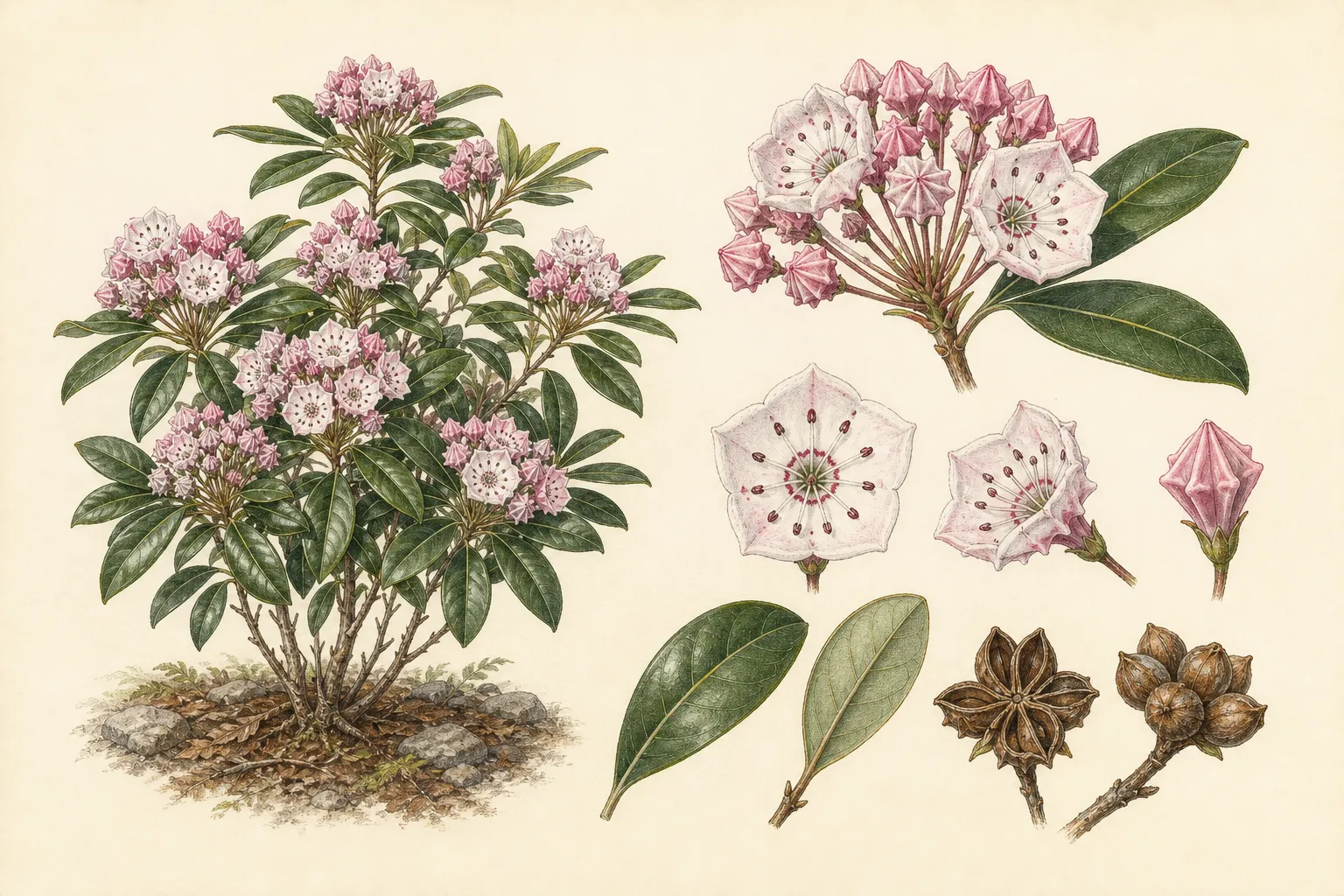
Mountain Laurel
A species-focused guide to mountain laurel's spring flowers, cool acidic root zone, old-wood pruning, high toxicity and fire-wise placement.
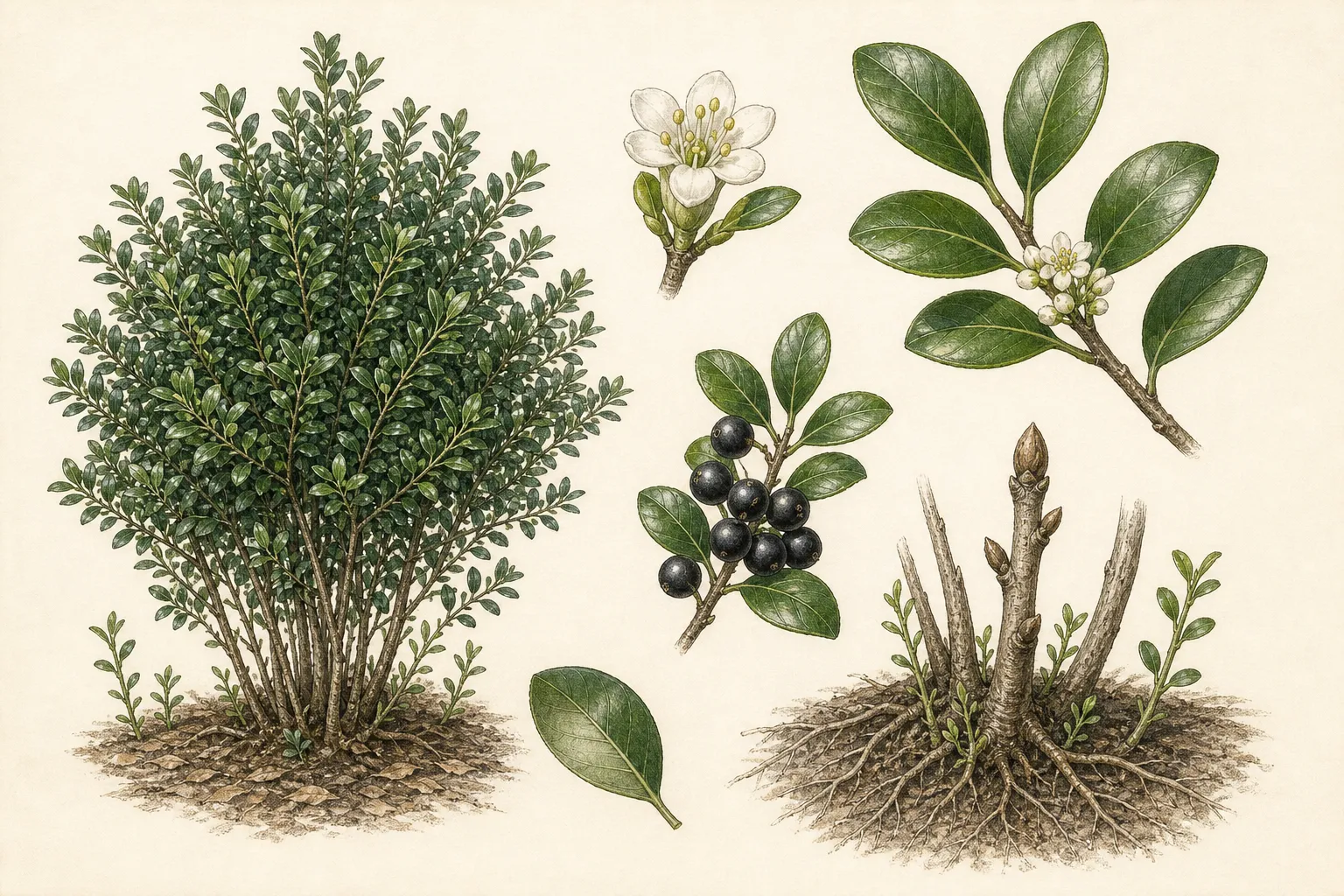
Inkberry Holly
A species-focused guide to inkberry holly's acidic-soil needs, male-female pollination, root suckers, basal renewal and low-toxicity black fruit.
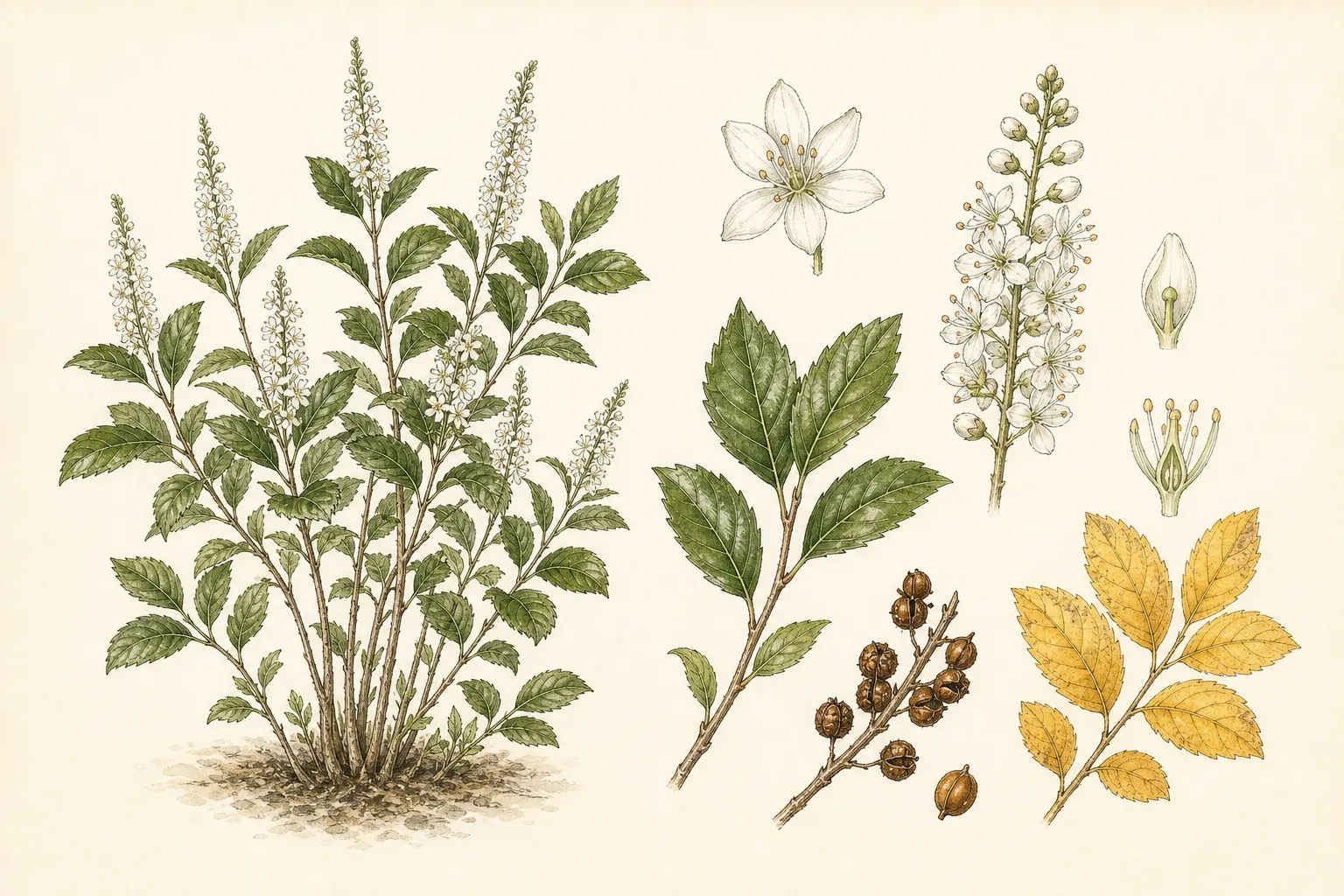
Summersweet
A species-focused guide to summersweet's fragrant new-wood flowers, acidic wet-ground tolerance, species scale and suckering colony habit.
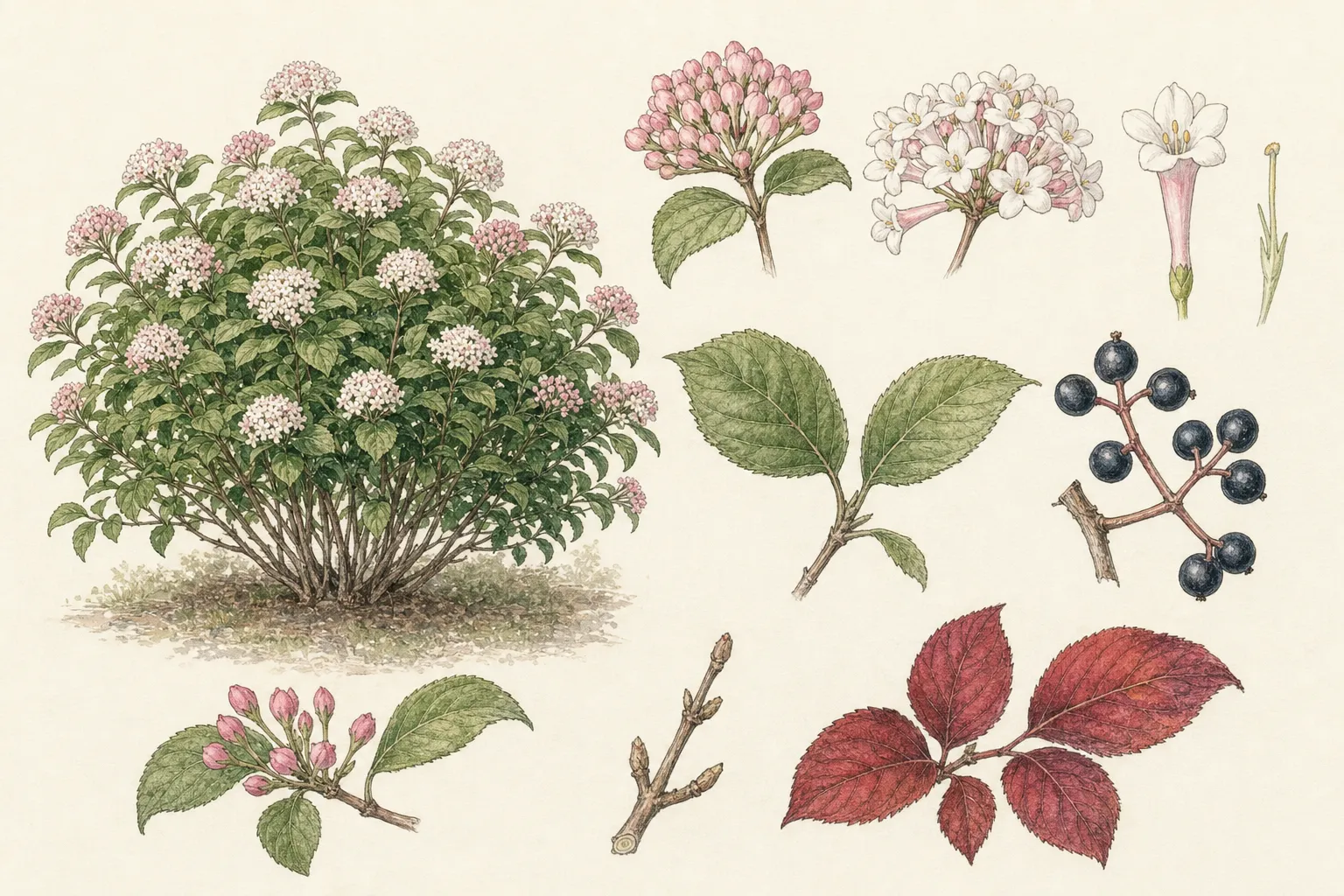
Koreanspice Viburnum
A species-focused guide to Koreanspice viburnum's fragrant spring flowers, rounded scale, old-wood pruning and possible graft-rootstock suckers.
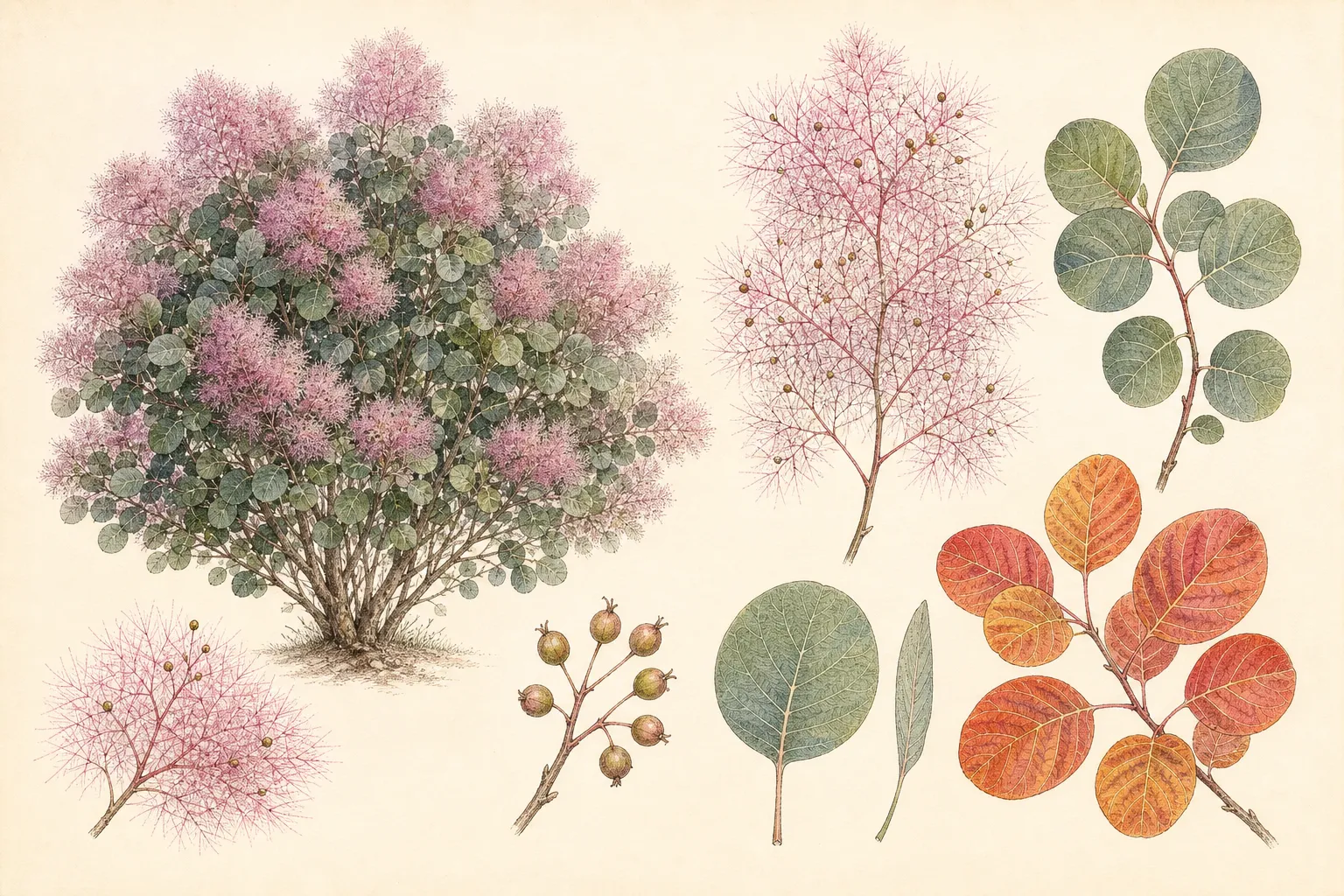
Smokebush
A species-focused guide to smokebush panicles, mature scale, broad soil tolerance, sap safety and the pruning choice between flowers and foliage.
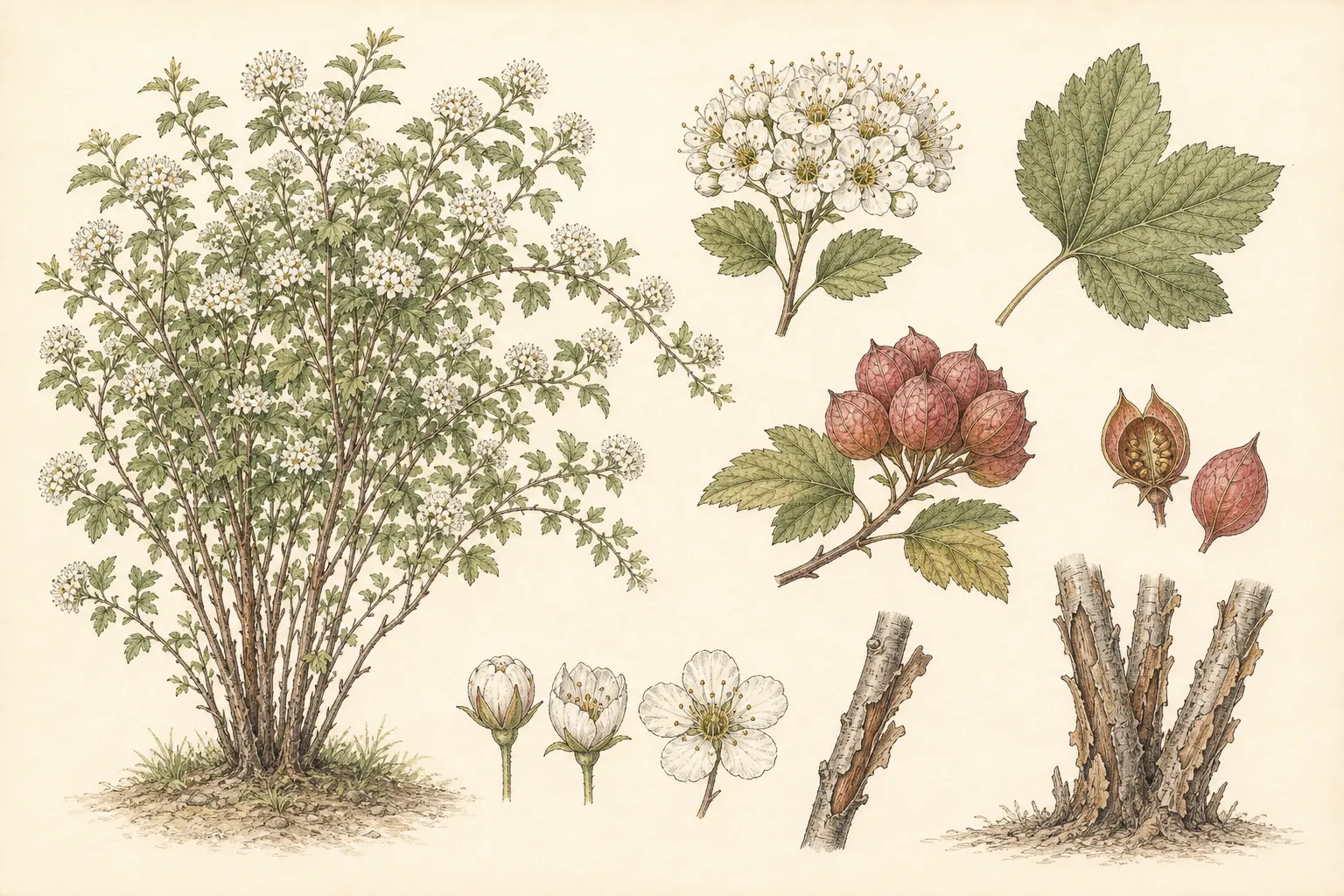
Common Ninebark
A species-focused guide to common ninebark's exfoliating bark, arching habit, adaptable soil, old-wood flowers and selective renewal.
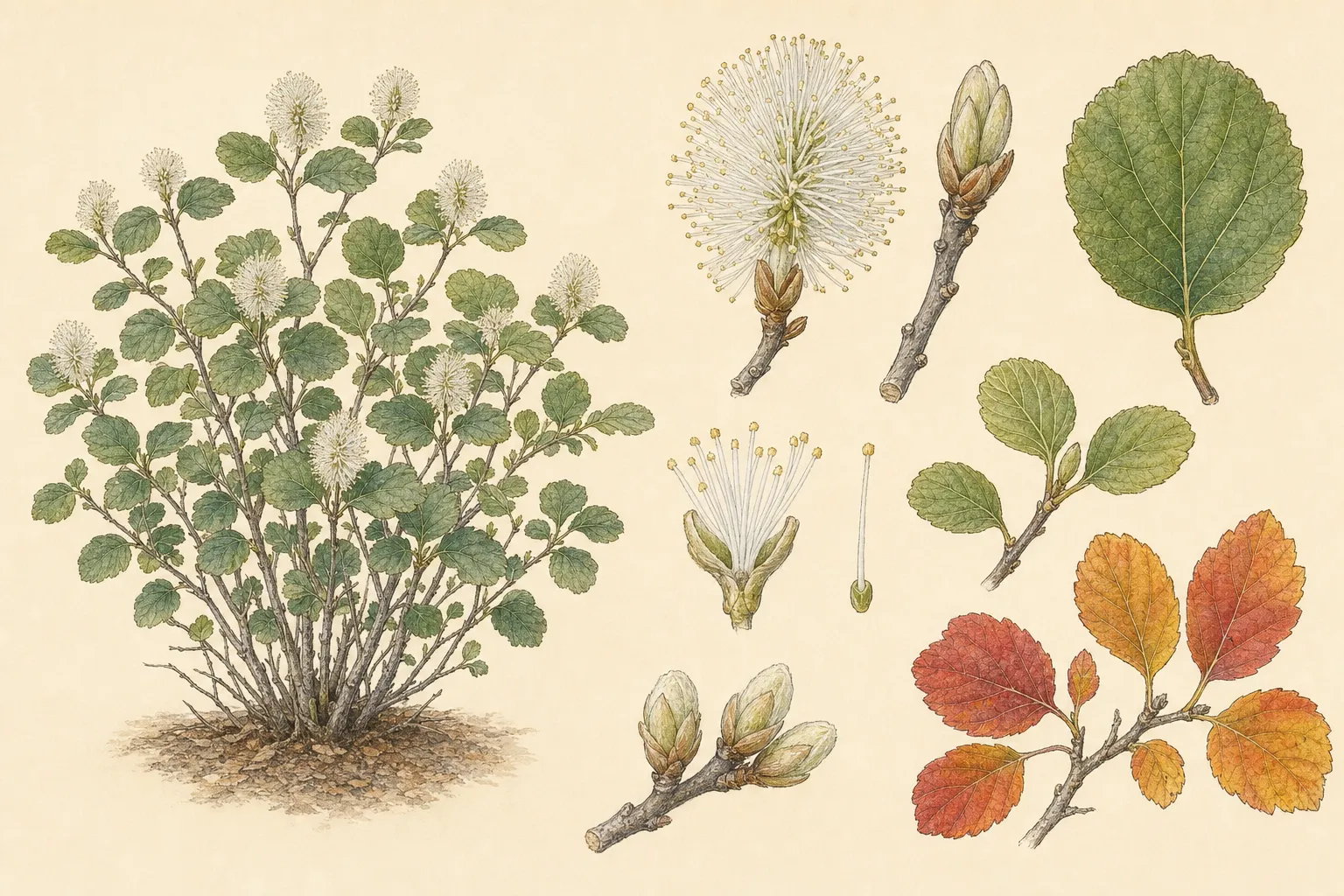
Dwarf Fothergilla
A practical species profile of Fothergilla gardenii, with identification, garden placement, soil and seasonal care guidance.
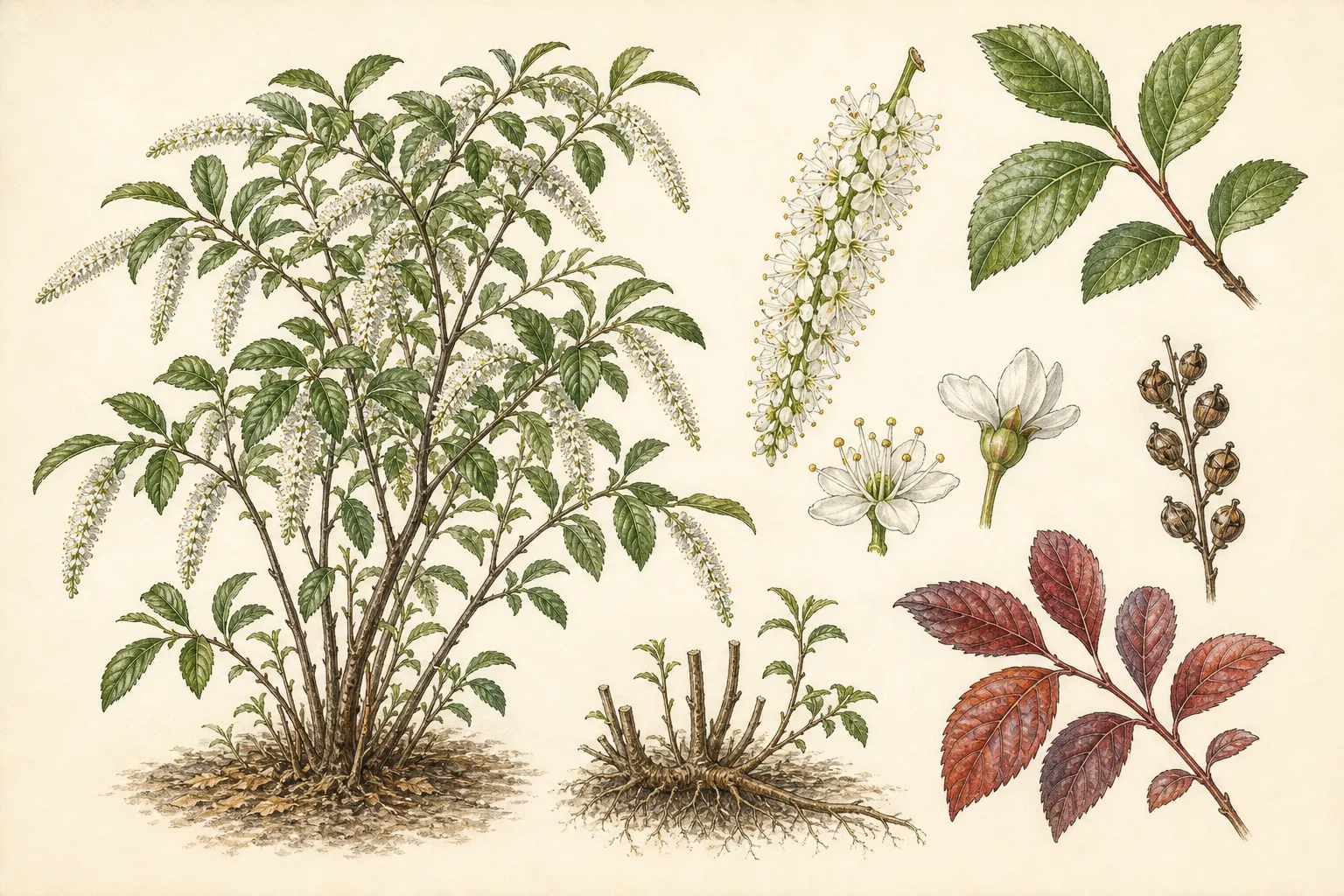
Virginia Sweetspire
A practical species profile of Itea virginica, with identification, garden placement, soil and seasonal care guidance.
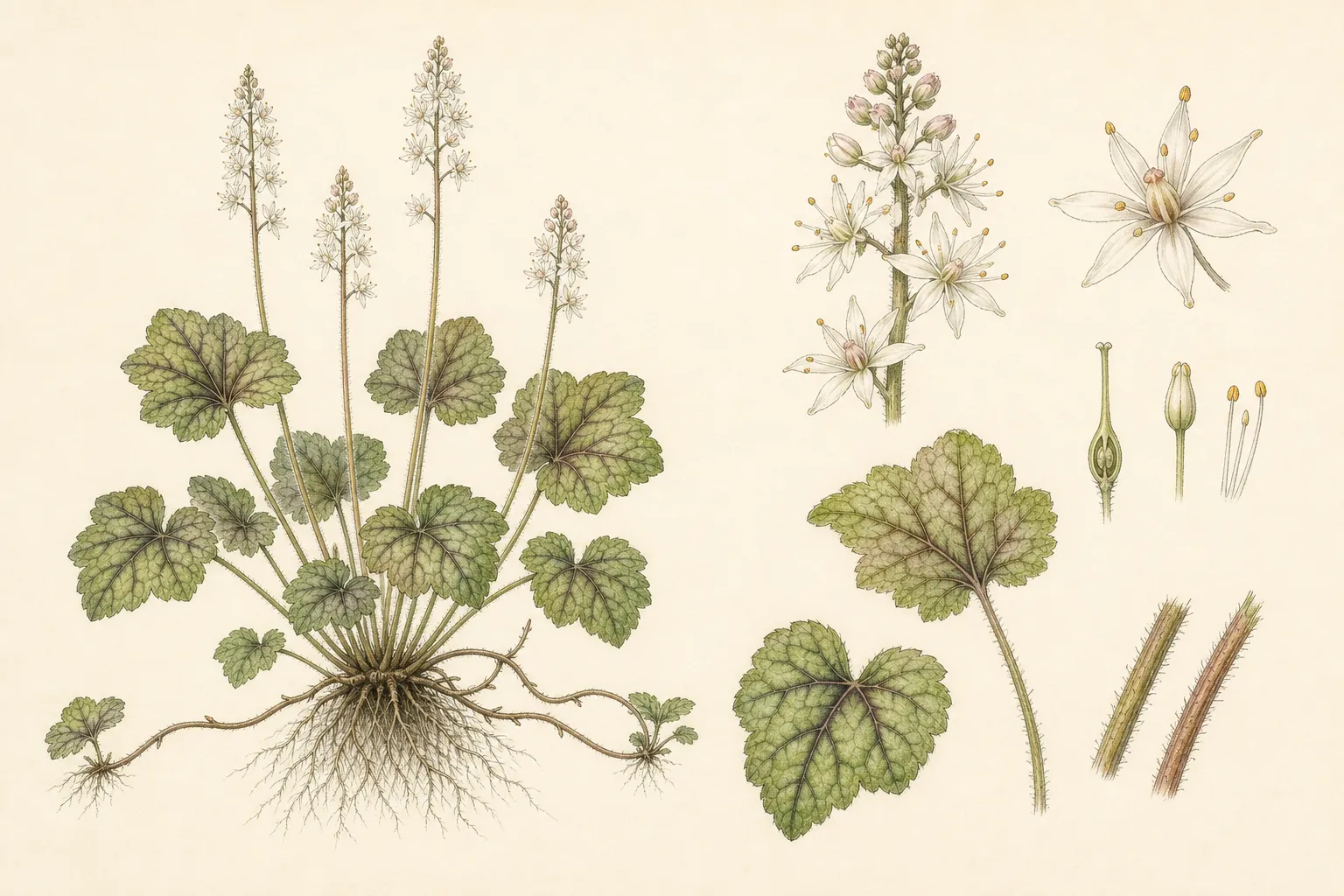
Foamflower
A practical species profile of Tiarella cordifolia, with identification, garden placement, soil and seasonal care guidance.
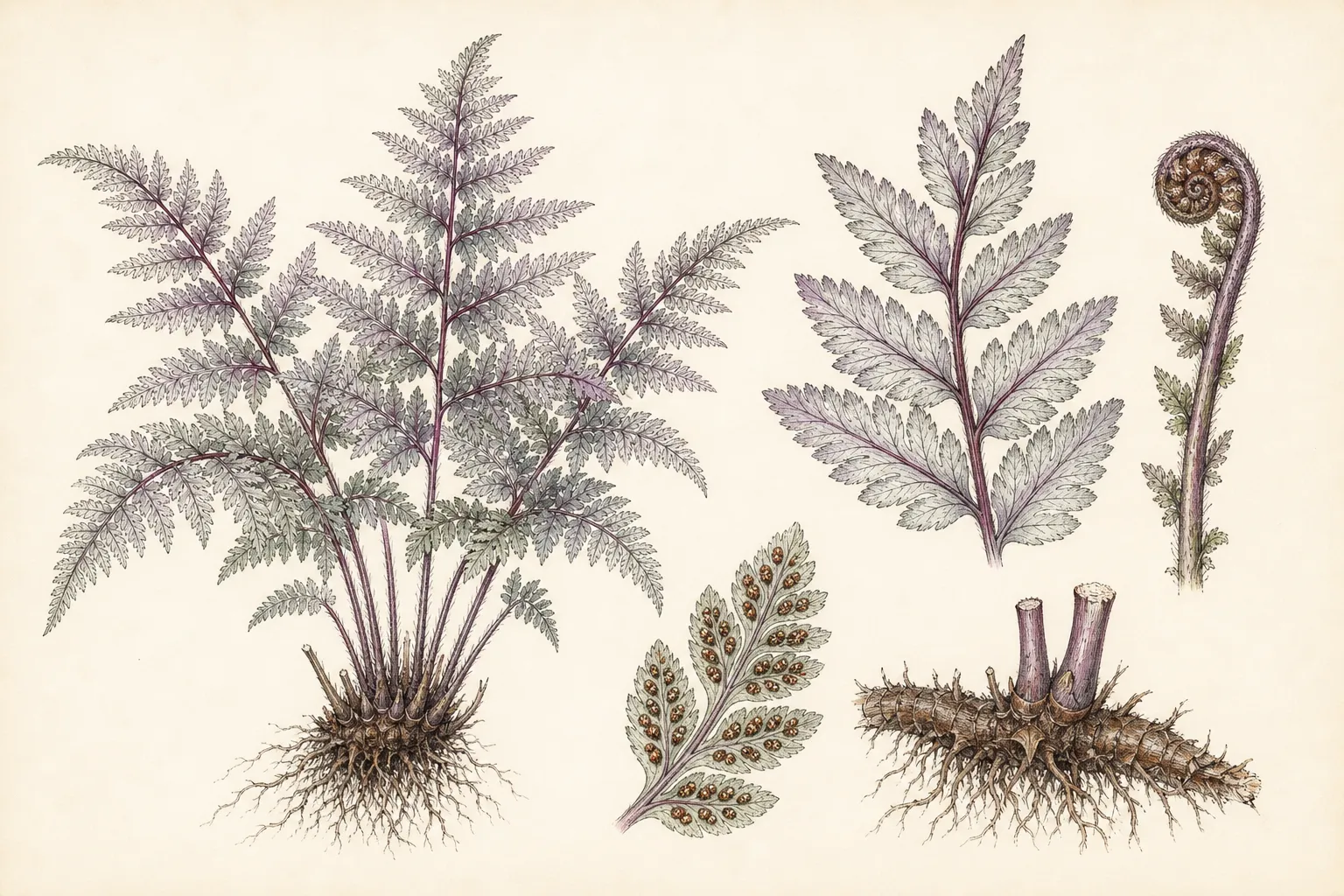
Japanese Painted Fern
A practical species profile of Athyrium niponicum, with identification, garden placement, soil and seasonal care guidance.
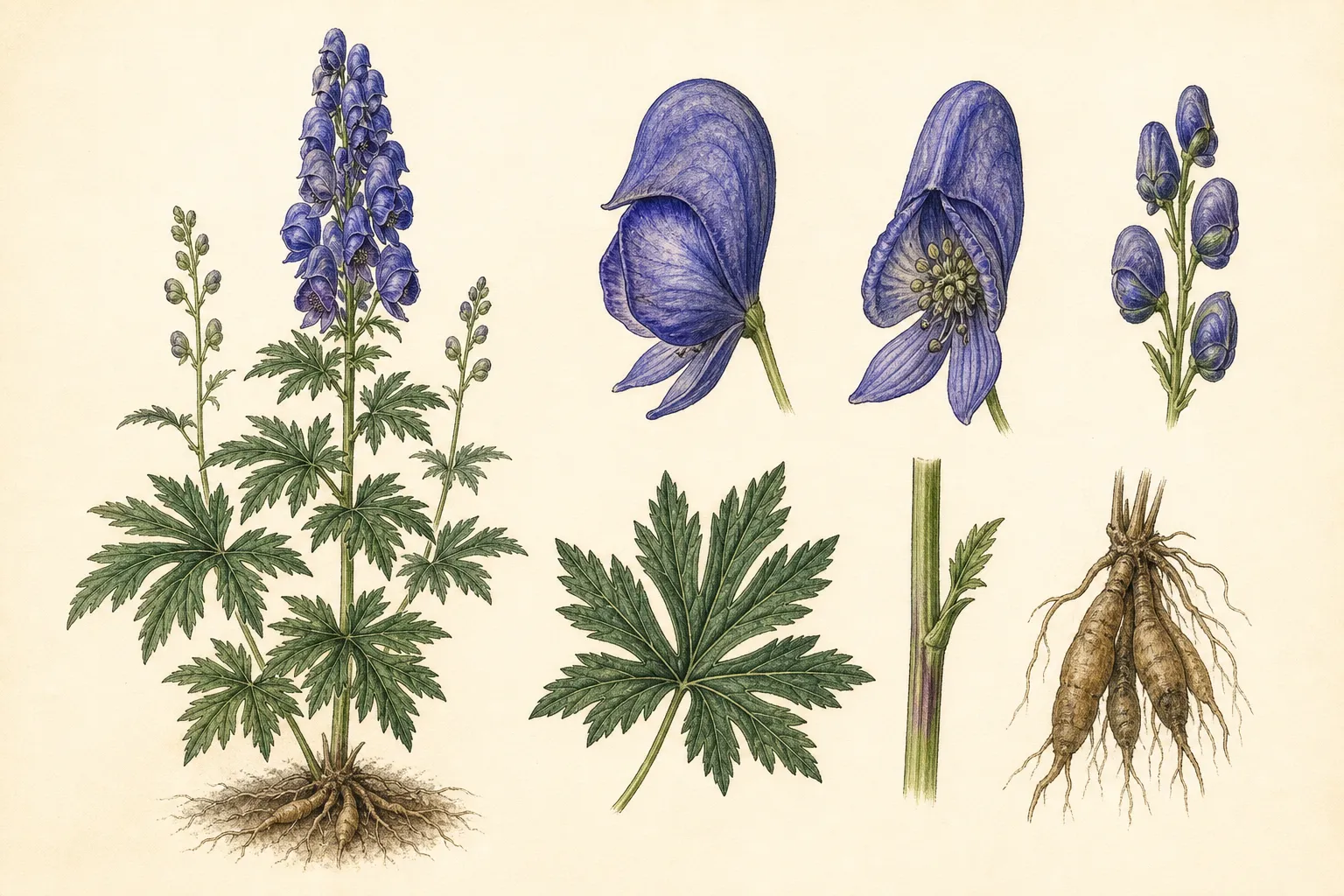
Monkshood
A practical species profile of Aconitum napellus, with identification, garden placement, soil and seasonal care guidance.
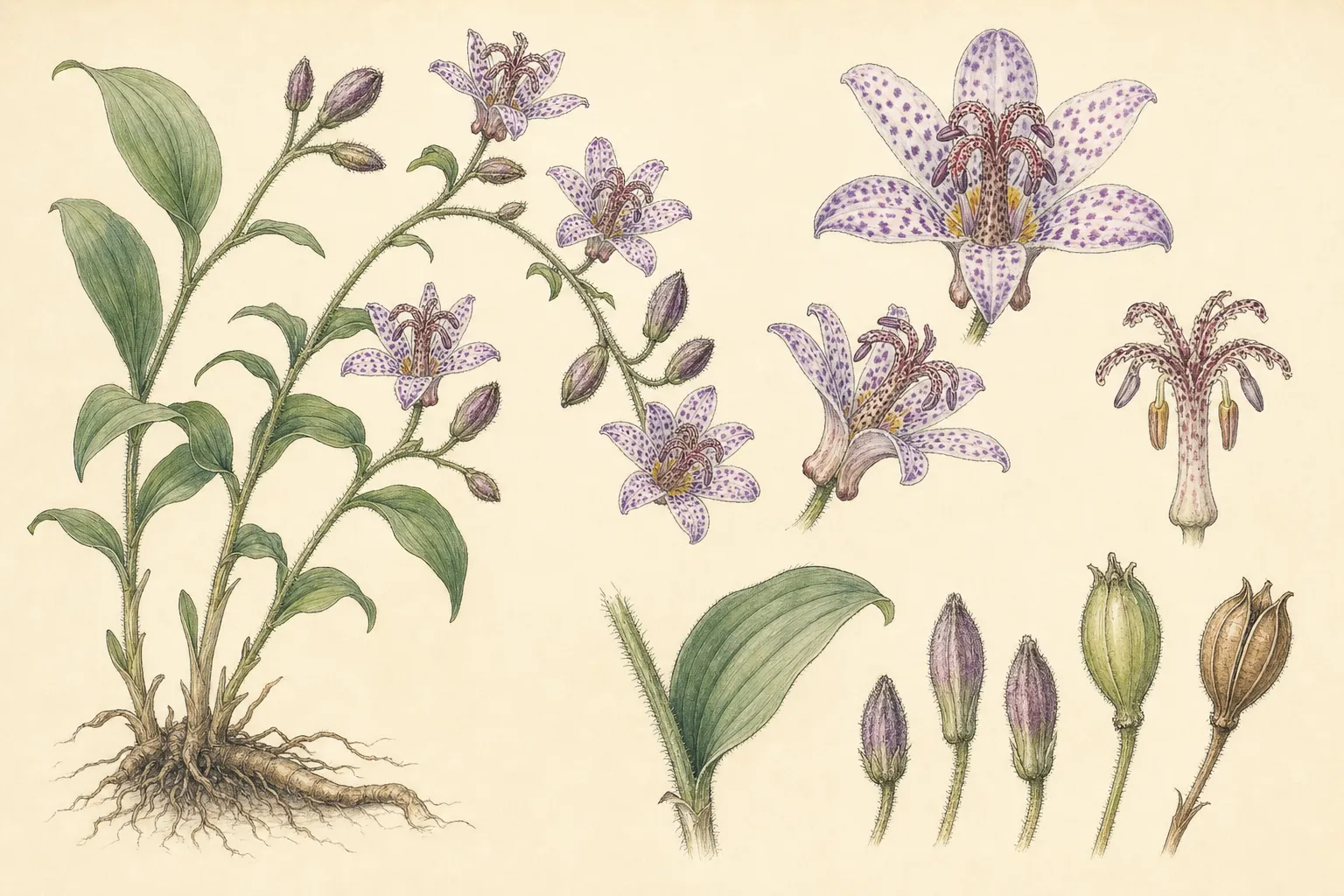
Toad Lily
A practical species profile of Tricyrtis hirta, with identification, garden placement, soil and seasonal care guidance.
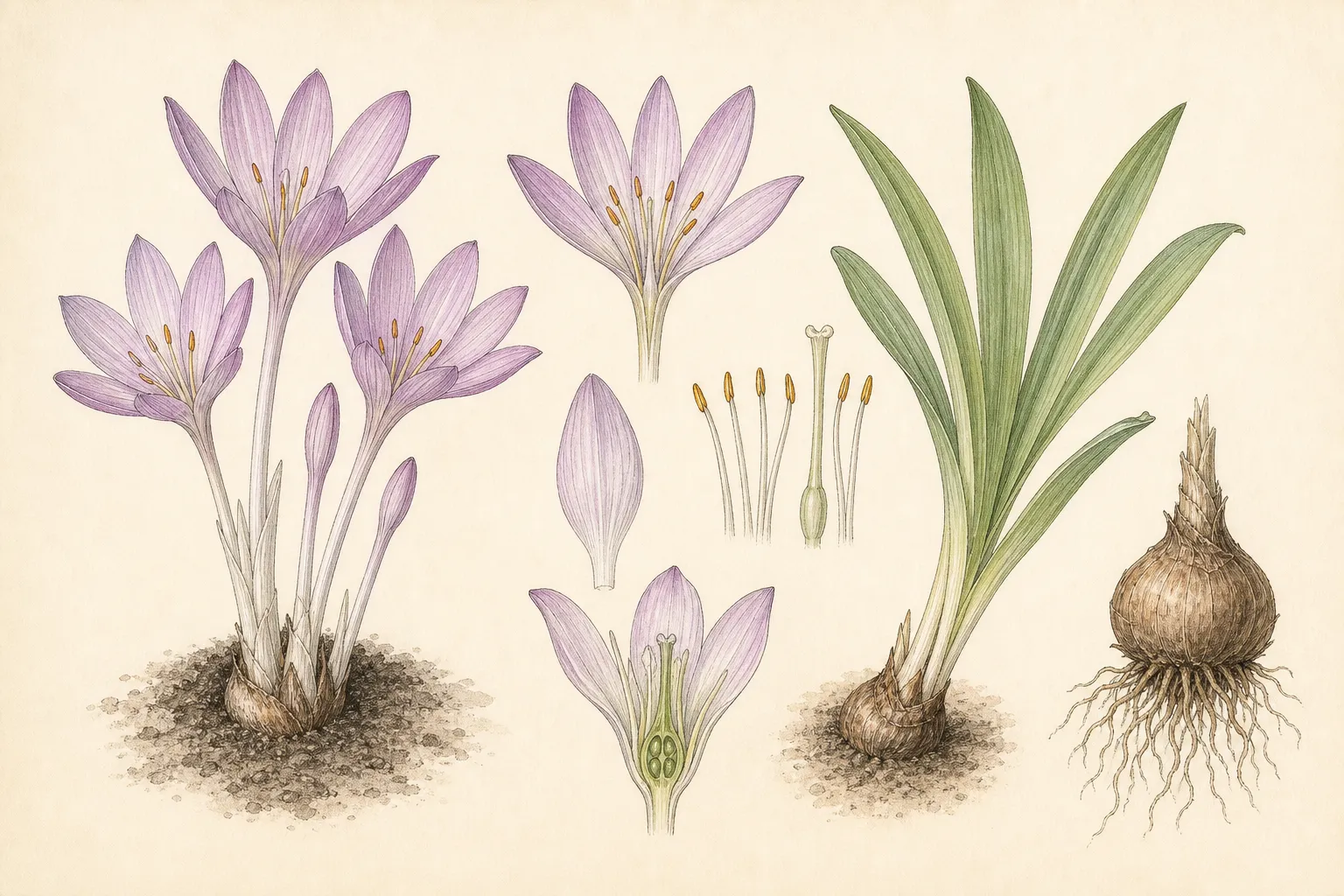
Autumn Crocus
A practical species profile of Colchicum autumnale, with identification, garden placement, soil and seasonal care guidance.
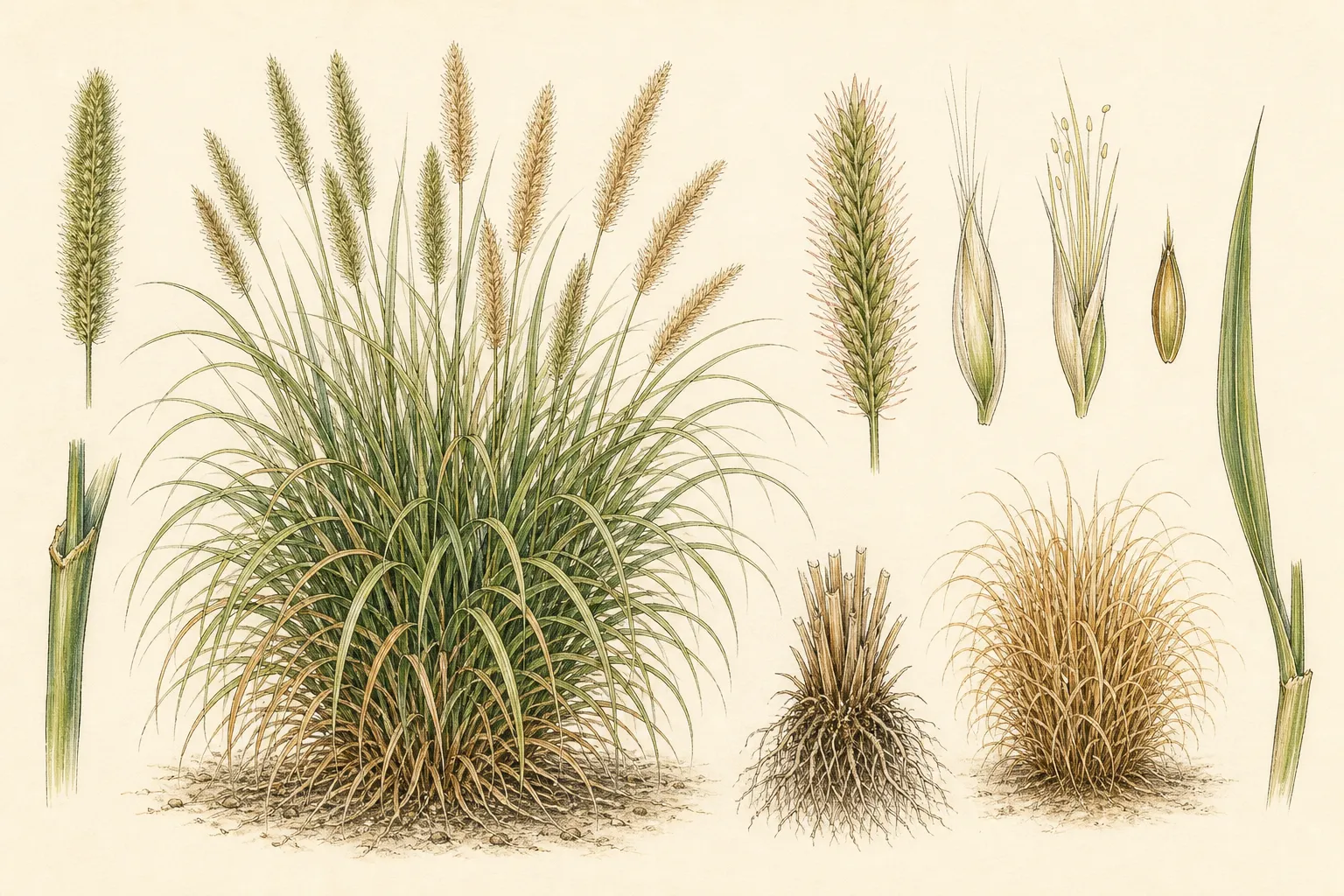
Fountain Grass
A practical species profile of Cenchrus alopecuroides (syn. Pennisetum alopecuroides), with identification, placement and seasonal care.
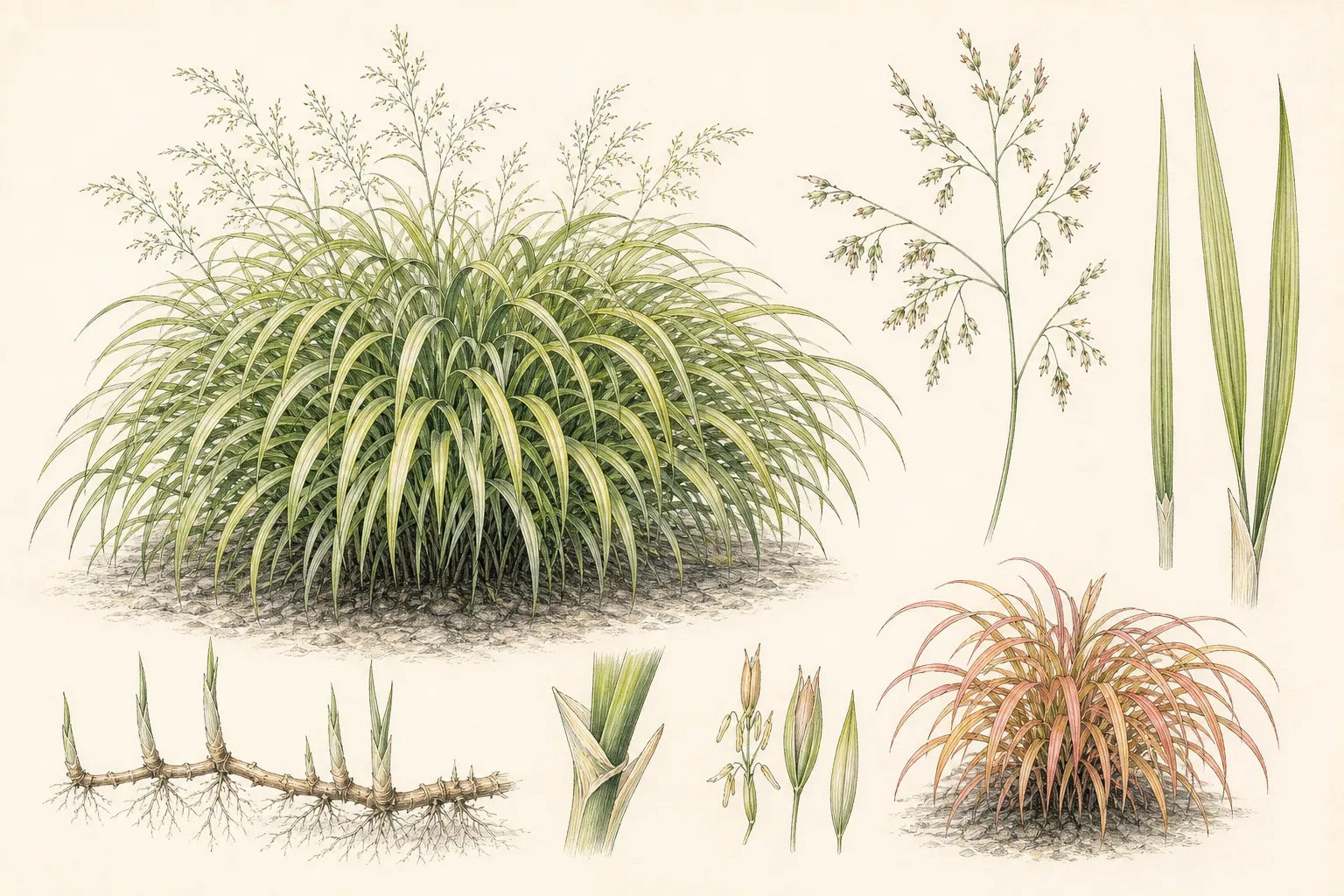
Japanese Forest Grass
A slow-spreading deciduous grass from southern Honshu, forming cascading green mounds in cool, moist, well-drained shade.
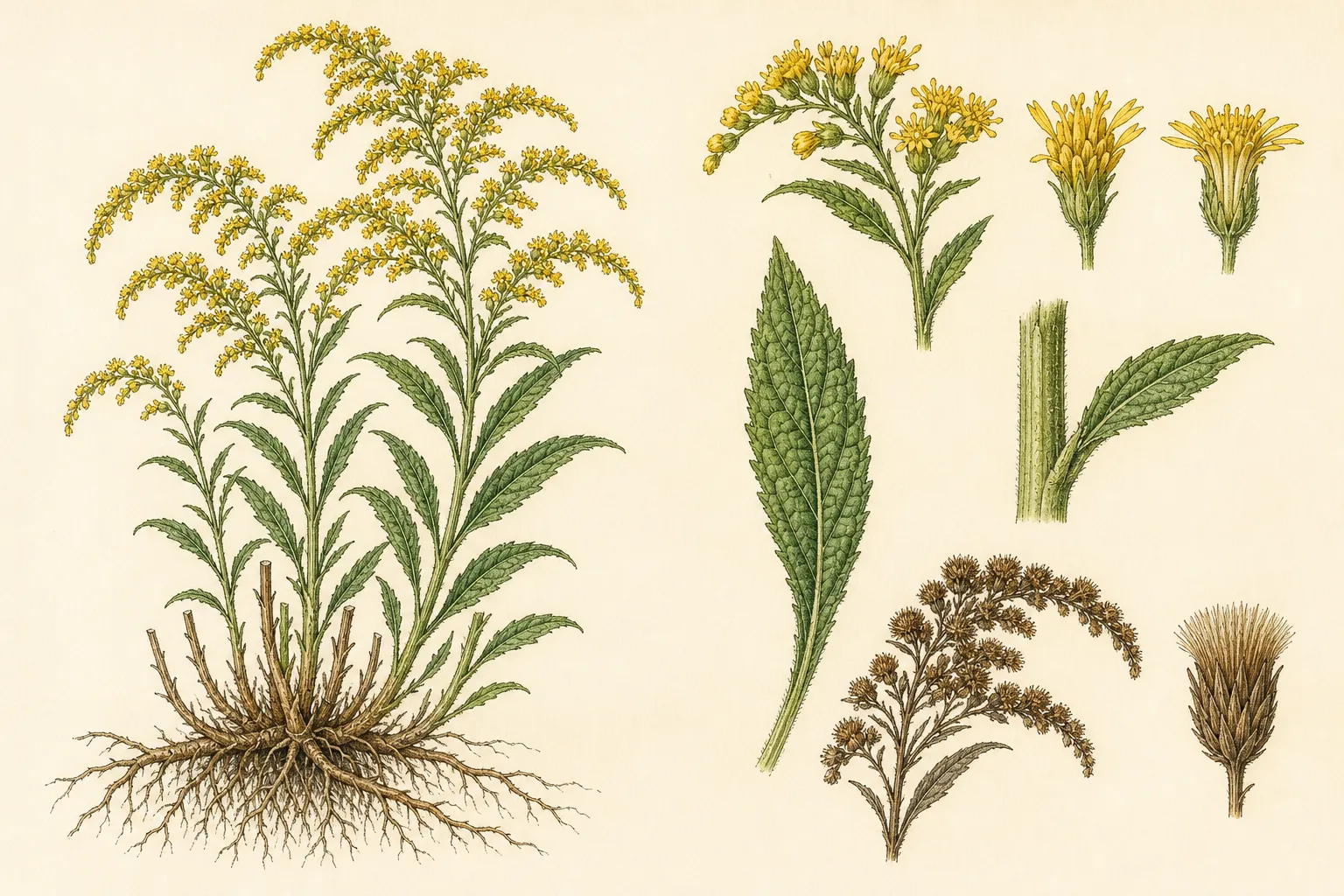
Wrinkleleaf Goldenrod
An eastern North American rhizomatous perennial with rough wrinkled leaves and arching yellow panicles for moist, sunny naturalistic plantings.
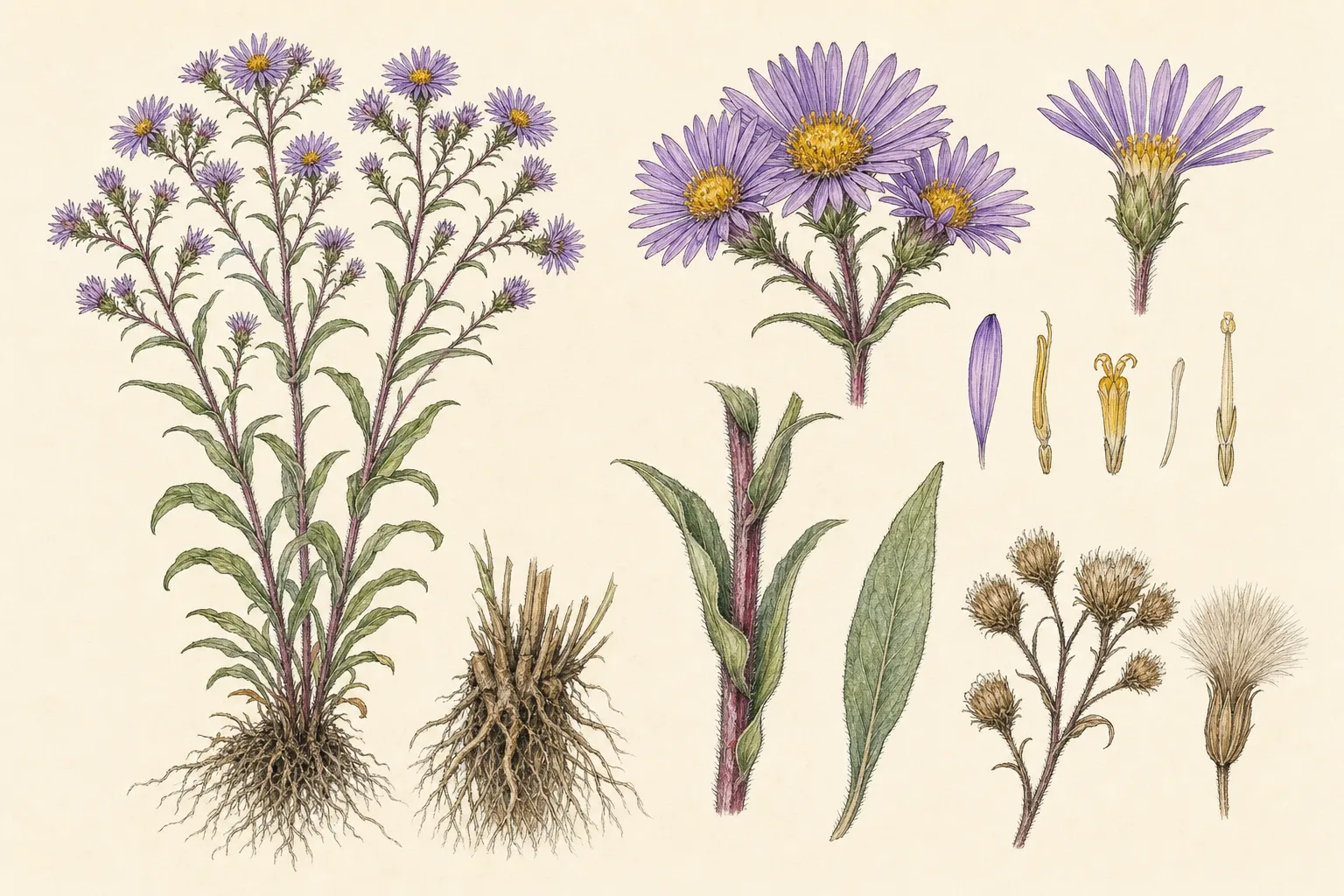
New England Aster
A tall eastern North American aster with rough clasping leaves and purple late-season flowers for sunny, moist meadow-style plantings.
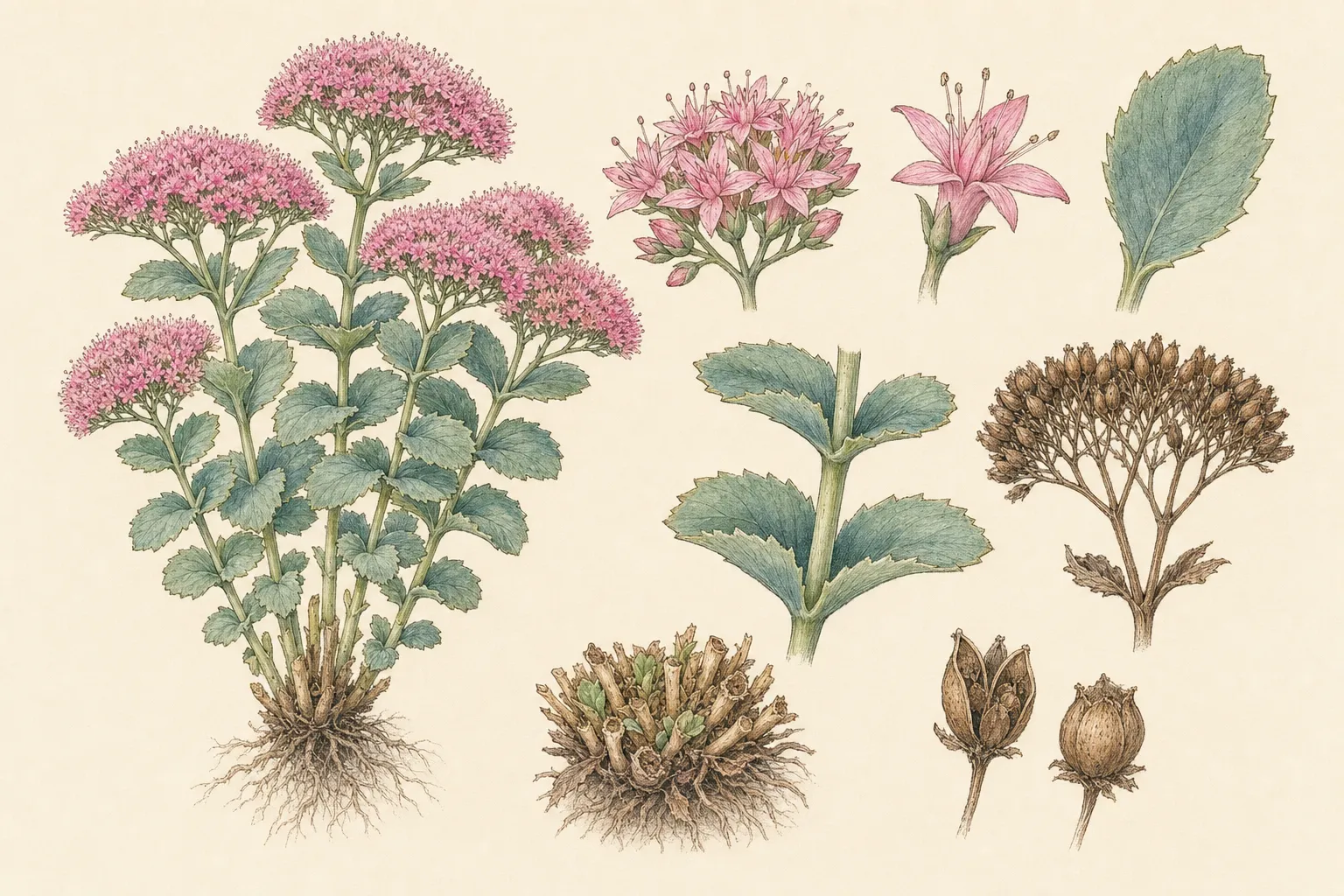
Showy Stonecrop
A clump-forming succulent perennial with flat pink late-summer flower heads, strongest in full sun and lean, sharply drained soil.
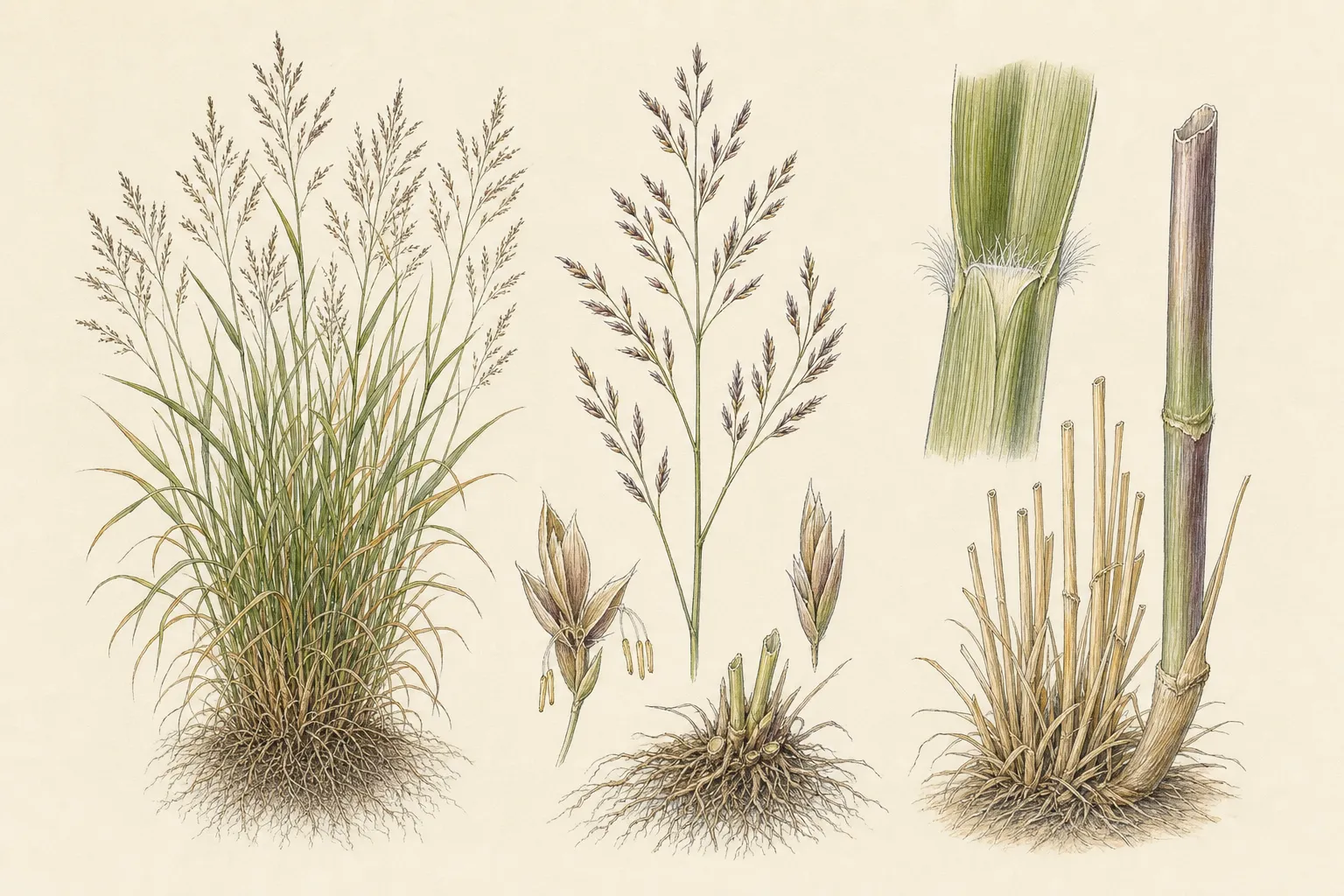
Switchgrass
A deep-rooted North American warm-season grass with upright summer foliage, airy seed panicles and persistent tan winter stems.
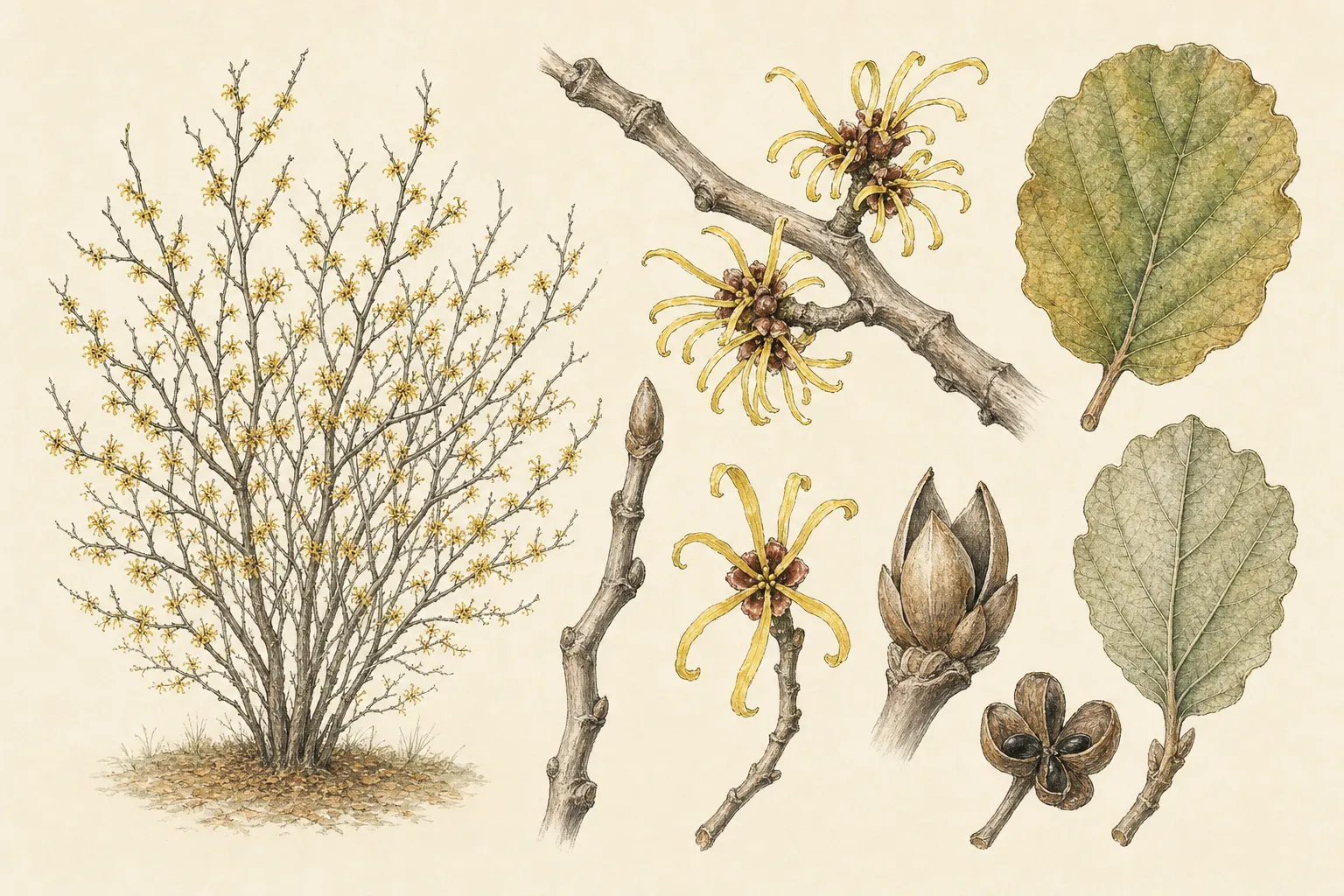
Common Witch Hazel
An eastern North American shrub or small tree with fragrant yellow flowers as leaves fall, best in moist, slightly acidic woodland soil.
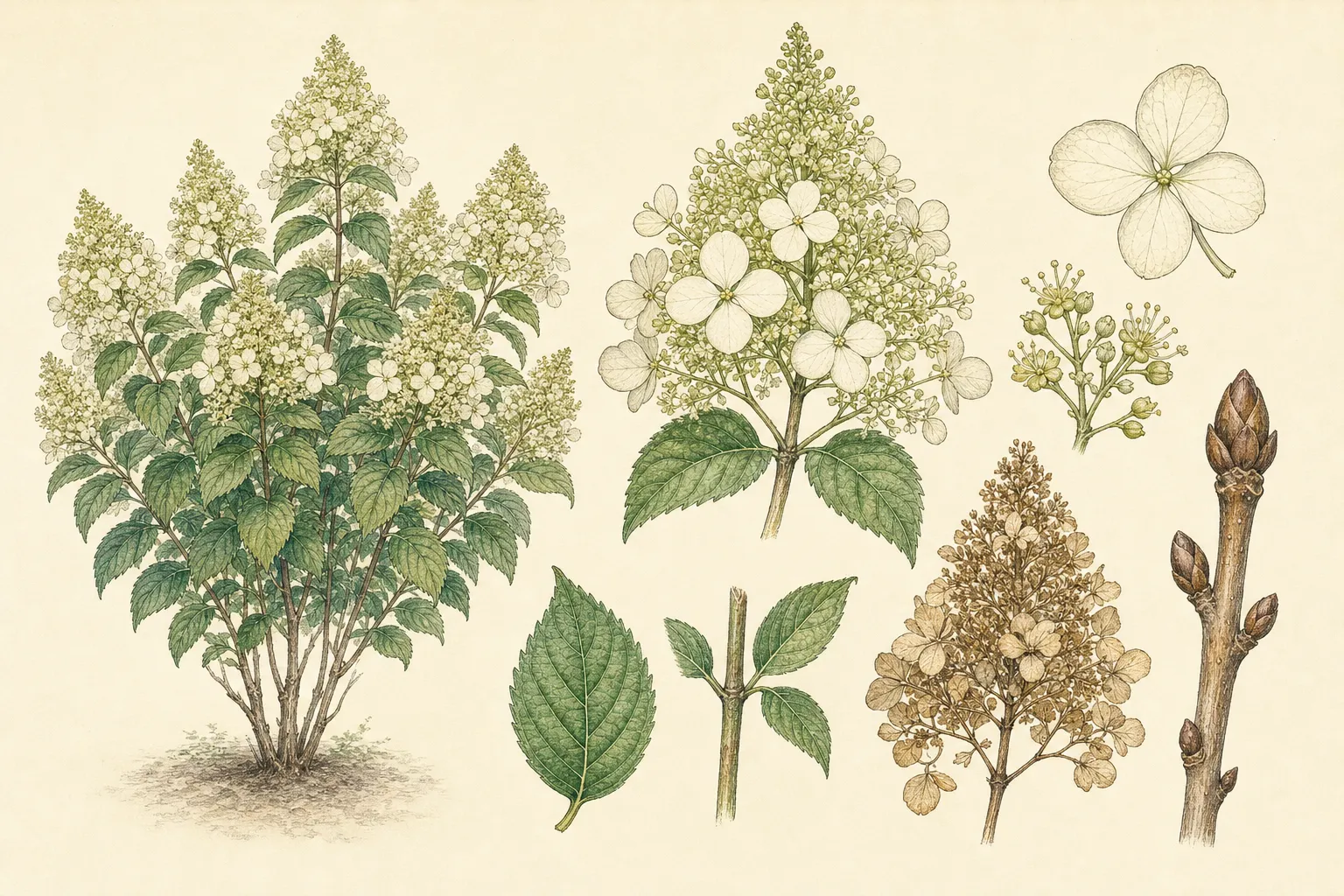
Panicle Hydrangea
A cold-hardy hydrangea with conical summer flower panicles on new growth, suited to moist, well-drained soil and generous garden space.
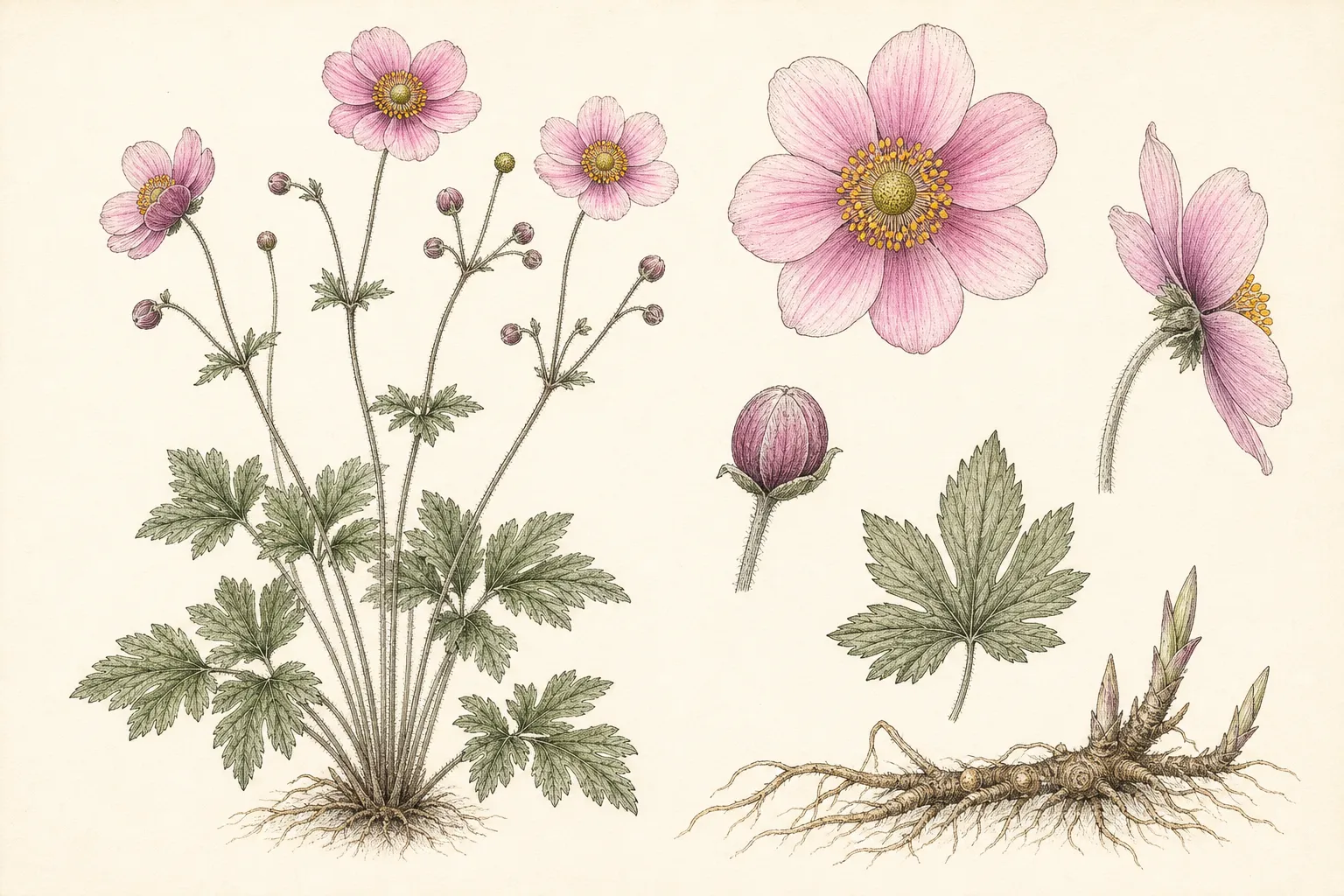
Japanese Anemone
Japanese anemone is a late-flowering, root-spreading perennial for reliably moist, well-drained borders in sun or light shade.
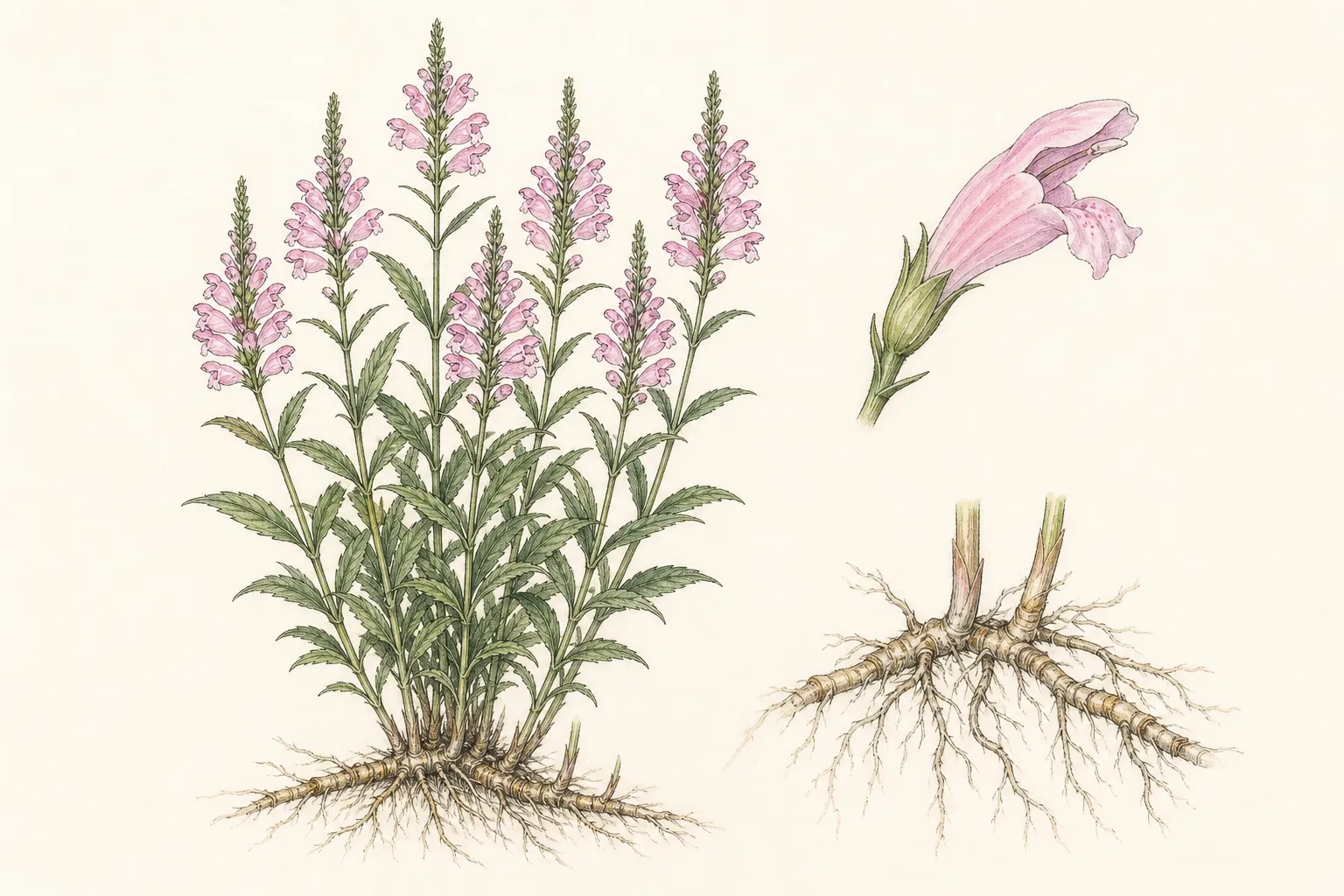
Obedient Plant
A long-blooming North American perennial with movable two-lipped flowers, square stems, and shallow rhizomes that need a deliberate boundary.
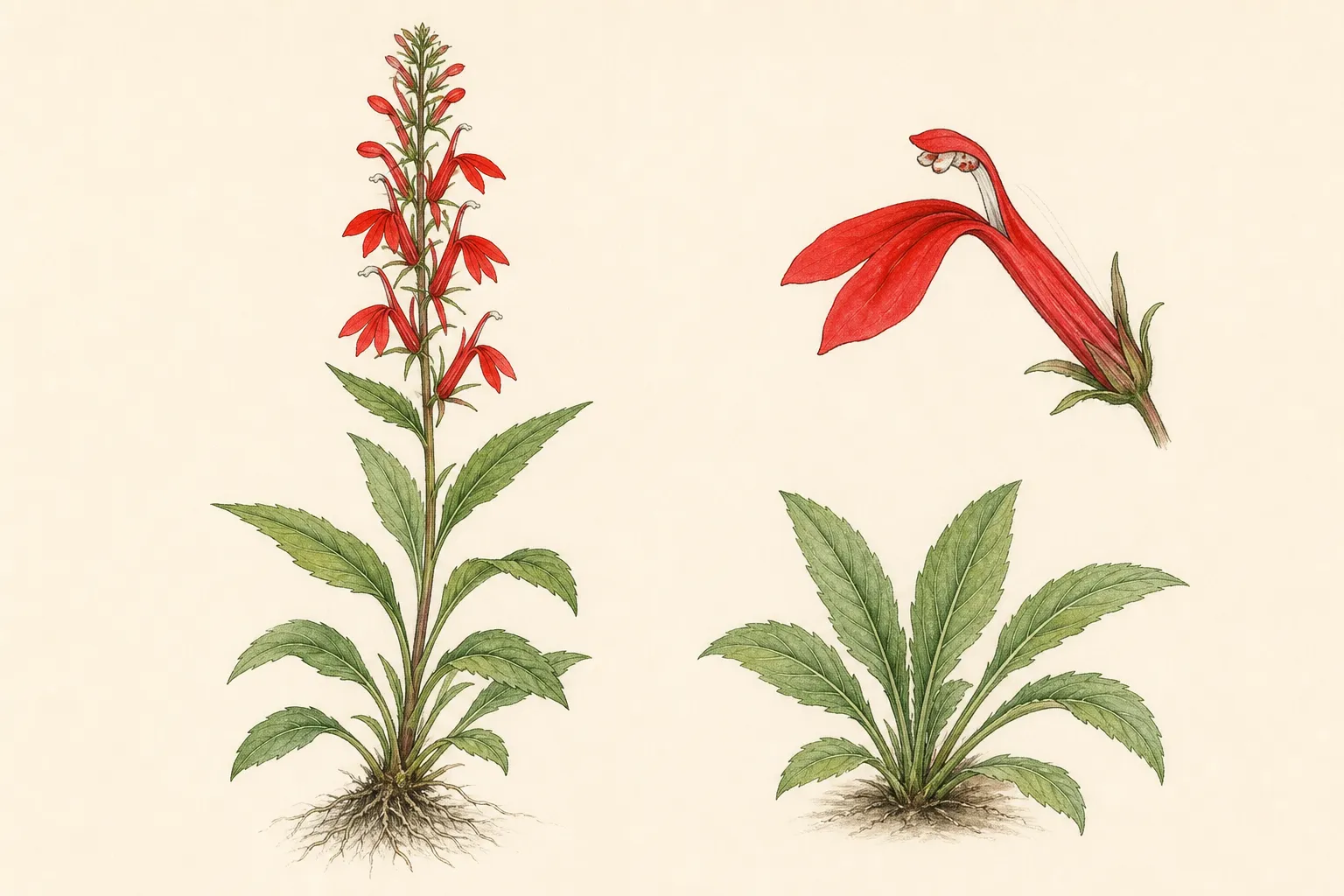
Cardinal Flower
A scarlet-flowered wetland perennial that needs continuously moist soil, exposed overwintering basal rosettes, and strict protection from ingestion.
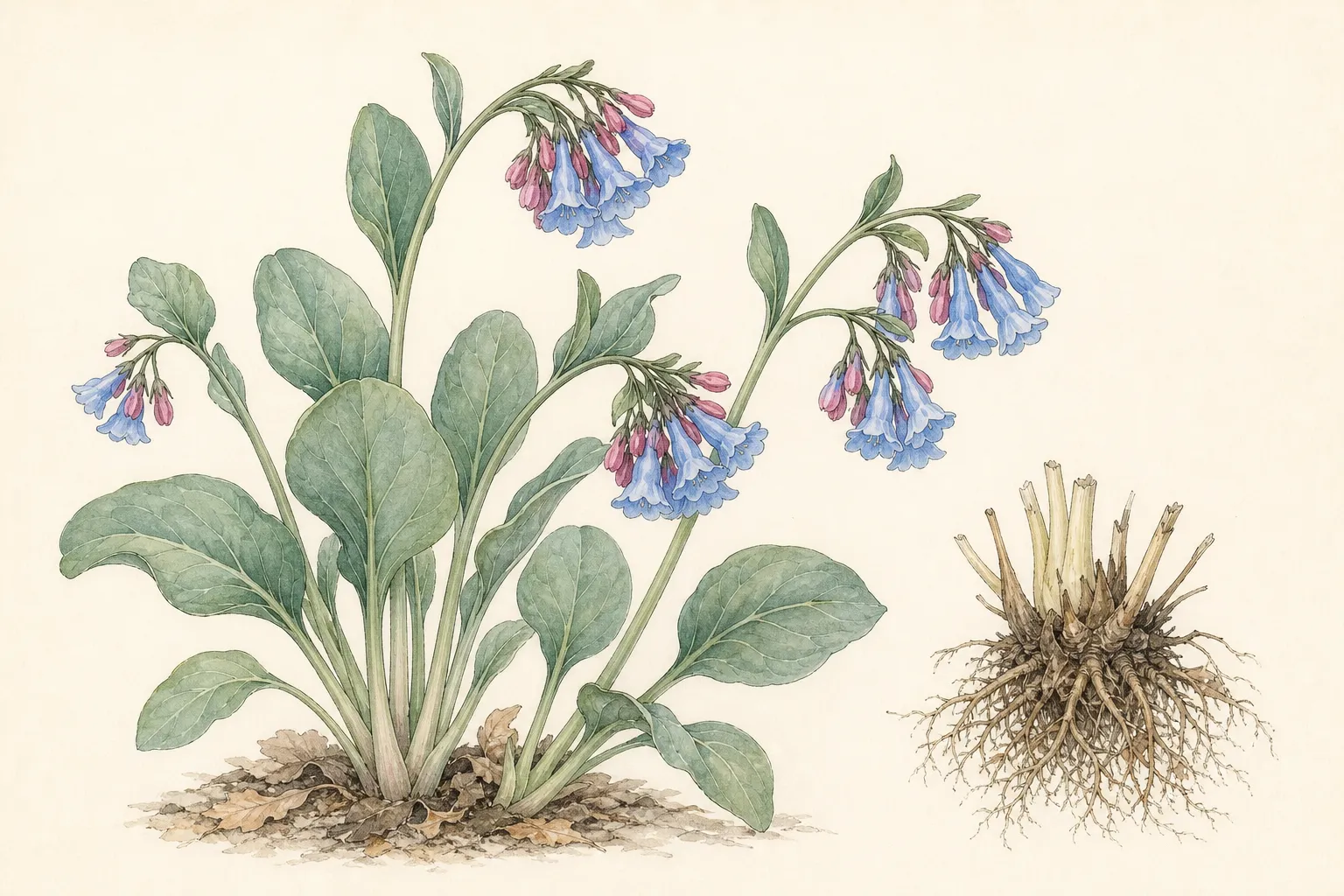
Virginia Bluebells
A spring woodland ephemeral with purple-pink buds, nodding blue bells, smooth blue-green leaves, and a normal early-summer disappearance.
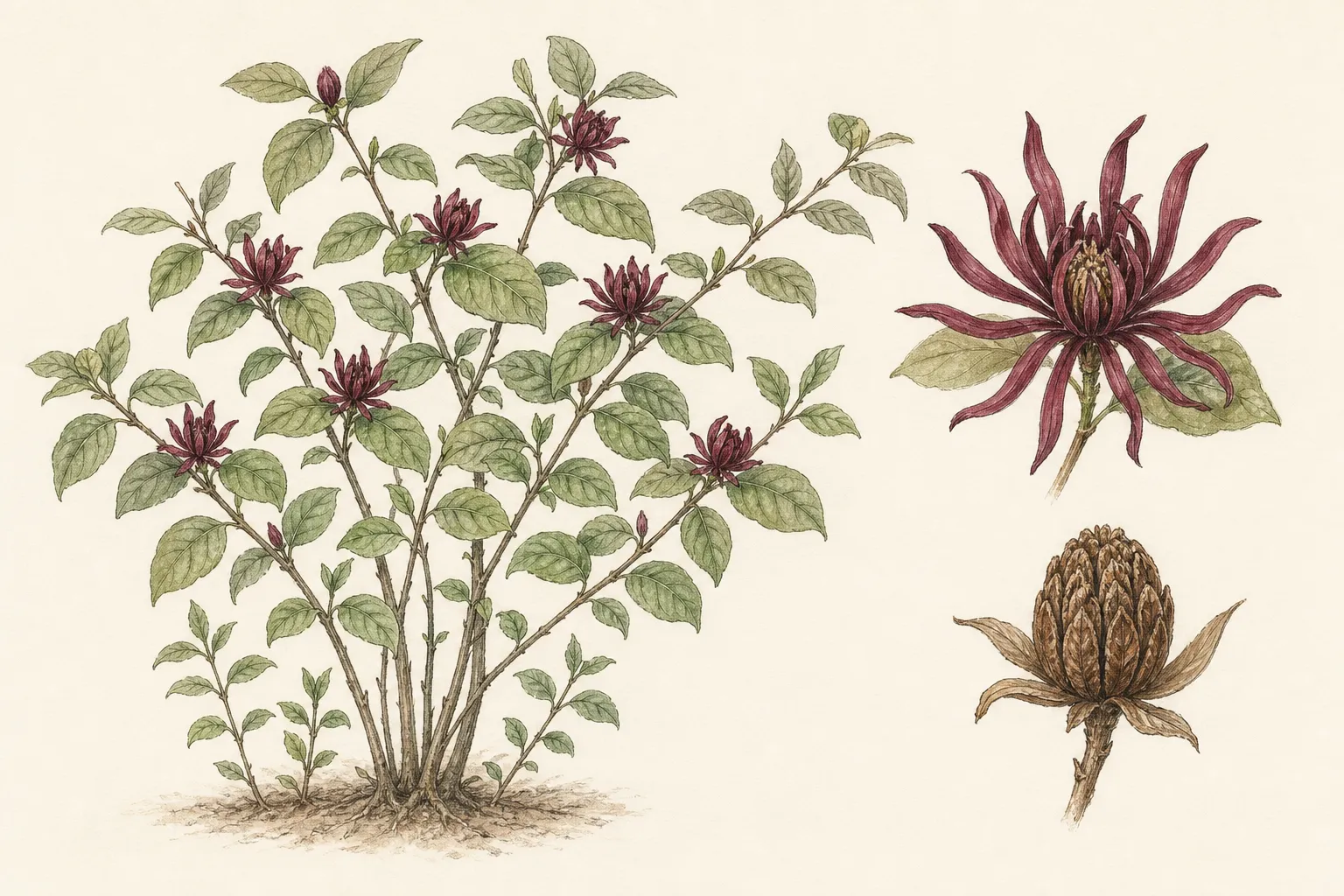
Common Sweetshrub
An eastern U.S. suckering shrub with maroon many-tepalled flowers, aromatic foliage and bark, variable fragrance, and poisonous seeds.
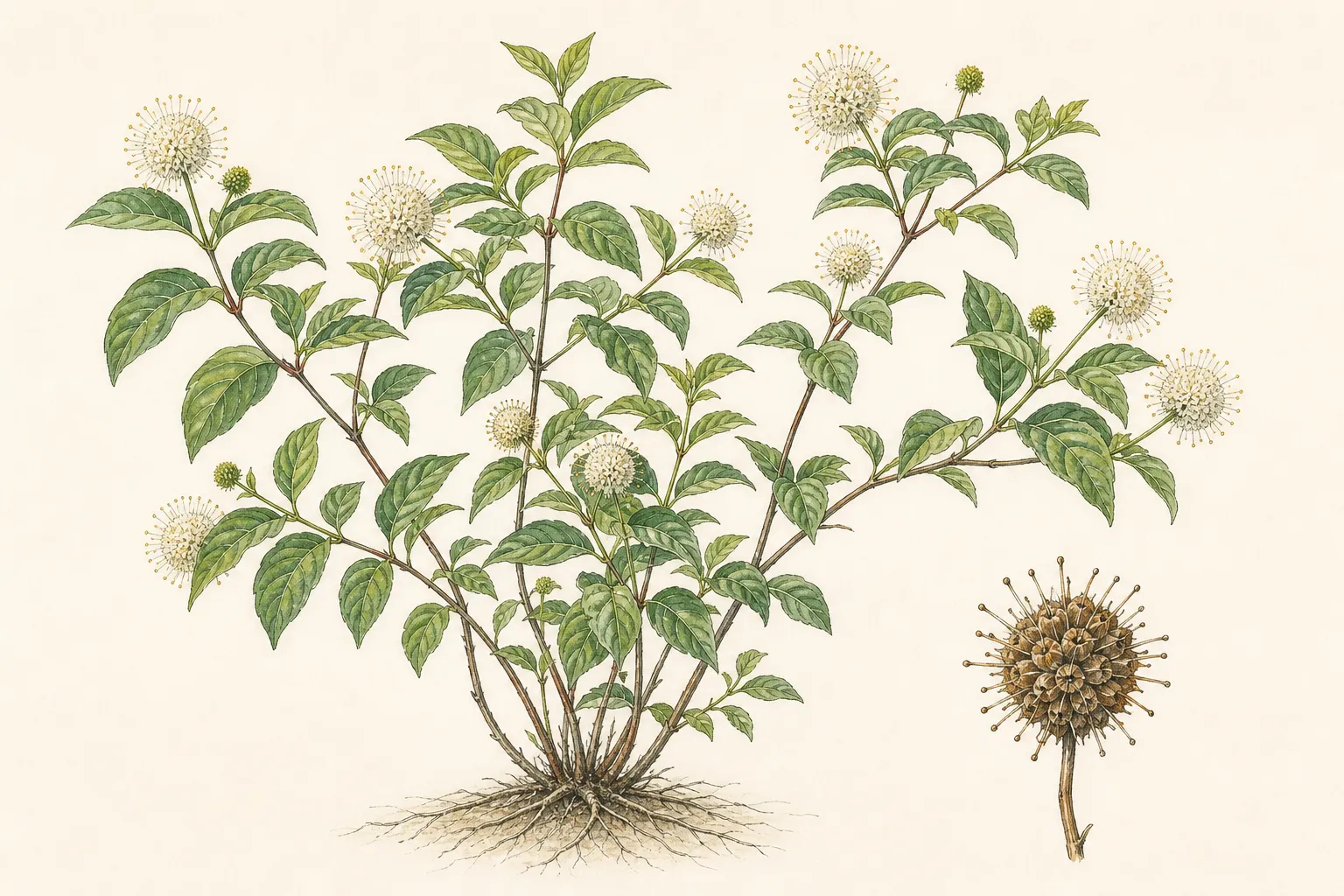
Buttonbush
A large native wetland shrub with spherical white flower heads, whorled or opposite leaves, persistent fruit, and a strict need for reliable moisture.
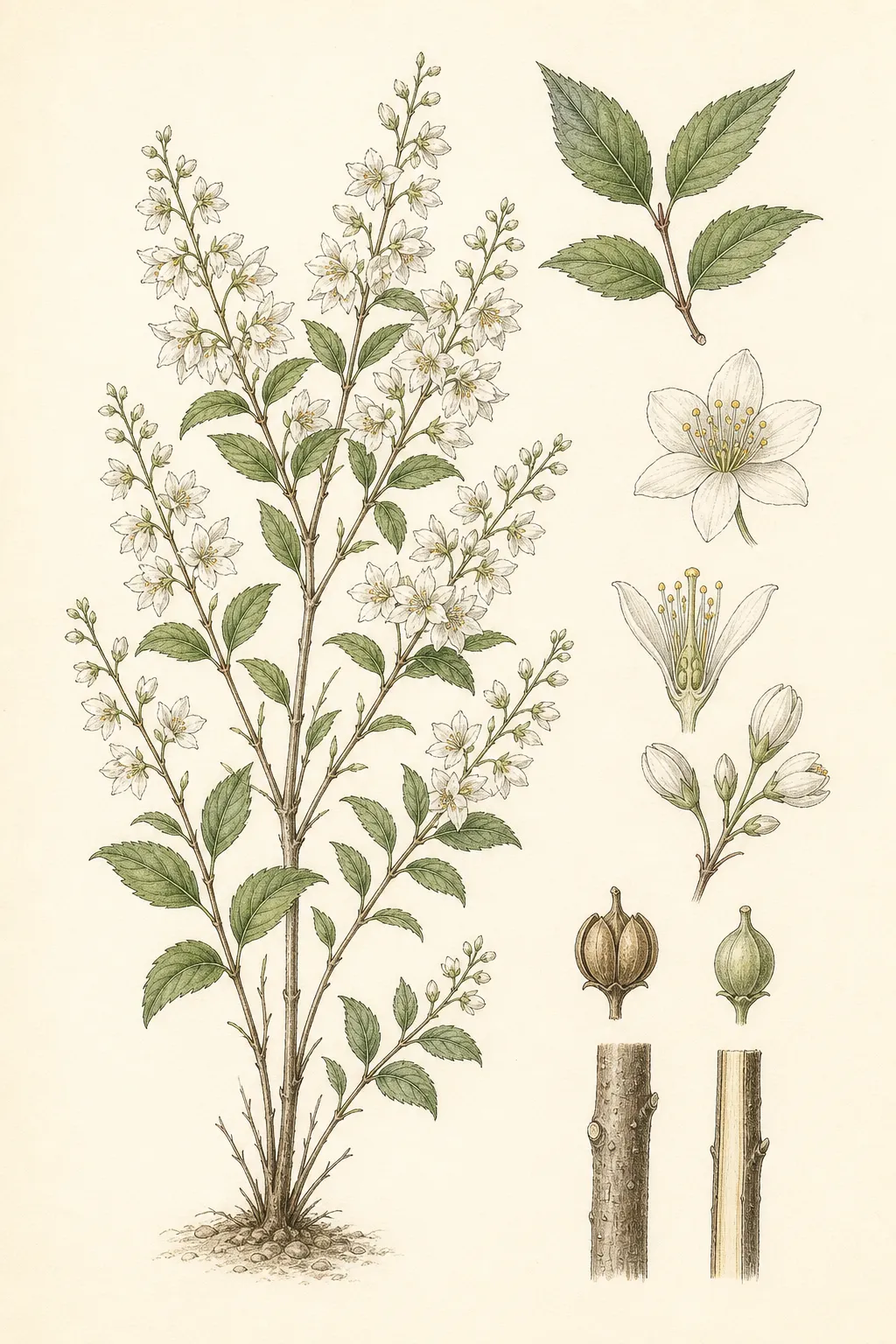
Slender Deutzia
A compact Japanese deciduous shrub with opposite serrated leaves and small white spring flowers on old wood, best renewed immediately after bloom.
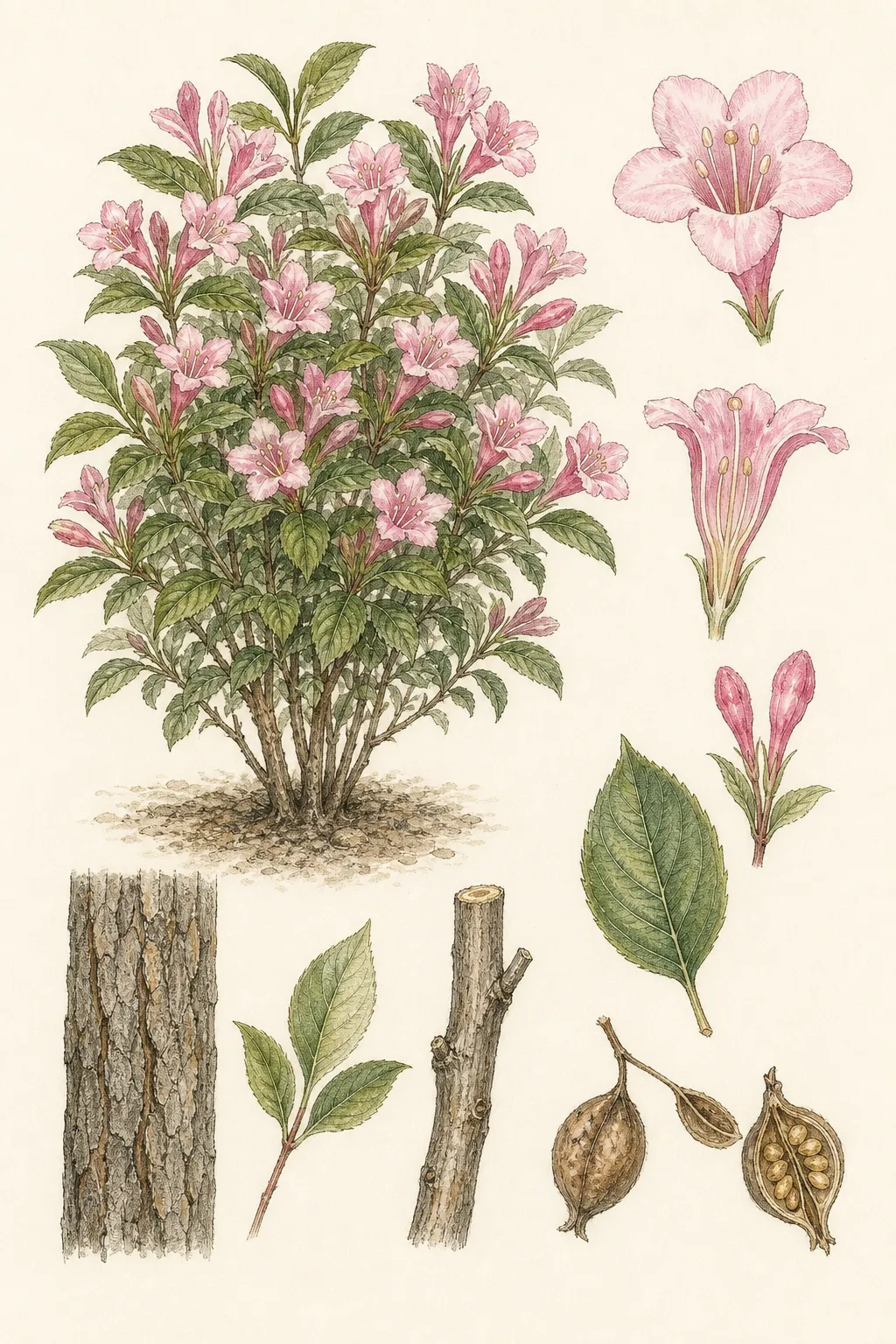
Weigela
Identify species weigela by its arching deciduous habit and pink funnel-shaped flowers, then site and prune it without sacrificing the next old-wood bloom.
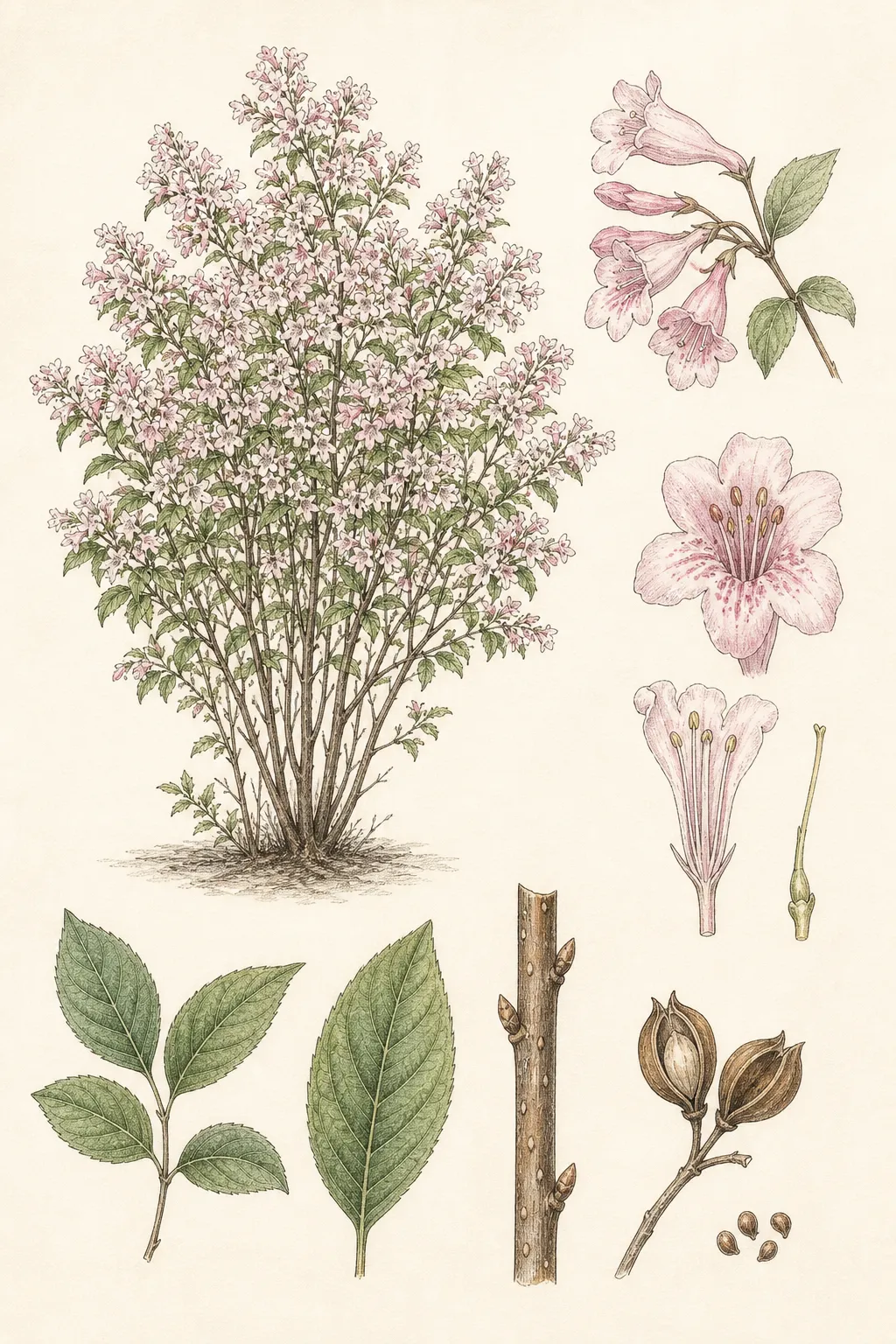
Beauty Bush
Beauty bush is a large arching shrub with profuse old-wood bloom and peeling mature bark; this profile covers full-size placement, root-flare planting, establishment, and renewal pruning.
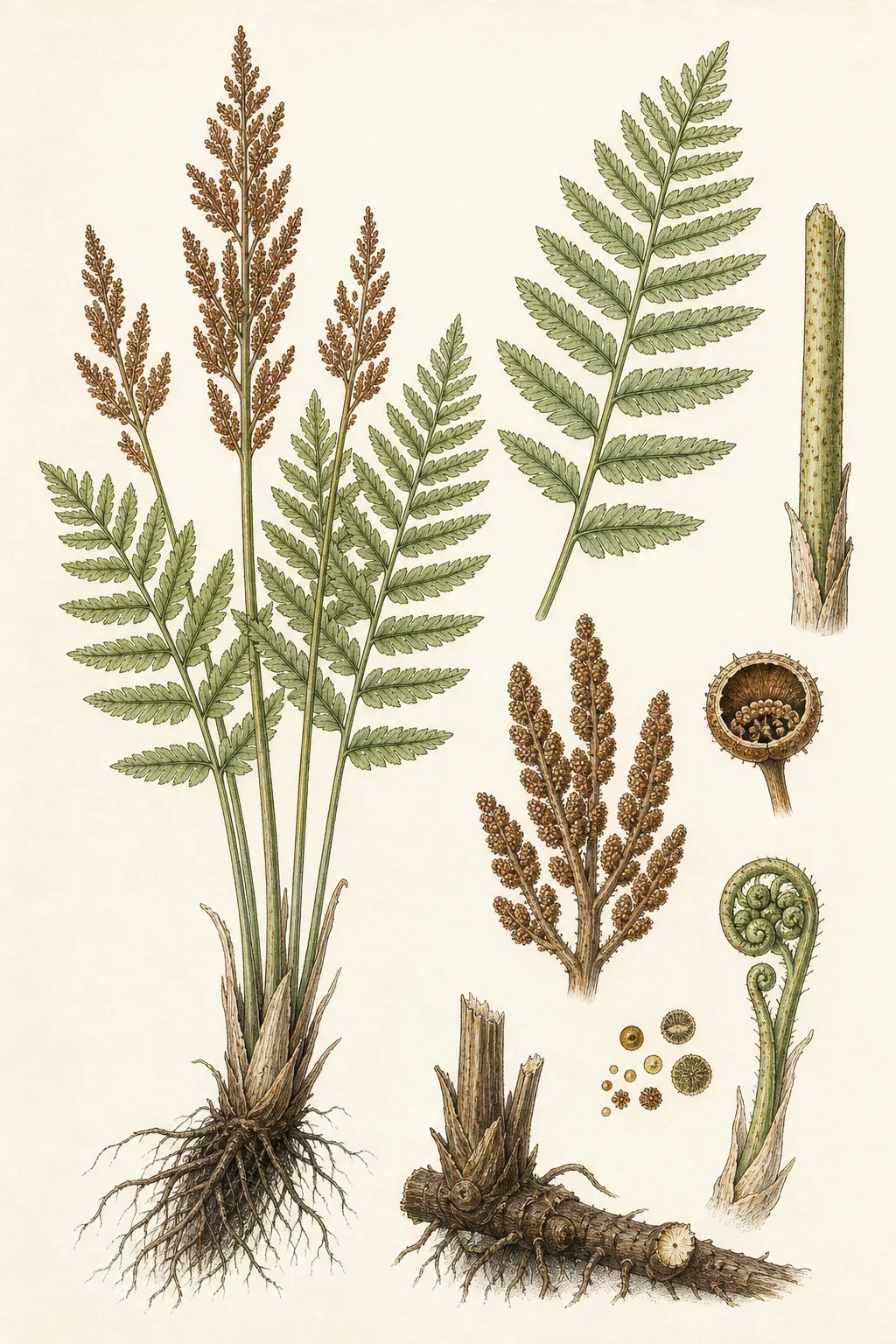
American Royal Fern
American royal fern is a large deciduous wetland fern with broad, widely spaced leaflets and fertile tips; this profile covers accepted identity, wet-soil placement, crown care, and seasonal dieback.
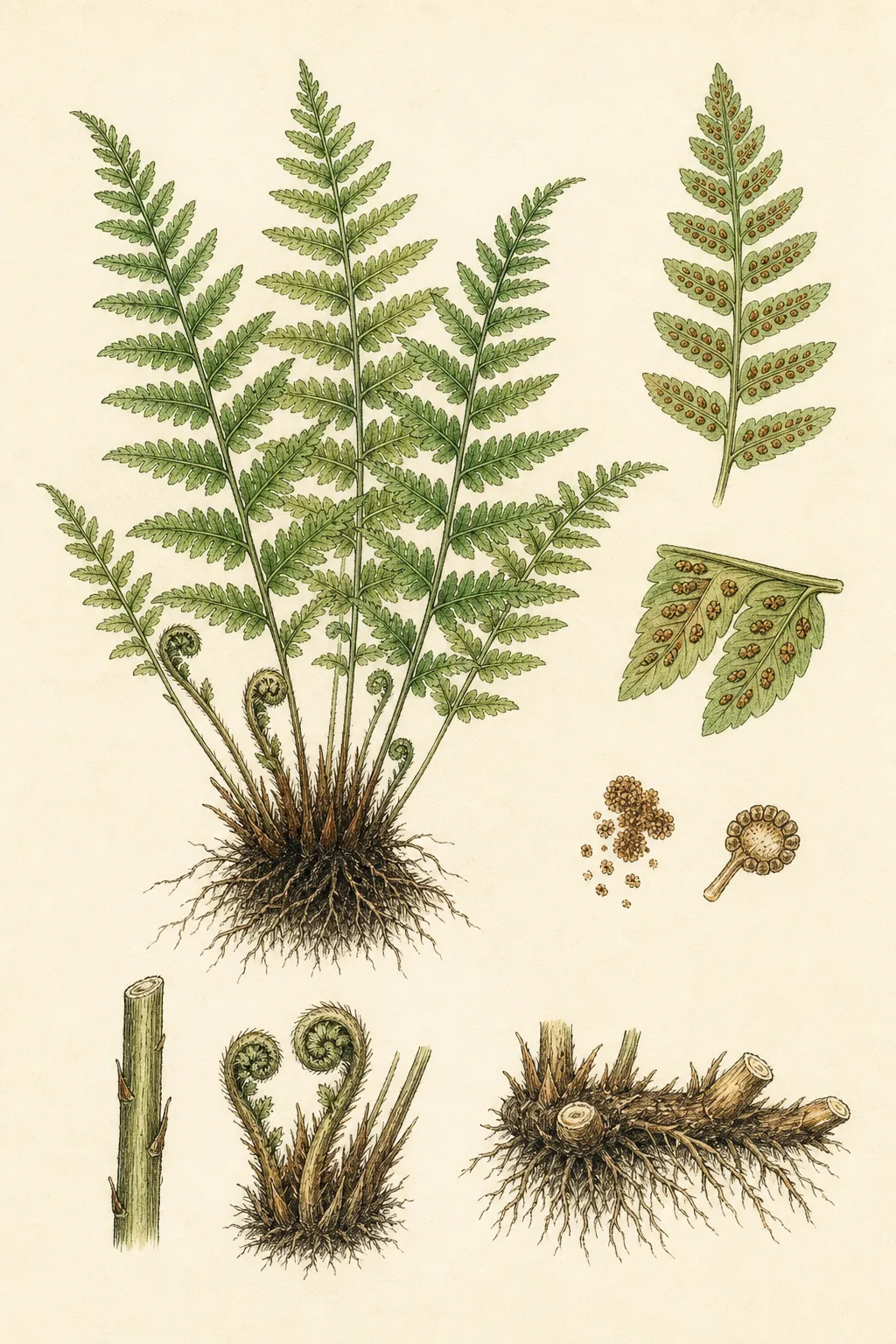
Christmas Fern
Christmas fern is a wintergreen eastern North American fern for shaded, well-drained ground; this profile covers its two frond forms, crown placement, restrained cleanup, and winter behavior.
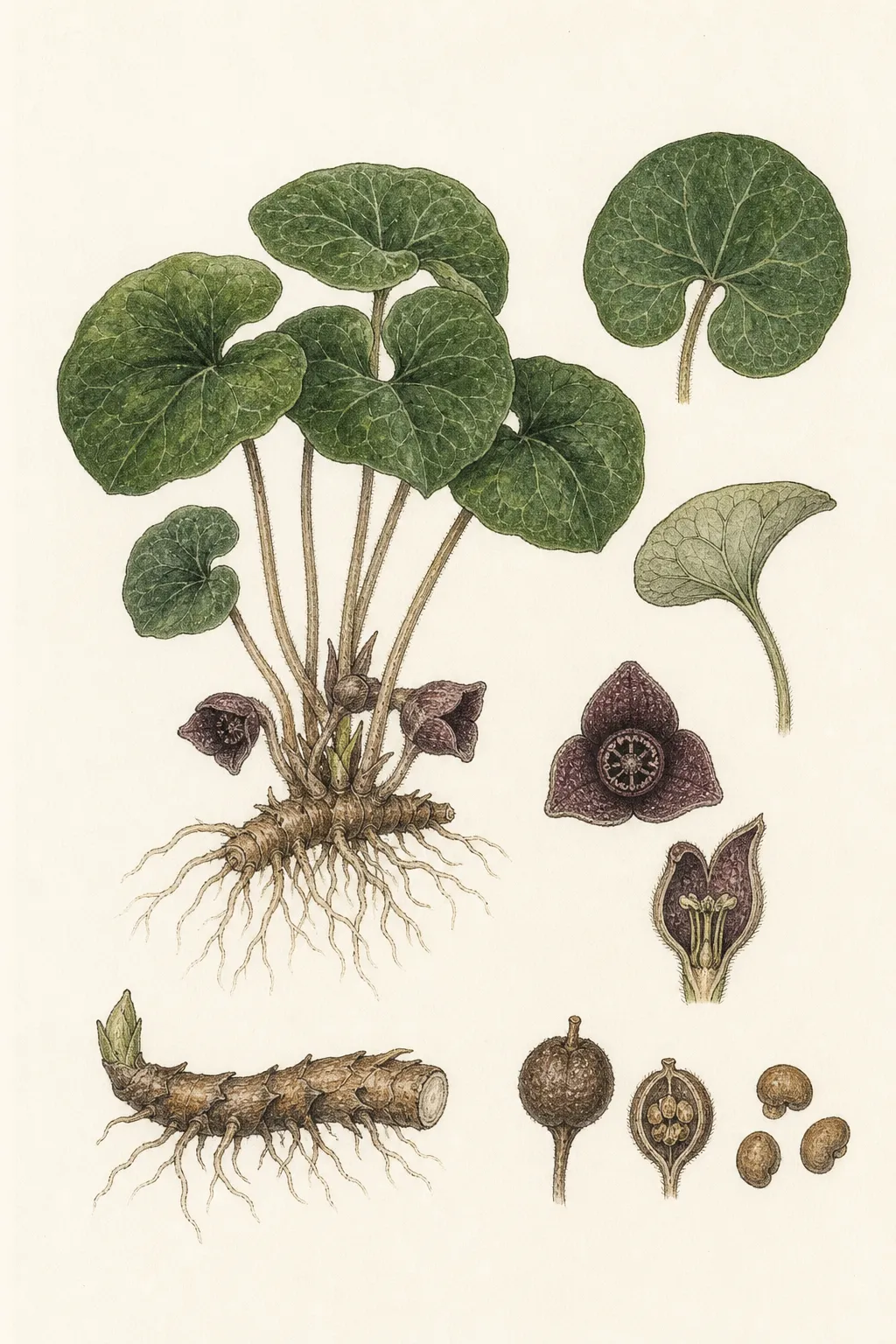
European Wild Ginger
European wild ginger is a slow, evergreen woodland groundcover with glossy kidney-shaped leaves and hidden spring flowers; this profile covers shade culture, division, foliage care, and toxicity.
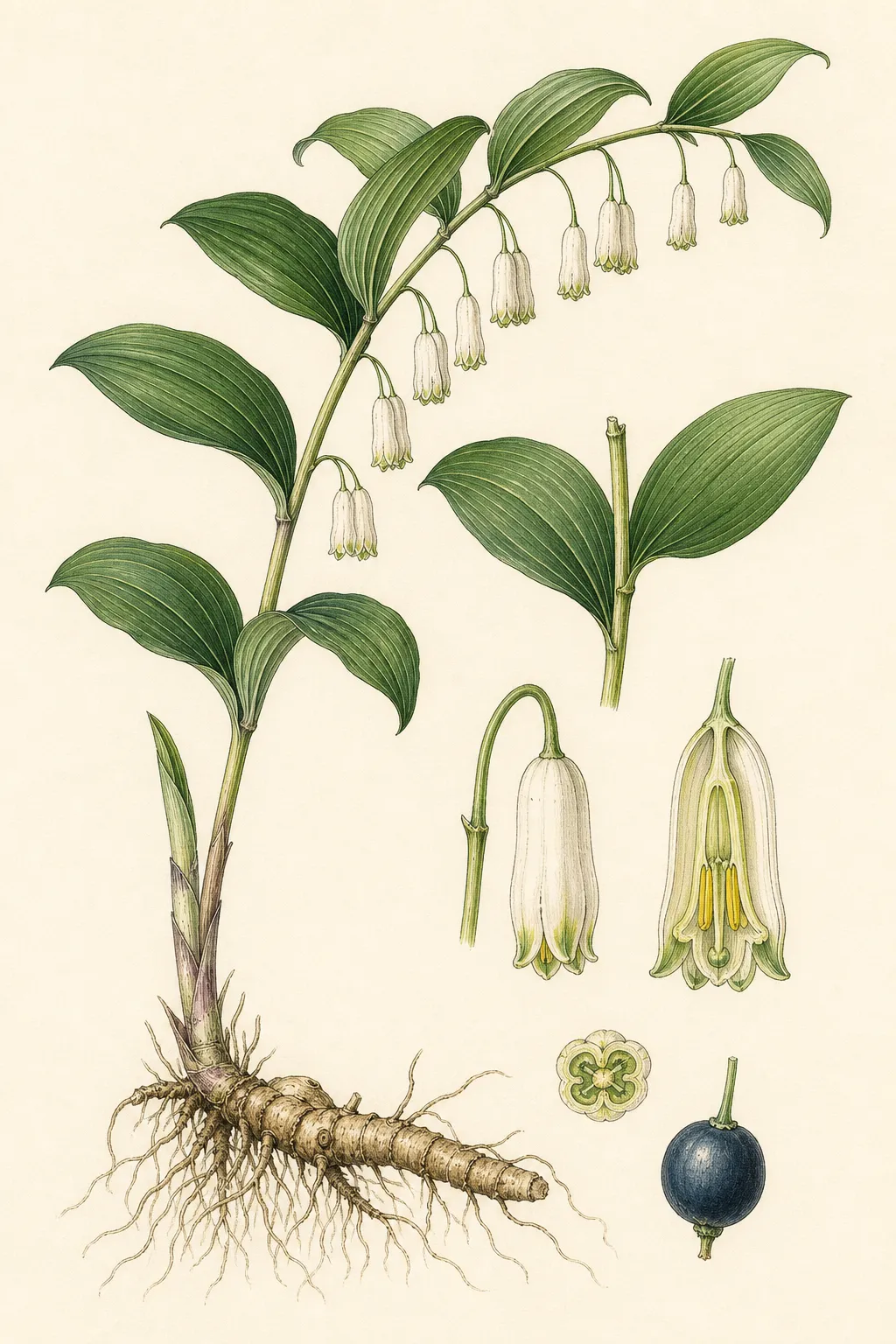
Fragrant Solomon’s Seal
Fragrant Solomon’s seal sends angled, arching stems from slender rhizomes, with fragrant spring bells and blue-black fruit; this profile covers shade culture, spread, dieback, pests, and ingestion risk.
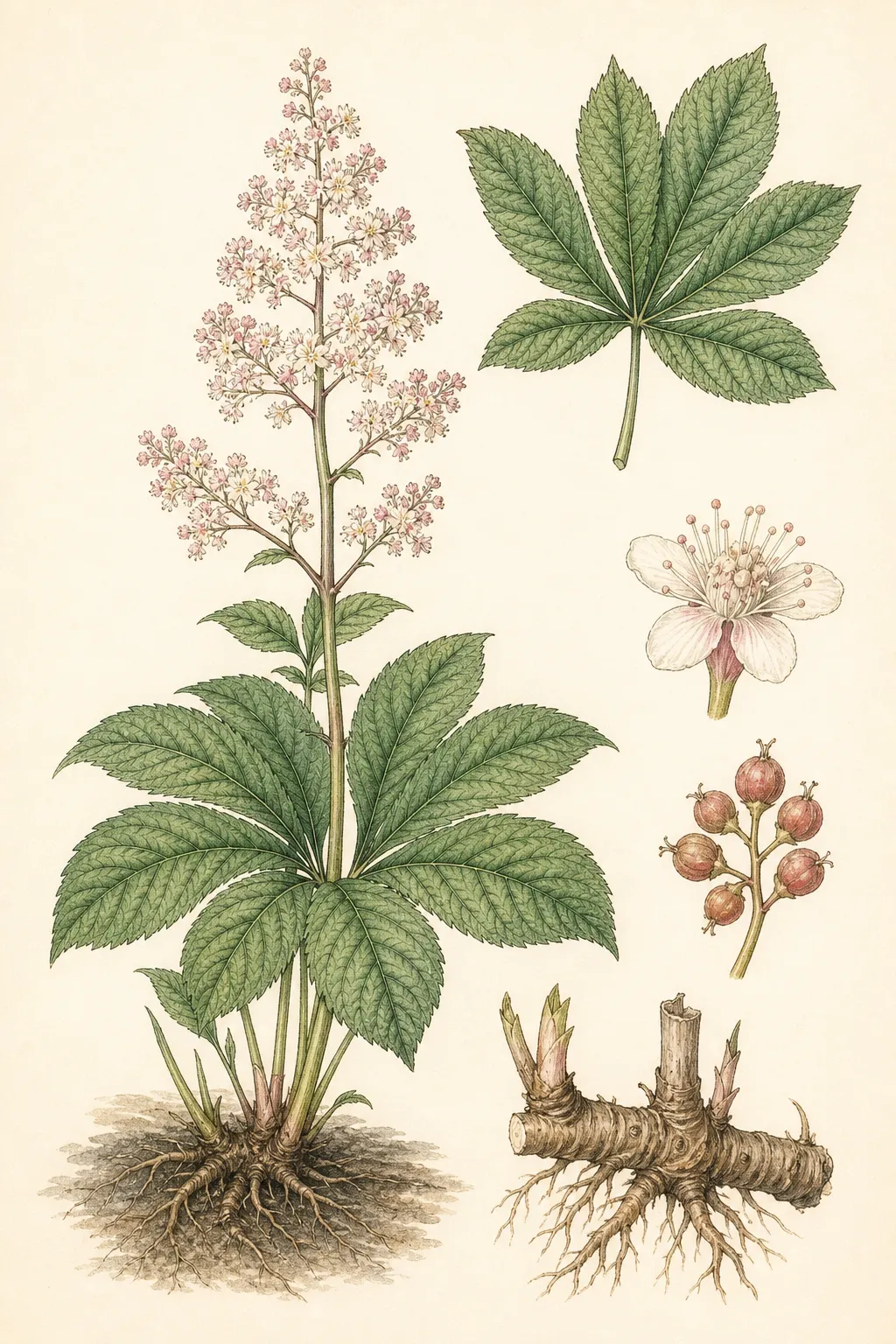
Chestnut-Leaved Rodgersia
Chestnut-leaved rodgersia is a bold rhizomatous perennial for reliably moist ground, valued for horse-chestnut-like leaves, summer panicles, and an expanding architectural clump.
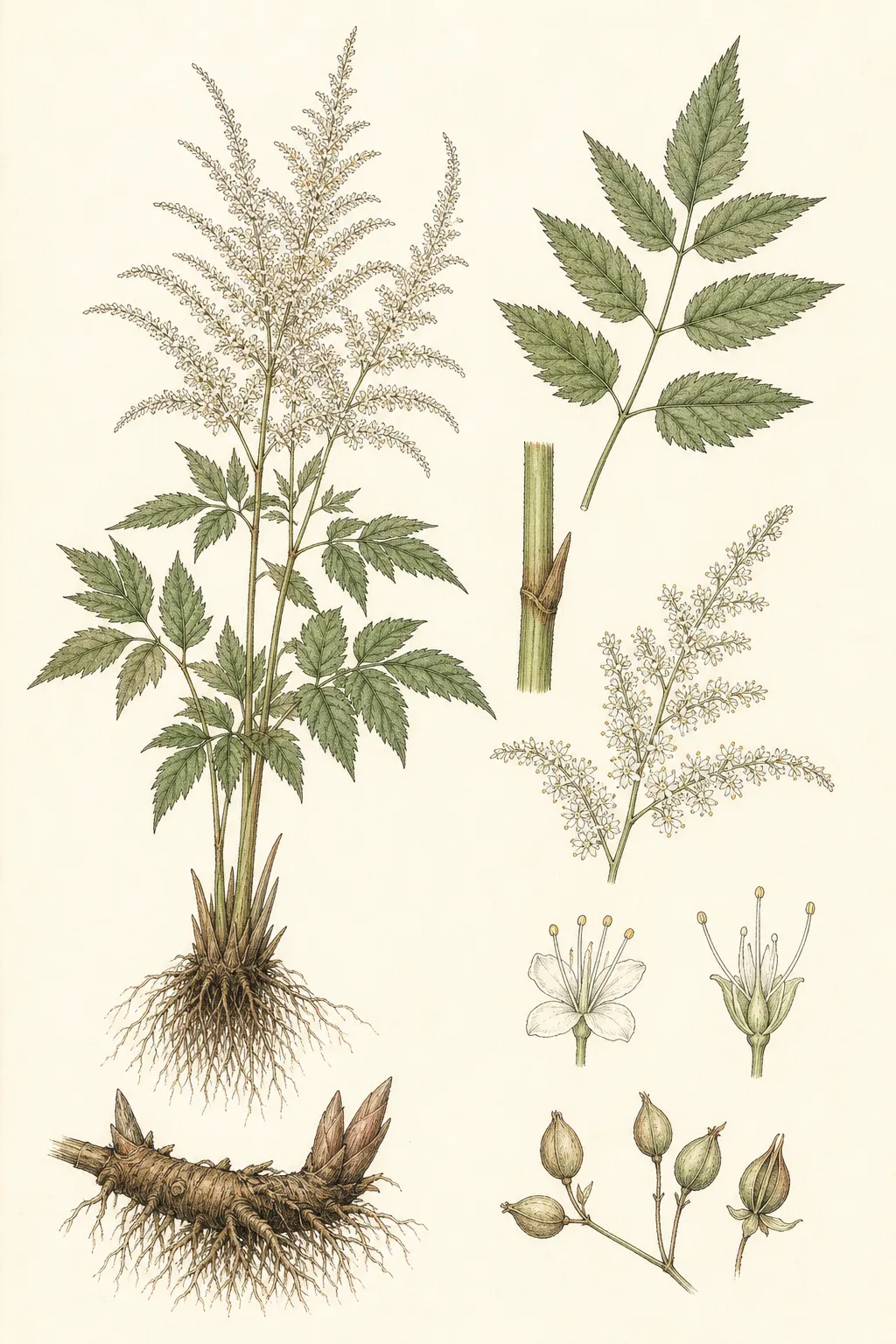
Goat’s Beard
Goat’s beard is a large, moisture-loving woodland perennial with fernlike foliage and cream plumes; this profile covers its dioecious flowers, seed safety, siting, and seasonal care.
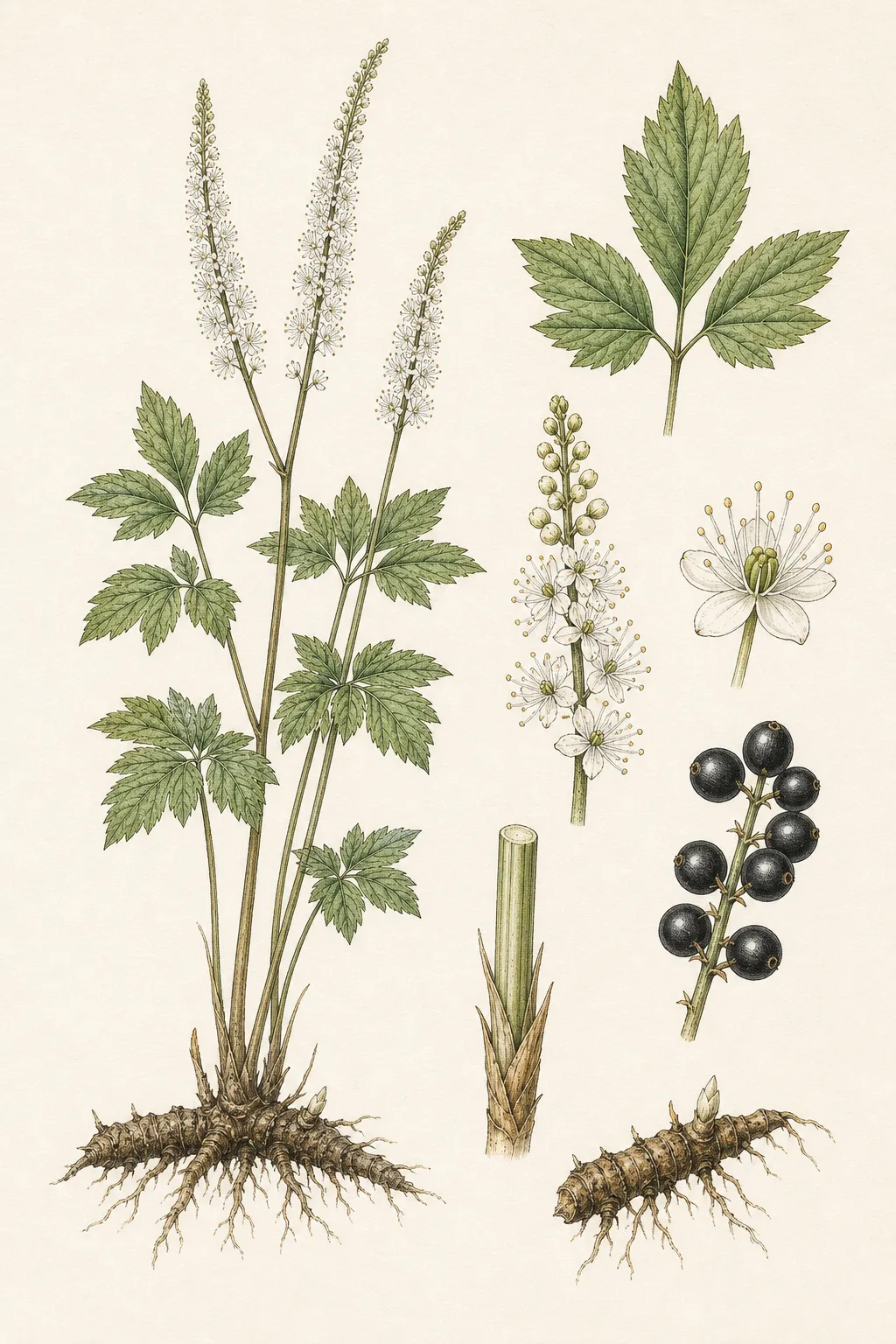
Black Cohosh
A source-checked profile of native black cohosh, covering its rhizomatous woodland habit, moist-shade care, wild-harvest concerns, and safety.
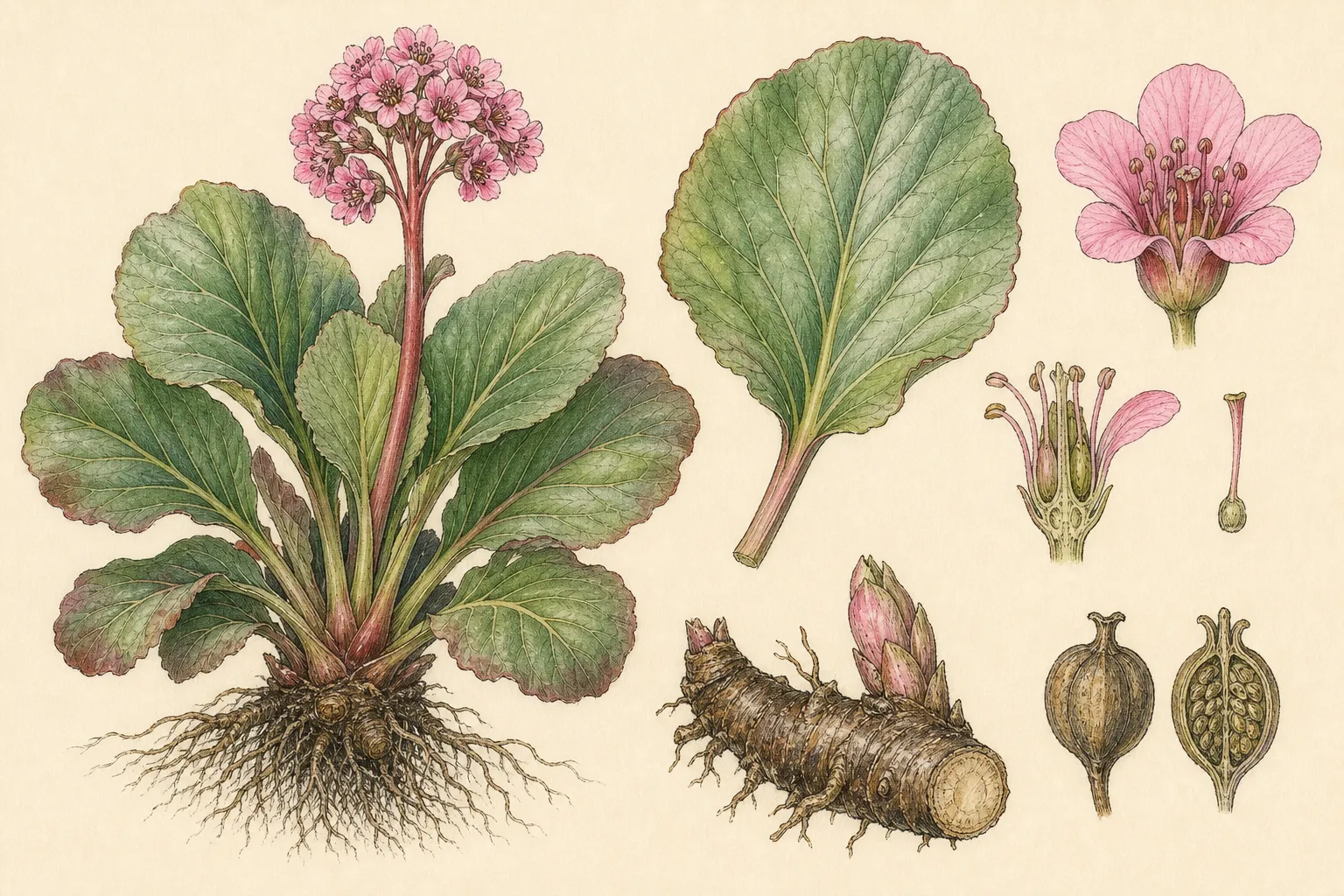
Pigsqueak
Identify Bergenia crassifolia by leathery evergreen rosettes and surface rhizomes, then site, divide, and clean the clump without shearing it.
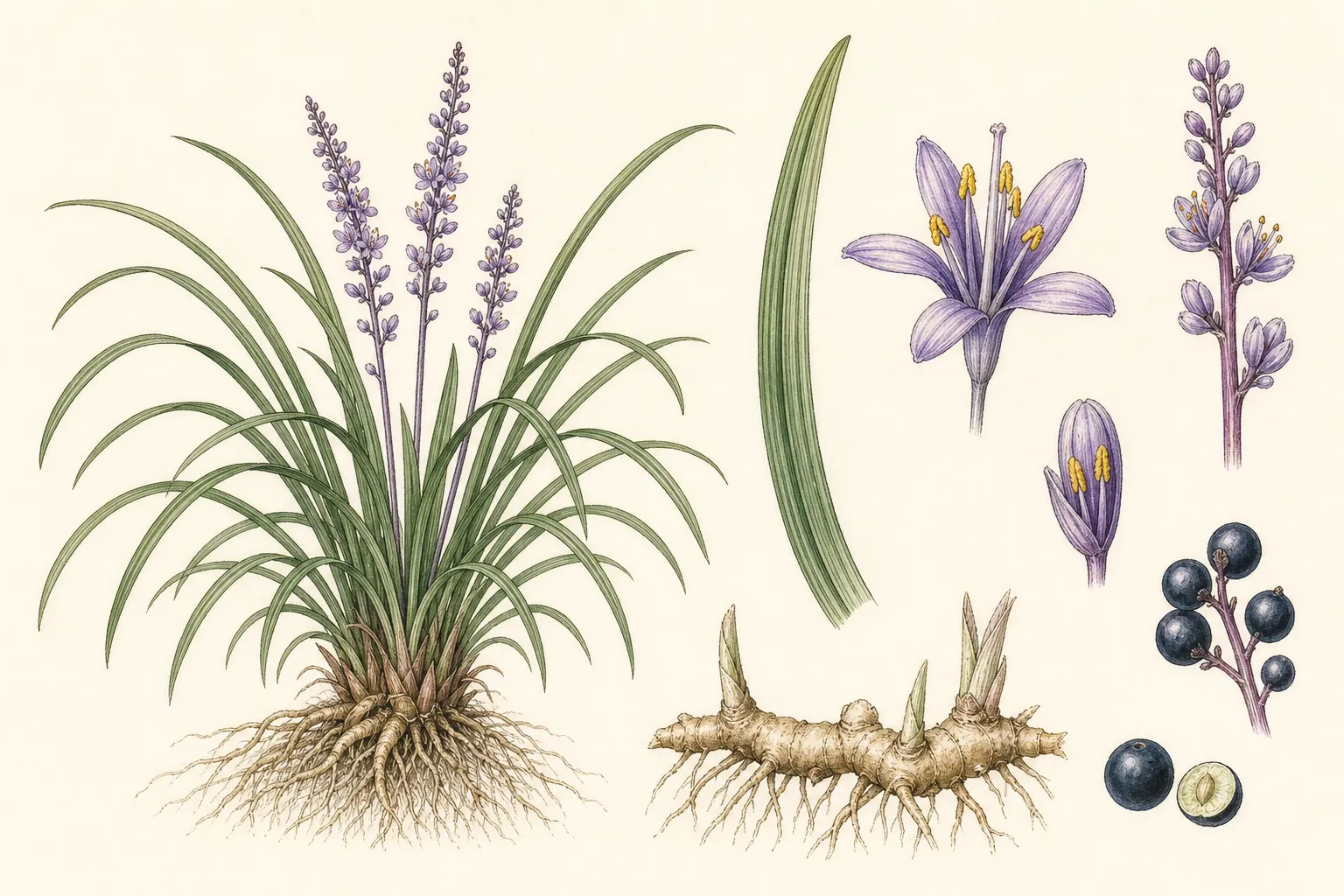
Lilyturf
Identify clump-forming, tuberous-rooted Liriope muscari, establish it in drained shade, and cut old leaves before spring growth.
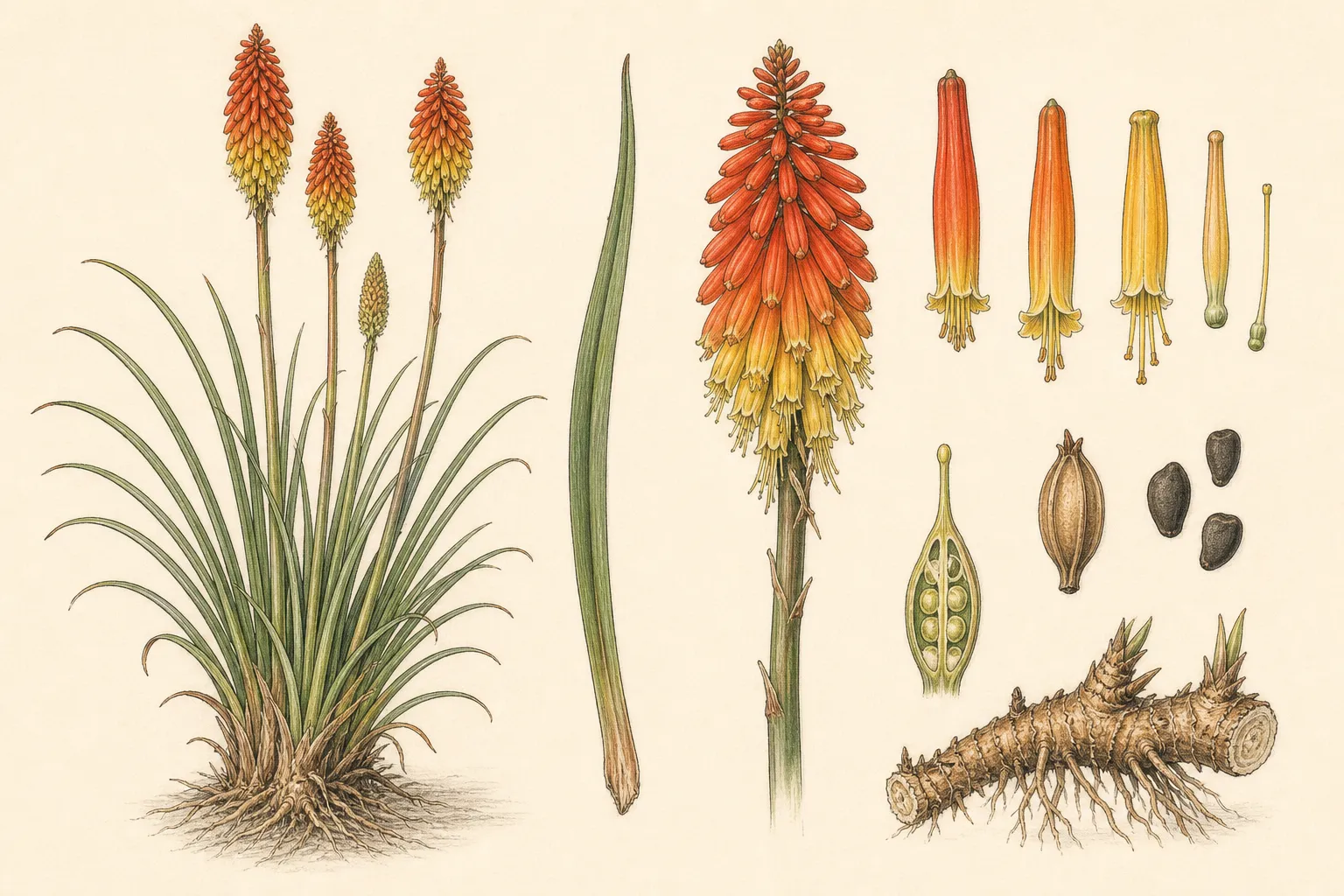
Red-Hot Poker
Grow species red-hot poker in full sun and sharply drained soil, protect its rhizomatous crown from winter wet, and prune its leaf fan correctly.
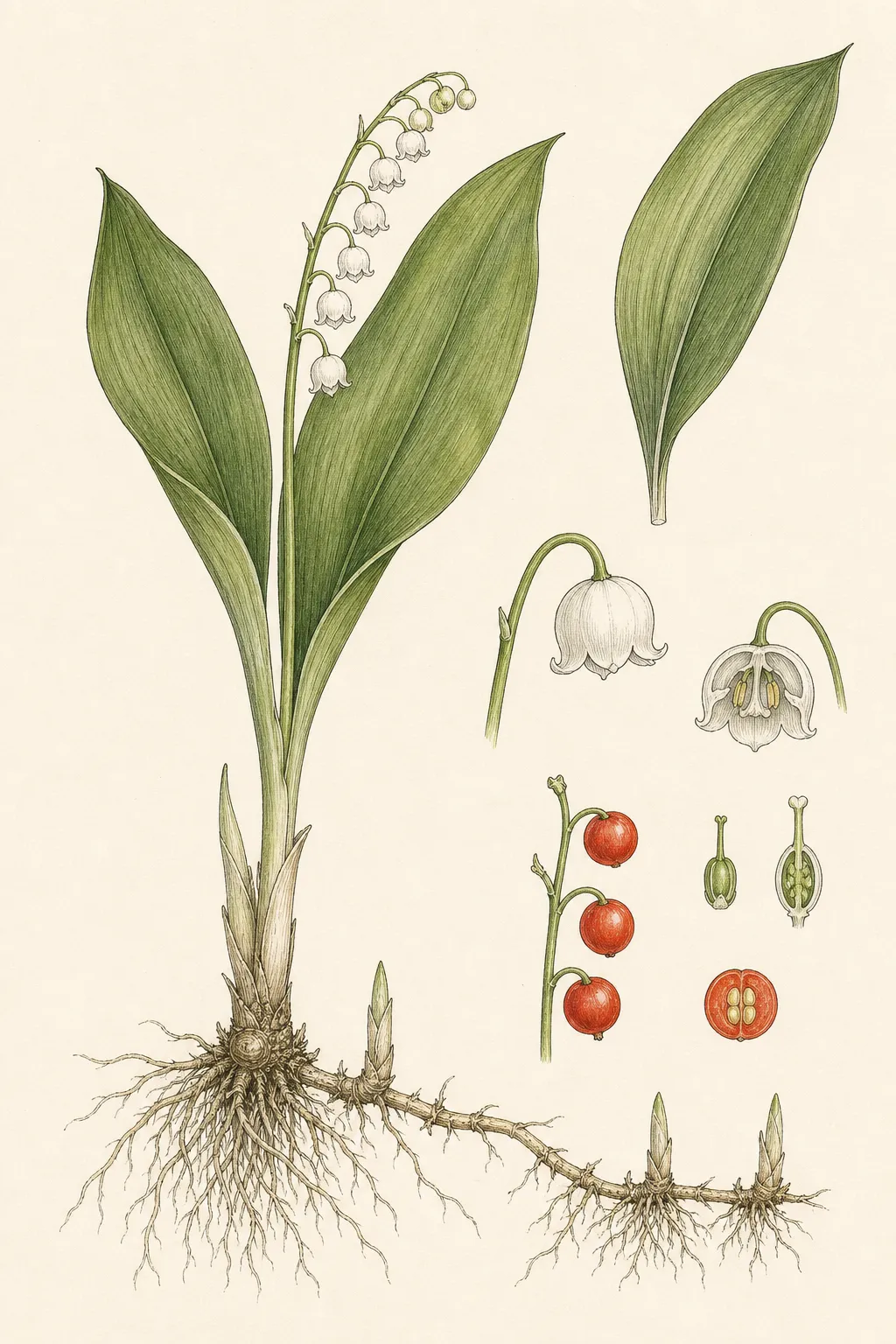
Lily-of-the-Valley
Identify lily-of-the-valley, plant its rhizomes at the sourced depth, contain its spreading colony, and handle every poisonous part safely.
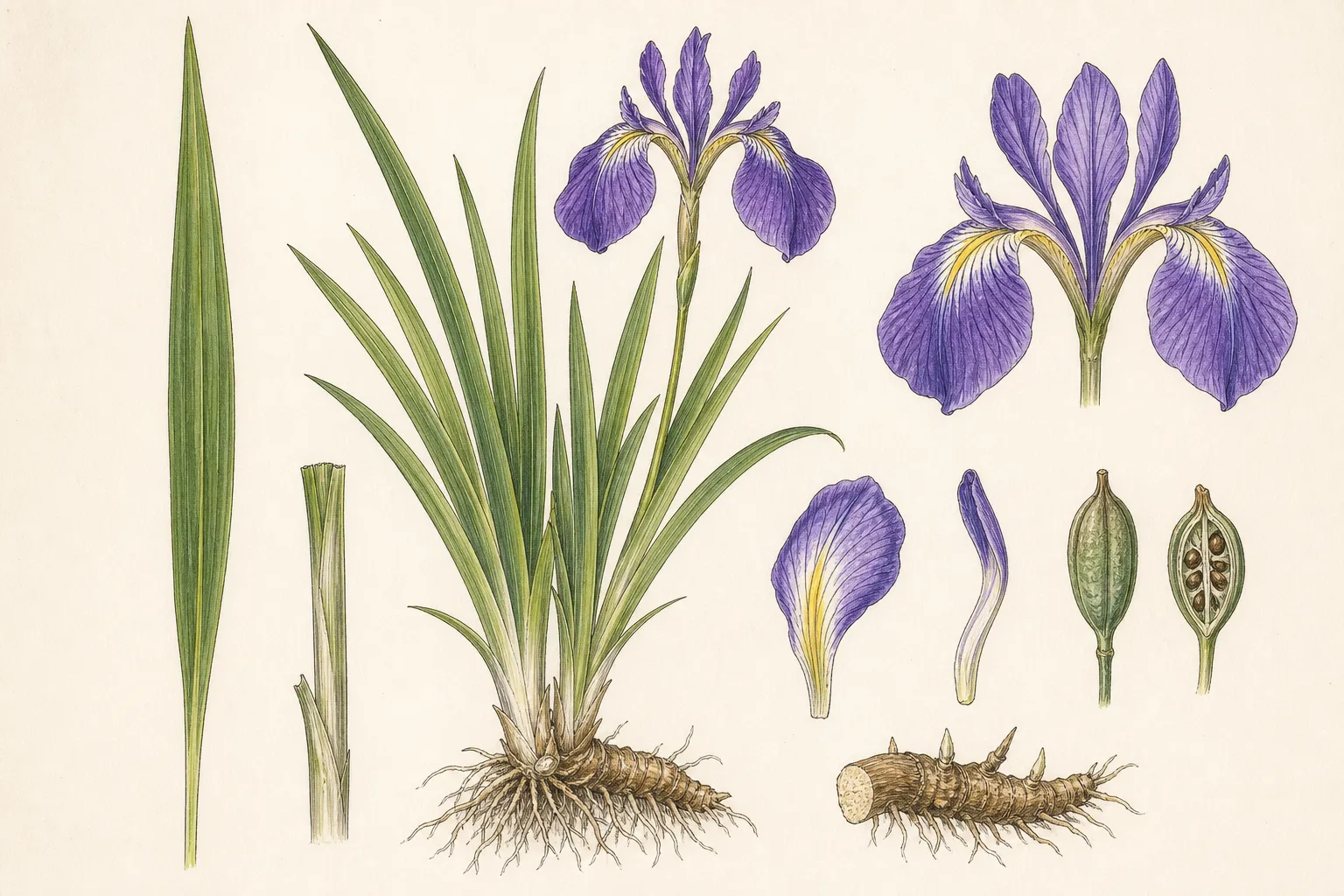
Japanese Iris
Grow Japanese iris in rich acid soil with abundant summer moisture, correct 1–2 in rhizome cover, dry winter drainage, and safe handling.
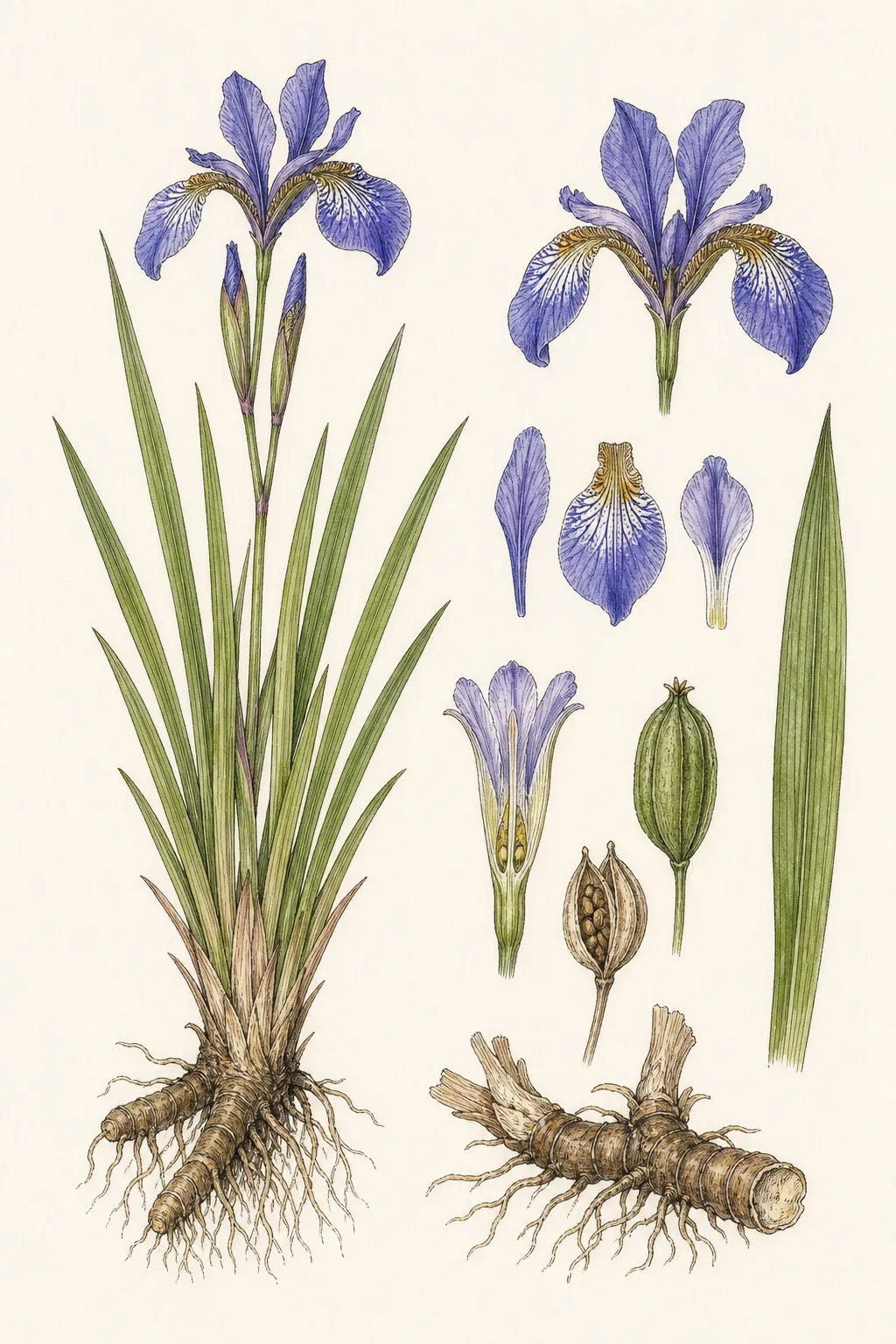
Siberian Iris
A source-checked guide to Siberian iris: narrow rhizomes, grassy fans, moisture needs, 1–2 in planting depth, division, and safe handling.
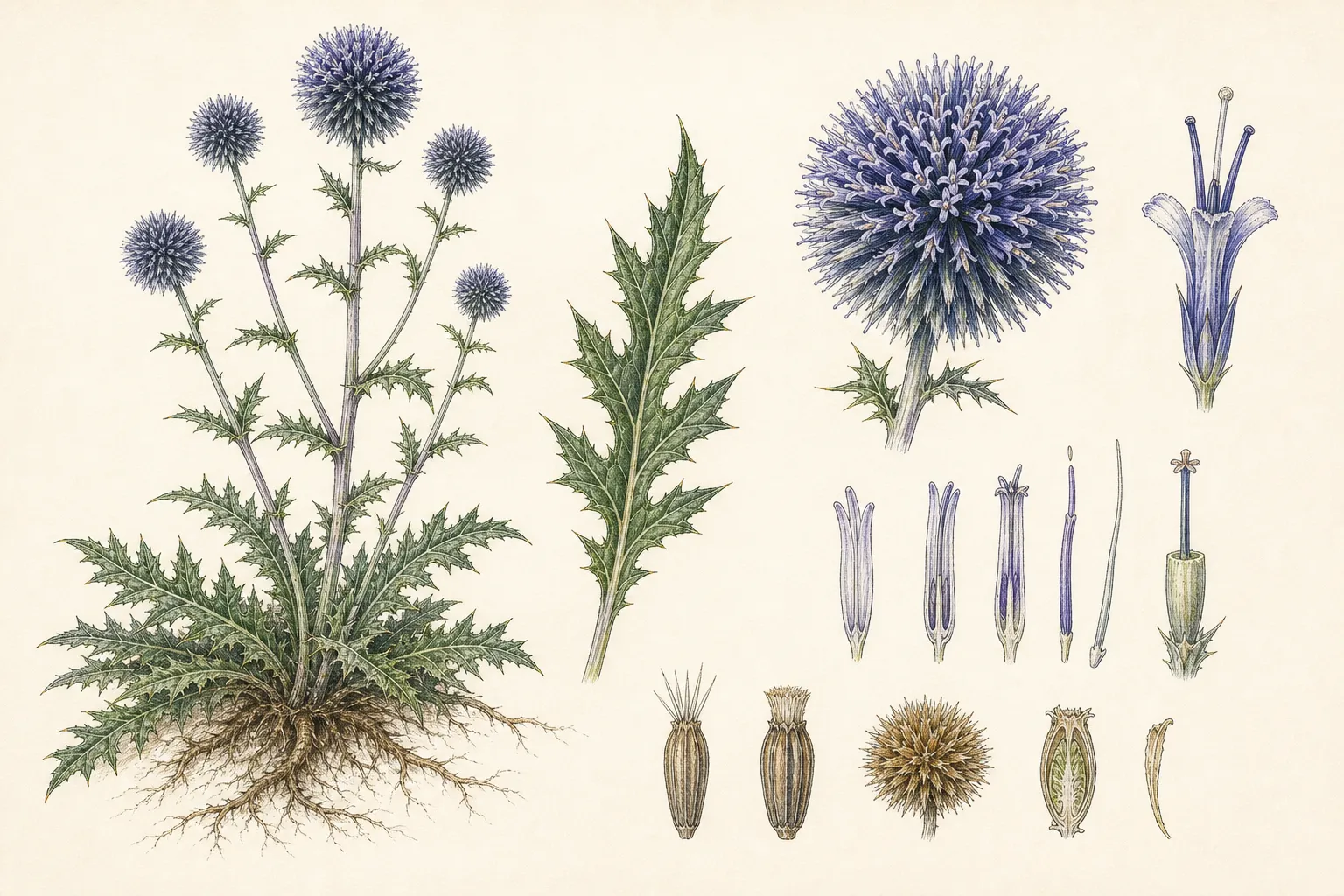
Globe Thistle
Identify globe thistle by its spiny gray-green foliage and steel-blue flower globes, then grow its taprooted clump in lean, freely drained sun.
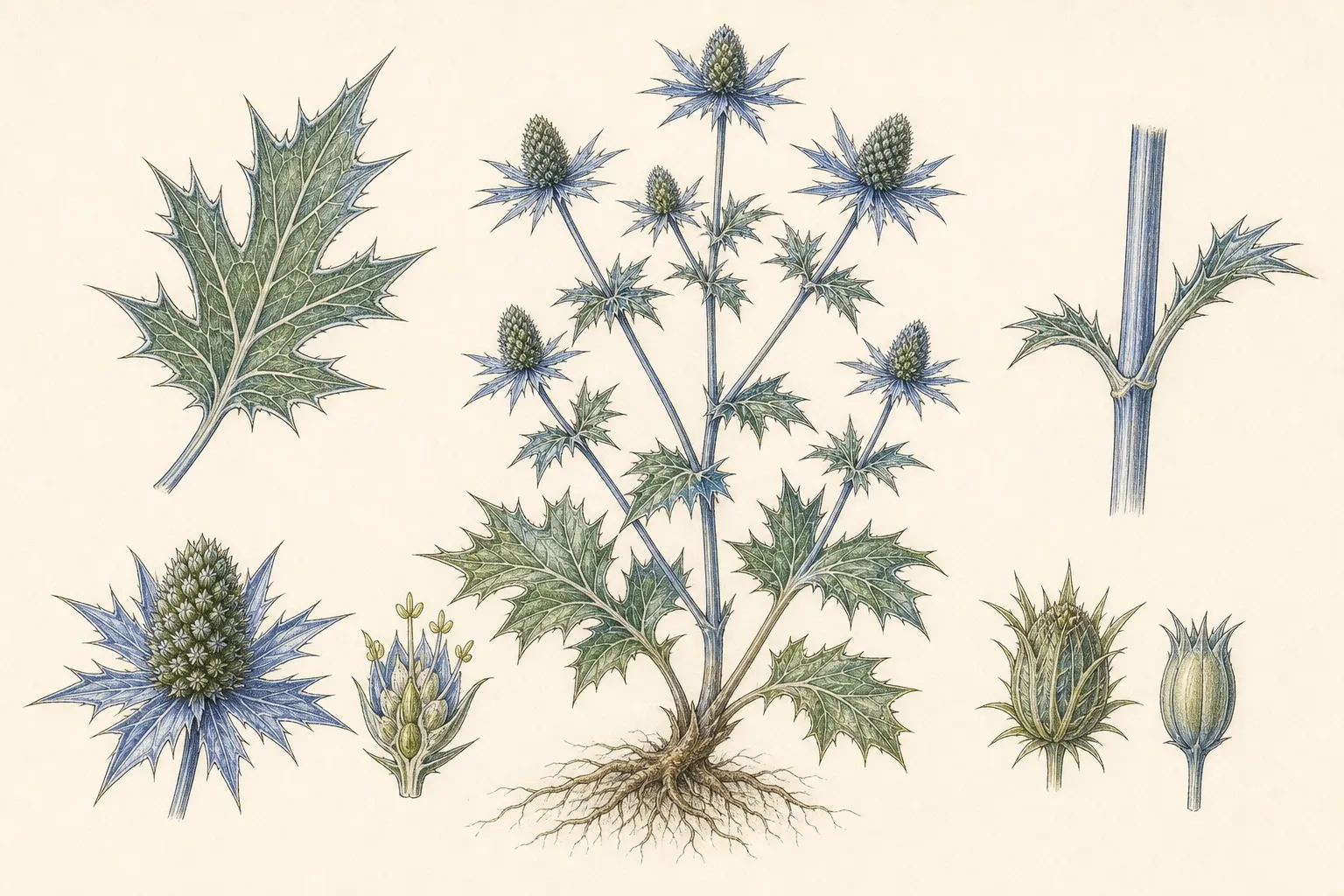
Sea Holly
A taprooted dry-garden perennial with steel-blue branched stems and small flower heads ringed by narrow bracts, intolerant of rich soil and winter wet.
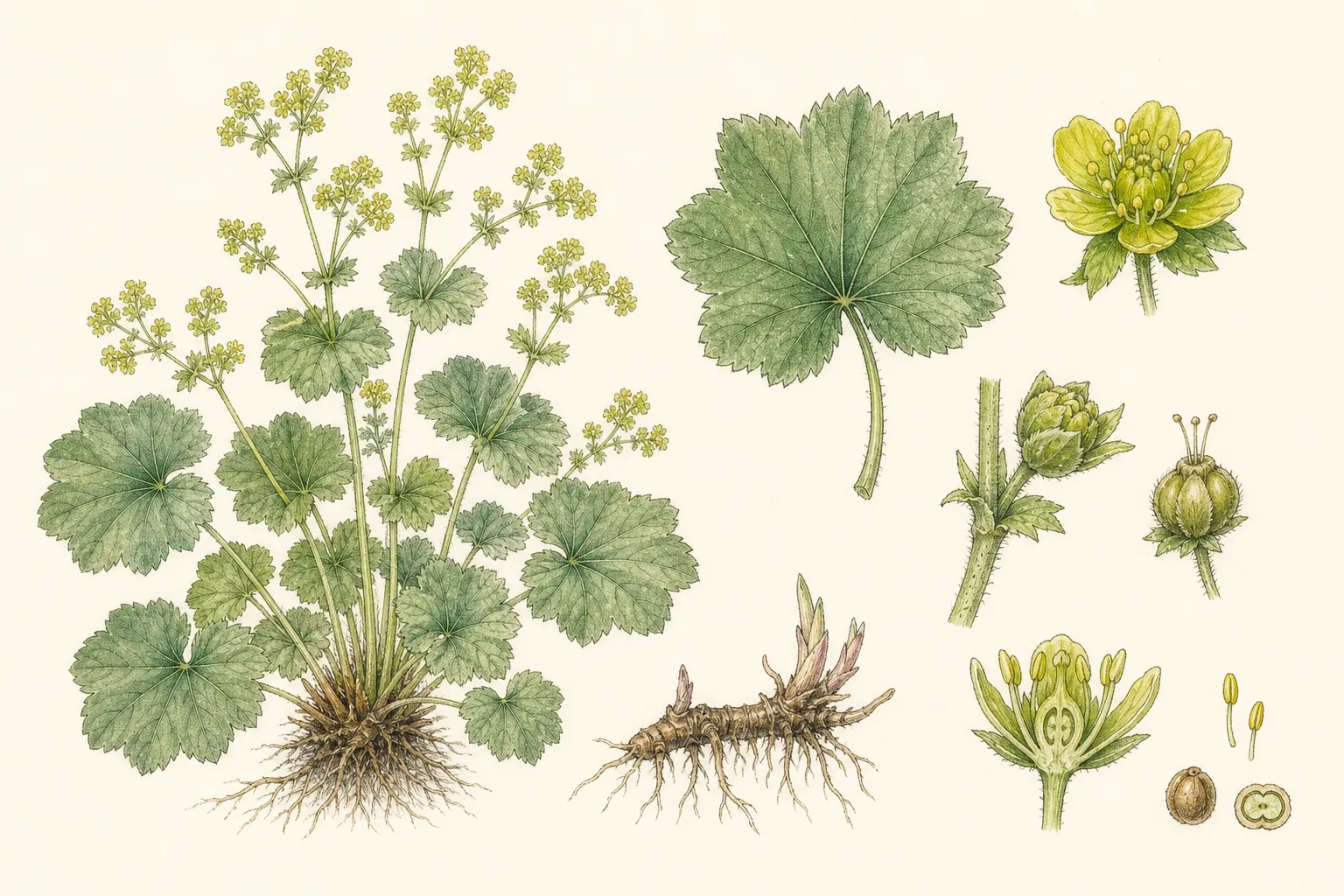
Lady’s Mantle
A low mounding perennial with pleated water-beading leaves and chartreuse summer flowers, adaptable to sun or shade but prone to prolific self-seeding.
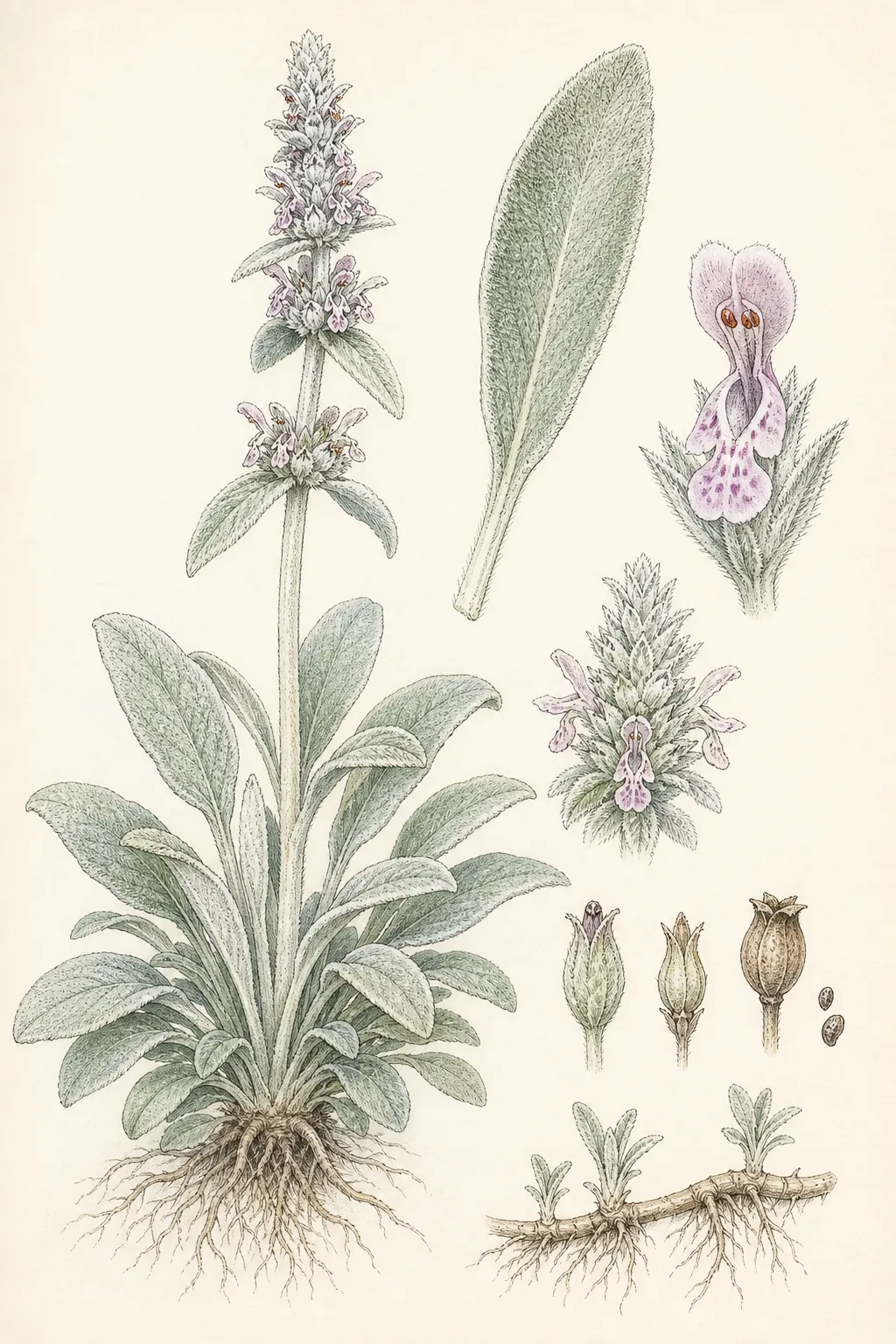
Lamb’s Ear
A mat-forming perennial grown for woolly silver rosettes, requiring full sun, open air, and well-drained soil to avoid wet-weather leaf and crown rot.
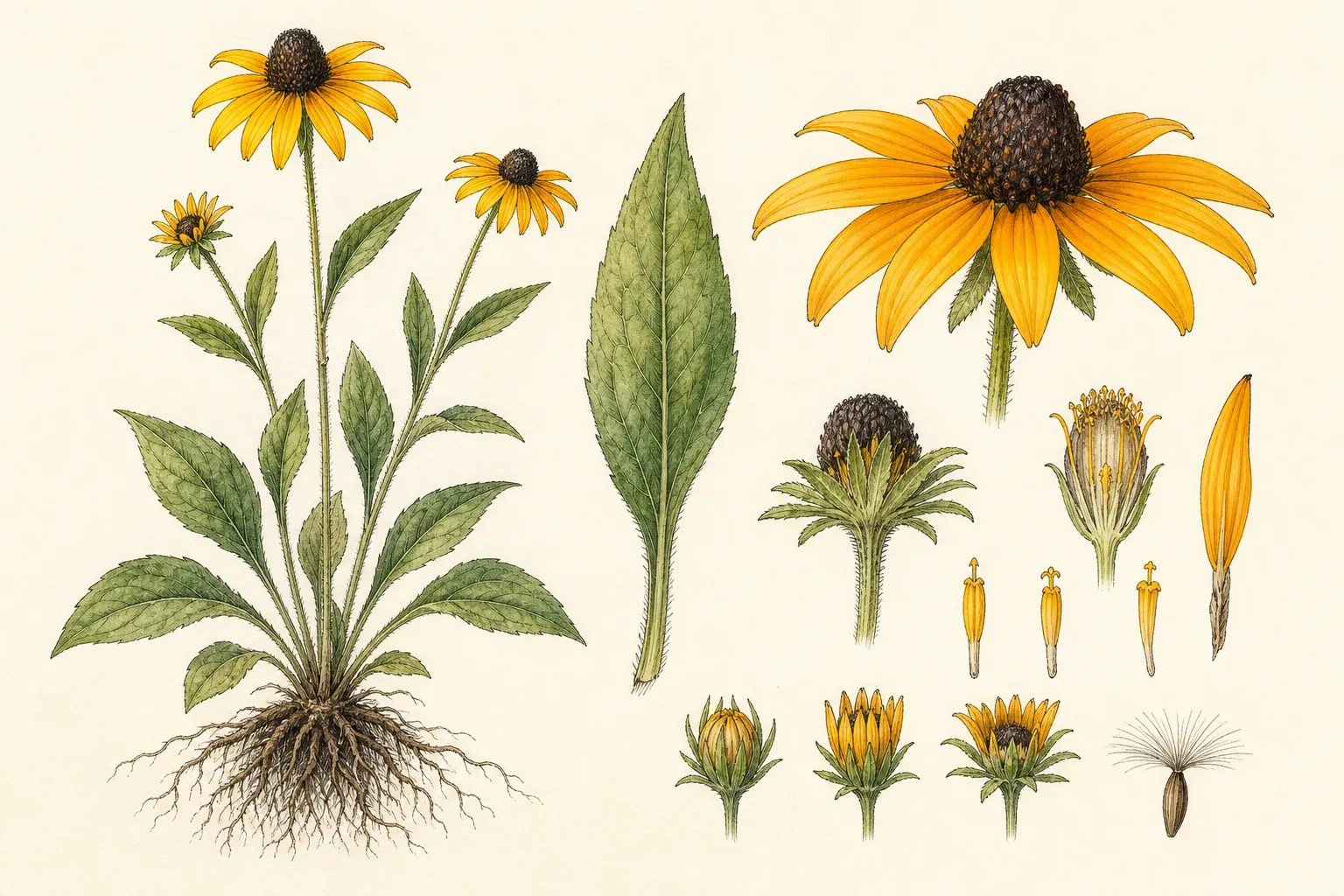
Orange Coneflower
A rhizomatous eastern U.S. perennial with rough basal leaves and golden-orange daisies, valued for long late-season bloom and persistent seed heads.
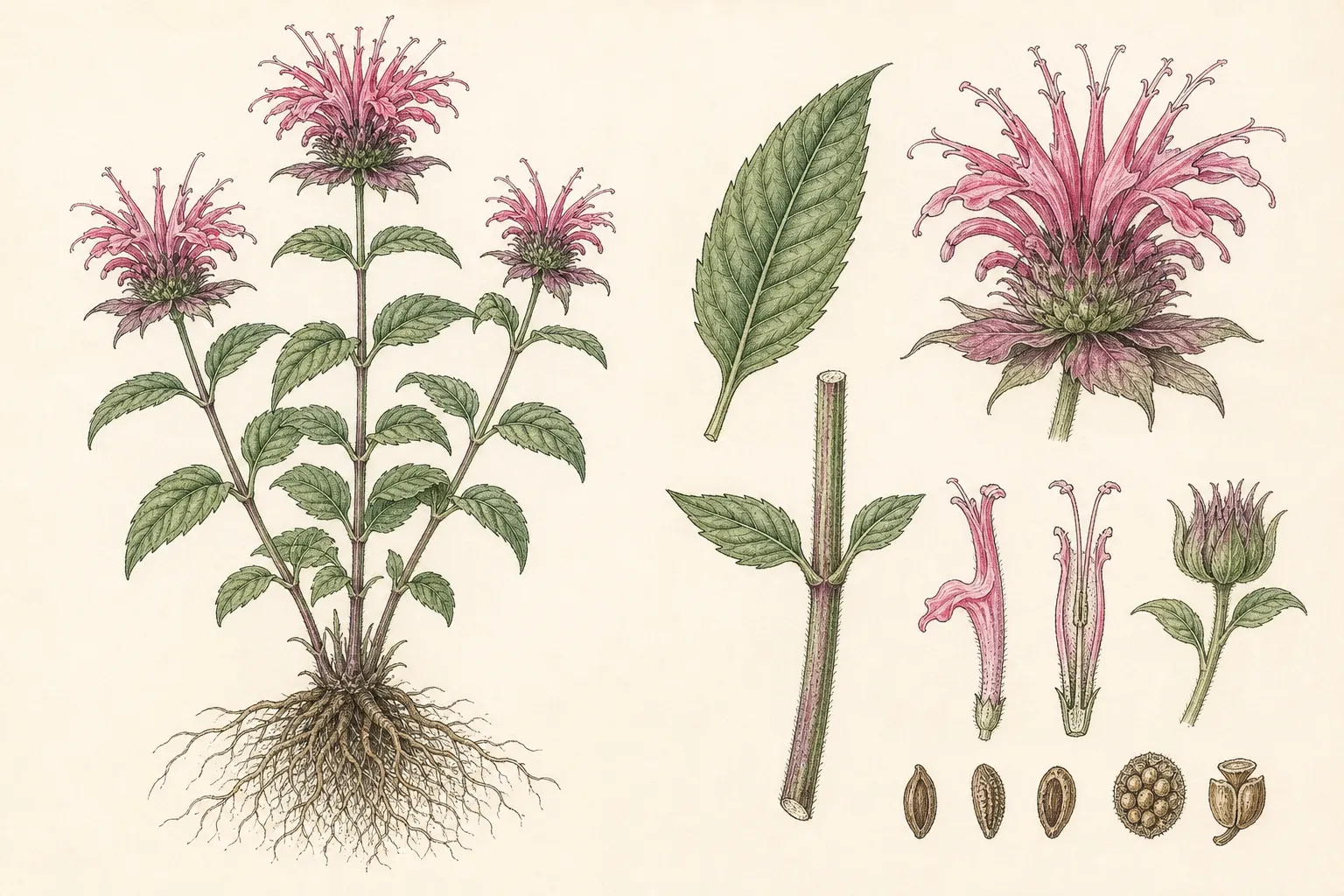
Bee Balm
A moisture-loving eastern North American perennial with aromatic leaves, scarlet flower whorls, spreading underground stolons, and mildew-prone foliage.
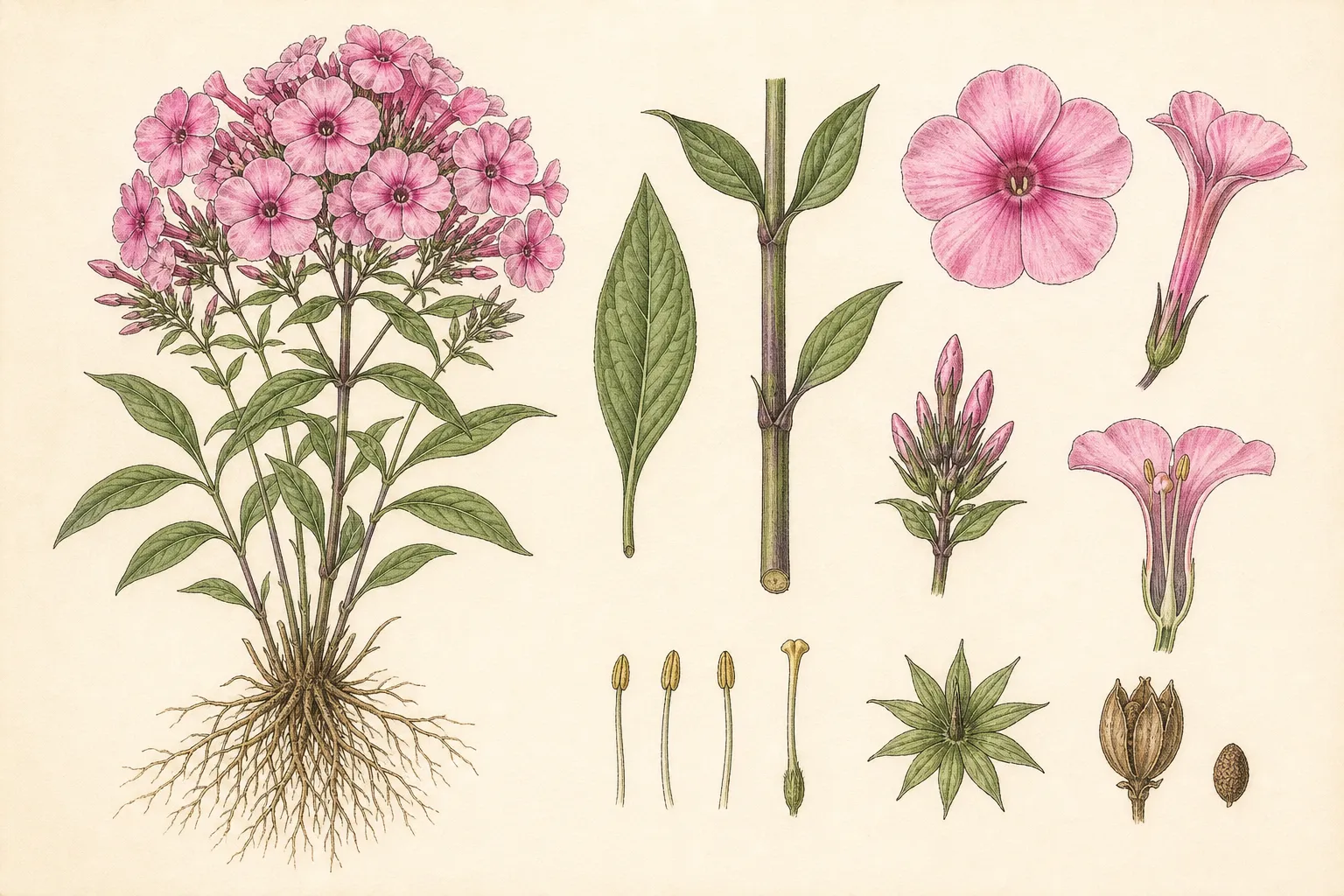
Garden Phlox
A tall eastern North American perennial with fragrant domed flower clusters, best grown in fertile moist soil with sun, airflow, and mildew-aware care.
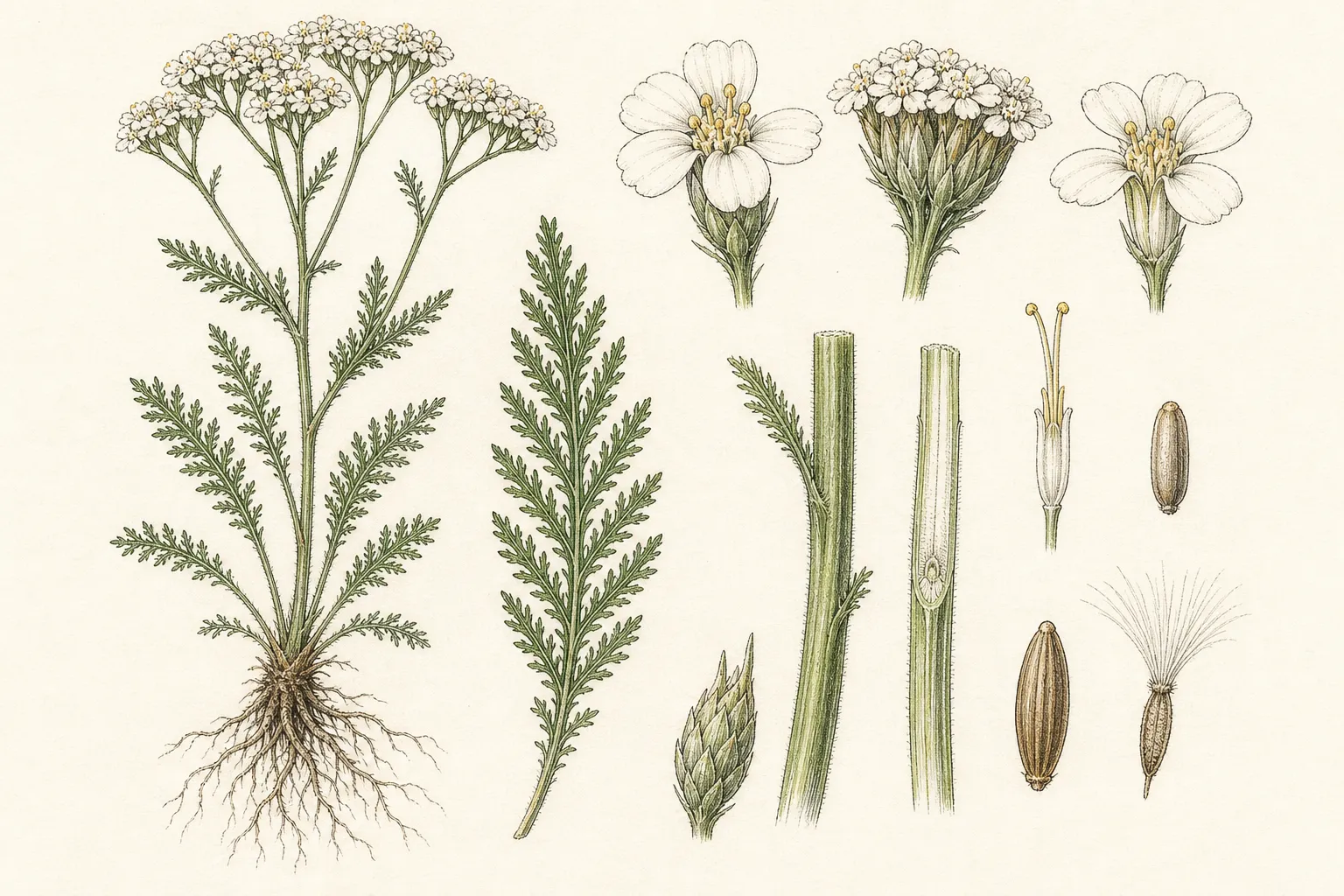
Common Yarrow
A sun-loving rhizomatous perennial with aromatic divided leaves, flat summer flower clusters, and a spreading habit that needs deliberate boundaries.
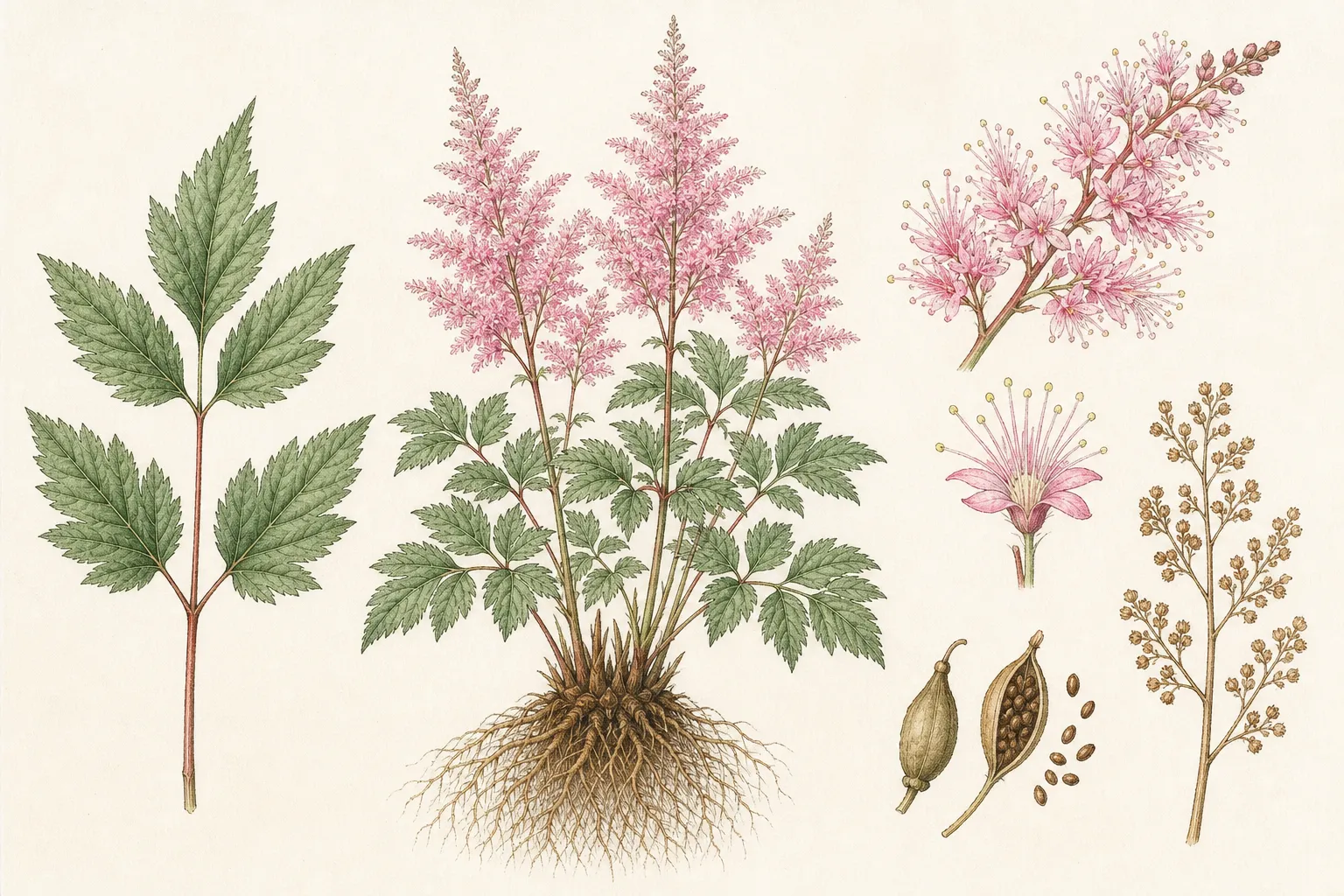
Chinese Astilbe
A moisture-loving East Asian perennial with divided foliage and upright late-summer plumes, suited to cool, humus-rich shade.
No entries match this index. Try a broader plant name, subject or task.