Sea Holly
Eryngium planum
A taprooted dry-garden perennial with steel-blue branched stems and small flower heads ringed by narrow bracts, intolerant of rich soil and winter wet.
Published Last updated
At a glance
- Light
- Full sun
- Water
- Low after establishment
- Soil
- Lean, sandy or gravelly, sharply drained soil
- Hardiness
- Zones 5–9
- Bloom
- Midsummer to early autumn
- Height
- 2–3 ft · 60–90 cm
In this guide
Overview
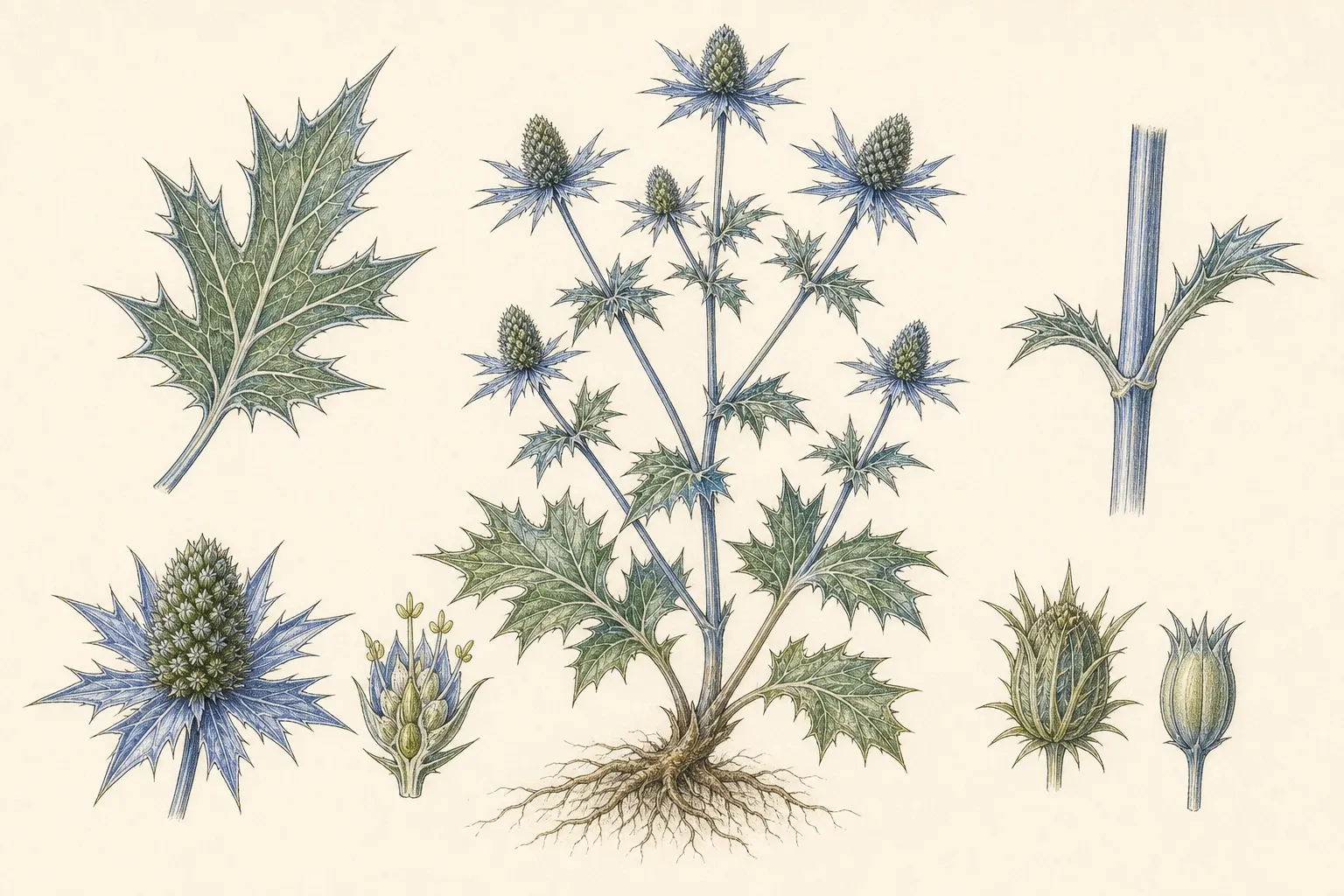
Sea holly is a deciduous, taprooted perennial with rounded to oblong basal leaves and branched upper stems that turn steel blue around small oval flower heads. The narrow bracts look spiny even though the basal leaves of Eryngium planum are flatter and less armed than those of many other eryngiums.
Place the 2–3 ft stems among grasses and rounded flower forms where the rigid silhouette can stand clear. Allow 1–2 ft of spread and keep the prickly upper growth back from narrow paths.
Full sun and lean sandy, gravelly, or loamy soil bring the strongest blue color. Rich soil, shade, and regular irrigation create green, weak stems that can topple. Protection from winter wet is more important than added fertility.
Choose the permanent position before planting because the deep taproot makes established plants slow to recover from division or transplanting. Set the crown at nursery grade, water during the first season, and avoid cultivating over the root.
Flower heads can be cut for fresh or dried arrangements, deadheaded to limit seedlings, or left for winter structure. Cut old stems at the base before new spring leaves expand. Use seedlings or root cuttings for propagation rather than repeatedly splitting the mature crown.
- Family
- Apiaceae
- Range
- East-central Europe through Central Asia to Mongolia and the western Himalaya
- Soil pH
- 5.5–7.5
- Spread
- 1–2 ft · 30–60 cm
Planting & careHow to grow sea holly
Kew records Eryngium planum as introduced across parts of northern North America and Europe. It may self-seed in open ground, so deadhead where volunteers are unwanted and check local invasive-plant guidance before naturalizing it.
- 1Leave room around the taproot
Allow roughly 2–3 ft in height and 1–2 ft in spread, with access to cut stems and pull seedlings without disturbing the permanent taproot.
- 2Choose lean full-sun ground
Choose full sun and lean sandy, gravelly, or loamy soil where rain leaves quickly. Rich amended soil, irrigation overspray, and winter puddling weaken the blue stems.
- 3Set the taproot once
Choose the permanent position, keep the crown at nursery grade, backfill without bending or breaking the taproot, and water thoroughly to settle the soil.
- 4Water only to establish
Water a new plant when the root ball begins to dry during its first season. Once the taproot is established, irrigate only during prolonged drought.
- 5Protect the basal crown
Use gravel or very shallow mulch outside the crown. Keep the basal rosette exposed so winter wet and early rot remain visible.
- 6Choose the seed-head finish
Decide whether winter heads or seedlings are wanted. Deadhead before seed ripens where volunteers would be difficult to remove by their taproots.
Pruning sea holly
Leave firm blue heads for autumn and winter structure, or deadhead earlier where seedlings are unwanted. Cut old stems at the base before new spring growth. Avoid routine division or transplanting because the mature taproot recovers slowly from disturbance.
Seasonal care
Spring
Cut old stems before the basal rosette expands, remove unwanted seedlings while small, and avoid digging or dividing the established taproot.
Summer
Withhold routine irrigation from established plants, deadhead if self-sowing is unwanted, and check weak green or leaning stems for shade and excess fertility.
Autumn
Retain sound blue heads for winter or cut them for drying. Do not divide the mature crown; mark seedlings now if they will be moved while young.
Winter
Keep rain and snowmelt from pooling over the dormant crown. Leave the taproot undisturbed and remove only stems that have collapsed.
Safety and garden spread
The retained institutional profiles do not identify a specific poisoning hazard, but the stiff bracts and upper leaves can be prickly. Wear gloves when cutting stems and keep the plant back from narrow paths and play areas.
Common problems
Root rot after wet weather
- Look for
- The basal rosette wilts in damp soil, crown tissue softens, or the plant fails after a wet winter.
- Action
- Stop irrigation, expose the crown, and correct drainage. Remove irrecoverable tissue; replace the plant only in a drier position because the mature taproot is difficult to salvage.
Leaning or splayed stems
- Look for
- Flowering stems fall outward, expose the center, or need support despite normal weather.
- Action
- Increase sun and reduce fertility and irrigation. Support may prevent breakage temporarily, but the lasting correction is a leaner, brighter site.
Aphids, slugs, or snails
- Look for
- Aphids cluster on new stems, or irregular chewing appears on young basal leaves in damp weather.
- Action
- Confirm the pest, remove small infestations by hand or water where practical, and use a locally labeled control only when damage justifies it.
Unwanted seedlings
- Look for
- Young rosettes appear in gravel or open soil beyond the intended planting.
- Action
- Lift seedlings before their taproots deepen and deadhead future flower heads before seed ripens. Do not attempt to contain the species by splitting the mature parent.
Plant details
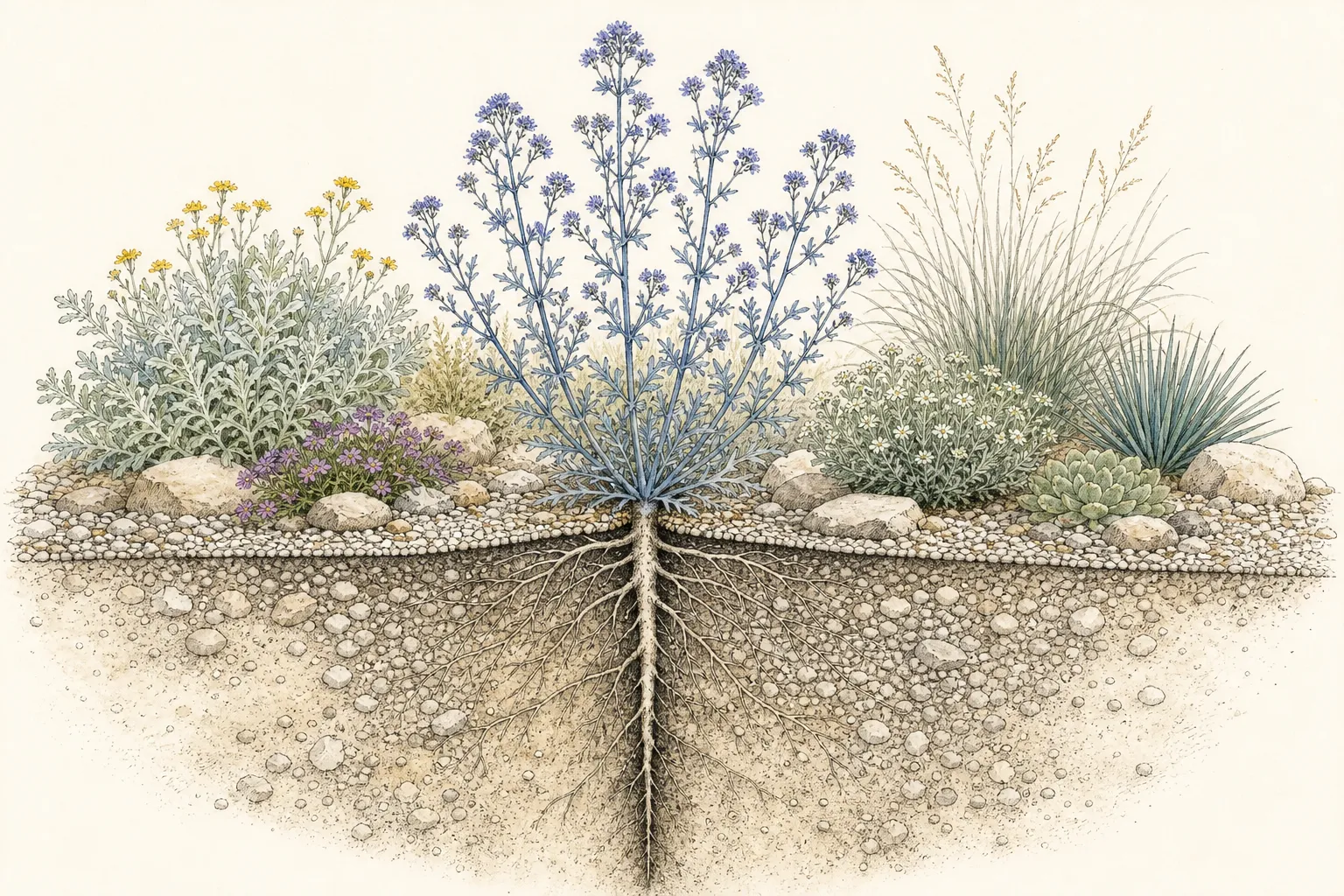
Garden study showing the placement and growth habit of Sea Holly
Sources
- Eryngium planum. NC State Extension. Source record · Accessed 2026-08-30.
- Eryngium planum. Royal Horticultural Society. Source record · Accessed 2026-08-30.
- Eryngium planum L.. Royal Botanic Gardens, Kew. Source record · Accessed 2026-08-30.
- Sea holly. The Morton Arboretum. Source record · Accessed 2026-08-30.