Gardens
Design ideas and plant combinations for spaces large and small.
58 entries
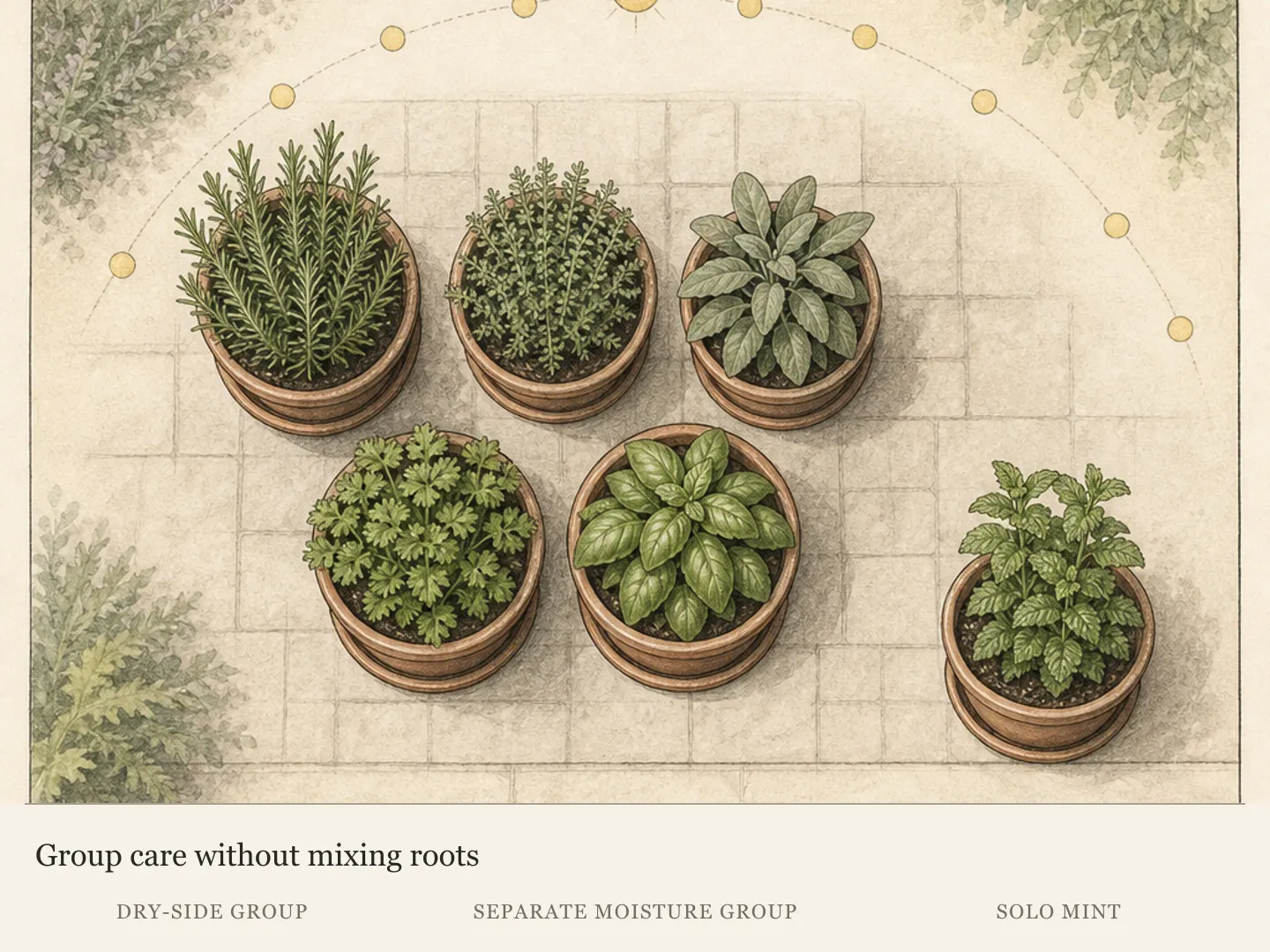
A Container Herb Garden Grouped by Watering Needs
Compose several compatible herb pots as one small garden, preserving separate root zones while repeating container finishes, forms, and access paths.
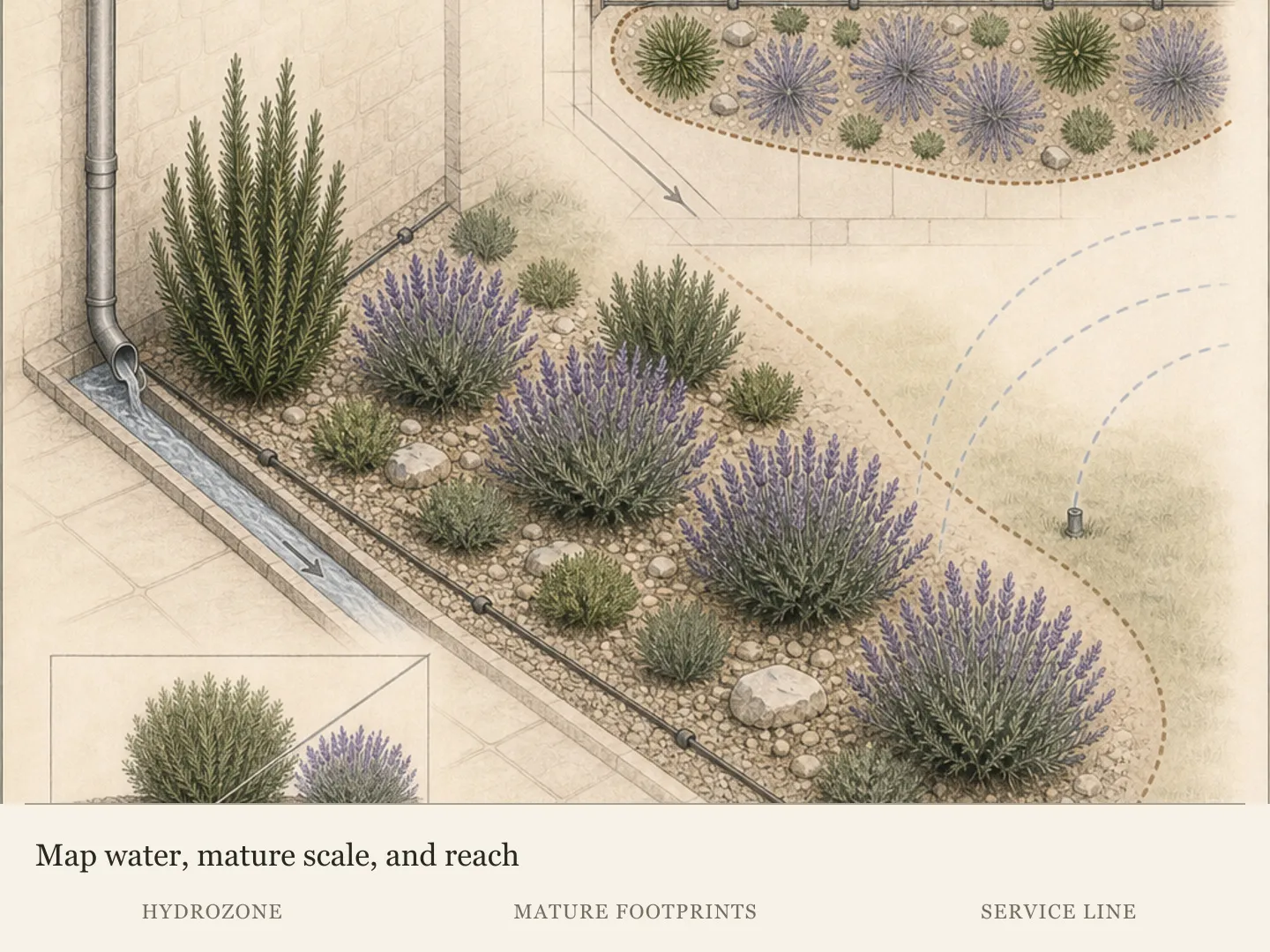
A Dry Herb Border with Lavender and Rosemary
Design a dry herb border as one sunny, free-draining hydrozone, using lavender repetitions, rosemary anchors, mature footprints, and an accessible edge.
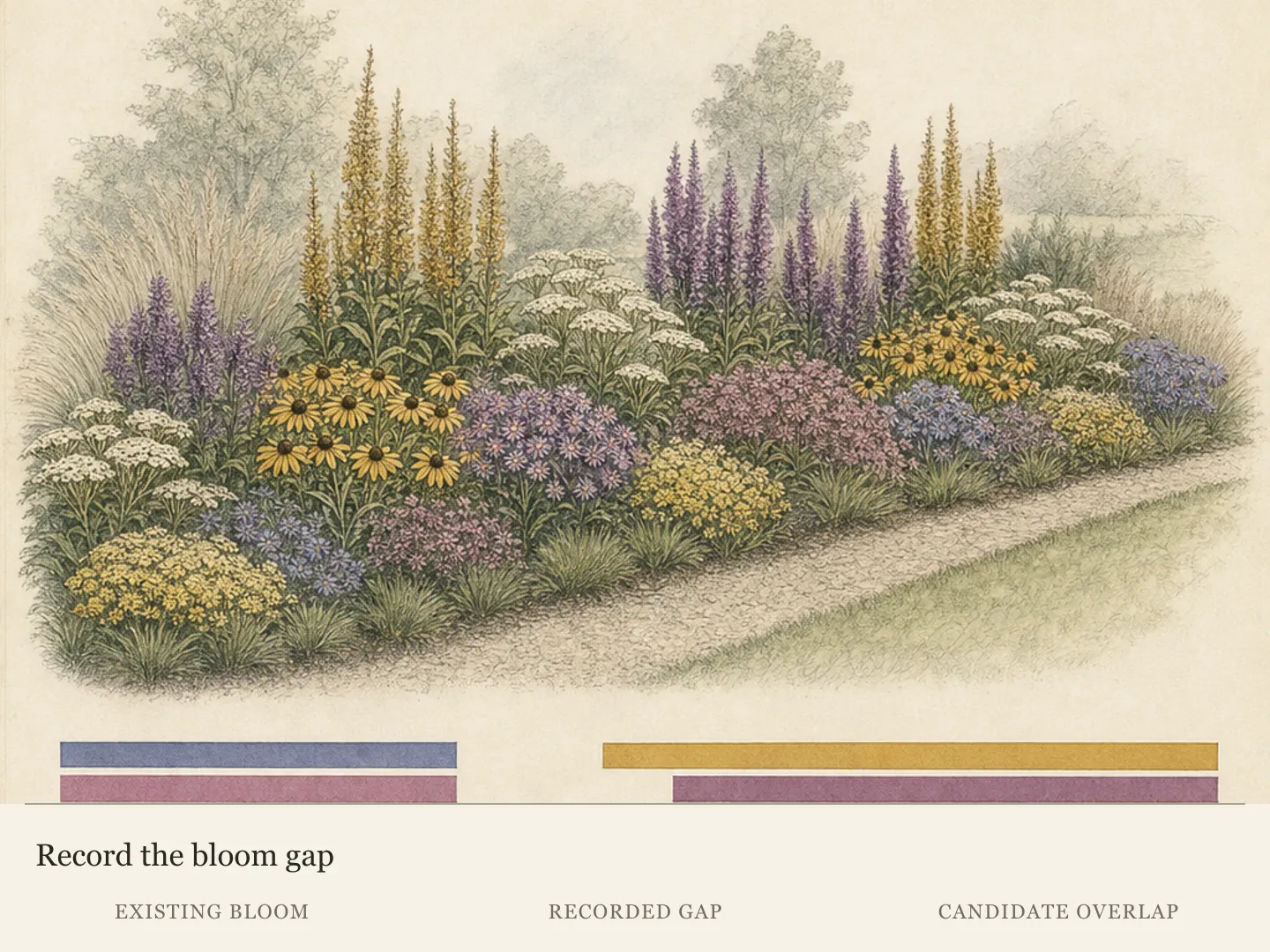
Late-Summer Pollinator Border: Bloom Gaps and Repeated Drifts
Map the border's actual August-to-fall bloom gap, then compose regionally appropriate drifts that fit the site, mature scale, and maintenance route.
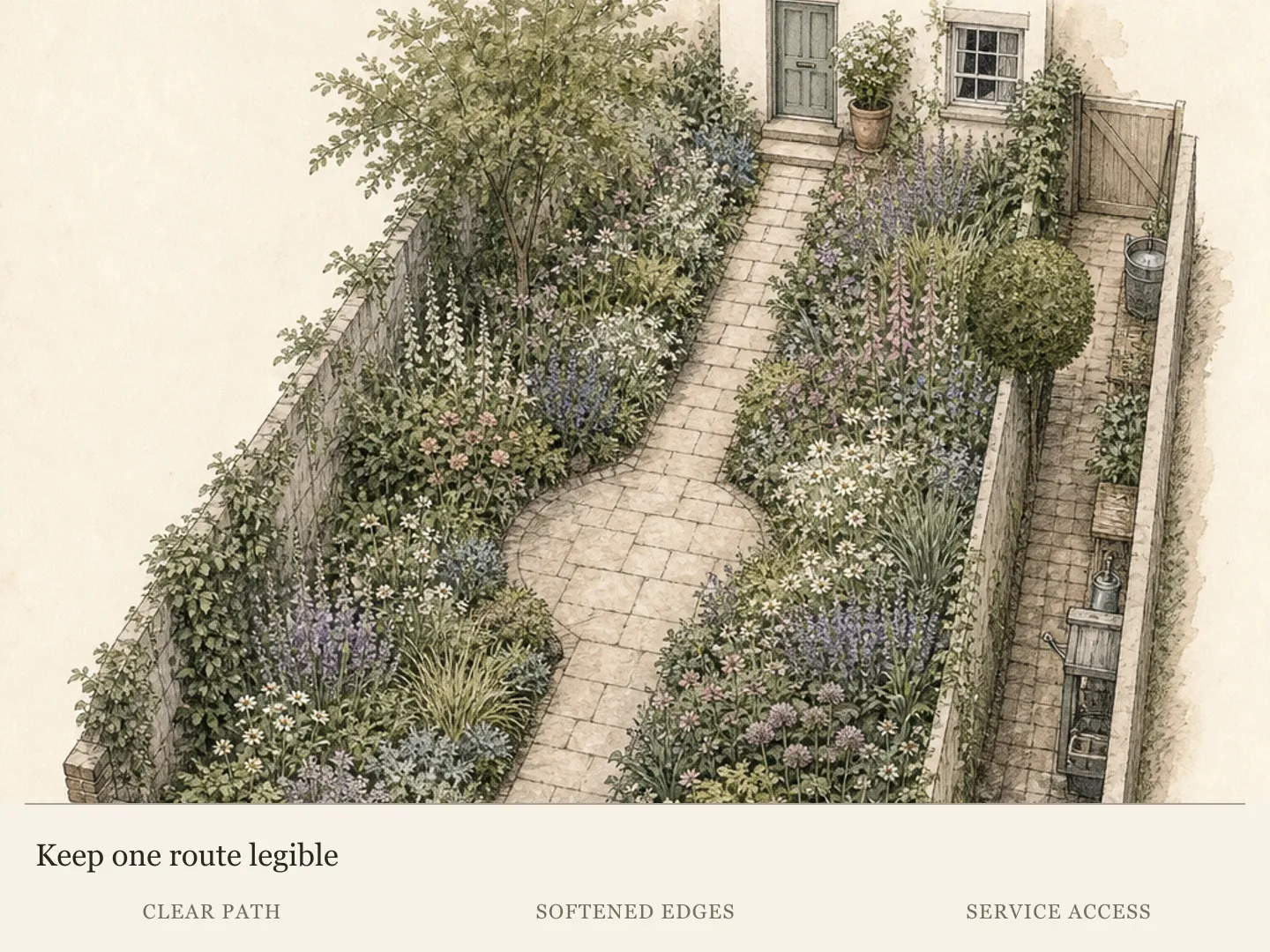
A Cottage Garden for a Small Plot
Give a small cottage garden a legible path and a restrained plant palette, then build abundance through repetition, layers and seasonal succession.
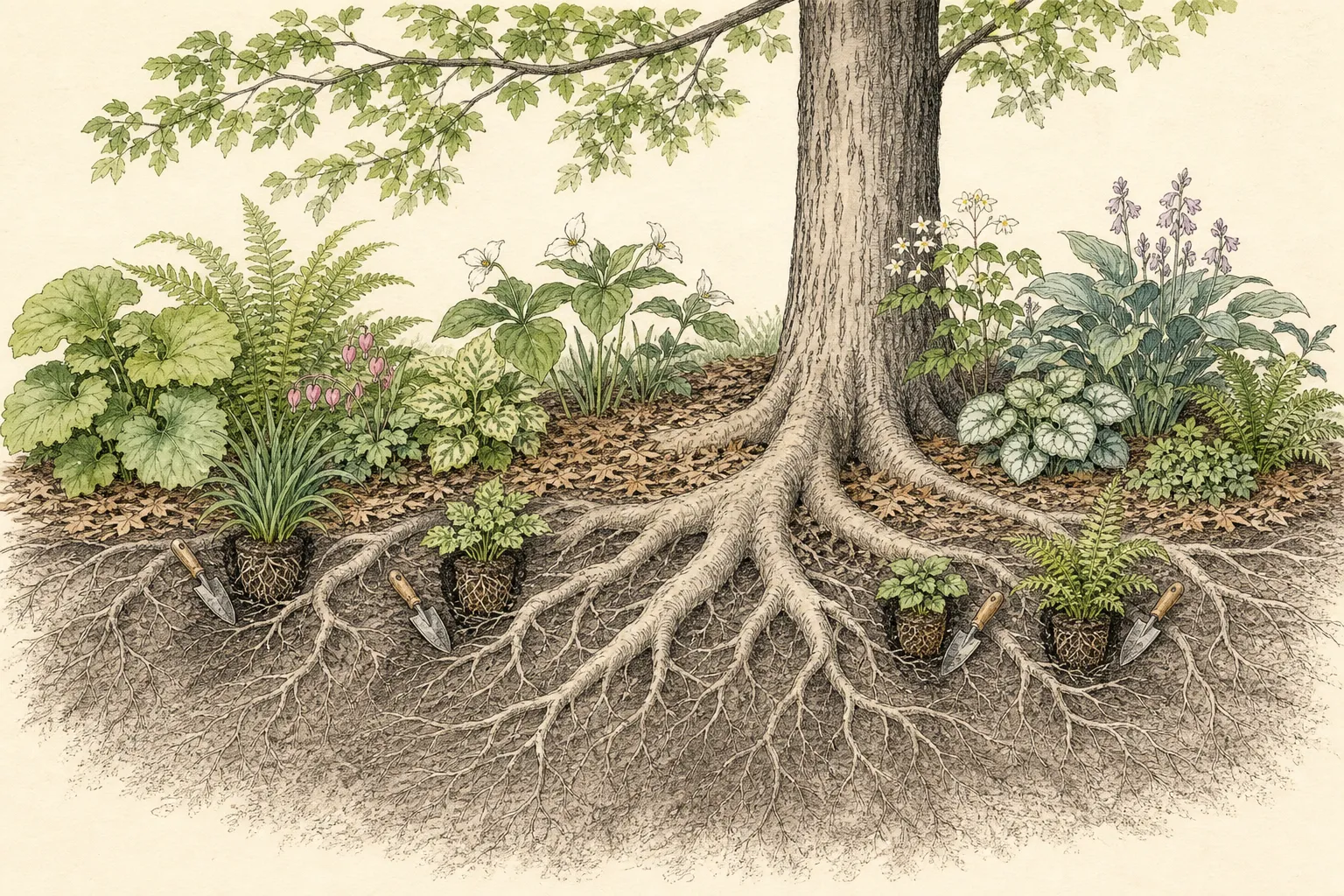
Design a Dry-Shade Garden Without Burying Tree Roots
Map changing light and surface roots, plant in small pockets without grade changes, and build a restrained understory that survives tree competition and remains serviceable.
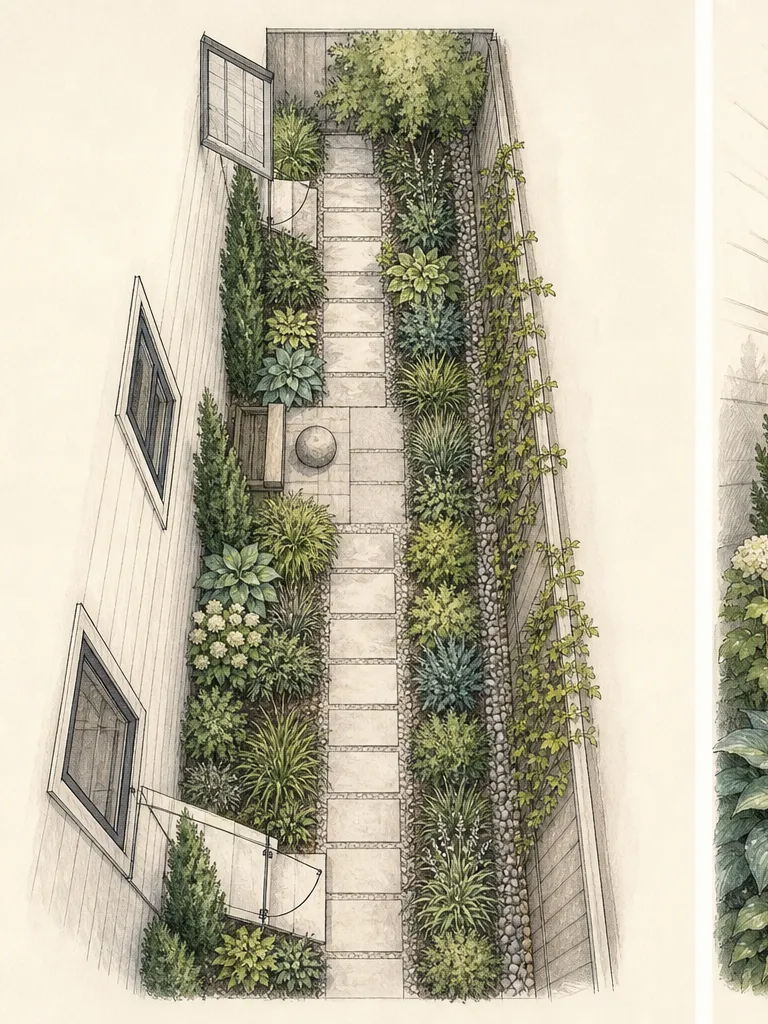
Design a Narrow Side-Yard Garden with Layered Foliage, Access, and Borrowed Light
Turn a narrow side yard into a usable foliage garden by protecting circulation and utilities, mapping reflected and seasonal light, and layering plants without closing the passage.
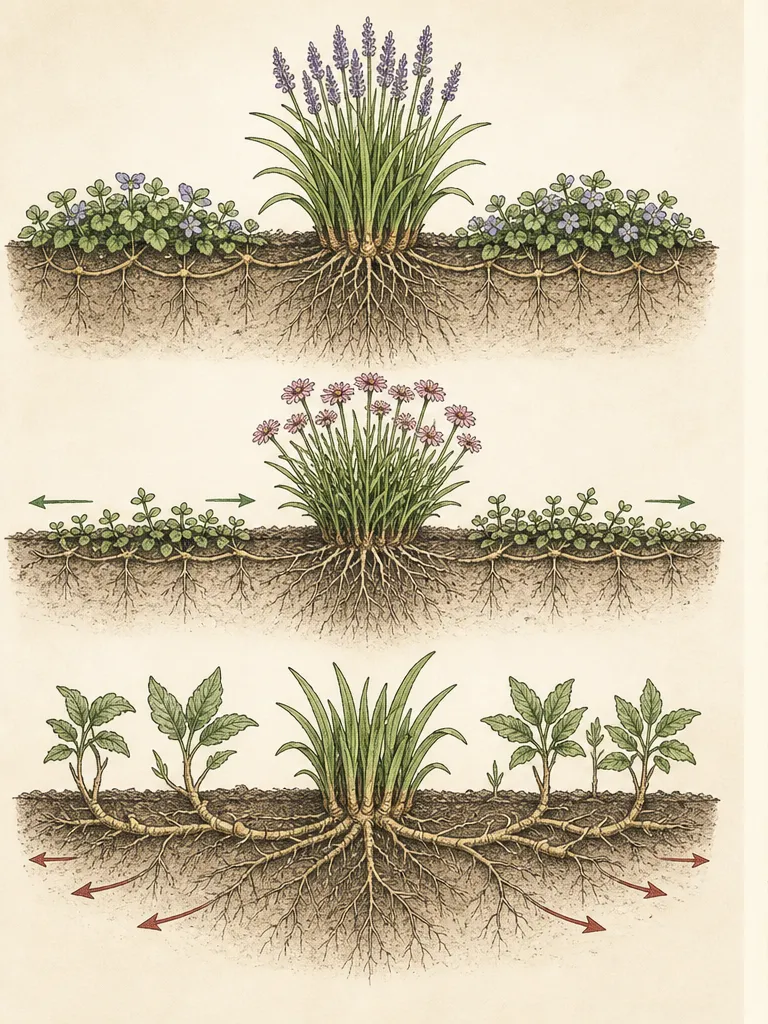
Combine Spreading Groundcovers with Clumping Perennials Without Burying Crowns
Pair spreading groundcovers with clumping perennials by mapping mature crowns, setting inspectable boundaries, and keeping mulch and runners away from living crown tissue.
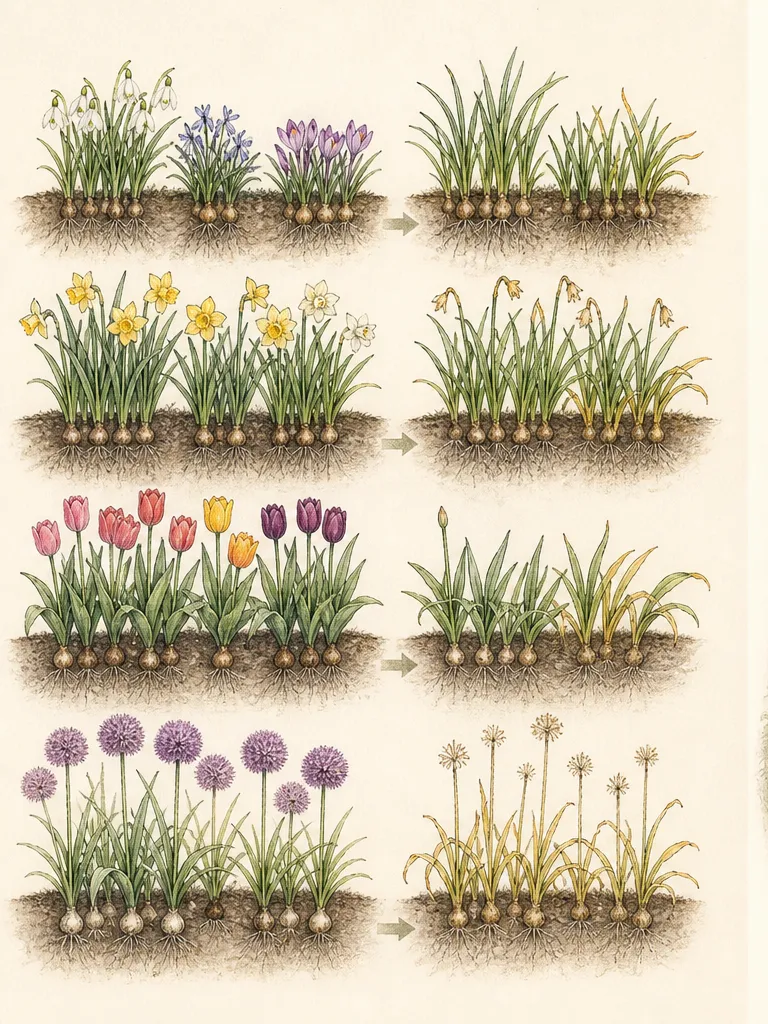
Plan an Autumn Bulb Display by Bloom Sequence, Foliage Duration, and Repeatable Groups
Design a spring bulb display in autumn by mapping local bloom windows, the longer life of post-flowering foliage, and a small set of repeatable planting groups.
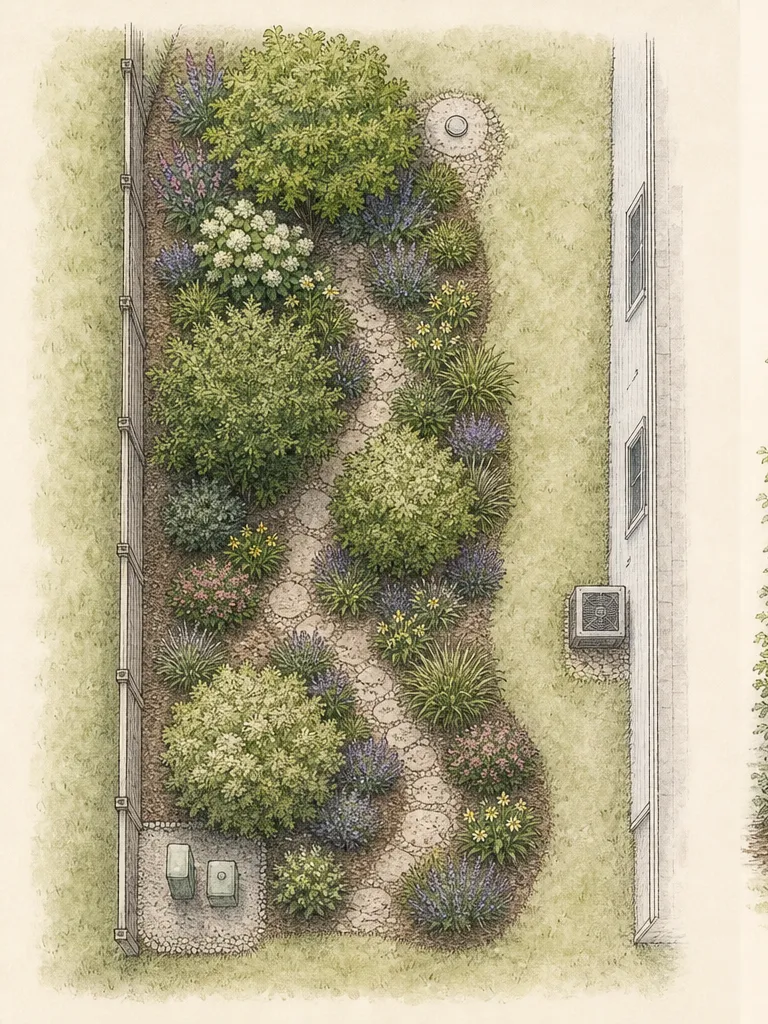
Layer Shrubs and Perennials for a Privacy Border That Stays Maintainable
Interrupt the views that matter with spaced shrub anchors, repeated perennial groups, and permanent access instead of building a solid wall of recurring pruning.
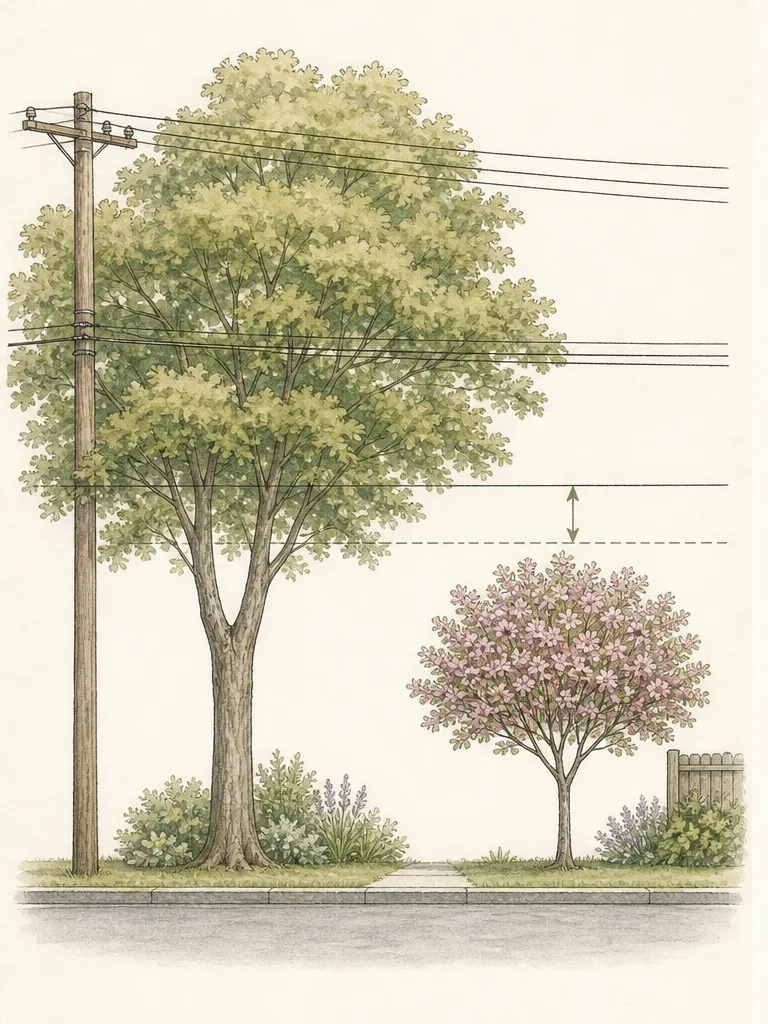
Select a Small Ornamental Tree Beneath Utility Lines
Choose and site a small ornamental tree under overhead utility lines by identifying the line, following local utility limits, mapping mature height and spread, and preserving access above and below ground.
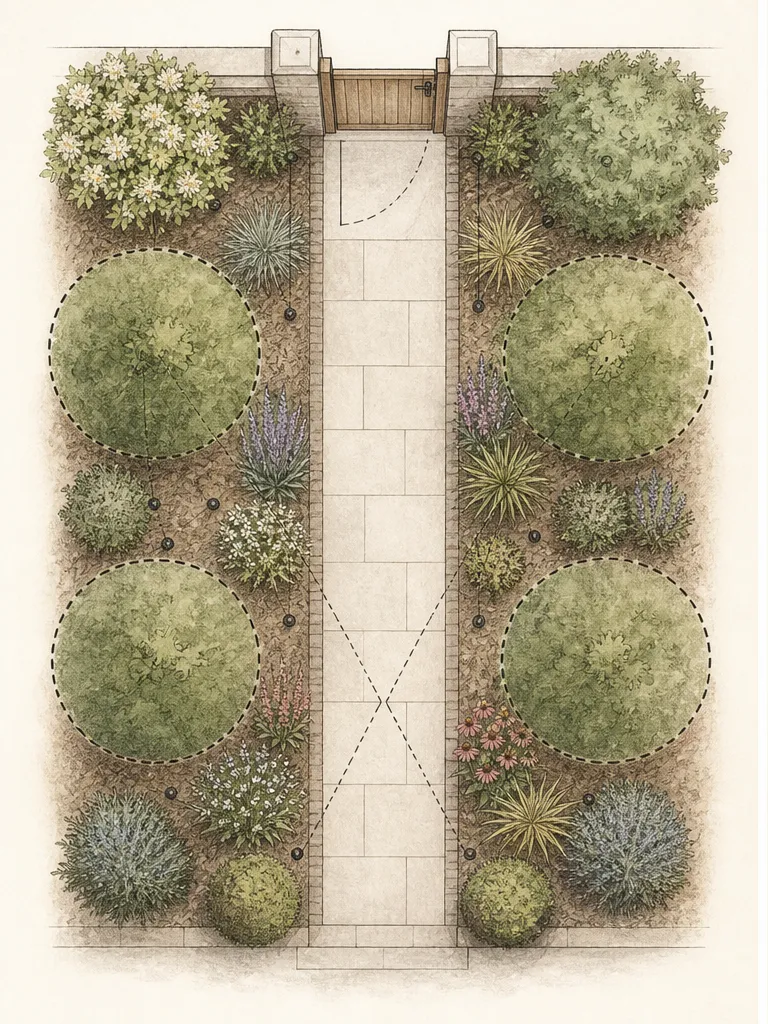
Design a Front-Path Border That Stays Off the Paving
Plan a welcoming front-path border from mature plant spread, a clear walking and service edge, contained plant habits, and irrigation that wets roots without spraying or draining across the paving.
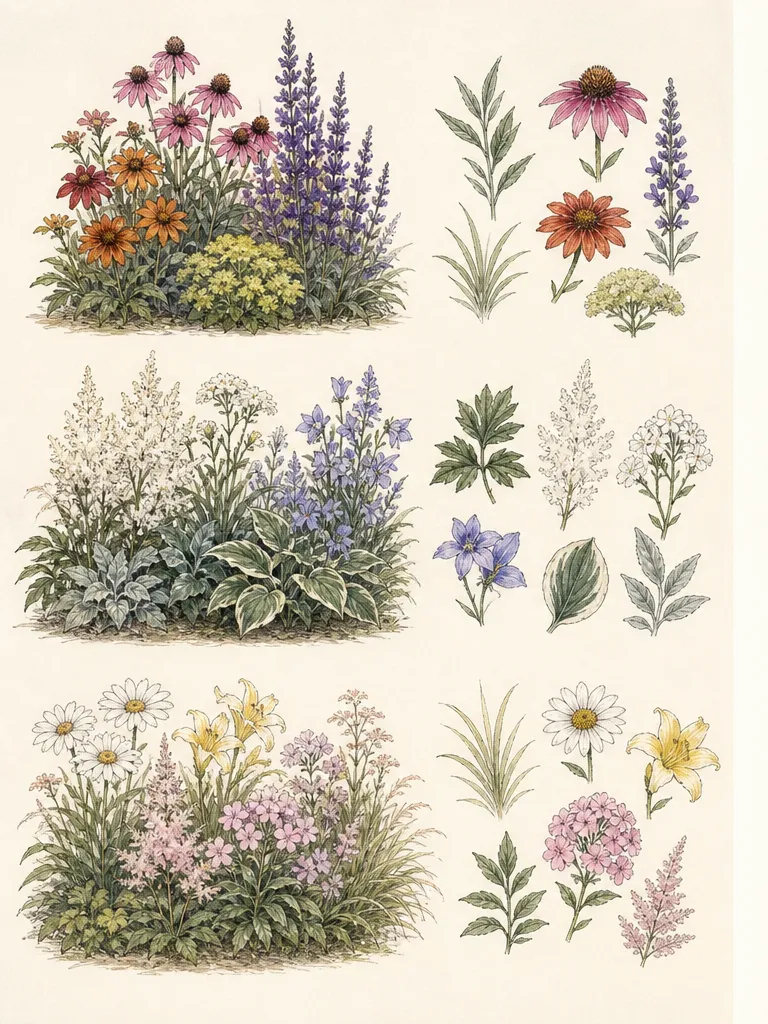
Choose Flower Color Relationships for Sun, Shade, and Evening
Build flower palettes from relationships—analogous, complementary, or monochromatic—then adjust their value, proportion, foliage, and repetition for bright sun, open shade, and evening viewing.
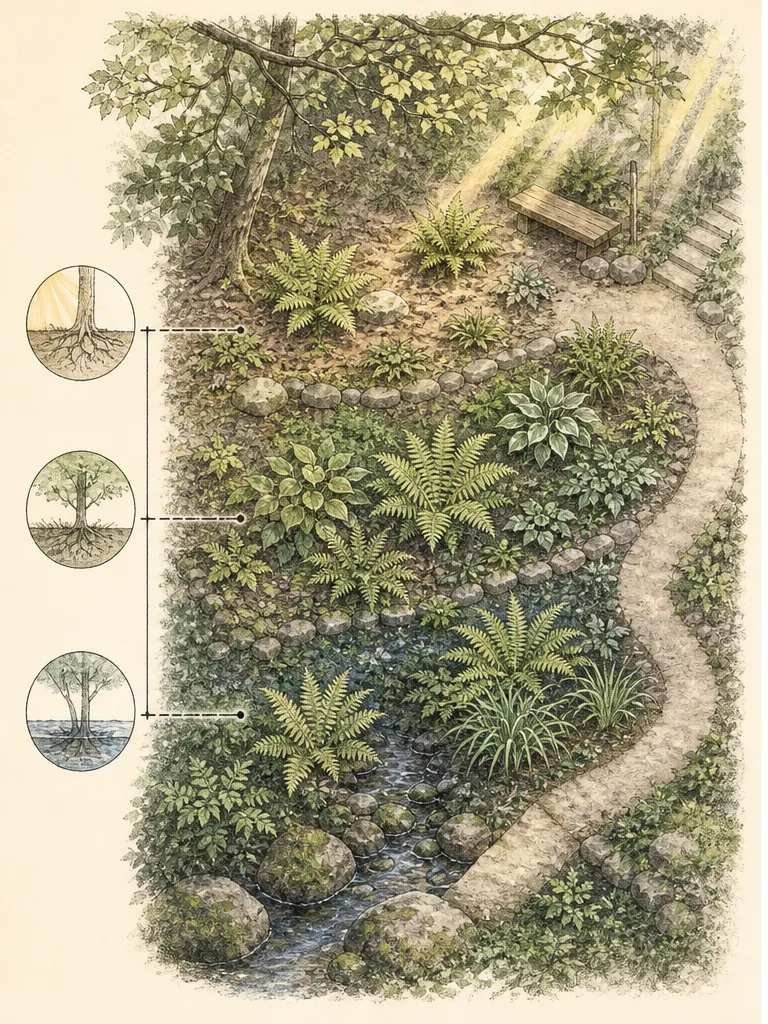
Build a Fern Garden From Measured Moisture and Light Gradients
Map shade through the day and soil moisture after rain, then arrange locally hardy ferns by mature habit, spread behavior, seasonal presence, and access.
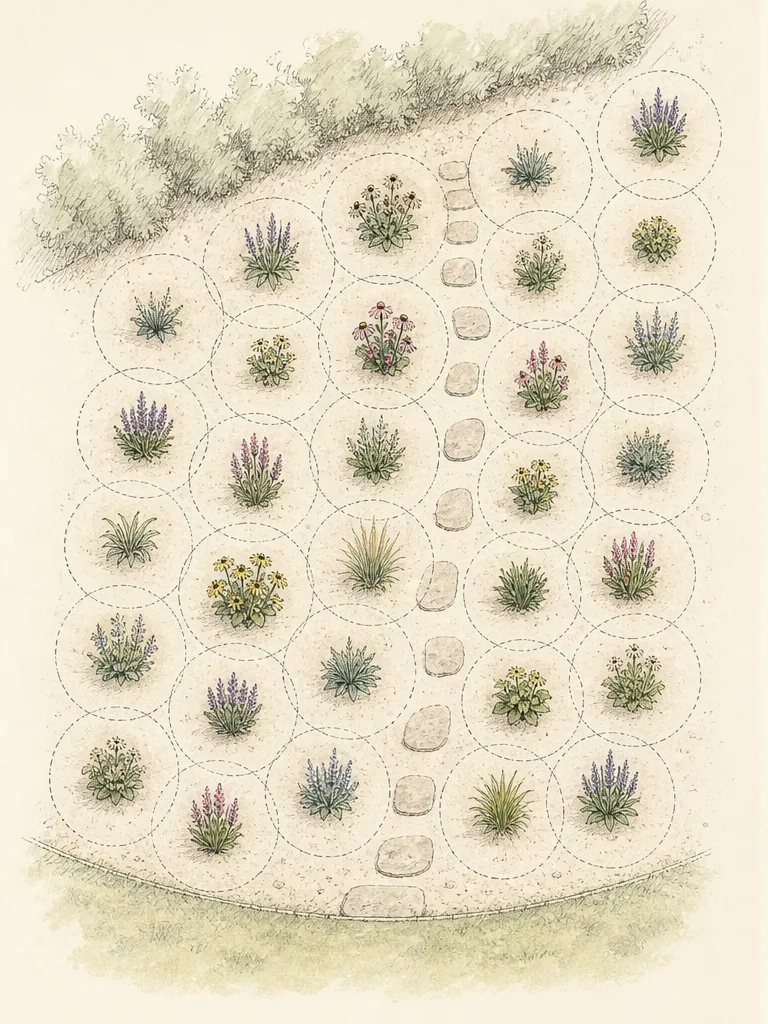
Space a New Perennial Border for Mature Spread and Maintenance Access
Turn nursery-label spreads into a scaled border plan that lets plants meet at maturity while preserving routes for weeding, division, staking, and watering.
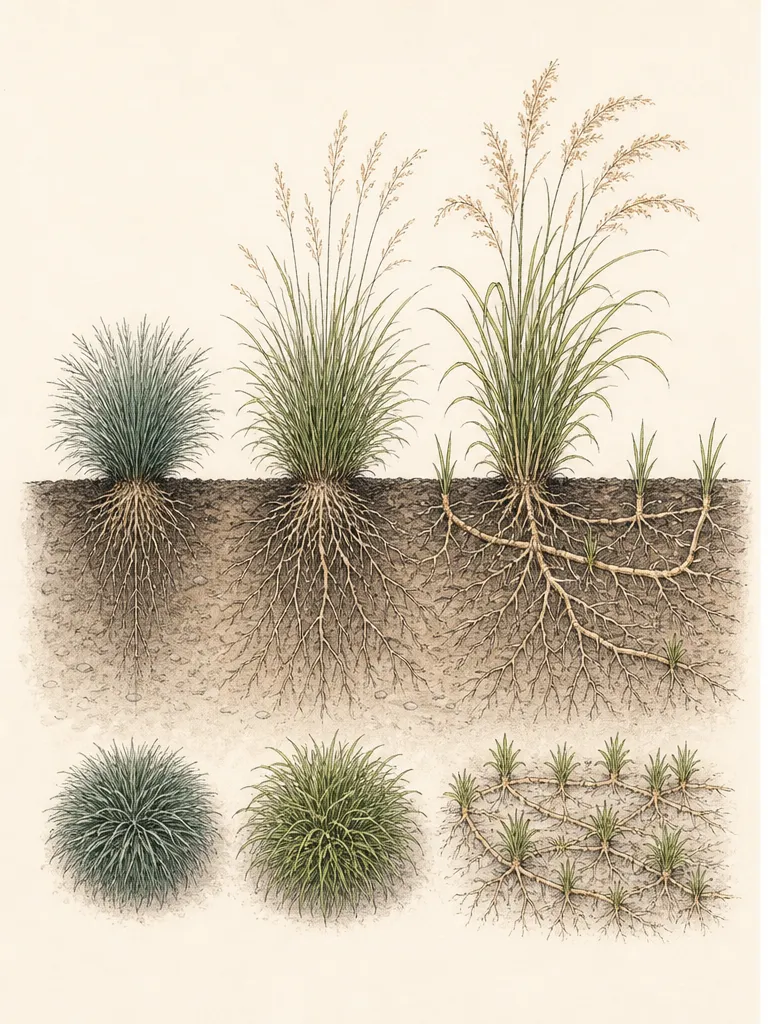
Choose Ornamental Grasses by Habit, Spread, and Seasonal Structure
Compare the mature outline, clumping or running behavior, and year-round structure of ornamental grasses before assigning each one a garden role.
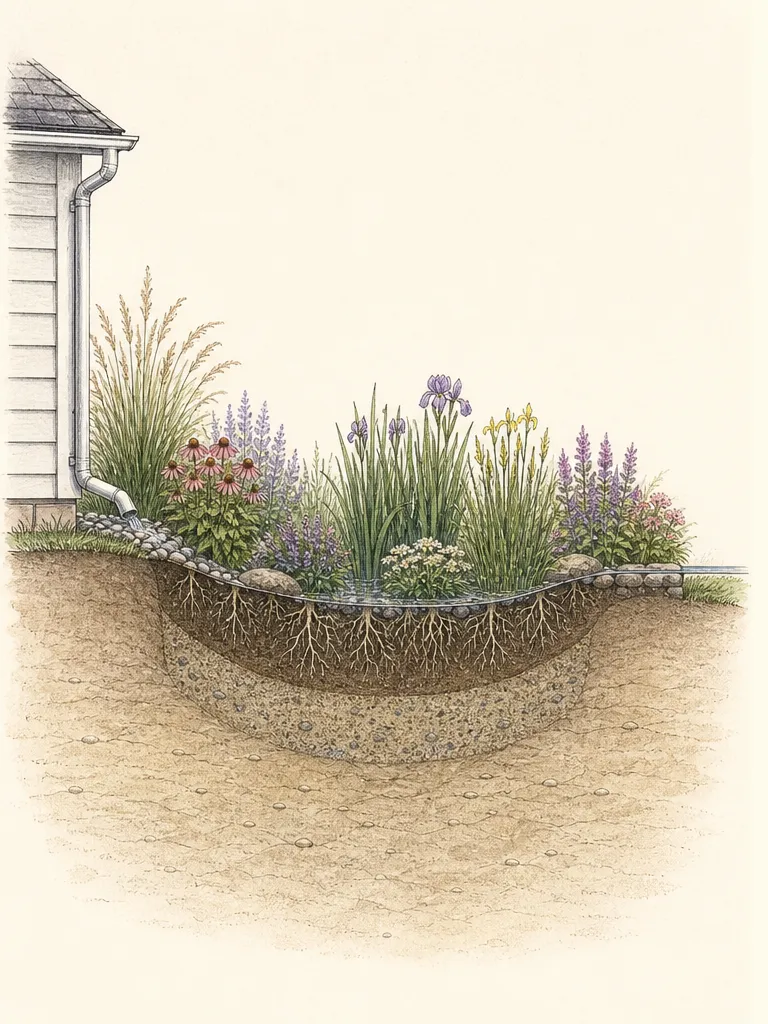
Design a Residential Rain Garden by Wet, Moist, and Upper-Edge Zones
Map how runoff enters, settles, and leaves a residential rain garden, then compose wet, moist, and upper-edge plant groups that remain legible between storms.
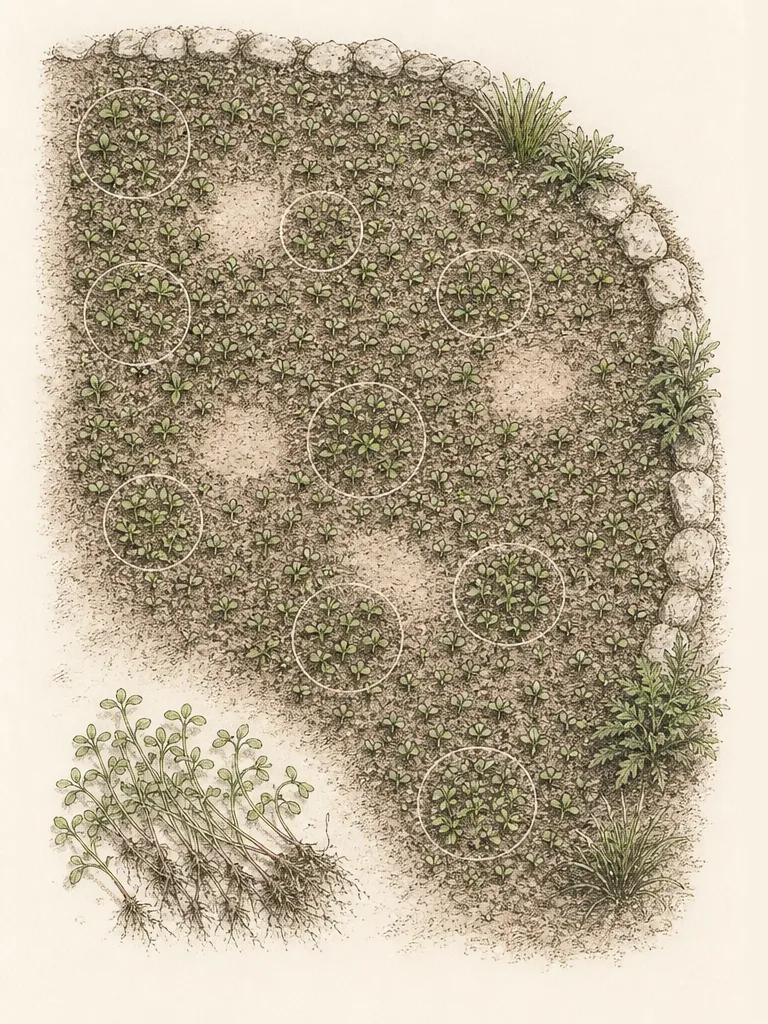
Edit Self-Sown Annual Flowers Into Deliberate Naturalistic Drifts
Map, identify and thin self-sown annual flowers into legible drifts with calm edges, repeated shapes and chosen seed zones instead of an accidental thicket.
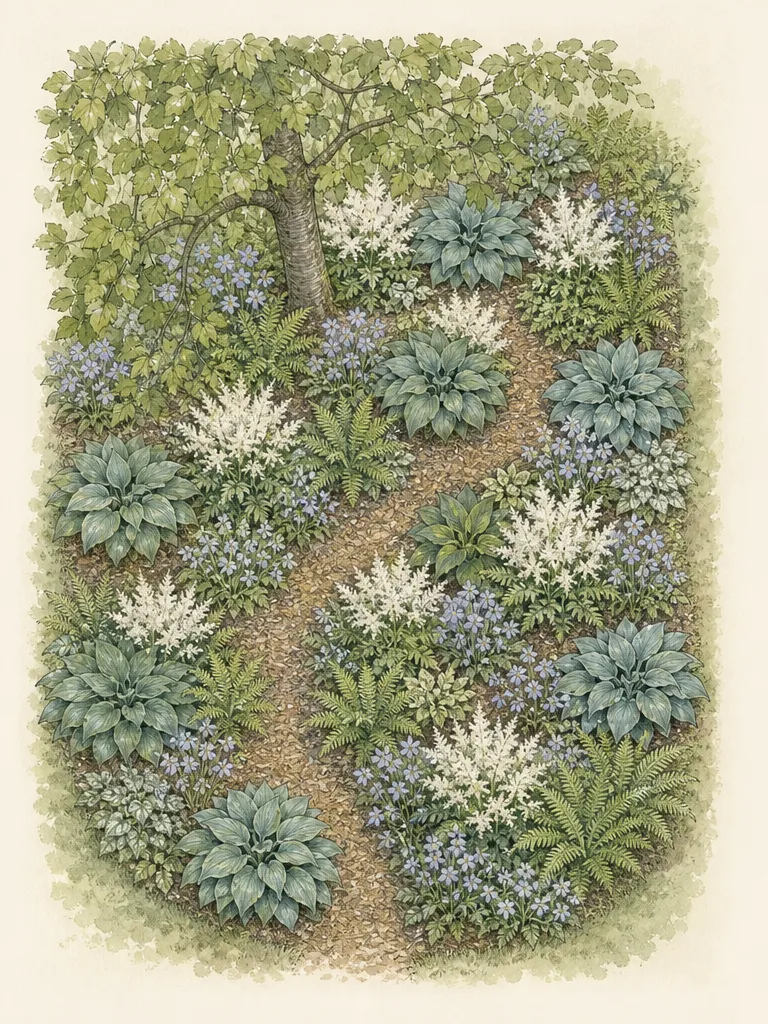
Design a Blue-and-White Shade Border With Foliage as Its Structure
Build a luminous shade border from repeated leaf masses, silver and blue-green tones, white edges and a measured sequence of locally suitable flowers.
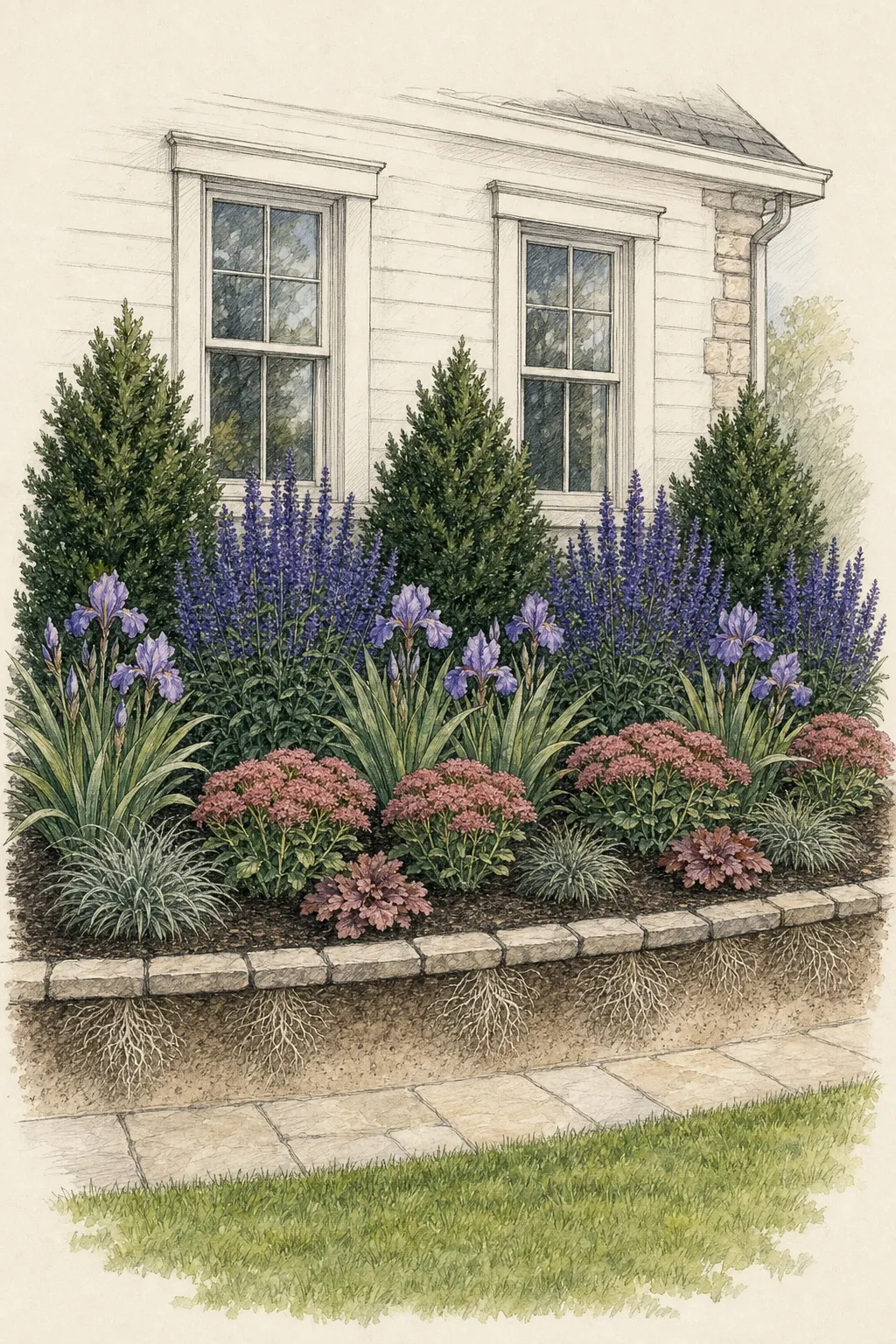
Design a Long-Blooming Foundation Border with Clear Windows and Access
Plan a long-blooming foundation border from building clearance, window views, mature plant size, service routes, drainage, and a restrained sequence of flowers.
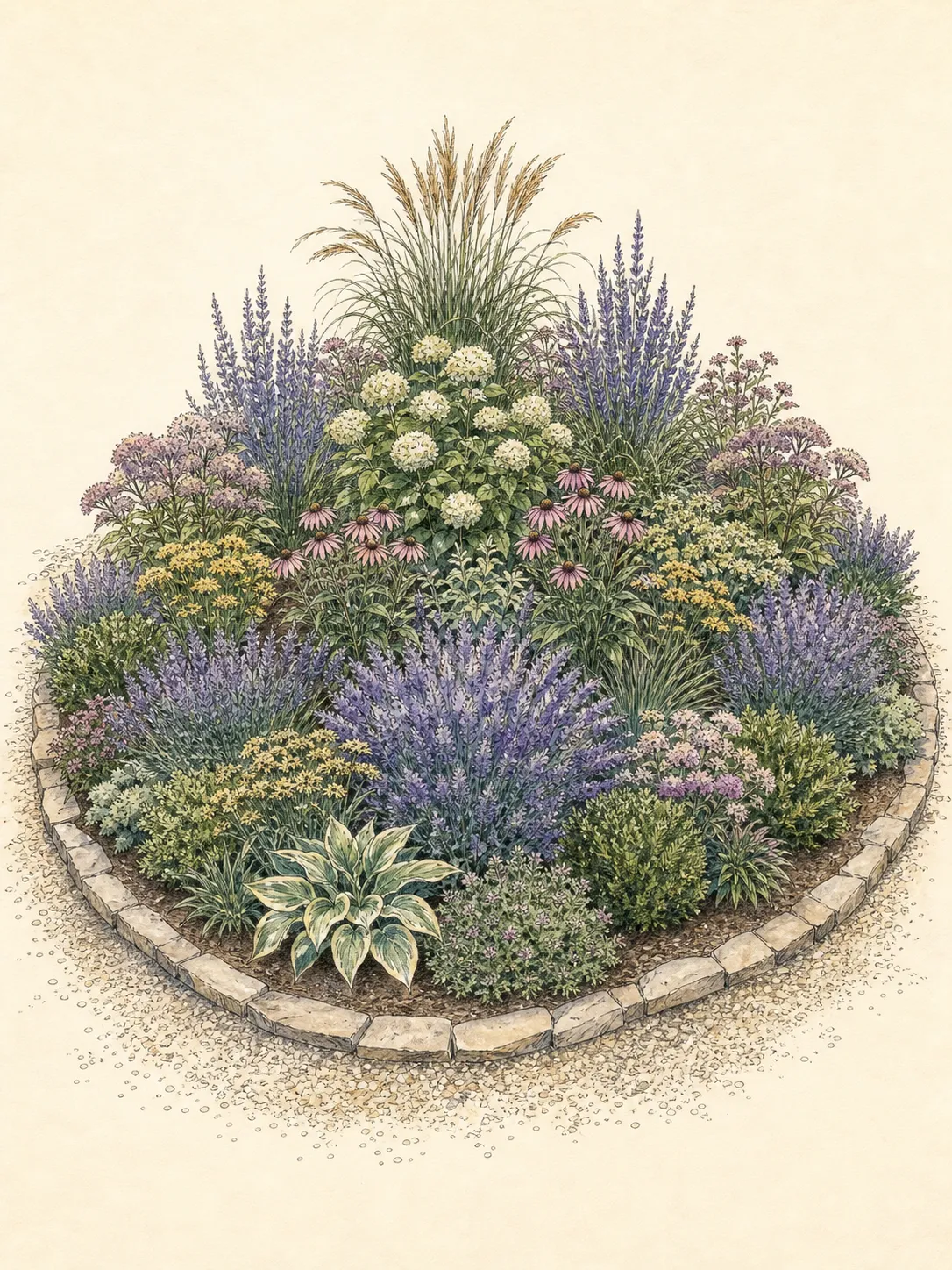
Design an Island Flower Bed That Reads from Every Side
Shape an island flower bed around its real viewing routes, repeated plant masses, graduated but varied height, and concealed access that keeps every crown serviceable.
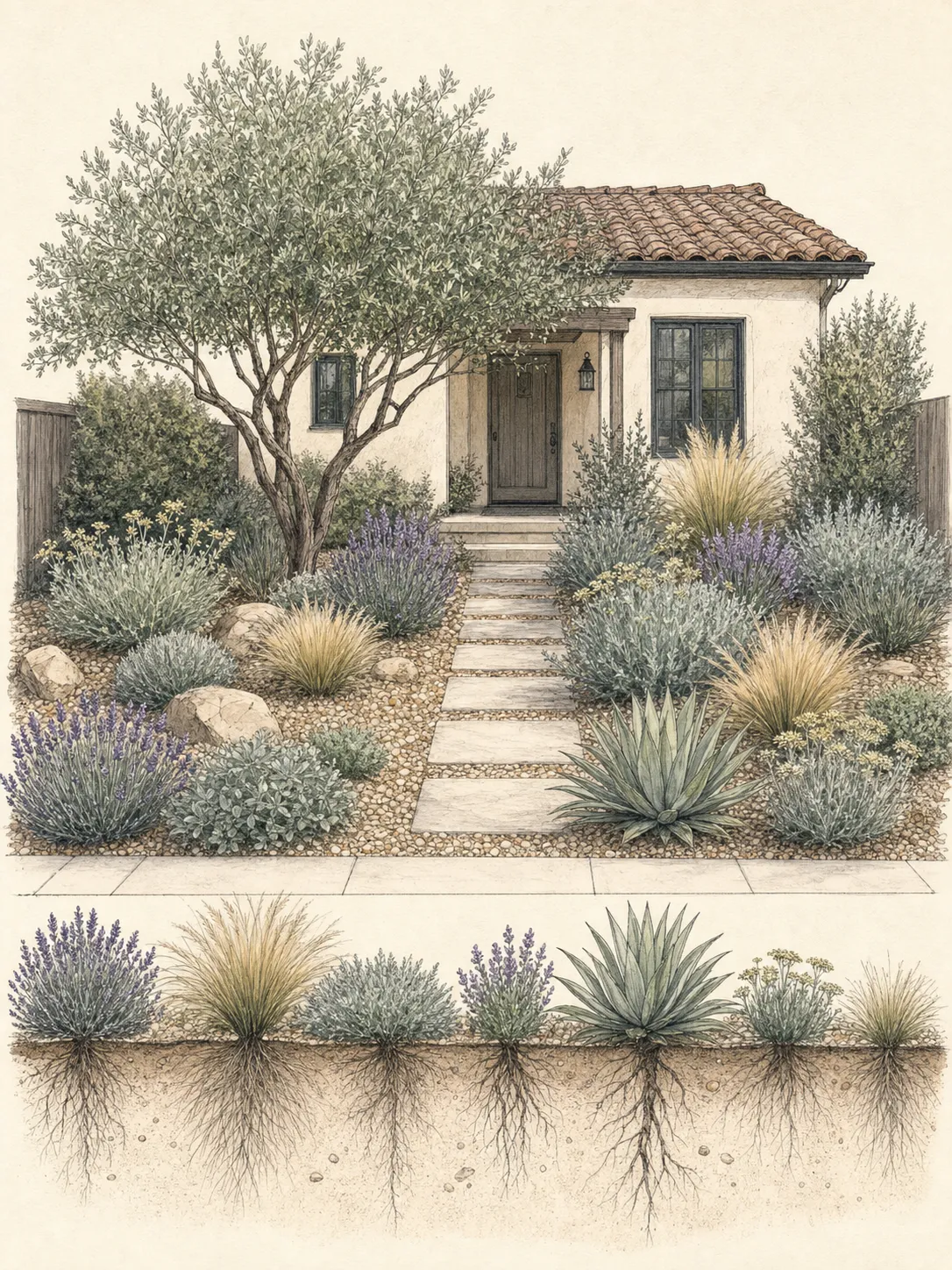
Design a Low-Water Front Garden with Structure, Not Just Cacti
Build a low-water front garden around regionally suitable structural plants, repeated foliage, useful paths, and irrigation zones rather than a single desert stereotype.
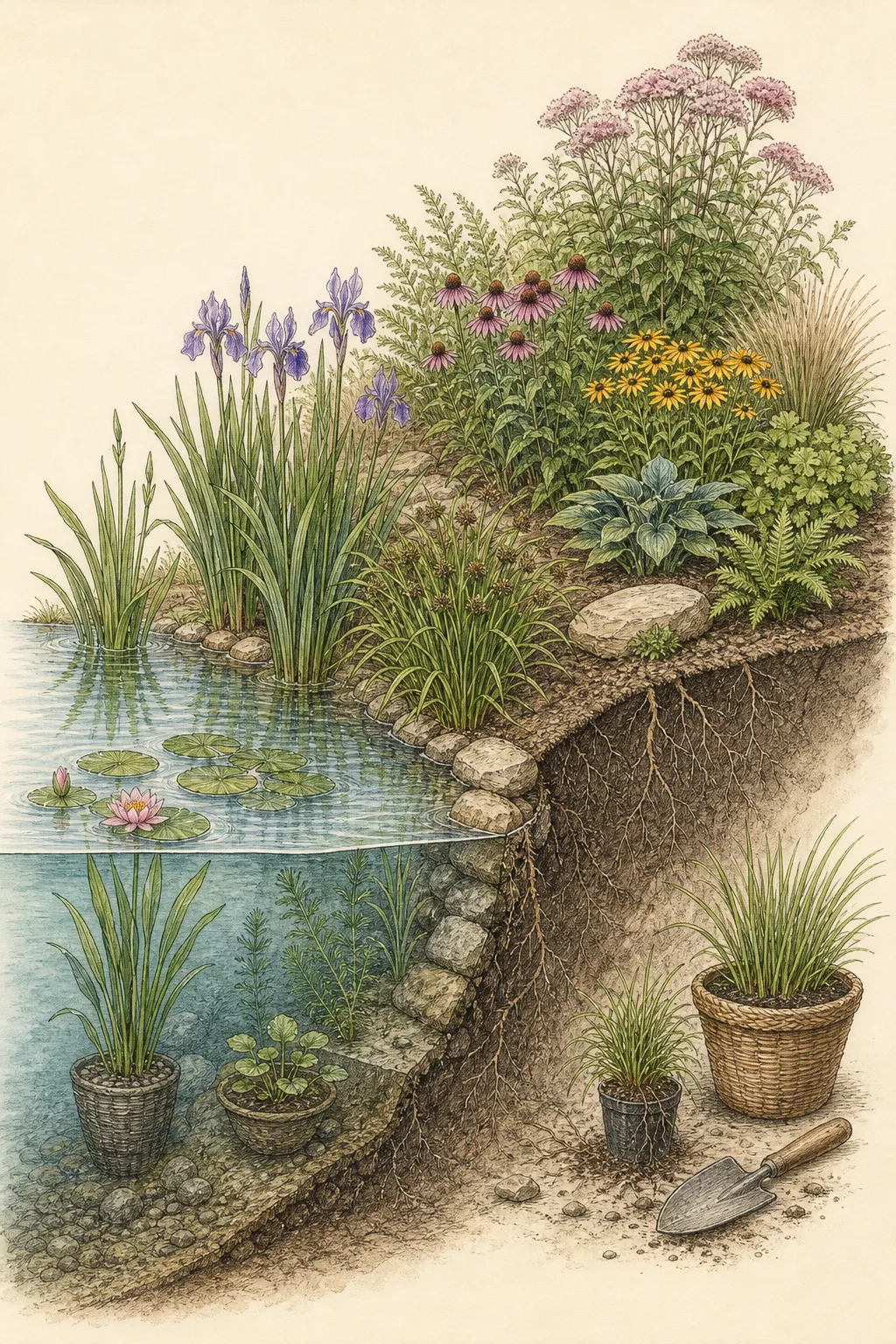
Design an Ornamental Pond Edge in Four Planting Zones
Shape a coherent ornamental pond edge by separating submerged, saturated, moist, and ordinary-soil conditions before choosing plants or disguising the liner.
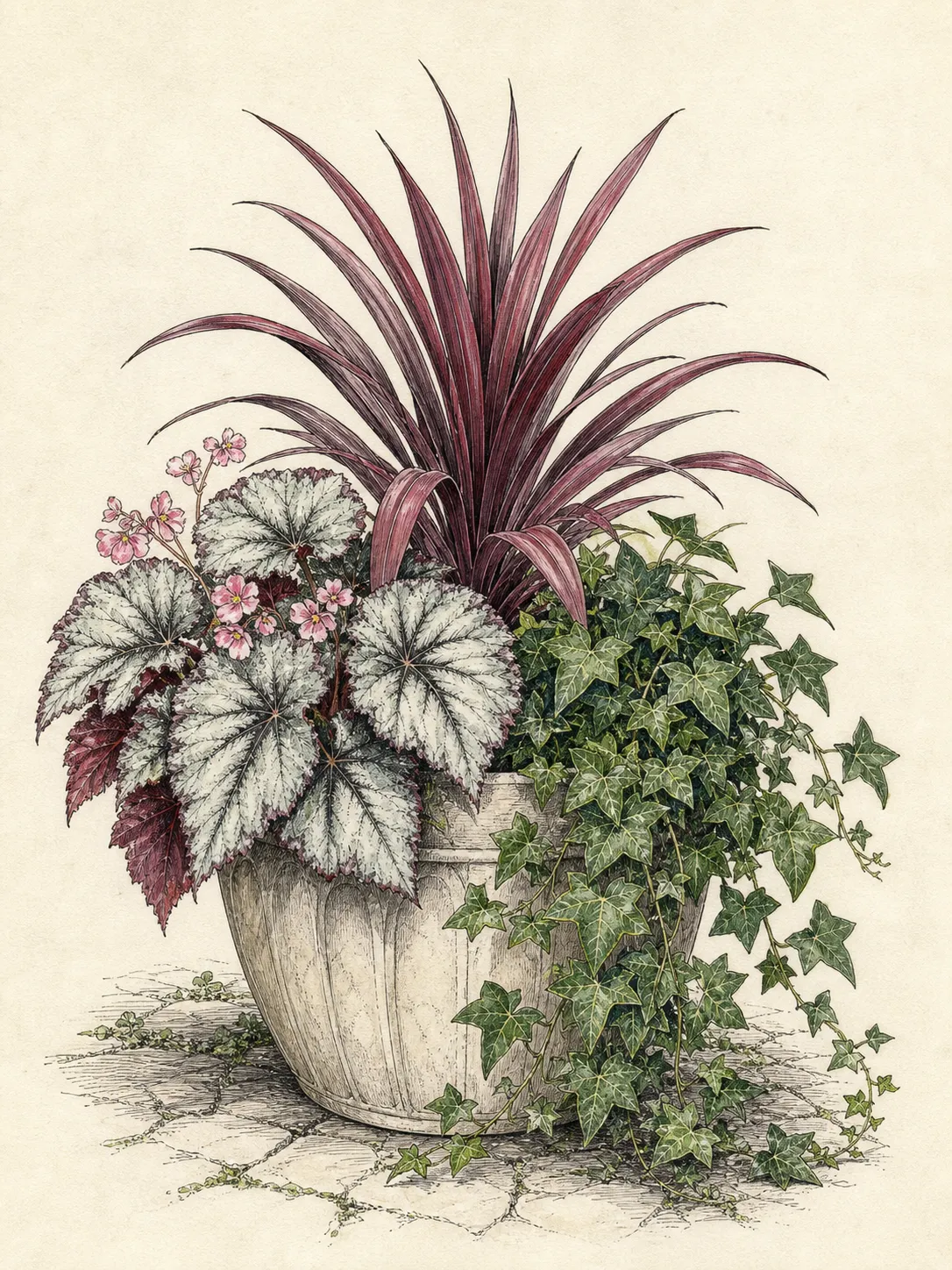
Design a Foliage-First Shade Container by Scale and Texture
Build a shade container from broad, medium and fine leaf relationships, reserving mature spread and one compatible root-zone water pattern before adding flowers.
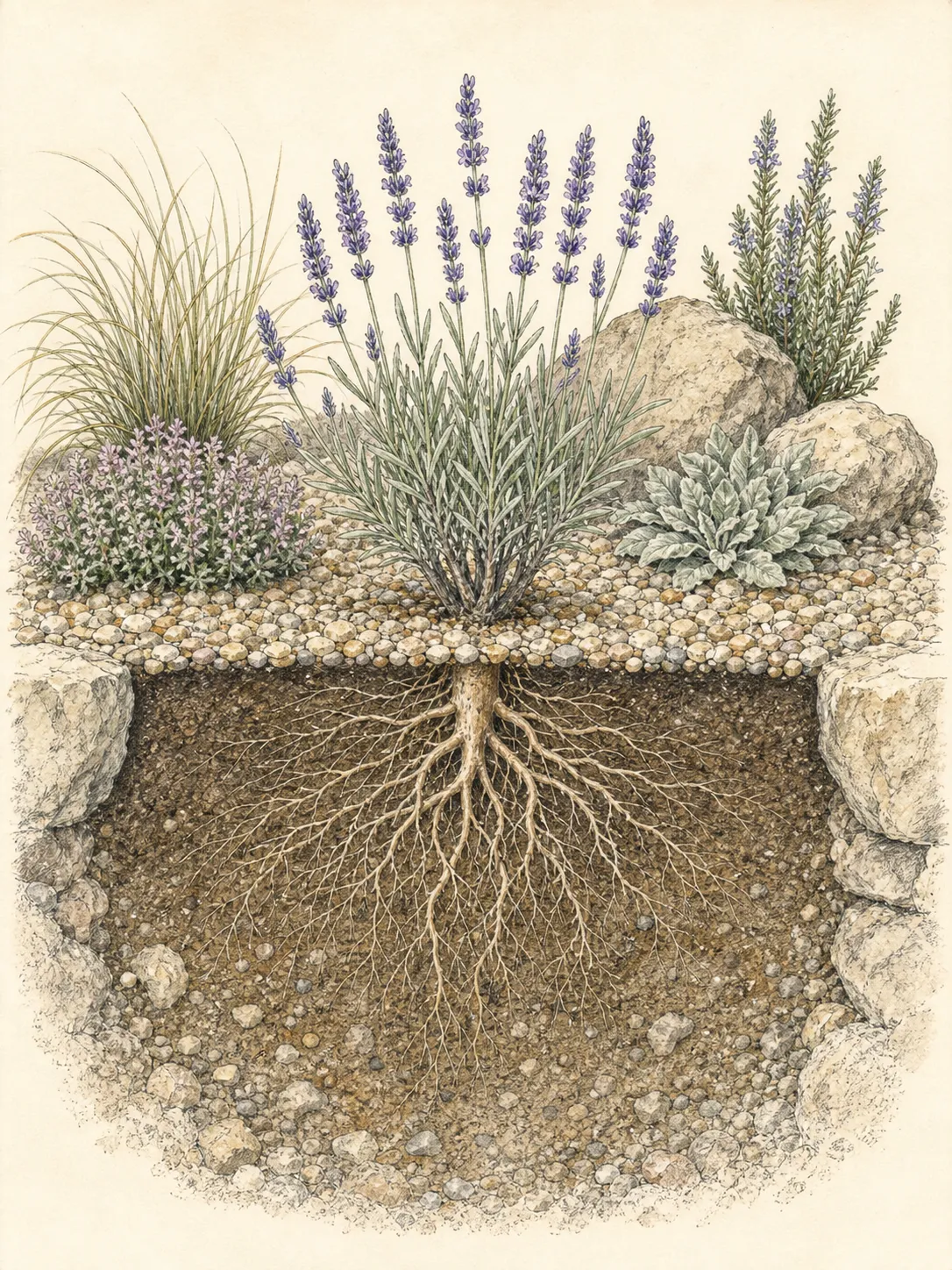
Design an Ornamental Gravel Garden for Plants and Access
Plan an ornamental gravel garden from real drainage, plant habit, mature spacing and reachable maintenance routes rather than treating gravel as a universal low-care surface.
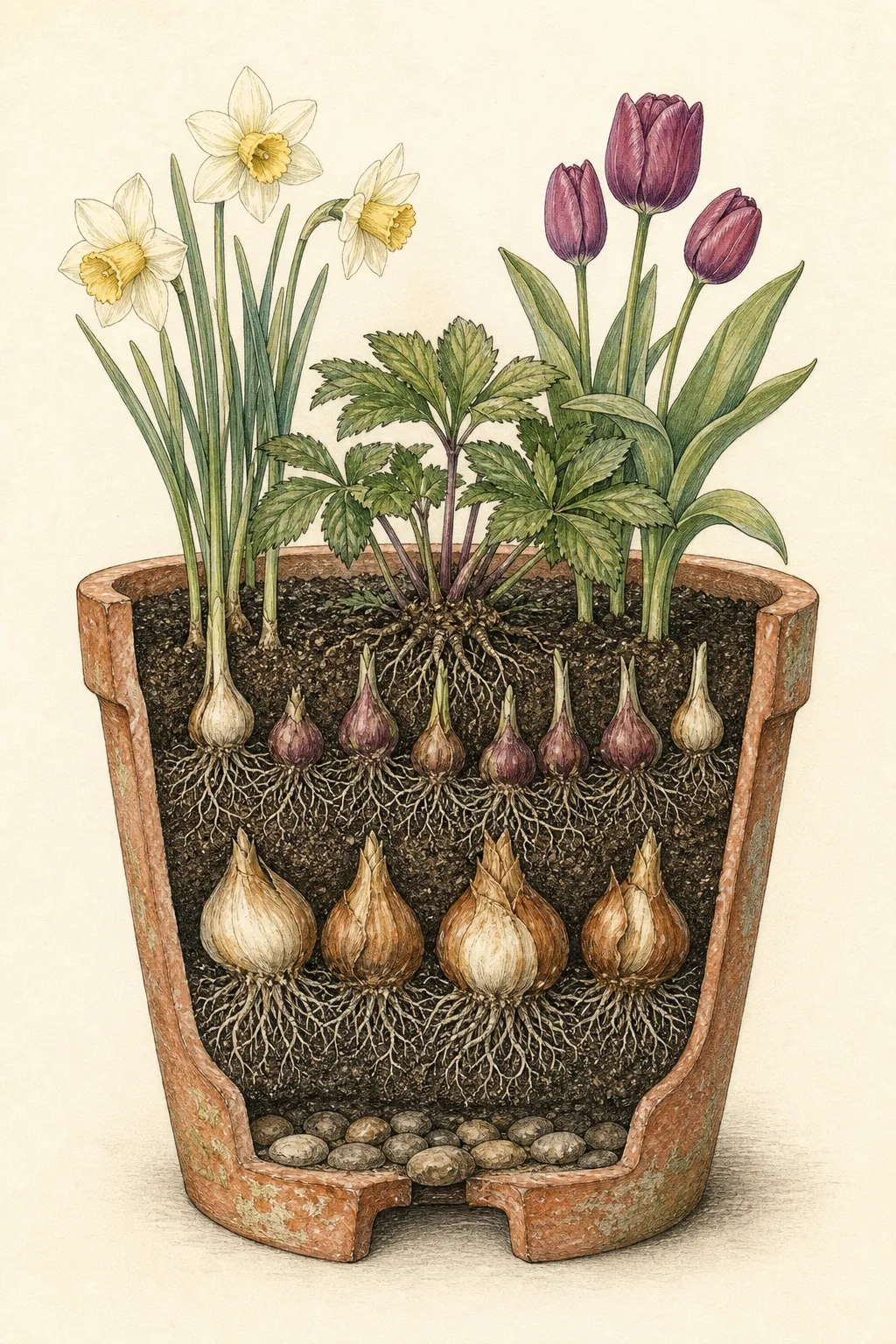
Layer Spring Bulbs and Durable Perennials in One Large Container
Design one large draining container as a shared root zone, layering spring bulbs around durable perennials while preserving mature crowns and post-bloom foliage.
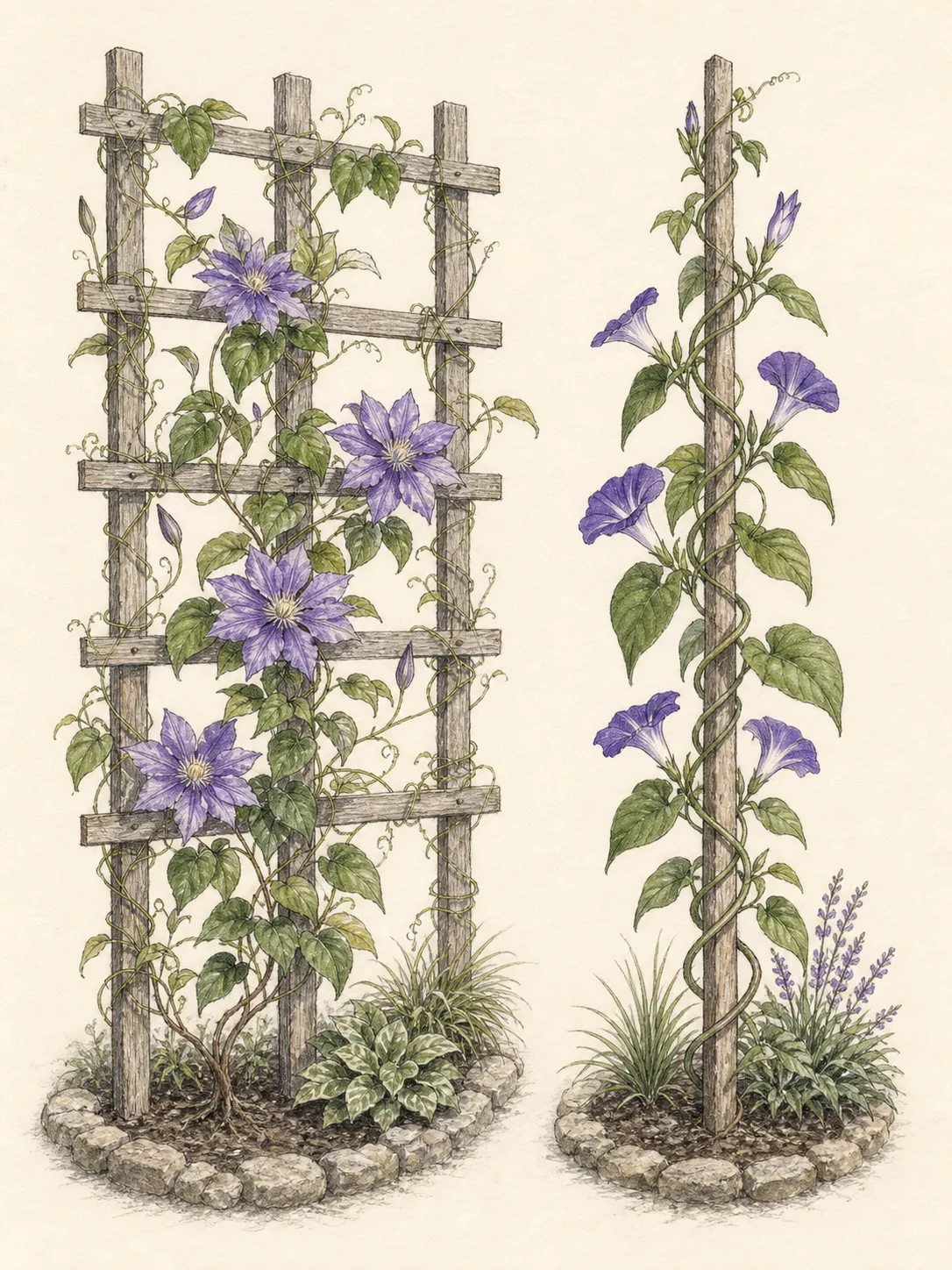
Choose a Trellis by How the Vine Climbs
Match trellis members and placement to twining stems, twining petioles, tendrils, or scrambling canes, then allow for mature load, ties, pruning, and wall access.
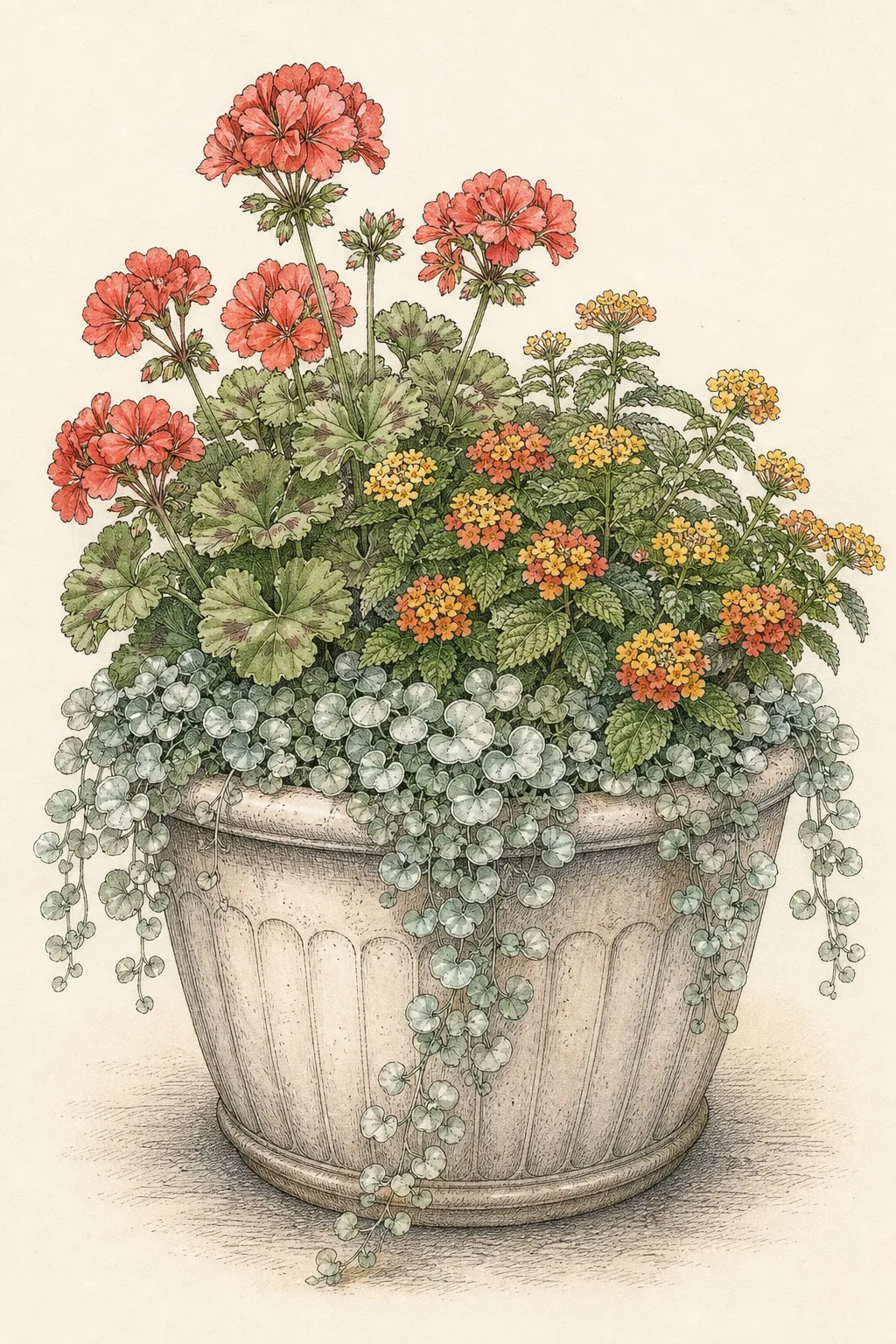
Choose Flowering Annuals for Hot, Windy Containers
Read reflected heat, wind, pot stability, and realistic watering capacity before selecting flowering annuals by foliage, stem, habit, and cultivar performance.
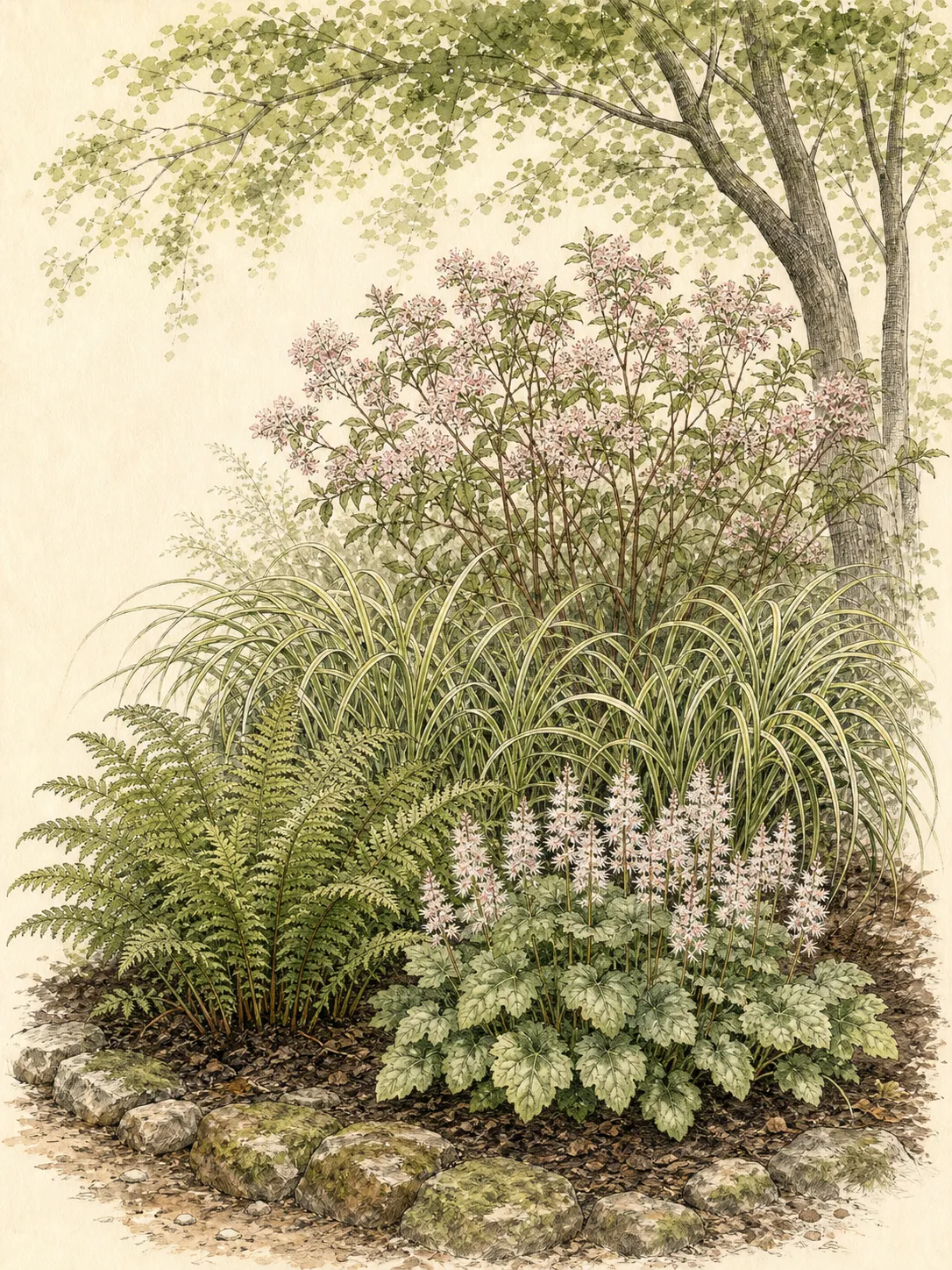
Design a Moist Woodland Edge From Measured Light and Moisture
Map changing light and root-zone moisture, protect established tree roots, and compose a layered woodland edge whose plants fit the evidence rather than a generic shade label.
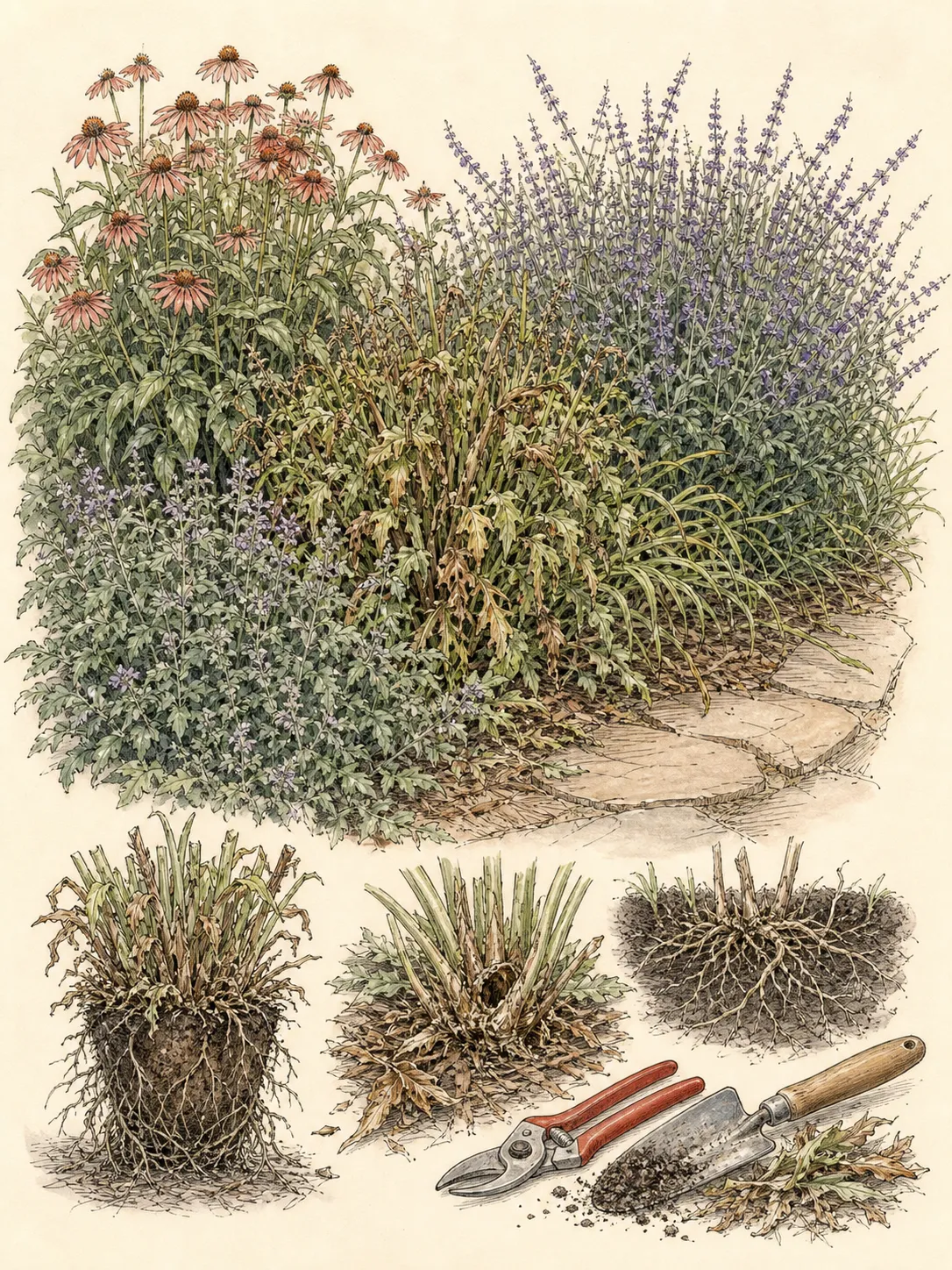
Edit an Overgrown Perennial Border Before You Dig
Map every ornamental plant as keep, move, divide or remove before renovation, then phase the work around identity, mature space, species timing and establishment care.
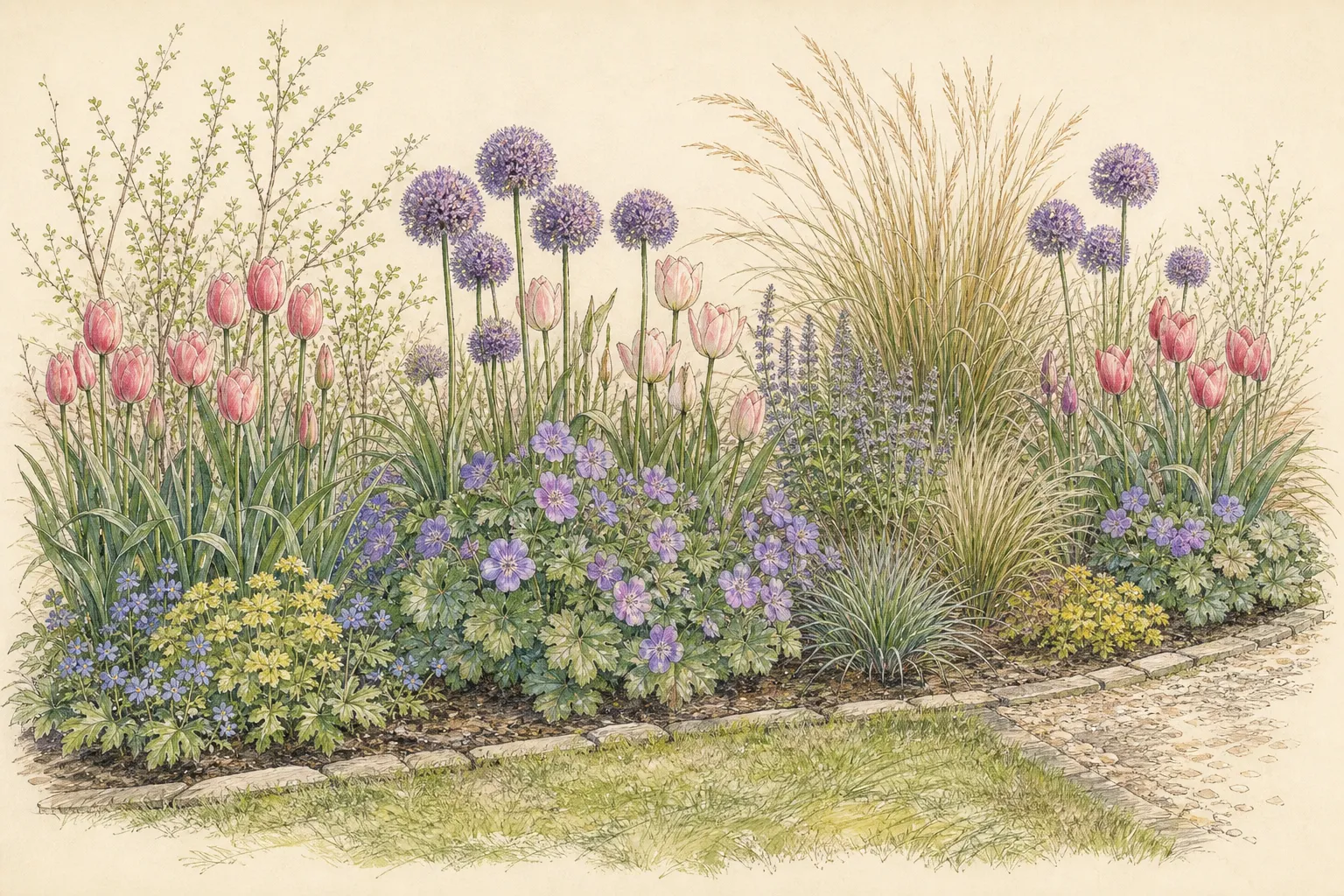
Design a Spring-to-Summer Border Handoff
Map bulbs, early perennials and summer structure as overlapping states so the border changes season without cutting green bulb foliage, crowding crowns or losing its visual framework.
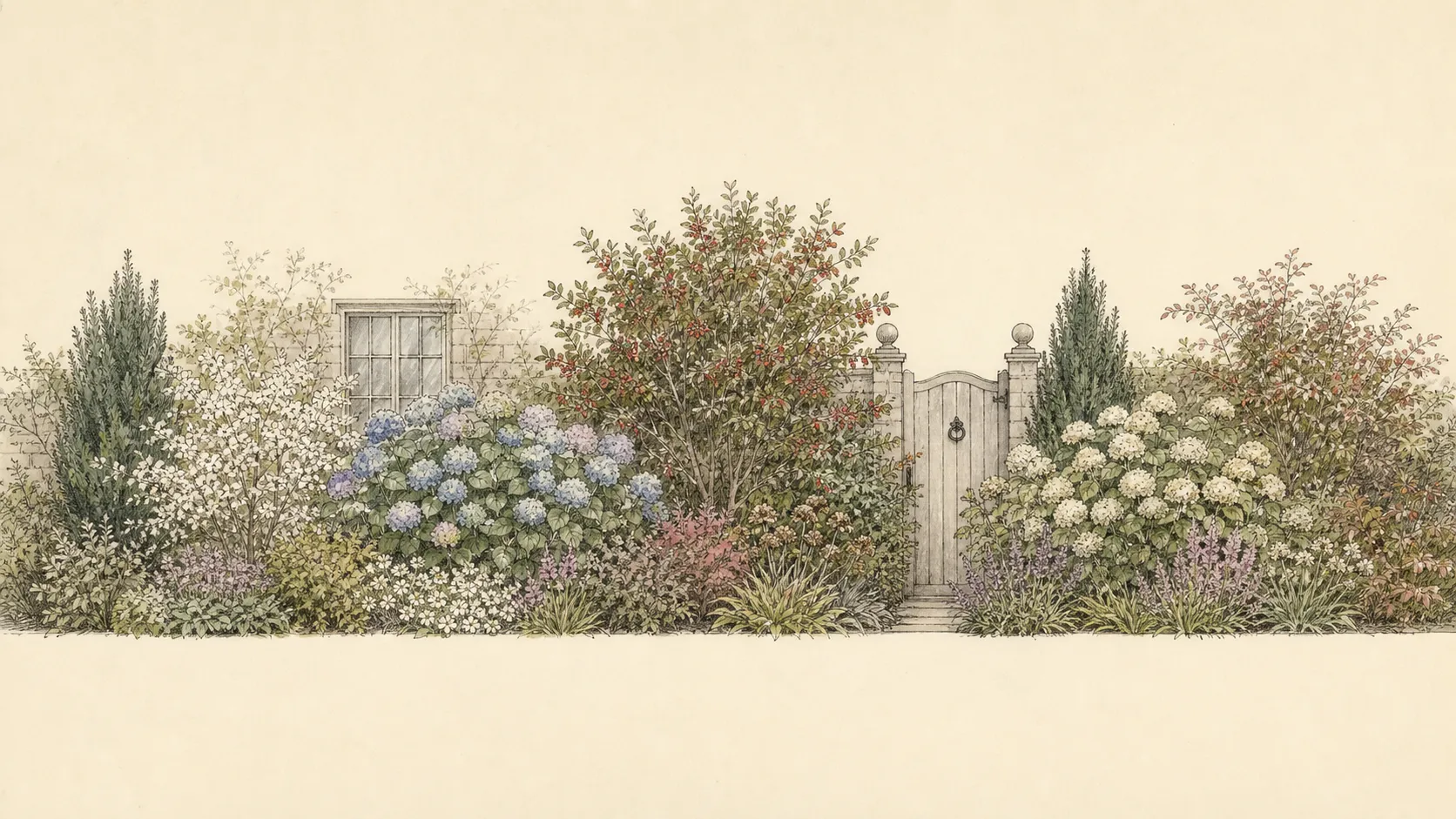
Design a Four-Season Flowering Hedge with a Maintainable Rhythm
Combine repeated structural shrubs with a restrained sequence of flowers, fruit, foliage, and winter form while preserving gates, windows, drainage, and pruning access.
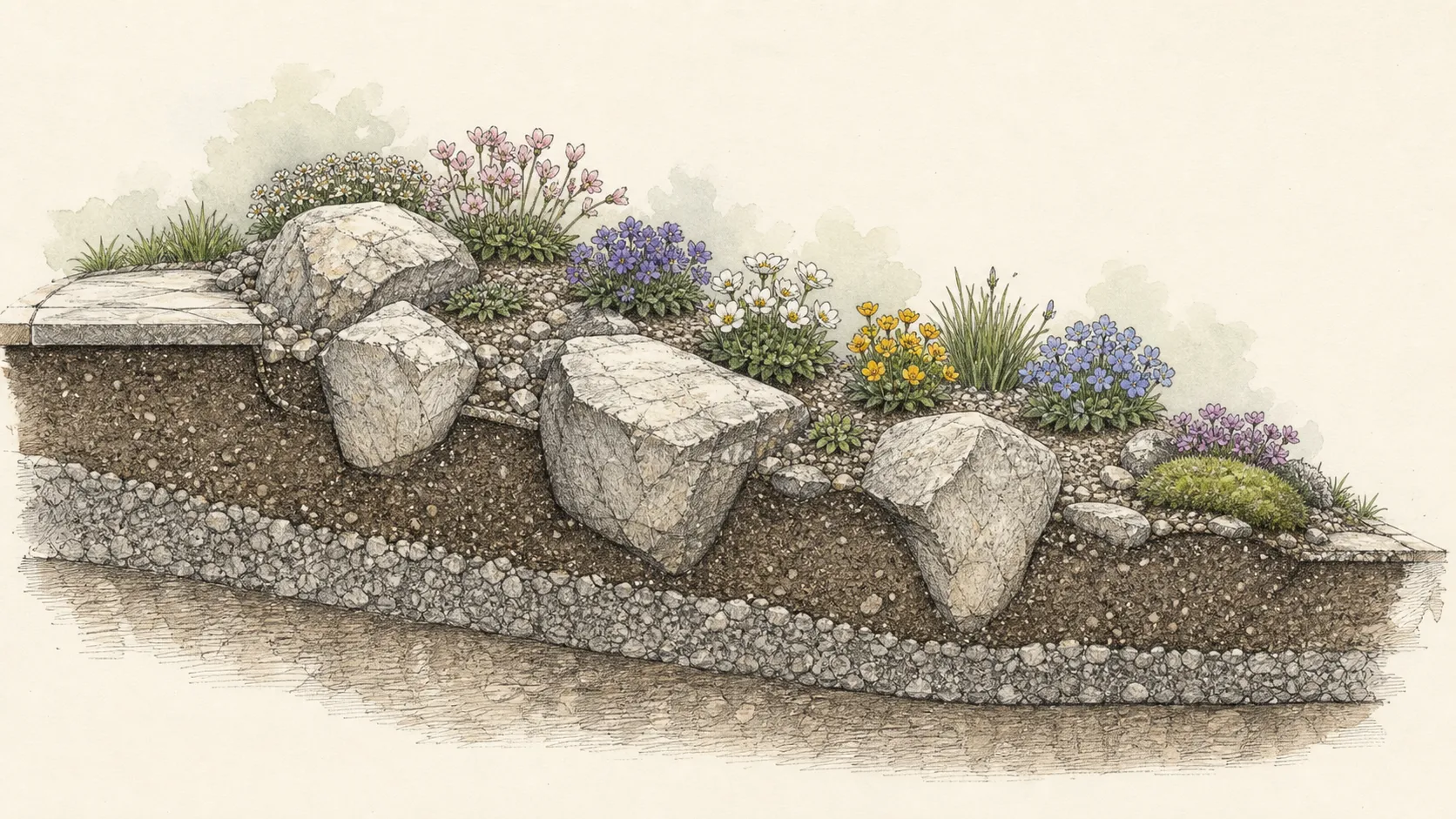
Design a Spring Rock Garden Around Drainage and Plant Scale
Set stones as one geological gesture, build draining planting pockets, and choose compact spring plants that will not erase the structure.
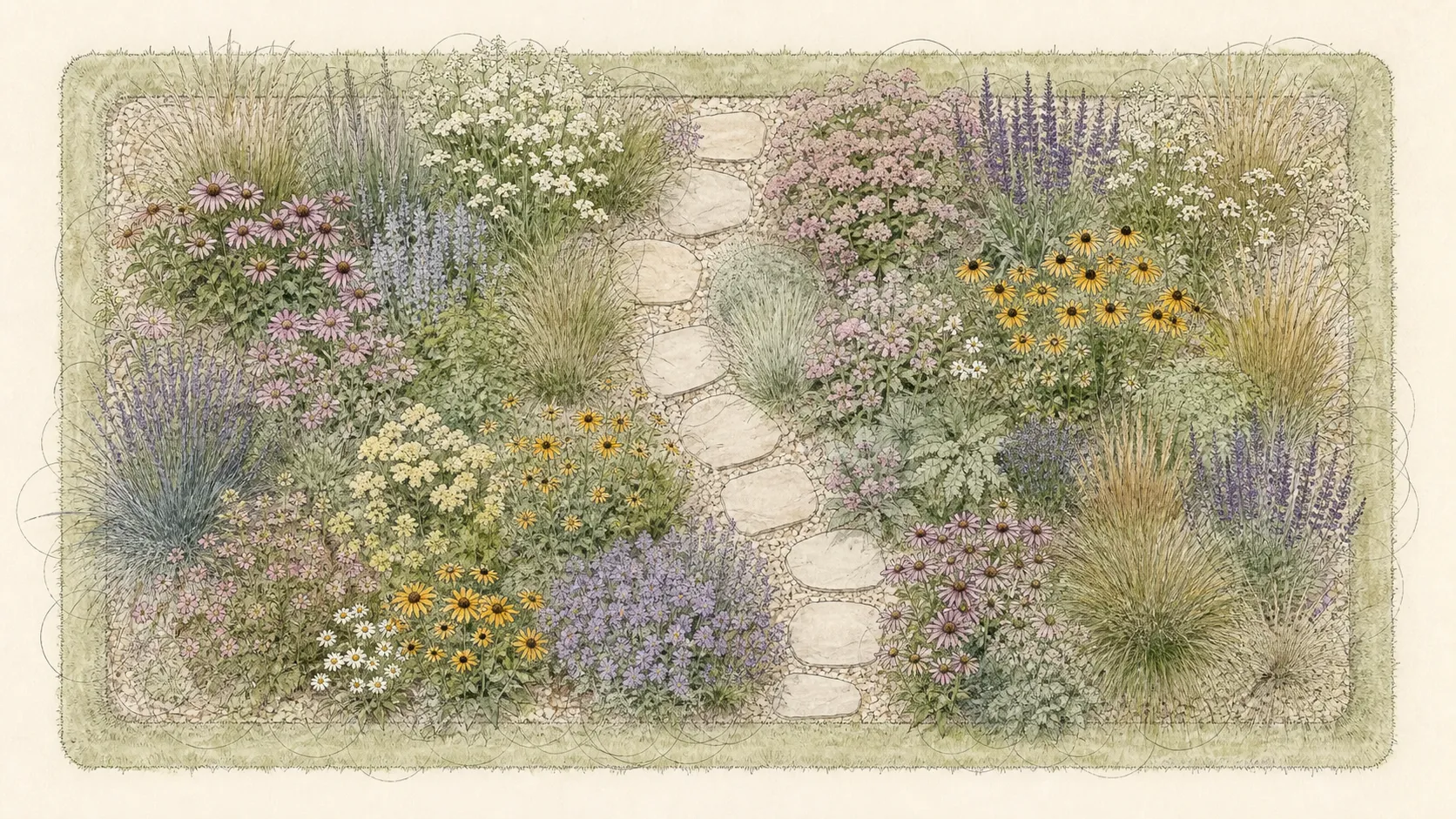
Design a Small Ornamental Meadow from Plugs, Not a Mystery Mix
Build a garden-scale meadow from named plugs, repeated plant roles, maintained edges, and a route for weeding before the matrix closes.
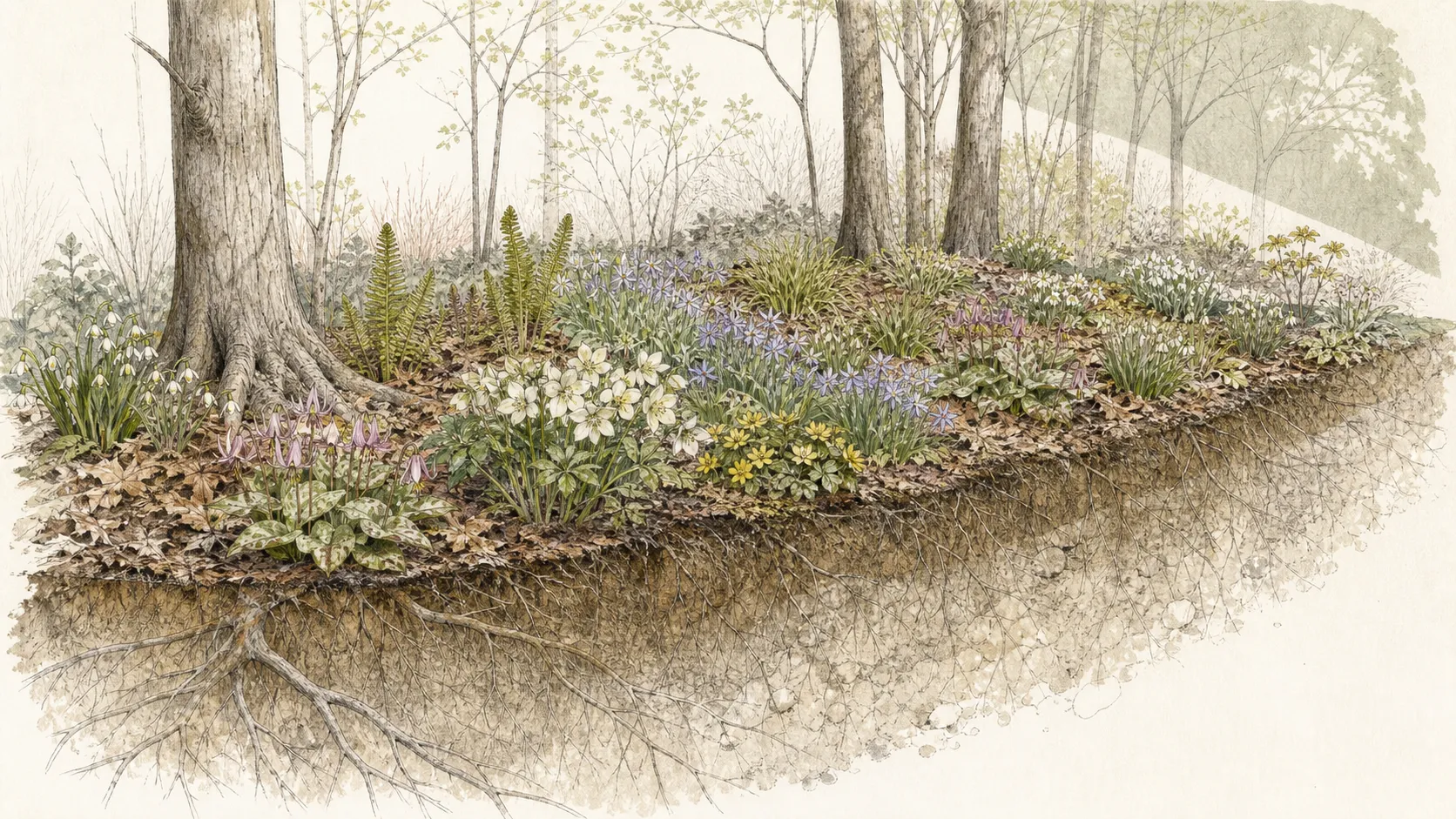
Design a Spring Woodland-Ephemeral Layer That Does Not Vanish in Summer
Use deciduous-canopy light, named spring ephemerals, persistent foliage, and protected tree roots to build a woodland border with a credible summer structure.
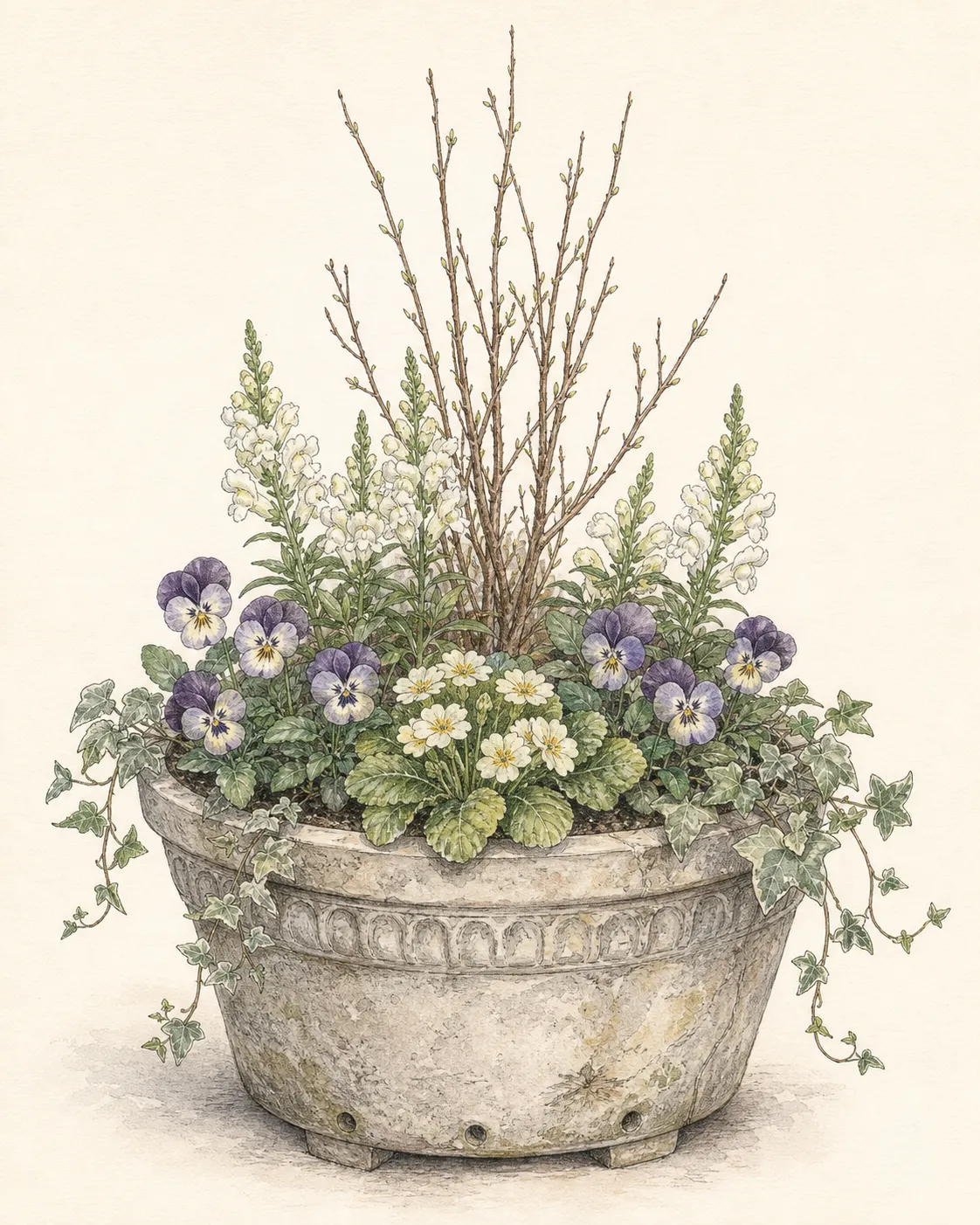
Design a Cool-Season Spring Container That Can Change Gracefully
Build a spring container around compatible cool-weather plants, usable drainage, measured spacing, and an intentional handoff to summer.
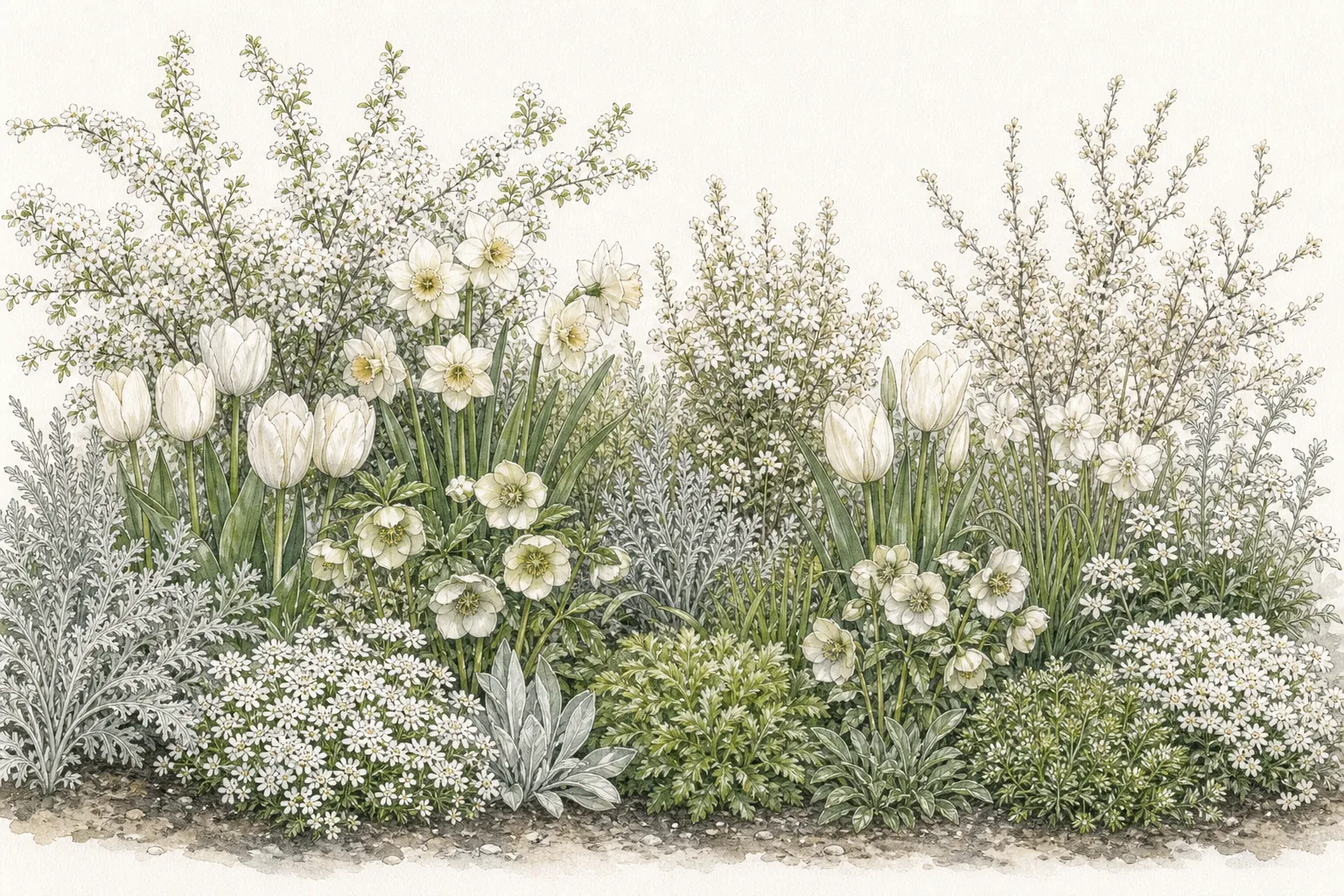
Design a White Spring Border with Shape, Shadow, and Succession
Combine white flowers of different forms with silver foliage, green structure, and overlapping bloom so the border remains dimensional.
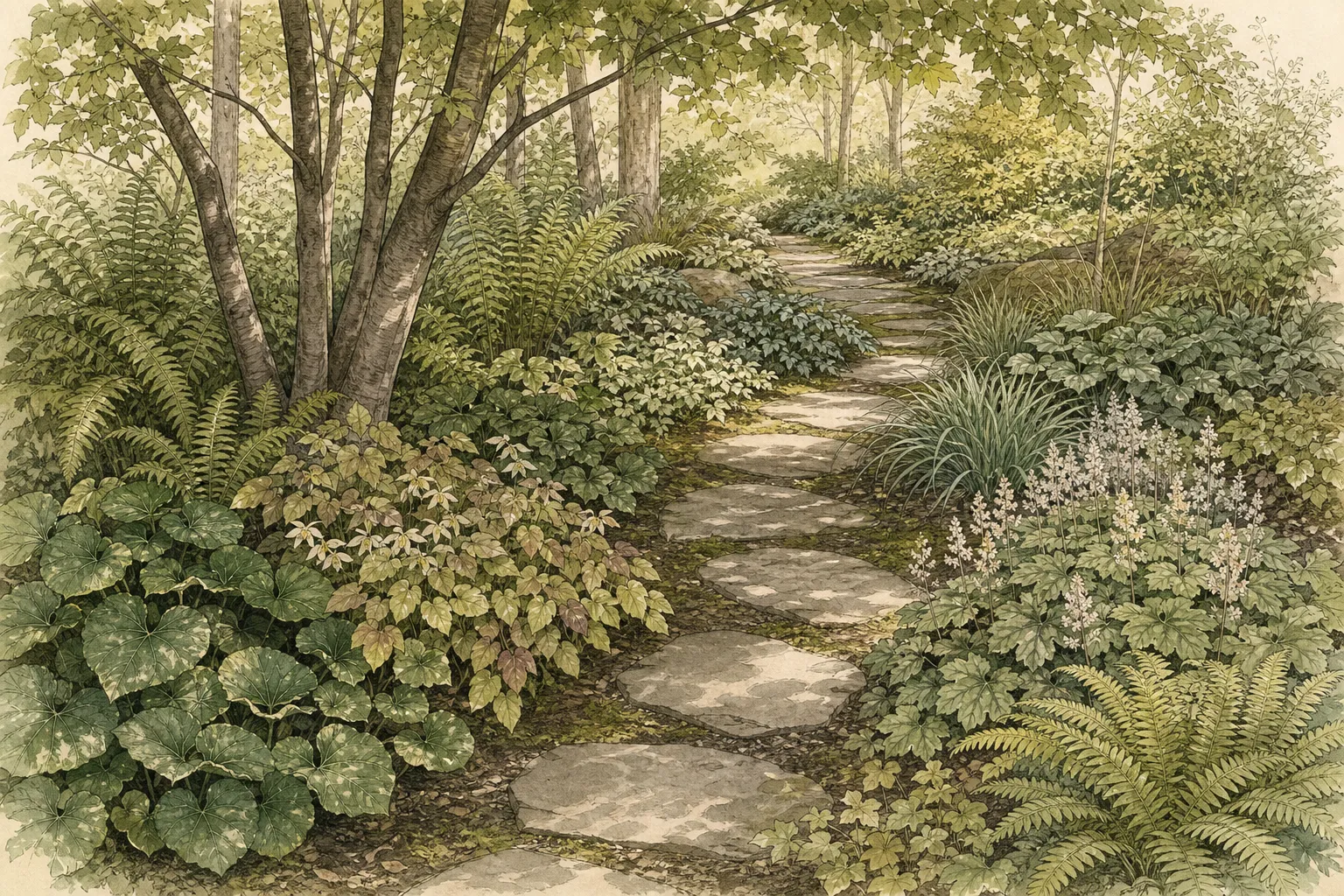
Shape a Shade Path with Low Groundcovers and Clear Edges
Compose a shaded path from repeated groundcover drifts, contrasting leaf textures, and open establishment pockets around existing tree roots.
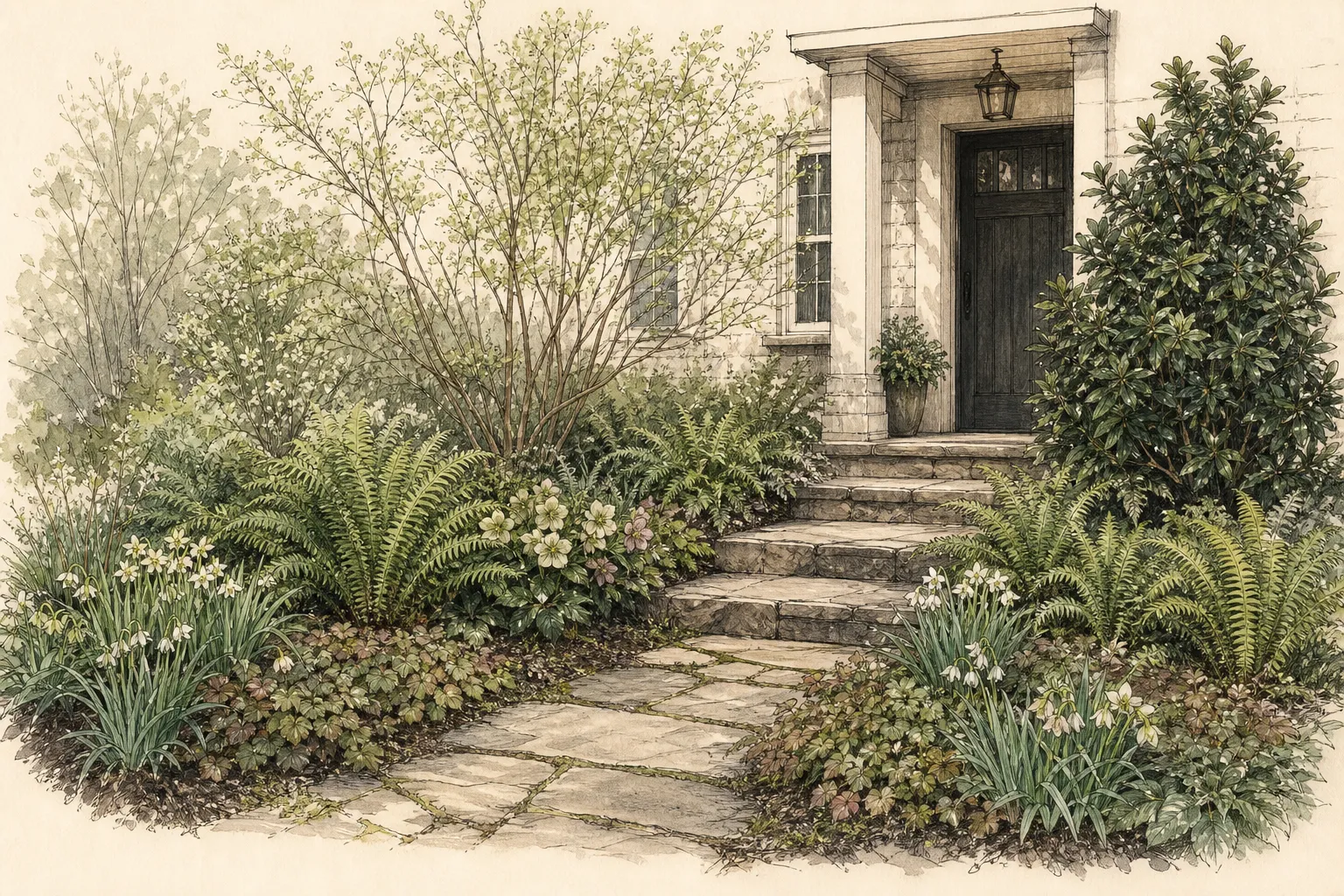
Design a North-Facing Entry Garden with Structure Before Flowers
Build a calm north-facing entry from evergreen form, layered foliage, repeated groundcovers, and a measured sequence of pale spring flowers.
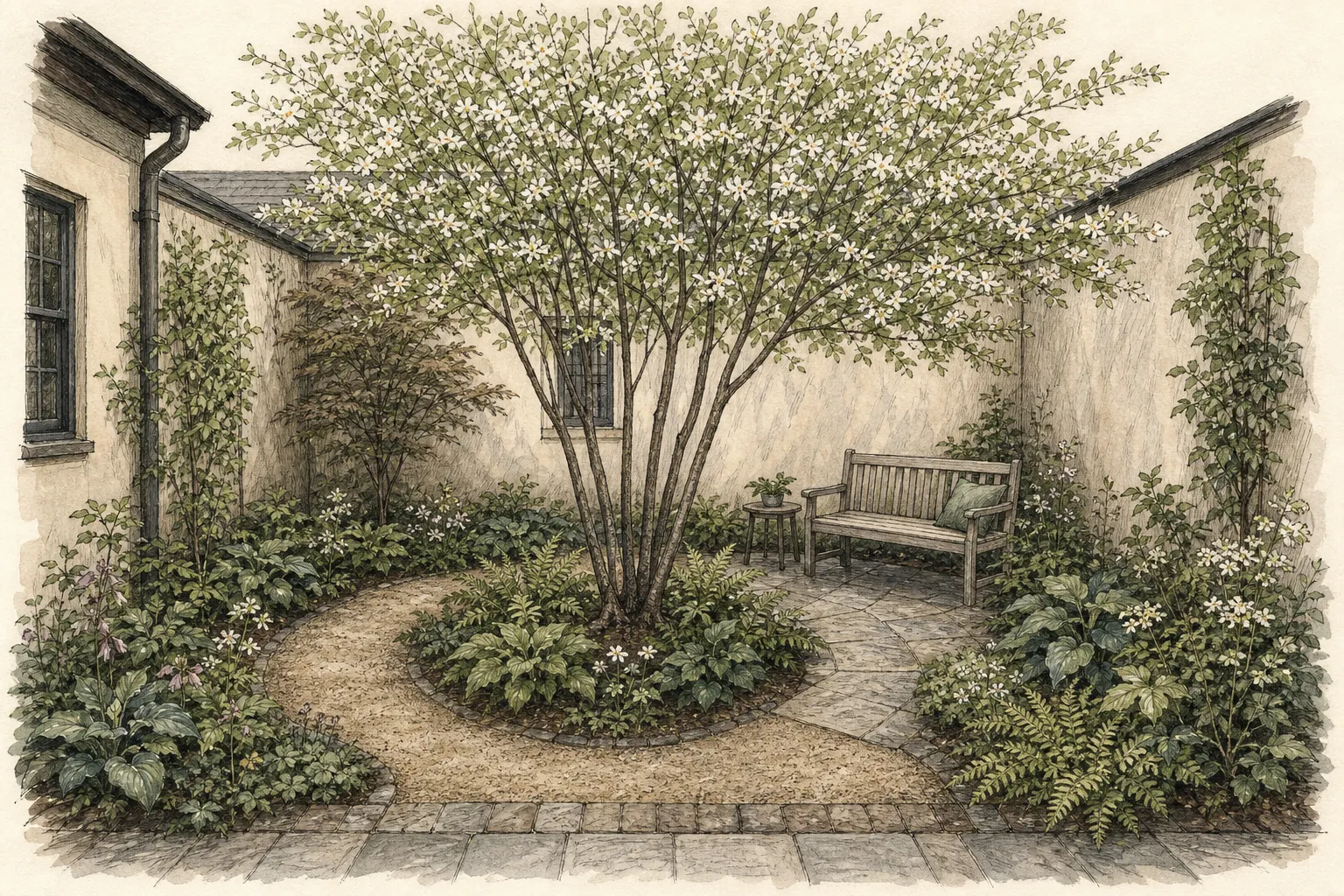
Build a Courtyard Garden Around One Small Flowering Tree
Use one correctly scaled flowering tree to organize shade, circulation, enclosure, and seasonal planting in a compact courtyard.
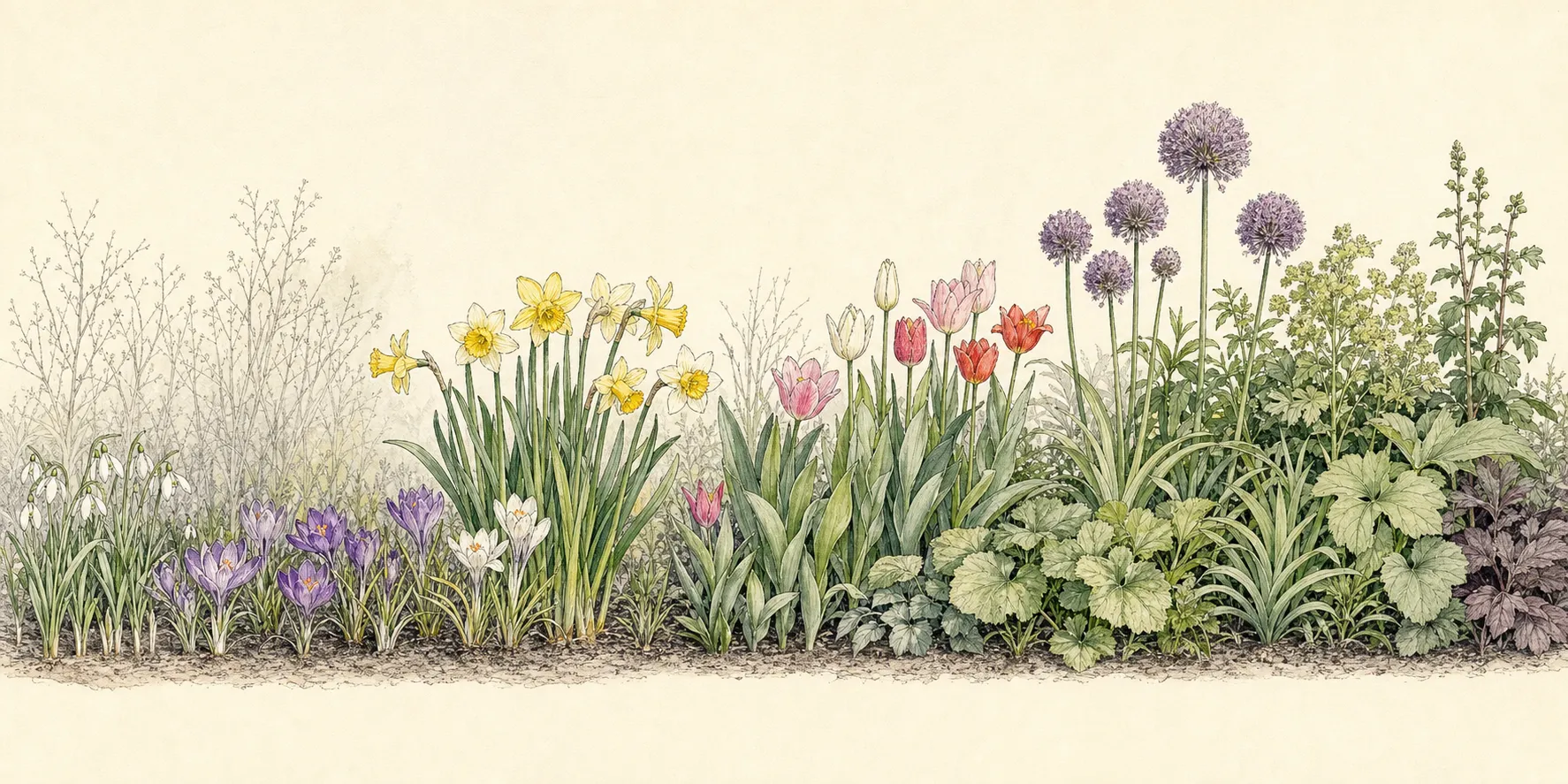
Design a Spring Bulb Succession That Reads as One Garden
Layer early, middle, and late spring bulbs through repeated drifts so fading foliage and changing bloom remain part of one coherent border.
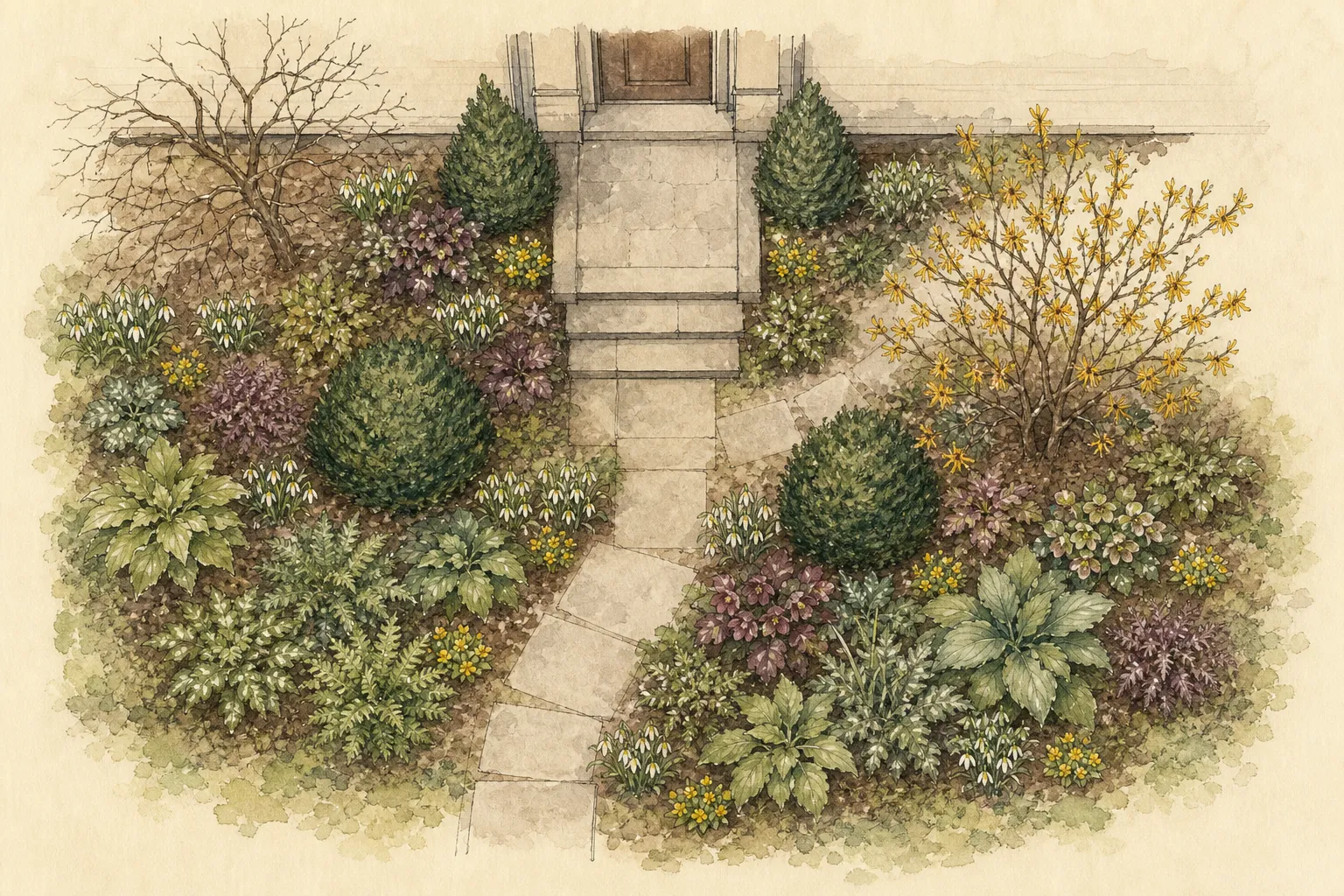
Design an Early-Spring Threshold Garden for the Daily Entrance
Compose a small entry garden from winter structure, close flower detail, emerging foliage, safe access, and a summer handoff rather than filling the doorway with seasonal containers.
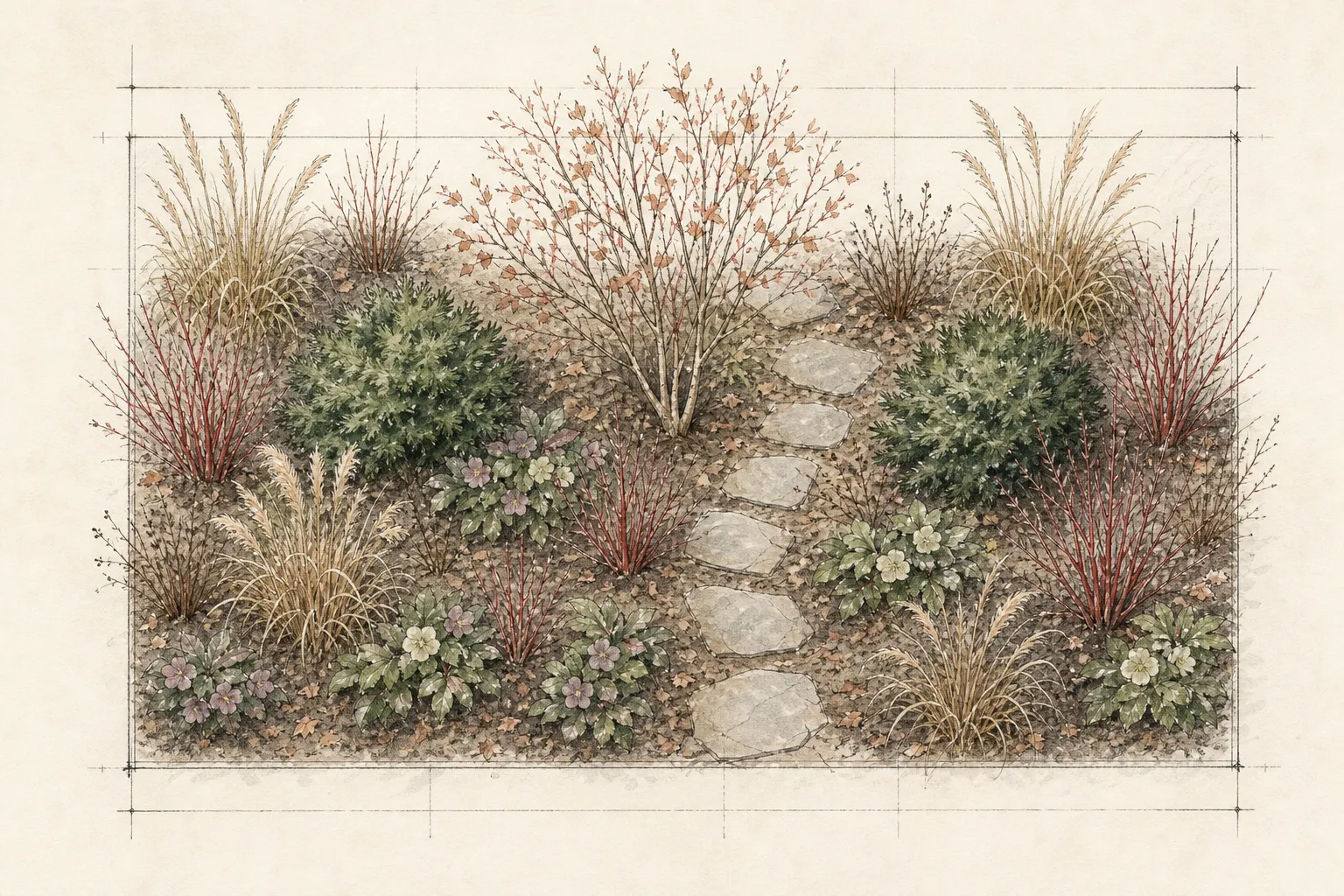
Design a Compact Winter Border with Structure at Every Height
Build a small winter border from measured woody structure, low seasonal detail, clear ground, and one focal event instead of a crowded collection of winter-interest plants.

Frame a Winter Garden View from the Room You Actually Use
Design one layered winter composition from an occupied indoor viewpoint while preserving daylight, access, drainage, and four-season garden structure.
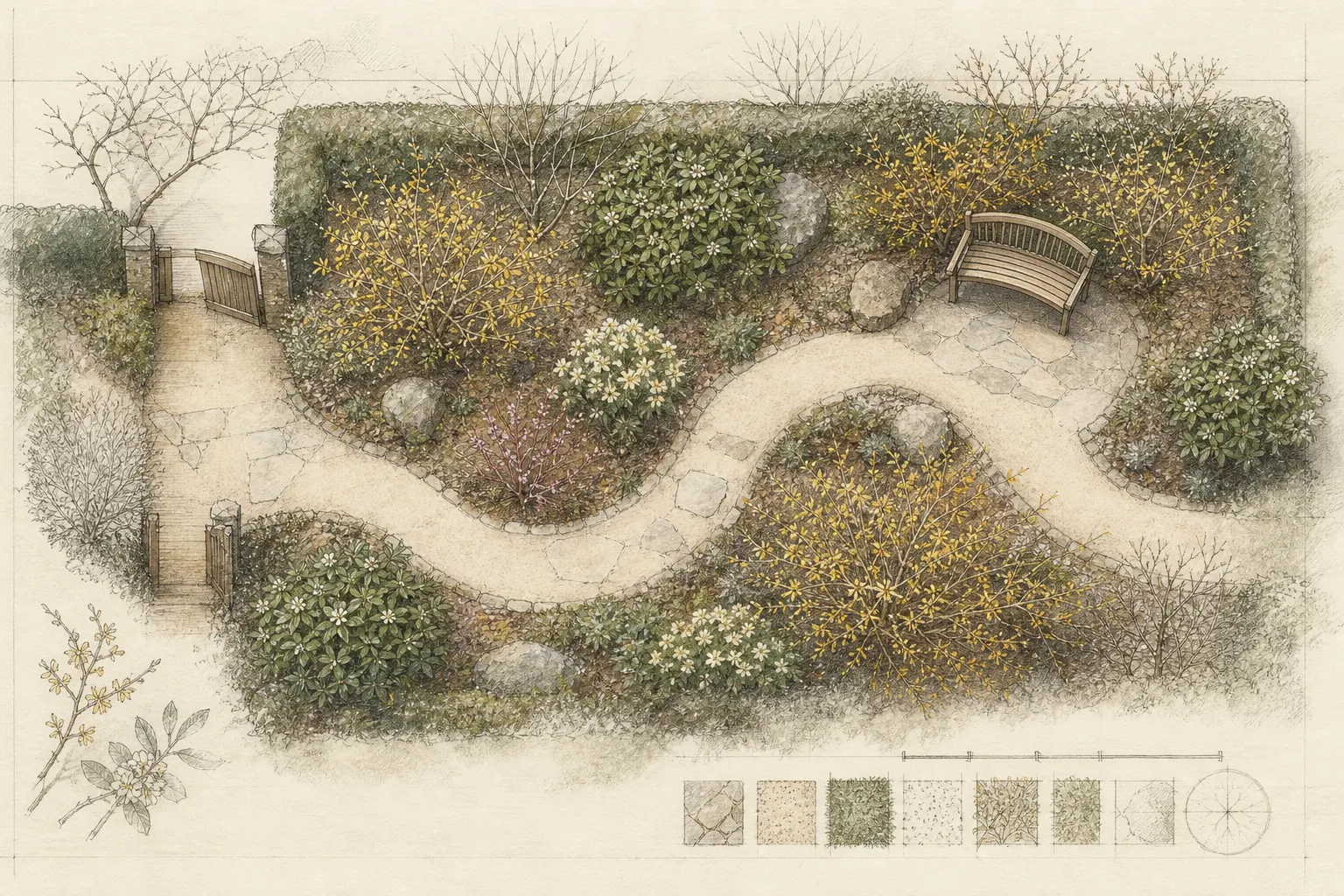
Design a Late-Winter Fragrance Path That Works in Cold Air
Place fragrant winter shrubs around a real walking route, using shelter, mature scale, flower height, and seasonal access to make scent perceptible.
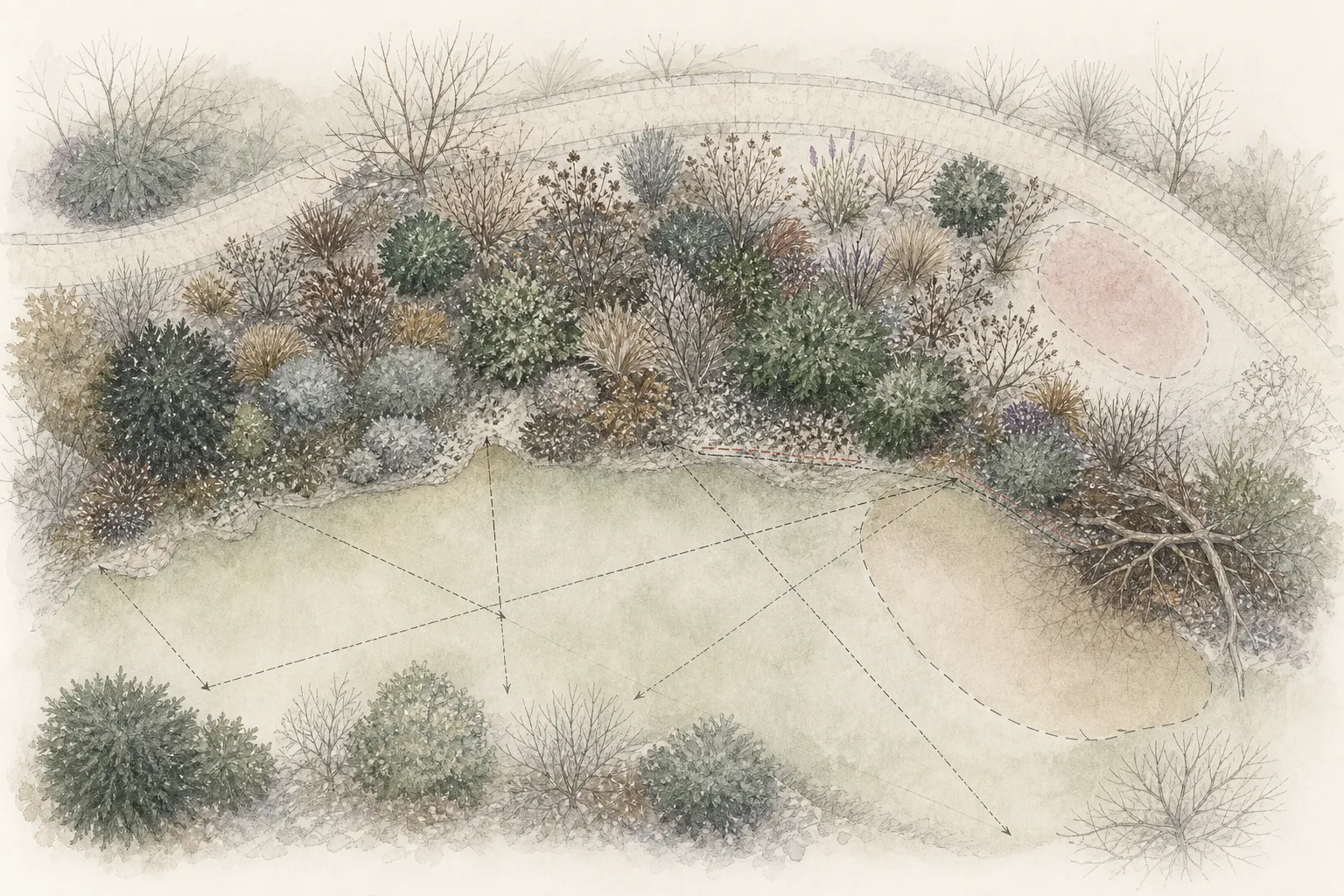
Audit a Summer Perennial Border by Its Winter Skeleton
Read paths, woody anchors, stems, seed heads, empty ground, supports, views, and maintenance access in winter to improve a flower-rich border without redesigning it blindly.
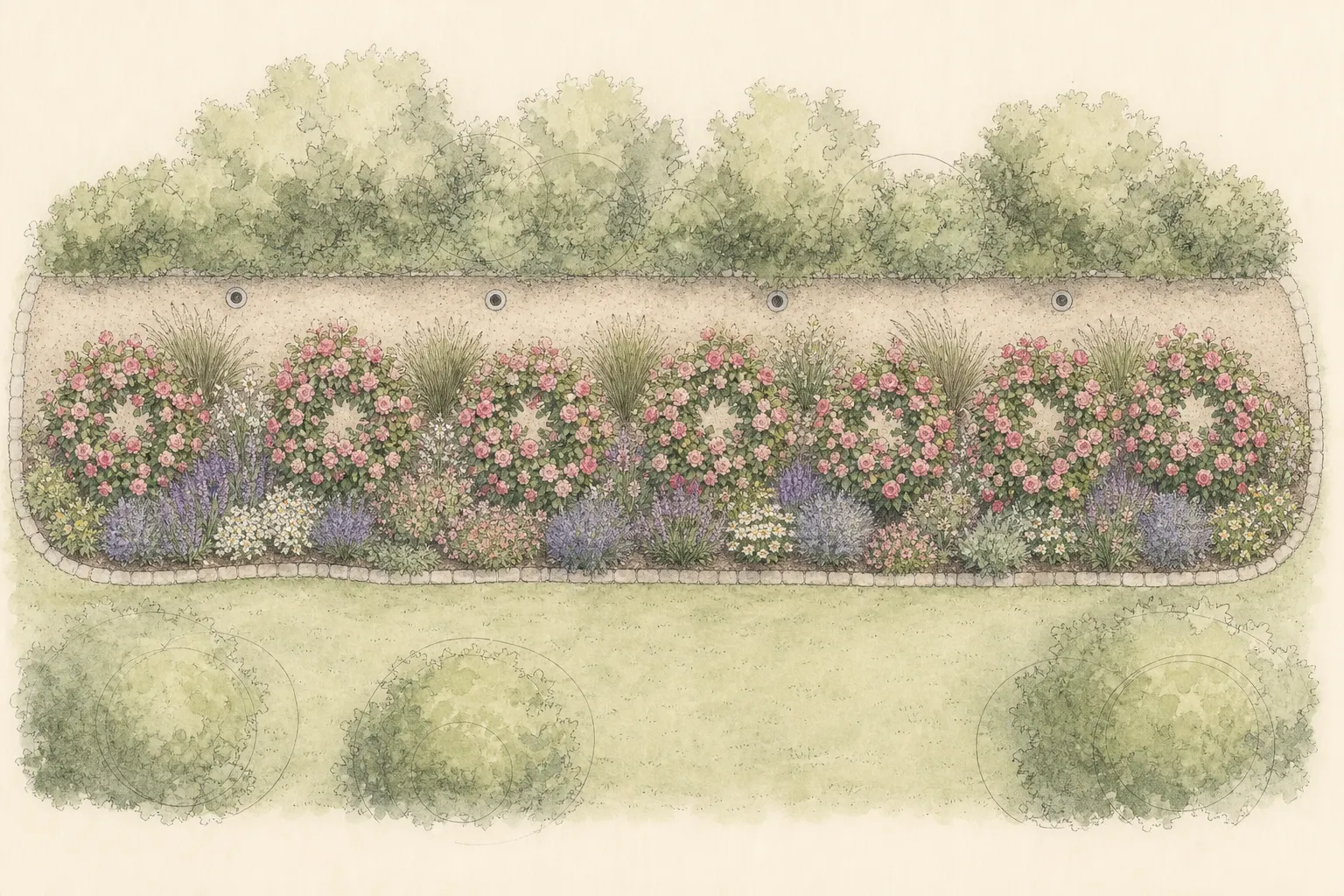
Design a Rose Border with Companion Plants and Working Access
Plan roses by mature spread, light, airflow, irrigation, pruning access, support, and companion layers that enrich the display without crowding the crown or blocking care.
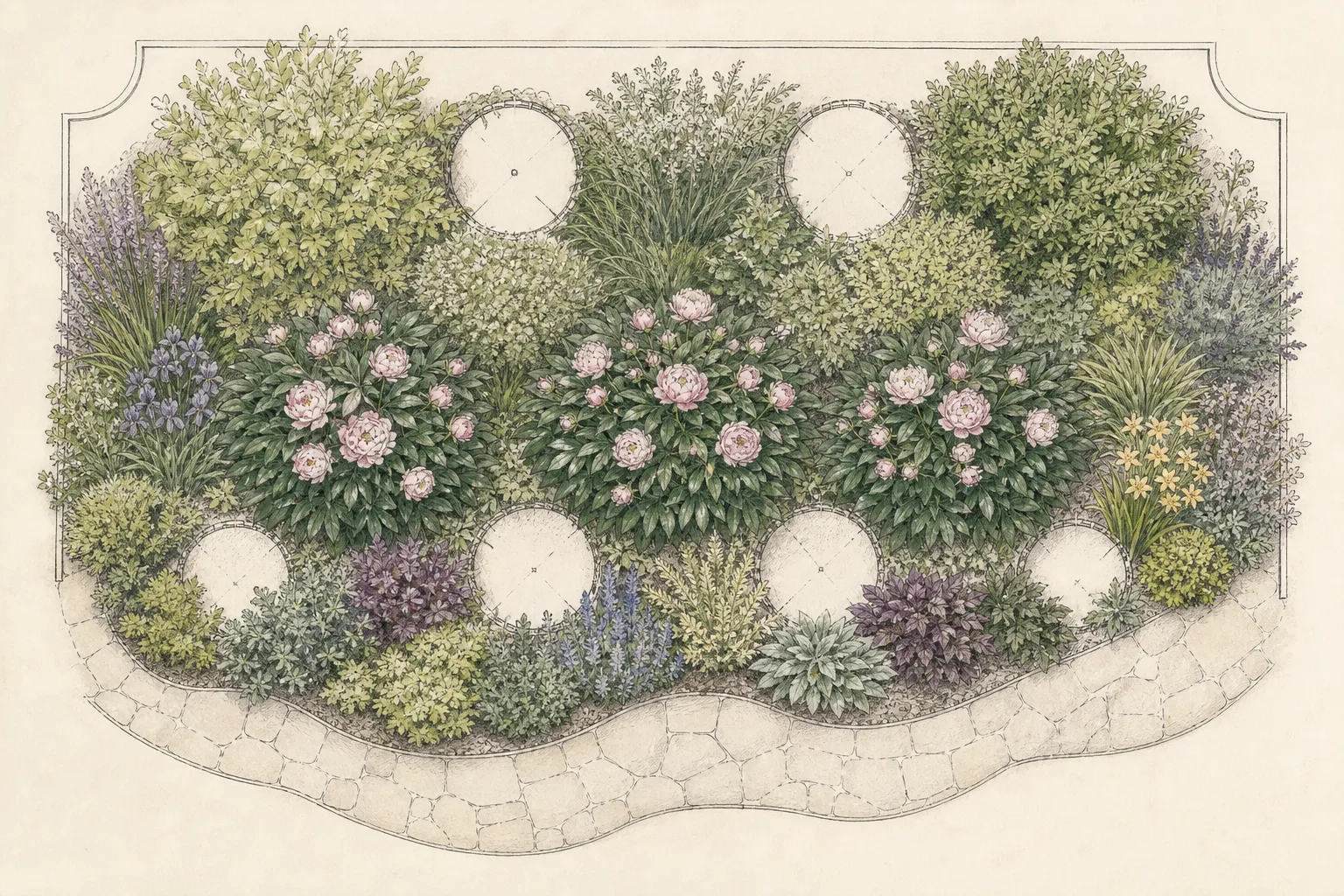
Design a Peony Border That Holds Its Shape After Bloom
Build a peony border around permanent foliage, discreet early support, mature crown spacing, working access, and companion plants that carry the composition beyond June.
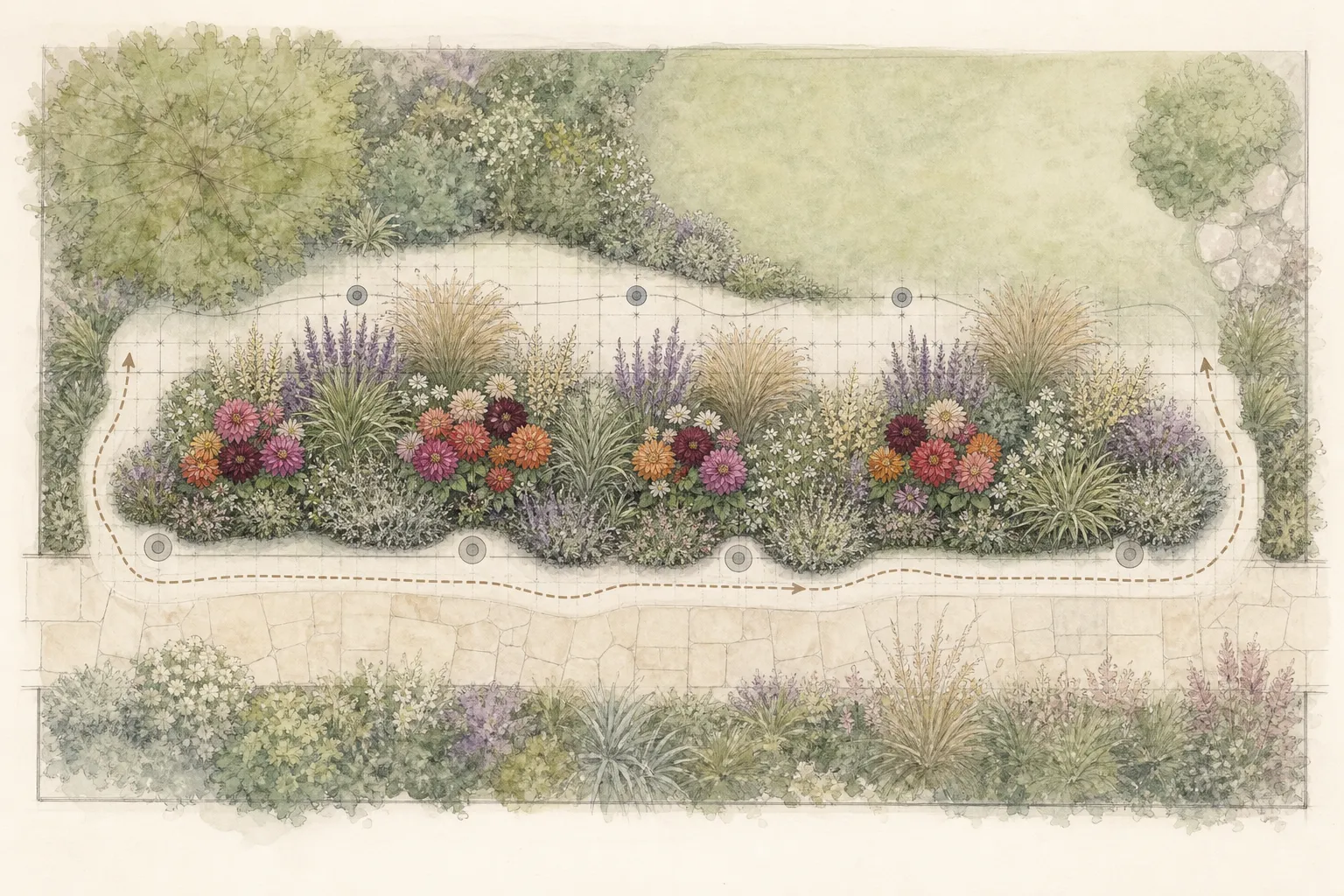
Design a Dahlia Border with Hidden Support and a Permanent Matrix
Plan dahlias as seasonal vertical color within a permanent ornamental framework, with early concealed supports, irrigation, lifting access, mature spacing, and an autumn exit.
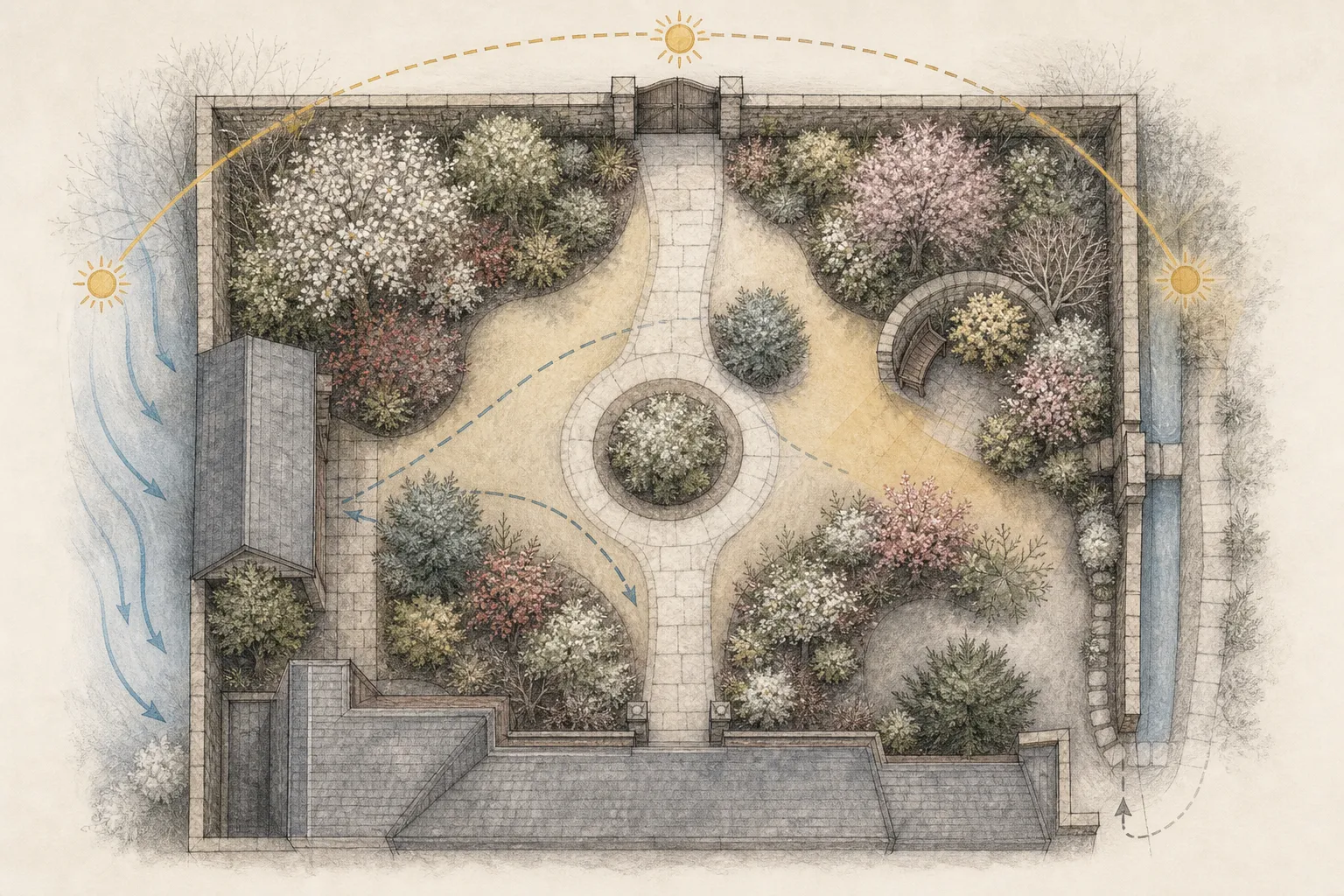
Design a Sheltered Courtyard for Winter-Flowering Shrubs
Use walls, winter sun, air drainage, scent routes, mature shrub scale, and open paving to make a small courtyard support a restrained winter-flowering composition.
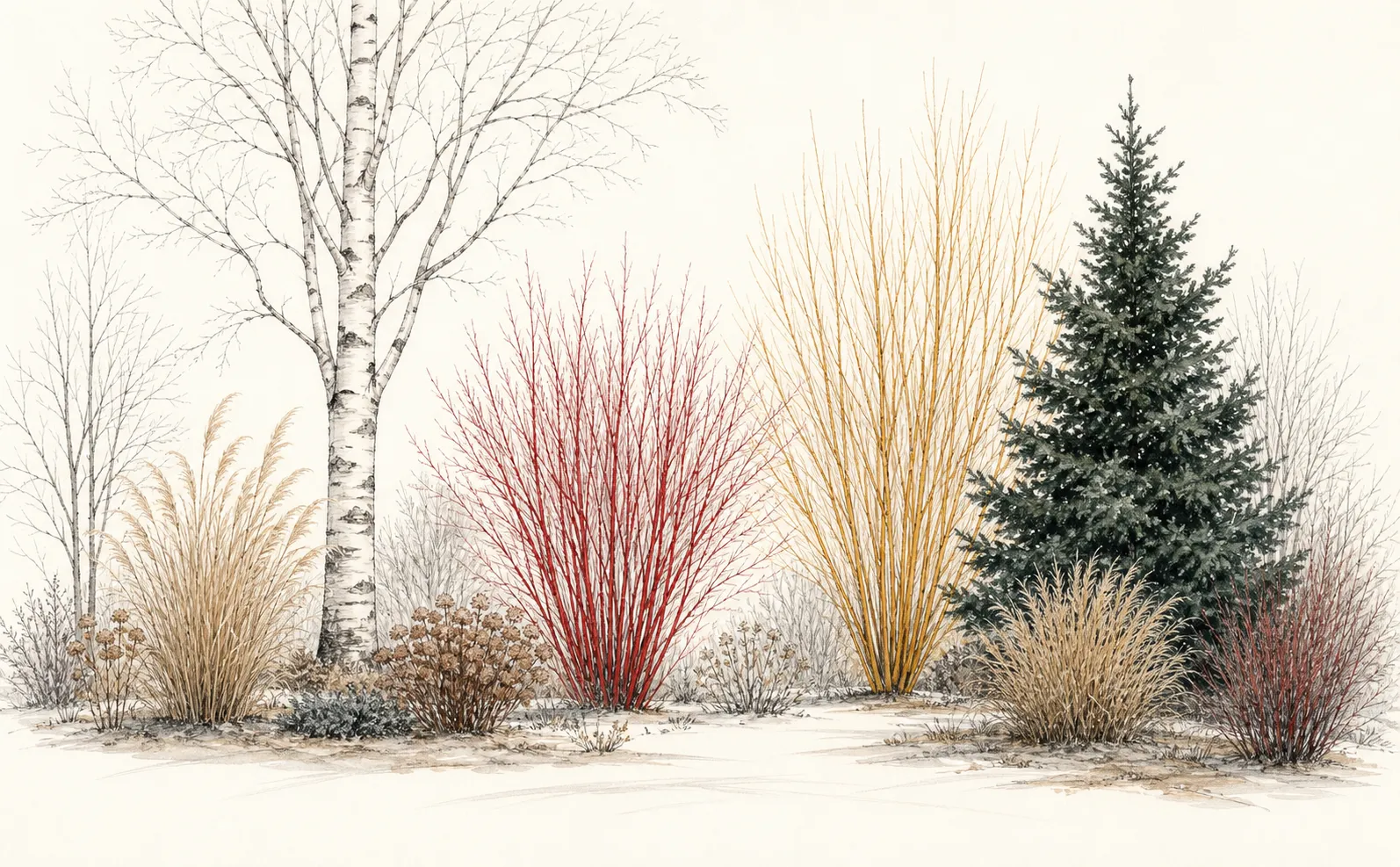
Design a Winter Bark-and-Stem Border for a Small Garden
Compose a compact ornamental border with bark color, young stem renewal, evergreen contrast, mature spacing, and a summer framework that earns its winter display.
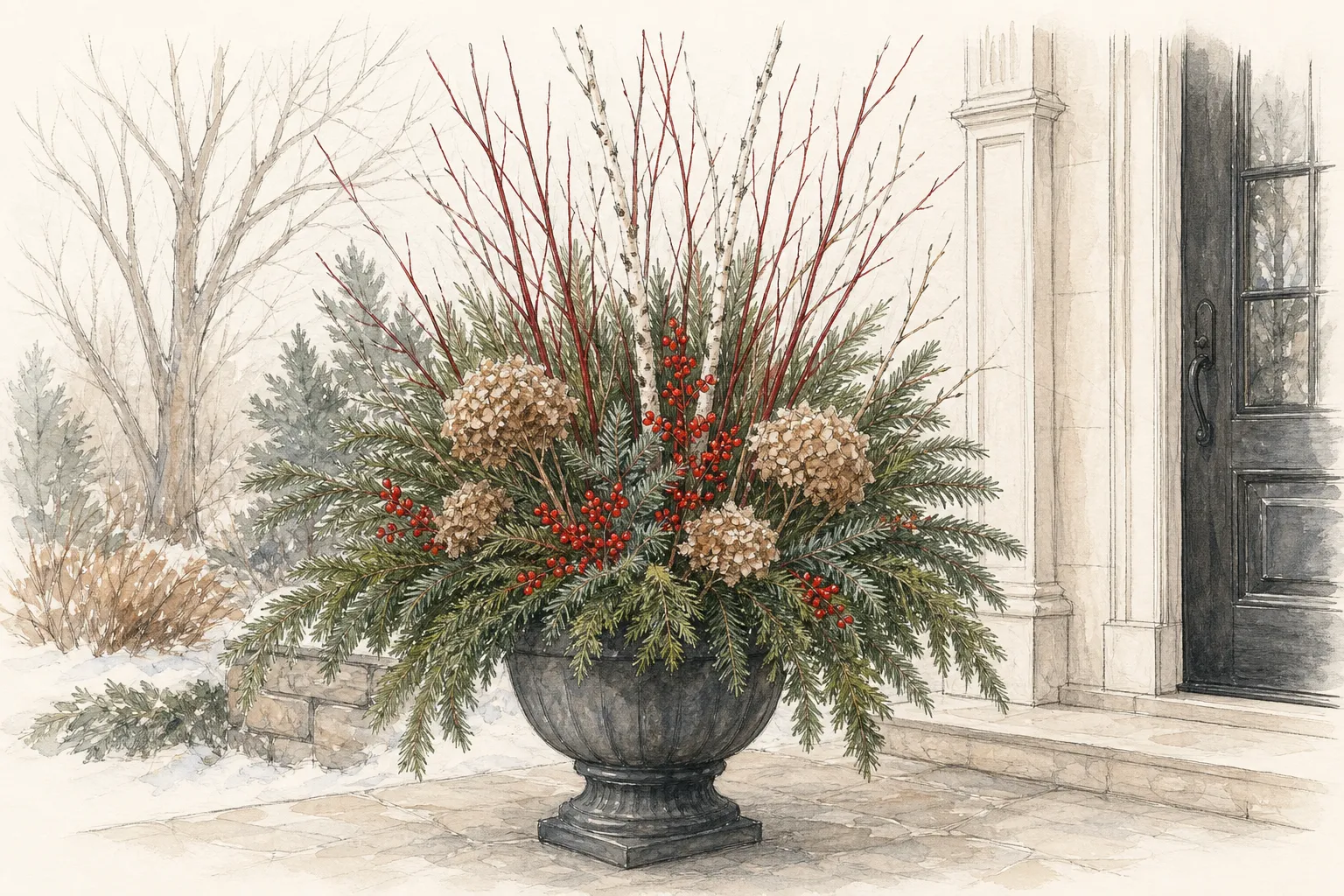
Design a Winter Container with Cut Evergreen Structure
Build an outdoor winter container from a stable vessel, a clear branch framework, locally suitable cut greens, and enough negative space to survive wind, snow, and close viewing.
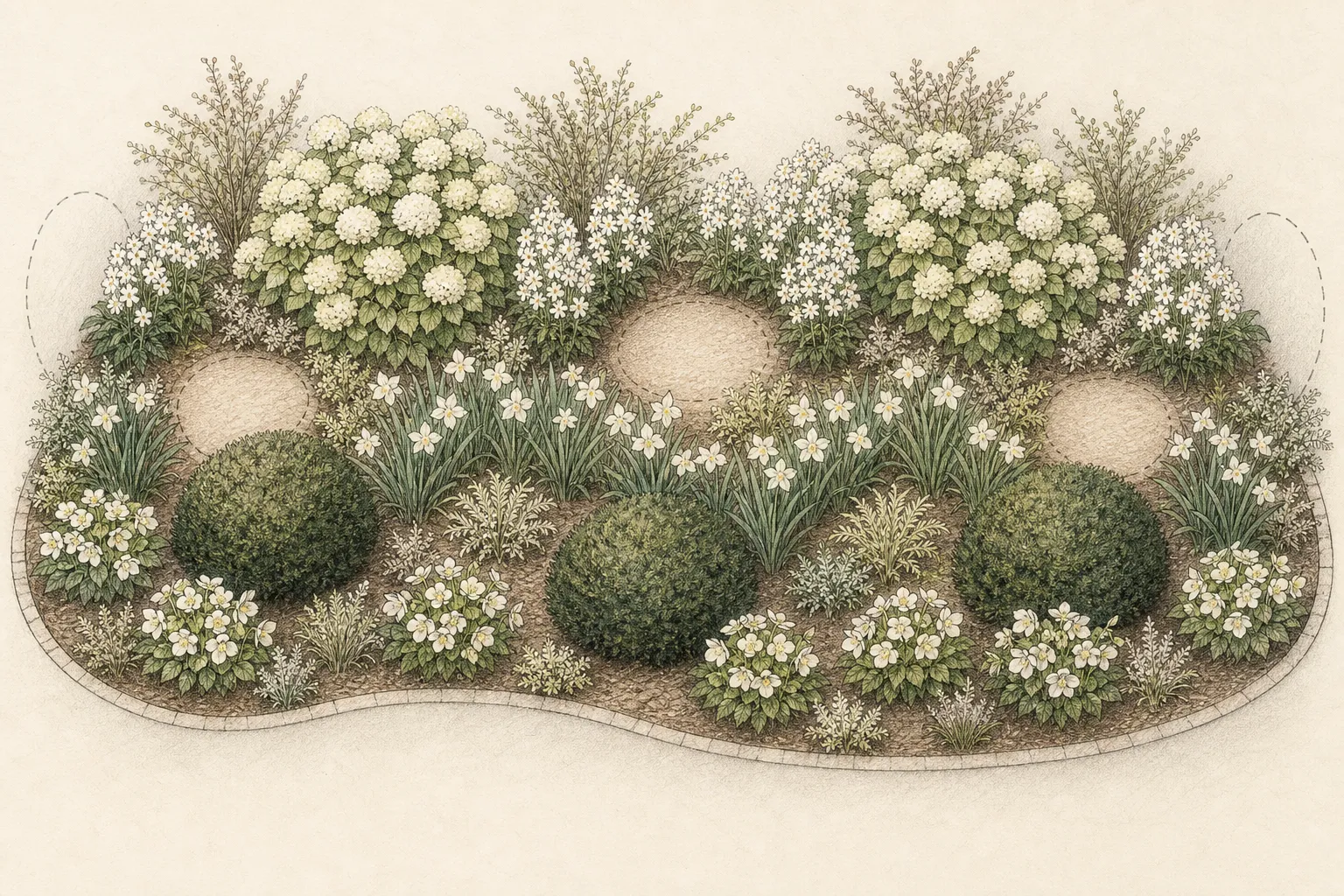
Plan a White Garden from Winter Structure to Summer Bloom
Build a white garden from evergreen and deciduous framework first, then layer white-flowering perennials and shrubs so the palette reads clearly from late winter into summer.
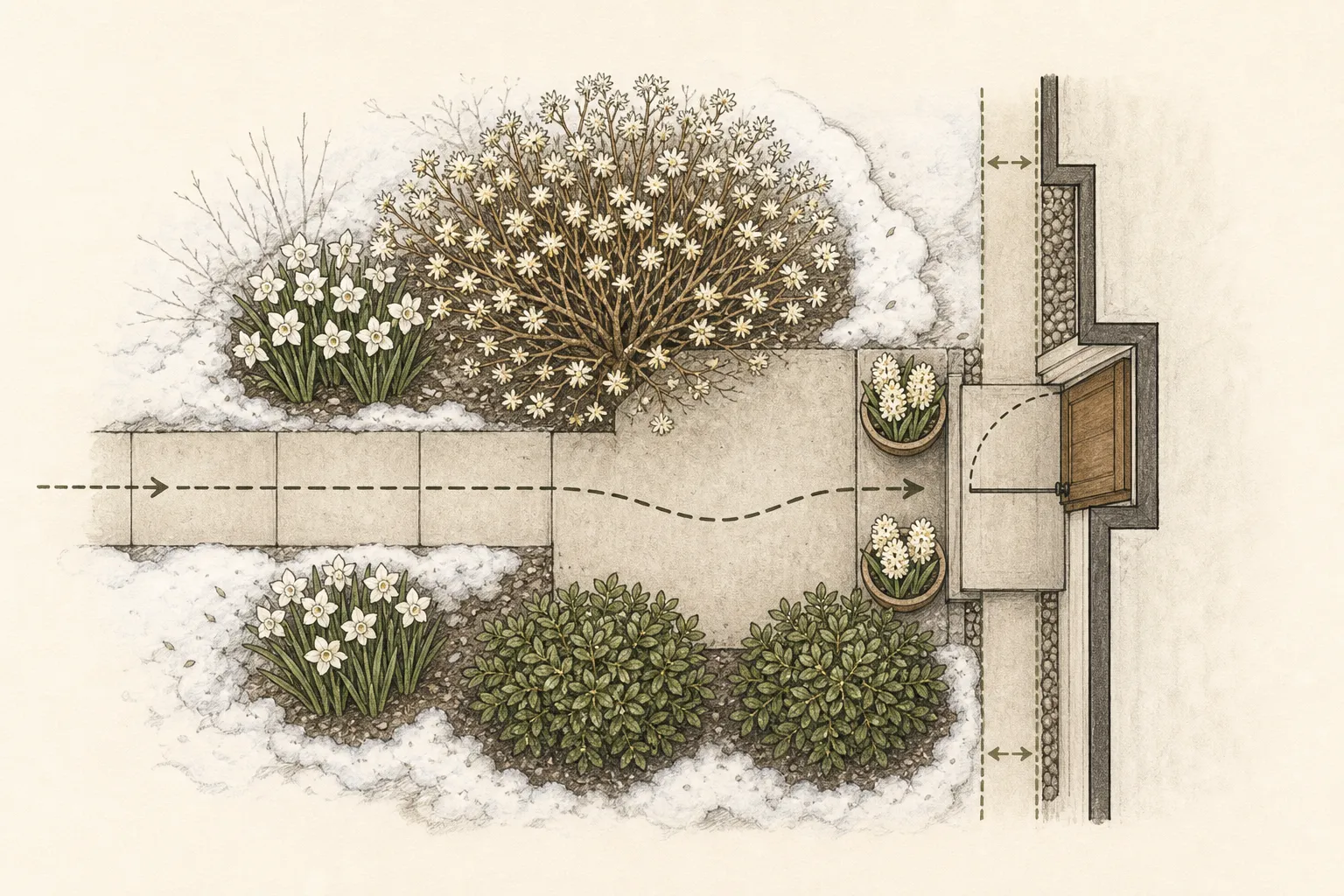
Design a Winter Entry with Scented Shrubs and Bulbs
Make a winter entry feel inhabited by placing scented shrubs where cold air can hold them briefly and bulbs where fragrance and detail meet the door.
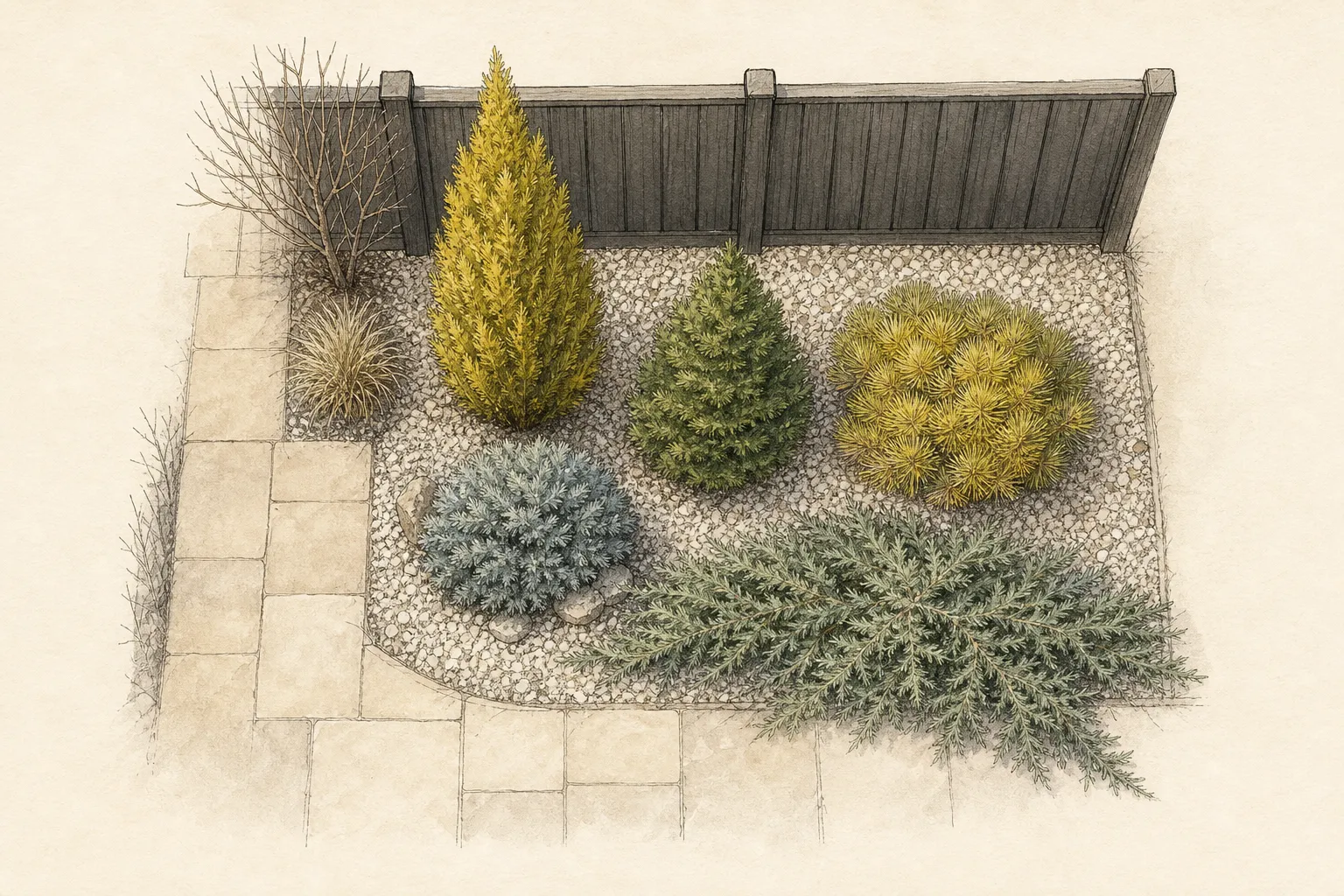
Design a Small Winter Garden with Dwarf Conifers
Design a small winter garden around dwarf conifers by drawing mature size first, spacing strong forms, and using restrained companions to sharpen winter light and structure.
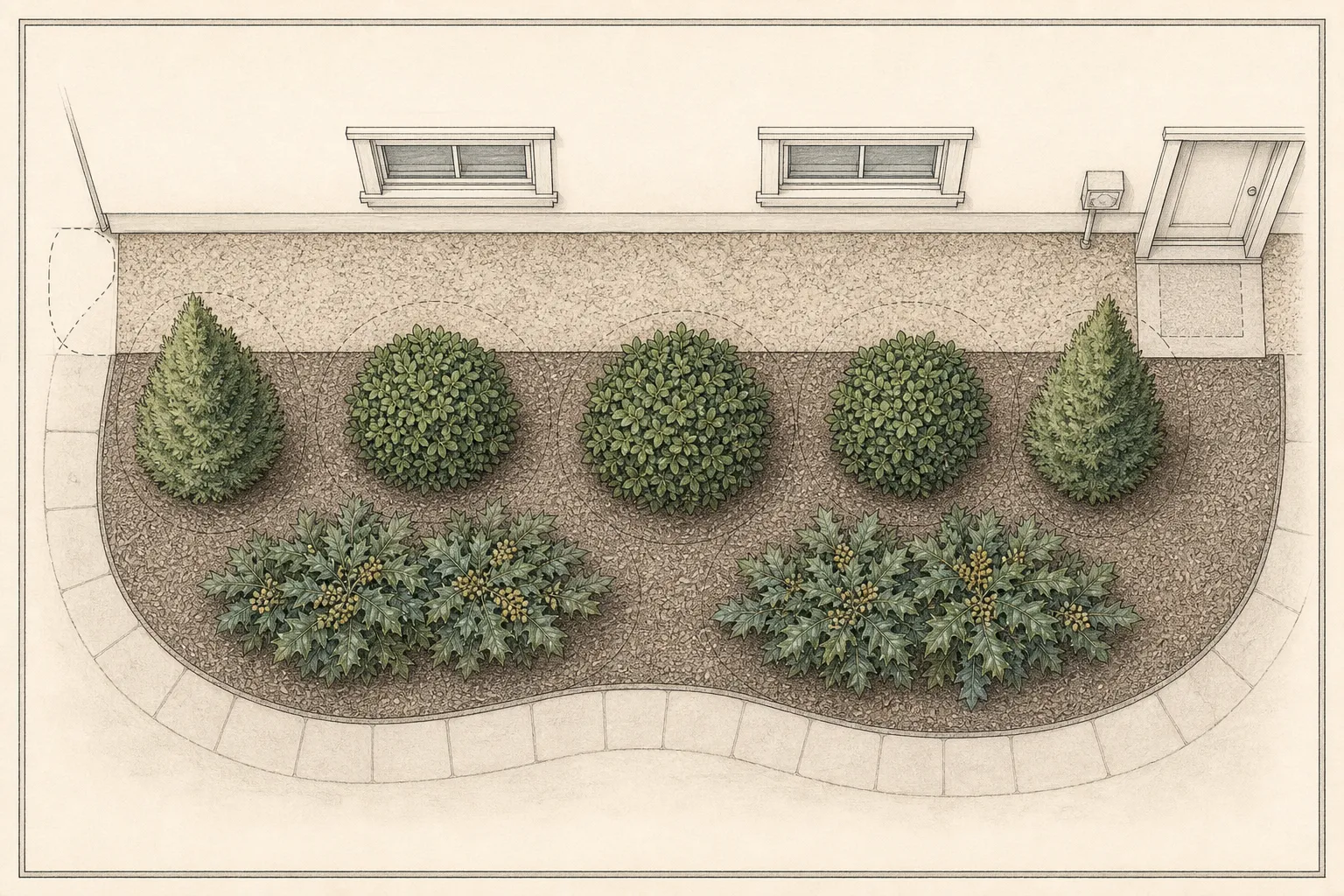
Design an Evergreen Foundation Planting with Form Contrast
Build a calm evergreen foundation planting from mature conical, rounded, and spreading forms while preserving windows, access, drainage, and the architecture.
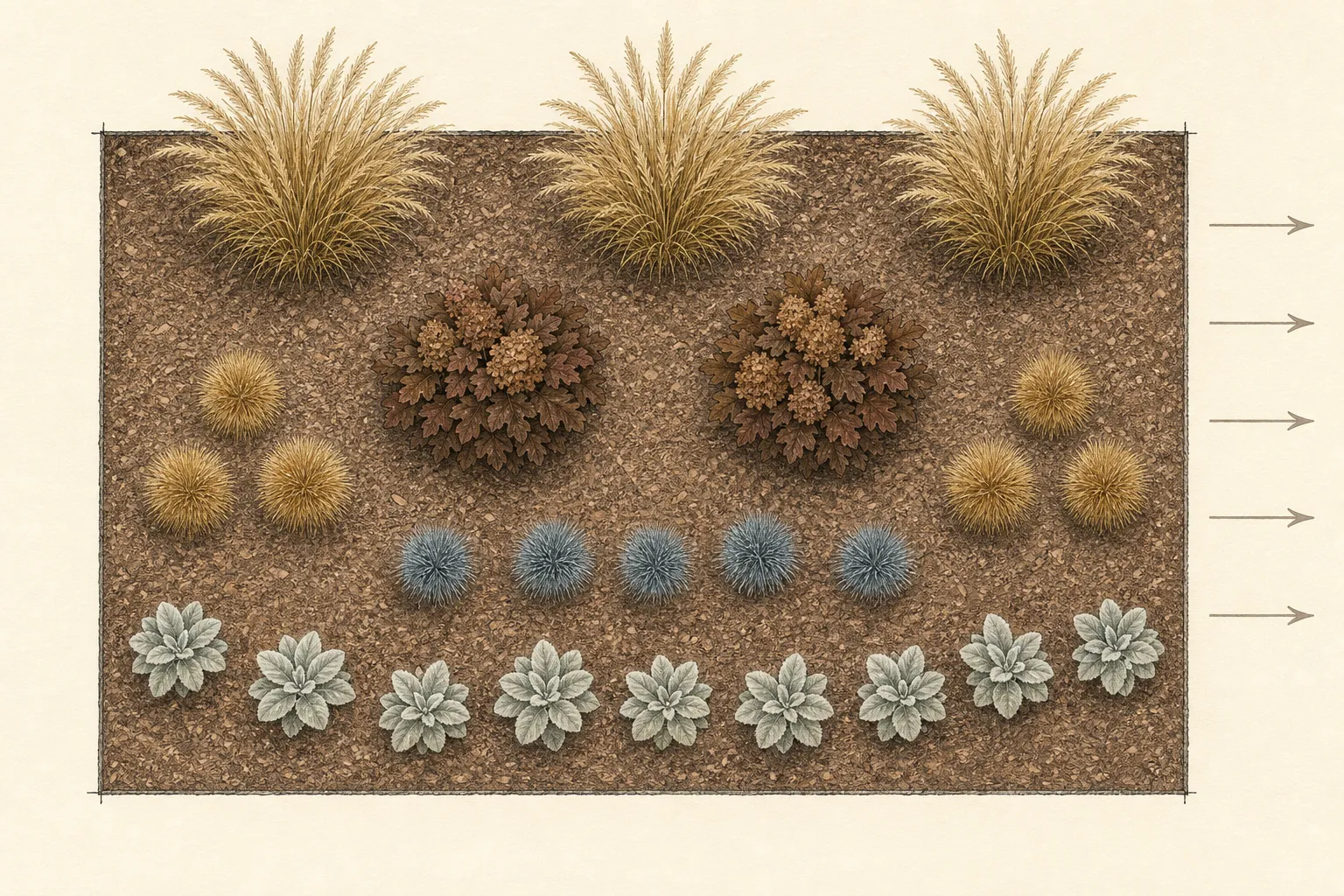
Design a Frost-Lit Garden for the Morning View
Align an eastward view with backlit grass plumes, persistent flower heads, fine stems, and a low silver edge in a measured Zone 5b garden.
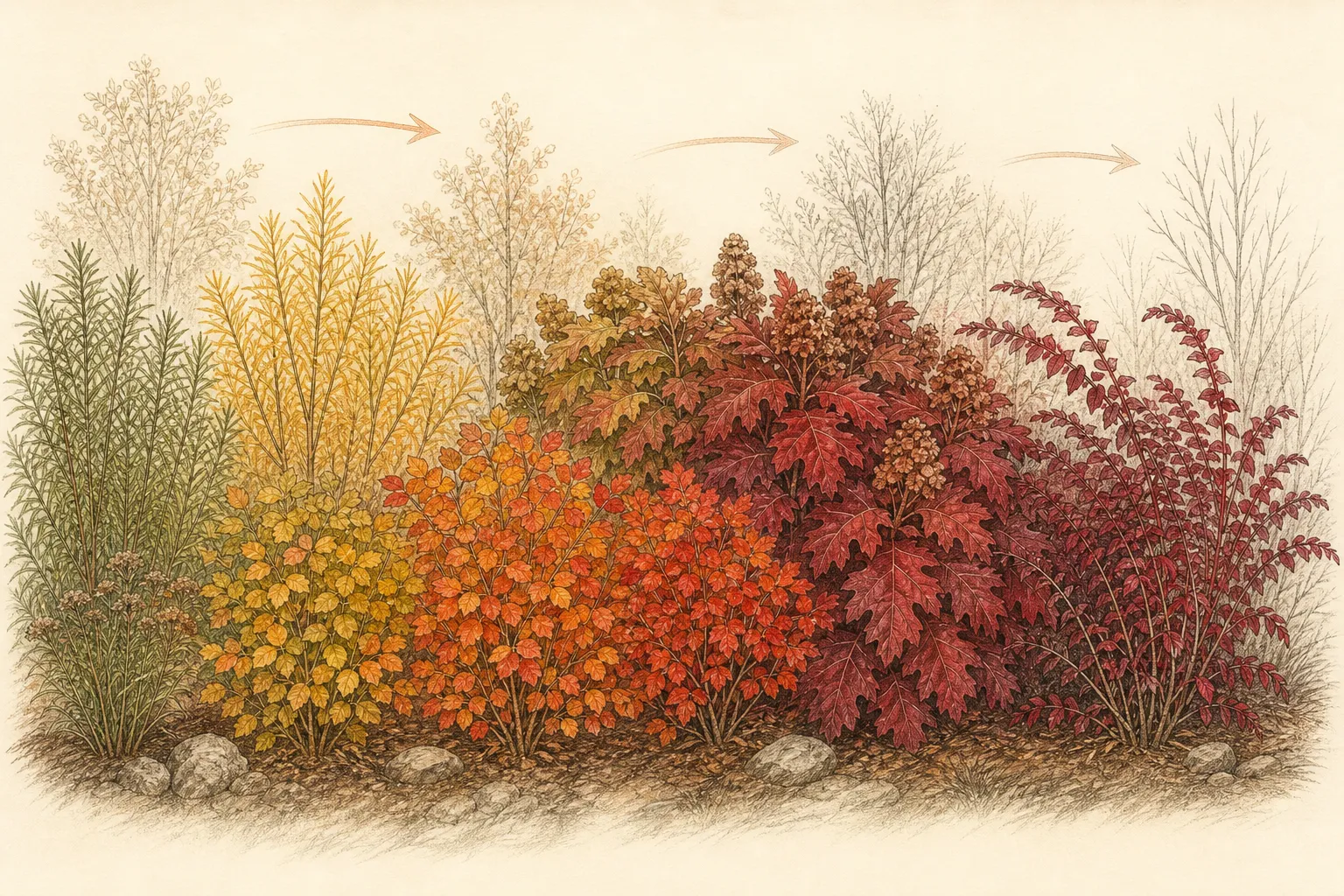
Design a Garden for Autumn Leaf-Color Succession
Plan overlapping gold, orange, red, and mahogany foliage across garden layers, then calibrate the sequence with a measured Zone 6b composition and local phenology notes.
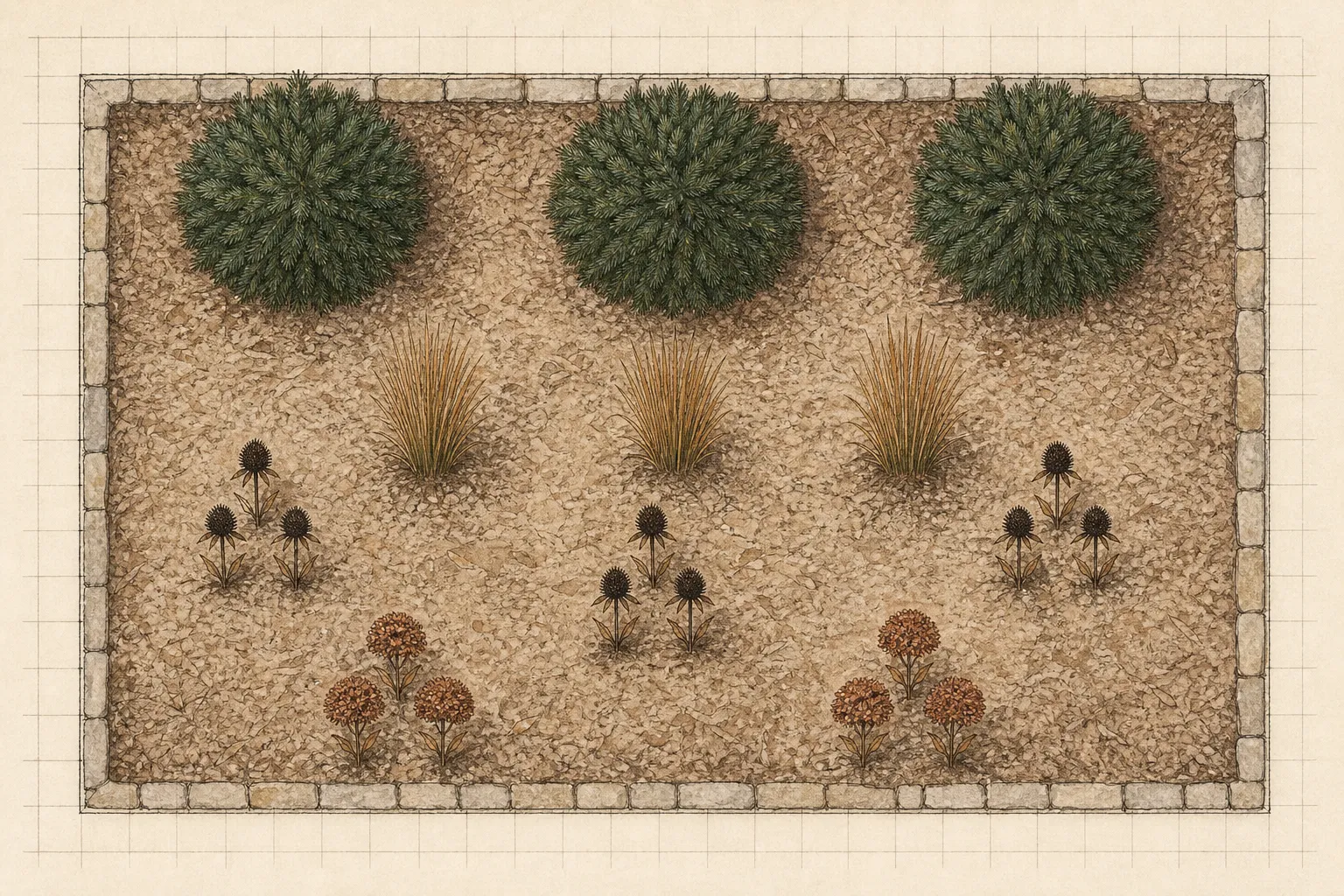
Design a November Garden with Seed Heads and Evergreens
Build a late-autumn composition from durable seed-head silhouettes, scaled evergreen masses, open ground, and one measured Zone 5b planting plan.
No entries match this index. Try a broader plant name, subject or task.