Gardens · heat wind container annual selection
Choose Flowering Annuals for Hot, Windy Containers
Read reflected heat, wind, pot stability, and realistic watering capacity before selecting flowering annuals by foliage, stem, habit, and cultivar performance.
Published Last updated
In this guide
- Read the exposure as heat, light, and moving air
- Keep regional trial results separate from a hot-wall assumption
- Define what success must look like
- Choose traits before flower color
- Reject brittle height and unsupported sail area
- Match root volume and drainage to the shortlist
- Build a wind-stable composition
- Buy from evidence, not a generic heat label
- Run a small exposure trial before repeating
- Edit the display from repeatable cues
- Design ideas
Read the exposure as heat, light, and moving air
A label that says full sun does not describe a container beside pale masonry or paving. The plant receives direct light, heat stored and released by nearby surfaces, and reflected radiation that can intensify a western exposure. Wind then moves through the foliage and across the potting mix. Treat this as a combined site, not as an ordinary sunny border lifted into a decorative pot.
Observe the location on clear days from morning through evening. Note when direct sun begins, which wall or paving surface reflects light, when the container itself becomes hot, and where wind accelerates around a corner, railing, or passage. Repeat the observation during a calmer day. A balcony edge, roof terrace, open entry, and enclosed courtyard can all have different patterns even when a weather app reports the same temperature.
Mark any temporary shelter that already exists. A parapet may protect the lower half of a plant while flower stems rise into turbulence; a neighboring pot may shade one root zone but not another; an awning can block rain without blocking heat. These details determine useful plant height and placement. If the only location repeatedly overturns large containers or creates unsafe falling objects, solve the physical site before selecting flowers.
Keep regional trial results separate from a hot-wall assumption
Use the named Fort Collins trial plants within the stated climatic context, then test any extra reflected-heat exposure separately. Draw full canopies around stable pots while retaining watering and removal access. A cultivar's successful trial performance does not establish that an exposed hanging position or a hotter wall will behave the same way.
Define what success must look like
Decide whether the container must provide color from the street, a close patio detail, a low path marker, or a short seasonal display. A distant view needs a clear mass and repeated color; a close view can reward small flowers and textured foliage. Write the months that matter and the times when the pot can actually be checked. The annual is being chosen for a job, not merely for surviving sun.
Set a realistic maintenance ceiling. Containers usually dry faster than plants in the ground, and wind increases moisture loss from leaves and exposed surfaces. If daily observation is not possible during severe weather, reject plants and pot sizes that would depend on it. Selection cannot compensate for a tiny root volume, blocked drainage, an absent gardener, or a site where water cannot be applied safely and allowed to drain.
Translate the maintenance ceiling into acceptance tests before buying. A candidate should remain upright or recover its intended habit after ordinary wind, hold enough foliage to shade its own potting mix, and continue its assigned display through the local hot interval without constant staking, sheltering, or replacement. Define what evidence will disqualify it: repeated stem splits at the same height, flowers that are stripped whenever the prevailing wind returns, permanent afternoon scorch, or water demand that exceeds safe access to the site. Compare those cues with the exact cultivar in a single trial pot, because performance reported for a species or marketing series may not transfer to every selection or region. Keep the root volume, mix, drainage, exposure, and care routine constant while comparing candidates; otherwise a larger pot can make a weak plant choice look successful. Review the display from its intended viewing distance as well as close up. A plant can be botanically healthy yet fail as an ornamental if blooms remain hidden, the center opens, or stems spend the season tied to supports. This written threshold turns replacement into planned editing and keeps heat or wind tolerance from becoming an unsupported all-or-nothing label.
Separate replacement from failure. Flowering annuals are valuable precisely because a display can be changed within a season or between years. A spring composition can be removed before the hottest interval, or one damaged plant can be replaced without redesigning the entire garden. Build that editability into the plan by keeping labels, leaving access, and avoiding a tangle of roots and stems that makes one weak component impossible to remove.
Choose traits before flower color
Start the shortlist with whole-plant traits. Compact mounds keep their center of mass low; flexible stems can move rather than snapping; narrow, waxy, glossy, silver, or hairy foliage may indicate adaptations useful in exposed sites; and smaller flowers often present less broad surface to wind than oversized blooms. These are screening clues, not guarantees. Confirm the exact species or cultivar through regional trials and nursery information.
Inspect where flowers are carried. Blooms held just above a dense canopy may be protected by foliage, while long bare peduncles put the display into the strongest air. Look at branching from the base, distance between nodes, leaf attachment, and whether spent flowers shed cleanly or require frequent grooming. A plant can be heat-tolerant yet become untidy when every flower is bruised by a railing or hot wall.
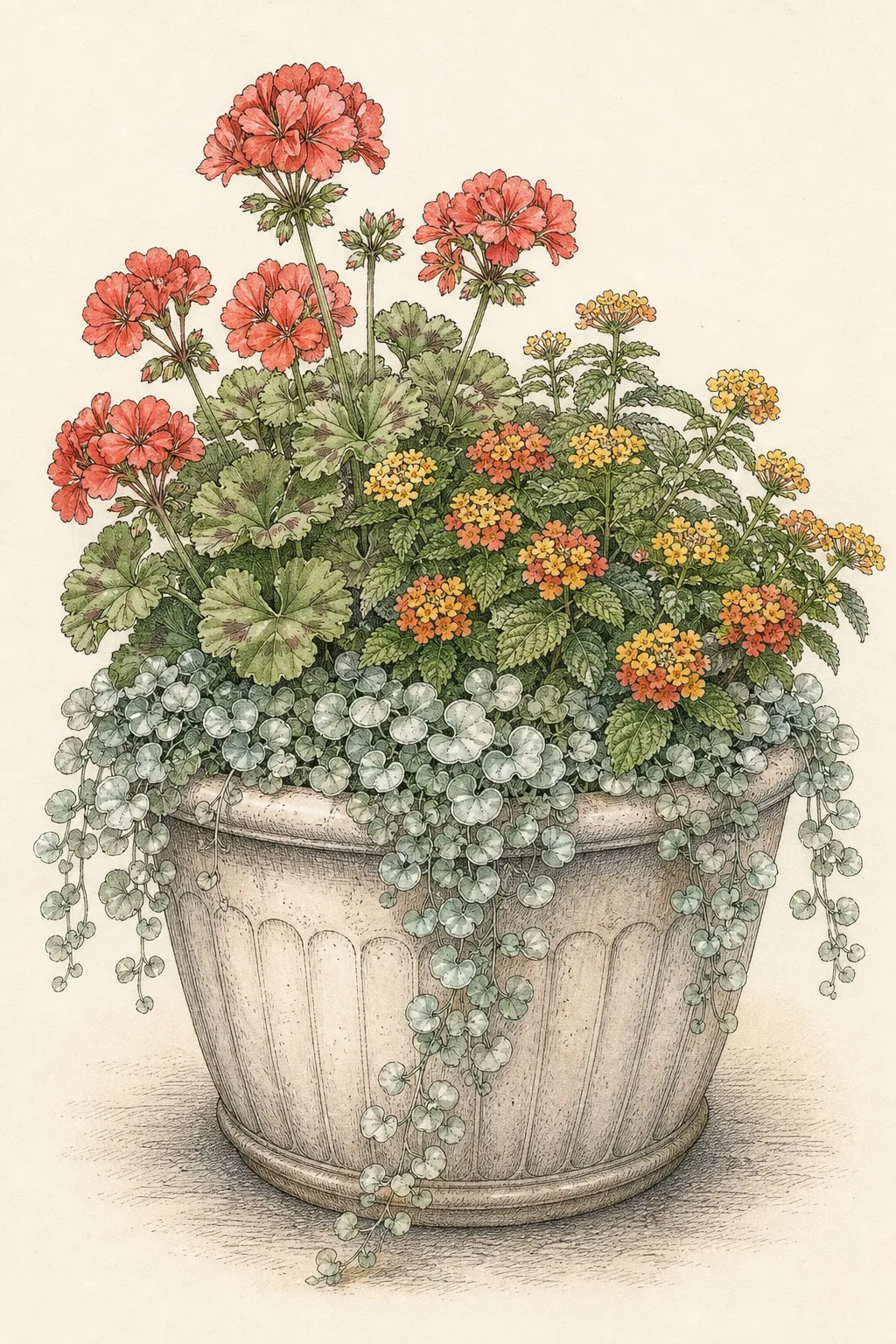
Use named selections precisely. Pelargoniums, salvias, verbenas, petunias, calibrachoas, lantanas, and other familiar container groups contain different habits and tolerances. University of Minnesota guidance for Pelargonium, for example, applies to a broad group with upright and trailing forms, and it warns that windy hanging positions dry faster. Do not transfer one cultivar's compact habit or dry-soil tolerance to every plant sharing a common name.
Reject brittle height and unsupported sail area
A tall annual is not automatically unsuitable, but its architecture must earn the position. Examine the stem base, branching, mature width, and the ratio of leafy canopy to pot. A single rigid stem topped by a broad mass can behave like a lever in gusts. Several lower branches, a tapered outline, or flexible narrow foliage may distribute movement more safely. Nursery height is not the mature wind profile.
Do not assume staking converts a poor selection into a good one. A stake can support a valued stem, but it adds ties, inspection, and another rigid point where tissue can rub. If every principal shoot requires a splint, choose a shorter cultivar or different flower form. Reserve staking for a planned specimen with a stable container and reachable ties, not as routine rescue for an exposure the plant was never selected to tolerate.
Trailing plants need their own wind test. A stem that drapes beautifully in shelter may whip against a sharp rim or railing, and a hanging basket is exposed on more sides while carrying less mix. Choose sturdy or flexible trailers, keep them clear of abrasive edges, and reject a placement over circulation or neighboring property. The safe fall zone of the container matters more than the desire for a long cascade.
Match root volume and drainage to the shortlist
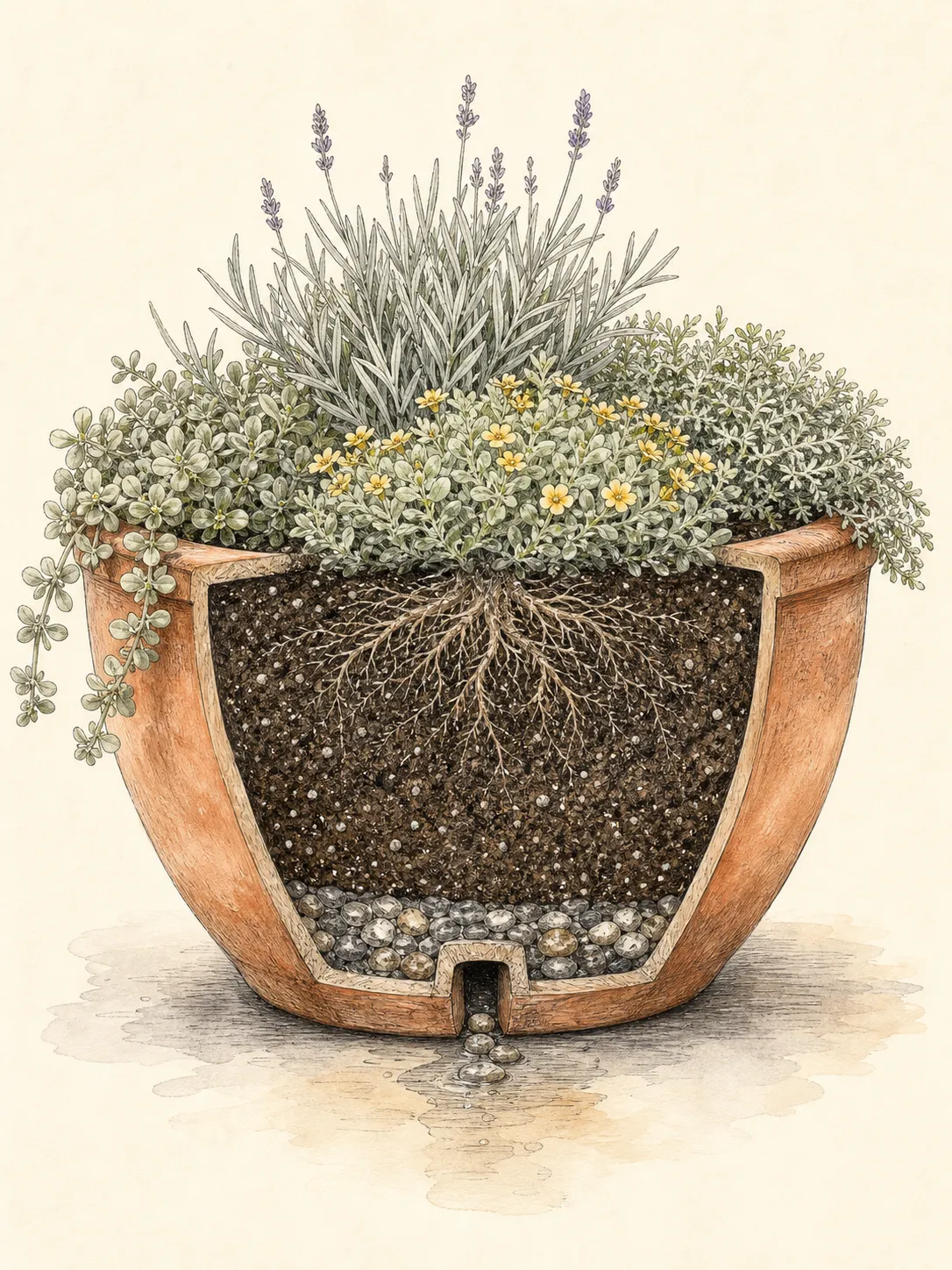
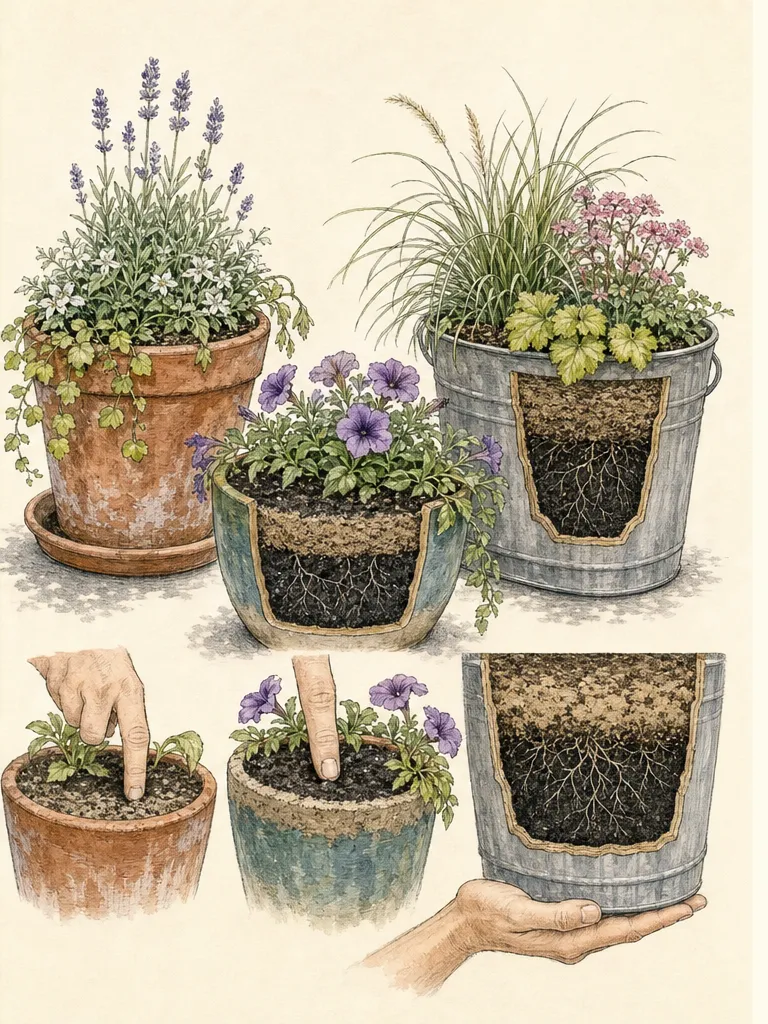
A resilient top still depends on a functional root zone. Use a container with open drainage and enough volume for the mature combination, then choose a potting mix intended for outdoor containers. A broad, stable base helps resist overturning and usually buffers moisture changes better than a cramped decorative vessel. Confirm that the filled pot and drainage water are suitable for the deck, balcony, or paving that will carry them.
Group plants with compatible water and light needs. A drought-tolerant pelargonium beside a constantly thirsty, shade-preferring filler creates an impossible compromise: watering for one can leave the other wet, while drying for the other can end flowering. Read each label and regional source. Similar flower colors do not make compatible roots, and the thriller-filler-spiller formula is useful only when every component can share the same care.
Keep the crown and stem bases visible when planting, and leave room for water to reach the mix rather than running over a packed root mat. Do not bury small plants to make a sparse arrangement appear finished. Temporary gaps close through normal growth and can be edited with removable surface detail. A densely packed pot may look complete on day one while losing the air, access, and root volume needed during the hottest weeks.
Build a wind-stable composition
Place the most compact, resilient habit on the windward side and slightly shelter more delicate flowers behind it without creating a dense wall. Keep the tallest element near the center of a broad pot, or omit height and let repeated low mounds provide the design. View the arrangement from the direction of prevailing wind as well as from the chair or doorway where color will be enjoyed.
Draw the mature silhouette in elevation and overhead. Include flower stems, trailing reach, the pot rim, and nearby railings or walls. The final canopy should not cover a vent, narrow a required path, scrape paint, or trap the gardener against a hot surface during watering. A composition can be asymmetrical toward the sheltered side while still appearing balanced from the main view.
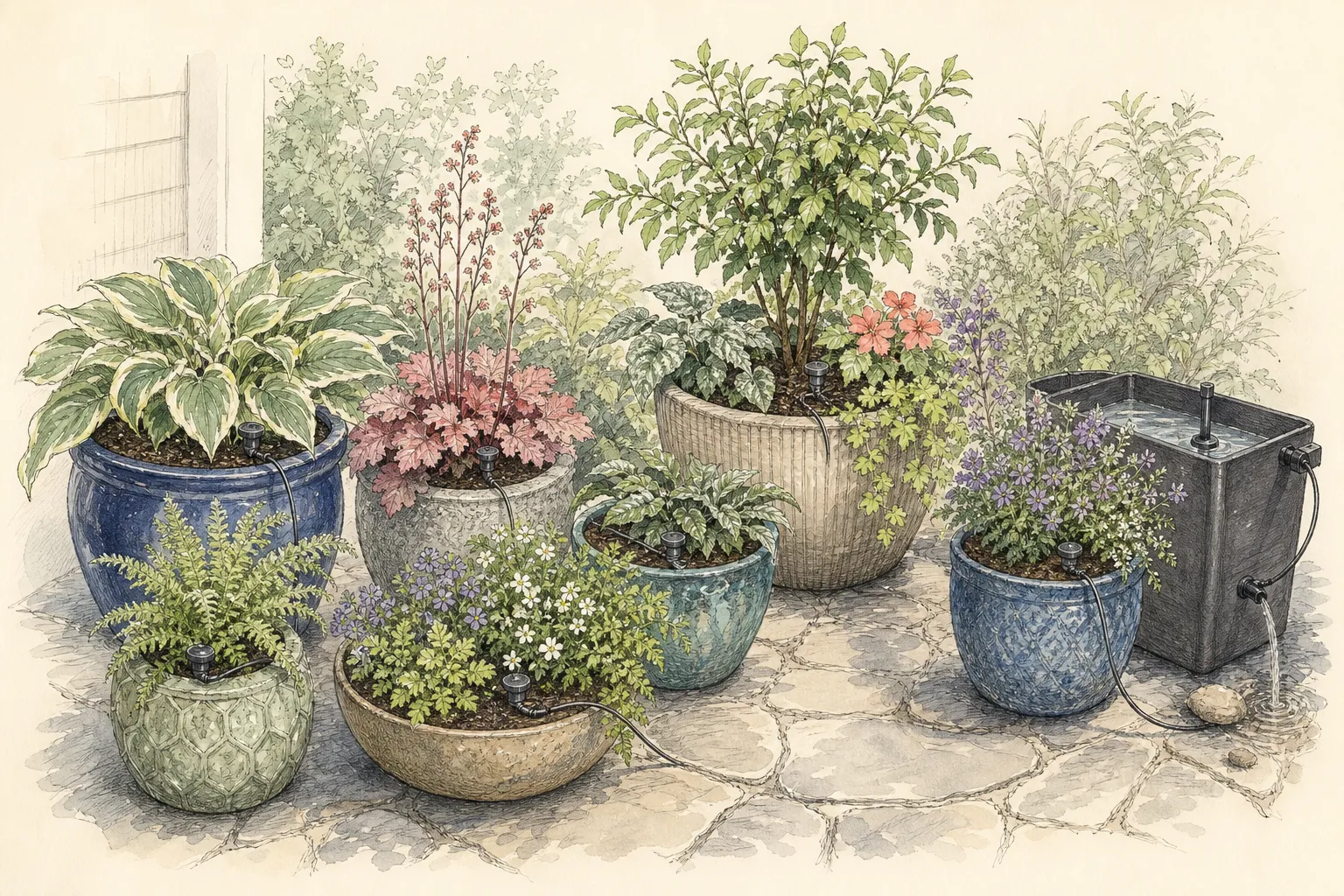
Use repetition across several pots instead of forcing every role into one vessel. Three stable containers can repeat one flower color while varying low foliage forms; a single tall pot can stand in the calmest position rather than making every container top-heavy. Grouping may also create modest shelter, but each pot must still receive compatible light and remain independently reachable for inspection, turning, and drainage.
For one declared-region starting composition, use three separate, broad-based 20-inch containers in a full-sun Fort Collins, Colorado, garden exposed to the Front Range trial conditions described by Colorado State University: high elevation, intense solar radiation, drying winds, large temperature swings, and occasional hail. The 2020 trial placed five plants of one cultivar in each 20-inch container. Repeating that tested density in separate pots keeps cultivar responses legible and avoids inventing compatibility inside a mixed container.
Plant five Angelonia Serenita Pink in the windward pot, five Petunia Bee's Knees in the middle pot, and five Scaevola Abanico Power Laguna Blue in the pot with room for trailing growth. In the CSU trial, Serenita Pink was about 11.5 inches high by 12.25 inches wide in July and 18 by 10 inches in September; Bee's Knees was about 12.5 by 16 inches and later 8 by 28.5 inches; Abanico Power Laguna Blue was about 16.5 by 17.5 inches and later 12 by 26 inches. Use those observations to reserve clearance, not as guaranteed mature dimensions, and keep all three pots independently stable, draining, reachable, and rotatable.
This trio gives upright pink flower spikes, a spreading yellow mass, and a blue trailing edge without a brittle central tower. CSU recognized Serenita Pink and Bee's Knees for container performance and described Abanico Power Laguna Blue as vigorous and weather resistant, but the report documents one season and place. It does not test a specific reflected-heat wall, every wind corridor, or every irrigation regime. At a reflective facade, duplicate one candidate in the hottest measured position and one just outside the reflected beam, monitor root-zone drying and flower or foliage damage, and keep only the cultivar that passes that local comparison. Outside comparable Intermountain conditions, use regional trial data for cultivar substitution.
Buy from evidence, not a generic heat label
Look for regional trial results, botanical-garden displays, and local nursery plants grown outdoors under comparable conditions. Record the full cultivar name and the conditions under which a recommendation was made. A selection praised in humid summer heat may respond differently in a dry high-elevation wind, and a British coastal recommendation does not automatically transfer to a continental balcony. Use the trait as a clue and local evidence as the decision.
Inspect the actual plant before purchase. Favor a balanced root-to-shoot proportion, branching that begins low enough for the intended role, leaves without widespread scorch, and stems that are neither stretched nor recently soft from protected forcing. A plant can acclimate to a harsher site only within its genetic limits. Gradual exposure may reduce transition shock, but it cannot turn a shade annual into a reflected-heat performer.
Ask what the seller's word annual means in your region. A tender perennial may be used as a one-season plant where frost ends the display, while it can persist elsewhere; hardiness, heat tolerance, and flowering season remain separate questions. Also check mature size and whether the named selection needs deadheading. The best candidate fits the exposure and the gardener's available care, not simply the local sales category.
Run a small exposure trial before repeating
When the site is unusually severe, plant one representative container before buying a full row. Place two or three candidate annuals in compatible root conditions and photograph them from the same angle after calm, hot, and windy periods. Record flower retention, stem lean, leaf edge condition, watering frequency, and whether the pot stayed stable. Observed performance is more useful than remembering that one plant looked tired.
Change one variable at a time. Move the container slightly out of reflected afternoon heat, lower the tallest component, or substitute a tougher trailer while keeping the pot and care consistent. If every variable changes together, the successful trait remains unknown. Do not use extra fertilizer to push a stressed plant; lush soft growth can distort the habit being tested and does not correct an incompatible exposure.
Expand only from a result that remains ornamental, not merely alive. A plant that stops flowering, needs constant tying, or carries permanent scorch may be surviving without doing its assigned job. Replace it with another documented candidate or shorten the season of display. A cooler spring-and-autumn pot can be a better design than insisting on one flower combination through the site's harshest interval.
Edit the display from repeatable cues
Check the potting mix below the surface before watering and compare plant response in cooler and hotter parts of the day. Temporary midday wilt can occur while roots are still moist; persistent wilt, dry mix, soft collapse, and leaf scorch require different responses. Verify drainage and root moisture before adding water. The companion guide to heat-ready container watering can supply the detailed routine once plant selection is sound.
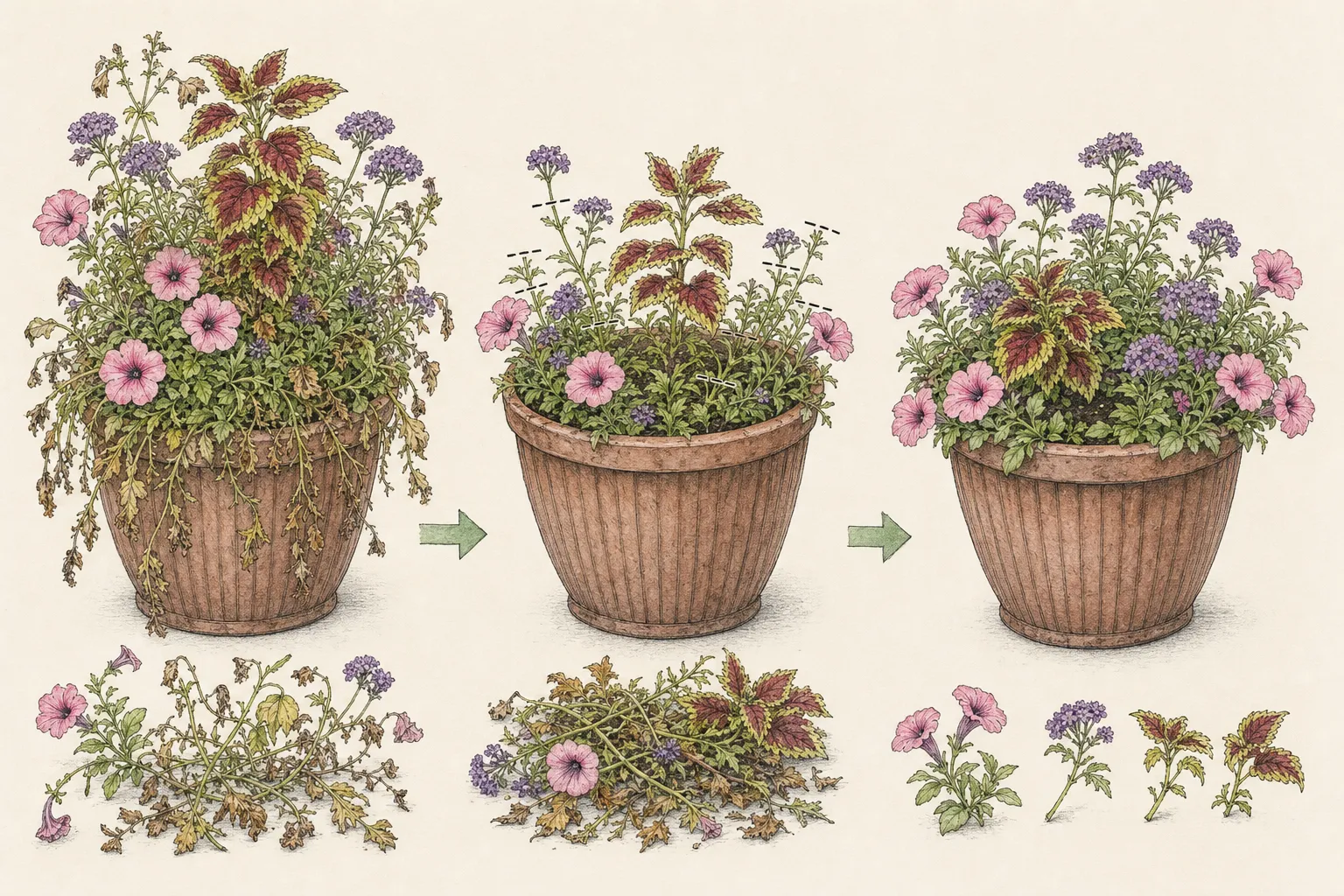
After wind, inspect the stem base, branch unions, ties, rim contact, and the container's position. Remove a split or badly damaged stem cleanly according to the plant's needs, but do not repeatedly shear the whole pot to fit an underestimated space. If the same cultivar leans, tangles, or abrades after every event, replace it or move it to shelter rather than turning emergency grooming into the design.
At season's end, record which traits succeeded: compact branching, flexible stems, persistent flowers, useful foliage, manageable watering, and stable proportion. Keep the exact names, because next year's similar-looking substitute may behave differently. A strong hot-wind container is a measured composition whose plants, root volume, and care capacity agree; color is chosen within that shortlist, not used to override it.
Design ideas
- Style
- Low, resilient seasonal container compositions with repeated flower color and strong foliage structure
- Space
- Sunny balcony, roof terrace, exposed entry, paved courtyard, or west-facing patio with reflected heat and wind
- Climate
- Declared worked example: full-sun Fort Collins, Colorado, conditions with high elevation, intense solar radiation, drying wind, large temperature swings, and occasional hail; reflected-wall heat remains a separate site trial, and cultivar performance must be rechecked outside comparable Intermountain gardens
- 1Build the Fort Collins three-pot group
Use three separate broad-based 20-inch pots, each with five plants of one CSU 2020 trial cultivar: Angelonia Serenita Pink, Petunia Bee's Knees, and Scaevola Abanico Power Laguna Blue. Reserve roughly 30 inches of clear canopy width for the two spreading cultivars, keep drainage and watering independent, and duplicate one pot outside a reflected beam before treating the trial result as proof for a hot wall.
- 2Use pelargonium as a measured candidate
Trial a named upright or interspecific Pelargonium in full light, draining mix, and a stable pot, while avoiding an exposed hanging position that dries rapidly. Compare that exact cultivar's branching and flower retention with local trial evidence; do not treat all geranium-labeled plants as equivalent. Record where the plant was trialed and when the hottest exposure occurred, because regional temperature patterns and cultivar performance limit any broader recommendation.
- 3Repeat one wind-adapted foliage clue
Choose several candidates with a useful trait such as narrow, waxy, glossy, silver, or softly hairy leaves, then verify each plant's local performance. Repeat the successful foliage quality across different flower colors so the display remains coherent when bloom pauses during severe weather. Treat the leaf feature as a shortlist clue, not proof of tolerance, and reject any candidate whose exact light, water, or regional requirements conflict with the pot.
- 4Move height to the sheltered pot
If the design needs one upright annual, place it in the broadest container nearest a protective wall or inner corner, while keeping the root zone out of the hottest rain shadow. Use lower mounds in the exposed pots and repeat the tall plant's color at a safer height. Recheck the position after the sun angle changes; shelter that blocks wind may also increase reflected heat or exclude useful rain later in the season.
- 5Make a reflected-heat trial pair
Place two identical stable pots with the same mix and candidate plants, one in the hottest reflected position and one just beyond the reflected beam. Keep care consistent and record leaf, stem, and flower response. Use the comparison to set the real boundary of the display.
- 6Design a calm-side cascade
Put the trailing component on the sheltered side of the pot so stems do not whip against a railing or sharp rim. Keep its final reach above private, safe ground and pair it with a compact windward mound. Reject a trailer that needs repeated untangling to remain intact.
- 7Repeat color across separate root zones
Use several pots rather than combining incompatible plants in one mix. Repeat a coral, violet, white, or red note with different annuals whose water needs suit each pot's exposure. The display reads as one composition while every root zone can be managed from evidence.
- 8Plan a seasonal handoff
Use one set of annuals for the moderate opening season and replace it before the reflected-heat peak with locally tested heat performers. Restore a cooler-season display later if desired. This deliberate handoff protects ornamental quality without demanding that one cultivar excel in every temperature interval.
Related reading
Sources
- Container Gardens. Colorado State University Extension. Source record · Accessed 2026-08-19.
- Growing Geraniums as Annual Flowers in Minnesota. University of Minnesota Extension. Source record · Accessed 2026-08-19.
- Plants Grown in Containers. NC State Extension. Source record · Accessed 2026-08-19.
- 2020 Annual Flower Trial Final Report. Colorado State University Annual Flower Trial Garden. Source record · Accessed 2026-08-19.