Gardens · cool season spring container design
Design a Cool-Season Spring Container That Can Change Gracefully
Build a spring container around compatible cool-weather plants, usable drainage, measured spacing, and an intentional handoff to summer.
Published Last updated
In this guide
Start with the container as a growing site
Measure the inside diameter, depth and drainage openings before choosing plants. Large foliage and tall accents need root volume as well as visual room. Schedule the work when cool-season plants are actively growing but sustained summer heat has not arrived. Confirm the choice by inspecting root-ball moisture, overnight temperature, wind exposure, and how quickly each plant fills its allotted sector. The safe finish is reached when the container reads as one composition while every crown remains visible and reachable.
Raise the pot so every hole can drain and keep saucers from holding spring rain. A decorative cachepot needs a removable planted liner.
Map sun, wind and roof shelter across the day. April light can become hot exposure after trees leaf out or the sun angle changes. In this case, success means the container reads as one composition while every crown remains visible and reachable. Let the next inspection test whether the container reads as one composition while every crown remains visible and reachable; the workday shows only the starting condition.
Use the start with the container as a growing site stage to compare root-ball moisture, overnight temperature, wind exposure, and how quickly each plant fills its allotted sector across the whole planting, including one unaffected reference point. Continue only where that evidence agrees with the container reads as one composition while every crown remains visible and reachable.
A spring container is a small root zone with amplified weather. Confirm that the vessel has open drainage holes, enough volume for the planned roots, and a material that can tolerate the remaining freezes. Colorado State recommends a porous but moisture-retentive potting medium, not native soil, which compacts and limits oxygen in pots. Pre-moisten the mix and leave about an inch below the rim for watering. A saucer can protect paving during irrigation, but standing water should be emptied so cool roots drain between waterings.
Container temperature changes faster than bed soil. A dark pot against a sunny wall can warm roots and advance growth on a cold day, then expose the same growth to a sharp night freeze. Grouping pots near shelter may moderate wind, but drainage holes must remain open and the vessel must stay stable. Keep a frost-protected pot out of standing water. Check the least hardy plant in the combination before deciding whether the whole container can remain outside.
Check container weight and the route to shelter before frost threatens. A large wet pot can be unsafe to move, so plan supported cover in place and secure it above flowers. Remove the cover promptly after temperatures recover so spring sun does not overheat the enclosed foliage.
Keep a spare drain-hole screen and matching potting medium for settling repairs. Replace only material lost from the pot; repeated washout signals that the hole, watering force, or vessel position needs correction.
Build the composition from jobs, not a shopping list
Assign one light vertical structure, one flowering bridge, one low edge and a controlled trailer. Repetition gives a small pot more authority than one of everything.
Use twig structure when cool-season flowers are all low. Keep branches airy enough that flowers remain visible and the arrangement does not mimic a winter urn. Track root-ball moisture, overnight temperature, wind, and the rate at which each plant fills its allotted sector. Separate plants whose drainage, frost tolerance, mature scale, or summer plan conflicts with the combination.
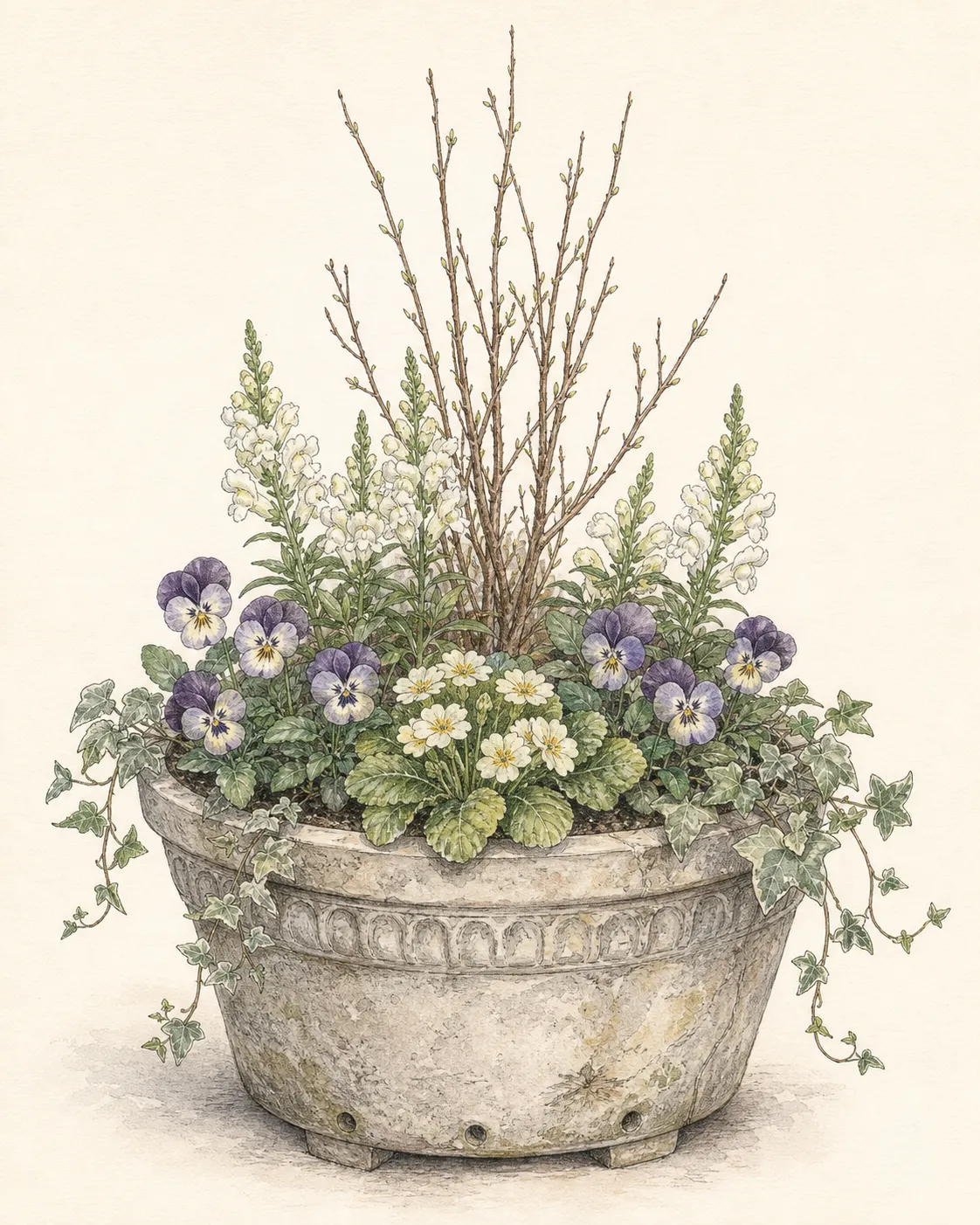
Choose a limited color family and let foliage carry transitions. Dusky violet, cream and clear green stay legible in weak spring light without becoming a florist bundle. The finished work must allow the container reads as one composition while every crown remains visible and reachable. Weather and new growth can clarify root-ball moisture, overnight temperature, wind exposure, and how quickly each plant fills its allotted sector during a measured pause.
Assign each plant a visible and horticultural job. From one side, compact snapdragons can form the rear height, pansies and primroses the middle mass, and restrained ivy the edge. A pot seen from all sides moves the height toward the center. Repetition makes the arrangement coherent with fewer species. Before planting, check that the structural, mounding, and trailing plants share exposure and moisture. A decorative twig is not a living plant and should remain stable, smooth, and clear of crowns and hands.
Make water needs agree
Compare the root-ball moisture of every candidate before purchase. Primrose that needs steady moisture should not share a tiny exposed pot with a drought-led plant. Separate seasonal timing from cosmetic urgency. The useful window is when cool-season plants are actively growing but sustained summer heat has not arrived.
Use a peat-free container medium designed to drain and retain usable moisture. Garden soil alone compacts and behaves differently inside a pot. Compare that setting with root-ball moisture, overnight temperature, wind exposure, and how quickly each plant fills its allotted sector.
Set root balls at their existing level and leave a watering lip. Buried crowns and media heaped over pansy stems invite decline. Stop once the container reads as one composition while every crown remains visible and reachable.
Root balls dry at different rates even in the same pot. A small nursery plug can be dry while surrounding fresh mix feels damp, or a peat-heavy root ball can remain wet after the rest of the container drains. Probe both zones during establishment and water slowly until drainage appears. Primroses generally need steadier moisture than a drought-tolerant permanent accent, so the combination should be changed if one plant repeatedly wilts while another stays wet. A larger vessel buffers these differences but does not eliminate them.
Test the plan at mature spread
Arrange plants on the filled pot before removing containers. Turn the most characteristic face outward and check space from the viewing route. Set every nursery pot on the surface and test the composition from its main viewing side before planting. Compatible light, moisture, frost tolerance, and summer plans matter more than forcing one extra plant into a temporary gap.
Read the label for mature width, then reserve that footprint even if April plants look small. Overpacking hides rot and makes selective replacement destructive. Record root-ball moisture, overnight temperature, wind exposure, and how quickly each plant fills its allotted sector before the work begins.
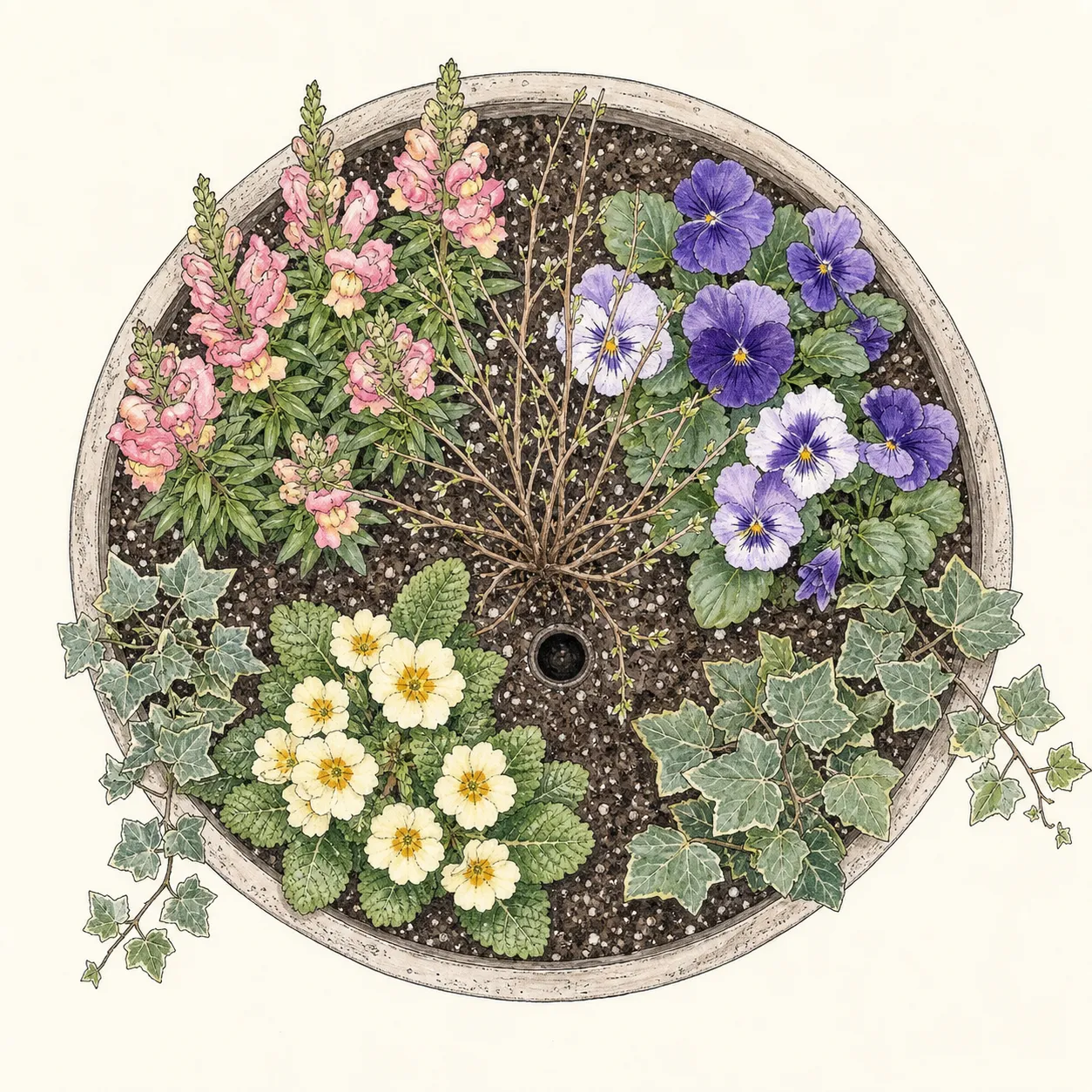
Keep trailers to one or two rim points so the pot silhouette remains visible. A full ring of ivy can mask drainage, labels and stressed interior plants. Account for pot volume, drainage holes, shelter, reflected heat and watering access shape the design.
Set the unopened nursery pots on the medium and view the arrangement from the path, doorway, or seating area before removing roots. Turn the best face outward and use the cultivar's expected spread to adjust counts. Illinois Extension notes that tight planting creates instant fullness while wider spacing fills later; this cool-season design favors visible crowns and room for several weeks of growth. If root balls already touch, remove a plant, not squeezing soil away to fit it. Keep watering access between the groups.
Plant for establishment, not instant fullness
Pre-moisten the medium and fill to about an inch below the rim. Set the structural plant first, then place groups while preserving crown access. Allow enough space for roots and crowns to expand during the cool season. The design can look deliberately open on planting day because repeated color and a clear silhouette supply order before foliage meets.
Loosen only genuinely circling outer roots and keep fragile cool-season root balls intact. Firm around them without compressing the whole pot. Use root-ball moisture, overnight temperature, wind exposure, and how quickly each plant fills its allotted sector to decide whether the task is corrective, preventive, or unnecessary. That distinction controls timing and scale.
Water slowly until the entire profile is moist and drainage appears. Recheck level after settling, not topping the crowns with extra mix. After the first watering, confirm that water exits the drain holes and that no crown settled below the medium. Move the container or protect it when a forecast exceeds the tolerance of its least hardy component.
Loosen circling outer roots gently and set every crown at its nursery depth. Begin with the structural plant, then install repeated flower groups, preserving the planned headspace. Water thoroughly so mix settles around roots and exits the drain holes. Recheck depth after settling; add mix beside a high root ball and keep the crown uncovered. The first week tests the planting. A tilted accent, dry interior root ball, or blocked drain should be corrected while roots remain localized and easy to lift.
Manage frost and warm spells as opposite risks
Cool-season annuals tolerate more chill than tender summer bedding, but open flowers can still mark in a freeze. Move portable pots or use a supported cover overnight.
Vent or relocate the container when bright spring sun overheats a sheltered doorway. Wilt in wet media can signal heat stress, not thirst.
Deadhead selectively and remove collapsed flowers after cold events. Keep sound leaves because they rebuild the display. Include root-ball moisture, overnight temperature, wind exposure, and how quickly each plant fills its allotted sector.
Cold and heat are opposite limits in a spring display. Pansies, violas, snapdragons, and sweet alyssum tolerate cooler weather than tender summer annuals, but cultivar conditioning and forecast lows still matter. Move a portable pot to shelter before a damaging freeze or use ventilated cover that does not crush flowers. Later, reflected heat and warm nights can stretch stems, dry the medium, and end bloom. Shade at noon may help briefly, but persistent decline signals that the planned summer handoff has arrived.
Plan the summer handoff before planting
Decide whether the whole display will be replaced, edited, or divided among other pots. That decision controls how densely perennial and woody components can root. Track root-ball moisture, overnight temperature, wind exposure, and how quickly each plant fills its allotted sector.
Photograph the spring arrangement from its main view and note peak dates. The record helps repeat color relationships without repeating crowding.
When heat shortens pansy and primrose performance, remove declining plants cleanly and refresh only the vacated pockets. Keep retained roots at their established depth.
Decide at planting which parts will leave in summer. A fitted liner can lift from a valuable vessel, while individual declining root balls can be removed from a mixed pot if roots are still separable. Choose summer replacements for the actual later-season sun, pot volume, and watering routine, not for the conditions of April. Retain ivy, heuchera, fern, or another structural plant only if its roots and mature size remain compatible. Record watering frequency and the first heat decline to refine next year's plant count and transition.
At removal, examine roots as well as top growth. A pansy that simply declined in heat can be composted when healthy, while roots with odor, rot, or unusual galls should not be mixed through fresh container medium. Remove a localized root ball with a narrow trowel, refill the pocket, and water the replacement separately until roots cross into the old mix. If most roots have knitted together, changing the entire liner is less damaging than tearing several plants apart in place.
Use one weekly record to connect weather with container response. Note overnight low, midday exposure, watering, and which root ball first lost firmness. A plant that repeatedly dries before its companions may need a larger root sector or a different combination; a plant that stays wet may need removal before roots knit. During frost forecasts, move the entire pot only when its weight and route make that safe. Otherwise shelter it in place with a supported cover. When warm nights and stretched growth become persistent, replace the cool-season layer according to the prepared summer plan, not increasing water and fertilizer to prolong a failing display.
Design ideas
- Style
- restrained seasonal container
- Space
- entry, terrace or balcony container
- Climate
- This worked design is for a temperate garden with cool April days, intermittent light frost, and a bright position protected from severe afternoon heat. Pansies, violas, primroses, snapdragons and ivy vary by cultivar and region; confirm hardiness, final spread and water needs for the exact plants. Treat local frost dates as planning ranges, not guarantees, and use the short forecast for each move outdoors. Cool-season annuals may tolerate light frost yet decline quickly when reflected heat and warm nights arrive.
- 1A 20-inch doorway pot
Use one open twig accent, three compact white snapdragons, five violet pansies, three small primroses and two modest ivy starts. Confirm actual cultivar spread and reduce counts if root balls touch at planting. A front-view container places the tallest snapdragons toward the rear; an all-around pot moves them toward the center. Leave about an inch of headspace and enough open medium to water each root ball evenly.
- 2A lower balcony bowl
Replace the tall accent with three short carex-like tufts suited to the same moisture, then repeat violas and primroses in asymmetric groups. Keep the center below the sightline and protect the bowl from drying wind. A broad, lower vessel dries differently from a deep pot, especially in balcony wind. Confirm that the carex substitute accepts container culture and the same moisture as the flowering plants before making it the permanent structure.
- 3A shaded entry
Use primrose, viola and an evergreen fern or compatible heuchera only where all share moisture and the container will not bake after canopy change. Keep flower colors pale enough to read in shade. Primroses and ferns need a cooler, moisture-retentive position than a sun-baked entry. Watch how the canopy changes through spring, and shift the pot before a formerly bright site becomes hot afternoon exposure.
- 4A sunny cool terrace
Favor pansies, violas, dianthus and compact snapdragons documented for the light. Use a larger water reserve and watch the shift from cool April sun to May heat. Use a container large enough that one sunny day does not exhaust its water reserve. Pansies and violas signal heat stress with stretching and reduced bloom, which is the cue to begin the summer transition.
- 5A restrained color rule
Choose one dark flower, one pale flower and one green texture, then repeat them. Let form and spacing create variety, and limit unrelated colors at open points. Repeat each color in more than one place so the eye crosses the pot, and continue through repeated specimens. Foliage remains part of the palette after individual flowers fade.
- 6A removable insert
Plant a nursery pot or fitted liner that can lift from a valuable decorative vessel. This simplifies frost moves, drainage checks and the later summer change without disturbing the outer container. The insert needs unrestricted holes and a small air gap above any standing water in the outer vessel. Lift it for overnight shelter or replacement while keeping the decorative container in place.
- 7A staged summer replacement
Remove only the cool-season plants that decline, loosen the vacated medium, and insert compatible warm-season plants with room for roots. Retain structural components only if their long-term scale fits. Remove declining cool-season root balls intact, refill only the vacated pockets with fresh compatible medium, and choose warm-season plants for the actual light. Retain only ivy or perennials whose mature roots and shoots fit the vessel.
- 8A one-season record
Mark plant names, quantities, pot dimensions, exposure and the dates each component peaked or declined. Keep the photograph and use performance, not memory alone, to design the next spring combination. Record the first heat-related decline, watering interval, and true spread of each cultivar. Those observations determine next year's plant count and transition date more accurately than the display at purchase.
Sources
- Designs: Container Gardens. University of Illinois Extension. Source record · Accessed 2026-08-30.
- Growing Pansies and Violas. Iowa State University Extension and Outreach. Source record · Accessed 2026-08-30.
- Plant Cool-Season Annuals Now. University of Illinois Extension. Source record · Accessed 2026-08-30.
- Container Gardens. Colorado State University Extension. Source record · Accessed 2026-08-30.