Sweet Joe-Pye Weed
Eutrochium purpureum
A tall, moisture-loving native perennial with whorled leaves, purple stem nodes, and vanilla-scented pink domes that feed late-summer pollinators.
Published Last updated
At a glance
- Light
- Full sun to partial shade
- Water
- Moderate to high; do not allow prolonged drought
- Soil
- Moist, well-drained to occasionally wet soil
- Hardiness
- Zones 4–9
- Bloom
- Midsummer to early autumn
- Height
- 5–7 ft · 1.5–2.1 m
In this guide
Overview
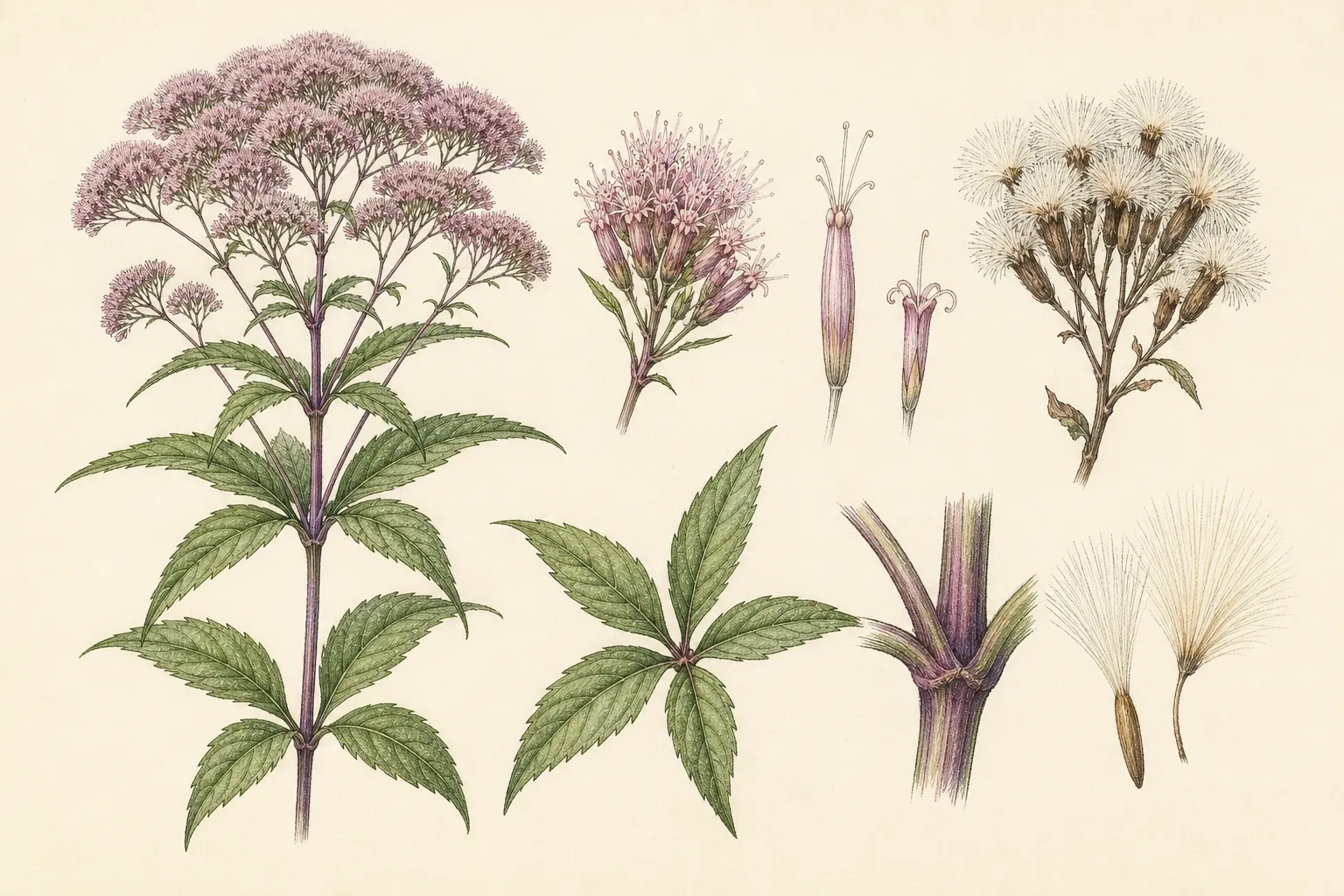
Eutrochium purpureum is an erect, clump-forming herbaceous perennial. Three or four long, serrated leaves circle each stem node, the nodes often show purple, and broad domes of tiny vanilla-scented pink-purple florets open from midsummer into early autumn. The similar species sold under the shared Joe-Pye weed name make the botanical label important.
The species commonly grows 5–7 ft high and 2–4 ft wide. Place it at the back of a moist border, in a rain garden, or along a bright woodland edge where the whole clump can be seen and reached. Its height will overwhelm a narrow bed and may lean when shade is too deep.
Full sun to partial shade is suitable, but the root zone should remain moist. North Carolina Extension describes moist, well-drained to occasionally wet soil and notes that the species is intolerant of dry ground. Scorched leaves during a dry interval are a moisture warning, not a prompt to fertilize.
The plant rises from a shallow, fibrous root system rather than a woody trunk. Set the crown at soil level, spread container roots into the surrounding bed, and keep mulch off the stem bases. Allow nearby plants to shade the soil without covering the crown or competing for all available moisture.
A cut made before early July can produce stockier, shorter stems and a later repeat display. Leave uncut plants for their full height and broad flower domes. At the end of the growing season, cut dead stems near the ground or retain selected seed heads temporarily for birds and winter texture.
Wind-dispersed seed can renew a planting, while named cultivars may not match the species in height or habit. Divide established crowns in autumn as dormancy begins when more plants are needed. Historical uses associated with Joe-Pye weed do not make the plant a home remedy or food.
- Family
- Asteraceae
- Range
- Eastern and central North America
- Soil pH
- 5–7.5
- Spread
- 2–4 ft · 60–120 cm
Planting & careHow to grow sweet joe-pye weed
Several similar Eutrochium species share the Joe-Pye weed name. Verify Eutrochium purpureum and its cultivar on the nursery label, then match the 5–7 ft species height and intolerance of dry soil to local summer heat. Use nursery-propagated stock and check current regional conservation guidance before collecting or planting near wild populations.
- 1Reserve the full 5–7 ft height
Allow 5–7 ft of height and 2–4 ft of width for the species, with access for watering and dormant stem removal. Use a verified compact cultivar when that height cannot fit safely below windows or beside paths.
- 2Find light with dependable moisture
Choose full sun to partial shade in a bed that stays moist through ordinary dry weather. Occasional wetness is acceptable, but confirm that the site is not merely wet for one day and dry through the root zone afterward.
- 3Place the fibrous crown at grade
Set the top of the herbaceous crown level with the surrounding soil. Loosen the container’s outer roots, backfill with site soil, water to settle it, and keep mulch clear of the emerging stem cluster.
- 4Prevent the new root ball from drying
Probe the original root ball and surrounding soil during the first season and water before either dries through. Continue supplemental water during later droughts when leaves lose firmness or the soil is dry below the surface.
- 5Mulch outside the crown
Use a thin organic layer to slow moisture loss across the root zone, leaving the shallow crown and stem bases visible. Keep aggressive neighboring roots away from the planting hole during establishment.
- 6Choose full height or an early cut
Let the first season show whether the 5–7 ft stems fit and remain upright. If a shorter display is needed, plan one cut before early July next year; do not repeatedly clip stems after flower buds form.
Pruning sweet joe-pye weed
To reduce final height and encourage stockier stems, cut new growth back once before early July; this shifts flowering later and can encourage a second display. Otherwise leave the stems intact through bloom. Cut the dead herbaceous stems near ground level at the end of the season or in late winter, retaining selected seed heads only where their spread and winter value are wanted.
Seasonal care
Spring
Remove last year’s stems before new shoots lengthen, uncover the shallow crown, and renew a thin mulch beyond it. Water if spring is dry and mark the space before neighboring perennials close over the emerging clump.
Summer
Keep the root zone moist as stems elongate. Make any height-reducing cut before early July, then allow buds to develop. Leaf scorch calls for a soil-moisture check; leaning calls for a light and spacing check.
Autumn
Let late flowers finish, then choose how many seed heads to retain. Divide a mature crown as dormancy begins if propagation is needed, and keep divisions moist until cold weather stops root activity.
Winter
The stems are dead while the crown rests below ground. Leave selected seed heads for birds and structure or cut them near the soil; complete cleanup before spring shoots emerge.
Safety and garden spread
The retained institutional profiles do not identify a specific human poisoning hazard. That absence is not evidence of edibility; do not ingest the plant, and wash hands after handling stems or sap.
Common problems
Leggy or fallen stems
- Look for
- Long stems lean toward light or fall outward, most often where shade is heavy or the clump is crowded.
- Action
- Increase available light or spacing, support the current stems discreetly, and use one pre-July cut next season if a shorter habit is acceptable.
Dry-soil leaf scorch
- Look for
- Leaf margins brown, lower leaves dry early, or the whole clump wilts while soil below the surface is dry.
- Action
- Water the full root zone slowly, restore a light mulch, and reduce competition for moisture. Do not feed a drought-stressed plant.
Powdery mildew or rust
- Look for
- A white coating, orange pustules, or spreading discolored areas develop across multiple leaves.
- Action
- Improve spacing and soil-level watering, remove badly affected fallen material, and confirm the organism with a local extension diagnostic service before using a labeled control.
The plant is not the expected Joe-Pye weed
- Look for
- Leaf whorls, stem nodes, mature height, or flower structure do not match the Eutrochium purpureum label.
- Action
- Compare the complete plant with a regional flora or extension key before changing care. Keep similar Eutrochium species and named cultivars identified separately.
Plant details
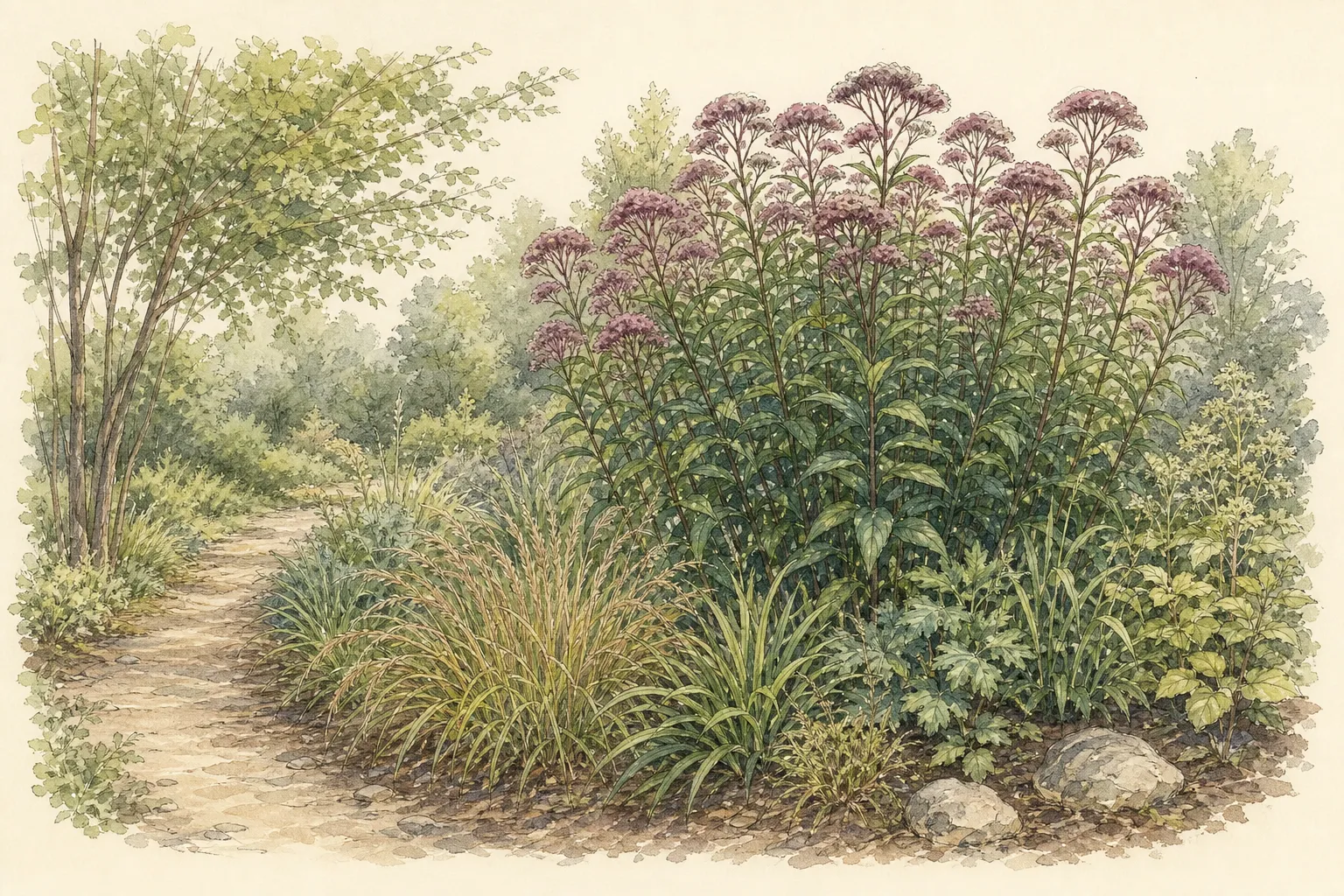
Garden placement study showing mature Sweet Joe-Pye Weed in an ornamental planting
Sources
- Eutrochium purpureum. North Carolina Extension Gardener Plant Toolbox. Source record · Accessed 2026-08-30.
- Eutrochium purpureum (L.) E.E. Lamont. USDA PLANTS Database. Source record · Accessed 2026-08-30.
- Eutrochium purpureum (L.) E.E.Lamont. Royal Botanic Gardens, Kew. Source record · Accessed 2026-08-30.