Wrinkleleaf Goldenrod
Solidago rugosa
An eastern North American rhizomatous perennial with rough wrinkled leaves and arching yellow panicles for moist, sunny naturalistic plantings.
Published Last updated
At a glance
- Light
- Full sun to light shade
- Water
- Moderate; prefers moist soil and tolerates some drought once established
- Soil
- Moist, well-drained sand or loam; adaptable to some clay
- Hardiness
- Zones 4–8
- Bloom
- Late summer to autumn
- Height
- 2–6.5 ft · 60–200 cm
In this guide
Overview
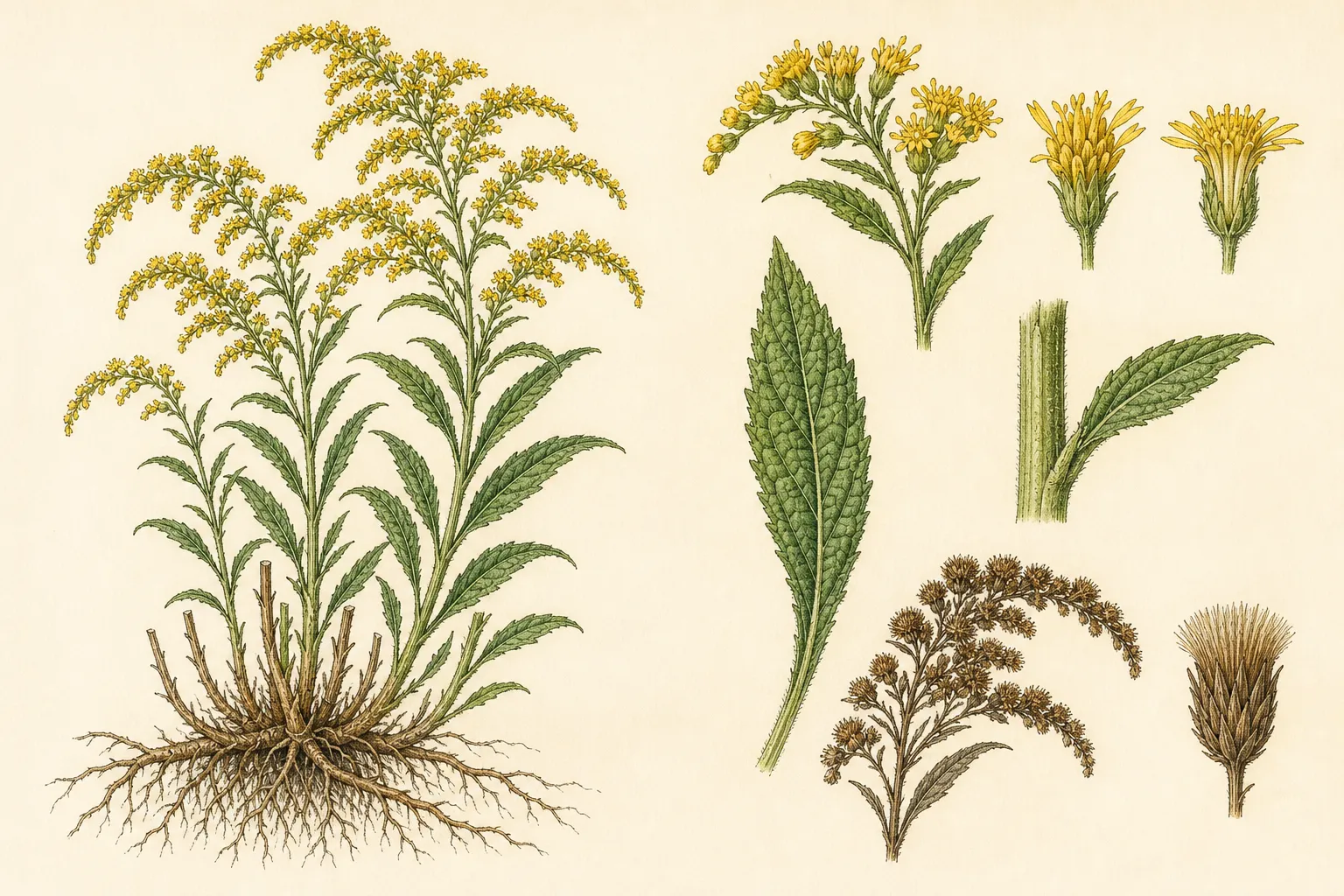
Solidago rugosa is a variable eastern North American perennial recognized by rough, often deeply veined leaves and hairy upright stems. Arching panicles of many small yellow flower heads open from late summer into autumn.
Creeping rhizomes can turn one stem into a broad multi-stemmed clump, particularly in moist disturbed soil. That habit fits a rain-garden edge, meadow or generous native border better than a narrow formal bed with delicate neighbors.
Full sun, moderate moisture and well-drained soil produce the strongest flowering, although the species tolerates light shade, wetland margins and some drought after establishment. Slightly acidic sand or loam is ideal, with some clay tolerance.
The straight species can reach 2–6.5 feet, while the cultivar ‘Fireworks’ is selected for a shorter habit and reduced rhizome spread. Treat cultivar behavior as a selection trait rather than a guarantee for every seedling or species plant.
- Family
- Asteraceae
- Range
- Eastern Canada and the eastern United States
- Soil pH
- 5–7.5
- Spread
- 2–4 ft · 60–120 cm
Planting & careHow to grow wrinkleleaf goldenrod
Guidance fits eastern North American gardens in USDA zones 4–8. USDA NRCS does not list the species as invasive in the United States, but its rhizomes can spread aggressively in cultivated or disturbed soil; check current state status locally.
- 1Choose a colony-sized site
Allow 2–6.5 feet of height and at least several feet of lateral room where a rhizomatous clump can be divided or edged without damaging neighbors.
- 2Use sun and moist drainage
Plant in full sun to light shade in soil that stays moist but drains, avoiding salty ground and stagnant water.
- 3Set the rosette at grade
Place the herbaceous crown and basal rosette at the nursery soil line, spreading roots and rhizomes horizontally without burying new shoots.
- 4Water through establishment
Keep divisions and new plants evenly moist while roots establish; later, check the soil before watering because established plants tolerate short dry periods.
- 5Mark a management edge
Set a visible boundary for the clump and keep access around it, since pulling stems alone does not remove the rhizomes that generate new shoots.
Pruning wrinkleleaf goldenrod
Its upright shoots are herbaceous and regrow from underground rhizomes. Cut stems during the growing season only when height control is needed, divide and remove clumps every two to three years where spread matters, and remove flower heads in late October or early November to limit seed dispersal. Cutting stems alone will not eliminate the rhizomes.
Seasonal care
Spring
Divide crowded rosettes in late winter or early spring, remove rhizomes beyond the chosen boundary and leave the crown visible at soil level.
Summer
Maintain moderate soil moisture without excess fertilizer, inspect lower leaves for powdery mildew and cut height only before flower panicles form.
Autumn
Enjoy the arching yellow flowers, then remove heads in late October or early November if wind-dispersed seed is unwanted; clear diseased litter after frost.
Winter
The shoots are dormant above ground; mark the clump boundary and plan division before spring rather than trying to control rhizomes by mowing dry stems.
Safety and garden spread
The retained horticultural and conservation sources do not identify a specific garden-contact toxicity hazard; this is not an edibility recommendation.
Spreads vigorously
Rhizomes may spread aggressively in cultivated or disturbed soil. Allow room or divide to contain the colony; vigorous growth alone does not establish invasive status.
Common problems
Powdery mildew
- Look for
- White powdery patches expanding over leaves, buds or flower panicles.
- Action
- Increase sun and air movement, avoid excess watering and fertilizer, and remove affected dead litter so spores are less likely to overwinter.
Rhizomes beyond the planting
- Look for
- New stems forming outside the intended clump, sometimes well after the visible shoots were cut.
- Action
- Dig out the outward rhizome and divide the remaining clump; mowing or cutting stems is not an effective way to remove the underground spread.
Goldenrod galls
- Look for
- Round or spindle-shaped swellings on otherwise upright stems.
- Action
- Recognize the galls as insect shelters and assess actual plant damage before intervening; predators often limit the associated insects.
Weak bloom in shade
- Look for
- Long stems with sparse yellow panicles and persistent damp foliage.
- Action
- Move or divide the clump into a sunnier, more open position with moist but well-drained soil rather than increasing fertilizer.
Plant details
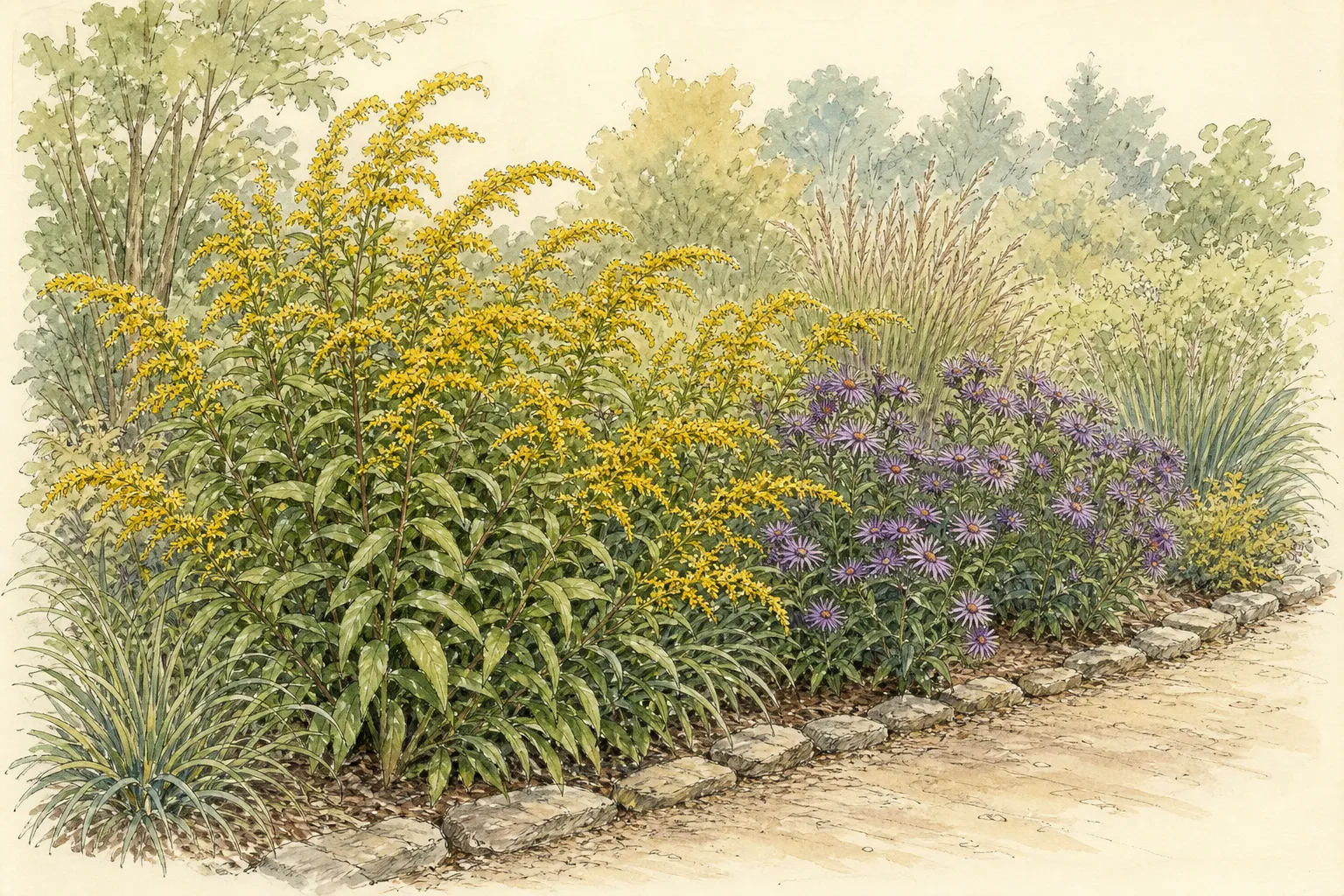
Garden placement study showing mature Wrinkleleaf Goldenrod in an ornamental planting
Related reading
Sources
- Wrinkleleaf Goldenrod cultivation profile. North Carolina Extension Gardener Plant Toolbox. Source record · Accessed 2026-08-20.
- Solidago rugosa horticultural guidance. USDA Natural Resources Conservation Service. Source record · Accessed 2026-09-07.
- Solidago rugosa taxonomy and distribution. USDA PLANTS Database. Source record · Accessed 2026-08-20.