Eastern Redbud

Cercis canadensis

A small eastern North American understory tree with pea-like flowers on bare wood, heart-shaped leaves, and a broad garden presence that needs room to mature.

Published Reviewed

At a glance

Light
Full sun to part shade
Water
Medium; consistent during establishment
Soil
Moist, well-drained loam; adaptable once established
Hardiness
Zones 4–9
Bloom
Early to mid-spring, before or with leaf emergence
Height
20–30 ft · 6–9 m
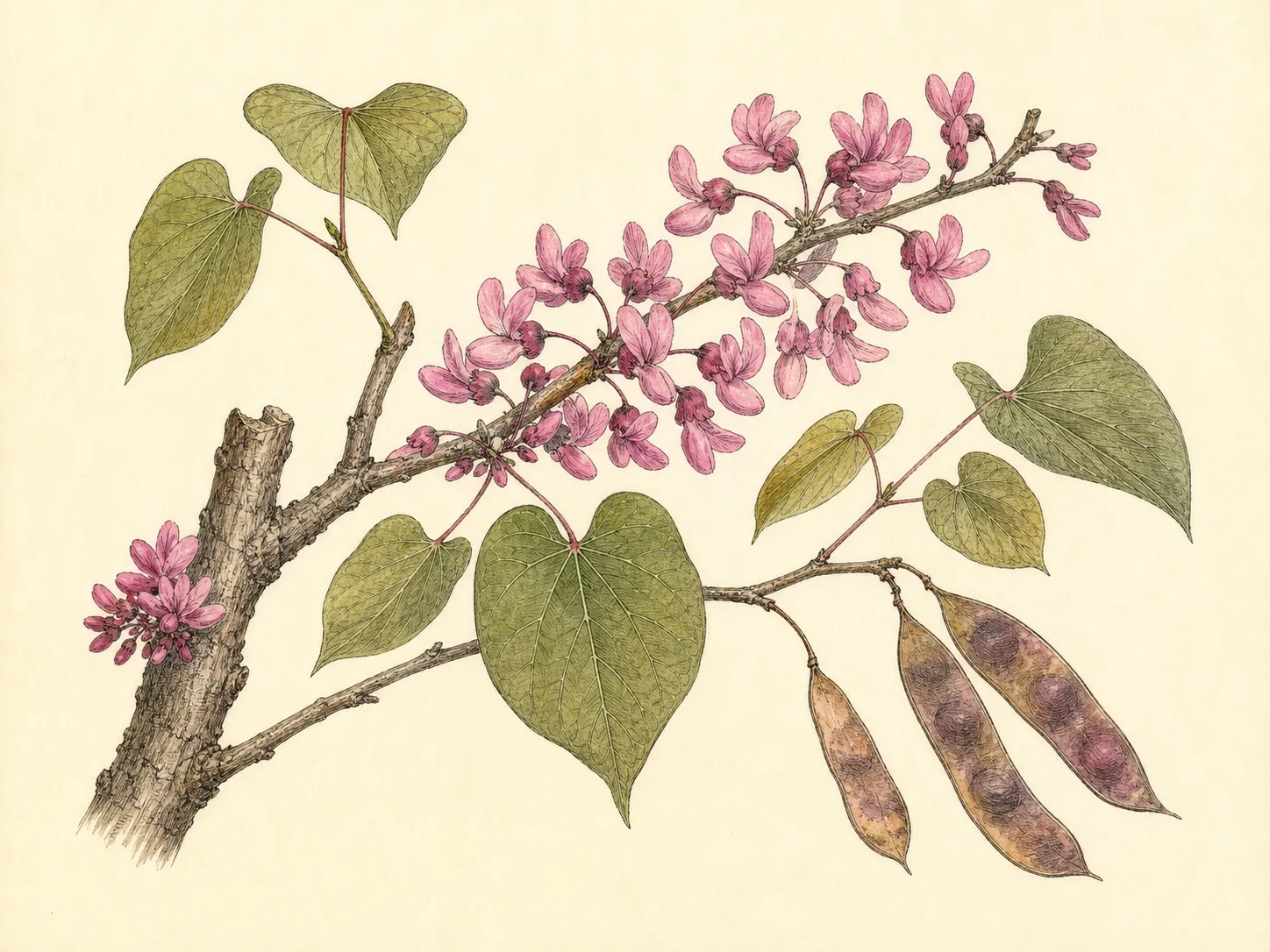
Botanical identification plate of eastern redbud with flowering branch, heart-shaped leaf, pea-like flower, pod and branching silhouette
Flowers arise in clusters along older twigs and branches before the alternate heart-shaped leaves fully expand.View full plate
In this guide

Overview

Eastern redbud is a small deciduous tree whose spring display comes directly from older twigs and branches before the canopy is fully in leaf. The pea-like flowers, flattened pods and membership in the legume family distinguish it from pink-flowered dogwoods and cherries. Schedule the work when the tree is dormant or only beginning active spring growth and the soil is workable rather than saturated. Confirm the choice by inspecting flower placement on older wood, alternate heart-shaped leaves, branch unions, root flare, canopy spread and the way the site drains after rain. The safe finish is reached when the root flare remains at finished grade and the naturally spreading canopy can develop without repeated clearance cuts. Keep neighboring plants in the same decision, because mature overlap can change access and airflow. A legible result keeps the crown, root zone, and route around the plant available for the next inspection.

The crown is commonly rounded and spreading, sometimes with several trunks. Alternate leaves expand after bloom into a broad heart shape, creating a calm summer canopy and clear yellow autumn color on many plants. Begin with the evidence in flower placement on older wood, alternate heart-shaped leaves, branch unions, root flare, canopy spread and the way the site drains after rain. The site assessment must also cover regional provenance, exposure, heat, soil volume, drainage and nearby buildings determine long-term performance. Keep this boundary intact: trunk injury, buried flare, chronic drought, standing water and major branch removal are not treated as routine care. Check the opposite side as a control before treating an exposure pattern as a whole-plant failure. Side-to-side comparison is more useful than making every plant match on the same afternoon.

Its understory and woodland-edge origin is a design clue rather than a command to place every tree in deep shade. Flowering and crown density respond to useful light, while the root zone benefits from soil volume, drainage and relief from severe reflected heat. Define the result before changing the plant or soil. In this case, success means the root flare remains at finished grade and the naturally spreading canopy can develop without repeated clearance cuts. Return after rain or active growth to see whether that condition still holds. Let the next inspection test whether the root flare remains at finished grade and the naturally spreading canopy can develop without repeated clearance cuts; the workday shows only the starting condition. The next weather event often reveals settling, runoff, exposure, or damage that stayed hidden during the work.

Species trees and cultivars differ in leaf color, branch habit, flower color and mature dimensions. Weeping, narrow, purple-leaved and variegated selections need their own label dimensions; the species measurements cannot be used to size every named plant. Regional calendars shift with regional provenance, exposure, heat, soil volume, drainage and nearby buildings determine long-term performance. Use the tree is dormant or only beginning active spring growth and the soil is workable rather than saturated as the biological cue. A date on the page cannot overrule what the crown, roots, and shoots show in the garden. Named-cultivar and regional guidance takes priority when it narrows a broad seasonal habit. Labels and same-angle photographs turn next season's decision into a record from this garden.

Use redbud as a small lawn specimen, at a generous border turn, or along a woodland edge where its winter branch pattern remains visible. A narrow foundation strip or route beneath utility lines converts its natural spread into a recurring pruning conflict. Read the whole planting through flower placement on older wood, alternate heart-shaped leaves, branch unions, root flare, canopy spread and the way the site drains after rain. One stem or leaf can misrepresent the larger pattern. Preserve trunk injury, buried flare, chronic drought, standing water and major branch removal are not treated as routine care until the distribution of the evidence is clear. Leave enough sound tissue and undisturbed soil to make the response visible. Mature dimensions belong in the present decision even when nursery plants leave generous empty space.

Family
Fabaceae
Range
Eastern and central North America into northern Mexico
Soil pH
6–8
Spread
25–35 ft · 7.5–10.5 m

Planting & careHow to grow eastern redbud

The species is native across a broad eastern and central North American range, but provenance and cultivar affect cold tolerance, heat response, form, and mature size. Use a locally appropriate selection and compare the nursery label with regional Extension guidance before planting; keep the work reversible until flower placement on older wood, alternate heart-shaped leaves, branch unions, root flare, canopy spread and the way the site drains after rain confirms the choice, and stop at trunk injury, buried flare, chronic drought, standing water and major branch removal are not treated as routine care; verify the result against flower placement on older wood, alternate heart-shaped leaves, branch unions, root flare, canopy spread and the way the site drains after rain before moving to the next plant or section.

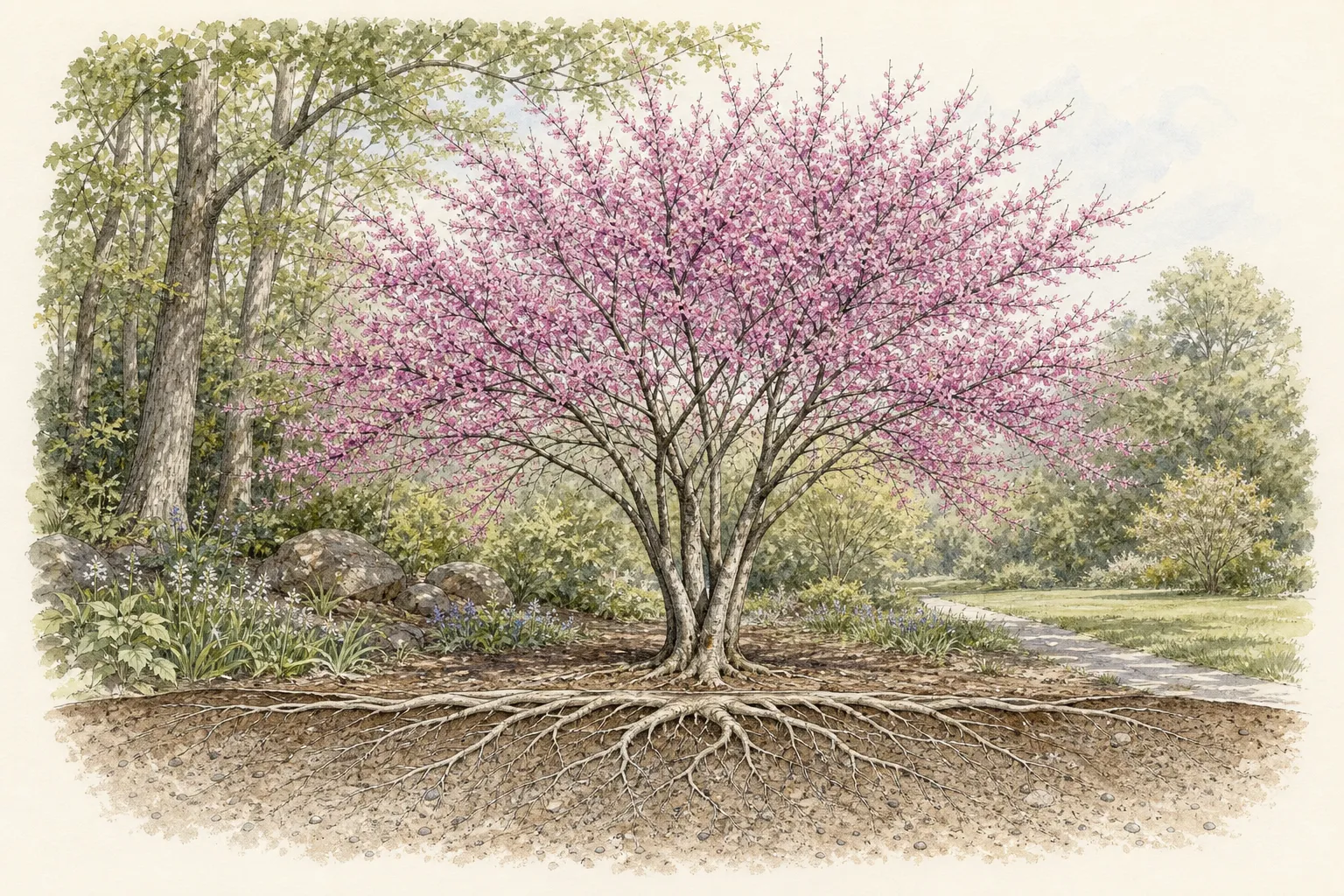
Garden section showing an eastern redbud placed at a woodland edge with mature canopy clearance, visible root flare and open drainage
A woodland-edge position can provide useful light and shelter while preserving the tree’s broad mature canopy and root zone.
  1. 1
    Confirm identity and regional fit

    Match the botanical name, cultivar and nursery provenance to regional cold, heat and disease guidance before choosing the final position; finish by checking that the root flare remains at finished grade and the naturally spreading canopy can develop without repeated clearance cuts; correct settling or exposure while the intervention is still small; verify the result against flower placement on older wood, alternate heart-shaped leaves, branch unions, root flare, canopy spread and the way the site drains after rain before moving to the next plant or section.

  2. 2
    Draw the mature canopy

    Mark the documented height and spread on the plan, keeping branches clear of roofs, drives, overhead services and sightlines at maturity; adjust the calendar to regional provenance, exposure, heat, soil volume, drainage and nearby buildings determine long-term performance, using the tree is dormant or only beginning active spring growth and the soil is workable rather than saturated as the biological cue; verify the result against flower placement on older wood, alternate heart-shaped leaves, branch unions, root flare, canopy spread and the way the site drains after rain before moving to the next plant or section.

  3. 3
    Read light and drainage together

    Choose full sun to part shade with a root zone that drains after rain and is not baked by reflected afternoon heat; photograph the result and compare the same point after weather or new growth makes the response visible; verify the result against flower placement on older wood, alternate heart-shaped leaves, branch unions, root flare, canopy spread and the way the site drains after rain before moving to the next plant or section.

  4. 4
    Expose the root flare

    Remove excess container or field soil from the top of the root ball until the first structural roots and trunk flare are visible; if identity or damage remains uncertain, retain sound tissue and obtain local guidance before making the next irreversible cut; verify the result against flower placement on older wood, alternate heart-shaped leaves, branch unions, root flare, canopy spread and the way the site drains after rain before moving to the next plant or section.

  5. 5
    Open a broad planting area

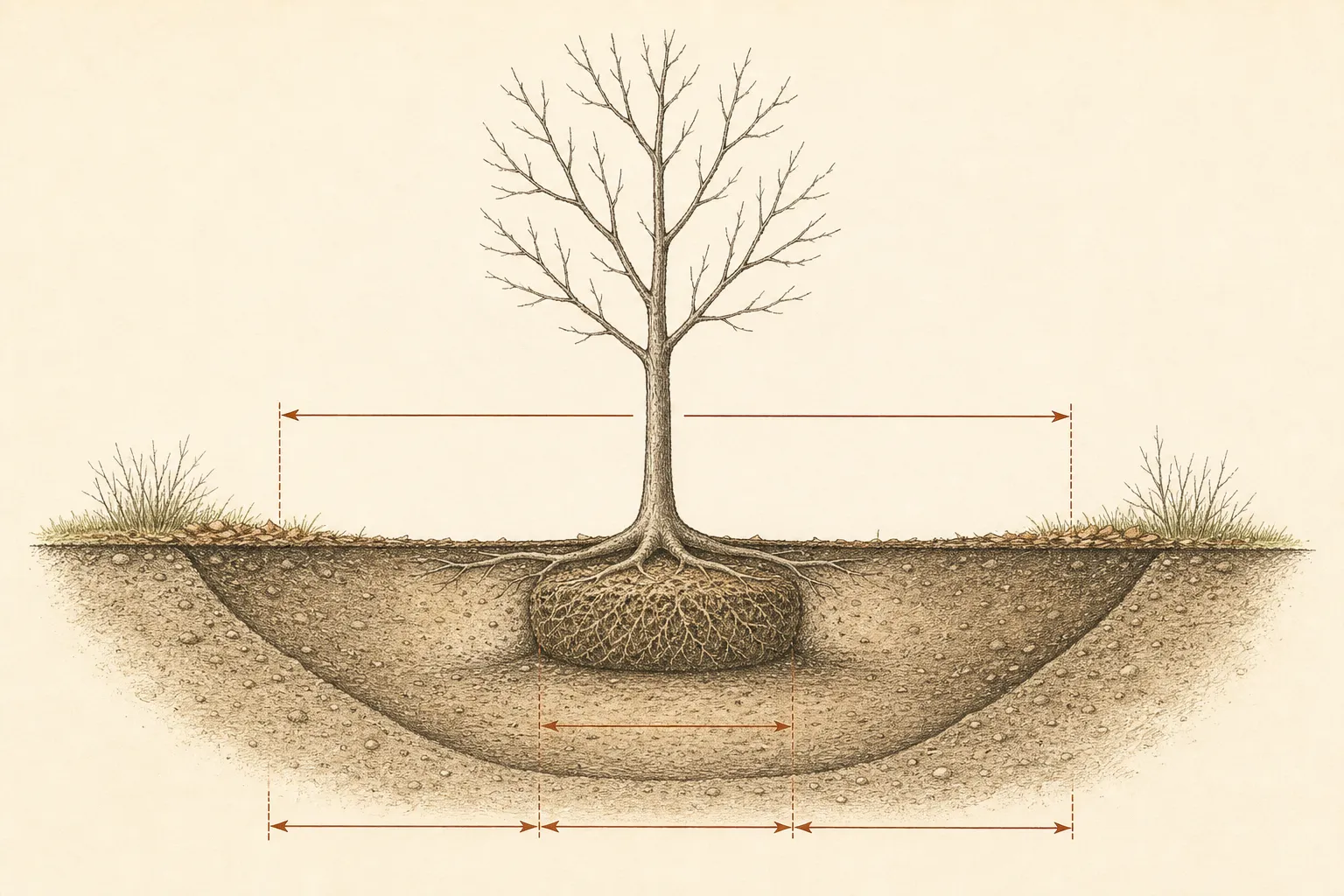
    Dig no deeper than the measured root ball and several times wider where soil permits, preserving a firm base beneath the flare; leave an access route for inspection and aftercare so the planting can be managed without compressing soil or breaking adjacent growth; verify the result against flower placement on older wood, alternate heart-shaped leaves, branch unions, root flare, canopy spread and the way the site drains after rain before moving to the next plant or section.

  6. 6
    Correct circling roots selectively

    Straighten, cut or redirect major circling and girdling roots according to sound tree-planting practice before backfilling with site soil; judge success from the plant's response and the root zone, not from a perfectly uniform surface on the day of work; verify the result against flower placement on older wood, alternate heart-shaped leaves, branch unions, root flare, canopy spread and the way the site drains after rain before moving to the next plant or section.

  7. 7
    Water and mulch the root zone

    Settle the planting, monitor moisture through establishment and apply a broad shallow mulch layer that stays clear of the trunk; keep the work reversible until flower placement on older wood, alternate heart-shaped leaves, branch unions, root flare, canopy spread and the way the site drains after rain confirms the choice, and stop at trunk injury, buried flare, chronic drought, standing water and major branch removal are not treated as routine care; verify the result against flower placement on older wood, alternate heart-shaped leaves, branch unions, root flare, canopy spread and the way the site drains after rain before moving to the next plant or section.

Pruning eastern redbud

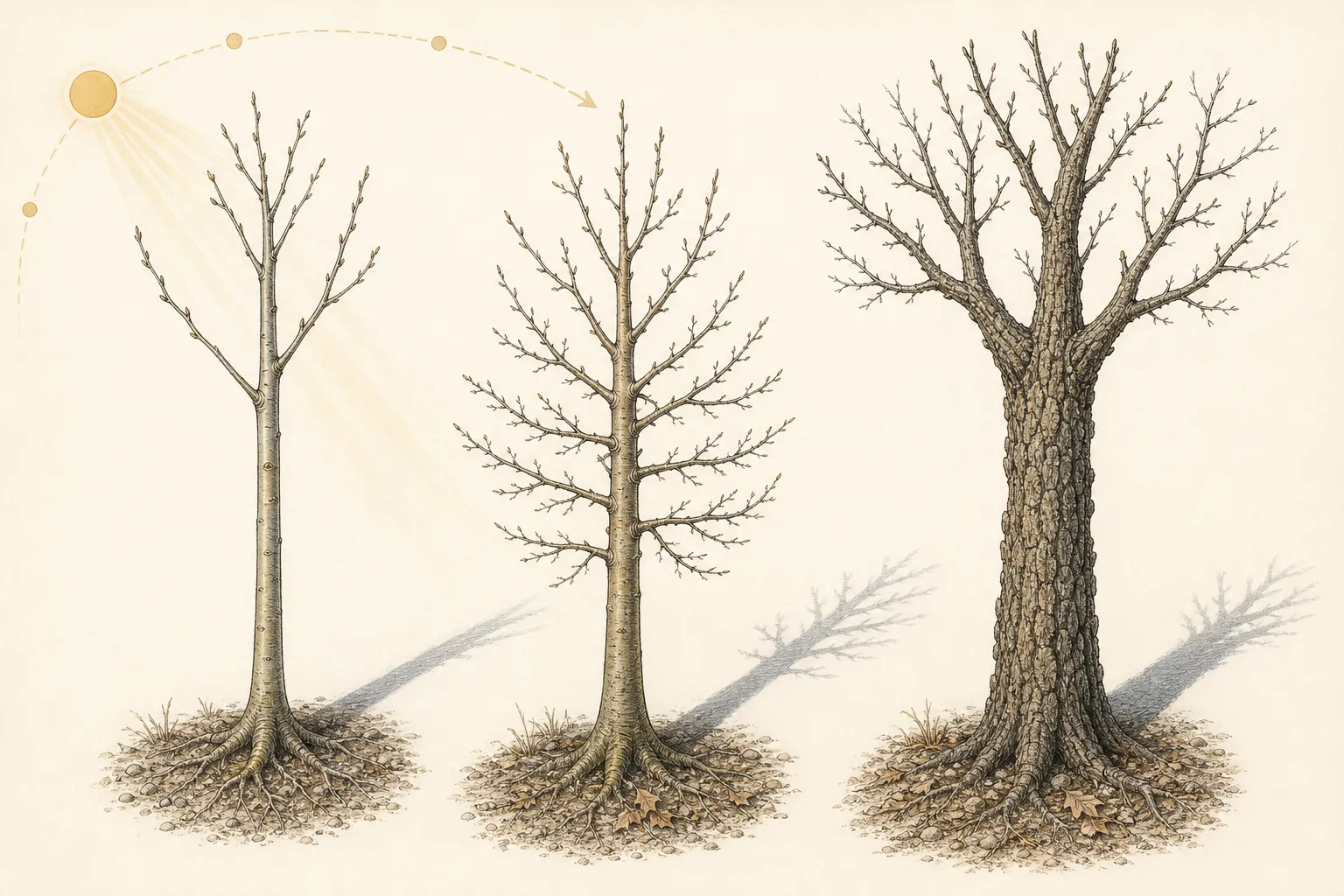
Eastern redbud needs a sound branch framework more than repeated size control. Remove dead, damaged or crossing branches with cuts at the branch collar, and develop well-spaced unions while the tree is young. Keep pruning modest because large wounds and heavy canopy reduction are not routine maintenance. If mature branches repeatedly strike a roof, path or vehicle envelope, the site was undersized for the tree; obtain qualified arboricultural help for large or elevated work. Define the result before changing the plant or soil. In this case, success means the root flare remains at finished grade and the naturally spreading canopy can develop without repeated clearance cuts. Return after rain or active growth to see whether that condition still holds. Retain the label, date, and same-angle photograph for the next seasonal decision.

Seasonal care

Spring

Enjoy and record flower distribution, check late-frost effects on opening bloom, refresh shallow mulch and begin establishment watering only from root-zone moisture; adjust the calendar to regional provenance, exposure, heat, soil volume, drainage and nearby buildings determine long-term performance, using the tree is dormant or only beginning active spring growth and the soil is workable rather than saturated as the biological cue; verify the result against flower placement on older wood, alternate heart-shaped leaves, branch unions, root flare, canopy spread and the way the site drains after rain before moving to the next plant or section.

Summer

Watch newly planted trees during heat and drought, watering the occupied root zone deeply enough to wet it while allowing drainage between applications; photograph the result and compare the same point after weather or new growth makes the response visible; verify the result against flower placement on older wood, alternate heart-shaped leaves, branch unions, root flare, canopy spread and the way the site drains after rain before moving to the next plant or section.

Autumn

Use leaf fall to inspect branch unions, trunk flare and mulch depth, and plant suitable stock while local soil and weather remain favorable; if identity or damage remains uncertain, retain sound tissue and obtain local guidance before making the next irreversible cut; verify the result against flower placement on older wood, alternate heart-shaped leaves, branch unions, root flare, canopy spread and the way the site drains after rain before moving to the next plant or section.

Winter

Read the leafless framework for dead, rubbing or poorly attached wood and schedule only necessary structural work with safe access; leave an access route for inspection and aftercare so the planting can be managed without compressing soil or breaking adjacent growth; verify the result against flower placement on older wood, alternate heart-shaped leaves, branch unions, root flare, canopy spread and the way the site drains after rain before moving to the next plant or section.

Spring

Enjoy and record flower distribution, check late-frost effects on opening bloom, refresh shallow mulch and begin establishment watering only from root-zone moisture; adjust the calendar to regional provenance, exposure, heat, soil volume, drainage and nearby buildings determine long-term performance, using the tree is dormant or only beginning active spring growth and the soil is workable rather than saturated as the biological cue; verify the result against flower placement on older wood, alternate heart-shaped leaves, branch unions, root flare, canopy spread and the way the site drains after rain before moving to the next plant or section.

Summer

Watch newly planted trees during heat and drought, watering the occupied root zone deeply enough to wet it while allowing drainage between applications; photograph the result and compare the same point after weather or new growth makes the response visible; verify the result against flower placement on older wood, alternate heart-shaped leaves, branch unions, root flare, canopy spread and the way the site drains after rain before moving to the next plant or section.

Autumn

Use leaf fall to inspect branch unions, trunk flare and mulch depth, and plant suitable stock while local soil and weather remain favorable; if identity or damage remains uncertain, retain sound tissue and obtain local guidance before making the next irreversible cut; verify the result against flower placement on older wood, alternate heart-shaped leaves, branch unions, root flare, canopy spread and the way the site drains after rain before moving to the next plant or section.

Winter

Read the leafless framework for dead, rubbing or poorly attached wood and schedule only necessary structural work with safe access; leave an access route for inspection and aftercare so the planting can be managed without compressing soil or breaking adjacent growth; verify the result against flower placement on older wood, alternate heart-shaped leaves, branch unions, root flare, canopy spread and the way the site drains after rain before moving to the next plant or section.

Common problems

  • Poor establishment

    Look for
    A root ball that dries while surrounding soil is moist, sparse extension growth, early leaf drop or a trunk flare buried below grade; photograph the result and compare the same point after weather or new growth makes the response visible; verify the result against flower placement on older wood, alternate heart-shaped leaves, branch unions, root flare, canopy spread and the way the site drains after rain before moving to the next plant or section.
    Action
    Check moisture inside and outside the original root ball, expose a buried flare carefully, restore mulch clearance and obtain local help if roots or grade require major correction; leave an access route for inspection and aftercare so the planting can be managed without compressing soil or breaking adjacent growth; verify the result against flower placement on older wood, alternate heart-shaped leaves, branch unions, root flare, canopy spread and the way the site drains after rain before moving to the next plant or section.
  • Branch dieback or cankers

    Look for
    Localized wilt, discolored or sunken bark, dead twigs and a sharp boundary between living and dead branch tissue; if identity or damage remains uncertain, retain sound tissue and obtain local guidance before making the next irreversible cut; verify the result against flower placement on older wood, alternate heart-shaped leaves, branch unions, root flare, canopy spread and the way the site drains after rain before moving to the next plant or section.
    Action
    Confirm the pattern before cutting, protect tree vigor and ask a local diagnostic service about progressive cankers or vascular disease rather than treating symptoms blindly; judge success from the plant's response and the root zone, not from a perfectly uniform surface on the day of work; verify the result against flower placement on older wood, alternate heart-shaped leaves, branch unions, root flare, canopy spread and the way the site drains after rain before moving to the next plant or section.
  • Leaf scorch

    Look for
    Brown margins concentrated on exposed foliage during heat, wind or root-zone drought while sheltered leaves remain less affected; leave an access route for inspection and aftercare so the planting can be managed without compressing soil or breaking adjacent growth; verify the result against flower placement on older wood, alternate heart-shaped leaves, branch unions, root flare, canopy spread and the way the site drains after rain before moving to the next plant or section.
    Action
    Check soil moisture at root depth, correct establishment watering and reduce reflected or drying exposure where practical without keeping the root zone saturated; keep the work reversible until flower placement on older wood, alternate heart-shaped leaves, branch unions, root flare, canopy spread and the way the site drains after rain confirms the choice, and stop at trunk injury, buried flare, chronic drought, standing water and major branch removal are not treated as routine care; verify the result against flower placement on older wood, alternate heart-shaped leaves, branch unions, root flare, canopy spread and the way the site drains after rain before moving to the next plant or section.
  • Weak branch unions

    Look for
    Narrow included unions, competing leaders, cracks or heavy limbs extending from crowded points on a young framework; judge success from the plant's response and the root zone, not from a perfectly uniform surface on the day of work; verify the result against flower placement on older wood, alternate heart-shaped leaves, branch unions, root flare, canopy spread and the way the site drains after rain before moving to the next plant or section.
    Action
    Use early selective structural pruning or a qualified arborist assessment; large compromised unions are not a homeowner pruning exercise; finish by checking that the root flare remains at finished grade and the naturally spreading canopy can develop without repeated clearance cuts; correct settling or exposure while the intervention is still small; verify the result against flower placement on older wood, alternate heart-shaped leaves, branch unions, root flare, canopy spread and the way the site drains after rain before moving to the next plant or section.
  • Failure to flower

    Look for
    A healthy canopy with little spring bloom, especially on a young tree, a heavily pruned plant or one in deep shade; keep the work reversible until flower placement on older wood, alternate heart-shaped leaves, branch unions, root flare, canopy spread and the way the site drains after rain confirms the choice, and stop at trunk injury, buried flare, chronic drought, standing water and major branch removal are not treated as routine care; verify the result against flower placement on older wood, alternate heart-shaped leaves, branch unions, root flare, canopy spread and the way the site drains after rain before moving to the next plant or section.
    Action
    Confirm age, cultivar, light, previous pruning and winter injury before changing care, and allow normal establishment time rather than forcing growth with fertilizer; adjust the calendar to regional provenance, exposure, heat, soil volume, drainage and nearby buildings determine long-term performance, using the tree is dormant or only beginning active spring growth and the soil is workable rather than saturated as the biological cue; verify the result against flower placement on older wood, alternate heart-shaped leaves, branch unions, root flare, canopy spread and the way the site drains after rain before moving to the next plant or section.

Sources

  1. Cercis canadensis. North Carolina State Extension. Source record · Accessed 2026-08-19.
  2. Cercis canadensis. Missouri Botanical Garden. Source record · Accessed 2026-08-19.
  3. Cercis canadensis. Royal Horticultural Society. Source record · Accessed 2026-08-19.