Grow · young tree trunk abiotic winter protection
Protect Young Ornamental Tree Trunks from Winter Injury
Identify thin-barked young trees at real risk of southwest injury, strengthen establishment care first, and use a light seasonal trunk wrap only where its limited shading role fits.
Published Last updated
In this guide
- Name the winter problem before buying a wrap
- Choose the tree, not a blanket rule
- Reduce the stress that a wrap cannot correct
- Inspect the bark and define the protected height
- Apply a light seasonal wrap without binding the trunk
- Use timing as a regional window, not a permanent date
- Let spring removal become the diagnostic check
- Steps
Name the winter problem before buying a wrap
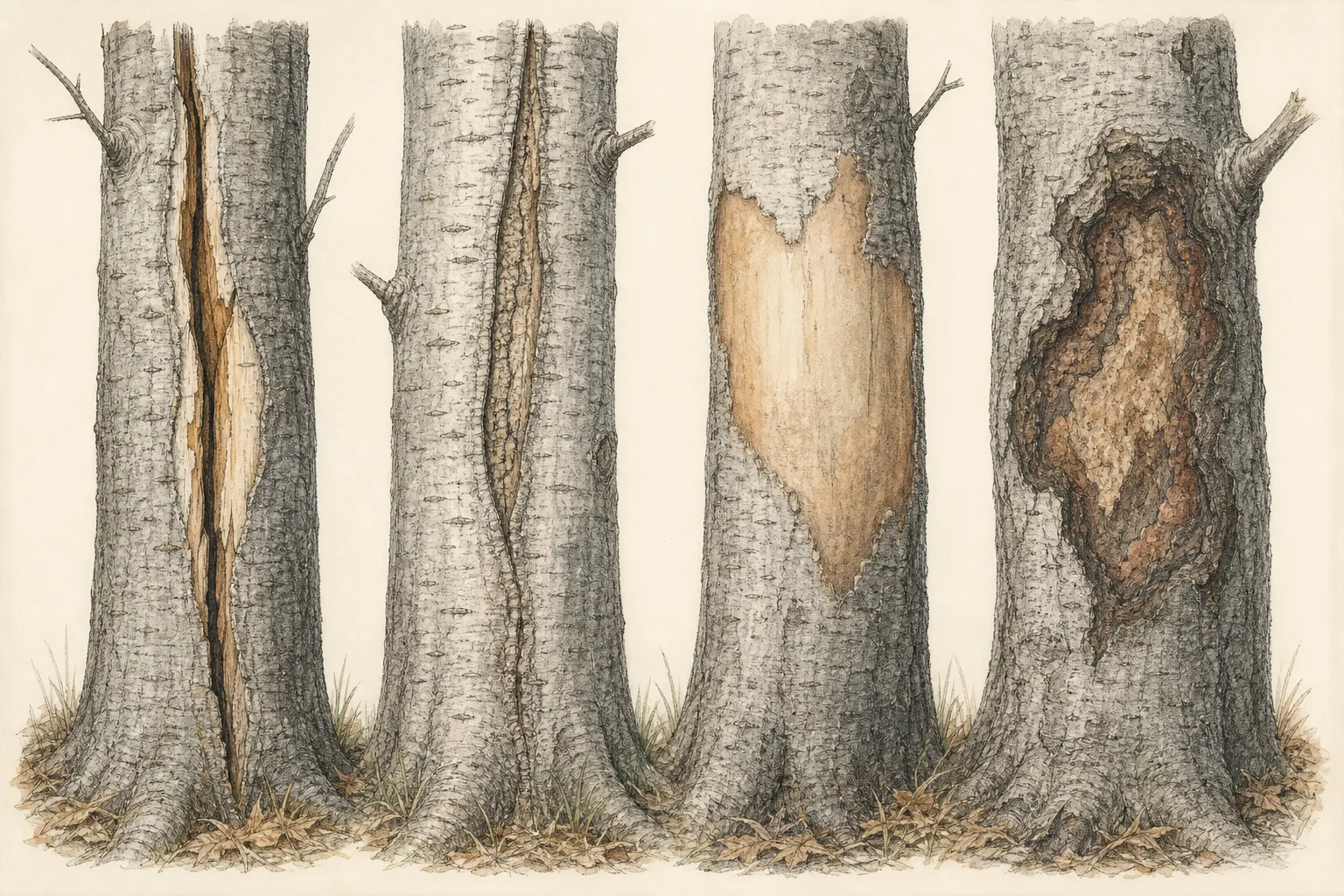
This task addresses temperature- and exposure-related injury on young ornamental trunks, especially sunscald or southwest injury and frost cracking. It does not own rabbit, vole, deer, mower, string-trimmer, or staking damage, even though those wounds can appear on the same tree. Colorado State describes sunscald as injury concentrated on the south or southwest side after sunny winter warming and a rapid temperature drop. Frost cracks are vertical splits associated with changing trunk temperatures. The useful prevention plan begins by locating that exposure pattern, not by assuming every young tree needs the same sleeve.
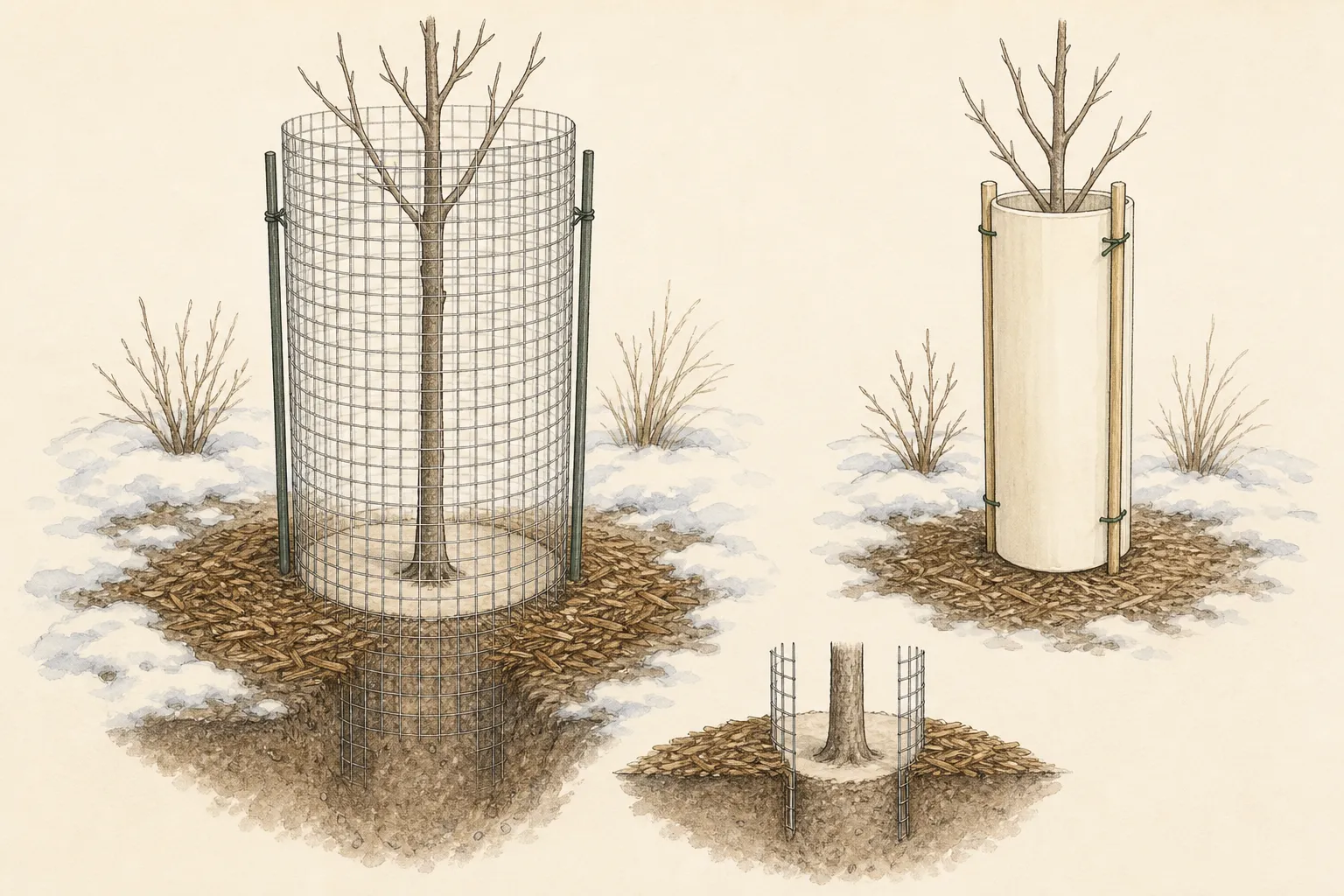
The distinction matters because materials solve different problems. A light-colored seasonal wrap is intended to reduce direct winter heating of vulnerable bark. A rigid guard or wire cylinder intended for animals has different spacing, height, inspection, and removal requirements. Dark plastic, burlap pressed to bark, or an improvised waterproof tube can change temperature and moisture around the trunk without providing the intended reflective shading. Keep the abiotic and animal plans separate enough that each can be inspected. If browse is the main risk, use the dedicated trunk-browse guidance rather than stretching this article beyond its purpose.
Do not diagnose an existing open wound from one photograph and then hide it. University of Florida guidance cautions that injuries called sunscald may also involve pruning wounds, canker-forming fungi, or borers. A fresh vertical split, loose bark, oozing, expanding discoloration, sawdust, or dieback deserves identification before wrapping. Protection can reduce future exposure; it cannot restore dead cambium or prove the cause of an old lesion. Photograph the trunk from all sides and mark the date, then ask a local Extension professional or qualified arborist when the pattern is active or uncertain.
Choose the tree, not a blanket rule
Young age alone is not a complete selection rule. Colorado State limits its recommendation to young, thin-barked trees and lists linden, maple, ginkgo, crabapple, and redbud among examples that may benefit; thick, corky bark such as bur oak does not need the same treatment. Inspect the actual trunk. Smooth, thin bark with a broad unshaded south or southwest face is a more plausible candidate than a deeply furrowed trunk already shaded by its own crown. Recent transplanting, a newly opened exposure, and reflective snow or paving can strengthen the case.
Map the tree's winter light from the low afternoon sun, not from its summer shade. A deciduous screen may disappear after leaf fall, and a wall can reflect light onto a trunk that seemed protected in July. Stand south and southwest of the tree and note whether lower branches, neighboring shrubs, or a fence shade the trunk. University of Florida notes that temporary lower branches can provide direct-sun protection and advises appropriate pruning and regular irrigation after planting. Preserving useful temporary structure may address the exposure with less material and fewer maintenance obligations.
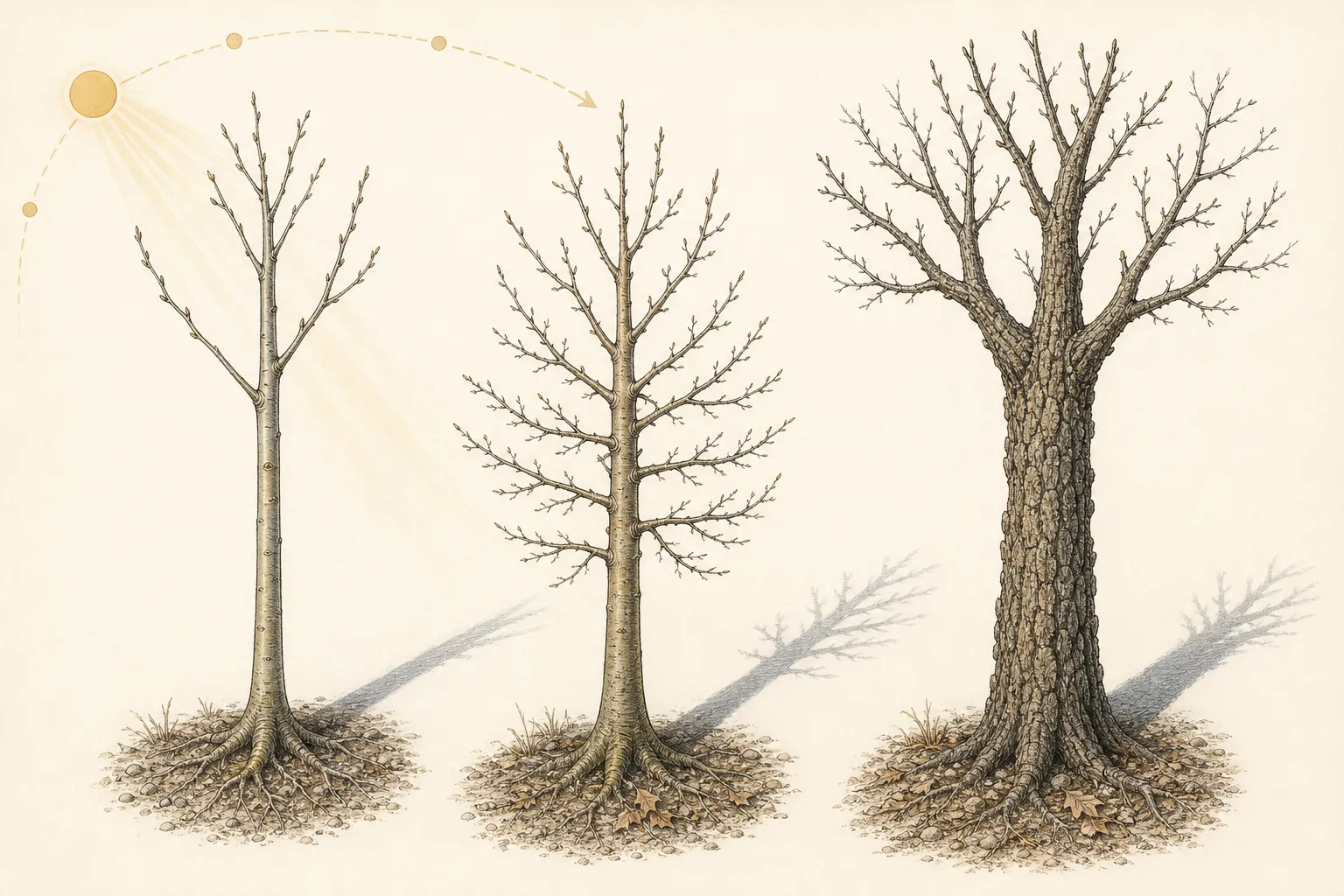
Accept the evidence limit. Colorado State and Iowa State present winter wrapping as beneficial for selected young trees, while University of Florida says research has not strongly validated trunk wrapping as a general sunscald preventive and that tightly secured wraps buffer temperature poorly. Those positions support a restrained decision: establish the tree well, retain natural shade, avoid wounds, and use light seasonal wrap where species, bark, and exposure make the risk credible. They do not support wrapping every new trunk as a permanent ritual or promising that wrap prevents all cracking.
Reduce the stress that a wrap cannot correct
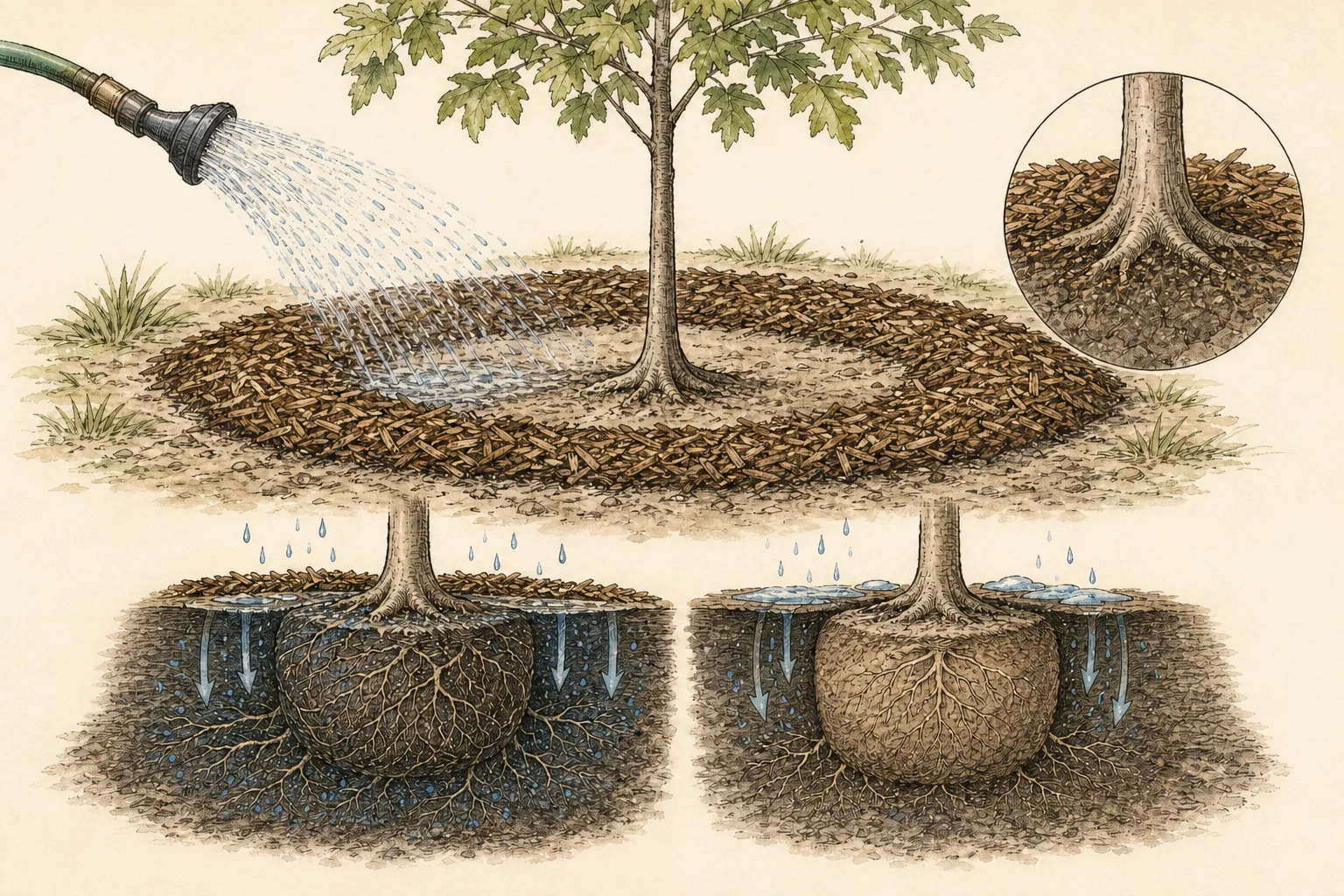
A trunk enters winter as part of a whole tree. University of Florida connects some sunscald attributed to transplanted thin-barked trees with inadequate soil moisture and emphasizes regular irrigation after planting. Check the root ball and surrounding soil before freeze-up according to local guidance, correcting a dry pocket while water can still enter the root zone. Keep organic mulch over the root area if appropriate, with the trunk flare exposed and the mulch pulled away from bark. A reflective strip around a dehydrated, buried, or poorly planted trunk leaves the establishment problem intact.
Review pruning next. Removing many low branches at planting can suddenly expose thin bark that had developed in shade. Retain sound temporary lower branches unless they create a specific defect or clearance conflict, and schedule structural pruning over time. This is not permission to keep broken, diseased, or badly attached wood. It is a reminder that a clean nursery-style stem is not automatically the healthiest first-winter silhouette. Avoid fresh unnecessary wounds on the south and west faces and do not coat existing sunscald or cracks with tar or sealing compound; University of Florida advises appropriate pruning rather than concealment.
Clear direct hazards from the trunk before adding anything. Loosen or remove a nursery label, check stakes and ties for rubbing, pull mulch back from the flare, and move rigid edging that contacts the bark. A wrap installed over a wire, tie, wet mulch ridge, or abrasive tag can hide a constriction until spring. Confirm that the root flare is visible and the trunk is dry. If the tree leans, rocks at the root plate, or needs staking, solve that mechanical question with a correct independent support system rather than asking the trunk wrap to act as a brace.
Inspect the bark and define the protected height
Walk around the trunk in good light. Record bark color, lenticels, old scars, graft position if present, branch attachments, and any area that is sunken, split, wet, or loose. Compare the south-southwest face with the north-northeast face. Existing damage often becomes more legible through asymmetry, but asymmetry does not establish the cause by itself. Delay wrapping if the trunk is wet after rain or if an active wound needs assessment. A clean, dry surface makes it easier to keep debris out and gives you a reliable baseline for the spring inspection.
Measure from the soil line or visible base of the trunk to the first main branch. Colorado State's procedure runs the wrap from the bottom upward to the first branch. That height keeps the vulnerable lower trunk shaded without enclosing the canopy or branch unions. Do not bury the flare with wrap or soil, and do not continue along scaffold limbs unless a product-specific or professional recommendation addresses an unusual exposure. The goal is a simple reflective column over bark, not a padded sculpture of the young tree.
Choose a light-colored crepe-paper tree wrap made for this purpose if wrapping is justified. Colorado State specifically favors light crepe paper that has some elasticity and sheds water, and warns that plastic, dark materials, or burlap can cause damage in this use. Read the product instructions for orientation, fastening, and reuse. Discard material that is moldy, brittle, contaminated, or missing its directions. The lowest-cost roll is not economical if it slips, holds water, or cannot be removed cleanly.
Apply a light seasonal wrap without binding the trunk
Start at the base and work upward so the layers shed water like shingles. Colorado State specifies an overlap of about one third of the wrap width until the first branch. Keep the band smooth and close enough to remain in place, but never stretch it into a constricting tourniquet. The wrap is shading bark, not splinting wood. Check that no stone, twig, label, tie, or fold is trapped beneath it, and keep the root flare and ground contact visible enough to inspect.
Finish by fastening the wrap to itself near the first branch. Colorado State allows tape or a staple into the wrap itself and explicitly says not to staple into the tree. Keep every hard fastener away from bark. Do not circle the trunk with wire, cord, or a non-expanding cable tie. Add a weatherproof removal tag with the date and a calendar reminder. The removal plan belongs on the tree-care record at installation because seasonal protection becomes a girdling, moisture, or insect-harboring risk when forgotten.
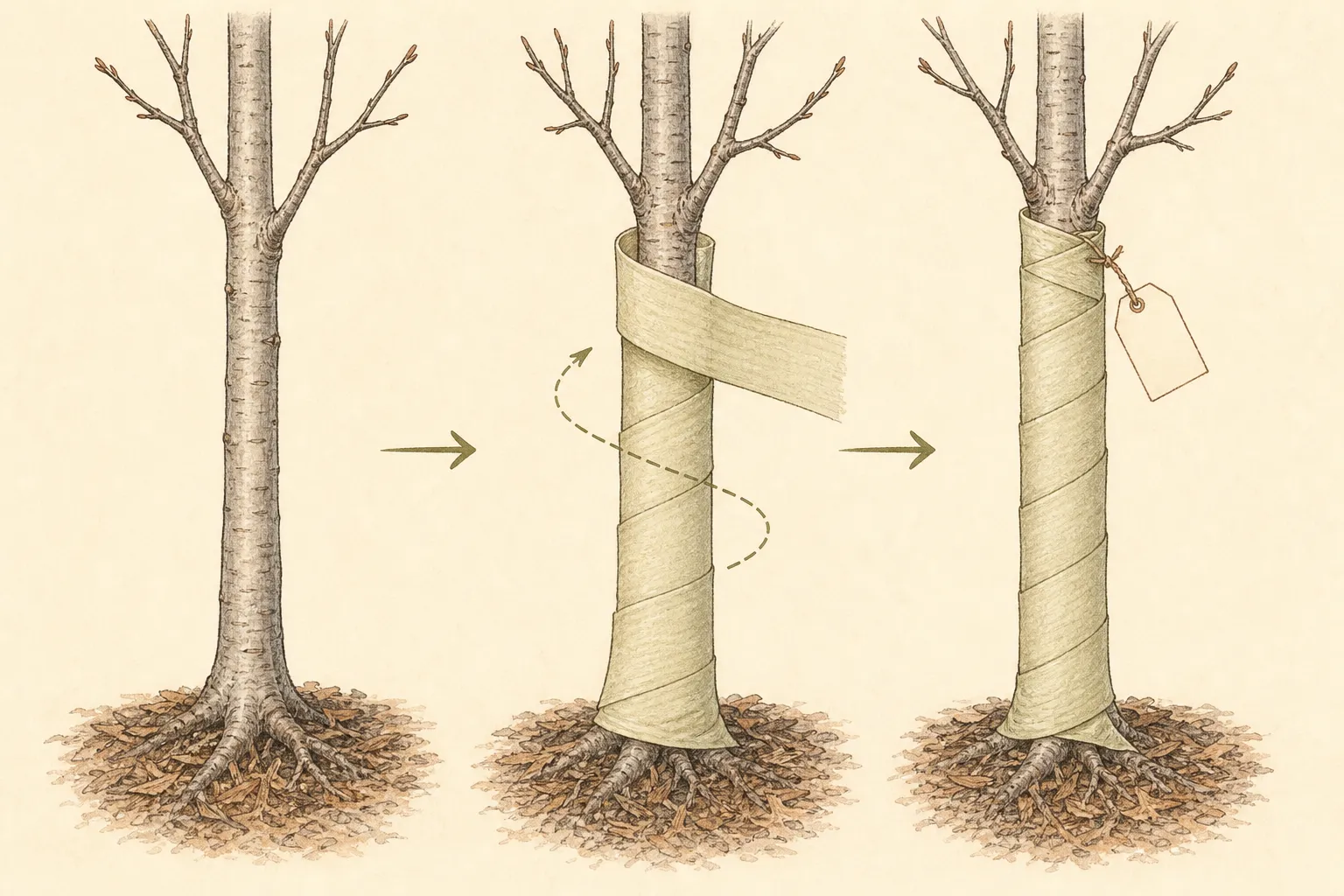
Read the finished wrap from several feet away and again by touch. It should be light in color, continuous from base to first branch, free of bulges, and independent of stakes or guards. The first layer should not disappear under mulch, and the top should not rub a branch union. Photograph the south and west views. If the material loosens immediately, replace the installation instead of solving slippage with tighter constricting bands. If the product directions conflict with this general sequence, the labeled product and local Extension guidance take priority.
Use timing as a regional window, not a permanent date
Install after active growth has ended and before the recurring winter exposure begins. Colorado State uses late November and removal around mid-April for its regional example; Iowa State gives November through April as a practical Iowa window. Those months illustrate a cool-climate dormant-season operation. They are not universal calendar law. Snow cover, freeze timing, elevation, latitude, and the tree's stage can shift the useful window. Ask local Extension when winter trunk protection begins and ends in your region, then record that local answer.
Inspect after the first wind, wet snow, and thaw. Look for a slipped top, a saturated band, material lifted by a guard, or an edge abrading bark. The wrap should not become a hidden seasonal compartment. If it repeatedly stays wet or shifts despite correct installation, remove it and reassess the product and site. Check nearby snow storage and deicing splash as separate hazards; a wrap does not make a tree tolerant of salt-laden snow, plow impact, or a frozen ridge piled against the flare.
Remove promptly in spring when the regional protection period ends. Iowa State emphasizes prompt removal, and Colorado State says the wrap should not remain all year. Take off every tape strip, staple held in the paper, label, and loose fragment. Do not add another layer over the old one. The bare trunk must expand, dry, and be inspectable through the growing season. If continuing exposure justifies another winter of protection, begin with fresh assessment in autumn rather than leaving the previous installation in place.
Let spring removal become the diagnostic check
Unwrap slowly so the condition underneath remains readable. Compare the new photographs with the pre-wrap record. Healthy bark should be firm and consistent with the tree's normal texture; the absence of new injury is a useful outcome even though it cannot isolate which preventive measure mattered. A new sunken patch, split, moisture staining, frass, loose bark, or constriction line needs diagnosis before the trunk is re-covered or painted. Leave wound compounds off unless a qualified tree professional gives a specific evidence-based reason.
Follow the canopy and root response through leaf-out. Sparse growth above one side, delayed buds, dieback, or wilting may reveal a larger root, vascular, planting, or disease problem. University of Florida's caution about multiple causes is especially important now: the location may resemble southwest injury while the progression points elsewhere. Keep watering and pruning tied to actual establishment needs, and consult an arborist when the damaged area is expanding, the tree is structurally compromised, or the diagnosis would change treatment.
Finally, decide whether the tree still qualifies next winter. Bark thickens, lower branches change, nearby plantings grow, and the tree establishes more roots. A method justified for the first vulnerable winters can become unnecessary maintenance. Continue only when thin bark and meaningful winter exposure remain. If repeated injury occurs despite sound planting care and careful seasonal shading, investigate site mismatch, root stress, pruning, and disease. Protection should become less necessary as a suitable tree establishes; it should not mask a cycle of unresolved damage.
Steps
- Level
- easy
- Time
- About 25 to 45 minutes per tree, plus spring removal
- Tools
- measuring tape, clean scissors, phone or camera for trunk records, calendar or weatherproof removal tag
- Materials
- light-colored crepe-paper tree wrap, fastener approved for attachment to the wrap itself, fresh organic mulch if the root zone needs correction
- 1Confirm an abiotic winter-exposure risk
Select a young, thin-barked tree with a genuinely exposed south or southwest trunk. Separate likely sunscald or frost-crack prevention from animal browse, mechanical wounds, cankers, and borers. Photograph every side and seek diagnosis first when bark is already split, sunken, wet, loose, or associated with dieback.
- 2Correct establishment stress first
Check soil moisture according to local guidance, keep mulch off the trunk flare, remove rubbing tags and ties, and retain useful temporary lower branches where they shade the stem. A wrap cannot repair dry roots, deep planting, poor staking, over-pruning, or an existing wound, so clear those conditions before adding material.
- 3Choose the material and height
Use a light-colored crepe-paper wrap intended for young trees, not dark plastic or burlap pressed to bark. Measure from the base of the trunk to the first main branch. Read the product label and local Extension timing so the installation remains a seasonal shading treatment rather than a permanent sleeve.
- 4Wrap upward with modest overlap
Begin at the base and spiral upward, overlapping each turn by about one third until the first branch. Keep the paper smooth and secure without stretching it tight. Remove any twig, label, tie, or fold beneath the band, and leave the flare and branch union clear enough for inspection.
- 5Fasten only to the wrap
Secure the finish to the paper itself with the approved method. Never staple into bark or circle the trunk with wire, cord, or a rigid non-expanding tie. Add a visible spring removal date and photograph the completed south and west faces so slippage or constriction can be compared later.
- 6Inspect through winter
Check after wind, wet snow, and thaw for slipping, saturation, abrasion, hidden mulch, and interference from stakes or guards. Remove and reassess a wrap that repeatedly stays wet or cannot remain secure without tight bands. Keep salted snow, plow piles, and mechanical impact away as separate site hazards.
- 7Remove promptly and read the bark
Take off the wrap and every fastener when the local winter-protection period ends. Compare the exposed trunk with the autumn record, then monitor leaf-out. Diagnose new cracks, sunken tissue, frass, loose bark, constriction, or dieback before treatment, and decide from current bark and exposure whether another winter is justified.
Plants in this guide
Related reading
Sources
- Wrapping Trees for Winter. Colorado State University Extension. Source record · Accessed 2026-08-20.
- Should I Wrap the Trunks of Newly Planted Trees?. Iowa State University Extension and Outreach. Source record · Accessed 2026-08-20.
- Sunscald. University of Florida IFAS. Source record · Accessed 2026-08-20.
- Winterize Your Trees. Purdue Extension. Source record · Accessed 2026-08-20.