Grow · young ornamental tree winter browse guard
Protect Ornamental Tree Trunks from Winter Browse Without Hiding the Bark
Identify the animal and snow-line risk, then install a breathable stand-off guard that protects young ornamental bark while preserving inspection, root flare, and spring removal.
Published Last updated
In this guide
- Confirm the risk before choosing a guard
- Inspect the tree and root flare first
- Size the guard for the animal and snow line
- Install the guard without touching bark
- Integrate browse protection with the whole site
- Inspect through winter and spring growth
- Know when protection can end
- Respond to bark damage without concealing progression
- Steps
Confirm the risk before choosing a guard
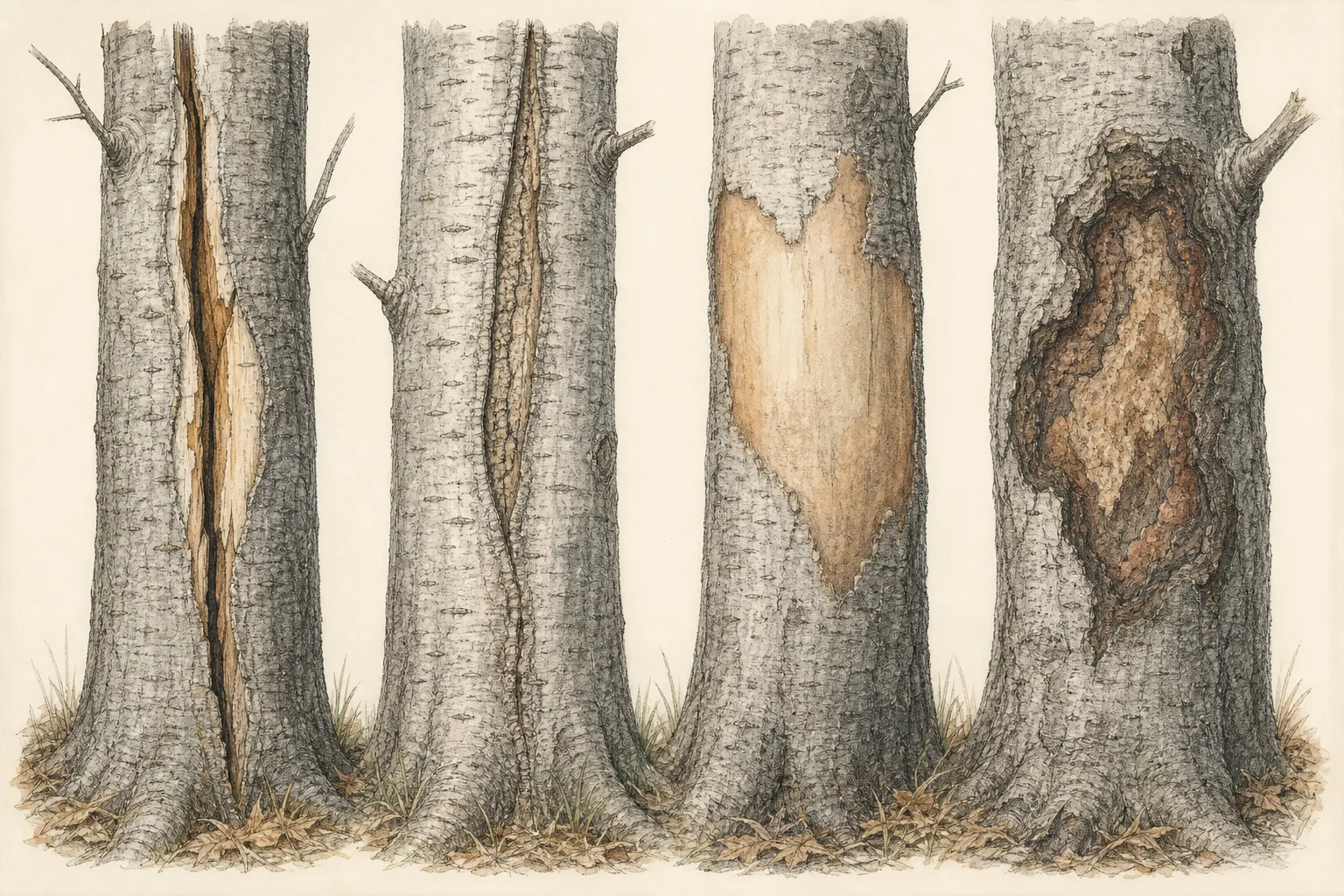
Winter bark loss can come from rabbits, voles, deer rubbing, deer browse, equipment, ties, sun injury, and disease. A plastic spiral installed for every problem can hide the evidence and create another wound. Inspect the complete trunk, expected snow line, low branches, tracks, droppings, tunnels, tooth marks, shredded bark, and nearby plants. Photograph findings with scale before covering anything.
Rabbit feeding often leaves clean gnawing and clipped stems at reachable height, which rises with snow. Voles work near the ground and beneath snow or mulch, sometimes girdling bark where damage is hidden. Deer can browse twigs higher or rub antlers against young trunks. Use current regional wildlife guidance to identify the likely animal; mesh opening, height, and area protected depend on it.
Map site attractants and routes. Dense mulch, tall grass, groundcover, stored materials, snow banks, fences, and shrub masses can shelter rodents or direct rabbits. A guard protects one trunk but does not manage the habitat around it. Keep the solution proportional: preserve valuable habitat elsewhere where appropriate while reducing concealed access immediately around vulnerable bark. Check whether damage is already severe. If bark is removed around much of the circumference, the trunk is split, the tree leans, or crown dieback follows, seek local arboricultural or diagnostic advice. Do not cover a wet, infected, or structurally damaged wound with a tight guard. Immediate exclusion can prevent more feeding, but it does not restore lost vascular tissue.
Inspect the tree and root flare first
Remove loose mulch and leaf piles from direct trunk contact until the root flare and upper structural roots are visible. Do not dig aggressively into roots or frozen soil. A buried flare stays damp and prevents inspection; a guard pushed into a mulch volcano creates a protected animal tunnel. Maintain a broad shallow mulch ring while keeping the stem base open.
Remove old labels, wire, string, staking ties, lights, and guards only when they can be taken off without tearing bark or destabilizing a newly planted tree. Inspect beneath them for constriction and abrasion. If support remains necessary, replace it with a properly fitted system independent of the wildlife guard and schedule removal. Do not attach mesh to the trunk with staples or wire.
Trace the graft union on grafted ornamentals and identify suckers below it. The guard should allow the union and rootstock shoots to be inspected. Do not bury the union or trap vigorous suckers inside a narrow tube where they press against bark. Remove rootstock growth according to plant guidance before installation when access is clear. Measure trunk diameter, low branch spread, root flare width, and a stand-off gap. The mature growing-season trunk will be larger than the winter measurement. A guard fitted like clothing can abrade, retain moisture, harbor insects, or girdle. Design a stable cylinder or enclosure that excludes the animal while remaining structurally separate from living bark.
Size the guard for the animal and snow line
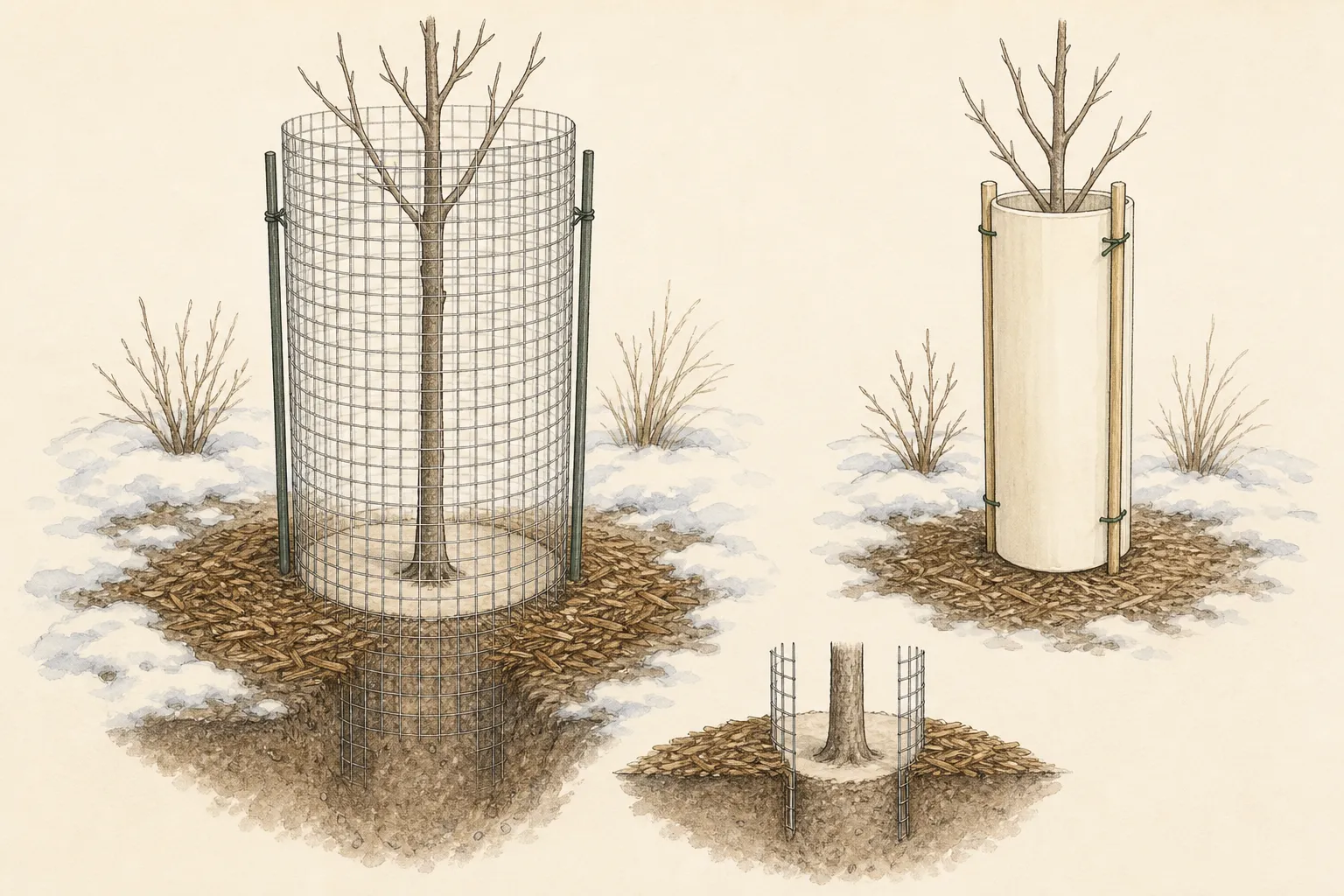
For rabbits, the protected height must extend above the maximum expected snow surface, not merely above bare ground. Snow banks created by plowing can raise access dramatically. Use regional recommendations for final height and mesh opening. Protect low branches separately or enlarge the enclosure; do not pull branches inside a narrow cylinder where wire rubs buds and bark.
For voles, the lower barrier and ground interface matter. Hardware cloth or other recommended mesh may need to reach the soil surface or below according to local guidance, without damaging roots or creating a moisture trap. Keep vegetation and deep mulch back. Inspect for tunnels after snowmelt. Poison baits and repellents carry legal, wildlife, pet, and efficacy issues and should not replace physical diagnosis.
For deer rubbing, a small trunk tube may be inadequate because the animal can push or antlers can reach above it. A larger rigid cage or broader exclusion around the tree may be needed, anchored strongly enough to resist contact and visible enough not to entangle wildlife. Follow local deer-management guidance. Protect branches and leader without enclosing the entire crown so tightly that growth and access fail. Choose mesh opening to exclude the target without trapping a nose, paw, bird, or antler. Avoid loose netting and nearly invisible line that can entangle wildlife. Use a rigid, smooth-edged, weather-resistant material recommended for the purpose. Cap or fold cut wire edges outward and away from bark and paths, using protective finishing that cannot detach into the garden.
Install the guard without touching bark
Form the barrier around the measured stand-off gap and close its seam outside the path. Anchor it independently with stakes located after checking utilities and important roots. The cylinder should not lean into the trunk during wind or snow. Keep stakes clear of branches and visible at their tops. Never drive fasteners into the tree or use the trunk as the guard’s structural post.
Set the lower edge according to the target animal and regional method. For a surface rabbit guard, eliminate large gaps created by uneven ground. For a vole barrier that enters soil, work carefully around roots and follow depth guidance. Do not seal the base with plastic or mound soil against bark. Water and air must still move, and the root flare must remain inspectable.
Extend the top above projected snow or rubbing height and check branches through their winter and summer positions. A branch passing through mesh can be girdled as it thickens or moves. Enlarge the guard or protect a wider area. Do not prune sound low branches solely to make a purchased cylinder fit; choose the barrier after measuring the tree.
Attach a visible label with installation date, target animal, review dates, and removal or enlargement threshold. Keep it outside bark contact. Photograph the guard from all sides. The record helps another gardener understand why it exists and prevents a temporary seasonal device from becoming permanent unnoticed hardware.
Integrate browse protection with the whole site
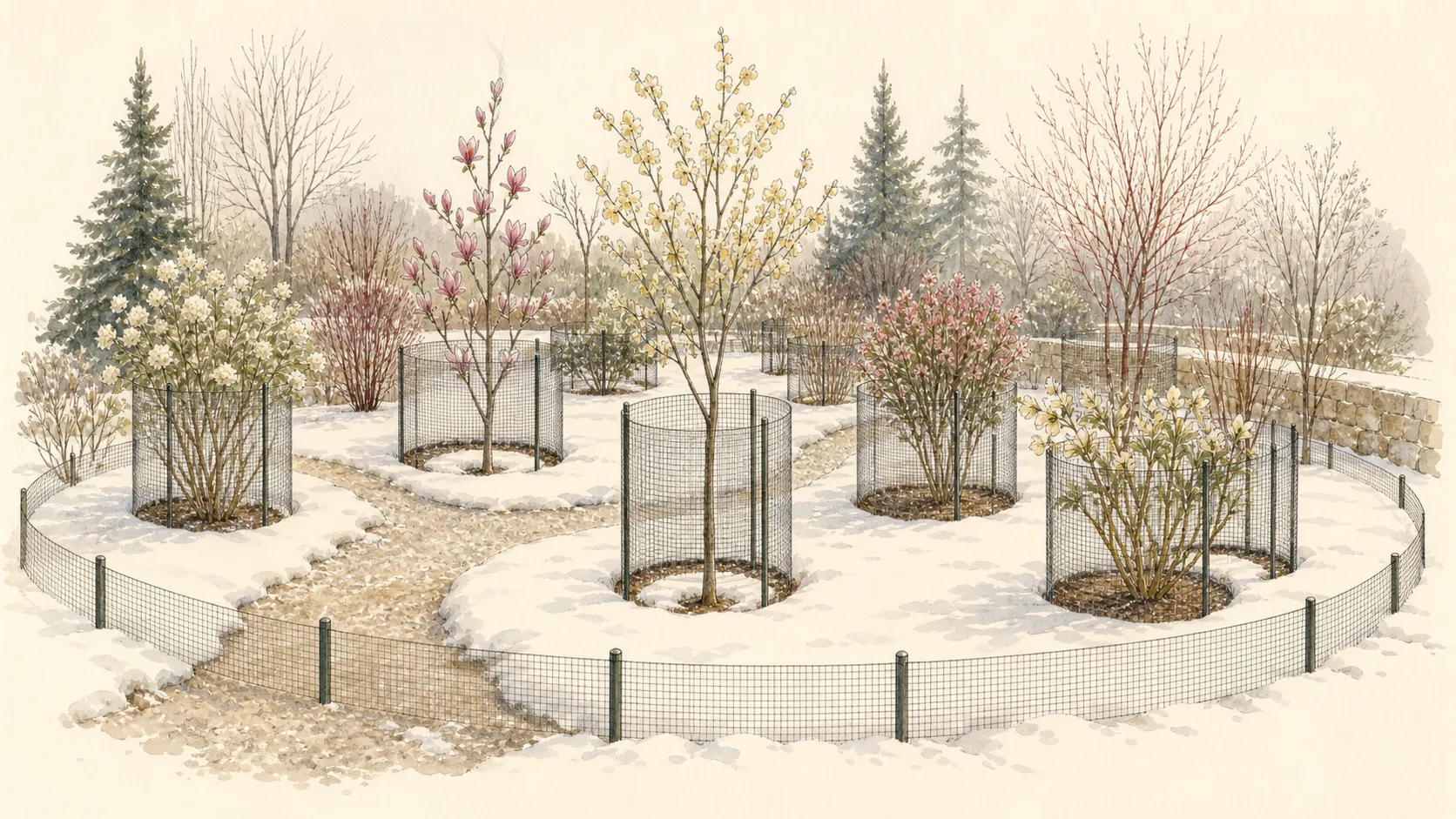
Reduce hiding cover immediately around the trunk while preserving the broader garden’s intended habitat. Mow or trim a small vulnerable zone at the locally appropriate time, manage fallen fruit and dense weeds, and keep mulch shallow. Do not clear an entire wildlife garden indiscriminately. The objective is a visible inspection ring and fewer concealed routes to valued bark.
Redirect snow storage away from vulnerable trunks and guards. Shoveling against mesh can bend it into bark and create a raised feeding platform. Mark guard locations for snow operators. Keep salt-contaminated snow away from roots. After storms, brush loose snow from outside and inspect anchors; do not strike frozen branches or push the guard toward the tree.
Protect the leader and young branch tips where deer browse is a separate risk. A trunk guard cannot stop feeding above it. A larger fence, repellents used according to current labels, or plant selection may be needed. Repellent performance changes with weather and hunger pressure; rotate or reapply only as labeled, and do not spray edible or sensitive material without approved use. Keep paths, gates, lights, irrigation, and mowing routes clear. A rigid cage can create a collision or catch a hose. Set the outer boundary where mature branches and maintenance can coexist. If the tree is planted in a narrow high-traffic strip where effective exclusion blocks access, relocation or a different ornamental may be more responsible than a permanent obstacle.
Inspect through winter and spring growth
Check after heavy snow, thaw, wind, and visible animal activity. Confirm anchors, seam, top height, ground gaps, bark clearance, and branch contact. Remove trapped leaves and litter without reaching blindly into animal shelter. Look for new tooth marks above the guard that show snow has raised access. Extend the system before feeding continues.
At snowmelt, inspect the lower trunk and root flare. Vole injury can remain hidden through winter. Photograph any bark loss and mark its circumference and height. Do not trim wound edges, paint, fill, or wrap the injury before professional advice. Protect against further feeding while leaving tissue visible and ventilated. Severe girdling requires prompt local assessment.
As buds swell and shoots expand, enlarge or remove any barrier that branches or trunk approach. The schedule depends on local animal pressure and the system; some rigid cages can remain longer when they maintain ample clearance, while spirals and wraps often require seasonal removal. Follow regional guidance and inspect rather than relying on a date alone.
Clean reusable guards before moving them to another tree, especially if disease, insects, or rodent contamination was present. Remove organic debris, wash, and use any disinfecting method only under current guidance and label. Repair sharp edges and bent mesh. Do not transfer a hidden tie, nest, or contaminated mulch with the guard.
Know when protection can end
Bark becomes less vulnerable as some trees mature, but risk depends on species, local animal pressure, snow, and trunk size. Review annually rather than assigning a universal age. A valuable thin-barked ornamental may need several seasons of exclusion; another site may have no continuing pressure. Remove unnecessary hardware so the mature trunk remains visible and unencumbered.
Compare browse, guard labor, tree growth, and site conflicts. If protection must expand into a large permanent cage each year, consider broader deer fencing, habitat management, or a less vulnerable replacement. Do not keep adding nested mesh and stakes around an unsuitable plant. The landscape should remain safe, maintainable, and visually coherent after the young-tree phase.
Store guards dry with edges secured and labels updated. Pull stakes carefully without damaging roots or leaving holes beside the trunk. Restore a shallow mulch ring and keep equipment away. Photograph the unguarded bark so future wounds can be dated. A clean baseline distinguishes new animal damage from old stable scars.
Use the record when planting the next ornamental. Choose species and size with local wildlife in mind, position outside snow and deer routes where possible, prepare exclusion at planting, and preserve inspection from the first winter. Prevention is most effective when the guard is part of site design, not an emergency wrap installed after bark disappears.
Respond to bark damage without concealing progression
When feeding has already removed bark, photograph the complete circumference and measure the vertical and horizontal extent without probing. Keep the wound clean of mulch, soil, paint, tar, caulk, and household wrap. Protect the tree from additional animals with a stand-off enclosure that does not touch the tissue. Living bark margins and crown response must remain visible for later comparison.
Do not trim attached bark flaps, carve smooth wound edges, bridge-graft, or fertilize reflexively. The correct response depends on species, season, percentage of circumference affected, tissue condition, tree value, and local expertise. A local Extension diagnostician or qualified arborist can determine urgency and whether a specialized intervention is reasonable. A severe girdle on a young replaceable tree may have a different responsible outcome from a limited wound on a valuable specimen.
Set fixed photographic points and review at leaf-out and during summer. Record bud break, leaf size, shoot extension, dieback, callus development, moisture, and any new animal marks. Water the root zone during dry unfrozen or growing periods as appropriate, but avoid saturation. Keep mower and trimmer traffic outside the mulch ring. Whole-tree vigor supports compartmentalization; no topical product recreates lost vascular tissue.
Escalate for increasing lean, root movement, expanding soft or foul tissue, fungal structures, marked crown thinning, or a wound near a structural union. Restrict the target area when failure could reach a path or building. Preserve labels and the original damage photographs. The purpose of the guard after injury is to stop recurrence while evidence stays readable, not to make the trunk look finished.
Steps
- Level
- moderate
- Time
- 45–90 minutes per tree, plus winter inspections
- Tools
- Tape measure, Gloves and eye protection, Wire cutters suited to mesh, Utility and root-location information, Camera and visible date labels
- Materials
- Rigid breathable mesh or exclusion recommended for the identified animal, Independent stakes and compatible fasteners, Edge protection for cut mesh
- 1Identify the animal and injury
Map tooth marks, bark height, tracks, droppings, tunnels, rubbing, browse, equipment, and snow. Photograph before covering and seek help for girdling, splits, lean, or crown decline.
- 2Expose the root flare
Move loose mulch and cover away from direct trunk contact, remove constricting hardware safely, inspect graft and suckers, and preserve a broad shallow protected root zone.
- 3Measure animal and snow reach
Use regional guidance for mesh opening, lower interface, final height above expected snow, deer rubbing range, and low branches. Do not size from bare ground alone.
- 4Create a stand-off enclosure
Form rigid breathable material with enough gap for bark inspection and growth. Finish sharp edges and keep branches from passing through the mesh.
- 5Anchor independently
Locate roots and utilities, place stakes outside the trunk, close seams away from paths, and prevent wind or snow from pushing the guard into bark. Never fasten to the tree.
- 6Label the seasonal system
Mark target animal, installation, thaw and growth reviews, and the enlargement or removal threshold. Photograph clearance and branch position from every side.
- 7Manage surrounding access
Reduce immediate hiding cover, keep mulch shallow, redirect snow and salt, protect upper browse separately, and preserve paths, gates, irrigation, and mowing routes.
- 8Inspect after weather and at thaw
Check height, gaps, anchors, bark, branches, and new tracks after storms, then examine the lower trunk at snowmelt for hidden vole injury and seek advice before altering wounds.
- 9Remove before constriction
Enlarge or remove barriers as trunk and shoots approach, clean reusable material, pull stakes without root injury, photograph the bark baseline, and store guards dry.
- 10Document any existing girdle
Photograph and measure bark loss around the full circumference without scraping or trimming. Keep mulch and products away, install exclusion outside the wound, and obtain local advice when damage is extensive, structural, soft, spreading, or followed by crown decline.
- 11Review the unguarded baseline
After safe removal, photograph root flare, graft, trunk, low branches, and old wounds from fixed directions. Continue a shallow mulch ring and equipment exclusion. The baseline lets next winter’s tooth marks, abrasion, constriction, or bark change be dated instead of guessed.
Related reading
Sources
- Protecting Trees and Shrubs in Winter. University of Minnesota Extension. Source record · Accessed 2026-08-19.
- Vole Damage. University of Minnesota Extension. Source record · Accessed 2026-08-19.
- Eastern Cottontail Rabbits in Gardens and Home Landscapes. University of Maryland Extension. Source record · Accessed 2026-08-19.