New England Aster
Symphyotrichum novae-angliae
A tall eastern North American aster with rough clasping leaves and purple late-season flowers for sunny, moist meadow-style plantings.
Published Last updated
At a glance
- Light
- Full sun
- Water
- Medium, consistent moisture during active growth
- Soil
- Moist, fertile, well-drained loam or clay loam
- Hardiness
- Zones 4–8
- Bloom
- Late summer to autumn
- Height
- 3–6 ft · 90–180 cm
In this guide
Overview
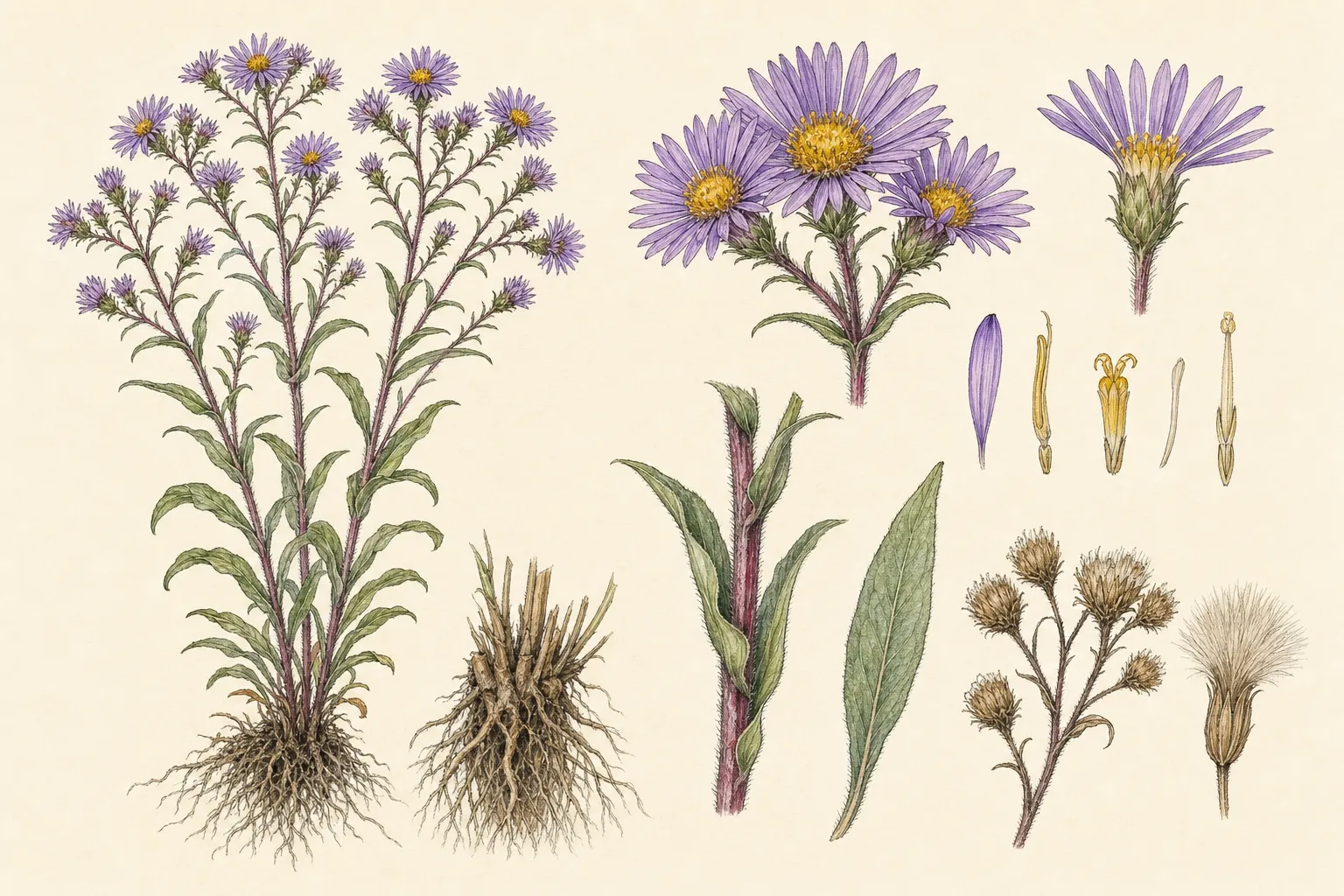
Symphyotrichum novae-angliae is a clump-forming herbaceous perennial with stout, hairy stems and rough leaves that clasp each stem. From August into October, many purple rays surround yellow disc flowers about 1.5 inches across.
The species grows 3–6 feet tall, so it belongs behind shorter border plants or in a meadow, pond edge or rain garden where its lower stems can be screened. Named cultivars may be shorter or differently colored and should be spaced by their own mature dimensions.
Full sun, moist fertile soil and open air movement support flowering and limit foliar disease. Taller plants can still need staking, especially if shade, wind or rich growth stretches the stems.
A spring-to-early-summer pinch produces a bushier, shorter plant but also delays flowering. Stop pinching before mid-July so the new branches have time to form the late-season flower display.
- Family
- Asteraceae
- Range
- Central and eastern North America
- Soil pH
- 5–7.5
- Spread
- 1–3 ft · 30–90 cm
Planting & careHow to grow new england aster
Guidance fits temperate North American gardens in USDA zones 4–8. The species is native across central and eastern North America; use locally appropriate stock for habitat plantings and allow airflow in humid regions.
- 1Place the tall clump deliberately
Allow 3–6 feet of height and 1–3 feet of width behind shorter companions, with access for staking or seasonal cleanup.
- 2Provide full sun and airflow
Choose an open sunny site rather than a crowded corner, because moving air helps foliage dry and reduces conditions favorable to mildew.
- 3Set the perennial crown level
Plant the herbaceous crown at its nursery depth in moist, well-drained soil and keep mulch clear of the emerging stem bases.
- 4Maintain even moisture
Water deeply after planting and during dry spells so the active root zone remains moist without sitting in stagnant water.
- 5Decide on support early
Install a low ring or neighboring support before stems reach full height, or plan an early-season pinch where a shorter display is preferable.
Pruning new england aster
Pinch emerging herbaceous stems in spring or early summer to shorten and branch the plant, stopping before mid-July because later cuts delay or remove flower buds. After frost, cut diseased stems to the crown; sound seed-bearing stems may remain into winter and be removed before spring growth.
Seasonal care
Spring
Clear last year’s stems before shoots elongate, renew mulch without covering the crown, and begin pinching only if a shorter, bushier plant is wanted.
Summer
Finish any pinching before mid-July, maintain soil moisture, add support before tall stems lean and check early for powdery mildew.
Autumn
Let the purple flowers feed late pollinators, then retain clean seed heads for birds or remove diseased stems and fallen foliage after frost.
Winter
Leave sound dry stems if winter habitat is the priority, otherwise cut them to the dormant crown; complete cleanup before new shoots emerge.
Safety and garden spread
The retained horticultural sources do not identify a specific garden-contact toxicity hazard; do not infer edibility from that absence.
Common problems
Powdery mildew
- Look for
- White powder spreading over leaves, often beginning low in a crowded or humid planting.
- Action
- Increase spacing and airflow, avoid wetting foliage late in the day and remove badly affected debris; seek a current local recommendation before treatment.
Aster wilt or stem rot
- Look for
- Individual stems wilting, darkening at the base or collapsing while neighboring stems remain upright.
- Action
- Remove affected stems, correct poor drainage and obtain a diagnosis before replanting asters in the same soil.
Tall stems leaning
- Look for
- Three- to six-foot stems splaying into neighboring plants before the flowers open.
- Action
- Add discreet support, increase sun if the site is shaded and plan an earlier pinch next year rather than cutting flower-ready stems.
Aphids or spider mites
- Look for
- Clusters on young shoots, sticky residue, fine stippling or webbing on stressed foliage.
- Action
- Confirm the pest, restore appropriate moisture and use a locally recommended control only if the population is causing meaningful damage.
Plant details
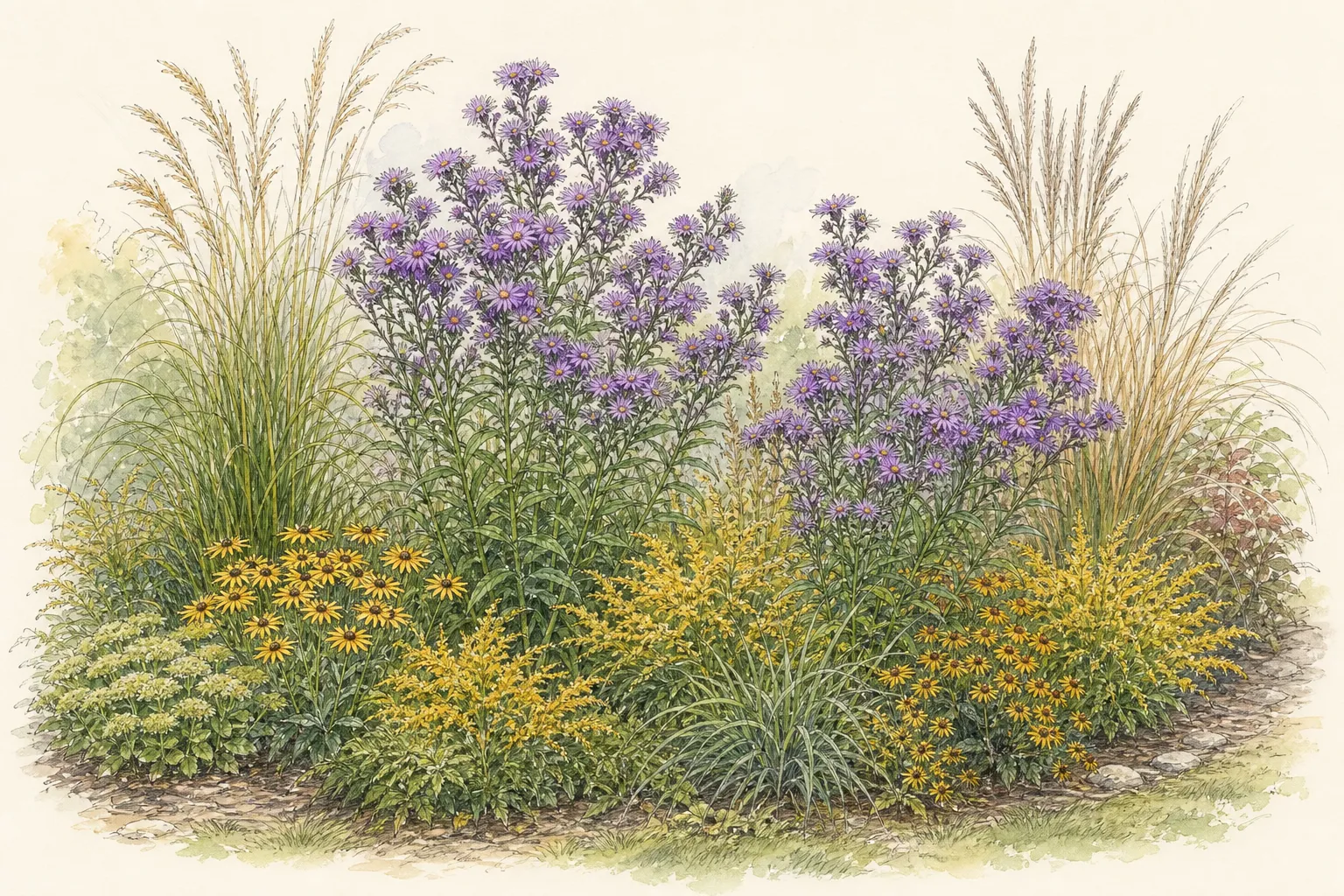
Garden placement study showing mature New England Aster in an ornamental planting
Related reading
Sources
- New England Aster cultivation profile. North Carolina Extension Gardener Plant Toolbox. Source record · Accessed 2026-08-20.
- Symphyotrichum novae-angliae horticultural guidance. Missouri Botanical Garden. Source record · Accessed 2026-08-30.
- Symphyotrichum novae-angliae taxonomy and distribution. USDA PLANTS Database. Source record · Accessed 2026-08-20.