Grow · fall perennial division selection
Choose Which Perennials to Divide in Fall—and Which to Leave for Spring
Sort established perennials by need, bloom time, root habit, and weeks before frozen ground before dividing anything in early fall.
Published Last updated
In this guide
Start with the plant, not the September calendar
Divide an established perennial in early fall only when four answers line up: the clump actually needs division, the identified species tolerates fall work, flowering is finished, and several weeks of workable soil remain before the ground freezes. A cool September day is not permission by itself. A healthy, well-scaled plant can stay intact; an autumn-blooming plant, a difficult taproot, or a drought-stressed crown usually belongs on the spring list or the leave-alone list.
Look for a real reason to intervene: fewer or smaller flowers, a dead center surrounded by living growth, declining vigor, repeated flopping caused by crowding, or a clump that has exceeded its allotted space. Illinois Extension emphasizes these plant signals over a fixed calendar. Iowa State likewise notes that vigorous species may need division every two or three years, while a peony can remain undisturbed for decades. More plants for another bed is a valid goal, but it does not erase the timing and root-habit limits of the species you are lifting.
Run a four-part fall test
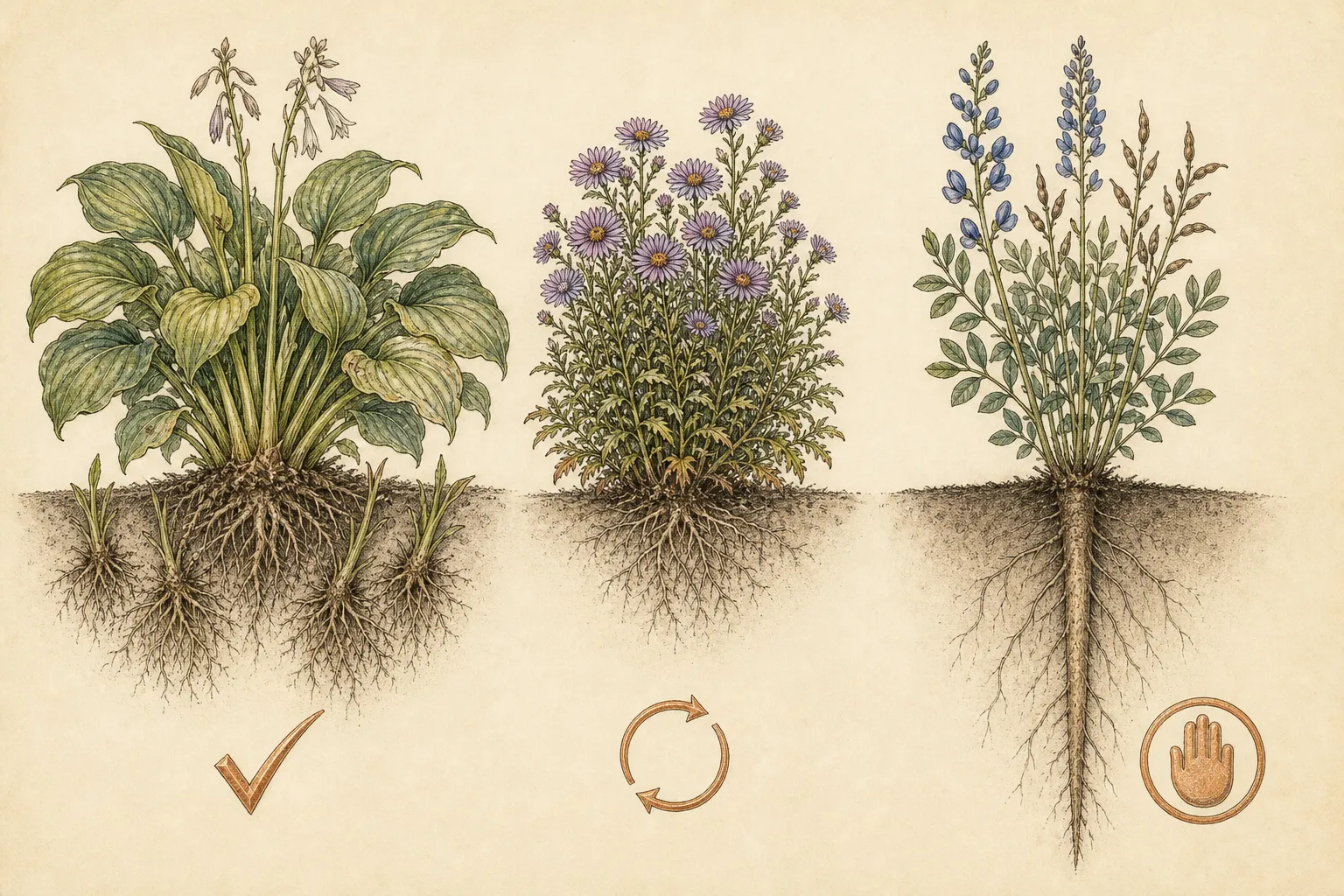
First, identify the plant to species or a useful garden group; a label saying only “perennial” cannot support a timing decision. Second, note whether it has finished flowering. The familiar rule—divide spring and early-summer bloomers after flowering and leave fall bloomers for spring—is a starting point, not a substitute for species guidance. Third, learn the root habit. A fibrous hosta crown can be separated into rooted fans; a mature blue false indigo or butterfly weed has a deep root system that Iowa State advises leaving undisturbed. Fourth, compare the date with local frozen-ground timing, not only the first light frost.
Regional guidance shows why the last test matters. Iowa State describes mid-August through September as a fall window in Iowa and asks for at least four to six weeks before the ground freezes. New Hampshire Extension recommends a more conservative eight weeks because late divisions can be heaved by freeze-thaw cycles. Use the longer window when the first hard freeze is uncertain, the site is exposed, or winters repeatedly heave crowns. If that time is no longer available, mark the clump and prepare the destination now, then divide at spring emergence.
Build a small fall candidate list
For a cool-temperate garden, begin with locally verified species that have finished flowering and are listed for late-summer or fall division. Iowa State includes hosta, coral bells, coreopsis, daylily, garden phlox, lungwort, foamflower, and several other fibrous or clumping perennials in that category. Its table also gives special fall timing to Oriental poppy and peony. These are candidates, not a mixed-bed command: each still needs enough roots, a prepared destination, and the remaining establishment window.
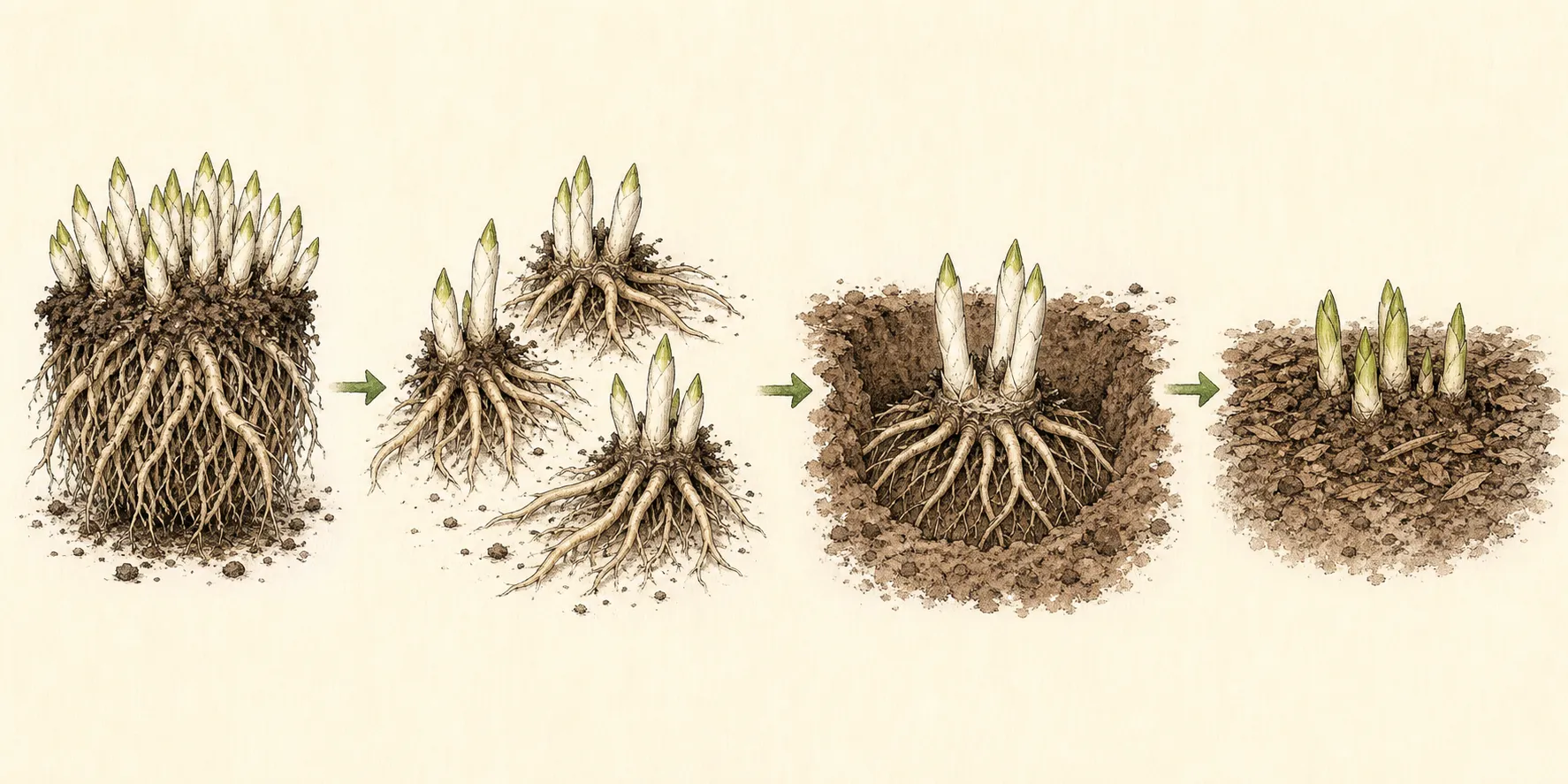
Keep special crowns out of a generic production line. Bearded iris is handled by its exposed rhizome and fan rather than like a buried hosta crown; peony divisions need correctly placed eyes and exact planting depth; Oriental poppy is worked while dormant. Use their plant-specific directions once the timing triage admits them. The purpose of this list is to identify a few defensible jobs for the week, not to lift every spring-blooming plant in the border.
Move spring-only and leave-alone plants off the digging list
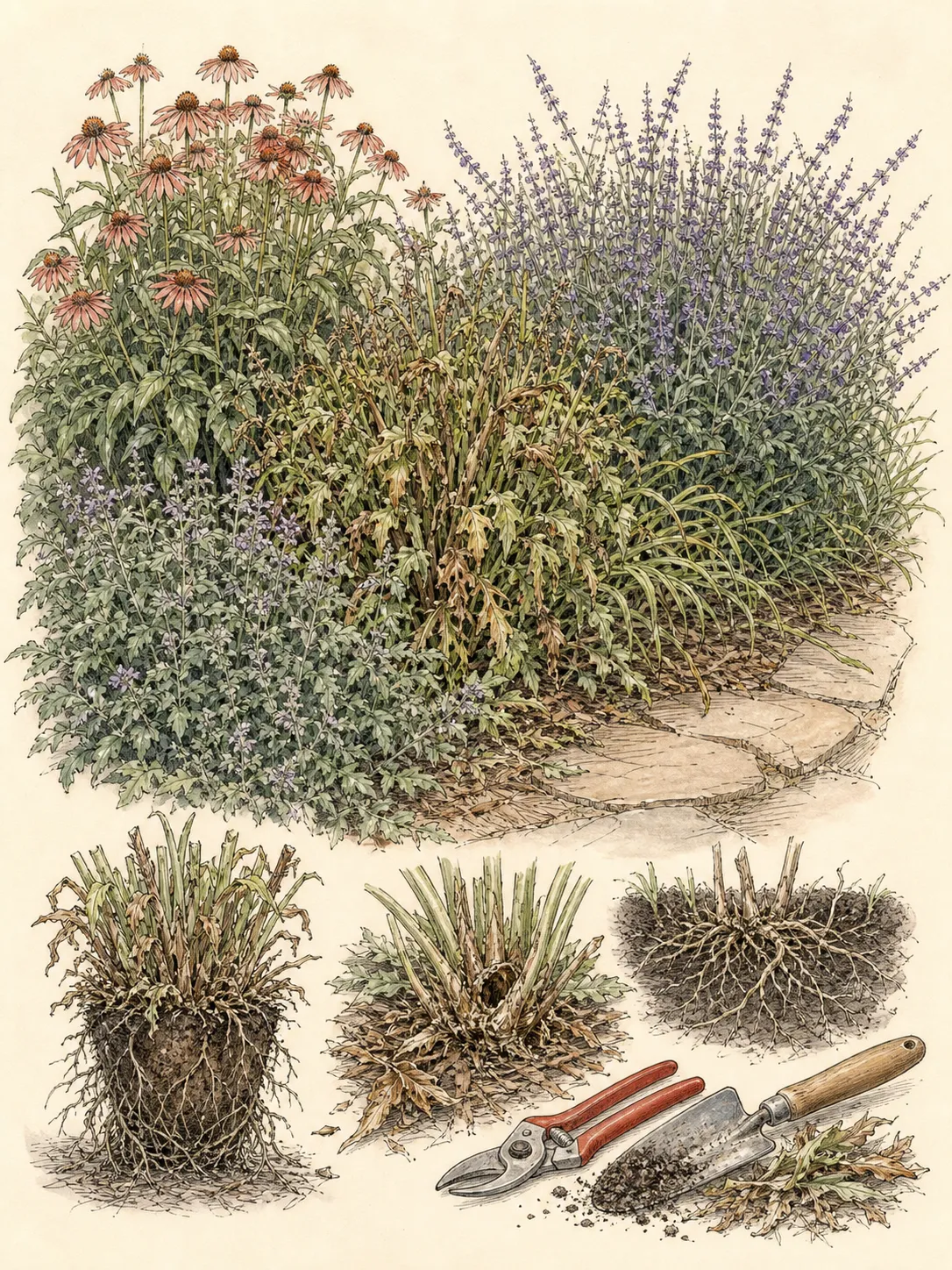
Put a plant on the spring list when it is flowering now, when its local species guidance favors spring, or when cold will arrive before new roots can settle. Iowa State lists asters, ornamental grasses, purple coneflower, perennial salvia, Shasta daisy, and several other familiar plants for spring division. Regional lists do not agree on every genus, so use the most local institutional recommendation you can find and keep the cultivar label. A broad bloom-time rule should never overrule a clear species exception.
A separate leave-alone list prevents spring from becoming a delayed mistake. Iowa State identifies blue false indigo and butterfly weed as difficult to divide because of deep roots and recommends other propagation methods; Illinois Extension also notes that some perennials would rather not be disturbed. Delay work on a plant that is wilted, recently transplanted, diseased at the crown, or rooted in saturated soil. Division cannot repair the wrong site, and cutting a suspect crown into several pieces can distribute a problem that first needed diagnosis.
Lift enough root to keep the choice visible
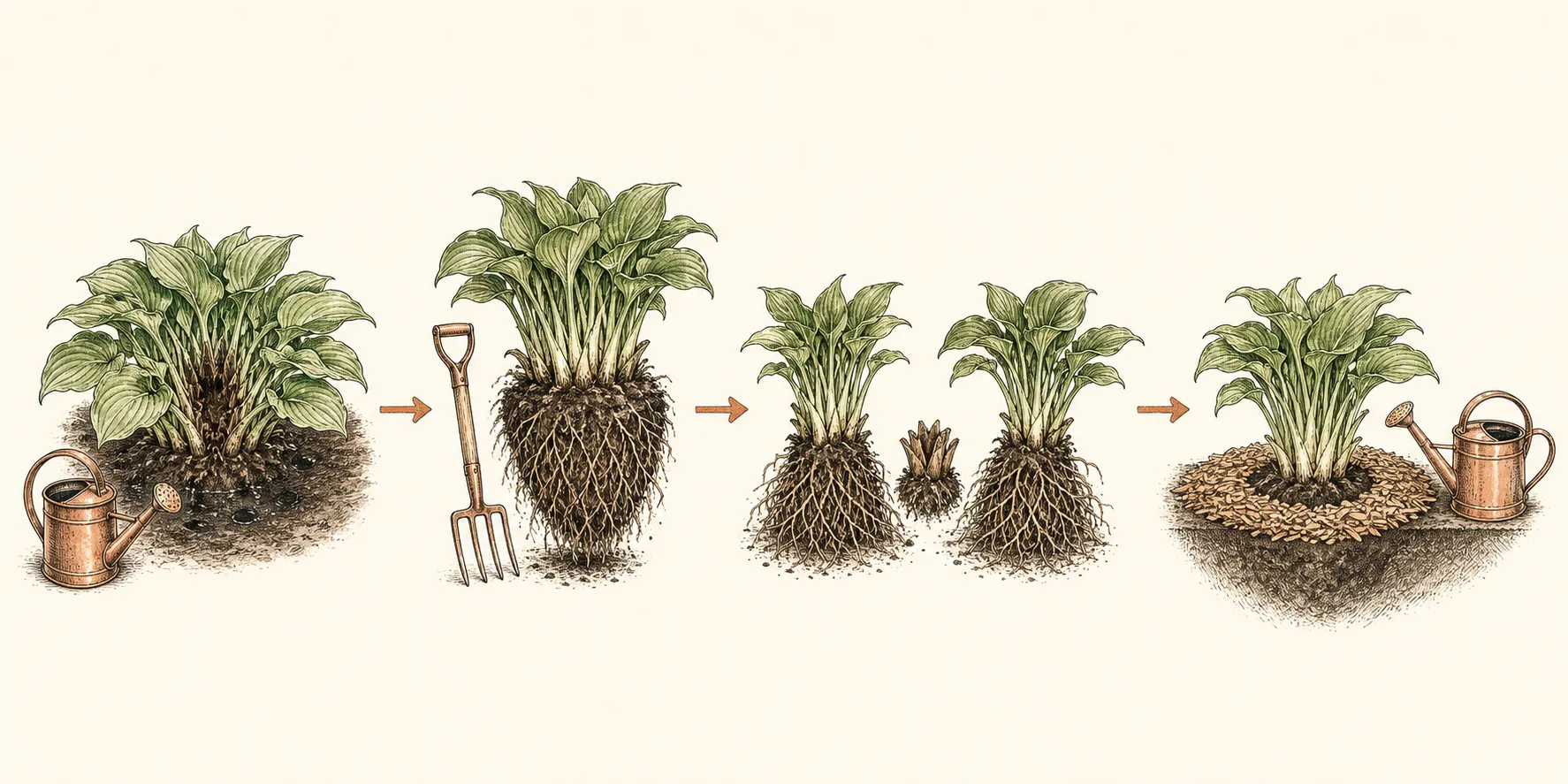
Prepare the receiving holes before the clump leaves the ground. If the bed is dry, water a day or two before digging so soil releases without turning to dust and roots begin the operation hydrated. New Hampshire Extension suggests starting eight to twelve inches from the crown for a typical perennial, circling the plant, and lifting the root ball intact. That distance is not a universal diameter; enlarge it for a broad crown and stop if the fork or spade is severing the living perimeter you intend to keep.
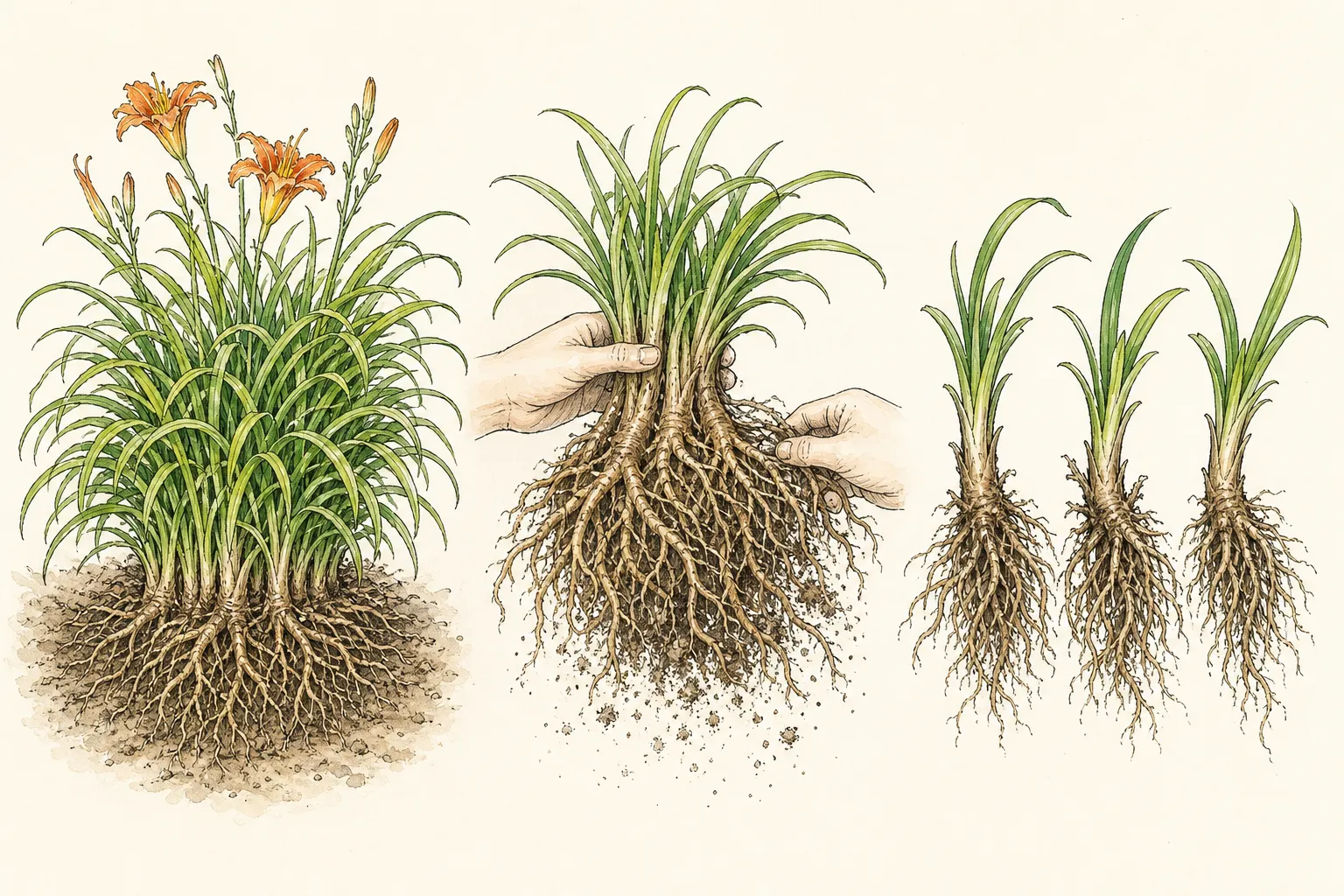
Remove only enough loose soil to see crowns, buds, roots, dead center, and diseased tissue. Tease loose fibrous sections apart by hand, cut a dense crown with a sharp knife or spade, or use two forks where the root mass releases that way. Retain several healthy shoots or growing points with abundant roots rather than maximizing the number of tiny pieces. Iowa State notes that larger divisions establish and fill sooner, and both Iowa and New Hampshire direct gardeners to discard weak or dead center material. Keep accepted divisions shaded and moist while you work.
Replant immediately at the original grade
Set each ordinary fibrous division at the same soil level it occupied before lifting, with roots spread into loosened soil rather than folded into a narrow hole. Firm the backfill enough to close large air pockets, water the whole root zone thoroughly, and leave the crown visible. Special structures still keep their own depth rules. Do not translate “same grade” into burying a bearded-iris rhizome or placing peony eyes by the hosta standard.
Continue checking moisture until dormancy because the new root zone is smaller than the foliage it supports. Water when that occupied soil begins to dry, then allow excess water to drain. New Hampshire Extension advises waiting until the following season to fertilize newly divided plants; fall fertilizer does not replace roots. Where local guidance calls for winter protection, wait for the specified timing and use a loose insulating mulch that does not smother the crown. Iowa's recommendation for late divisions is explicitly regional and timed for November, so adapt it rather than copying its depth and date into every climate.
Let spring growth judge the work
Mark each division with the plant name, source clump, and date. After winter, check whether the crown remains at grade, reset only material that has visibly heaved, and look for firm new shoots before declaring a loss. Iowa State cautions that many newly divided perennials do not flower well until their second growing season. The first useful result is rooted survival and balanced growth, not a full-size display immediately after the plant has given up part of its crown and root system.
Record which species established, which site stayed too wet or dry, and how many weeks actually separated division from frozen ground. Those notes turn a national calendar into a local one. If the fall window closed before you began, the successful outcome is a labeled spring list and prepared space—not a hurried transplant. Early fall division works best as a selective edit: a few identified, eligible clumps moved well, while flowering, deep-rooted, stressed, and late-season plants remain intact.
Steps
- Level
- moderate
- Time
- One to three hours to assess, lift, divide, and replant one established clump, followed by moisture checks until dormancy
- Tools
- Weatherproof labels and pencil, Garden fork or sharp spade, Soil knife or sturdy hand pruners for suitable crowns, Watering can or hose
- Materials
- Locally verified species timing guidance, Prepared receiving holes, Loose mulch if recommended for the local winter
- 1Identify the plant and the freeze window
Confirm the species or garden group, record its bloom stage, and count backward from typical frozen-ground timing. Use the longer local establishment window when guidance differs or winter exposure is severe.
- 2Confirm that division has a job
Proceed for a dead center, reduced performance, crowding, unwanted spread, or a planned increase. Leave a healthy, correctly scaled clump intact when the only reason is the date.
- 3Assign fall, spring, or leave alone
Use species guidance and root habit to sort each candidate. Move active fall bloomers and spring-favored species to the spring list; exclude deep-rooted plants that resent disturbance.
- 4Prepare the destination first
Open and water the receiving site as needed, label it, and assemble tools before lifting. Do not leave exposed divisions waiting while a new bed is cleared or designed.
- 5Lift and select substantial outer pieces
Circle beyond the living crown, raise an intact root mass, and expose enough structure to separate healthy rooted sections. Discard the dead center and avoid multiplying tiny, weak pieces.
- 6Replant at the correct grade
Return ordinary fibrous crowns to their previous soil level, follow special depth rules for rhizomes and eyes, close air pockets, water thoroughly, and keep the crown visible.
- 7Protect establishment and review in spring
Keep the occupied root zone from drying before dormancy, delay fertilizer, apply only locally timed winter mulch, and inspect labeled crowns for heaving and new shoots after thaw.
Plants in this guide
Related reading
Sources
- How to Divide and Transplant Perennials. Iowa State University Extension and Outreach. Source record · Accessed 2026-08-27.
- When should I divide my perennials?. University of New Hampshire Extension. Source record · Accessed 2026-08-27.
- Dividing Perennials. University of Illinois Extension. Source record · Accessed 2026-08-27.