Blue False Indigo
Baptisia australis
A deep-rooted, long-lived native perennial with indigo pea flowers, blue-green leaves, and black seedpods, best placed once in sunny, well-drained soil.
Published Last updated
At a glance
- Light
- Full sun to light shade
- Water
- Moderate while establishing; drought tolerant when mature
- Soil
- Average, well-drained soil
- Hardiness
- Zones 3–9
- Bloom
- Late spring to early summer
- Height
- 3–4 ft · 90–120 cm
In this guide
Overview
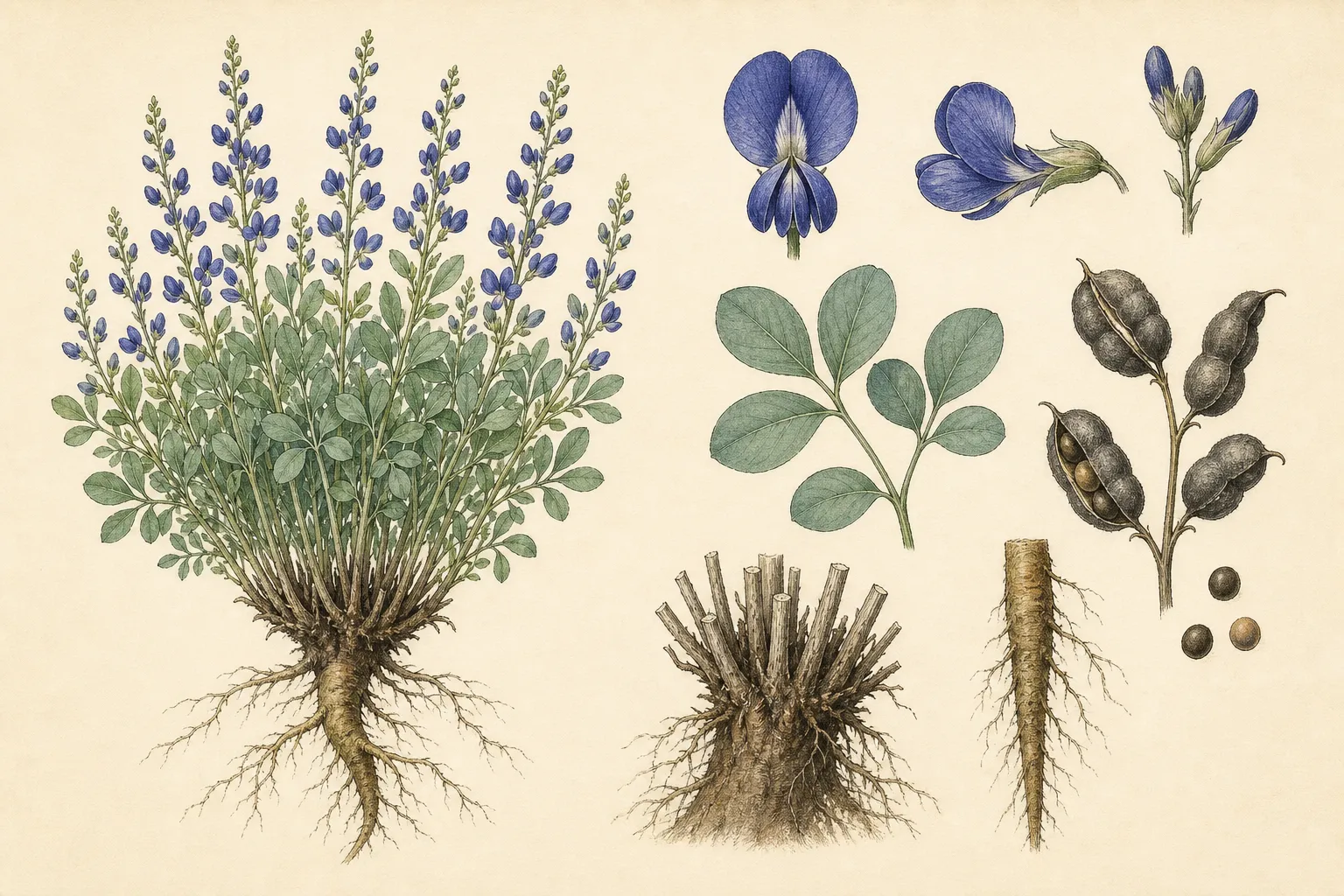
Baptisia australis is a clump-forming herbaceous legume with a shrub-like outline. Blue to indigo pea-shaped flowers rise in late spring above blue-green, three-part leaves; inflated pods turn charcoal black later in the season, and the entire top dies to the ground in winter.
A mature species plant is commonly 3–4 ft high and wide. Use it as a single specimen or small group where later perennials can overlap the sturdy summer foliage. Compact selections and hybrids may occupy less space, so use the exact nursery label rather than applying the species dimensions to every Baptisia sold.
Full sun gives the strongest bloom and most self-supporting habit. Light shade is tolerated but can reduce flowers and encourage leaning. Average gravelly, sandy, loamy, or clay soil can work when water drains freely; excessive irrigation and fertility promote soft, floppy growth rather than improving the established plant.
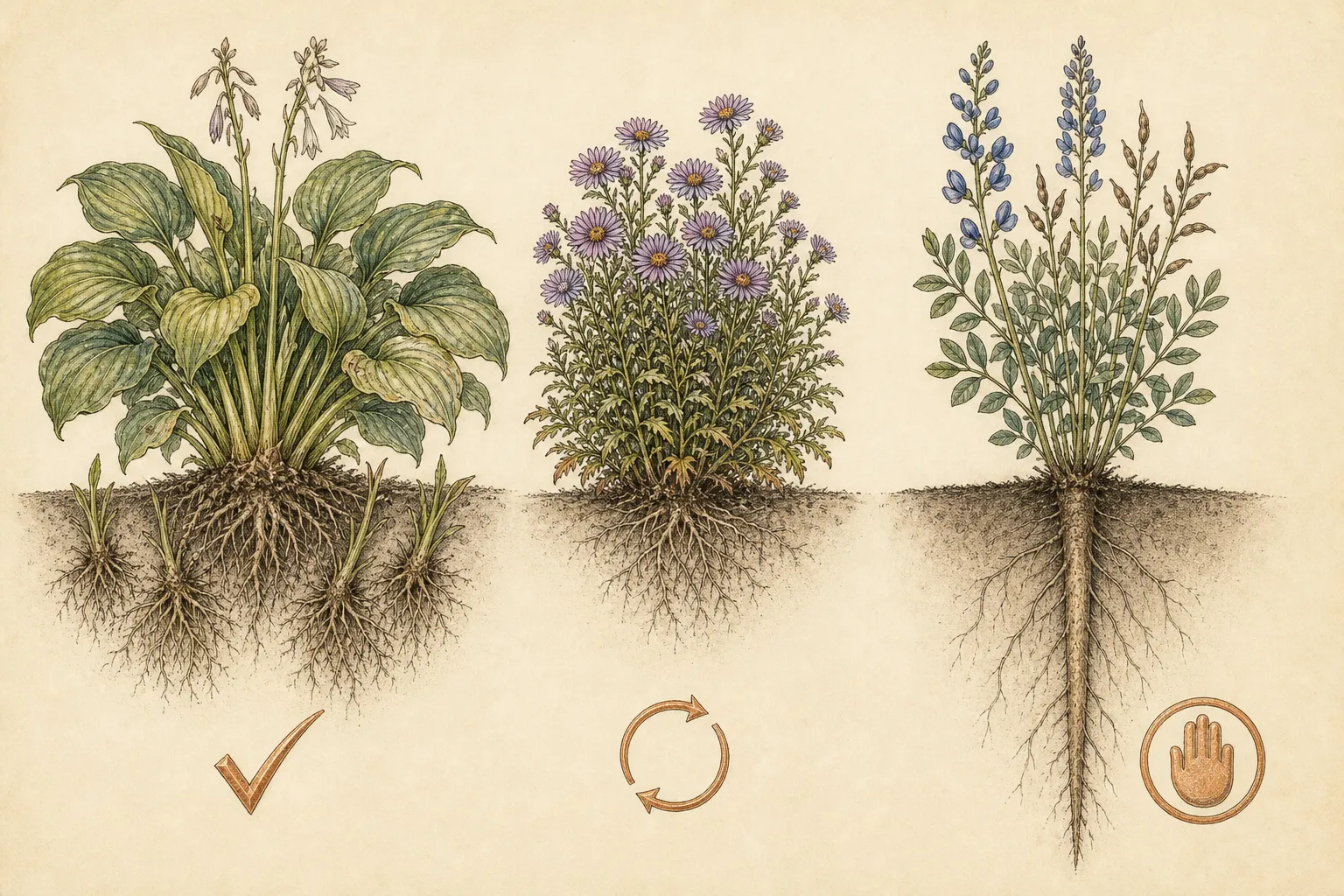
Water regularly during the first growing season while the deep taproot and lateral roots develop. Once established, the clump is notably drought tolerant. A mature plant is difficult to transplant, and routine division is unnecessary; if a move cannot be avoided, work in cool weather and keep the disturbed roots moist until growth resumes.
Decide whether the black pods belong in the design. Leaving them adds sound and winter structure, while removing spent flower stems prevents self-sowing and reduces the weight that can pull stems outward. After dormancy, all remaining stems can be cut near ground level before spring shoots appear.
This species fixes nitrogen and generally needs little fertilizer. It also contains compounds that North Carolina Extension treats as a low-severity ingestion hazard. Keep seedpods and cut stems out of reach of children and pets, and do not confuse historical dye or medicinal uses with evidence that any part is edible.
- Family
- Fabaceae
- Range
- Eastern and central United States
- Soil pH
- 5.5–7.5
- Spread
- 3–4 ft · 90–120 cm
Planting & careHow to grow blue false indigo
Confirm that nursery stock is Baptisia australis rather than a compact variety or an interspecific hybrid; size, flower color, and pod set can differ. In climates within zones 3–9, local drainage and winter wetness matter more than routine feeding, and the mature taproot makes the first planting position the important one.
- 1Choose the permanent 3–4 ft position
Allow a species plant about 3–4 ft of height and width, with a route for dormant cleanup. Keep it clear of paths and utilities because an established deep-rooted clump is difficult to relocate.
- 2Prioritize sun and drainage
Select full sun for maximum flowering and stem strength; use light shade only where a looser habit is acceptable. Reject sites that hold water after rain rather than trying to correct them with a small amended pocket.
- 3Set the crown without breaking the taproot
Dig a hole wide enough to settle the container root system without bending it, and keep the herbaceous crown level with the surrounding soil. Backfill, water once to settle soil, and avoid splitting the young clump.
- 4Water the first season, then taper
Check the root ball below the surface and water before it dries through during establishment. As vigorous new growth shows that roots have expanded, lengthen the interval and reserve irrigation for extended drought.
- 5Keep inputs modest
Apply only a thin mulch outside the crown and skip routine high-nitrogen fertilizer. The legume’s mature form depends on sun and drainage; extra water and fertility can produce growth that falls outward.
- 6Choose pods or a tidier mound
After the first flowering, decide whether to keep the developing pods. Remove flower stems at their bases for a neater mound and less self-sowing, or retain sound pods and plan to cut the dead stems before spring.
Pruning blue false indigo
After bloom, remove individual flower stems at the base of the inflorescence or shorten the plant by no more than one-third if seedpods and their weight are unwanted. Otherwise leave the pods for autumn and winter interest. Once the top is fully dormant, cut all dead herbaceous stems near ground level in late fall, winter, or early spring before new shoots emerge.
Seasonal care
Spring
Cut any remaining dead stems before the thick new shoots extend. Plant or make an unavoidable division early, before shoots elongate, and water disturbed roots consistently; leave an established healthy crown undivided.
Summer
Water first-year plants during dry spells and let established clumps use their drought-tolerant roots. After flowering, remove developing pods if stem flopping or self-sowing is unwanted; avoid excess irrigation and fertilizer.
Autumn
Allow retained pods to turn black and rattle, or remove them before seed drops. Mark the crown while the foliage is still visible, because the entire top will disappear during dormancy.
Winter
The clump is dormant below ground. Leave dry pods temporarily for structure or cut all stems near the soil; keep the crown uncovered and make sure winter water drains from the site.
Safety and garden spread
Common problems
Sparse flowers or leaning stems
- Look for
- The plant makes soft growth with few flower spikes, especially in shade or after heavy watering and feeding.
- Action
- Increase light if practical, stop unnecessary fertilizer, and allow the soil to drain between establishment waterings. Compare size and habit with the exact cultivar label.
Decline in wet soil
- Look for
- Shoots weaken or the crown softens while the surrounding ground remains saturated after rain or irrigation.
- Action
- Stop routine watering, confirm drainage and crown depth, and seek a local diagnosis before replanting. A raised mound cannot compensate for a persistently waterlogged site around the root system.
Seedpod weevils
- Look for
- Maturing pods contain damaged seed or small feeding holes, while the foliage and crown remain otherwise healthy.
- Action
- Remove and discard affected pods if viable seed is the goal. The damage usually concerns seed production rather than the health of the established clump.
The mature clump no longer fits
- Look for
- A deep-rooted plant crowds a path or neighboring crowns after its shrub-like 3–4 ft outline develops.
- Action
- Move adjacent plants or widen the bed where possible. If relocation is unavoidable, work in cool weather, lift as much root as practical, water through recovery, and expect slow re-establishment.
Plant details
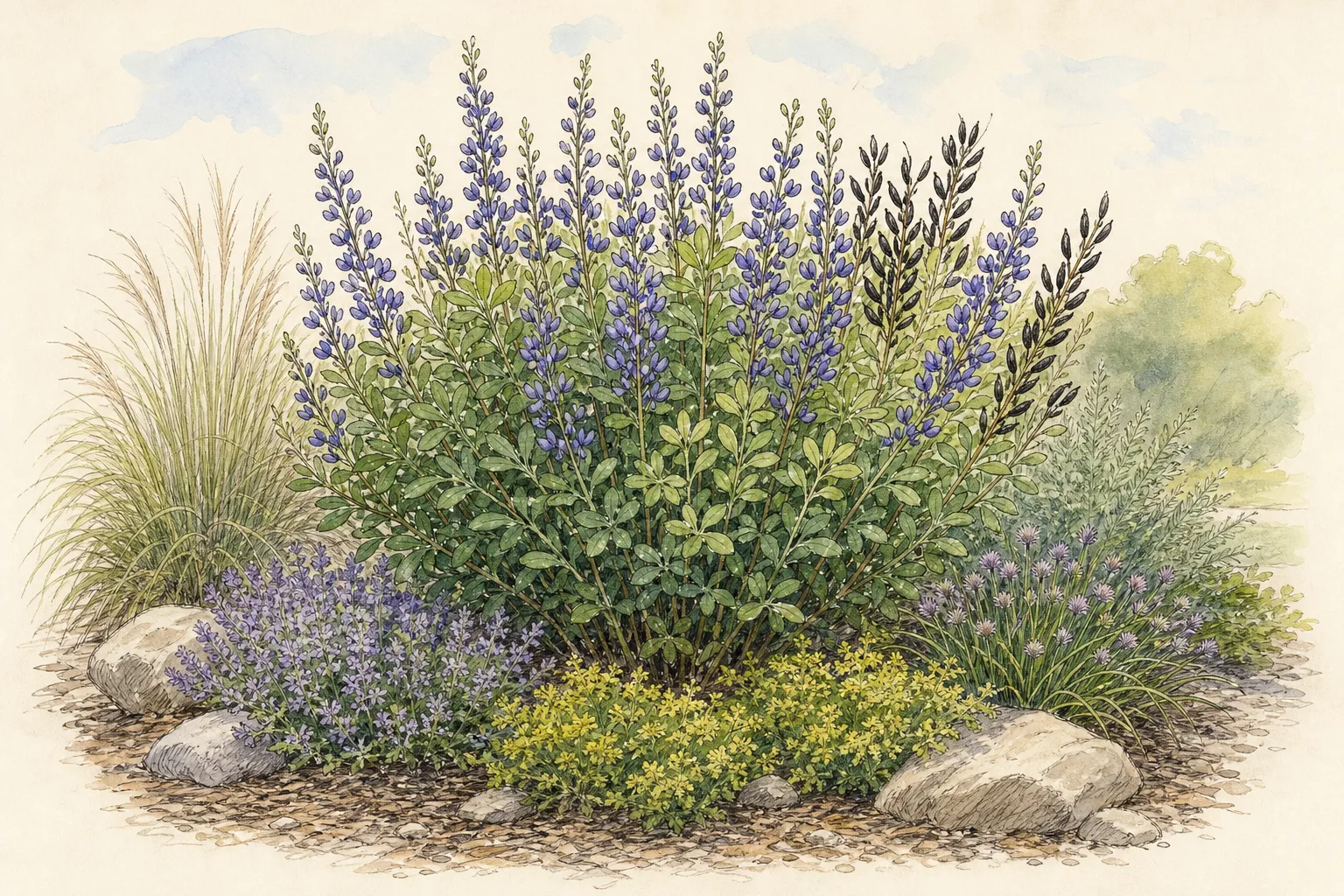
Garden placement study showing mature Blue False Indigo in an ornamental planting
Related reading
Sources
- Blue False Indigo, Baptisia australis. University of Wisconsin Extension. Source record · Accessed 2026-08-30.
- Baptisia australis. North Carolina Extension Gardener Plant Toolbox. Source record · Accessed 2026-08-30.
- Baptisia australis (L.) R. Br. ex Ait. f.. USDA PLANTS Database. Source record · Accessed 2026-08-30.
- Blue Wild Indigo. USDA Natural Resources Conservation Service. Source record · Accessed 2026-08-30.