Hosta
Hosta plantaginea
A species-led profile of fragrant Hosta plantaginea, with clear limits for the far more variable garden hybrids sold simply as hostas.
Published Last updated
At a glance
- Light
- Dappled to partial shade; deep shade tolerated, with more sun possible only in cooler sites where moisture remains dependable
- Water
- Consistent moisture in active growth without stagnant or winter-wet soil
- Soil
- Rich, organic, moisture-retentive but well-drained loam
- Hardiness
- Zones 3–9
- Bloom
- Late summer into early autumn
- Height
- 1–2 ft foliage; flower scapes to about 2.5 ft · 0.3–0.6 m foliage; flower scapes to about 0.75 m
In this guide
Overview
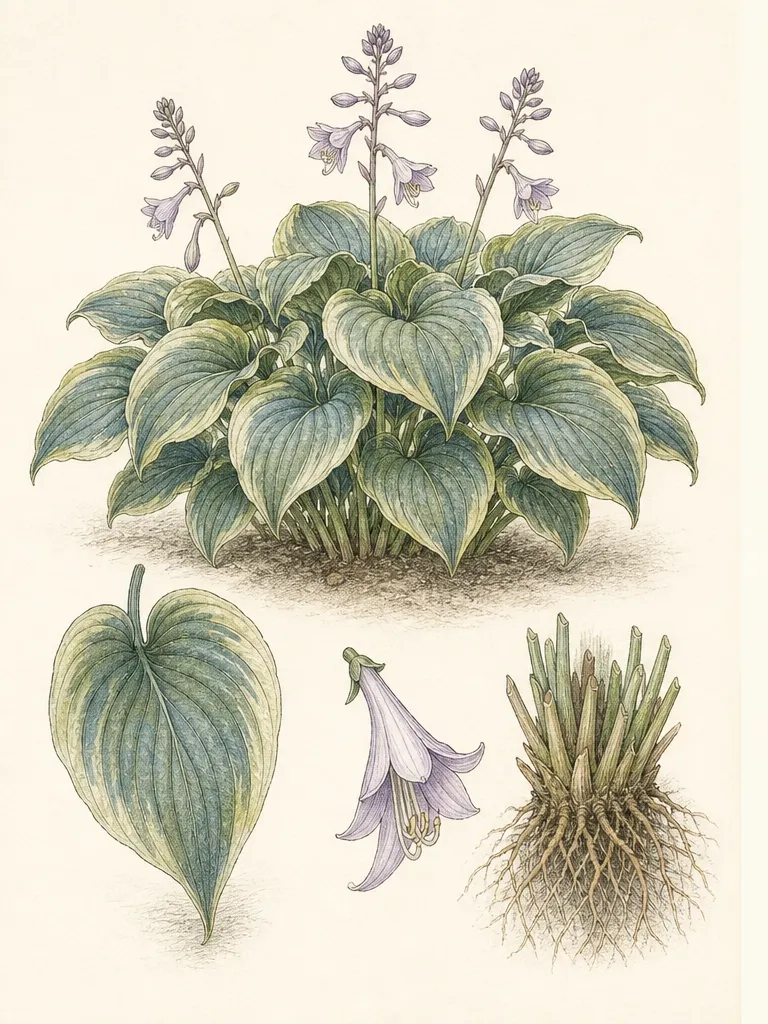
Hosta is best understood as a foliage framework rather than a generic patch of green shade. Leaves rise from a compact crown on individual petioles, overlap into a broad mound and disappear after frost, leaving no woody skeleton. The combination of basal leaves, strongly visible parallel veins and a separate leafless flower scape quickly distinguishes hostas from many broad-leaved woodland perennials. Their architectural value comes from that repeated mound: one plant can anchor a small shaded corner, while several at mature spacing can carry a border through the long intervals between spring and autumn flowers.
This Botanical Index entry uses Hosta plantaginea as its defensible representative species. It is an accepted species in the asparagus family and is native to China. In gardens it forms a bright yellow-green to lime-green mound of glossy, nearly round to heart-shaped leaves. The leaves are substantial but not the powdery blue, heavily corrugated foliage often pictured in modern hosta catalogs. Its signature appears above the mound in late summer: large waxy white trumpet flowers on tall scapes, opening late in the day and carrying a strong fragrance that is unusual within the genus.
A plant sold only as hosta may not be this species. Garden hostas include species selections and a vast array of cultivars and hybrids in blue, green, gold, cream and variegated combinations. Mature size can range from a tiny path-edge tuft to a clump wider than a person can reach across. Flower color, bloom time, scent and tolerance of light also vary. Hosta plantaginea contributes fragrance and heat tolerance to horticulture, but those traits cannot be assumed in an unnamed blue or variegated hybrid. Keep the nursery label, and treat its cultivar dimensions as the first spacing authority.
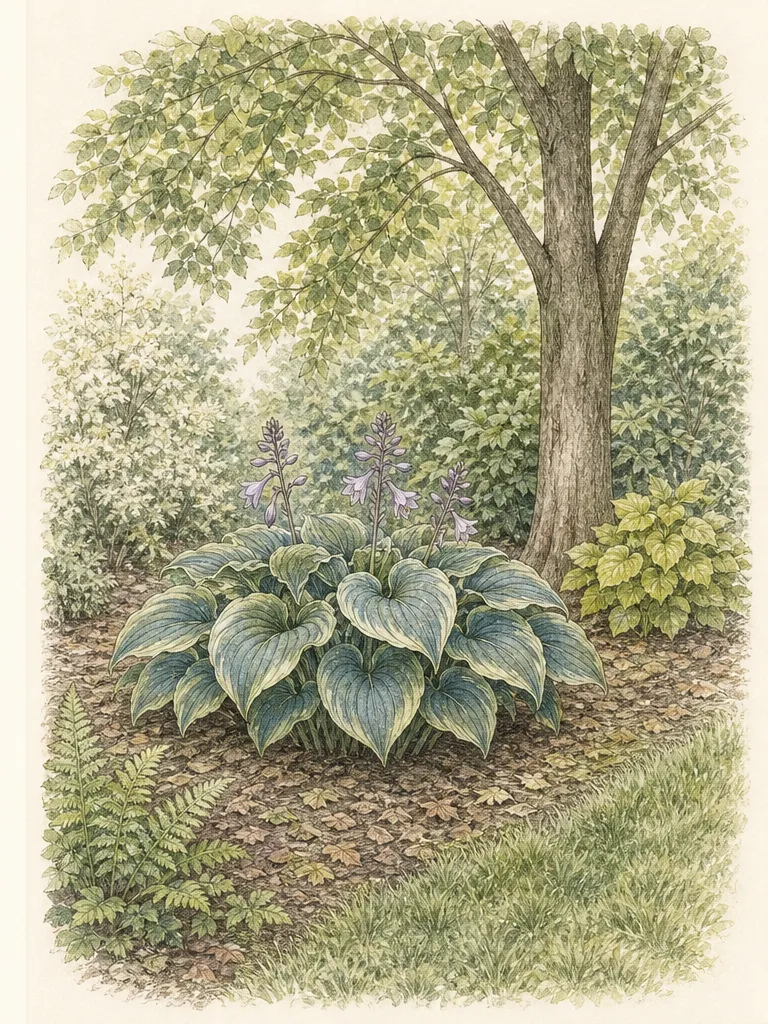
Site the species where shade is luminous rather than airless. Dappled light or gentle morning sun supports a dense mound while sheltering leaves from the harshest heat. Deep shade is survivable, but growth can be slower and flowering lighter. Cooler climates may allow more direct sun if the root zone remains moist; hot-summer gardens require stronger protection, especially in the afternoon. No sun rule cancels water balance. A hosta pressed against a rain-shadowed wall may be shaded yet dry, while a low pocket under irrigation may remain wet enough to threaten the crown.
The ideal soil holds moisture but releases excess water. Organic, well-structured loam supports the fleshy roots, while winter saturation encourages crown and root trouble. A pH planning range of 6.0–7.5 follows the University of Tennessee nursery table for Hosta plantaginea, but it is not a reason to amend soil blindly. Test first and prioritize drainage, organic matter and a continuous root zone. Under trees, remember that the canopy intercepts rain and established roots compete for water; a cool-looking shade bed can become dry below the surface soon after a light shower.
Use Hosta plantaginea where its evening fragrance can be reached: beside a shaded path, near a sitting place, or at the middle of a woodland border where the mature spread will not cover smaller crowns. Pair its broad glossy leaves with fine ferns, sedges or arching woodland grasses, and let spring ephemerals finish before the hosta canopy expands. Avoid placing the soft foliage where foot traffic, mower wheels, hail runoff or frequent hose dragging will shred it. Its dormant winter gap should be part of the composition, held by woody structure, evergreen ground layers or visible stone rather than disguised with soil piled over the crown.
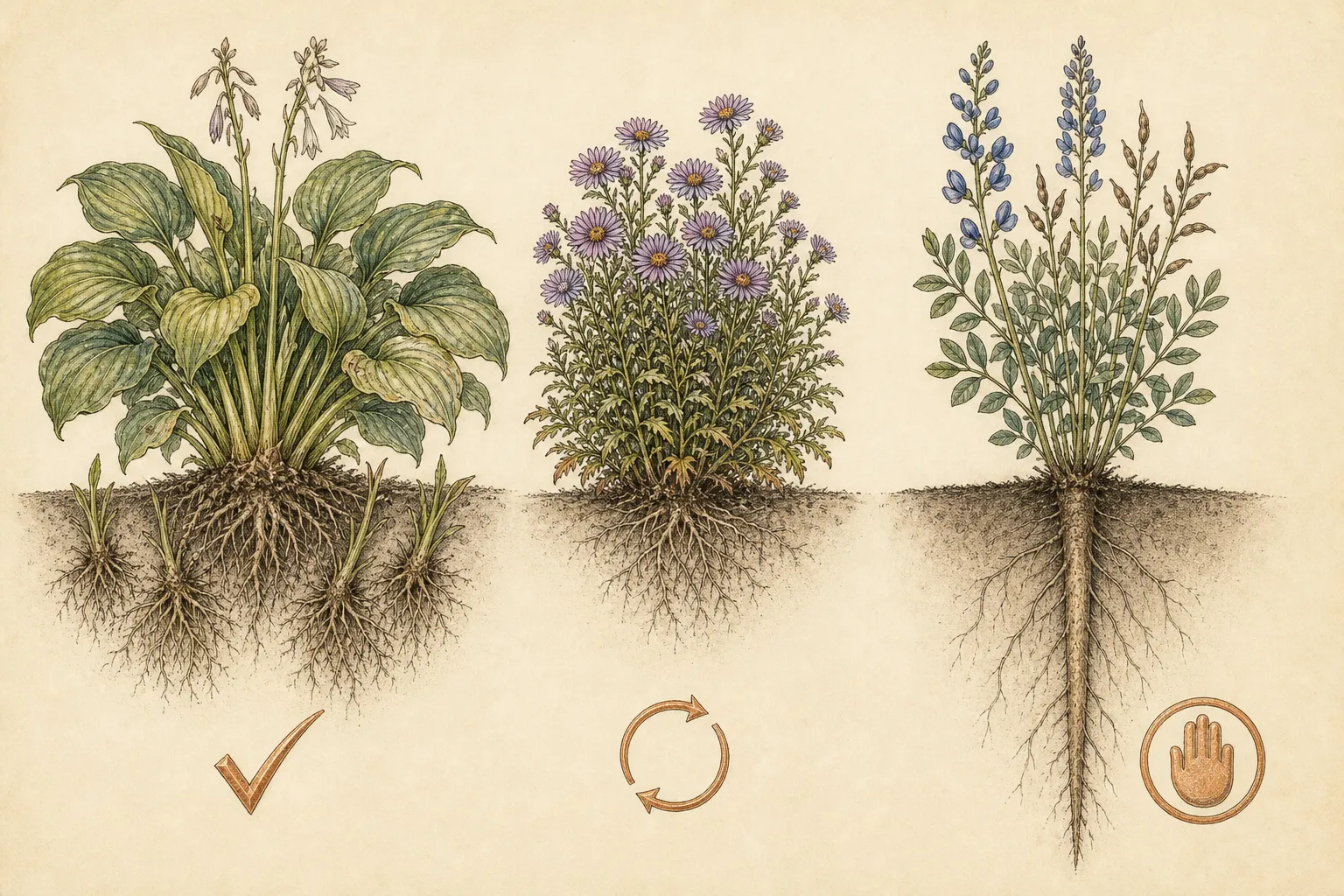
A settled hosta can live for years without routine division. Divide because more plants are wanted, a path is being narrowed, or a redesign requires it—not because the calendar demands rejuvenation. Early spring, when the eyes are visible but leaves have not fully unfurled, makes the crown easiest to read and limits leaf damage. Autumn division is also possible in suitable regions, provided roots have time to establish before severe cold. Every division needs an intact crown, viable roots and enough space to regain the mature form described by its own label.
- Family
- Asparagaceae
- Range
- South-central and southeastern China
- Soil pH
- 6–7.5
- Spread
- 3–4 ft · 0.9–1.2 m
Planting & careHow to grow hosta
This profile is anchored to the accepted species Hosta plantaginea, which Kew records as native to China. The zone, dimensions and cultural envelope describe that species in North American garden references, not every plant labeled hosta. Named cultivars and complex hybrids range from miniature to giant, may carry blue, gold or variegated foliage, and differ in sun response, fragrance, mature spread and winter performance. Confirm the tag and local guidance before spacing or exposing a selection to sun. In hot, humid regions, protect foliage from strong afternoon sun; in very cold or mild-winter regions, verify that the selected plant receives the dormancy and drainage conditions it needs.
- 1Confirm species or cultivar identity
Read the complete label before choosing the hole. A true Hosta plantaginea should be identified by species name and will make a broad glossy green mound with fragrant white late-summer flowers. A named hybrid may be much smaller or larger and may need different light. Record the name, mature spread and hardiness so the species profile is not applied indiscriminately.
- 2Map shade and moisture together
Observe morning and afternoon light, then probe the soil after rain. Favor dappled or partial shade with protection from hot afternoon sun and enough access for watering. Avoid a roof overhang that excludes rain, a low pocket that remains saturated, and a dense tree-root zone where a planting hole would require cutting substantial roots.
- 3Reserve the mature mound
For the species, allow roughly the 3–4 foot spread reported by NC State rather than spacing by the small nursery pot. Keep the future leaf margin off paths and away from smaller crowns. For a hybrid, replace that envelope with the label dimensions; hosta cultivars range too widely for one spacing rule.
- 4Prepare a broad, draining root zone
Loosen the planting area without building a deep amended pocket. Blend finished organic matter through the surrounding soil when structure is poor, preserving a gradual transition into the native ground. Correct a persistently waterlogged site before planting or choose another position. Do not set the crown over an impermeable basin and expect mulch to solve drainage.
- 5Set the crown at grade
Place a container plant at the same soil level it held in the pot. For a dormant division, spread the fleshy roots and keep the crown—the junction between roots and shoots—level with the surrounding finished surface, with growing tips visible rather than deeply buried. Backfill gently and remove large air pockets without stamping wet soil.
- 6Water the whole root ball
Water immediately so the nursery root ball and surrounding soil become one moist zone. Recheck below the surface through the first growing season, especially beneath trees and during heat. Apply water to soil rather than repeatedly wetting the leaf canopy, and allow excess water to drain. A brief surface sprinkle can leave the fleshy root system dry.
- 7Mulch without covering the crown
Add a conservative organic mulch around the plant to moderate evaporation and reduce soil splash, keeping the crown and emerging eyes visible. Pull material back if it slides inward. Mark a dormant planting so winter or early-spring bed work does not cut into it, and delay close companion planting until the hosta shows its actual spread.
Pruning hosta
Hosta needs editing, not formative pruning. In spring, wait for the pointed eyes to reveal the crown before removing any remaining collapsed foliage. Cut soft dead material at the base with clean tools and lift it away without slicing emerging shoots. During the growing season, remove a badly torn or yellow leaf by tracing its petiole to the crown; do not shear the whole mound into a geometric dome, because a cut leaf does not replace its missing blade. Flower scapes can remain through bloom for fragrance and ornamental value. After flowers finish, cut a scape near its base if a clean foliage effect is wanted, or retain it until capsules mature when seed and structure are desired. Seedlings from garden hybrids may not resemble the parent. After frost, foliage can be removed once it collapses, particularly where damaged tissue forms a dense wet mat, or left briefly as cover and cleared before spring growth. Never compensate for an oversized cultivar by repeatedly cutting leaves in half. Divide or relocate the clump at an appropriate season, preserving rooted crown sections and using the named plant's mature width in the new plan.
Seasonal care
Spring
Find the marked crown before raking the bed. Remove winter mulch and collapsed leaves gradually as pointed eyes emerge, keeping tools above the crown. This is the clearest time to divide or transplant because the shoots show each growing point while leaves remain compact. Replant divisions at grade, restore even moisture and mark them. Inspect new leaves for distorted coloring that does not match the cultivar; unexplained mosaic, ink-like bleeding along veins or persistent distortion should be assessed before any division is shared.
Summer
Keep moisture consistent through the active root zone, especially in tree shade and during hot dry weather. Brown bleaching on exposed leaves can indicate too much sun, while soft collapse at the crown in wet soil points toward a different problem. Water the soil beneath the canopy and keep mulch from touching petiole bases. Protect the broad leaves from hose dragging and foot traffic. As late summer approaches, Hosta plantaginea sends up white-flowered scapes; preserve them near paths or seats where evening fragrance can be appreciated.
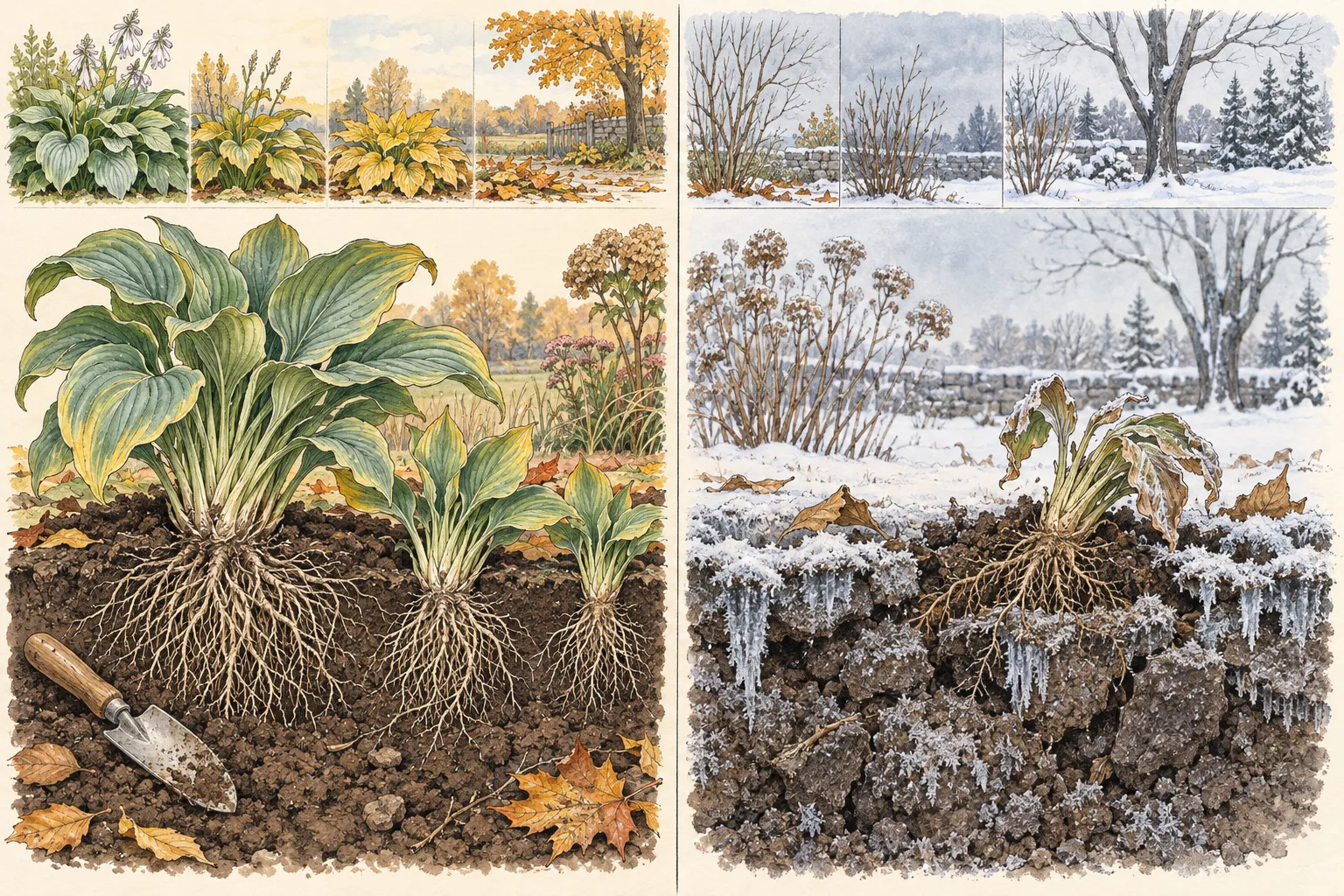
Autumn
Allow healthy leaves to feed the crown until frost and natural yellowing. Remove scapes after flowering if seed is not wanted, or retain dry capsules as a record of the season. Autumn division is possible where the plant can establish before severe cold, but spring is easier in colder districts. Once foliage collapses, clear any dense diseased or slimy mat and leave the crown at its original grade. Apply only enough mulch to moderate freeze-thaw cycles, never a wet mound over the eyes.
Winter
The visible plant is dormant; the fleshy crown and roots remain below ground. Keep its marker in place and avoid digging, storing heavy pots or channeling downspout water over the site. Check after storms or freeze-thaw cycles for mulch heaped onto the crown and for standing water. A bare surface does not mean the plant has died. Use the quiet season to compare the recorded cultivar width with neighboring plants and plan division or relocation before shoots unfold.
Safety and garden spread
Common problems
Chewed holes and ragged leaf margins
- Look for
- Irregular holes, shredded edges or surface scraping, often most visible on tender leaves and in damp sheltered parts of the mound.
- Action
- Inspect the plant and hiding places before choosing a response. Reduce dense debris and boards that shelter slugs and snails, hand-remove them where practical, and protect new growth without applying an unidentified treatment to the whole shade bed.
Crown or root decline in wet soil
- Look for
- Soft petiole bases, a loosening crown, yellowing or collapse associated with soil that remains soggy rather than merely moist.
- Action
- Stop automatic watering, pull mulch away and assess drainage. Remove badly decayed material with clean tools only if sound crown tissue remains. Relocate healthy divisions to a draining site rather than rebuilding another water-holding basin.
Sun scorch
- Look for
- Bleached patches, crisp brown areas or burnt tips concentrated on the side receiving the strongest direct light.
- Action
- Check root-zone moisture and the daily light pattern together. Restore deep, even watering when dry, then move the plant during a suitable season if hot afternoon exposure repeatedly damages otherwise healthy leaves.
Possible virus symptoms
- Look for
- Persistent mottling, ink-like color bleeding along veins, rings, distorted leaves or patterns that differ from the stable variegation expected for the cultivar.
- Action
- Do not divide, sell or share the plant. Photograph symptoms, isolate tools and seek a local diagnostic service. Remove an infected plant according to local guidance, and clean tools before using them on another hosta.
Poor flowering or loose growth
- Look for
- Few scapes, sparse flowers or a reaching mound in very deep shade, or weak growth where roots repeatedly dry.
- Action
- Confirm that the plant is Hosta plantaginea rather than a different hybrid, then compare light and moisture with its needs. Increase gentle light or relocate only after ruling out drought, crowding and crown damage.
Pet chewing
- Look for
- Missing leaf sections or disturbed stems where a dog, cat or horse has access, with possible vomiting, diarrhea or depression after ingestion.
- Action
- Prevent further access and contact a veterinarian or animal poison service promptly. Do not wait for this garden profile to diagnose severity, and do not induce vomiting or give a home remedy unless a veterinary professional directs it.
Plant details
Comparison of green fragrant Hosta plantaginea with blue, gold, variegated, miniature and giant garden hosta forms
Related reading
Sources
- Hosta plantaginea (Lam.) Asch.. Royal Botanic Gardens, Kew. Source record · Accessed 2026-08-19.
- Fragrant Plantain-lily: Hosta plantaginea. NC State Extension. Source record · Accessed 2026-08-19.
- Hosta. NC State Extension. Source record · Accessed 2026-08-19.
- Toxic and Non-toxic Plants: Hosta. ASPCA. Source record · Accessed 2026-08-19.
- Desired pH Ranges and Salt Tolerance of Common Nursery Plants. University of Tennessee Institute of Agriculture. Source record · Accessed 2026-08-19.