Bee Balm
Monarda didyma
A moisture-loving eastern North American perennial with aromatic leaves, scarlet flower whorls, spreading underground stolons, and mildew-prone foliage.
Published Last updated
At a glance
- Light
- Full sun to partial shade
- Water
- Moderate, with even moisture through summer
- Soil
- Rich, moisture-retentive, well-drained soil
- Hardiness
- Zones 4–9
- Bloom
- Midsummer to early autumn
- Height
- 2–4 ft · 60–120 cm
In this guide
Overview
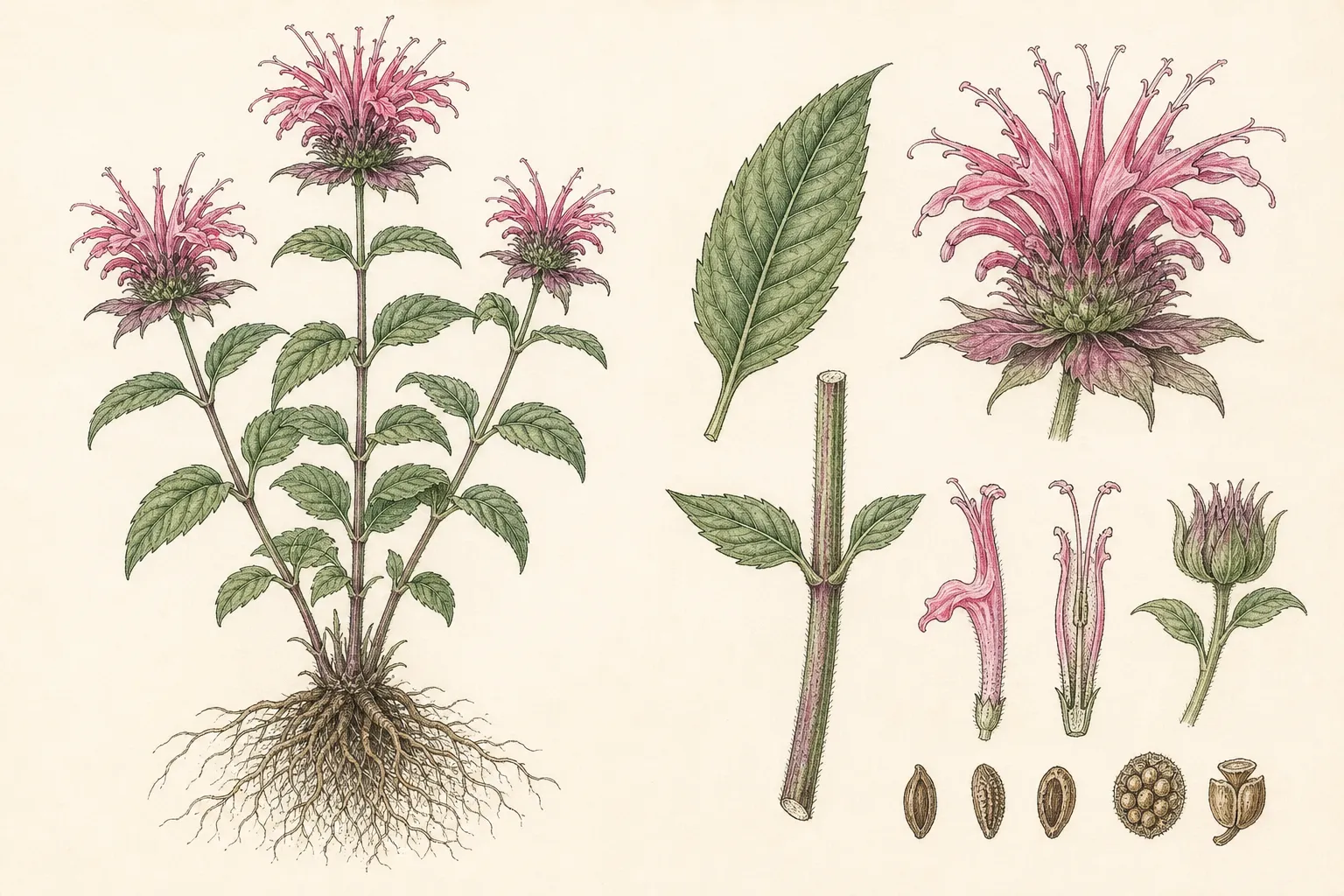
Scarlet tubular flowers cluster in dense terminal whorls above square stems with opposite aromatic leaves. Those mint-family traits separate Monarda didyma from unrelated red-flowered border plants. The species is deciduous and returns from a network of underground stolons each spring.
Use bee balm as a colony in a moist border, rain-garden edge, or naturalized planting where a 2–4 ft flowering height and 2–3 ft spread will not crowd delicate neighbors. Named cultivars may be shorter or have different flower colors and mildew resistance.
Full sun to light shade, steady summer moisture, and moving air support clean foliage. Hot dry soil stresses leaves and favors powdery mildew; stagnant winter wet can damage the crown. Water the soil rather than keeping the canopy wet.
Set the crown level with the surrounding soil and leave the square stem bases free of mulch. Space plants for their mature width, water deeply through the first season, and inspect the edge each spring as new stolons emerge.
Deadhead to extend flowering if seed heads are not wanted. After frost, cut most stems down, but NC State Extension recommends leaving selected hollow stems 12–24 in tall until they break down naturally because native bees may nest in them. Divide or thin a dense colony in spring.
- Family
- Lamiaceae
- Range
- Southeastern Canada and the eastern United States
- Soil pH
- 6–7.5
- Spread
- 2–3 ft · 60–90 cm
Planting & careHow to grow bee balm
Hot dry summers increase powdery-mildew stress, while excessive winter wet can damage crowns. Named cultivars vary in height and mildew resistance; the species also spreads rapidly by underground stolons and needs more room than a narrow mixed border allows.
- 1Allow the colony room
Plan for a 2–3 ft-wide stoloniferous colony and leave open access along its edge. The 2–4 ft flowering stems need airflow rather than support from crowded neighbors.
- 2Test summer moisture and airflow
Use full sun to light shade with rich soil that stays moist in summer but drains after rain. Avoid reflected heat, drought-prone tree roots, and stagnant enclosed corners.
- 3Set the crown at soil level
Place the root ball so the crown remains level with the surrounding bed. Backfill, water thoroughly, and keep mulch away from the square stem bases.
- 4Keep summer moisture even
Keep the root zone evenly moist through establishment and hot weather, allowing excess water to drain rather than leaving the crown saturated.
- 5Keep stolons visible
Apply a light mulch outside the stem cluster. An uncovered crown dries more readily and makes emerging stolons and decayed tissue easier to see.
- 6Set the colony boundary
Mark the intended colony edge and lift shoots that cross it each spring. A planned broad patch is easier to maintain than repeated shearing in a narrow gap.
Pruning bee balm
Deadhead spent whorls to a leafy junction if a longer display is wanted. After frost, cut most stems to the base, but leave selected hollow stems 12–24 in tall as potential bee nesting sites until they decay. Thin or divide stolons in spring instead of shearing the colony edge.
Seasonal care
Spring
Thin weak shoots, divide a crowded colony, and lift stolons beyond the planned edge before stems fill out. Leave any occupied hollow stems undisturbed until they decay.
Summer
Maintain even root-zone moisture, deadhead if more bloom is wanted, and inspect interior leaves for powdery mildew. Improve spacing before considering a control product.
Autumn
After frost, remove diseased debris and cut most stems down. Retain selected sound hollow stems at 12–24 in for stem-nesting bees.
Winter
Check that meltwater drains away from the dormant crown. Keep heavy mulch off the stolon network and leave retained hollow stems standing.
Safety and garden spread
NC State Extension records culinary uses for correctly identified leaves and flowers, but this ornamental profile does not provide food-use guidance. Do not consume plants exposed to garden pesticides or uncertain identification.
Common problems
Powdery coating on leaves
- Look for
- White-gray patches expand over the leaf surface, often first in a crowded or shaded part of the clump.
- Action
- Restore even soil moisture, thin crowded stems, remove badly affected debris, and favor resistant cultivars. Use a labeled treatment only after local diagnosis and current Extension guidance.
Growth beyond the allotted patch
- Look for
- New shoots arise from underground stolons in paths or within neighboring crowns.
- Action
- Trace and lift the complete unwanted stolon section while spring growth is young, then maintain the deliberately chosen colony edge.
Leaning or splayed stems
- Look for
- Flowering stems fall outward, expose the center, or need support despite normal weather.
- Action
- Increase sun and airflow, reduce excess nitrogen, and thin weak spring shoots. Stake only after correcting the site or crowding that produced soft stems.
Crown or root decline
- Look for
- Stems wilt in wet soil, the crown softens, roots darken, or sections fail after winter.
- Action
- Pull mulch away, stop routine watering, and inspect drainage. Remove soft tissue and replant sound divisions at crown level only after excessive winter wet is corrected.
Plant details
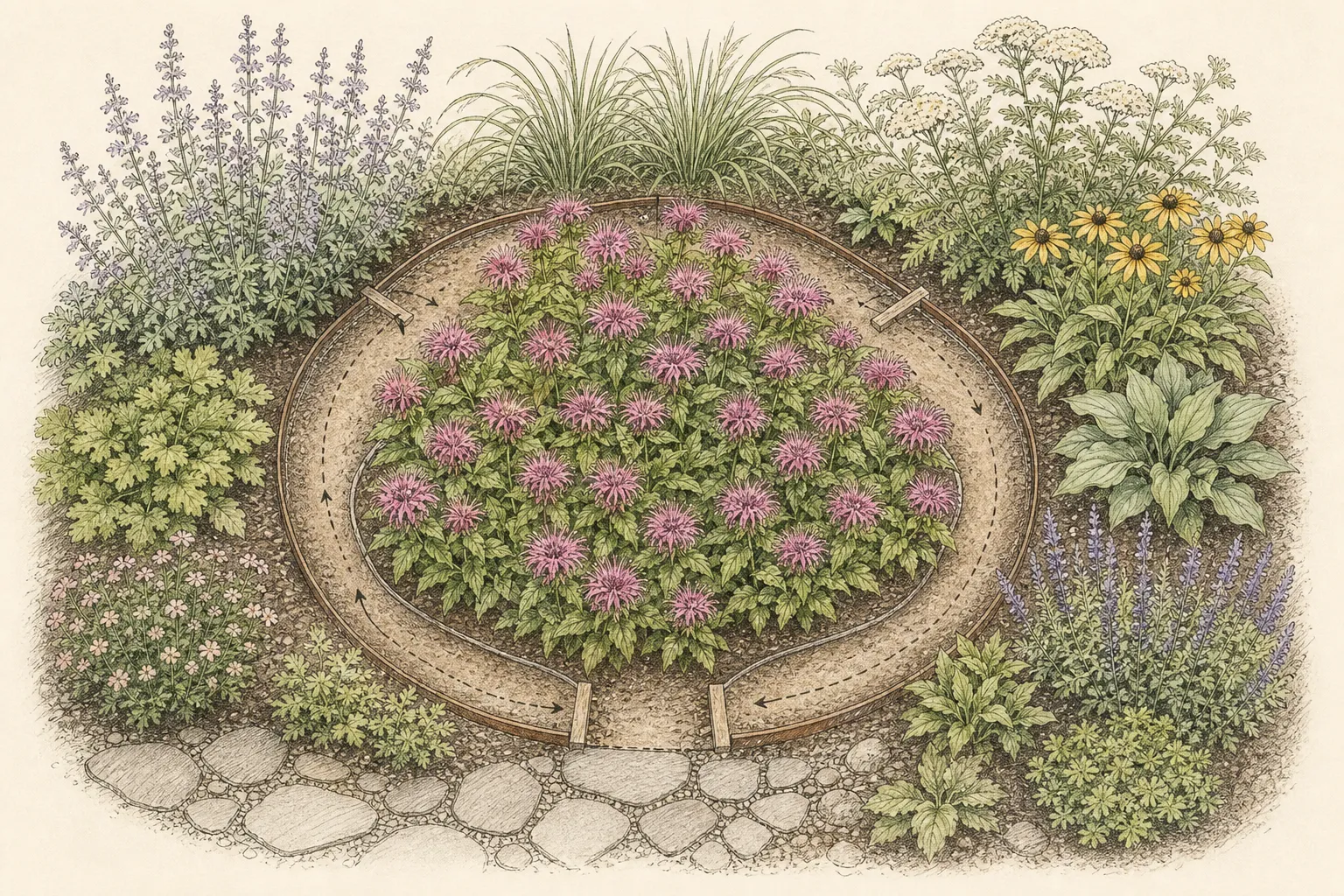
Garden study showing the placement and growth habit of Bee Balm
Sources
- Monarda didyma. NC State Extension. Source record · Accessed 2026-08-30.
- Monarda didyma. Royal Horticultural Society. Source record · Accessed 2026-08-30.
- Monarda didyma L.. Royal Botanic Gardens, Kew. Source record · Accessed 2026-08-30.