Koreanspice Viburnum
Viburnum carlesii
A species-focused guide to Koreanspice viburnum's fragrant spring flowers, rounded scale, old-wood pruning and possible graft-rootstock suckers.
Published Last updated
At a glance
- Light
- Full sun to partial shade
- Water
- Moderate, especially during establishment
- Soil
- Moist, well-drained, slightly acidic to neutral soil
- Hardiness
- Zones 4–7
- Bloom
- Spring
- Height
- 4–6 ft · 1.2–1.8 m
In this guide
Overview
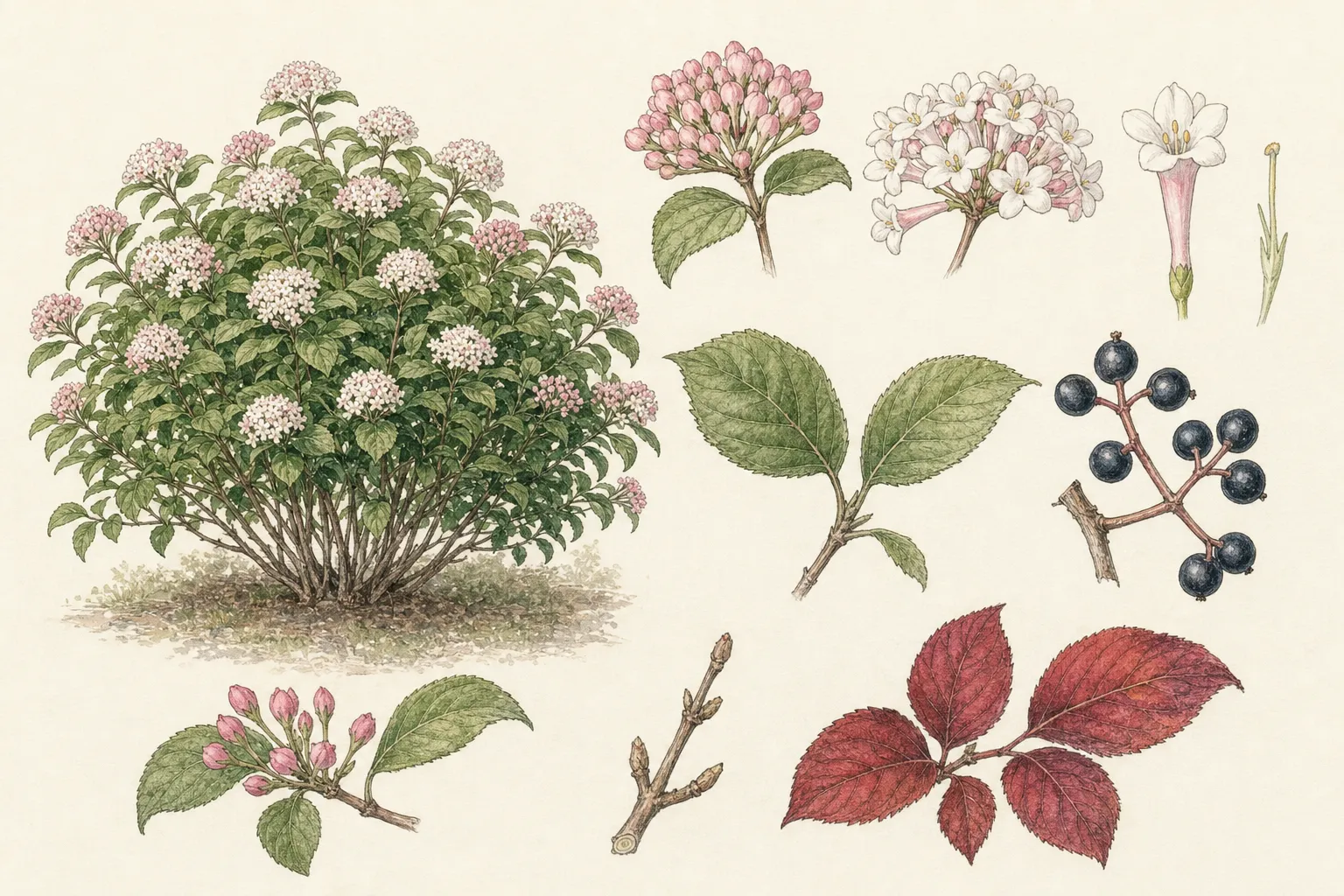
Koreanspice viburnum is a slow-growing, rounded deciduous shrub. Pink to red buds open into intensely fragrant, white hemispherical clusters in mid- to late spring. Opposite, softly hairy, serrated leaves and fissured gray older stems help confirm the identity after the flowers fade.
A mature species plant is usually 4–6 feet tall and wide. Place it near an entrance, terrace, or frequently used path where the fragrance can be noticed, but leave the whole rounded crown free of a doorway or narrow foundation gap.
Full sun to partial shade and moist, well-drained soil support flowering. North Carolina Extension accepts clay, loam, or sand and acid to neutral conditions. Newly planted viburnums need attention during dry periods, while established plants should not sit in a chronically wet pocket.
This species flowers on old wood, so a winter or early-spring size cut removes the buds already in place. The RHS lists Viburnum carlesii among viburnums needing little or no pruning; when a correction is necessary, make it immediately after flowering.
Red drupes may mature bluish-black and attract birds, but fruit set is variable and should not be promised as the main display. The spring flowers and rounded framework are more dependable design features; fall leaf color can also vary.
Some nursery plants are grafted, and the rootstock can sucker. A shoot with different leaves or unusual vigor arising below the graft should be traced to its origin and removed there before it takes over the named plant.
- Family
- Viburnaceae
- Range
- Southeastern China, Korea, and western and southern Japan
- Soil pH
- 5.5–7
- Spread
- 4–6 ft · 1.2–1.8 m
Planting & careHow to grow koreanspice viburnum
Kew records Viburnum carlesii in southeastern China, Korea, and western and southern Japan, and the species is cultivated elsewhere. North Carolina Extension lists USDA Zones 4–7. Grafted nursery plants may send up shoots from the rootstock, so keep the label and distinguish those shoots from the rounded species crown.
- 1Reserve a rounded footprint
Allow about 4–6 feet in both height and width, with extra access on the side from which the spring fragrance and flower clusters will be viewed.
- 2Choose flowering light
Use full sun to partial shade and moist, well-drained soil; avoid a deep-shade corner or a low spot that stays saturated after the rest of the bed drains.
- 3Keep the shrub at grade
Set the top of the root ball level with the surrounding bed, loosen circling roots, and keep backfill and mulch below the first woody stems and any visible graft.
- 4Establish without saturation
Water the root ball and surrounding soil after planting, then recheck moisture during dry weather through the first year or two instead of keeping the site continuously wet.
- 5Mulch outside the stem base
Apply a shallow organic mulch across the rooting area and leave a clear circle around the trunk cluster so the graft, basal shoots, and bark remain inspectable.
- 6Check the label and suckers
Retain the species or cultivar label and compare new basal shoots with the crown; remove rootstock growth at its point of origin rather than clipping it above soil.
Pruning koreanspice viburnum
Koreanspice viburnum needs little or no routine pruning. Remove dead wood when it is clear, and make any size or shape correction immediately after the spring flowers finish because the next buds form on old wood. Cut a rootstock sucker at its origin below the graft; do not shear the rounded crown or shorten every branch annually.
Seasonal care
Spring
Watch pink buds open to fragrant white clusters, keep the root zone evenly moist during dry spells, and postpone any live-wood shaping until flowering is complete.
Summer
Finish necessary pruning just after bloom, then let new shoots mature. Check soft growth for viburnum aphids and inspect expanding leaf spots before deciding whether action is warranted.
Autumn
Observe any red-to-bluish-black fruit and variable fall color, remove confirmed diseased fallen leaves, and water recently planted shrubs if autumn is dry.
Winter
Leave the dormant framework intact because spring flower buds are already on the old wood. Trace and mark any rootstock sucker for removal without disturbing the wanted crown.
Safety and garden spread
Common problems
Missing spring flowers
- Look for
- A healthy leafy shrub with few fragrant clusters after winter or early-spring pruning, or bloom limited to the brighter side.
- Action
- Leave old wood uncut through the next bud cycle, improve light if the site is heavily shaded, and avoid forcing soft growth with unnecessary fertilizer.
Viburnum aphids
- Look for
- Clusters of soft-bodied insects, sticky residue, and curled or distorted young leaves during active growth.
- Action
- Confirm the insect on new shoots, conserve beneficial insects, and use only a locally recommended control when distortion is substantial.
Fungal leaf spot
- Look for
- Discrete expanding spots and premature leaf drop rather than the shrub's ordinary late-season color change.
- Action
- Collect heavily affected fallen leaves, keep irrigation off the foliage, and obtain a local diagnosis before using a fungicide.
Rootstock takeover
- Look for
- A vigorous shoot from below the graft with leaves, growth rate, or habit that differs from the labeled Viburnum carlesii crown.
- Action
- Expose the shoot's origin and remove it cleanly at the rootstock. Repeatedly clipping only the visible top encourages it to return.
Plant details
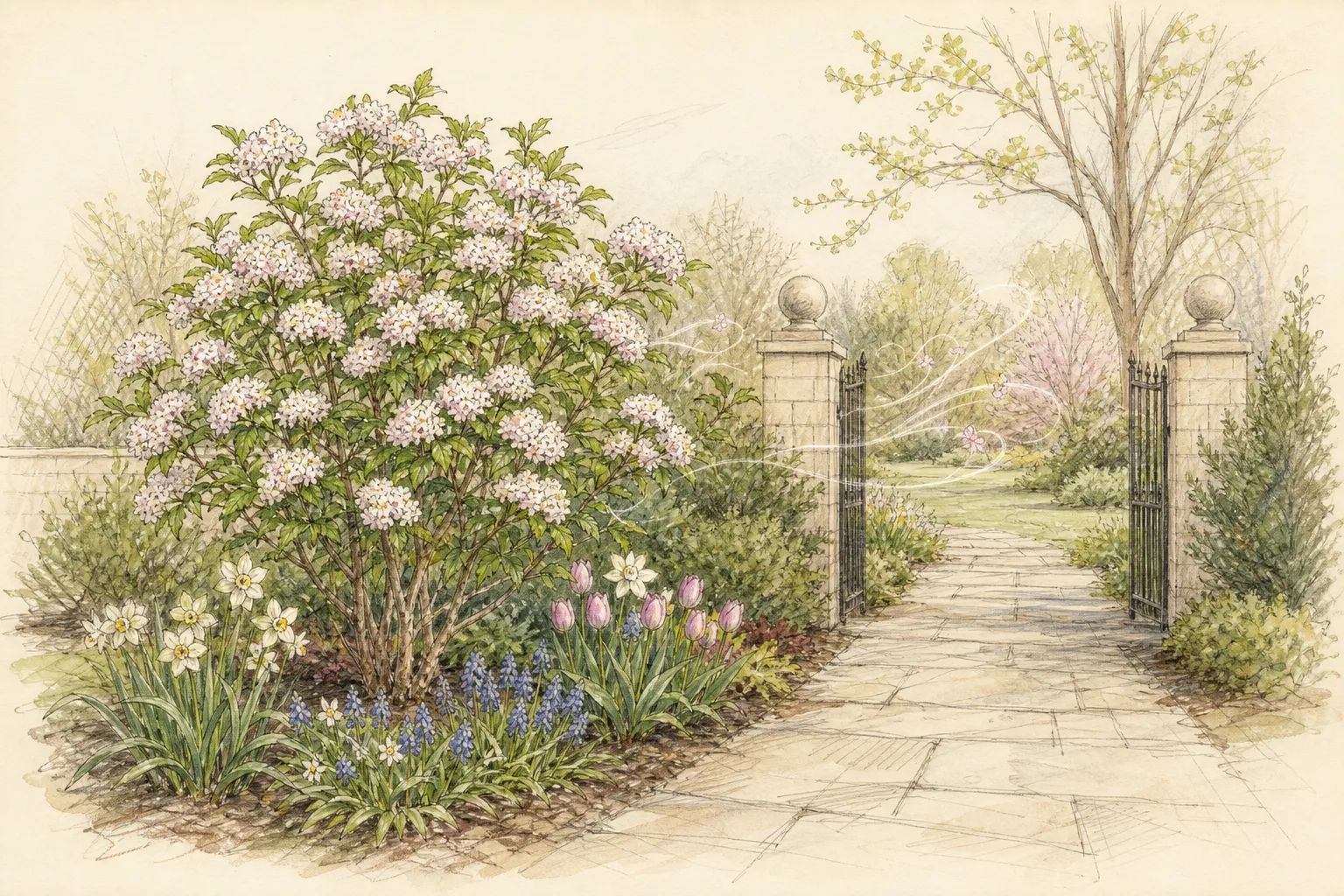
Garden placement study showing mature Koreanspice Viburnum in an ornamental planting
Related reading
Sources
- Viburnum carlesii. North Carolina Extension Gardener Plant Toolbox. Source record · Accessed 2026-08-20.
- Viburnum carlesii [1] | Koreanspice viburnum. Royal Horticultural Society. Source record · Accessed 2026-08-20.
- Viburnum carlesii Hemsl.. Royal Botanic Gardens, Kew. Source record · Accessed 2026-08-20.