Winterberry Holly
Ilex verticillata
Use the deciduous native holly Ilex verticillata for brilliant winter fruit where moisture, space, and a compatible male pollinator can be planned together.
Published Last updated
At a glance
- Light
- Full sun to partial shade; stronger sun generally supports denser flowering and fruiting where soil moisture remains adequate
- Water
- Medium to wet; avoid drought-prone sites and maintain even moisture during establishment
- Soil
- Organically rich, acidic to neutral soil that remains moist; tolerates seasonal wetness better than dry alkaline ground
- Hardiness
- Zones 3–9
- Bloom
- Late spring to early summer; fruit colors in late summer and persists into winter when not taken by birds
- Height
- 6–12 ft · 1.8–3.7 m
In this guide
Overview
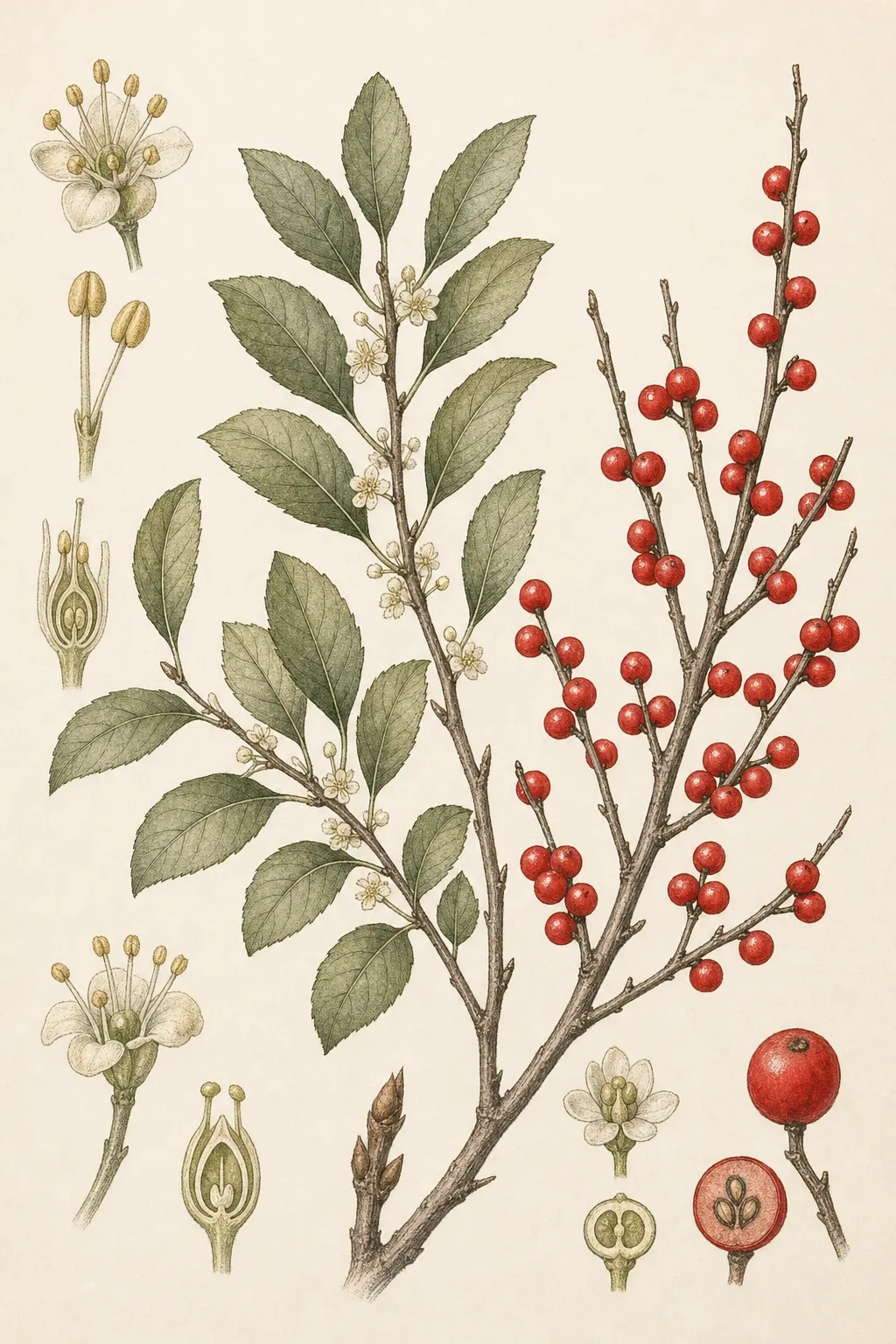
Winterberry is a deciduous holly valued less for summer foliage than for dense red, orange, or gold fruit displayed after its leaves fall. The open winter framework can be vivid against dark evergreen mass, pale grass, snow, or a quiet wall. It belongs where its broad, suckering shrub habit can be read rather than forced into a narrow foundation slot.
Fruit planning begins at purchase. Nursery labels should identify plants as male or female and indicate compatible bloom timing; a male cultivar can pollinate several nearby females only when flowering overlaps. A female plant without appropriate pollen may grow well and flower yet carry little or no fruit, so the pollinator is part of the design rather than a later correction.
The species is adapted to moist ground and can suit rain gardens, low borders, pond edges, and other sites that do not dry hard. It can also grow in ordinary garden soil when moisture is reliable and drainage does not leave the crown chronically stagnant. Dry alkaline foundation beds are a poor default even if supplemental irrigation is promised.
Choose a cultivar by mature outline, fruit color, bloom group, and local performance, not by the size of the nursery pot. Preserve space for suckers or remove them deliberately. Where a smaller garden cannot accommodate the species, choose a genuinely compact cultivar and verify both its female fruiting partner and compatible male rather than planning annual shearing.
- Family
- Aquifoliaceae
- Range
- Eastern and central North America, including wet woods, swamps, pond margins, and stream edges
- Soil pH
- 4.5–7
- Spread
- 6–12 ft · 1.8–3.7 m
Planting & careHow to grow winterberry holly
Hardiness and mature size vary by cultivar and climate. Confirm local invasive guidance, nursery sex, bloom group, and exact cultivar dimensions. Plants are dioecious, so fruiting females need pollen from a compatible male that flowers at the same time and is within effective pollinating distance.
- 1Confirm the complete pollination group
Select named female plants and at least one male whose documented flowering period overlaps. Record cultivar names permanently; a generic “male winterberry” label does not establish compatibility.
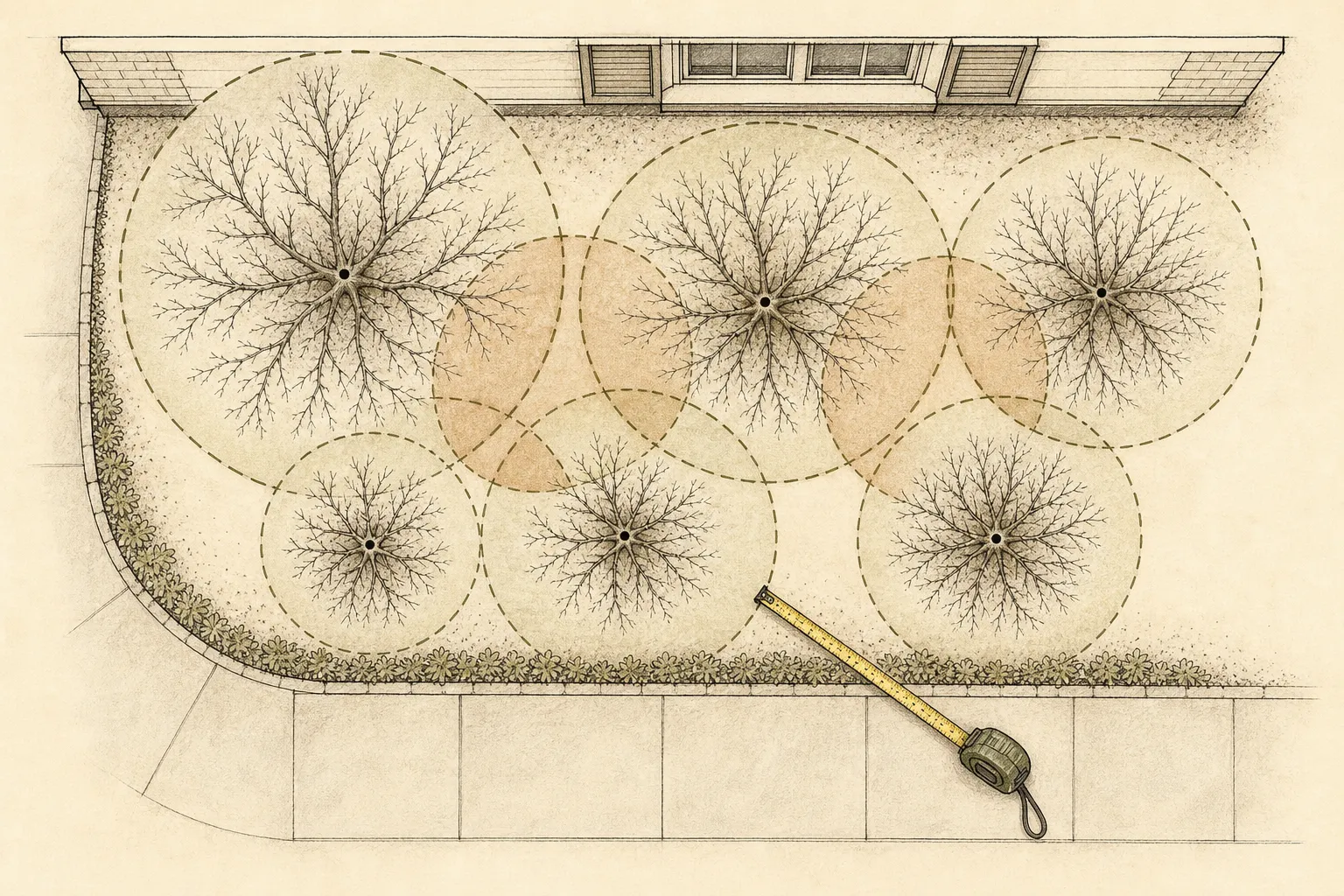
- 2Map mature crowns and moisture
Draw each shrub at credible mature spread, check where rain collects and summer soil dries, and keep roots, walls, paths, drains, and neighboring crowns clear.
- 3Plant at the nursery grade
Set the root flare and upper root system at the correct level, spread or correct circling roots where current woody-plant guidance calls for it, backfill with site soil, and water the complete root zone.
- 4Mulch broadly but keep stems clear
Use a shallow organic layer to moderate moisture while leaving the crown and stems exposed. Water through establishment and observe both the driest and wettest part of the bed.
Pruning winterberry holly
Prune minimally while the shrub establishes. Winterberry flowers on current-season growth; when shaping is needed, NC State and Missouri Botanical Garden place that work in early spring just before new growth begins. Remove dead or damaged wood first, then thin selected old or congested stems at the base and control unwanted suckers with clean targeted cuts. Once leafy shoots are extending, shearing or shortening them can remove the flowers or developing fruit carried by those shoots. Retain the natural rounded outline and avoid making routine hard reduction a substitute for choosing a cultivar that fits.
Seasonal care
Spring
Before new growth begins, check winter damage and make only necessary selective or sucker-removal cuts. Then preserve the current-season shoots that will flower, confirm male and female bloom overlap, refresh shallow mulch, and water before drought develops.
Summer
Keep newly planted shrubs evenly moist, inspect fruit set after flowering, protect the root zone from cultivation, and record where crowns or suckers exceed the plan.
Autumn
Observe fruit color and retention, water before freeze during dry weather, clear only diseased debris, and verify that paths and drains remain open at full spread.
Winter
Read fruit against the background, avoid unnecessary cutting for decoration, inspect snow loading and animal damage, and mark any renewal work for the correct season.
Safety and garden spread
Common problems
Little or no fruit
- Look for
- Healthy female flowers followed by sparse set, no nearby male, uncertain cultivar identity, or male and female bloom at different times.
- Action
- Verify plant sex and bloom group from reliable nursery records, add or replace the compatible pollinator if needed, and also assess light, pruning, and weather during flowering.
Leaf yellowing and weak growth
- Look for
- Dry soil, alkaline conditions, damaged roots, buried crown, chronic saturation without aeration, or competition from larger woody plants.
- Action
- Diagnose moisture and soil conditions before fertilizing. Correct grade, mulch contact, irrigation, drainage, and competition; use a laboratory soil test where pH or nutrient availability is uncertain.
Shrub exceeds its place
- Look for
- Crowns entering paths or neighboring shrubs, repeated exterior shearing, and suckers appearing beyond the intended group.
- Action
- Selectively remove poorly placed older stems or suckers, preserve the natural outline, and transplant or replace a fundamentally oversized cultivar while it can still be moved safely.
Plant details
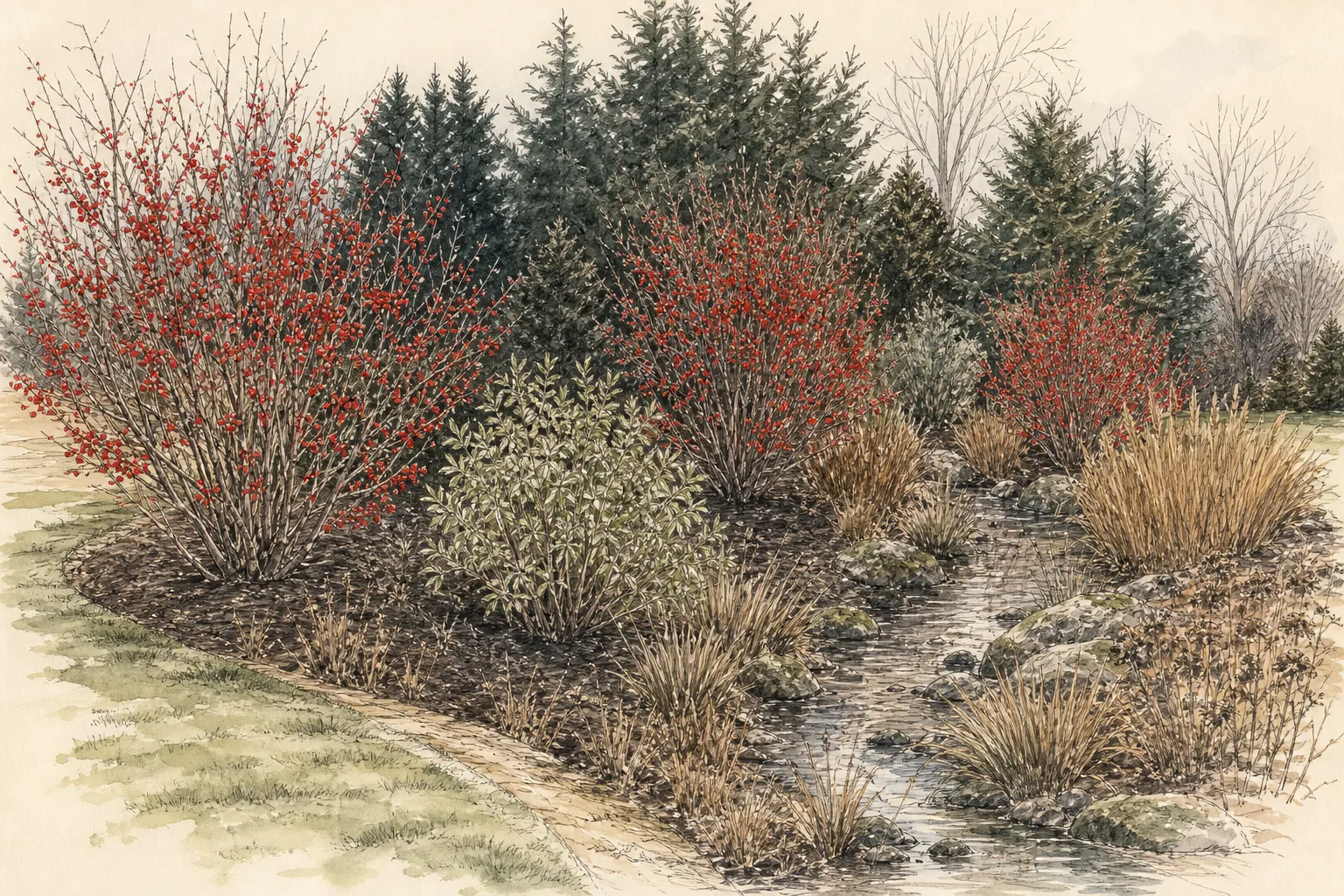
Winterberry hollies carrying red fruit in a moist ornamental swale with evergreen background and open maintenance access
Related reading
Sources
- Winterberry Holly. NC State Extension Gardener Plant Toolbox. Source record · Accessed 2026-08-30.
- Ilex verticillata. Missouri Botanical Garden Plant Finder. Source record · Accessed 2026-08-30.
- Ilex verticillata. Royal Horticultural Society. Source record · Accessed 2026-08-30.
- Ilex verticillata (L.) A.Gray. Royal Botanic Gardens, Kew. Source record · Accessed 2026-08-30.
- Holly berries: A beautiful decoration but a poisonous snack. National Capital Poison Center. Source record · Accessed 2026-08-30.