Garden Peony
Paeonia lactiflora
A field guide to Paeonia lactiflora and its named cultivars: identify the herbaceous crown, site it for cold dormancy and drainage, and preserve shallow eyes and healthy foliage.
Published Last updated
At a glance
- Light
- Full sun to light afternoon shade
- Water
- Moderate and even while actively growing; never persistently waterlogged
- Soil
- Deep, fertile, moisture-retentive but well-drained soil with an undisturbed crown
- Hardiness
- Zones 3–8
- Bloom
- Mid- to late spring into early summer, varying by cultivar and region
- Height
- 1.5–3 ft · 45–90 cm
In this guide
Overview
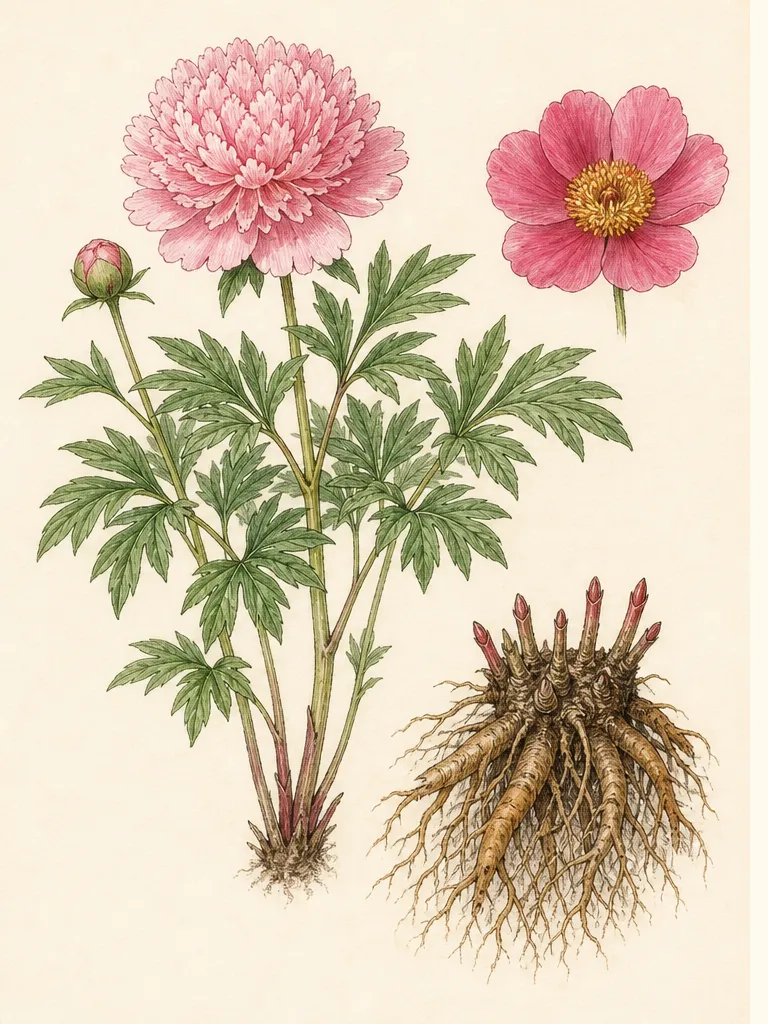
Garden peony is a winter-dormant herbaceous perennial that rises each spring from a persistent crown. Reddish shoots expand into a rounded clump of thick green stems and divided compound leaves. Rounded flower buds develop at the ends of stems, then open into single, semi-double, Japanese, anemone or fully double forms according to cultivar. After flowering, separate follicles may form where seed is retained, while the leafy mound continues working until frost.
This profile is centered on Paeonia lactiflora and the large garden group selected from it. A Lactiflora cultivar has P. lactiflora as its species identity; an herbaceous hybrid includes another peony species, and an intersectional peony combines herbaceous and woody ancestry. All may die back substantially in winter, but their stem character, flower timing, size and care details can differ. Preserve the full nursery name rather than reducing every herbaceous peony to P. lactiflora.
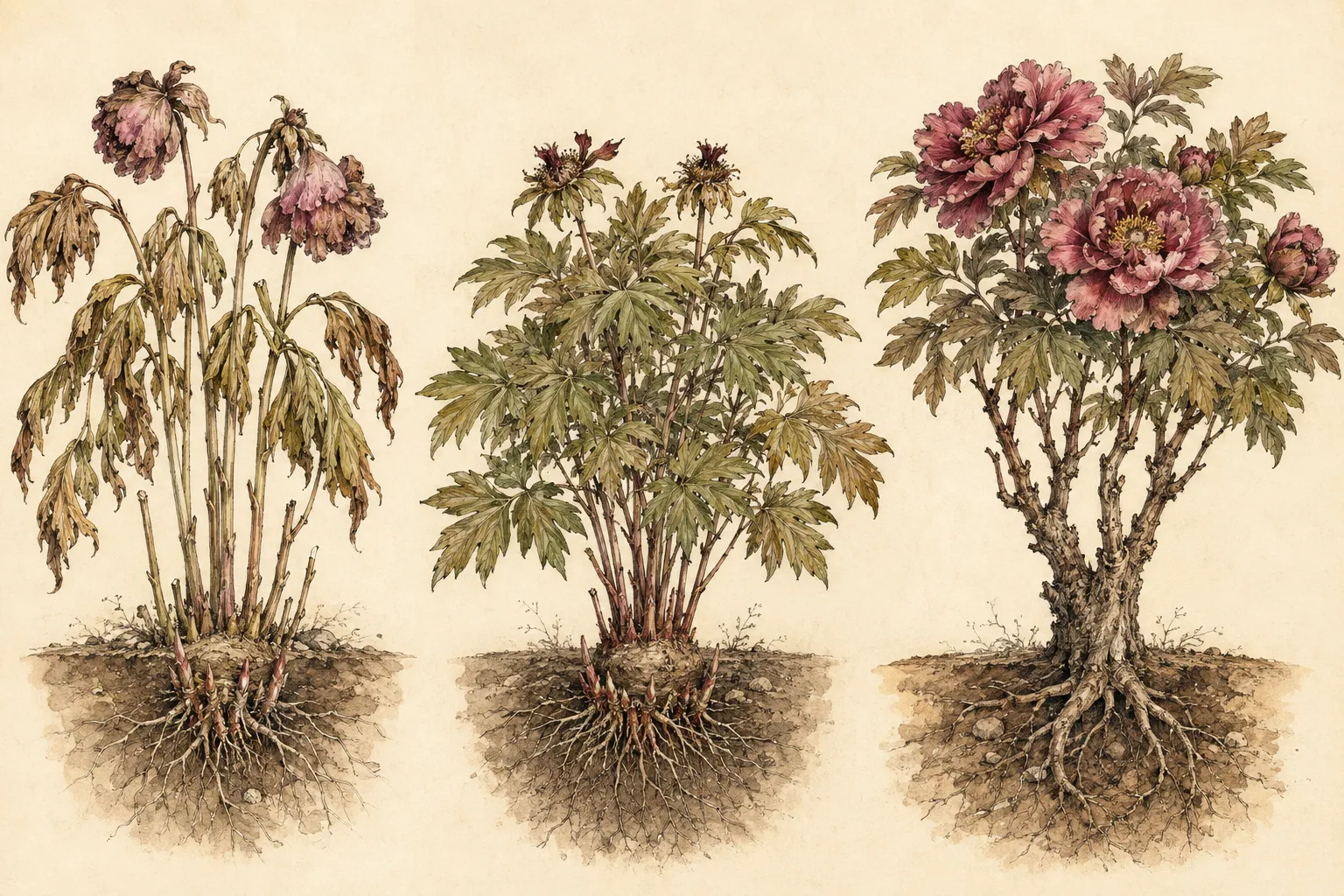
Distinguish garden peony from a woody or tree peony before pruning. A garden peony carries soft seasonal stems that die to the crown. Woody peonies retain a permanent above-ground branch framework with pointed buds, and intersectional cultivars can leave short woody stem bases. Cutting every peony to soil level because the leaves look similar can remove living framework from the wrong type.
Flower form is a cultivar trait, not a measure of health. Single flowers expose stamens; double cultivars transform many stamens into petal-like structures and can become heavy with rain. Some named cultivars are fragrant, some have stronger stems, and some are selected for lower chilling needs. The broad species dimensions and late-spring season are planning baselines only. Use the cultivar description for final spacing and support.
Site the crown where it can remain for years. Full sun supports flowering in cool regions, while light afternoon shade can moderate heat in warmer parts of the range. Deep shade, aggressive tree roots, persistent wetness and a confined position beside a wall work against bloom and air movement. A generous border position lets the clump mature without repeated relocation or size control.
The eyes must remain shallow after the soil settles. Purdue guidance keeps the upper buds no more than about two inches below the finished surface in its Indiana context, while warm-region guidance may place them shallower. Treat local Extension depth as controlling. Soil added later, deep mulch or a sinking crown can change an initially correct planting and become a hidden reason for weak flowering.
Summer foliage is part of the following display. Leave healthy leaves after bloom so the crown can continue photosynthesis and develop future buds. Cut flower stems conservatively, deadhead where seed is not wanted and retain as much foliage as practical. Remove the entire top only after frost or natural dormancy, separating diseased debris from sound material according to local disposal guidance.
- Family
- Paeoniaceae
- Range
- Southeastern Siberia to northern and eastern China
- Soil pH
- 6–7
- Spread
- 1.5–3 ft · 45–90 cm
Planting & careHow to grow garden peony
Zones 3–8 describe a broad cold-hardiness range, not equal flowering performance. Garden peonies generally perform best where winter provides a dependable cold dormancy; hot parts of Zone 8 may need a locally proven low-chill cultivar, shallow planting and afternoon protection. The species Paeonia lactiflora, named Lactiflora cultivars, interspecific herbaceous hybrids and intersectional Itoh peonies are not interchangeable labels. Mature height, fragrance, flower form, stem strength, bloom timing and chill response belong to the named cultivar record.
- 1Confirm the exact peony group
Record the botanical name, cultivar, herbaceous or intersectional ancestry, mature size, bloom season, chill suitability and stem strength. Do not assign P. lactiflora care details to a woody peony merely because both are sold as peonies.
- 2Choose a long-term open site
Provide full sun in cooler regions or useful morning sun with light afternoon protection where summers are hot. Keep the crown away from persistent saturation, dense tree roots, solid-wall confinement and a path that would require repeated clipping.
- 3Prepare a broad settled root area
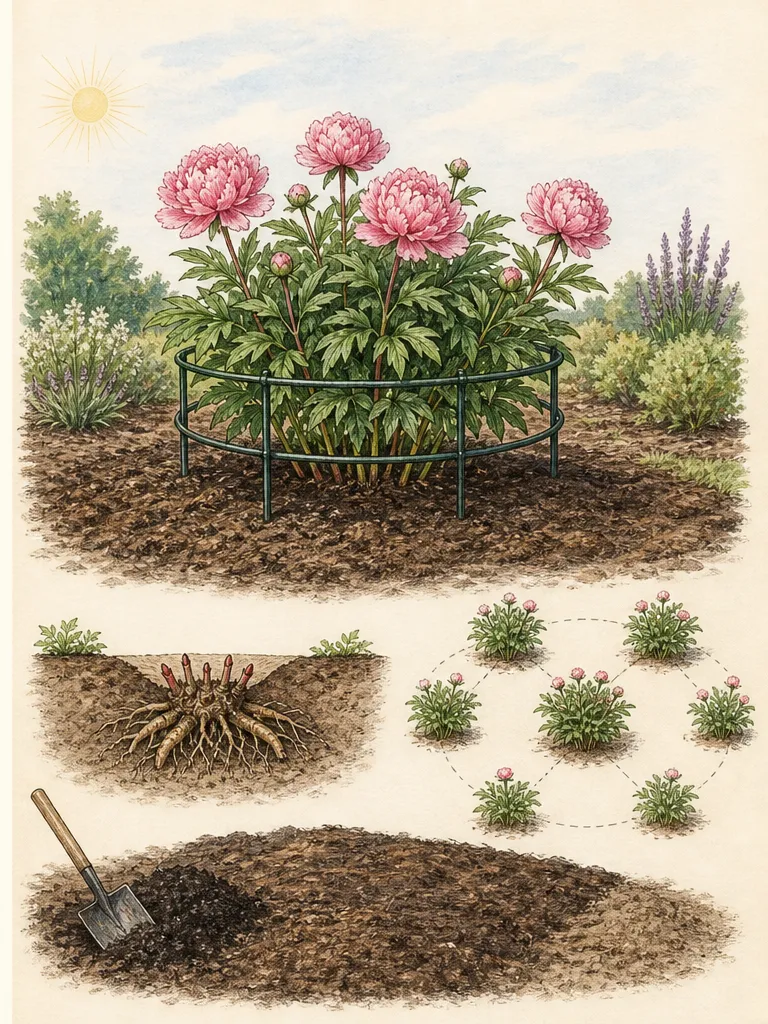
Loosen the planting area deeply enough for the fleshy roots, incorporate suitable organic matter across the bed and correct drainage before planting. Use a soil test for pH or nutrient decisions and allow freshly prepared soil to settle so the crown will not sink later.
- 4Set sound roots and shallow eyes
Spread firm healthy roots without forcing sharp bends and orient the eyes upward. Follow local depth guidance; in the Purdue reference the upper eyes remain no more than about two inches below finished soil, with warmer regions often requiring a shallower position.
- 5Backfill without burying the crown
Work soil around the roots, firm gently and water to settle contact. Recheck the eye depth after watering. Keep mulch away from the crown and mark the location so later top-dressing, cultivation or spring cleanup does not add an unnoticed layer over the buds.
- 6Install support before stems open
Where the named cultivar carries large double flowers or weak stems, place a peony ring or unobtrusive grid while shoots are short. Guide stems through the support as they grow rather than forcing a rain-flattened flowering clump back through a cage.
- 7Establish with even, draining moisture
Check the planted crown and surrounding soil separately, watering when the active root zone begins to dry. Do not keep the crown saturated. Expect a moved or newly planted division to need establishment time before normal flowering and avoid repeated lifting while it settles.
Pruning garden peony
Treat pruning as seasonal sanitation and flower-stem management, not shrub shaping. In spring, protect emerging red shoots and remove only tissue that is clearly dead or rotted. Install support before the stems lean. During bloom, cut flowers with short stems and retain substantial foliage; for routine garden deadheading, remove the spent flower and seed structure without stripping the leafy stem. Leave sound foliage through summer even after the display ends. When frost or natural senescence has browned the whole top, cut the herbaceous stems close to soil level without injuring crown buds, then remove debris. Diseased leaves and stems should not remain over the crown; follow local guidance for disposal. Do not perform this ground-level cut on a woody tree peony, and verify how much stem an intersectional cultivar retains before cutting. Division is not an annual pruning operation. Lift and divide a garden peony in the locally appropriate dormant autumn window only for crowding, relocation or propagation, preserving several sound eyes and roots on each division and resetting them shallowly.
Seasonal care
Spring
Remove winter protection before shoots are trapped, expose the crown surface, set support early and watch emerging stems for sudden soft collapse or dark lesions. Check drainage and late-freeze exposure, but do not mound soil over eyes or feed by guess.
Summer
Deadhead unless seed is wanted, retain healthy foliage, water during meaningful dry periods and keep the crown open to air. After heavy rain, reset support rather than cutting sound flattened stems, and remove confirmed diseased tissue with clean tools.
Autumn
Plant or divide dormant herbaceous crowns in the locally recommended window, rechecking shallow eye depth after settling. Once the top is fully dormant, cut and clear stems; separate diseased debris and preserve a visible label over the sleeping crown.
Winter
Keep standing water and heaved soil away from the crown. Use temporary first-winter protection only where regional guidance calls for it, avoid insulating warm-climate crowns with deep mulch and inspect the marker before nearby bed work begins.
Safety and garden spread
Common problems
Few or no flowers
- Look for
- Eyes buried beneath added soil or mulch, deep shade, a recently moved division, crowding, late-freeze injury or a cultivar poorly matched to local winter chill.
- Action
- Recover the cultivar and planting record, expose the crown carefully, measure depth from finished grade and correct light or drainage before adding fertilizer. Allow establishment time and move only in the proper dormant season when the site remains unsuitable.
Botrytis blight
- Look for
- Young shoots that soften or collapse, water-soaked stem areas, blackened buds or gray growth during a damp spring.
- Action
- Remove affected tissue promptly in dry conditions, clear debris, improve spacing and avoid unnecessary foliage wetting. Seek local diagnosis before treatment because crown rot, frost and other disorders can also collapse shoots.
Powdery mildew
- Look for
- A white powdery coating that develops on leaves, often later in the season and more conspicuously on susceptible cultivars in still or shaded sites.
- Action
- Preserve useful foliage when the issue is cosmetic, improve light and air movement, avoid crowding and remove the dormant top at season's end. Select a less susceptible named cultivar when the pattern returns severely.
Leaf blotch or spotting
- Look for
- Purple, red or brown bounded lesions on leaves or stems rather than removable surface residue or a uniform dry margin.
- Action
- Photograph the pattern, keep foliage dry during irrigation, remove badly affected tissue and clear the dormant top. Use a diagnostic service when spots expand quickly, deform shoots or cannot be distinguished from another disease.
Crown or root rot
- Look for
- Persistent wilt over wet soil, soft dark crown tissue, decaying roots, a foul odor or broad decline in a poorly drained position.
- Action
- Stop automatic watering, verify drainage and obtain a local diagnosis before moving contaminated material. Remove failed plants and affected soil only as advised, then correct the site before another peony is considered.
Flowers lodge after rain
- Look for
- Sound stems bending under large double flowers while the crown remains firm and leaves otherwise look healthy.
- Action
- Install support early the following spring, guide stems as they lengthen and choose stronger-stemmed or simpler-flowered cultivars for exposed sites. Do not confuse mechanical lodging with the softened stem base of disease.
Related reading
Sources
- Paeonia – Herbaceous Types. North Carolina Extension Gardener Plant Toolbox. Source record · Accessed 2026-08-19.
- Paeonia lactiflora Pall.. Royal Botanic Gardens, Kew. Source record · Accessed 2026-08-30.
- Paeonia lactiflora. Missouri Botanical Garden. Source record · Accessed 2026-08-19.
- Growing Peonies in the Indiana Landscape. Purdue University Extension. Source record · Accessed 2026-08-19.
- Toxic and Non-toxic Plants: Peony. ASPCA Animal Poison Control Center. Source record · Accessed 2026-08-19.