Grow · herbaceous peony autumn cutback
Cut Back Herbaceous Peonies in Autumn Without Damaging Next Year's Buds
Wait for herbaceous peony foliage to finish its season, distinguish it from tree peony wood, make a clean autumn cut, and remove disease-prone debris.
Published Last updated
In this guide
- Start with the plant's type, not the calendar
- Confirm which peony you have before cutting
- Make the autumn cut after the plant has finished its work
- Separate routine dieback from a disease response
- Prepare a clean, low-risk work session
- Remove stems without scraping the crown
- Move foliage away and keep mulch off the eyes
- Check the result in spring, not by fall appearance
- Steps
Start with the plant's type, not the calendar
For an established herbaceous peony, the right autumn cut is simple: let the foliage finish its season, then cut the dead stems close to the soil line and remove the debris from around the crown. The timing matters more than the force of the cut. Green leaves are still making and moving reserves, while a collapsed, brown top has finished the job that matters for next spring. The crown should be visible when you are done, but the eyes should remain undisturbed below the soil surface.
This is a late-season reset for herbaceous peonies such as common garden peonies and many fern-leaf types. It is not a universal instruction for every plant sold as a peony. Tree peonies are woody shrubs with stems that survive winter, and an intersectional or Itoh peony needs its cultivar identity checked before you treat it like a fully herbaceous clump. A tidy garden is not a reason to make a cut the plant's growth habit does not support.
Use September 20 as a planning checkpoint in a cool-temperate Northern Hemisphere garden, not as a compulsory deadline. In many gardens the foliage will still be green then. Iowa State University Extension and Outreach recommends waiting until a hard freeze has destroyed the foliage, while the Royal Horticultural Society describes the broader autumn dieback window. Soil, latitude, frost timing, and the named cultivar move the work. Inspect now; cut when the plant has actually crossed into dormancy.
Confirm which peony you have before cutting
A herbaceous peony makes a leafy mound from a fleshy crown and returns from buds, often called eyes, near the soil surface. Its stems soften and disappear by winter. An Itoh peony is an intersectional hybrid: it combines tree-peony ancestry with herbaceous seasonal behavior, and many selections die back to the ground while leaving a sturdier-looking crown. A tree peony is different again. Its gray or brown woody stems form the framework that carries next year's growth, so a ground-level autumn cut would remove living structure.
Read the label, nursery record, or plant map before picking up the shears. If the plant has a persistent woody trunk-like base and branches that have carried growth for more than one season, pause. Iowa State University Extension and Outreach identifies tree peonies as woody shrubs whose stems remain above ground, whereas common herbaceous peonies typically die back and Itoh peonies often follow the herbaceous pattern. When a label is missing, a conservative identification step is more useful than a fast cleanup.
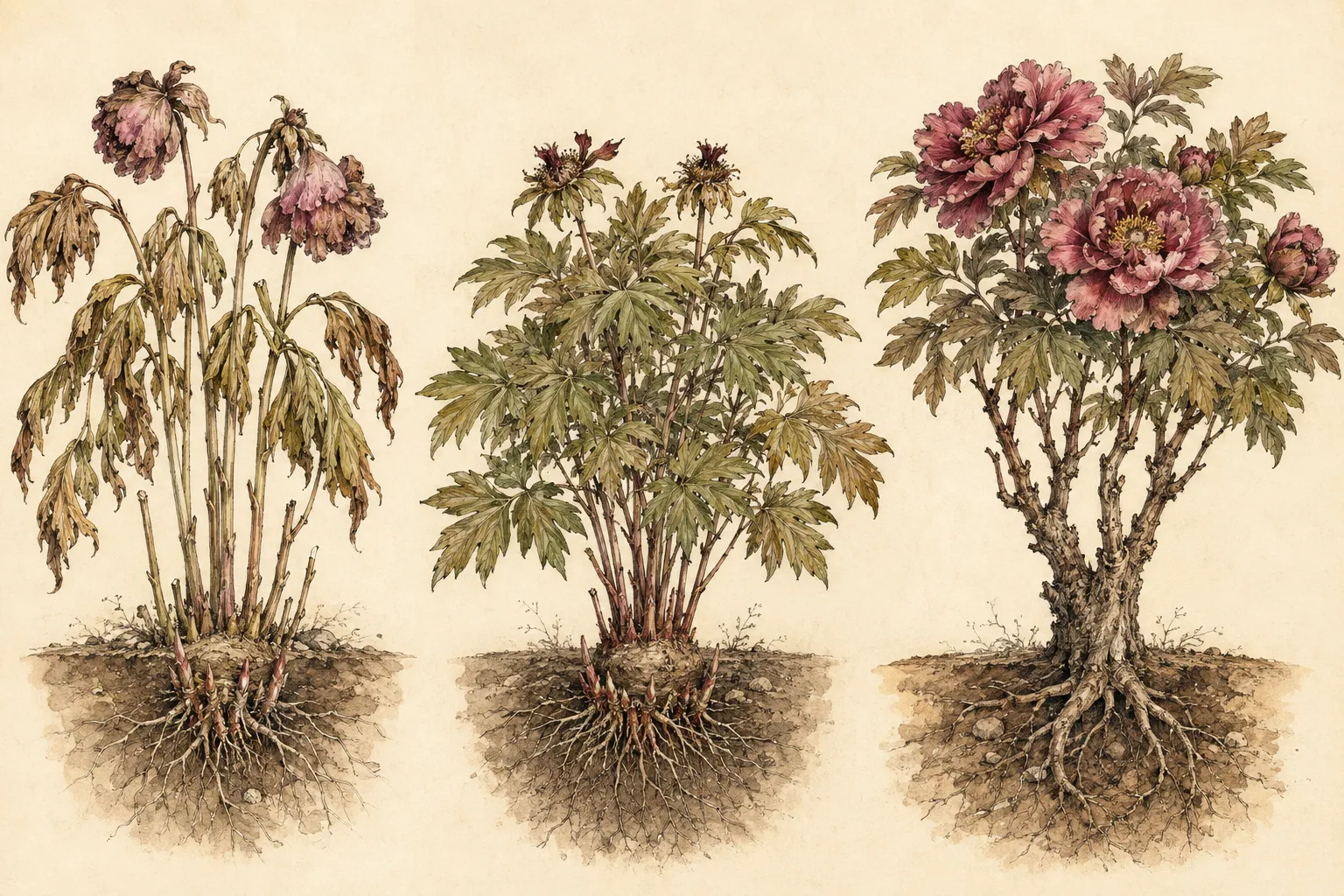
The decision is also visible in the way the plant meets the soil. Herbaceous stems emerge in a cluster from a low crown; tree peony branches rise from woody stems with bark and a permanent branching architecture. The comparison plate makes that distinction a visual job because a photograph of summer flowers can hide the most important autumn difference. If an Itoh cultivar's care sheet retains short woody bases or gives a specific cut height, keep that instruction with the plant record and follow it over a generic rule.
Make the autumn cut after the plant has finished its work
Look for a real end to the growing season: leaves have yellowed, browned, or collapsed; stems no longer hold fresh green tissue; and the plant is no longer carrying an active canopy. A few marked leaves do not mean the whole plant is dormant. If most of the foliage is still green, keep the clump intact and reassess after colder weather. Iowa State University Extension and Outreach cautions that peonies cut in August or early September may produce fewer flowers than plants cut in fall, which is why an early tidy-up can be a biological mistake even when the bed looks untidy.
A hard freeze is a useful signal in regions where it arrives before the foliage has naturally collapsed. Iowa State University Extension and Outreach gives late October or early November as a general Iowa window, but that calendar belongs to Iowa's climate. The practical translation is to wait for the event that ends active foliage in your garden. In a milder region, the same plant may reach that state later; in a colder pocket, it may happen earlier. Record the plant's actual date; a copied month from another climate can mislead.
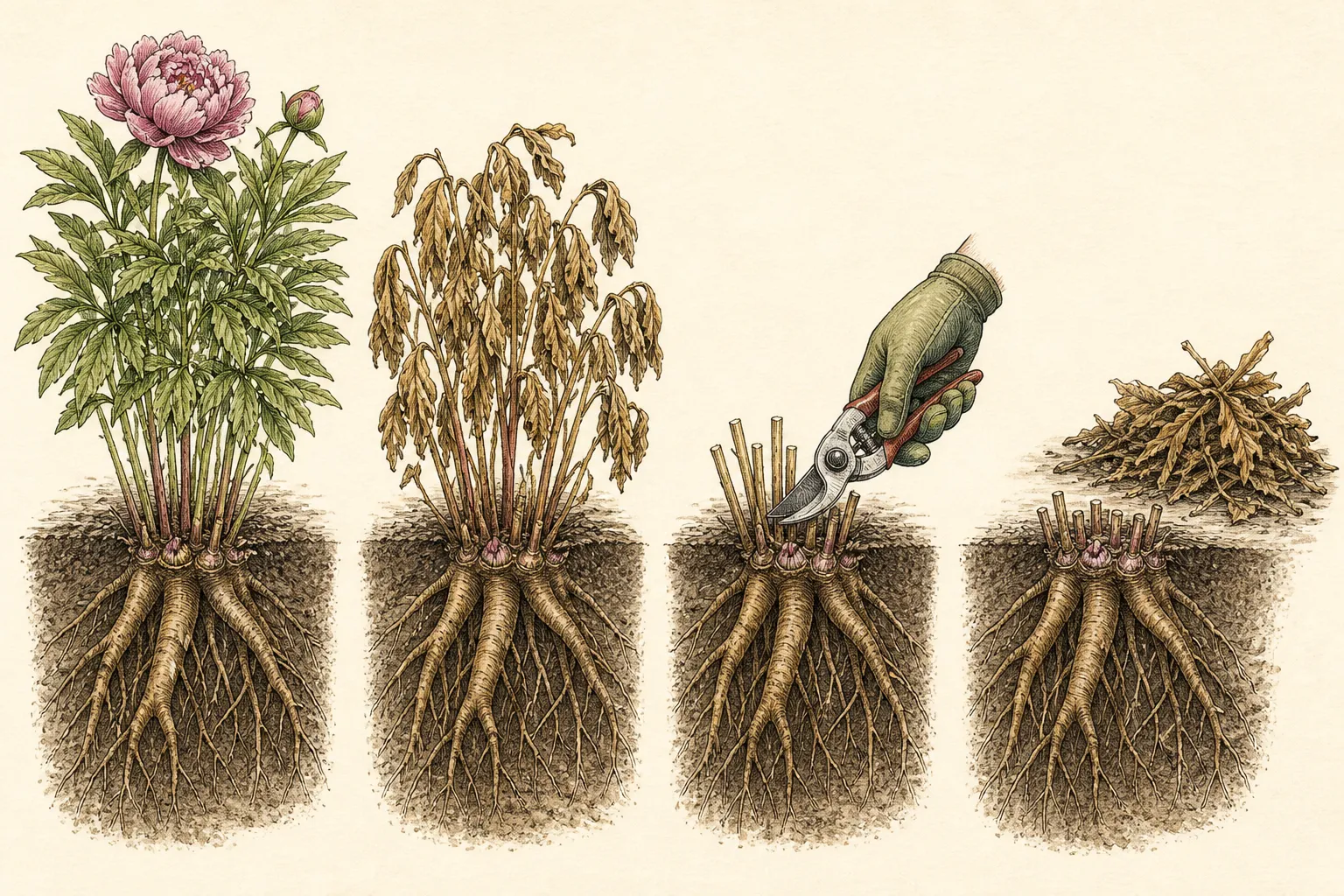
A recently transplanted or divided peony follows the same foliage rule. Let sound leaves continue until the plant reaches its normal autumn finish, keep the crown at its settled grade, and avoid lifting it again to inspect the eyes. A small plant may need more time to establish before it flowers, but early cutting does not shorten that establishment period. Mark the new location so the dormant crown is not disturbed during later autumn work.
The sequence illustration places the green plant first for a reason. A peony can look tired while its leaves are still useful, and a first autumn frost does not automatically make every leaf disposable if the plant remains active. Cut only when the whole clump has finished, or make a limited disease-directed removal of badly affected tissue while preserving as much sound green foliage as possible. The final cut is routine sanitation; premature defoliation is a different action.
Separate routine dieback from a disease response
Brown foliage after a cold night is not the same diagnosis as spreading disease. Routine senescence is fairly even across the clump and follows the season. Disease may leave irregular spots, blackened or collapsing stems, gray mold, or patches that worsen while neighboring tissue remains green. You do not need to name the disease to make the first safe decision: keep damaged material from sitting against the crown, preserve healthy leaves when they are still functioning, and record a clear photo before the evidence disappears.
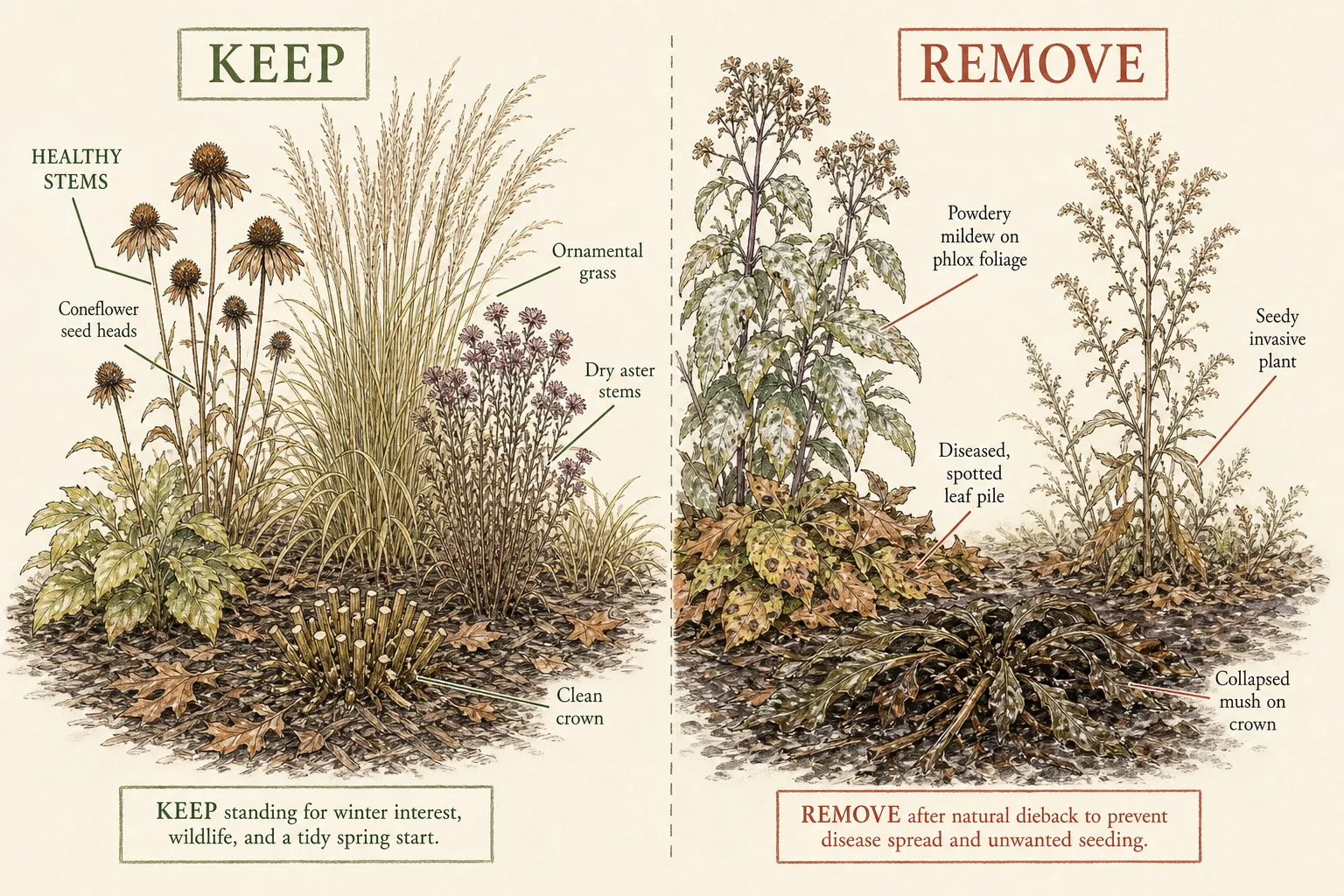
University of New Hampshire Extension lists peony among perennials that can be cut back in fall and advises prioritizing diseased top growth for removal. Its broader guidance also warns that many fungal diseases can overwinter in debris and that most backyard compost piles do not reach a reliable pathogen-killing temperature. This is a reason to separate suspect foliage from clean plant material, not a reason to strip every green leaf in August. Keep the disease response proportional to what you can actually see.
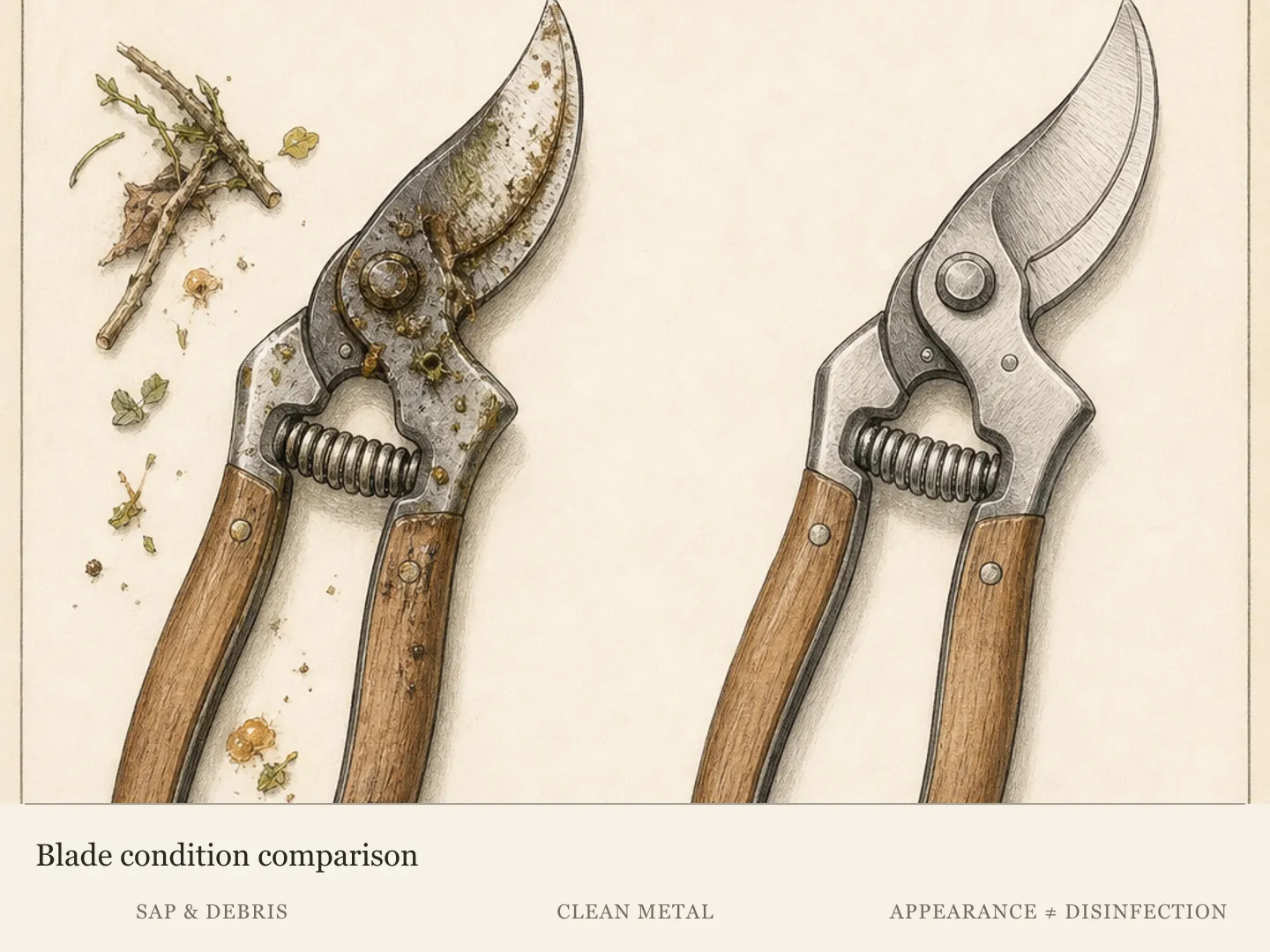
If you remove a diseased section before the final autumn cut, clean the blades before moving to another plant. The cut should remove the affected tissue without tearing into the crown or turning a small problem into a collection-wide transfer. The separate tool-cleaning guide in this site covers the distinction between ordinary soil and sap cleanup and a disease-directed disinfection step. For a recurring or severe problem, preserve photos and seek a regional diagnosis instead of treating every brown mark as proof of the same infection.
Prepare a clean, low-risk work session
Choose a dry, workable day when the bed will support your weight without smearing. Gather the pruners, gloves, a container for debris, and the label before you kneel beside the crown. Wet foliage clings to tools and soil, and a hurried session encourages the two mistakes this job is meant to avoid: pulling stems until the crown lifts and scraping around the eyes to make the surface look perfectly bare. The work is small enough to do carefully plant by plant.
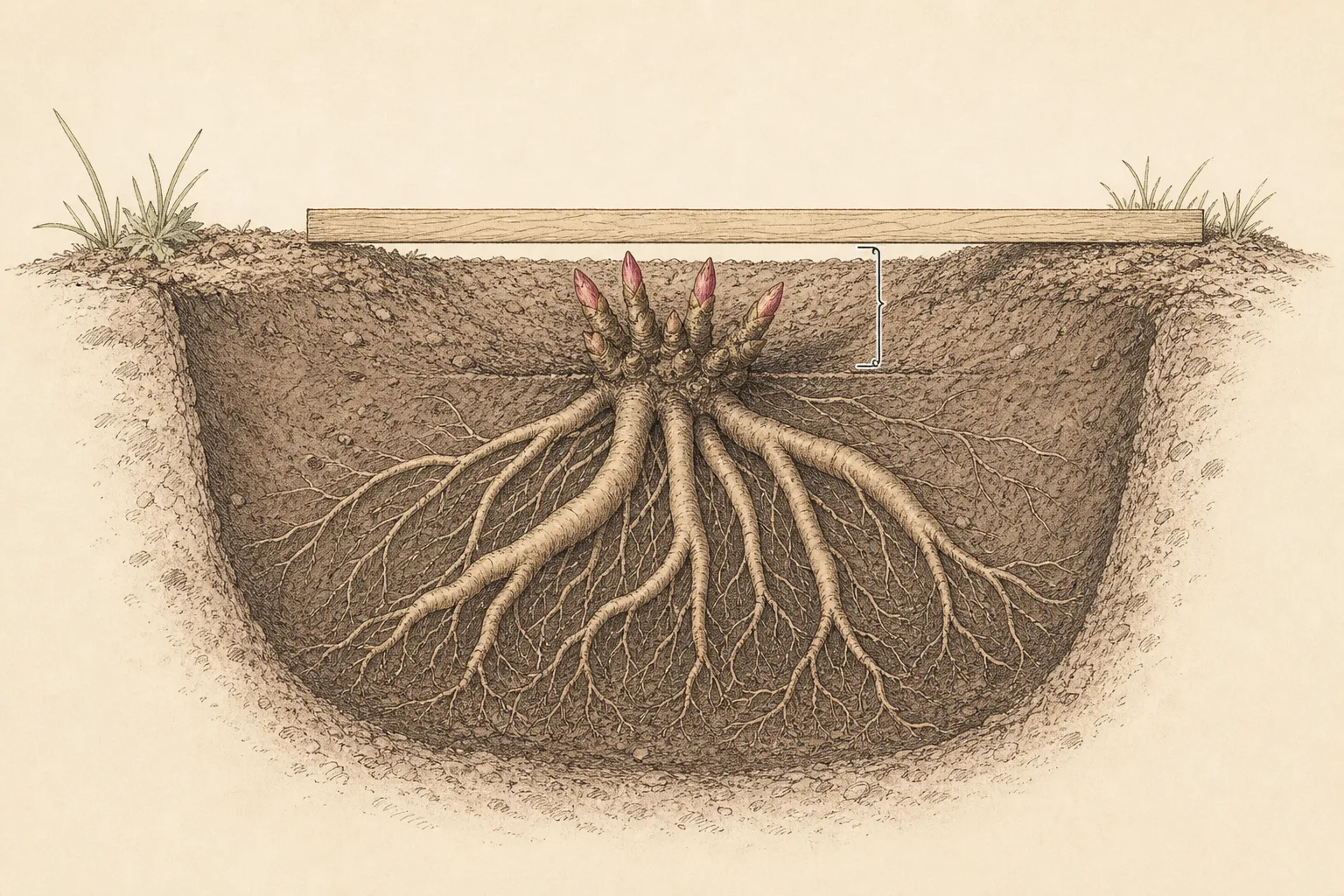
Clear only what you need to see the base. Move fallen leaves away with a gloved hand and identify the center of the clump before cutting. Herbaceous peony eyes sit close to the surface; they are not a target for a blade, rake tine, or digging fork. If a thick mulch layer hides the grade, draw it back temporarily so the cut can be made from a visible base. A visible crown and a stable soil surface are more important than a perfectly polished bed.
Stand to one side of the clump and work from the outside toward the center. For tall or tangled stems, take several manageable handfuls instead of twisting the entire top into one bundle. Keep the non-cutting hand above the blade path and use a tool that closes cleanly on the stem. A short stem remnant near the soil line is acceptable when it protects the crown from a careless cut; the goal is a clean dormant base, not a wound made for visual precision.
Remove stems without scraping the crown
Cut each dead stem near ground level, leaving a small visible stub if that gives you better control. Iowa State University Extension and Outreach says to cut the stems near ground level, while the University of Wisconsin–Madison Division of Extension describes cutting old leaves down to ground level for disease prevention. Read both recommendations as a placement boundary: remove the spent top without digging into the crown or slicing across the dormant eyes. A lower cut is not a better cut if it injures the plant's living base.
Let the blade do the work. If a stem is fibrous, use a sharp hand pruner or shears and make a decisive cut in a single controlled motion; sawing back and forth against the crown increases drag and reduces control. Work around the clump until no dead top is leaning into the center. Avoid pulling stems that resist; resistance usually means the cut is too low, the base is still attached to living tissue, or the plant is not fully dormant. In each case, pause and look again before applying more force.
The finished crown should be easy to find, with the soil surface intact and the removed material gathered away from it. It need not be excavated, washed, or rearranged. Do not divide a healthy plant simply because the crown is visible in autumn, and do not use the cleanup as an excuse to correct planting depth by digging. If the plant was recently moved, mark it and let the root system settle; the cutback operation has a narrower job than renovation.
Move foliage away and keep mulch off the eyes
Remove the cut stems and loose leaves from the crown area, especially when the plant had blotches, mildew, gray mold, or another recurring foliar problem. The University of Wisconsin–Madison Division of Extension recommends destroying old leaves instead of composting them for disease prevention, and University of New Hampshire Extension similarly cautions against placing diseased material in an ordinary backyard compost pile. Use the disposal route available in your locality for suspect material; do not mix it into a clean leaf-mold batch and forget which plant it came from.
A sound, established herbaceous peony needs a clean surface more than a deep winter blanket. The Royal Horticultural Society notes that peony foliage dies back in late autumn and advises cutting it to ground level to reduce peony-wilt risk; its growing guide also warns against covering the center of the plant because that can damage the buds. If your region uses light winter protection for newly divided plants, place it around the root zone according to local guidance and keep the crown and eyes legible.
Finish by returning the label to a position just outside the crown and recording the cut date, the plant type, and any disease pattern you observed. That note prevents a future gardener from cutting a tree peony as if it were herbaceous and gives you a comparison point next season. Keep the bed accessible for spring inspection. A few minutes of accurate record-keeping is more useful than an extra layer of mulch that hides the plant's structure.
Check the result in spring, not by fall appearance
In spring, look for normal emergence before deciding that the autumn cut caused a problem. A quiet crown can be slow without being dead, especially after a late or dry season, a recent move, or a harsh winter. Inspect for firm soil, standing water, animal disturbance, and the return of shoots from the expected center. Avoid digging around the eyes to search for life; disturbing shallow buds creates a new problem while solving no confirmed one.
If flowering is poor next year, keep the autumn record beside the other likely causes. Iowa State University Extension and Outreach identifies premature foliage removal, excessive shade, recent transplanting, and planting too deeply among the reasons a peony may have leaves but few flowers. A correct autumn cut cannot compensate for a crown buried too deep or a site without enough sun. Treat the cutback as one part of the plant's yearly cycle, not as a bloom guarantee.
The useful sequence is therefore short: identify the peony, keep green foliage until it finishes, remove diseased portions when evidence warrants it, cut the spent herbaceous top near the soil line, carry debris away, and keep mulch off the crown. Leave tree peony wood intact. When the work follows the plant's actual growth habit and seasonal state, the garden enters winter cleaner without sacrificing the buds that will make next spring's flowers.
Steps
- Level
- easy
- Time
- 20–40 minutes per established clump, once the foliage has senesced
- Tools
- Sharp hand pruners or garden shears, Clean gloves, A plant label or marker, A bucket or bag for removed foliage
- Materials
- A cleanable work surface or tarp, Optional light, region-appropriate mulch, A map or note for the plant's type and cut date
- 1Identify the peony type
Check the label and stem architecture before cutting. Herbaceous peonies and many Itoh peonies return from a crown, while tree peonies keep woody stems above ground. If the identity is uncertain, pause and verify the cultivar's autumn care before using a ground-level cut.
- 2Wait for true senescence
Leave sound green foliage in place while it is still active. Yellowing, browning, collapse, or a hard freeze that ends the canopy are better timing cues than a copied September date. Early removal can reduce next year's flowering.
- 3Remove urgent diseased tissue selectively
When spots, mold, or collapsing stems are clearly worsening, remove the affected portions while preserving healthy green leaves. Clean the tool before moving to another plant and keep suspect debris separate from ordinary compost.
- 4Prepare a dry, controlled work session
Gather sharp pruners, gloves, a debris container, and the plant label. Work when the bed is firm enough to stand on without compacting it, and draw back hidden mulch so the crown and soil line remain visible.
- 5Cut the spent top near the soil line
Work from the outside inward, cutting dead stems cleanly near ground level while keeping the blade above the crown. Leave a short visible stub when it improves control. Never pull a resistant stem or scrape around dormant eyes.
- 6Gather and route the debris
Lift loose leaves and cut stems away from the crown. Route diseased material through the local disposal or green-waste system that applies to it, and keep it out of a backyard compost pile that may not heat enough to suppress pathogens.
- 7Keep winter protection away from the eyes
If local conditions call for light protection around a newly divided or exposed plant, keep the crown visible and follow regional advice. Do not pile thick mulch over the center, and leave the label outside the root zone.
- 8Record the cut and inspect in spring
Note the peony type, cut date, disease symptoms, and winter treatment. In spring, wait for normal emergence before diagnosing failure, then compare the result with site light, planting depth, drainage, and recent transplant history.
Plants in this guide
Related reading
Sources
- When can I cut back peony foliage?. Iowa State University Extension and Outreach. Source record · Accessed 2026-09-06.
- Peony. University of Wisconsin–Madison Division of Extension. Source record · Accessed 2026-09-06.
- Herbaceous and intersectional peonies / RHS Growing Guide. Royal Horticultural Society. Source record · Accessed 2026-09-06.
- Should perennials be cut back in fall?. University of New Hampshire Extension. Source record · Accessed 2026-09-06.