Common Witch Hazel
Hamamelis virginiana
An eastern North American shrub or small tree with fragrant yellow flowers as leaves fall, best in moist, slightly acidic woodland soil.
Published Last updated
At a glance
- Light
- Partial sun to shade; full sun where soil stays moist
- Water
- Regular moisture; established plants do not tolerate prolonged drought
- Soil
- Humus-rich, moist, well-drained, slightly acidic soil
- Hardiness
- Zones 3–8
- Bloom
- Autumn into early winter
- Height
- 15–25 ft · 4.5–7.5 m
In this guide
Overview
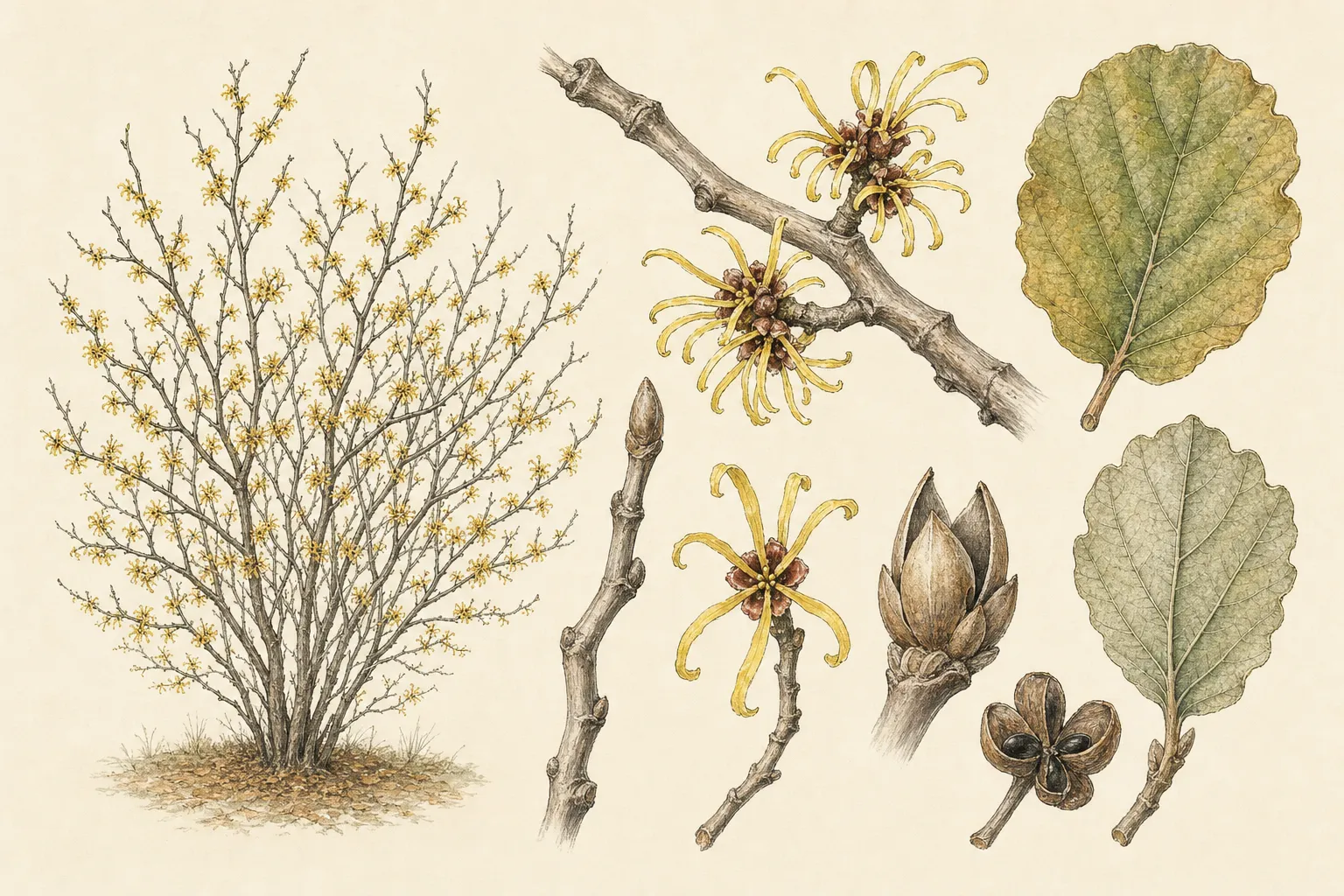
Hamamelis virginiana is a deciduous, usually multi-stemmed shrub or small tree with zigzag twigs and an open, vase-shaped canopy. Four narrow yellow petals curl in cold weather and open again during milder periods from October into early winter.
Flowers can appear while yellow autumn leaves and woody capsules from the previous season are still present. The simultaneous fruit and bloom, broad oblique-based leaves and late flowering distinguish this species from spring-flowering Asian witch hazels and their hybrids.
In a garden it needs the space of a large shrub, not a foundation filler. A woodland edge, rain-garden shoulder or winter view allows the mature canopy to spread while its late flowers remain visible against a quiet background.
Part sun and moist, slightly acidic soil resemble its woodland habitat. More sun can increase flowering where roots stay cool and moist, while exposed full sun and drought can scorch leaves and weaken the plant.
- Family
- Hamamelidaceae
- Range
- Eastern Canada through the central and eastern United States to northeastern Mexico
- Soil pH
- 4.5–6.8
- Spread
- 15–20 ft · 4.5–6 m
Planting & careHow to grow common witch hazel
Guidance fits temperate eastern North American gardens in USDA zones 3–8. In hotter or exposed sites, protect the foliage from drought and sunscorch; check local provenance when planting for habitat value.
- 1Reserve a tree-sized footprint
Allow about 15–25 feet of height and 15–20 feet of spread, keeping the future canopy clear of buildings, utilities and narrow paths.
- 2Choose moist woodland conditions
Use partial sun or high shade in humus-rich, slightly acidic soil that stays moist but drains; avoid a hot bank that repeatedly dries.
- 3Expose the root flare
Set the first structural roots at surrounding grade, spread roots into a broad planting hole, and keep added soil and mulch away from the woody stem bases.
- 4Water beyond the planting hole
Soak the entire developing root zone during dry weather, continuing through establishment because common witch hazel is not drought tolerant.
- 5Keep the natural stem form
Decide at planting whether to retain the characteristic multi-stemmed shrub or train one trunk, then avoid crowding the base with competing woody growth.
Pruning common witch hazel
Common witch hazel normally needs little pruning. After flowering, in early spring, remove dead or damaged wood and selectively thin an old stem at the base if the canopy is crowded; flowers form on older growth, so repeated heading cuts sacrifice the natural vase shape and future bloom. Established plants can tolerate occasional staged rejuvenation when genuinely overgrown.
Seasonal care
Spring
Prune only after the autumn-to-winter flowering period has ended, removing selected damaged or oldest stems, then renew mulch without covering the flare.
Summer
Check soil moisture during dry spells and water deeply before the broad leaves scorch; harmless witch-hazel leaf galls usually need no treatment.
Autumn
Watch golden leaves, ripening capsules and yellow ribbon-petaled flowers overlap, and keep newly planted roots moist if autumn rainfall is sparse.
Winter
Let the late flowers finish; petals may coil during freezing weather and reopen when temperatures moderate, so do not mistake this response for flower failure.
Safety and garden spread
The retained horticultural sources do not identify a specific garden-contact toxicity hazard; this is not an edibility or medicinal-use recommendation.
Common problems
Drought stress or sunscorch
- Look for
- Crisp brown leaf margins, curling leaves or early leaf drop on an exposed site.
- Action
- Water the broad root zone deeply, restore a shallow organic mulch and reduce harsh afternoon exposure if the soil cannot remain moist.
Few autumn flowers
- Look for
- Healthy foliage but little bloom, especially after spring or summer clipping.
- Action
- Stop shearing, preserve older flowering growth and assess whether dense shade or drought is limiting the plant before making another cut.
Witch-hazel leaf galls
- Look for
- Cone-shaped or spiny swellings on otherwise healthy leaves.
- Action
- Leave isolated aphid galls alone; University of Maryland Extension reports that they do not harm the plant and do not require management.
Leaf spots or powdery mildew
- Look for
- Spreading dark lesions or pale powder on leaves rather than discrete insect galls.
- Action
- Remove badly affected fallen leaves, improve air movement and confirm the diagnosis locally before selecting a treatment; these diseases are occasional, not routine.
Plant details
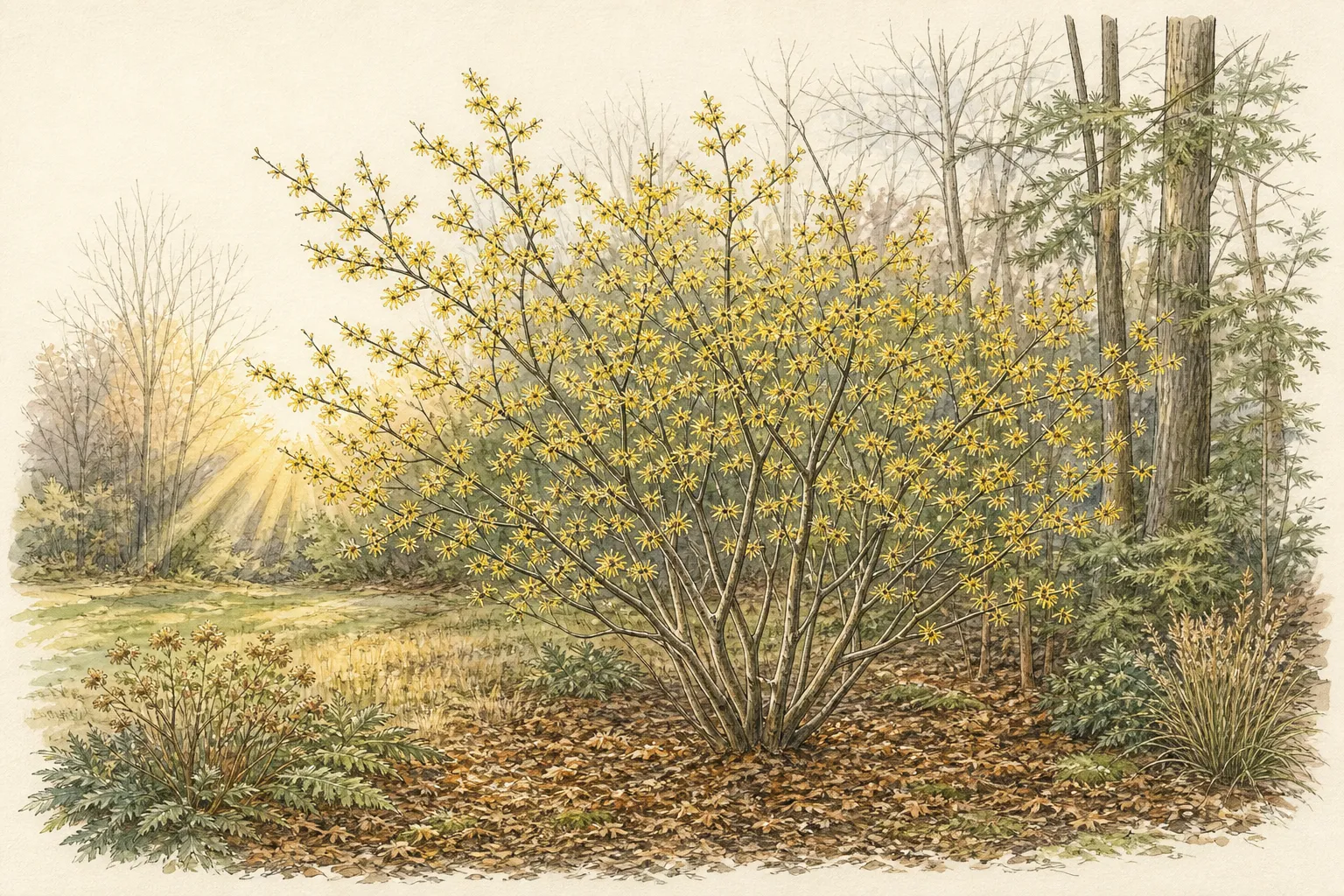
Garden placement study showing mature Common Witch Hazel in an ornamental planting
Sources
- Common Witch Hazel cultivation profile. North Carolina Extension Gardener Plant Toolbox. Source record · Accessed 2026-08-20.
- Hamamelis virginiana horticultural guidance. University of Maryland Extension. Source record · Accessed 2026-08-20.
- Hamamelis virginiana taxonomy and distribution. Royal Botanic Gardens, Kew. Source record · Accessed 2026-08-30.