Beauty Bush
Kolkwitzia amabilis
Beauty bush is a large arching shrub with profuse old-wood bloom and peeling mature bark; this profile covers full-size placement, root-flare planting, establishment, and renewal pruning.
Published Last updated
At a glance
- Light
- Full sun to partial shade
- Water
- Medium during establishment; established shrubs tolerate some dry soil
- Soil
- Average, well-drained sand, loam, or clay
- Hardiness
- Zones 4–8
- Bloom
- Mid- to late spring
- Height
- 6–10 ft · 180–300 cm
In this guide
Overview
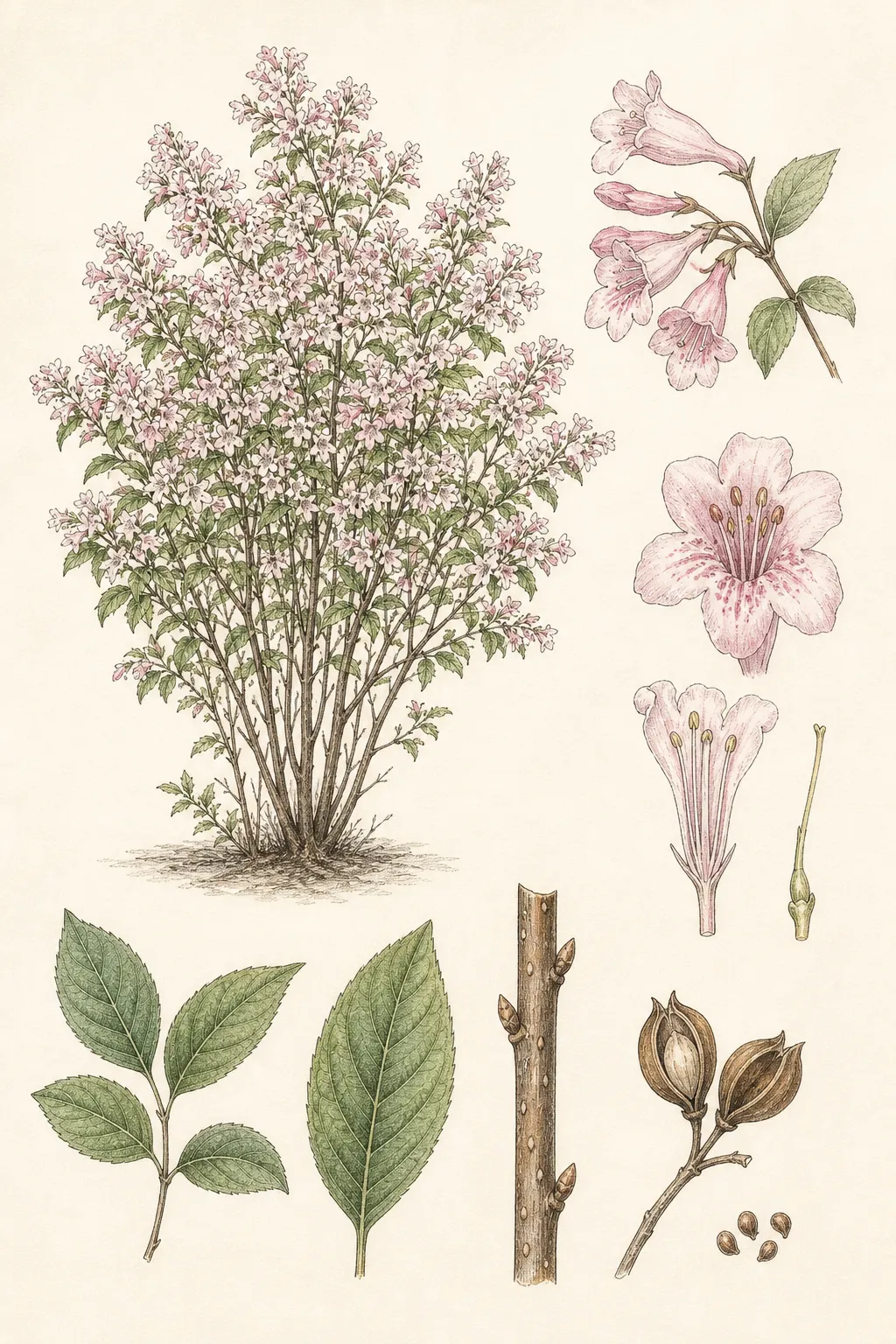
Kolkwitzia amabilis is a deciduous, multi-stemmed shrub in Caprifoliaceae. Arching canes make a vase or fountain shape, and paired pink bells with yellow throats cover the previous year’s wood in spring. Opposite ovate leaves, small bristly capsules, and peeling bark on old stems help confirm the identity later.
The species commonly reaches 6–10 ft in height and width, with some regional records taller. It needs lawn edge, a deep mixed border, or an informal screen where the canes can arch freely. Repeatedly clipping it beside a door or narrow walk removes both flowers and its natural form.
Full sun gives the heaviest bloom; filtered partial shade is tolerated. The shrub accepts sand, loam, or clay and a broad pH range as long as the site drains. Established plants tolerate some dryness, but a new root ball still needs regular water.
Expose the first structural roots and set the root flare level with the finished soil. Spread or correct circling roots, backfill, water the entire root ball, and keep mulch clear of the flare and basal stems.
Older canes become leggy and the center can grow dense. Immediately after flowering, remove up to one-third of the oldest and weakest stems at ground level. That renewal leaves younger arches to mature rather than creating a clipped outer shell.
Because flower buds sit on old wood, hard winter pruning sacrifices the next spring display. A neglected shrub can be cut near the ground for full rejuvenation, but that reset should be chosen knowingly and followed by a bloomless or bloom-reduced season.
- Family
- Caprifoliaceae
- Range
- North-central, south-central, and southeastern China, including Inner Mongolia
- Soil pH
- 3.5–8
- Spread
- 6–10 ft · 180–300 cm
Planting & careHow to grow beauty bush
US institutional profiles differ on ultimate size and warm-zone performance, so use 6–10 ft as a garden planning range and confirm local cultivar behavior. Bloom is borne on old wood in every region.
- 1Clear room for arching canes
Reserve a 6–10 ft-wide footprint plus access to the base for renewal cuts. Keep the arching tips clear of doors, windows, driveways, and narrow paths.
- 2Favor sun and dependable drainage
Choose full sun for maximum bloom or filtered partial shade where a lighter display is acceptable. Check that rain drains through the root zone rather than collecting around the future flare.
- 3Set the woody root flare at grade
Locate the first structural roots, position the flare at finished grade, and correct circling roots before backfilling. Water thoroughly to settle soil around the root ball.
- 4Water the original root ball
Check moisture in the original root ball and adjacent soil through the first growing seasons. Water deeply when they begin to dry, then lengthen intervals as roots establish.
- 5Mulch outside the basal stems
Use a shallow mulch ring over the root zone while keeping the flare and cane bases exposed. This preserves inspection access for future renewal pruning.
- 6Delay shaping until after bloom
Let the shrub complete its first spring display before judging which old canes need removal. Mark those stems and make selective ground-level cuts rather than shearing every tip.
Pruning beauty bush
Immediately after flowering, remove up to one-third of the oldest and weakest canes at ground level. Avoid shearing; a full cutback can rejuvenate a neglected shrub but will sharply reduce the following spring’s bloom.
Seasonal care
Spring
Enjoy the old-wood bloom and postpone routine pruning until it finishes. Remove only clearly dead or broken wood early, because shortening live tips now removes flowers.
Summer
As bloom ends, take selected old and weak canes to ground level while their age is easy to compare. Water young shrubs deeply during dry spells and keep the flare visible.
Autumn
Let new canes harden without late shearing or heavy feeding. Check that persistent capsules and fallen leaves are not hiding damage at the basal framework.
Winter
Use the leafless outline to identify dead, crossing, or damaged stems, but defer renewal cuts until after spring bloom if flowers are the priority. Keep mulch away from the flare.
Safety and garden spread
The retained extension and botanical-garden profiles do not flag this shrub as harmful. That does not establish edibility; keep its leaves and capsules ornamental.
Common problems
Sparse spring bloom
- Look for
- Flower clusters are few, confined to the sunniest side, or absent after winter pruning.
- Action
- Compare light and pruning history first. Increase sun where practical and leave live one-year-old wood intact through winter so it can carry the next display.
Leggy, congested framework
- Look for
- Foliage and flowers retreat to the ends of long old canes while the center fills with weak stems.
- Action
- After flowering, remove up to one-third of the oldest and weakest canes at ground level. Repeat over several years instead of shearing the outer foliage.
Dead or damaged canes
- Look for
- A stem fails to leaf out, cracks under snow load, or dies back from a wounded section.
- Action
- Confirm dead wood and remove it to a sound branch union or at ground level with clean tools. Inspect the exposed root flare and seek local diagnosis if dieback continues into new canes.
Poor establishment
- Look for
- New growth stays short, leaves wilt despite surface watering, or the root ball remains separate from surrounding soil.
- Action
- Check moisture inside both the root ball and adjacent soil, confirm the flare is at grade, and correct circling roots or drainage before adding fertilizer.
Plant details
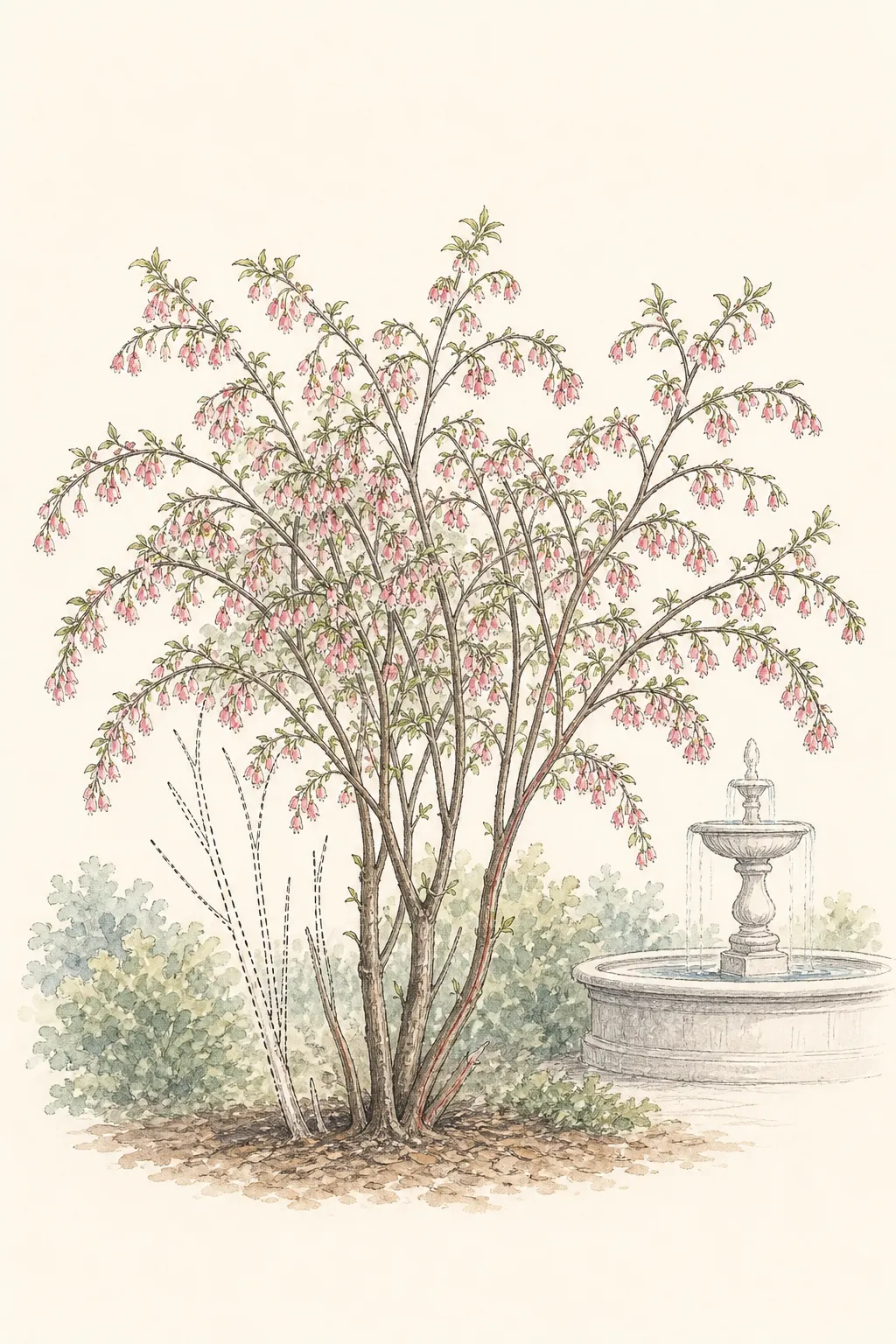
Garden study showing the placement and growth habit of Beauty Bush
Sources
- Kolkwitzia amabilis plant profile. NC State Extension. Source record · Accessed 2026-08-30.
- Kolkwitzia amabilis Plant Finder record. Missouri Botanical Garden. Source record · Accessed 2026-08-30.
- Kolkwitzia amabilis taxonomy and distribution. Royal Botanic Gardens, Kew. Source record · Accessed 2026-08-30.
- Beautybush (Kolkwitzia amabilis). Virginia Cooperative Extension. Source record · Accessed 2026-08-30.