Smokebush
Cotinus coggygria
A species-focused guide to smokebush panicles, mature scale, broad soil tolerance, sap safety and the pruning choice between flowers and foliage.
Published Last updated
At a glance
- Light
- Full sun
- Water
- Low to moderate once established
- Soil
- Average to lean, well-drained soil
- Hardiness
- Zones 4–8
- Bloom
- Airy panicles in early to midsummer
- Height
- 10–15 ft · 3–4.5 m
In this guide
Overview
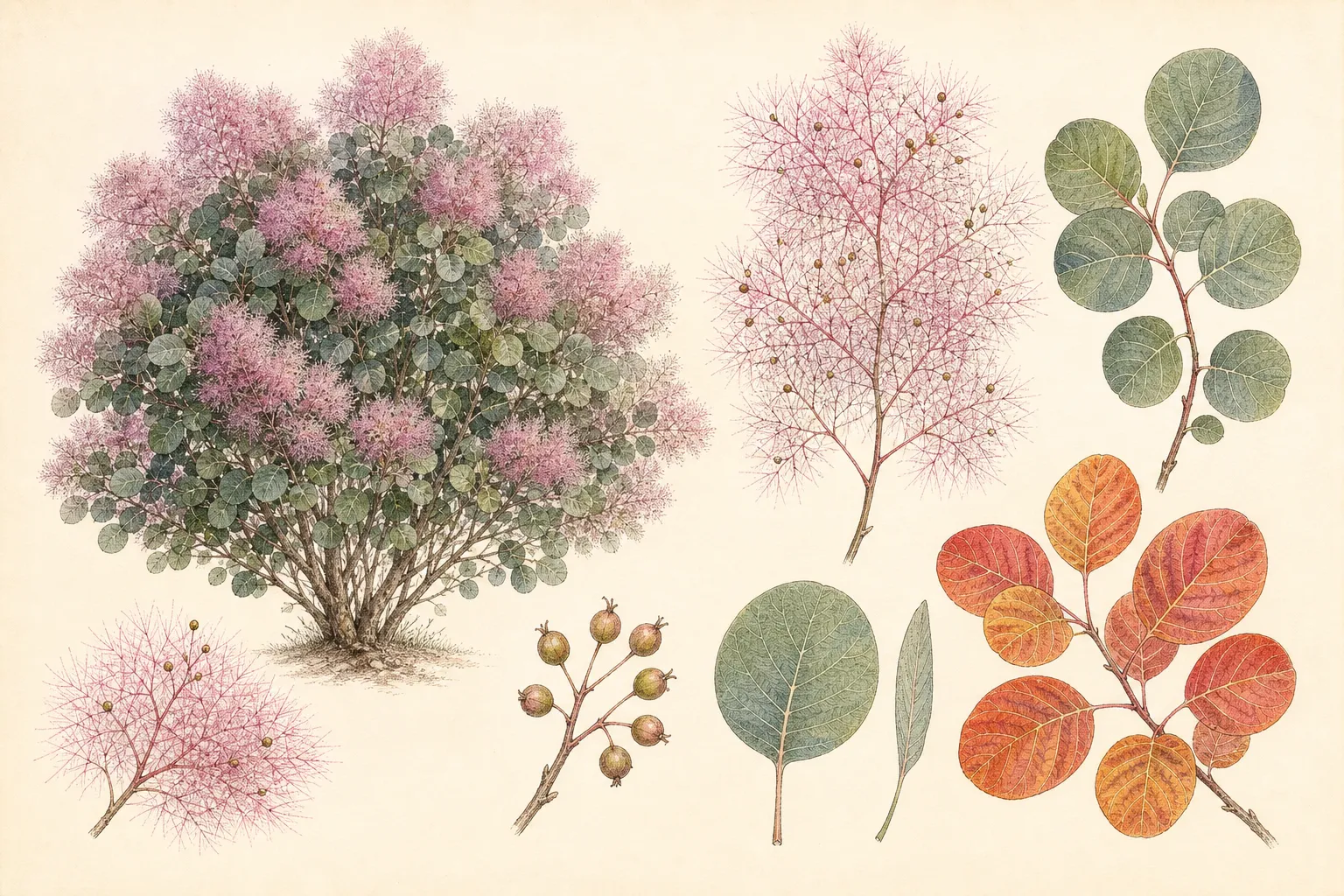
Smokebush is an upright, spreading deciduous shrub or small tree with rounded leaves and large summer panicles. Tiny flowers are followed by fine hairs on the flower stalks, creating the translucent pink-to-gray haze that gives the plant its common name. Autumn leaves may turn yellow, orange, red, or purple.
An unpruned species plant can reach roughly 10–15 feet in height and spread, so its smoky panicles read best as a specimen, broad border accent, or informal screen with open sky behind it. Compact cultivars need less room, but a young label should be checked against the mature dimensions of that exact selection.
Full sun gives the strongest flowering and the best color in purple-leaved cultivars. The species can accept light shade, but deep shade weakens the smoke effect and may cause purple foliage to turn greener.
Use a well-drained site in clay, loam, sand, or shallow rocky soil. Smokebush accepts acid, neutral, and alkaline conditions and becomes drought tolerant after establishment, but waterlogged soil and an extremely dry, impoverished site both work against a full crown.
Choose the pruning objective before making a cut. Keeping the mature framework preserves the summer smoke display. Cutting stems hard in late winter or early spring produces vigorous, oversized foliage but sacrifices that year's flowers; it is a foliage or renovation treatment, not routine size control.
The resinous sap can cause contact dermatitis, particularly for gardeners sensitive to poison ivy. Rust, leaf spot, and Verticillium wilt are the main disease concerns named by Extension, although otherwise well-sited plants are usually low maintenance.
- Family
- Anacardiaceae
- Range
- Southern and south-central Europe to central and southern China
- Soil pH
- 5.5–8
- Spread
- 10–15 ft · 3–4.5 m
Planting & careHow to grow smokebush
Cotinus coggygria is native from southern and south-central Europe east to China and is grown as a nonnative ornamental elsewhere. North Carolina Extension lists USDA Zones 4–8, while cultivar color, ultimate size, and winter performance vary; check local recommendations and the named selection before planting.
- 1Choose a smoke-sized site
Reserve a roughly 10-by-15-foot volume for a full-size plant and keep the panicle zone clear of eaves, paths, and dense neighboring crowns.
- 2Prioritize sun and drainage
Select full sun for the strongest panicles and cultivar color, then reject a pocket where water remains after surrounding soil has drained.
- 3Keep the fibrous roots shallow
Set the top of the root ball level with the surrounding grade, spread or loosen circling fibrous roots, and backfill with the excavated soil without burying the stem bases.
- 4Water through establishment
Soak the root ball after planting and check it during dry spells in the first seasons. Reduce supplemental water once roots occupy the site and the plant shows steady extension growth.
- 5Protect the rooting area
Use a modest mulch layer over the outer root zone for establishment, keeping mulch away from the multiple trunks and leaving the base open for inspection.
- 6Commit to flowers or foliage
Record whether the selection was bought for smoke-like panicles or large colored leaves; that decision controls whether it remains uncut or receives occasional hard spring pruning.
Pruning smokebush
Leave a flower-focused smokebush largely unpruned, removing only dead or badly placed stems with gloved hands. For deliberate renovation or a foliage display, cut stems to about 6–8 inches in late winter before growth starts; retain some old stems if a partial flower display matters. Hard pruning removes that summer's panicles, so it should never be used automatically on every plant.
Seasonal care
Spring
Before buds break, make any planned renovation cut and wear gloves around sap. Leave flower-focused plants intact, check drainage around newly planted root balls, and avoid heavy feeding.
Summer
Enjoy the current-season panicles and water established plants only when prolonged drought and soil checks justify it. Inspect leaves for rust or spotting and watch isolated wilt for possible Verticillium.
Autumn
Let the crown carry its fall color, remove diagnosed diseased debris, and reassess whether the cultivar still has adequate light. Continue watering only newly established plants during dry weather.
Winter
Study the leafless multi-trunked outline and decide whether next year should favor smoke or larger leaves. Schedule any coppicing for late winter, just before active growth.
Safety and garden spread
Common problems
No smoke display
- Look for
- Large vigorous leaves but few panicles, especially after a hard late-winter cut, or sparse bloom on a shaded side.
- Action
- Stop annual coppicing if flowers are the priority and improve light where possible. Allow a mature framework to develop rather than applying bloom fertilizer.
Verticillium-like wilt
- Look for
- One branch or one side wilts or dies while other parts remain apparently normal, without a simple drought pattern.
- Action
- Request a local diagnosis before pruning or replacing the plant; Verticillium cannot be confirmed from wilt alone and management depends on the cause.
Rust or leaf spot
- Look for
- Expanding spots, rust-colored pustules, or premature leaf drop rather than uniform autumn coloration.
- Action
- Remove heavily affected fallen material, avoid unnecessary overhead irrigation, and use a regionally current treatment only after the disease is identified.
Sap irritation
- Look for
- Redness, itching, or blistering after handling cut stems or resinous sap, especially in a person sensitive to poison ivy.
- Action
- Stop contact, wash exposed skin, launder contaminated clothing, and seek medical or poison-control advice for a significant reaction; use gloves for future pruning.
Plant details
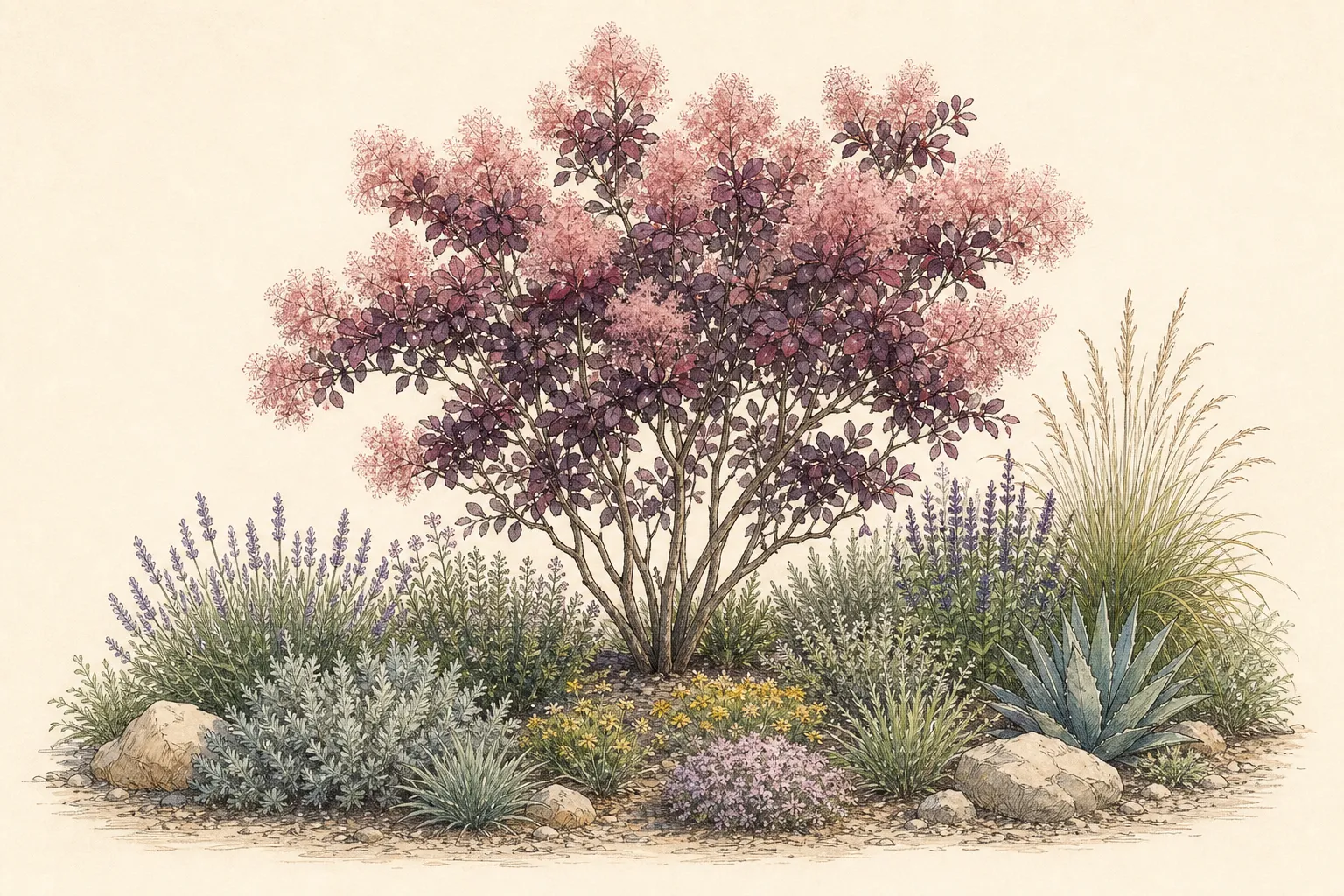
Garden placement study showing mature Smokebush in an ornamental planting
Sources
- Cotinus coggygria. North Carolina Extension Gardener Plant Toolbox. Source record · Accessed 2026-08-20.
- Cotinus coggygria | smoke tree. Royal Horticultural Society. Source record · Accessed 2026-08-20.
- Cotinus coggygria Scop.. Royal Botanic Gardens, Kew. Source record · Accessed 2026-08-20.