Common Yarrow
Achillea millefolium
A sun-loving rhizomatous perennial with aromatic divided leaves, flat summer flower clusters, and a spreading habit that needs deliberate boundaries.
Published Last updated
At a glance
- Light
- Full sun
- Water
- Low to moderate after establishment
- Soil
- Average to lean, well-drained soil
- Hardiness
- Zones 3–9
- Bloom
- Late spring through summer
- Height
- 1–3 ft · 30–90 cm
In this guide
Overview
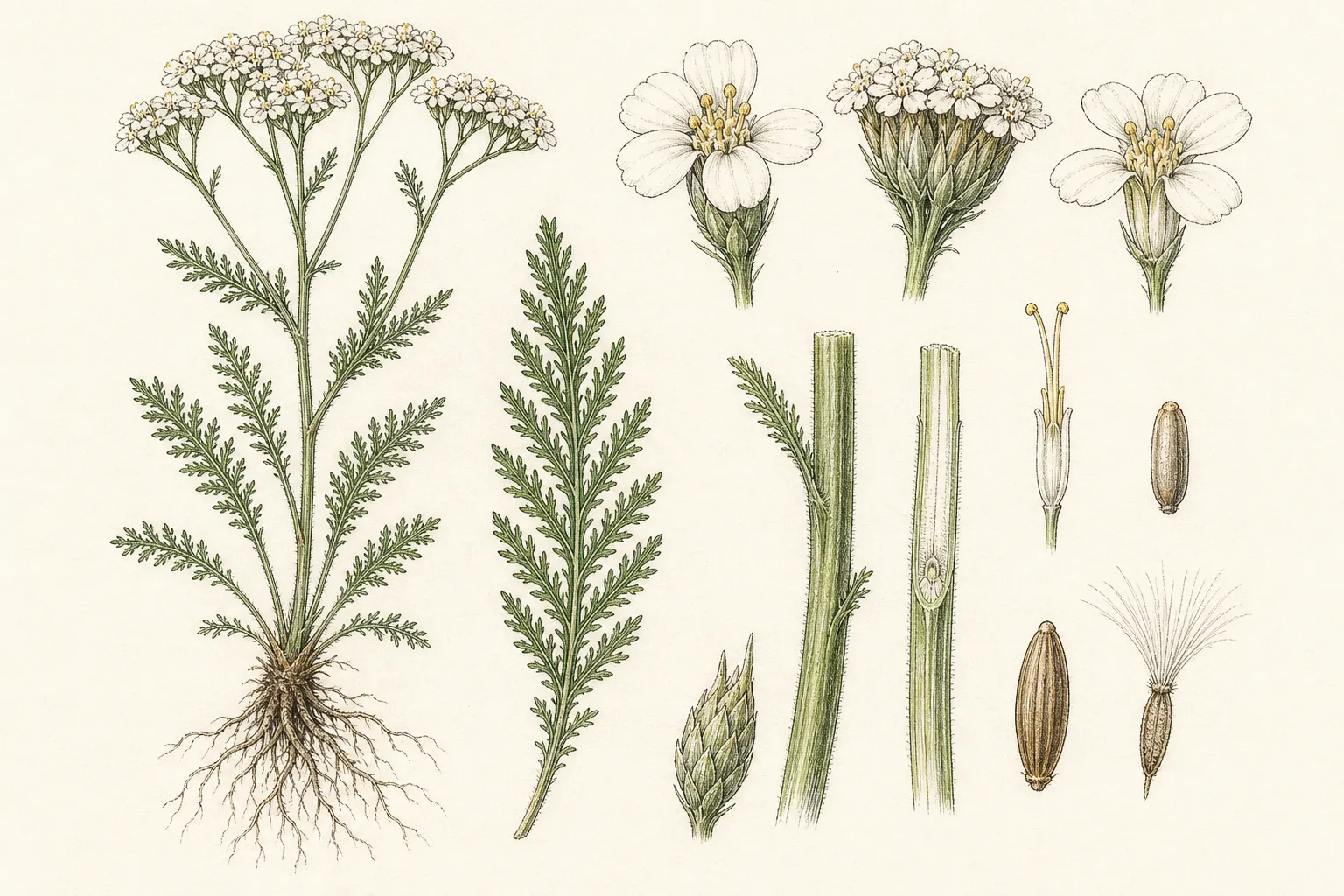
Common yarrow is a deciduous herbaceous perennial with aromatic leaves divided into many narrow segments and numerous tiny flower heads packed into broad, flat clusters. Wild plants commonly flower white to cream; named garden selections may be pink, yellow, orange, or red, so foliage and flower structure are more dependable than color alone.
The plant spreads rapidly through shallow rhizomes and also sets seed. That habit suits meadows, rough grass, and naturalized sunny areas, but it can overwhelm a small mixed border or fine lawn. Reserve an edge that can be cut or lifted, and deadhead before seed ripens if volunteers are not wanted.
Full sun and well-drained average or lean soil produce the firmest growth. Established plants tolerate drought, while rich feeding, shade, and routine irrigation encourage lax stems. A species clump commonly reaches 1–3 ft in both height and spread, with cultivar stature varying beyond that range.
Plant a container-grown crown at its existing soil line, keeping the basal leaves above mulch. Water during establishment, then let the upper soil dry between soakings. A permanently wet pocket is more damaging than ordinary summer dryness because it favors root and stem rot.
Deadheading may extend flowering and sharply reduces self-sowing. Cut faded stems back to healthy basal leaves, leaving that low foliage intact, then clear dead stems before spring growth. Wear gloves when handling the plant, and keep pets and livestock from browsing it because retained veterinary and Extension sources identify dermatitis and ingestion hazards.
- Family
- Asteraceae
- Range
- Greenland and subarctic to temperate Eurasia; North American status varies by taxonomic treatment
- Soil pH
- 6–8
- Spread
- 1–3 ft · 30–90 cm
Planting & careHow to grow common yarrow
Common yarrow can spread aggressively by shallow rhizomes and seed, especially in open disturbed soil. Taxonomic treatments disagree on how broadly the species is native in North America, so use regional flora and invasive-plant guidance when native status matters.
- 1Choose a controllable site
Use full sun and well-drained soil in a meadow, gravel bed, or border edge where wandering rhizomes and seedlings can be reached without disturbing delicate neighbors.
- 2Allow for a spreading colony
Reserve 1–3 ft for the species and decide the boundary before planting. A narrow isolated pocket will require continual removal as the rhizomes extend.
- 3Keep the basal crown at grade
Set the root ball at its nursery soil line and keep the basal rosette exposed. Backfill with the site soil and water once thoroughly to settle the roots.
- 4Water only through establishment
Water when the root ball begins to dry during the first season. Once established, reduce routine irrigation and intervene mainly during prolonged drought.
- 5Leave the rosette uncovered
Keep deep organic mulch away from the basal leaves and shallow rhizomes. An open surface makes unwanted shoots easy to trace and lowers the risk of trapped moisture.
- 6Choose a seed policy
Deadhead before the clusters turn brown where self-sowing is unwelcome. Retain seed heads only where volunteer plants and winter texture fit the planting plan.
Pruning common yarrow
Cut faded flower stems back to healthy basal foliage; this can prolong bloom and limits seed. Remove dead stems before spring growth, and lift complete wandering rhizome sections at the chosen boundary. Wear gloves because contact dermatitis is reported.
Seasonal care
Spring
Remove dead stems, trace rhizomes beyond the intended edge, and divide only if the colony needs renewal or reduction. Keep the fresh basal rosettes uncovered.
Summer
Water established plants only during sustained drought. Deadhead finished clusters before seed ripens, or leave selected heads where volunteers are acceptable.
Autumn
Remove seedlings from formal beds while they are small. Retain clean basal foliage and selected dry stems only where winter texture is worth the added seed.
Winter
Inspect the site after rain for standing water and note any rhizomes entering paths or neighboring crowns. Keep pets and livestock away from dormant plant material.
Safety and garden spread
Spreads vigorously
Rhizomes and self-sown seedlings can overrun a small border. Deadhead and contain the clump; cultivar and local native status matter.
Common problems
Soft, leaning stems
- Look for
- Flowering stems splay outward in a shaded, irrigated, or heavily fertilized position.
- Action
- Increase light where possible and reduce water and fertilizer. Replace a chronically rich or shaded site rather than staking every stem.
Powdery coating or stem rot
- Look for
- White patches develop on crowded foliage, or stems darken and collapse where soil remains wet.
- Action
- Open the planting to sun and air, remove affected debris, and correct excess moisture. Confirm the diagnosis locally before considering any labeled treatment.
Root decline in wet soil
- Look for
- Sections wilt despite damp soil, roots darken, or the crown pulls apart in a persistently wet pocket.
- Action
- Stop routine watering, remove decayed material, and improve drainage. Replant only sound divisions at the original crown depth.
Growth beyond the allotted patch
- Look for
- New rosettes appear along shallow rhizomes or as seedlings in open soil beyond the planned colony.
- Action
- Lift the entire unwanted rhizome section, remove seedlings before they establish, and deadhead earlier if seed is contributing to spread.
Plant details
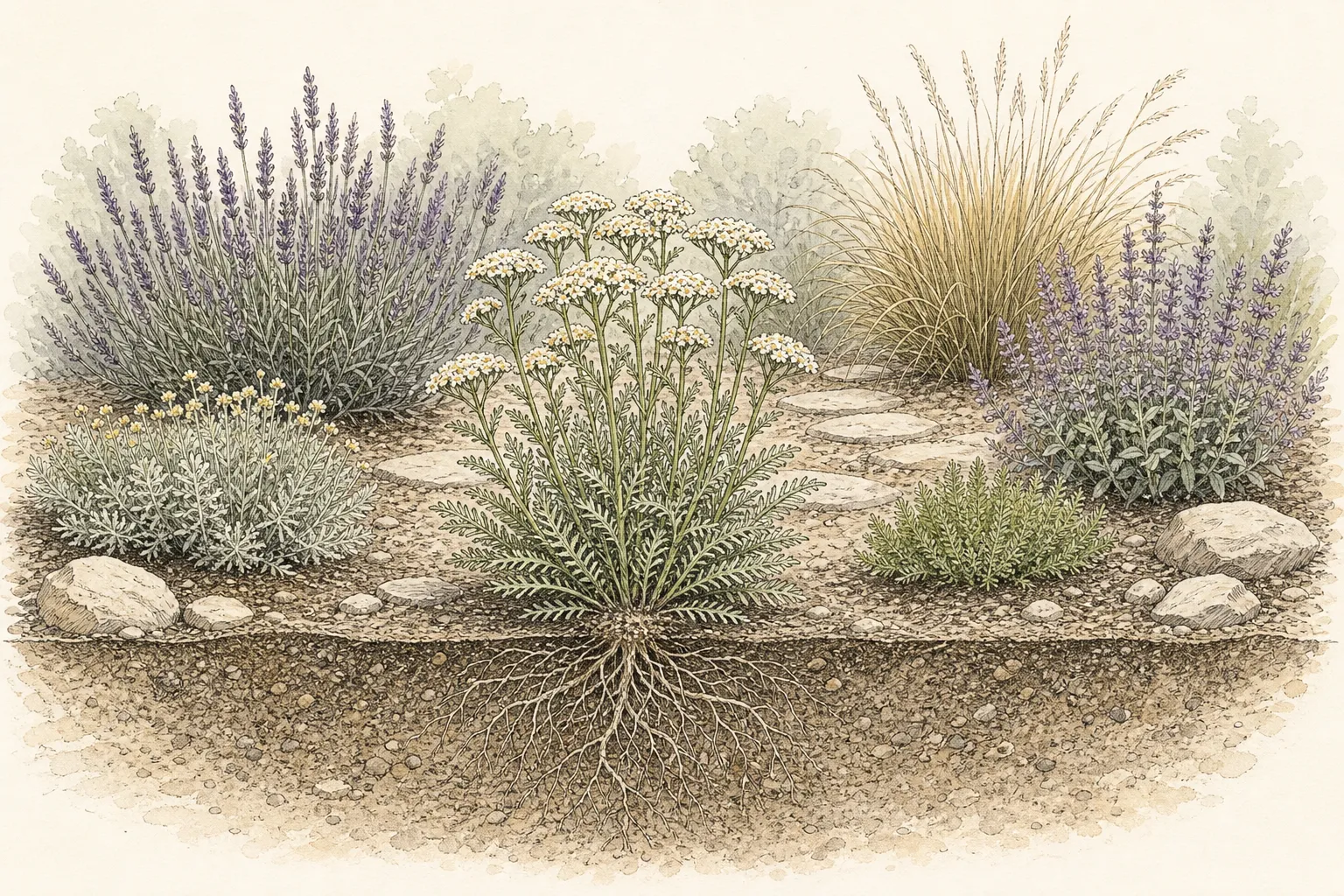
Garden study showing the placement and growth habit of Common Yarrow
Sources
- Achillea millefolium. NC State Extension. Source record · Accessed 2026-09-07.
- Achillea millefolium. Royal Horticultural Society. Source record · Accessed 2026-08-30.
- Achillea millefolium L.. Royal Botanic Gardens, Kew. Source record · Accessed 2026-08-30.
- Toxic and Non-toxic Plants: Yarrow. ASPCA Animal Poison Control Center. Source record · Accessed 2026-08-30.