Japanese Iris
Iris ensata
Grow Japanese iris in rich acid soil with abundant summer moisture, correct 1–2 in rhizome cover, dry winter drainage, and safe handling.
Published Last updated
At a glance
- Light
- Full sun to light partial shade
- Water
- Abundant in active growth, with drained winter soil
- Soil
- Rich, acidic, moisture-retentive soil
- Hardiness
- Zones 4–9
- Bloom
- Early to midsummer
- Height
- 2–4 ft · 60–120 cm
In this guide
Overview
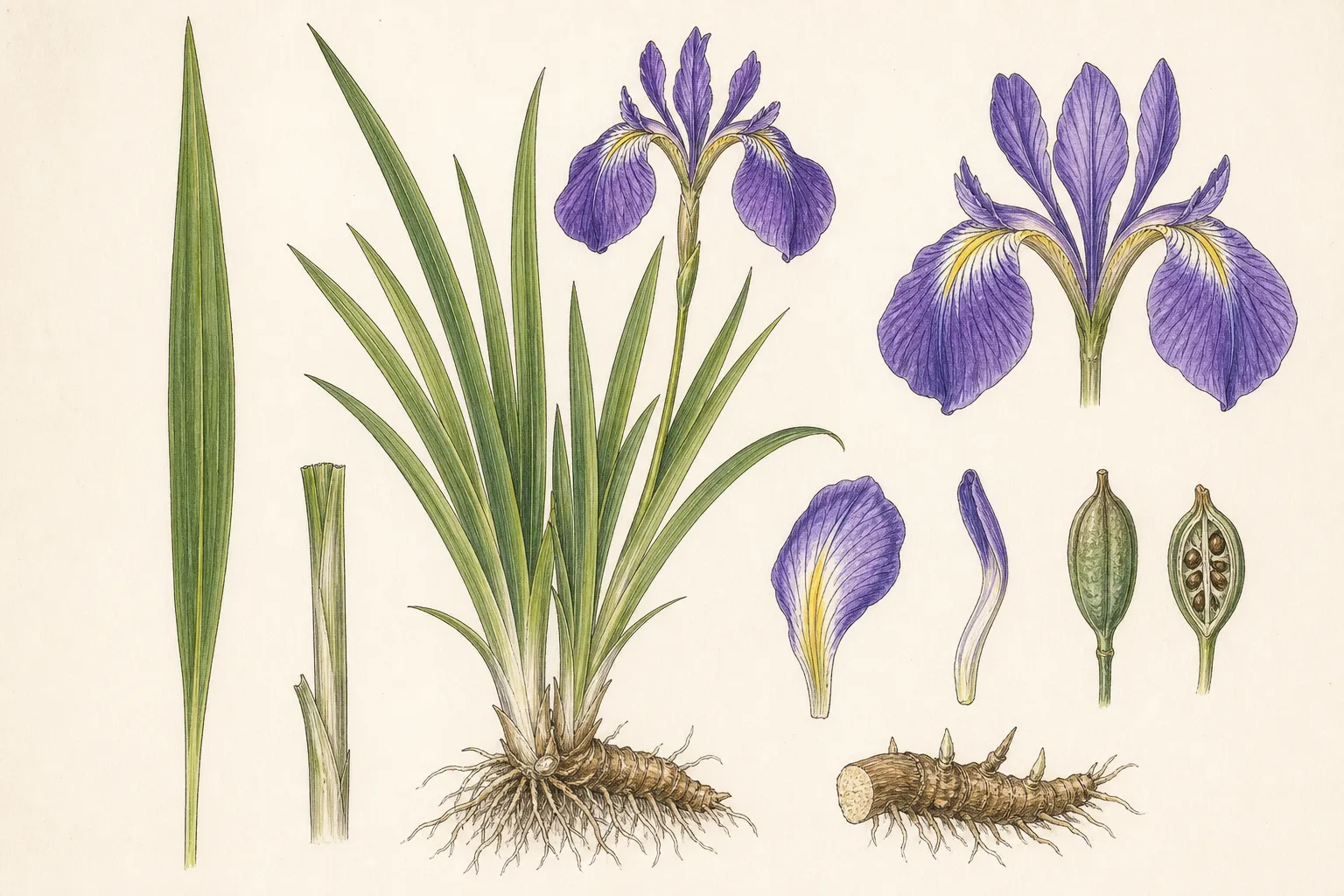
Japanese iris is a deciduous rhizomatous perennial with upright, knife-shaped leaves and broad, flattened summer flowers. Three large falls dominate the flower, each often marked by a yellow or white signal; the standards are much smaller. Cultivars can be single or double and vary widely in color, so identification should include the foliage and rhizome as well as the bloom.
Species-sized plants reach about 2–4 ft in flower and form clumps roughly 1.5–2 ft across. A group reads best beside a damp border, stream, or rain garden where the flowers can be viewed closely. The crown must remain accessible: Japanese iris is moisture-loving but is not a plant for permanent deep-water submersion.
Moisture needs change through the year. From spring growth through flowering, keep rich acid soil consistently moist; NC State notes that the active plant can tolerate periods of standing water. In autumn and winter, saturated soil or water over the dormant crown can cause loss, so the same site must also drain when growth stops.
Plant a bare rhizome vertically with its growing tip upward and 1–2 in below the soil surface. Spread the roots without letting them dry, settle soil around them, and water at once. This depth differs from the exposed-rhizome treatment used for bearded iris and should be restored when an old crown rises above grade.
Clumps increase by rhizomes and typically benefit from division about every three years when flowering falls or the center crowds. Lift them after flowering, retain vigorous sections, and reset them promptly at the correct depth. Do not solve a rising crown by repeatedly piling mulch over it, which can obscure soft rot.
Cut spent flower stems after bloom but keep green leaves until frost or natural yellowing. All Iris parts are ornamental rather than edible: institutional sources warn that roots, seeds, and sap are harmful if eaten and that sap may irritate skin. Gloves are appropriate for every division and cleanup job.
- Family
- Iridaceae
- Range
- Southeastern Siberia through China and Korea to Japan
- Soil pH
- 5–6.5
- Spread
- 1.5–2 ft · 45–60 cm
Planting & careHow to grow japanese iris
This iris needs a seasonal water regime: abundant moisture while actively growing, followed by drainage during dormancy. In cold regions, do not leave container-grown crowns in a pond over winter.
- 1Reserve the mature footprint
Allow 1.5–2 ft for each clump and up to 4 ft of flowering height. Leave a firm approach for division so the gardener does not have to stand in saturated soil or damage adjacent crowns.
- 2Test acidity and winter drainage
Choose a sunny to lightly shaded site with deep, humus-rich acid soil. Confirm that it can stay moist in summer yet release standing water in autumn and winter before planting.
- 3Set the rhizome vertically
Place the growing tip upward and cover the rhizome with 1–2 in of soil. Spread moist roots into the bed, firm gently, and water immediately; never leave divisions drying in sun or wind.
- 4Supply summer water, then change course
Keep the root zone continuously moist through active growth and bloom. As foliage enters dormancy, stop maintaining ponded water and make sure rainfall can drain away from the crown.
- 5Keep the crown inspectable
Apply a thin moisture-conserving mulch around the clump without burying the leaf bases. Each autumn, pull back settled material and check whether the rhizome has risen or any tissue has softened.
- 6Reset a congested clump after bloom
When flowering declines, lift the clump after its display, separate firm outer rhizomes, and replant with the growing tips upright. Water divisions well through the rest of the growing season.
Pruning japanese iris
Cut spent flower stems where they meet the foliage. Retain green leaves through the growing season, remove them after frost or yellowing, and divide congested rhizomes from after bloom into early autumn while wearing gloves.
Seasonal care
Spring
Remove dead foliage before new leaves lengthen, begin steady irrigation as growth accelerates, and correct any crown that frost or settling has left above its 1–2 in cover.
Summer
Maintain abundant root-zone moisture through flowering, remove faded stems, and mark weak or crowded sections for division after the display finishes.
Autumn
Divide congested clumps early enough for roots to establish, then reduce standing water as foliage yellows. Cut dead leaves and clear debris that could trap wetness over the crown.
Winter
Keep dormant crowns out of standing water. If the plant grows in a movable aquatic container, transfer it to damp but drained ground as local winter conditions require.
Safety and garden spread
Common problems
Dry-season leaf scorch
- Look for
- Leaf tips and margins brown while soil is drying during active growth or flowering.
- Action
- Check moisture several inches deep and restore even watering. Preserve a thin organic mulch, but keep it out of the crown and do not use fertilizer as a drought remedy.
Few flowers or chlorotic leaves
- Look for
- A mature clump produces few stems, or foliage pales in a soil that tests neutral to alkaline.
- Action
- Measure light, pH, and crown congestion. Move or divide after bloom when crowding is the cause; use soil-test guidance rather than repeatedly applying unmeasured acidifiers.
Winter crown or bacterial soft rot
- Look for
- Fans detach easily, rhizomes soften or smell, or a section fails after standing winter water.
- Action
- Drain the site, isolate affected material, and obtain an extension diagnosis. Disinfect tools between clumps and retain only firm tissue if division is recommended.
Slugs, snails, thrips, or virus-like damage
- Look for
- Young leaves are rasped, flowers are scarred, or foliage develops persistent streaking or mosaic patterns.
- Action
- Identify the cause before treating: inspect at night for mollusks and submit patterned foliage to a local diagnostic service. Use only controls supported for the confirmed problem.
Plant details
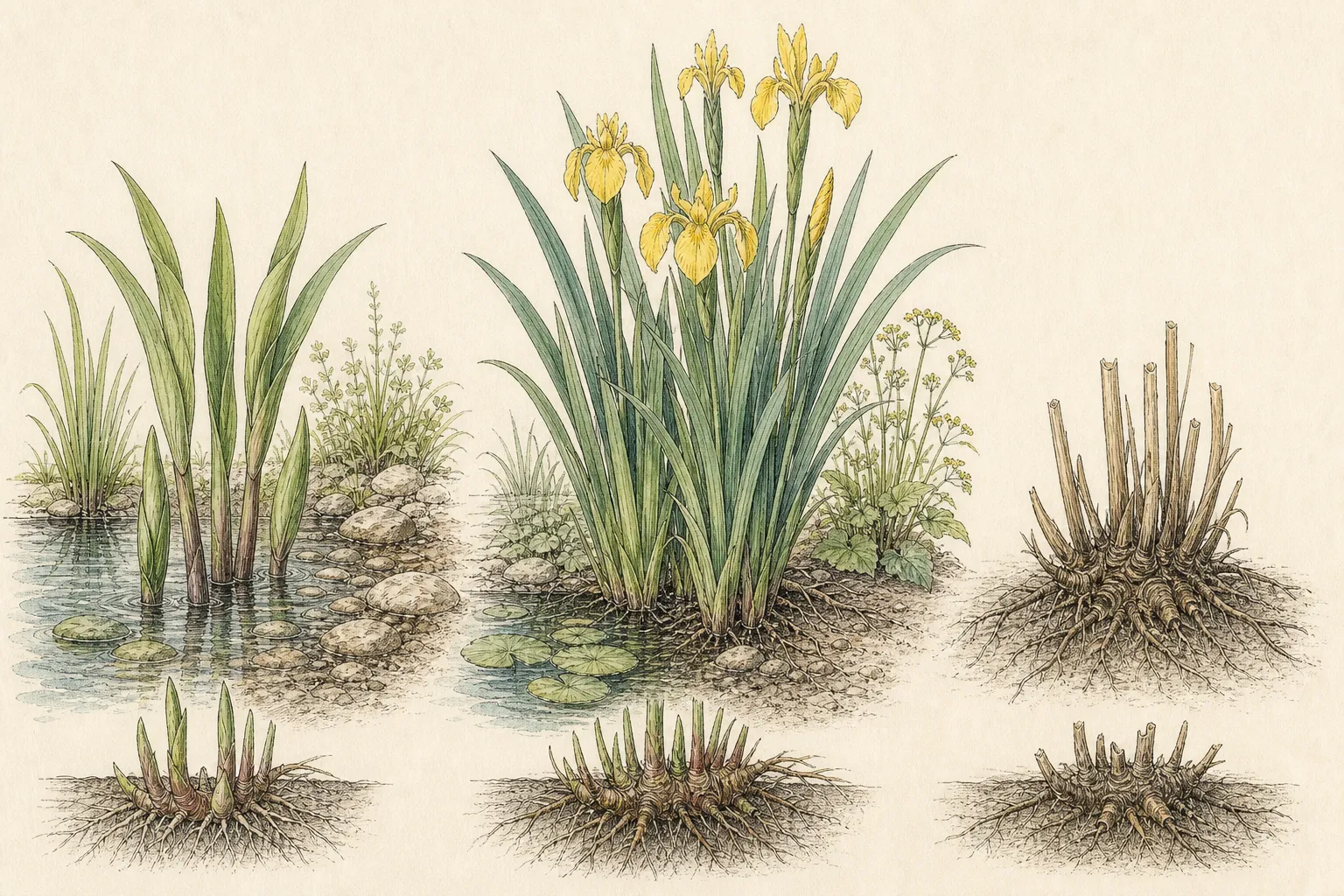
Garden study showing the placement and growth habit of Japanese Iris
Sources
- Japanese Iris cultivation profile. NC State Extension. Source record · Accessed 2026-08-30.
- Iris ensata plant profile. Royal Horticultural Society. Source record · Accessed 2026-08-30.
- Iris ensata taxonomy and native range. Royal Botanic Gardens, Kew. Source record · Accessed 2026-08-30.