Lilyturf
Liriope muscari
Identify clump-forming, tuberous-rooted Liriope muscari, establish it in drained shade, and cut old leaves before spring growth.
Published Last updated
At a glance
- Light
- Full sun to full shade, best in partial shade
- Water
- Regular while establishing, occasional afterward
- Soil
- Average, well-drained soil
- Hardiness
- Zones 5–10
- Bloom
- Late summer to early autumn
- Height
- 1–1.5 ft · 30–45 cm
In this guide
Overview
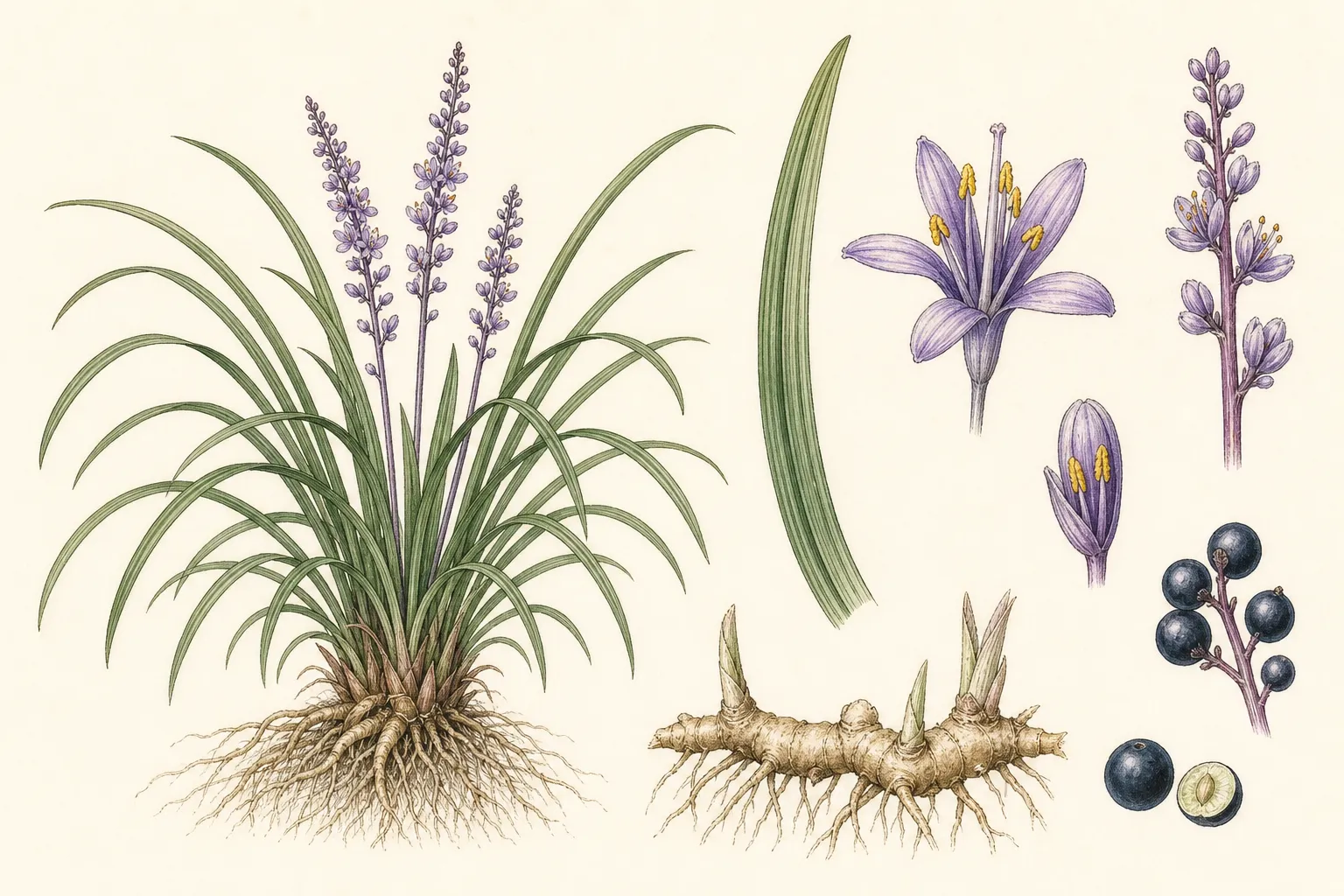
Lilyturf is an evergreen broadleaf perennial that resembles a grass but belongs to the asparagus family. Narrow arching leaves form a dense basal tuft above fleshy roots with scattered tubers. Violet flower racemes rise in late summer and early autumn, followed by glossy black fruits that can persist into winter.
Liriope muscari usually forms a 1–1.5 ft mound and expands slowly by short stolons. That compact habit separates it from running Liriope spicata. Repeat distinct clumps as an edge or under shrubs, leaving enough offset that arching leaves do not cover paving or merge into an unserviceable ridge.
Partial shade gives reliable foliage and flowering, although established plants tolerate sun or deep shade. Deep shade slows growth and reduces flowers; full sun combined with dry soil can scorch leaves. Average acid-to-neutral soil must drain, and first-year plants need regular water even where mature lilyturf later tolerates drought.
Plant the crown at the same grade it held in the container. Loosen circling fibrous roots without cutting off the normal tuberous swellings, water deeply, and keep mulch outside the central tuft. Space the actual cultivar width rather than closing gaps based on pot size.
An established clump can be divided in spring when it becomes too dense, but long runners suggest possible misidentification as L. spicata. Retain firm outer pieces with both roots and growing points. Black fruits are ornamental and should not be eaten; NC State advises caution even though documented human cases are not known.
Old leaves often brown in cold weather. Cut them down in late winter or very early spring before fresh tips emerge; a later cut leaves the new blades with blunt brown ends. Remove old flower stems if desired, while healthy year-round foliage remains the main garden value.
- Family
- Asparagaceae
- Range
- China, Korea, Japan, the Nansei Islands, and Taiwan
- Soil pH
- 5–7.5
- Spread
- 1–1.5 ft · 30–45 cm
Planting & careHow to grow lilyturf
Kew records introductions in Alabama, Arkansas, and Florida. Liriope muscari expands in clumps by short stolons, unlike the more aggressively running L. spicata; verify species identity and local status.
- 1Reserve the mature footprint
Allow about 1–1.5 ft in both height and spread for the species clump. Set the crown back from paving by the length of the arching leaves and preserve access for an early-spring cut.
- 2Balance shade with drainage
Choose partial shade for the most balanced performance. Confirm that heavy soil drains after rain and avoid combining full sun with a chronically dry root zone.
- 3Set the tuft at container grade
Place the crown level with surrounding soil, tease apart circling roots while preserving their tuberous swellings, backfill with site soil, and water thoroughly.
- 4Water through the first year
Keep the root ball moist but aerated during the first growing season. Once established, water during extended drought according to soil moisture, exposure, and leaf response rather than habit.
- 5Keep mulch out of the tuft
Use a thin mulch between clumps but keep the central leaf bases exposed. This preserves airflow and makes crown rot, slug shelter, and planting depth visible.
- 6Confirm the clumping habit
Watch the perimeter through one season. Slow widening by short stolons fits L. muscari; fast runners crossing the bed warrant checking the label before choosing a control method.
Pruning lilyturf
Cut weathered foliage down in late winter or earliest spring before new tips emerge. Remove spent flower stems if desired, and divide an overgrown clump in spring while retaining firm outer sections with tuberous roots.
Seasonal care
Spring
Cut old foliage before fresh blades rise, divide only crowded clumps, and begin regular watering for new divisions while keeping mulch out of their centers.
Summer
Check first-year plants during dry weather and watch for slugs in the dense leaf bases. Established clumps need less water unless hot sun and dry soil begin scorching leaves.
Autumn
Enjoy the violet flower spikes and later black fruits, but remove fruits where children or pets may sample them. Confirm that the plant remains a compact clump.
Winter
In cold or windy sites, protect the root zone without burying the tuft. Schedule the foliage cut for late winter, before the first fresh green tips appear.
Safety and garden spread
Common problems
Sun and drought scorch
- Look for
- Leaf tips or broad sections bleach and brown where the clump receives strong sun and dry soil.
- Action
- Check root-zone moisture, restore deep watering during drought, and use afternoon shade for future divisions. Do not fertilize scorched, dry roots.
Leaf or crown rot
- Look for
- Leaves collapse from a soft center, especially in poorly drained soil or a tuft packed with wet debris.
- Action
- Pull mulch and debris away, stop watering saturated soil, and obtain a local diagnosis. Improve drainage before replanting firm divisions.
Slug and snail feeding
- Look for
- Irregular holes and rasped edges appear low in the tuft, with slime or pests visible after dark.
- Action
- Confirm the pest, reduce damp hiding places touching the crown, and use a locally appropriate targeted control only if damage is material.
Few flower spikes
- Look for
- A healthy mature clump makes long leaves but little late-summer bloom in deep shade.
- Action
- Confirm species identity and seasonal light, then move a spring division to brighter partial shade if needed. Allow the reset clump a full growing season before judging bloom.
Plant details
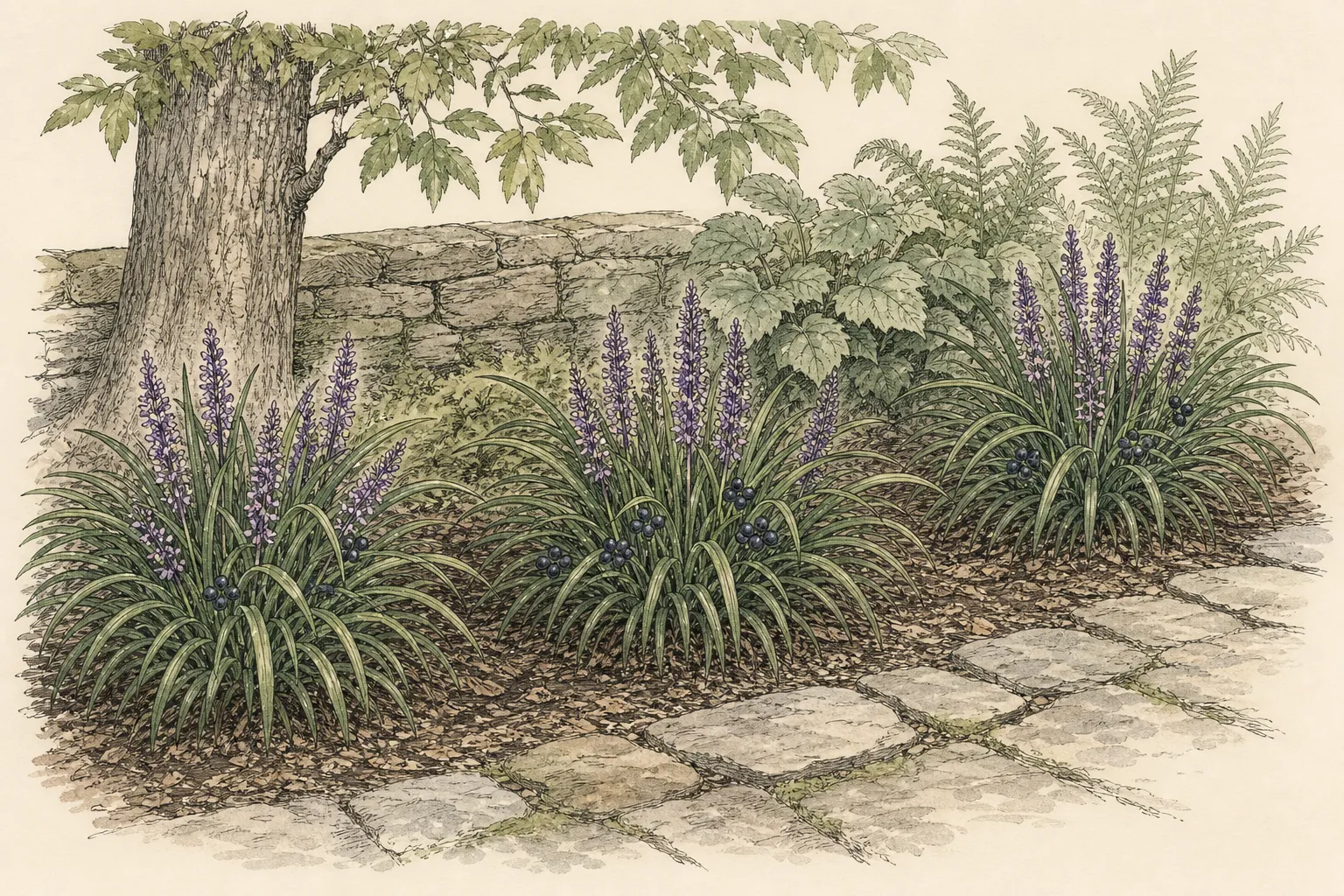
Garden study showing the placement and growth habit of Lilyturf
Sources
- Lilyturf cultivation profile. NC State Extension. Source record · Accessed 2026-08-30.
- Liriope muscari plant profile. Royal Horticultural Society. Source record · Accessed 2026-08-30.
- Liriope muscari taxonomy and native range. Royal Botanic Gardens, Kew. Source record · Accessed 2026-08-30.