Cardinal Flower
Lobelia cardinalis
A scarlet-flowered wetland perennial that needs continuously moist soil, exposed overwintering basal rosettes, and strict protection from ingestion.
Published Last updated
At a glance
- Light
- Full sun with constant moisture to partial shade
- Water
- Continuously moist to wet; brief flooding tolerated
- Soil
- Rich, humus-heavy, moist to wet sand or loam; low salt tolerance
- Hardiness
- Zones 3–9
- Bloom
- Midsummer to autumn, commonly July–October
- Height
- 4–5 ft · 120–150 cm
In this guide
Overview
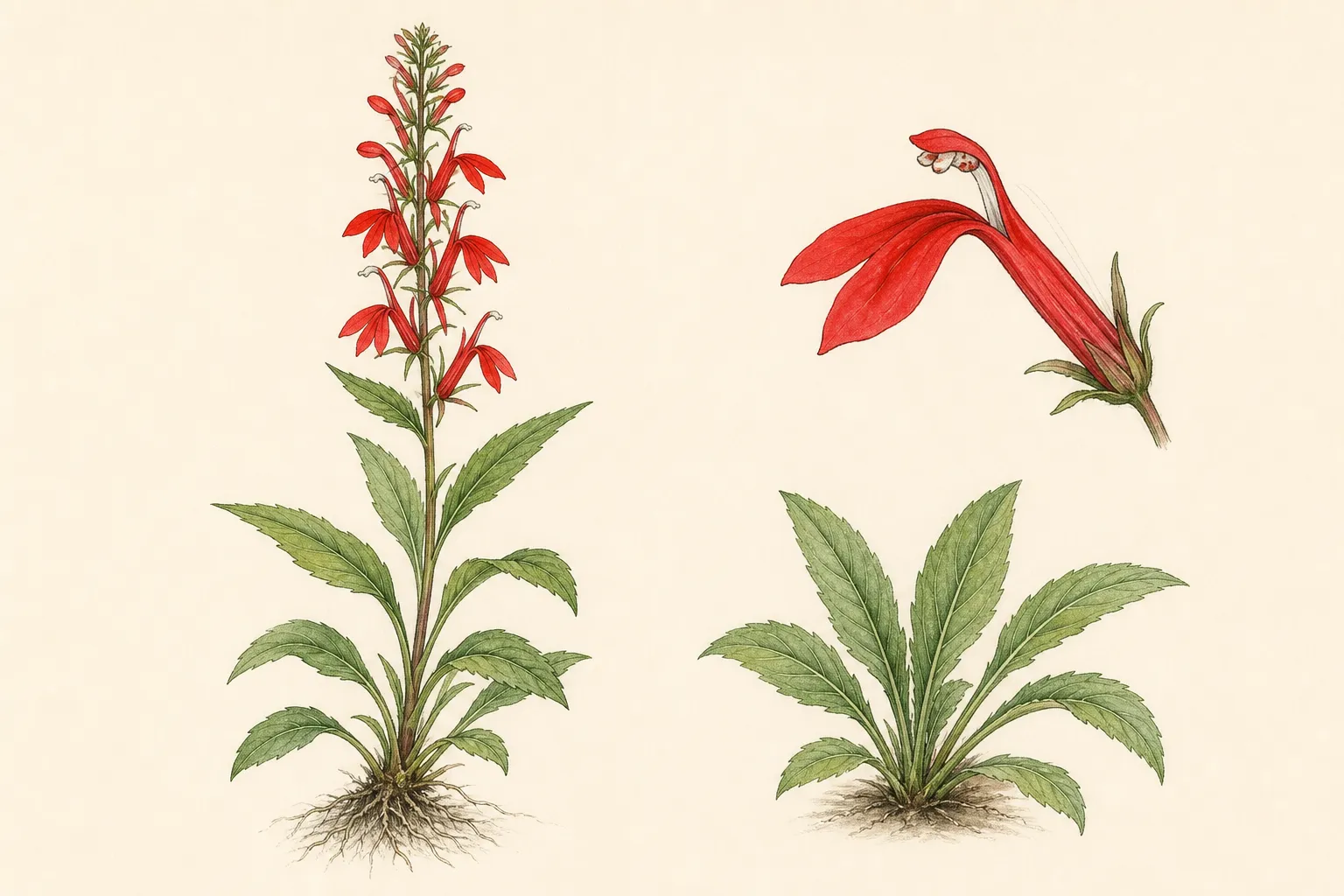
Lobelia cardinalis is an upright wetland perennial with alternate lance-shaped leaves and a terminal raceme of brilliant scarlet flowers. Each tubular flower has two upper lobes and three more prominent lower lobes, and the raceme opens from bottom to top. White and rose forms exist, so flower color alone should be checked against the leaf arrangement and flower structure.
Keep two structures separate during care: the tall flowering stalk can finish, while healthy basal rosettes must remain exposed and intact. Decide which capsules to retain before removing a spent stalk, then cut above the living rosettes. A plant disappearing under litter or mulch needs its base uncovered; treating it as a woody shrub would damage the growth that maintains the colony.
A flowering clump can reach 4–5 ft high while remaining only 1–2 ft wide. Place several crowns on a moist stream edge, wet meadow, rain-garden shelf, or rich border where the vertical spikes rise above shorter sedges without the basal leaves being shaded or buried. Strong wind can require discreet support for the tall stalks.
The root zone must remain continuously moist through active growth. Rich medium-to-wet sand or loam is suitable, brief flooding is tolerated, and shallow-water gardens can work, but the crown and leaves must not be buried in stagnant sediment. Full sun gives strong bloom only with dependable water; afternoon or partial shade reduces stress in hot regions.
Plant the crown at its nursery grade, water immediately, and keep light mulch outside rather than on top of the basal leaves. The species overwinters as a low green rosette. University of Maryland Extension warns that leaf litter, mulch, or dense neighbors can block its light and air, starving a plant that is then mistakenly described as simply short-lived.
Let some capsules mature on damp open soil, or divide established clumps by separating basal rosettes in spring or autumn. These offsets and seedlings maintain the planting as individual flowering crowns age. When cutting a spent stalk, stop above every healthy rosette and leave those leaves untouched.
Every part is poisonous if eaten. Institutional sources identify lobeline, lobelamine, and related alkaloids and describe gastrointestinal, neurologic, and cardiac effects. The plant is not a home remedy; collect cut stalks and seed-bearing debris wherever children, pets, or livestock could reach them.
- Family
- Campanulaceae
- Range
- Southern Canada through the United States, Mexico, and Central America to northern Colombia
- Soil pH
- 5–8
- Spread
- 1–2 ft · 30–60 cm
Planting & careHow to grow cardinal flower
The species is generally grown in USDA zones 3–9. Full sun is suitable only where moisture remains dependable; part or afternoon shade is preferable in hot climates. Bloom time and the degree to which basal rosettes stay green vary by winter conditions, but those rosettes must not be buried under mulch or leaf litter.
- 1Find a continuously moist shelf
Choose a stream edge, wet meadow, rain-garden shelf, pond margin, or border that stays moist through summer. A basin that alternates between brief flooding and hard drought does not meet the requirement.
- 2Match sun to available water
Use full sun only where moisture remains constant; choose partial or afternoon shade in hot climates. Reserve 1–2 ft of width and keep taller neighbors from covering the low rosettes.
- 3Set the crown at nursery grade
Place the crown level with the surrounding soil, settle rich moist soil around the roots, and water immediately. Brief flooding is acceptable, but do not bury the crown or basal leaves under soil or sediment.
- 4Keep moisture continuous
Probe the root zone during heat and falling water levels and irrigate before it begins to dry. Mulch lightly around the plant only where it cannot cover the basal rosettes.
- 5Keep every rosette exposed
Clear leaf litter, mulch, and sprawling groundcover from the green leaves at the base. Those rosettes photosynthesize through the cool season and carry the planting forward.
- 6Plan for toxic debris
Place the plant outside browse and play routes, and decide where spent stalks and capsules will be collected. Do not compost accessible toxic debris where animals may forage.
Pruning cardinal flower
Cardinal flower needs stalk cleanup, not woody pruning. After bloom, leave selected capsules to ripen where seedlings are wanted, then cut the spent flowering stem above all healthy basal rosettes. Never shear or bury those green rosettes. In spring, remove only dead loose material and divide established clumps by separating rosettes if renewal is needed. Handle all debris as toxic if ingested.
Seasonal care
Spring
Clear loose winter debris from green basal rosettes, check for frost heaving, and restore continuous moisture as upright stems begin. Separate established offset rosettes now if division is needed.
Summer
Do not let the root zone dry while scarlet racemes develop and flower. Support exposed tall stems if wind repeatedly bends them, and inspect low foliage for slugs or snails.
Autumn
Allow selected capsules to shed seed onto damp open soil, then cut declining stalks above the new basal rosettes. Remove fallen leaves from those rosettes and keep recent divisions moist.
Winter
Keep the low green rosettes uncovered by mulch, leaf litter, and neighboring foliage so they retain light and air. Monitor waterlogging, frost heave, and animal access without excavating the crown.
Safety and garden spread
Common problems
Drying and scorch
- Look for
- Leaves wilt, edges brown, or flowering stalks collapse during heat as the wet-site soil begins to dry.
- Action
- Restore continuous root-zone moisture immediately and check whether full sun is appropriate for the local heat. Move the plant if the site cannot stay moist through summer.
Smothered basal rosettes
- Look for
- Green leaves at the base are hidden under wet leaf litter, mulch, sediment, or a dense companion plant and begin to yellow or rot.
- Action
- Uncover the rosettes gently without disturbing roots, redirect sediment if flooding caused burial, and maintain a clear light-and-air opening through winter.
Slug or snail feeding
- Look for
- Irregular holes and scraped areas appear on low leaves, often with slime trails or nighttime feeders in the damp planting.
- Action
- Confirm the feeder after dark, reduce hiding debris without exposing roots to drought, and use a targeted locally appropriate method only if damage is material.
Potential ingestion
- Look for
- Chewed leaves or stalks, missing capsules, or toxic debris where a child, pet, or livestock animal had access.
- Action
- Remove access and contact the appropriate poison-control center or veterinarian promptly. Do not wait for gastrointestinal, neurologic, or cardiac symptoms to develop.
Plant details
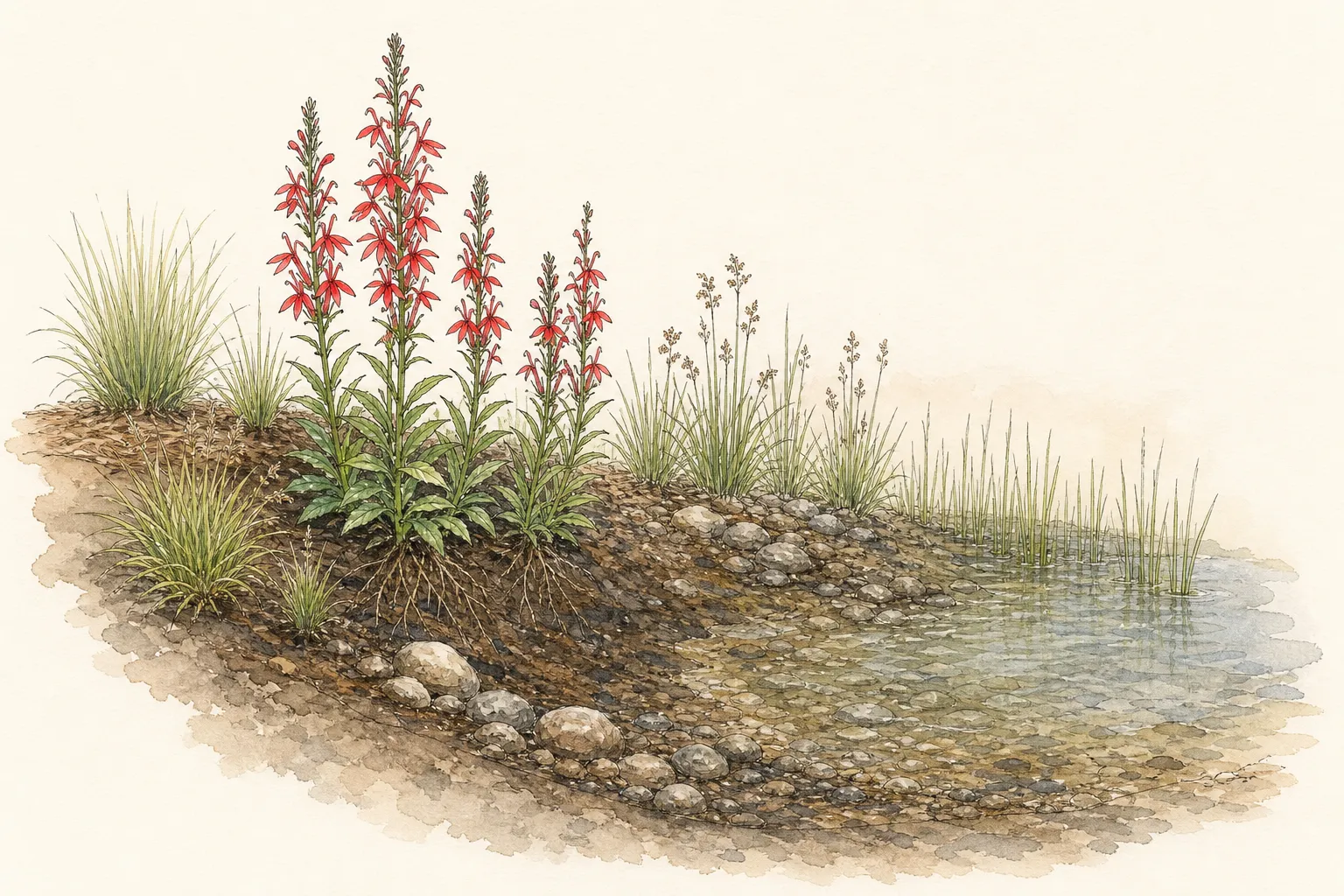
Cardinal flower clump on the continuously moist upper edge of a pond with scarlet spikes among sedges and rushes
Related reading
Sources
- Lobelia cardinalis. North Carolina State Extension. Source record · Accessed 2026-08-30.
- Cardinal Flower. University of Maryland Extension. Source record · Accessed 2026-08-30.
- Native Aquatic and Wetland Plants: Cardinal Flower, Lobelia cardinalis. University of Florida IFAS Extension. Source record · Accessed 2026-08-30.
- Lobelia cardinalis. Royal Horticultural Society. Source record · Accessed 2026-08-30.
- Lobelia cardinalis L.. Royal Botanic Gardens, Kew. Source record · Accessed 2026-08-30.