Anise Hyssop
Agastache foeniculum
A practical garden profile of Agastache foeniculum, covering identification, mature spacing, drainage, self-sowing and seasonal care.
Published Last updated
At a glance
- Light
- Full sun to partial shade; full sun usually gives the strongest flower display
- Water
- Dry to medium once established; water new plants while preserving free drainage
- Soil
- Average garden soil with reliable drainage; avoid a persistently wet crown
- Hardiness
- Zones 4–8
- Bloom
- Midsummer through early autumn, with timing varying by climate and selection
- Height
- 2–5 ft · 60–150 cm
In this guide
Overview
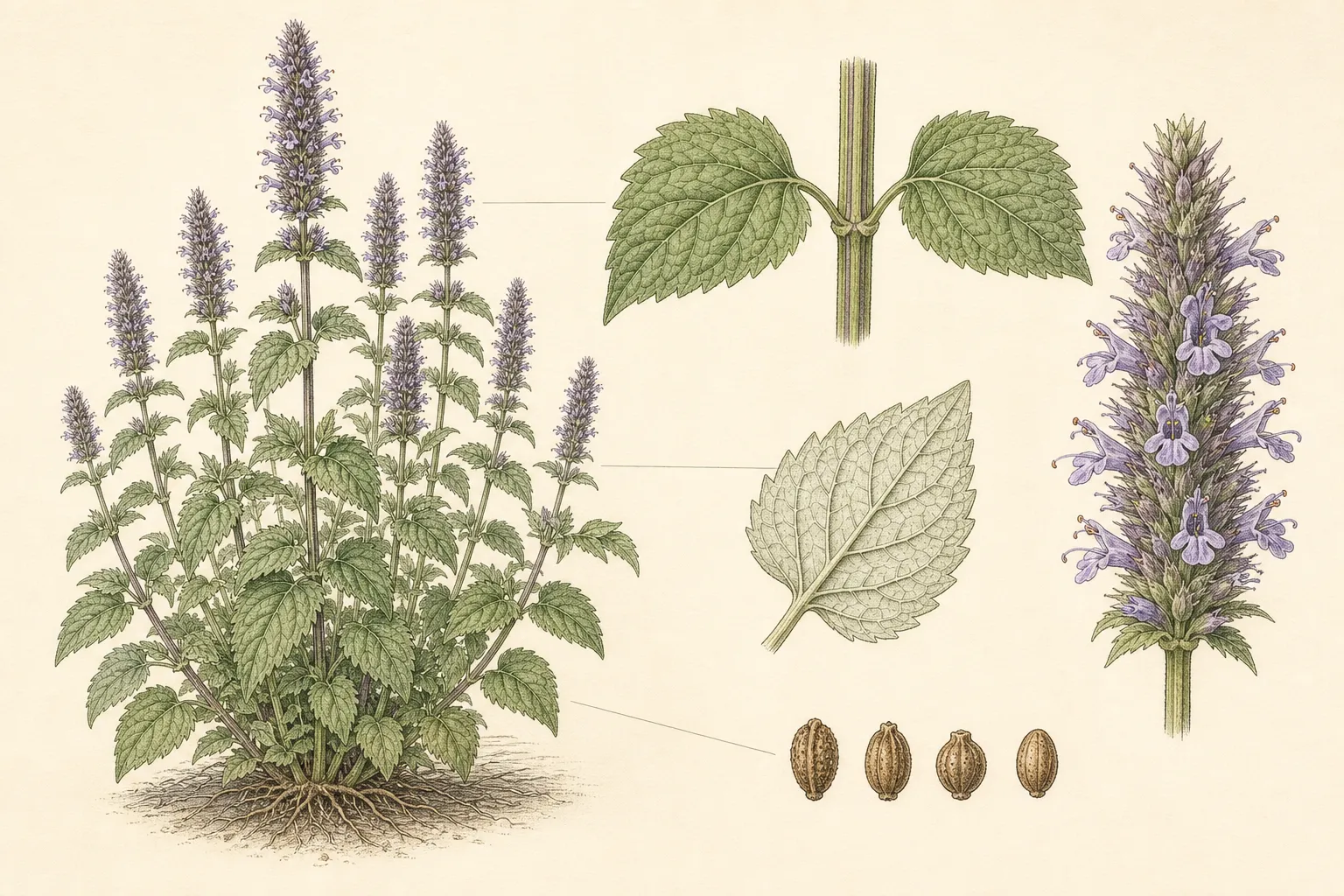
Anise hyssop is an upright member of the mint family, but it is neither true hyssop nor culinary anise. Square stems carry opposite, toothed leaves with a distinct licorice-like scent when gently rubbed. Dense cylinders of small, two-lipped lavender-blue flowers rise above the foliage from midsummer into autumn.
Treat the finished clump, not the nursery pot, as the unit of design. The straight flower spikes make a clear middle or back layer in a sunny perennial border, meadow-style planting or herb garden. Reserve roughly 1–3 feet of width per clump and keep neighboring crowns low enough that light and air still reach the base.
Full sun produces the firmest outline and most dependable flower display. Partial shade can work, especially where summers are hot, but an increasingly open or leaning plant is a cue to reassess light before adding fertilizer or a stake. Rich feeding can also produce soft growth that obscures the naturally vertical habit.
Drainage is the decisive soil condition. Established plants tolerate dry periods and also grow in moist soil when excess water leaves the crown. A low pocket that stays saturated after rain invites crown or root decline; move the plant or correct the site rather than trying to compensate with surface mulch.
The species can spread by short rhizomes and self-sown seedlings. That makes a modest drift possible, but it also means the gardener must decide whether to leave seed heads, deadhead for a tidier border, or edit seedlings the following spring. Named hybrids may be sterile or differ substantially from the species, so record exactly what was planted.
Anise hyssop is often short-lived. A plant disappearing after several winters is not automatically a maintenance failure, especially where drainage was marginal. Retaining a few well-placed seedlings can renew the group; unwanted seedlings are easiest to move or remove while small.
- Family
- Lamiaceae
- Range
- Prairies, plains, fields and dry upland woodland from north-central United States into western and central Canada
- Soil pH
- 6–7.5
- Spread
- 1–3 ft · 30–90 cm
Planting & careHow to grow anise hyssop
The species is native only within part of North America and may behave as an introduced garden plant elsewhere. Hardiness, height and flowering time vary by climate and selection. Confirm regional native status and keep the scientific name on the nursery label; many ornamental Agastache hybrids differ in mature size, flower color, fertility and winter performance.
- 1Confirm the plant identity
Buy by the botanical name Agastache foeniculum and record whether the plant is the species, a named cultivar or a hybrid; their size, fertility and flower color are not interchangeable.
- 2Map the mature clump
Reserve 1–3 feet of spread for each plant, then keep additional clearance from paths, neighboring crowns and any edge that must remain visible.
- 3Test light and drainage
Choose full sun to light partial shade and observe where water stands after rain. Reject a persistently wet pocket before adding amendments or irrigation.
- 4Set the crown at grade
Plant at the same depth as the container, spread loosened roots into the surrounding soil and keep mulch away from the crown and lower stems.
- 5Establish, then reduce intervention
Water the occupied root zone during establishment, then let soil condition rather than a fixed calendar determine irrigation. Avoid routine high-nitrogen feeding.
- 6Choose a seed-head policy
Before flowers fade, decide where seedlings are welcome. Deadhead selected spikes to limit seed or leave sound heads where renewal and winter structure suit the design.
Pruning anise hyssop
Deadhead individual flower spikes when limiting self-sowing or extending a neat flowering display matters, cutting back to a healthy leaf pair instead of shearing the whole clump. Leave some sound stems and seed heads if winter structure and seed are useful, then remove the dormant top growth before new spring shoots are damaged. Divide an enlarging clump in spring or autumn only when there is a clear propagation or spacing reason.
Seasonal care
Spring
Remove dormant stems before new growth rises through them, edit or transplant unwanted seedlings while small, divide only when needed and keep mulch clear of the crown.
Summer
Watch whether stems remain upright in the available light, water new plants by root-zone condition and check that heavy rain leaves the crown promptly.
Autumn
Deadhead where self-sowing is unwanted, leave selected sound seed heads for structure, and mark seedlings or divisions that can renew an aging group.
Winter
Observe standing stems and drainage through freeze-thaw cycles, avoid wet mulch over the crown and plan any relocation for a better-drained site.
Safety and garden spread
Common problems
Crown or root rot
- Look for
- Wilting or collapse while soil remains wet, darkened crown tissue, soft roots or repeated loss after saturated weather.
- Action
- Stop schedule-based irrigation, expose rather than bury the crown and correct or abandon the poorly drained site before replacing the plant.
Sparse flowers or leaning stems
- Look for
- Long soft internodes, an open center, few spikes or growth reaching toward the brightest side.
- Action
- Reassess seasonal light, crowding and fertilizer first; move the plant to stronger sun if the site cannot support its upright habit.
Powdery mildew or leaf spots
- Look for
- White surface growth, expanding spots or foliage decline concentrated in crowded, humid growth.
- Action
- Open spacing, water the soil rather than repeatedly wetting leaves and seek a local diagnosis before using a treatment.
Unwanted seedlings
- Look for
- Numerous young plants beyond the intended clump, especially below flower spikes left to ripen.
- Action
- Remove or transplant seedlings while small and deadhead more of the next flower crop before seed matures.
Plant details
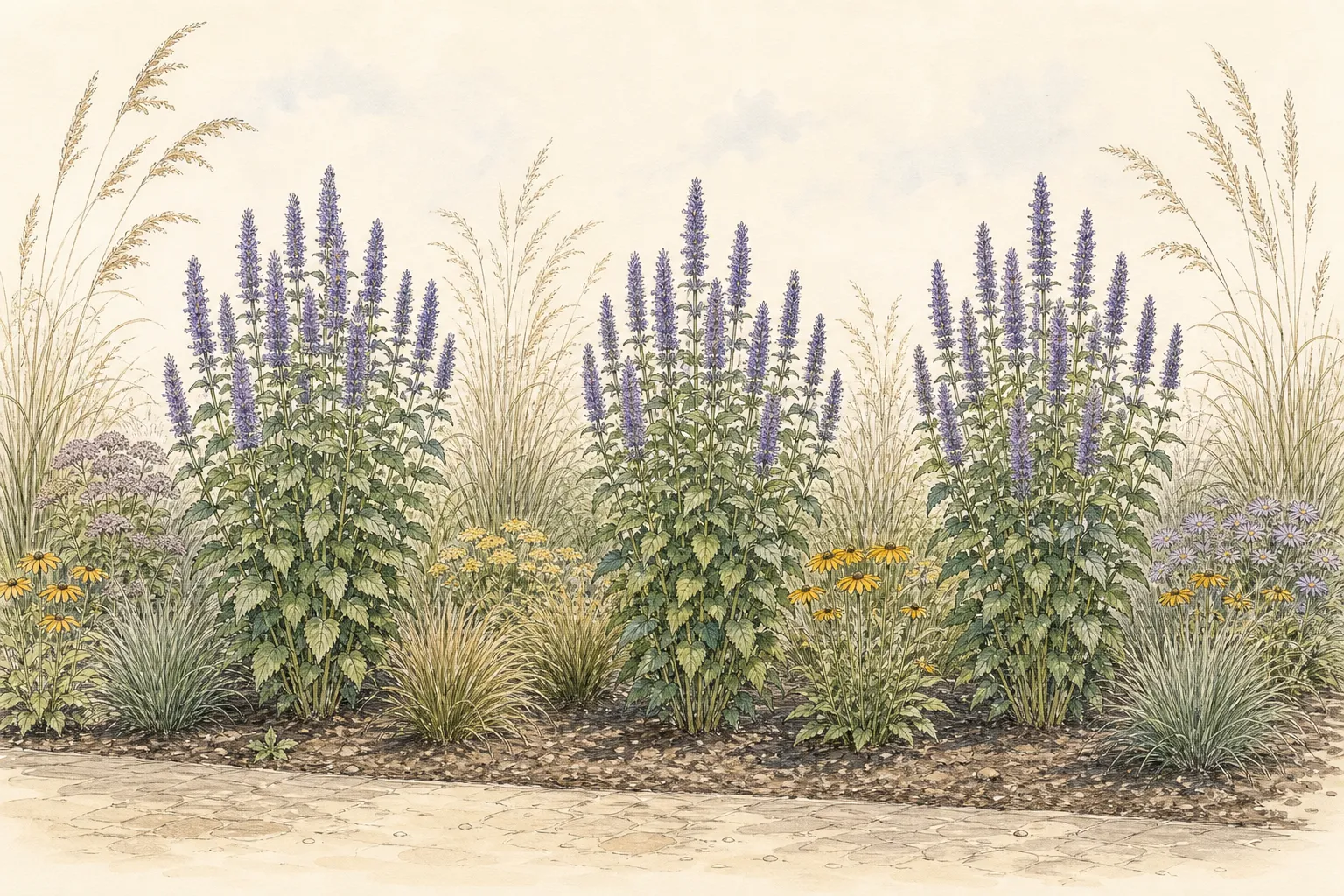
Three mature anise hyssop clumps spaced through a sunny late-summer border with lower grasses and yellow flowers
Sources
- Agastache foeniculum (Anise Hyssop, Hyssop). North Carolina Extension Gardener Plant Toolbox. Source record · Accessed 2026-08-24.
- Anise hyssop, Agastache foeniculum. University of Wisconsin–Madison Division of Extension. Source record · Accessed 2026-08-24.
- Agastache foeniculum. Missouri Botanical Garden Plant Finder. Source record · Accessed 2026-08-24.