Common Daffodil
Narcissus pseudonarcissus
A profile of Narcissus pseudonarcissus, the western European trumpet daffodil with a true bulb, spring foliage, and summer dormancy.
Published Last updated
At a glance
- Light
- Full sun to part shade during active growth
- Water
- Medium in growth; drier during summer dormancy
- Soil
- Moderately fertile, well-drained soil
- Hardiness
- Zones 4–8
- Bloom
- Early to mid-spring
- Height
- 12–18 in · 30–45 cm
In this guide
Overview
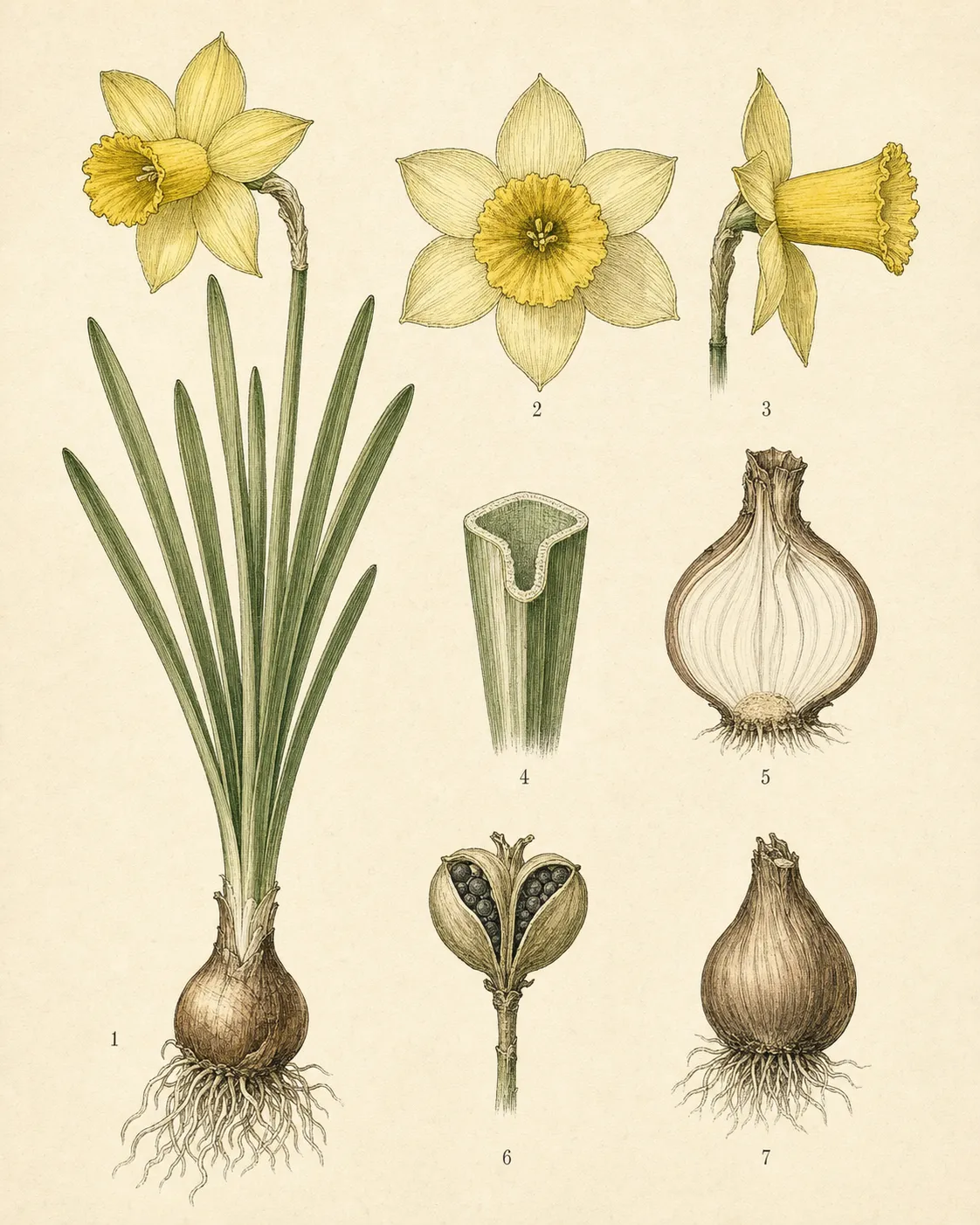
Narcissus pseudonarcissus is a bulbous perennial native to western Europe. Each flowering stem normally carries one yellow flower whose trumpet-like corona is as long as or longer than the surrounding six tepals. That proportion, together with the single flower and basal blue-green strap leaves, separates the species from many garden daffodil hybrids.
The underground organ is a true tunicate bulb, not a crown, corm, or rhizome. Roots grow from the basal plate and the pointed shoot emerges from the top. Institutional depth guidance uses different measurement conventions: RHS gives 1.5–2 bulb heights, Kew gives three, and NC State gives 4–5 in (10–13 cm) below the surface for this species. Apply the local supplier’s convention rather than mixing them.
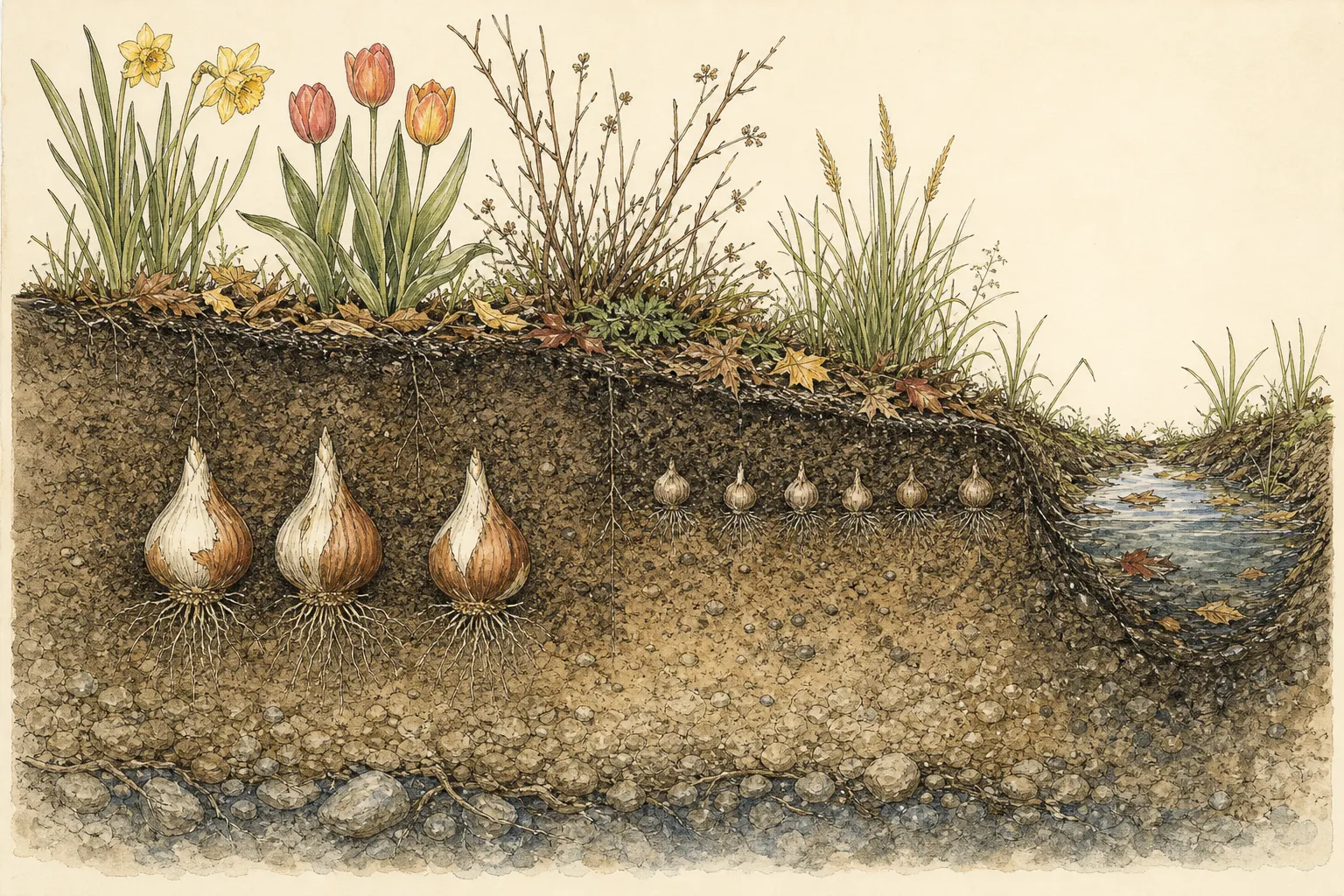
Full sun to light shade during active growth and fertile, well-drained soil support reliable return. Winter waterlogging encourages bulb rot. Under deciduous trees, useful light reaches the leaves before canopy closure, but deep evergreen shade can weaken flowering.
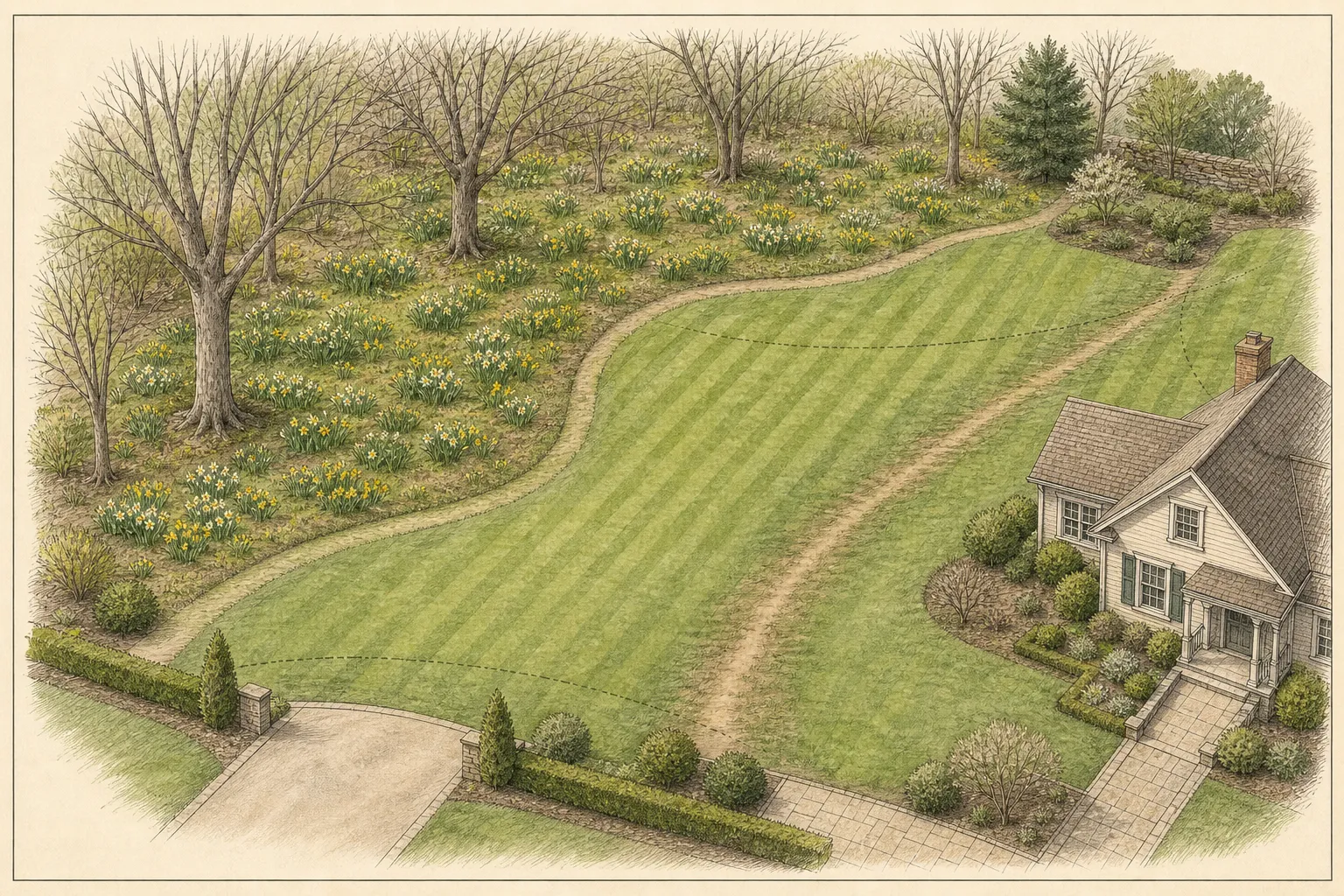
Leaves remain active after the flower fades and rebuild the bulb for the next year. Deadhead if seed is not wanted, then leave every green leaf untied and uncut until it yellows naturally. In grass, delay mowing until the daffodil foliage has completed that cycle.
Established bulbs increase into clumps and may be divided when flowering declines through crowding. Lift after the foliage has died back, separate sound offsets, discard soft bulbs, and replant promptly at the correct depth. Mark the area so summer digging does not damage dormant bulbs.
All parts contain alkaloids, and bulbs are the most hazardous if eaten. Store them in original labeled packaging away from onions and other food, wear gloves if sap irritates the skin, and keep loose bulbs from children and pets.
- Family
- Amaryllidaceae
- Range
- Western Europe
- Soil pH
- 6–7.5
- Spread
- 9–12 in per established clump · 23–30 cm per established clump
Planting & careHow to grow common daffodil
Reliable perennial performance depends on adequate winter chilling, spring light, and summer drainage. In warm-winter regions, cultivar choice and local bulb guidance are essential.
- 1Select firm labeled bulbs
Choose dormant bulbs without mould or soft areas and keep the Narcissus label attached. Store them separately from food until planting.
- 2Choose spring light and drainage
Use full sun or light deciduous shade in soil that drains after winter rain. Avoid deep shade and hollows that remain waterlogged.
- 3Measure from the bulb
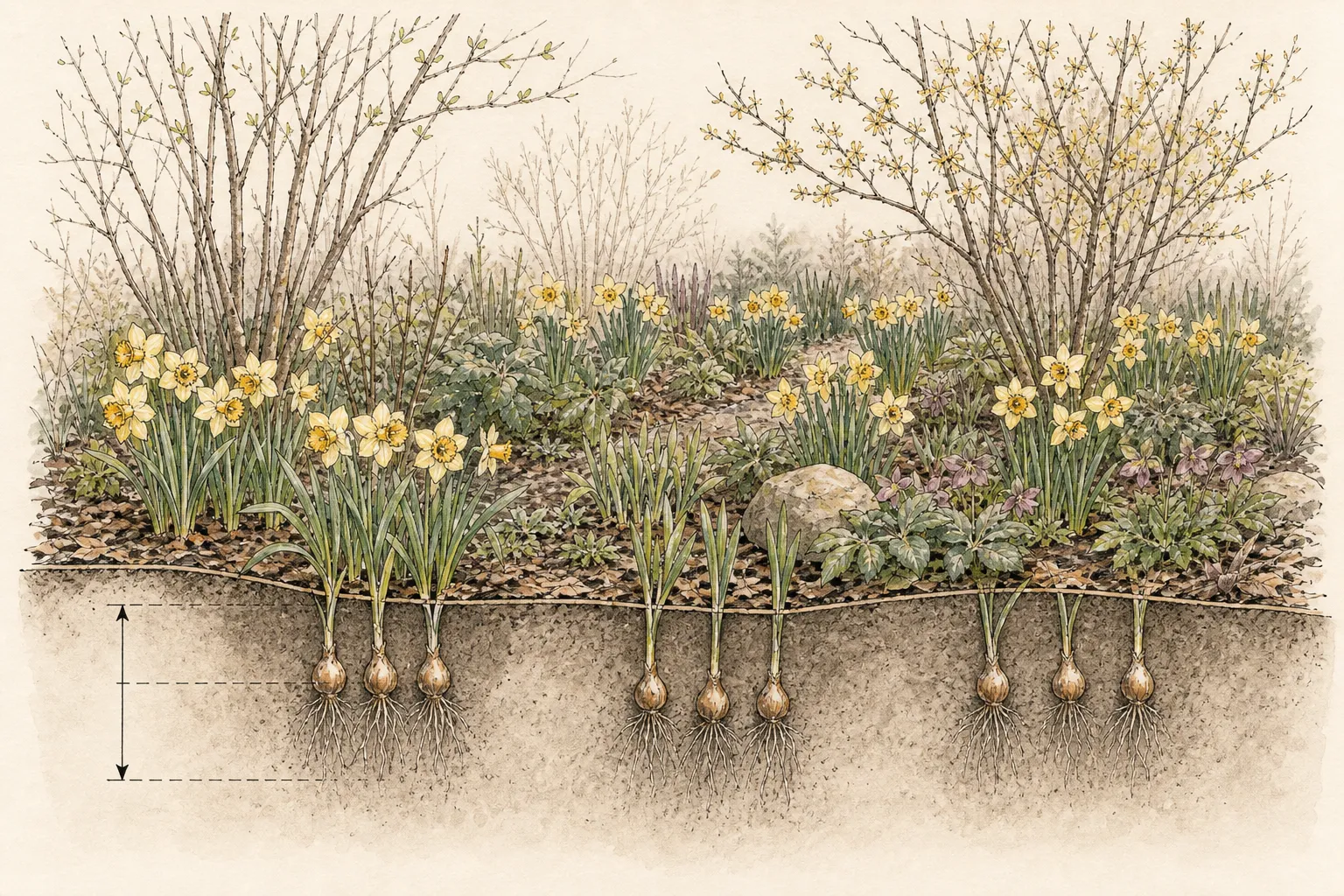
Set the pointed end up at the locally recommended depth. Published guidance ranges from 1.5 to three bulb heights; NC State gives about 4–5 in (10–13 cm) below the surface for this species.
- 4Arrange a readable group
Plant several bulbs in an irregular drift with enough space for offsets, keeping each basal plate in contact with firm soil.
- 5Settle the soil once
Water after planting to settle soil around the bulbs. Thereafter, water in-ground plants only during prolonged dry periods in active growth unless local conditions require more.
- 6Mark the dormant clump
Record the position before leaves disappear so later digging, mowing, and perennial division do not cut through dormant bulbs.
Pruning common daffodil
Daffodils need deadheading and foliage timing, not pruning. Remove spent flowers if seed is unwanted, but retain every green leaf until it yellows and detaches with little resistance. Cutting, knotting, or braiding active foliage reduces the leaf area replenishing the bulb; clear only fully dead leaves by hand.
Seasonal care
Spring
Enjoy bloom, deadhead where seed is not wanted, keep foliage intact, and water only when active roots are genuinely dry.
Summer
Let yellowing foliage finish and mark the clump as it enters dormancy. Lift and divide congested bulbs only after leaves have died back.
Autumn
Plant firm dormant bulbs at measured depth, water them in, and keep deep coarse mulch from altering the effective planting depth.
Winter
Leave dormant bulbs undisturbed, check containers and low sites for waterlogging, and watch for shoots without raking across them.
Safety and garden spread
Common problems
Bulb rot
- Look for
- Bulbs become soft or foul-smelling, and shoots yellow or collapse in wet soil.
- Action
- Remove rotten bulbs with gloves, correct drainage, and avoid replanting healthy bulbs into the same saturated pocket. Seek diagnosis if losses spread.
Leaves without flowers
- Look for
- Clumps produce foliage but few blooms after previously flowering well.
- Action
- Review shade, early foliage removal, planting depth, crowding, and summer drainage. Divide congested clumps after dieback and correct the supported cause.
Narcissus bulb fly or bulb mites
- Look for
- A bulb is hollowed or soft, with larvae, mites, or distorted weak shoots.
- Action
- Confirm the pest, discard badly damaged bulbs, and follow current local sanitation and labeled-control guidance rather than treating every clump.
Premature foliage removal
- Look for
- Leaves are cut, tied, or mown while still green and flowering declines in following seasons.
- Action
- Allow future foliage to yellow naturally and delay mowing over naturalized groups. Recovery may take more than one complete growth cycle.
Related reading
Sources
- Narcissus pseudonarcissus. North Carolina State Extension. Source record · Accessed 2026-08-30.
- Narcissus pseudonarcissus (13). Royal Horticultural Society. Source record · Accessed 2026-08-30.
- Narcissus pseudonarcissus. Royal Botanic Gardens, Kew. Source record · Accessed 2026-08-30.