Canada Serviceberry
Amelanchier canadensis
A profile of Amelanchier canadensis, the eastern North American multi-stem shrub or small tree with spring flowers and summer pomes.
Published Last updated
At a glance
- Light
- Full sun to part shade
- Water
- Medium; moisture-retentive soil with drainage
- Soil
- Acidic to neutral, moist, well-drained soil
- Hardiness
- Zones 4–8
- Bloom
- Early to mid-spring before full leaf expansion
- Height
- 15–25 ft · 4.5–7.5 m
In this guide
Overview
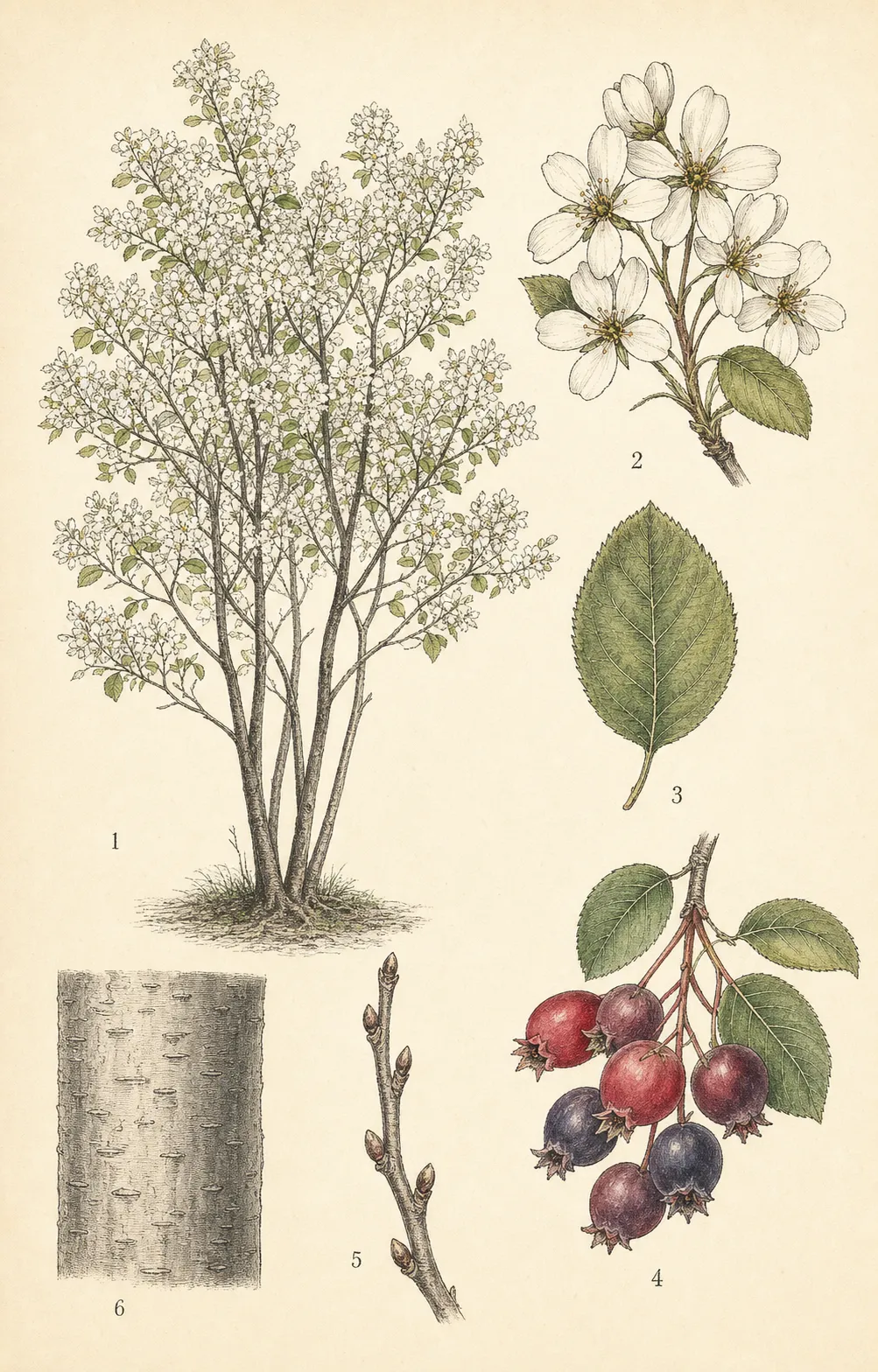
Amelanchier canadensis is an eastern North American large shrub or small tree of moist woods, thickets, swamps, and low ground. It commonly forms several upright stems and can spread by suckers into a colony. That habit suits a woodland edge or rain-garden margin better than a narrow bed where every new stem would be removed.
Loose clusters of fragrant five-petaled white flowers appear before or as the leaves expand. The simple alternate leaves are oval with fine teeth and may turn orange or red in autumn. Small berry-like pomes ripen from red to dark purple in summer and attract birds.
Related serviceberry species and hybrids are easily confused in nursery trade. Keep the botanical label and check flower clusters, alternate leaves, pome fruit, bark, and mature habit together. A cultivar may be narrower or shorter than the species, so its own dimensions override the broad 15–25 ft species range.
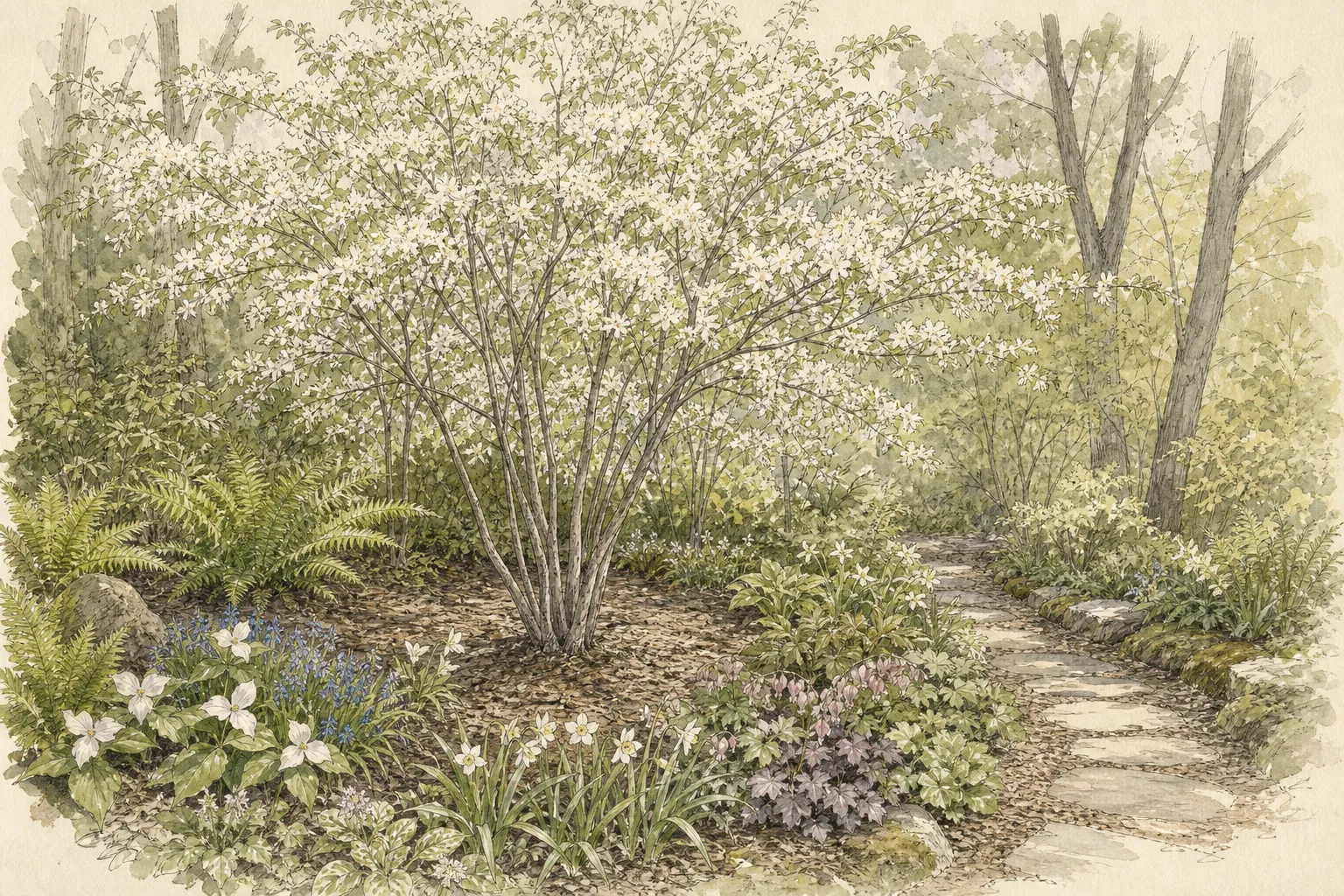
Part shade with moist, well-drained soil reflects the species’ natural setting. It can grow in full sun when the root zone receives adequate moisture, and established plants tolerate some wetness better than many small ornamental trees. Heavy compacted clay that excludes air can still cause root decline.
Decide whether the planting will remain multi-stemmed, be trained as a small tree, or be allowed to form a colony. Prune while branches are young, remove unwanted suckers at their origin, and retain enough two- to four-year-old flowering wood to preserve bloom and fruit.
Rust, leaf spot, blight, and powdery mildew can occur, while borers and scale are possible insect problems. Most symptoms do not justify routine spraying; identify the pattern and use current local guidance before treating.
- Family
- Rosaceae
- Range
- Eastern North America
- Soil pH
- 5–7
- Spread
- 10–20 ft · 3–6 m
Planting & careHow to grow canada serviceberry
Canada serviceberry is associated with moist woodland edges and wetlands in parts of its native range, but garden sites still need oxygenated soil and room for mature multi-stem growth. Regional disease pressure can affect foliage quality.
- 1Choose the intended habit
Plan for a multi-stem shrub, trained small tree, or colony before planting. Reserve the cultivar’s mature width plus access for sucker and branch management.
- 2Match light to moisture
Use part shade at a woodland edge or full sun where soil moisture is reliable. Avoid a confined dry foundation strip and chronically airless compacted soil.
- 3Expose the root flare
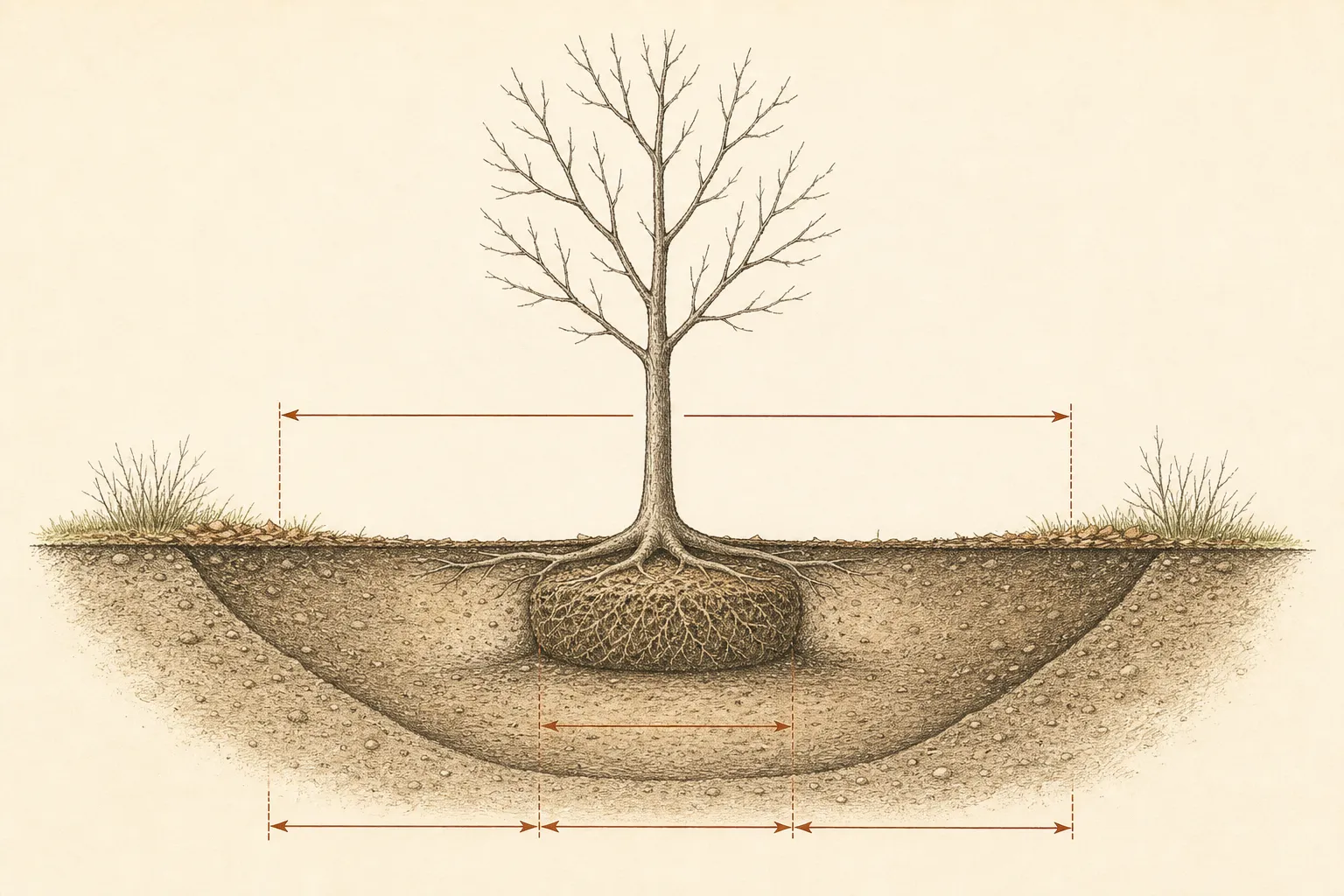
Find the first structural roots before measuring the hole. Set that flare at finished grade on firm soil and keep excess container soil off the stem bases.
- 4Open a broad root area
Dig no deeper than the measured root ball and widen the planting area where soil permits. Correct major circling roots and backfill with the excavated soil.
- 5Water both soil zones
Soak the nursery root ball and surrounding soil, then check both during the first growing season. Water during dry periods without maintaining stagnant soil.
- 6Keep the stem bases visible
Apply a broad shallow mulch ring, leave every trunk clear, and use low companions that do not hide suckers, bark injury, or the developing multi-stem framework.
Pruning canada serviceberry
Develop the intended multi-stem or small-tree framework while branches are young. During dormancy, remove dead, damaged, rubbing, or poorly placed branches and unwanted suckers at their origin. Keep an open canopy without shearing, and stage any old-stem renewal so some two- to four-year-old flowering wood remains.
Seasonal care
Spring
Observe flower clusters and leaf-out, restore a shallow mulch ring, and maintain moisture for new plants without burying the stem bases.
Summer
Watch ripening pomes, drought response, suckers, and leaf disease. Water during meaningful drought and remove only suckers outside the intended form.
Autumn
Enjoy autumn color, clear diseased fallen leaves where local guidance recommends sanitation, and protect the broad root zone from compaction.
Winter
Inspect the leafless framework and make modest structural or sucker-removal cuts during safe dormant weather, preserving sound young flowering wood.
Safety and garden spread
Institutional sources describe the ripe pomes as edible, but correct species identification and clean, suitable fruit are essential; this profile does not provide food-safety advice for seeds or other parts.
Common problems
Poor establishment
- Look for
- Sparse new growth, early leaf drop, or a root ball that stays much drier or wetter than surrounding soil.
- Action
- Check moisture in both zones, expose a buried flare, restore mulch clearance, and correct drainage or irrigation before adding fertilizer.
Leaf spots or mildew
- Look for
- Spots, blotches, or a white coating expand across leaves, especially in humid crowded conditions.
- Action
- Confirm the disease, improve airflow and watering practice, and follow local sanitation or treatment guidance instead of applying a routine spray.
Rust
- Look for
- Orange or rust-colored spots and spores appear on leaves, sometimes with premature leaf drop.
- Action
- Ask a local diagnostic service to confirm rust and its regional host cycle. Remove affected debris only as recommended and use labeled control if warranted.
Borer or scale decline
- Look for
- Localized dieback, holes or frass in stems, or fixed scale insects with gradual thinning.
- Action
- Confirm the pest before cutting or treating, protect root health, and use current local timing and product-label guidance for any intervention.
Related reading
Sources
- Canada Serviceberry. North Carolina State Extension. Source record · Accessed 2026-08-30.
- Canada Serviceberry. Morton Arboretum. Source record · Accessed 2026-08-30.
- Amelanchier canadensis. Royal Botanic Gardens, Kew. Source record · Accessed 2026-08-30.
- Serviceberry in the Garden and in the Kitchen. Penn State Extension. Source record · Accessed 2026-08-30.