Japanese Andromeda
Pieris japonica
Grow Pieris japonica as a broadleaf evergreen for spring flower panicles and colored new growth in sheltered, acidic, moist but well-drained ornamental beds.
Published Last updated
At a glance
- Light
- Partial shade to filtered sun; protect from intense reflected heat and drying exposure while retaining enough light for dense growth and flowering
- Water
- Medium and even; moist but well-drained conditions with protection from drought and chronic saturation
- Soil
- Acidic, organically rich, well-drained soil; avoid alkaline ground and buried crowns
- Hardiness
- Zones 5–8
- Bloom
- Late winter to spring, with flower buds often visible through winter and colored new foliage following bloom
- Height
- 6–12 ft · 1.8–3.7 m
In this guide
Overview
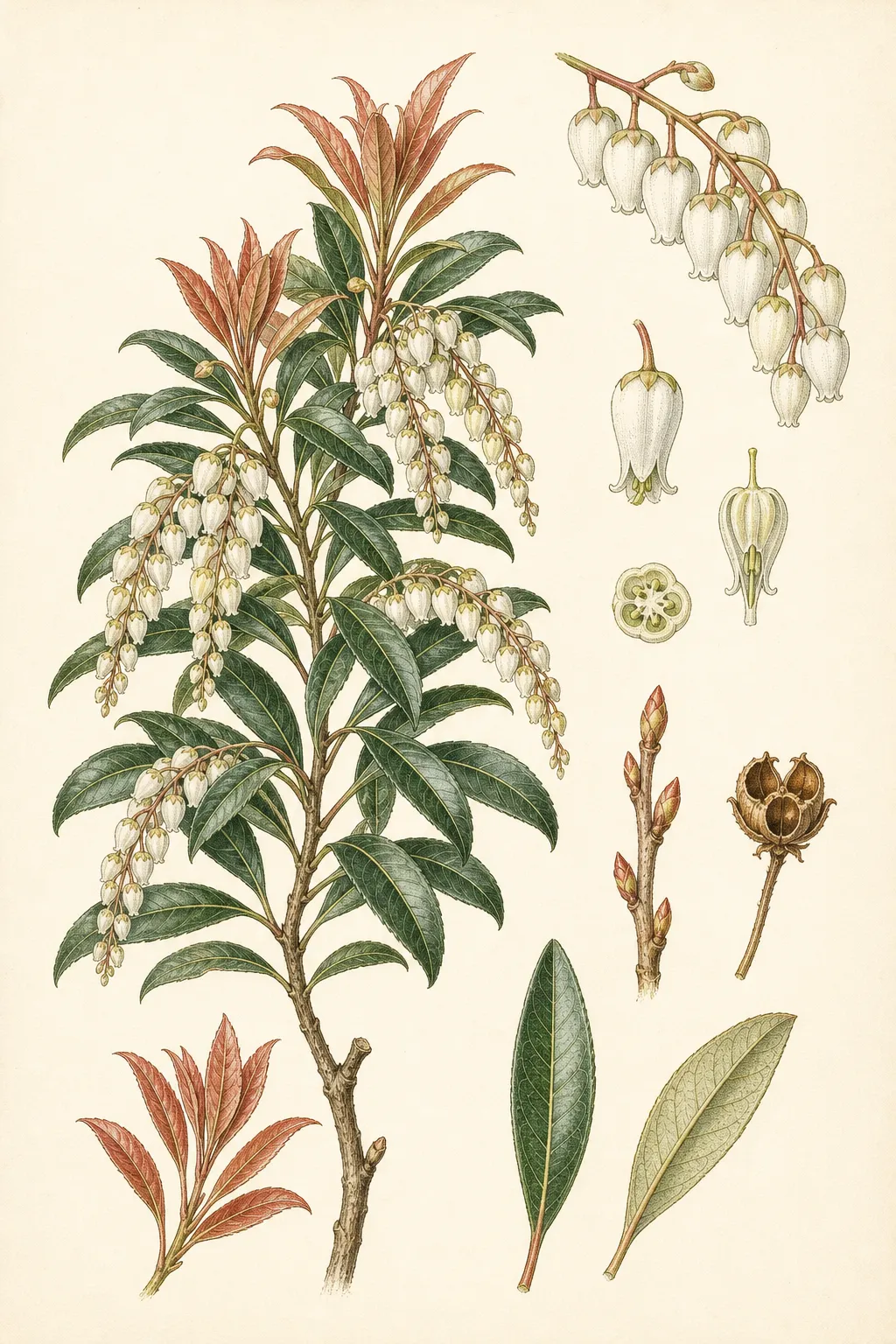
Japanese andromeda is an evergreen shrub with leathery leaves, pendent clusters of small urn-shaped flowers, colored young foliage, and visible winter buds. Named cultivars vary in mature size, flower color, and intensity of red or bronze new growth. The plant can carry several seasons of interest, but only when root conditions and shelter suit an acid-loving member of the heath family.
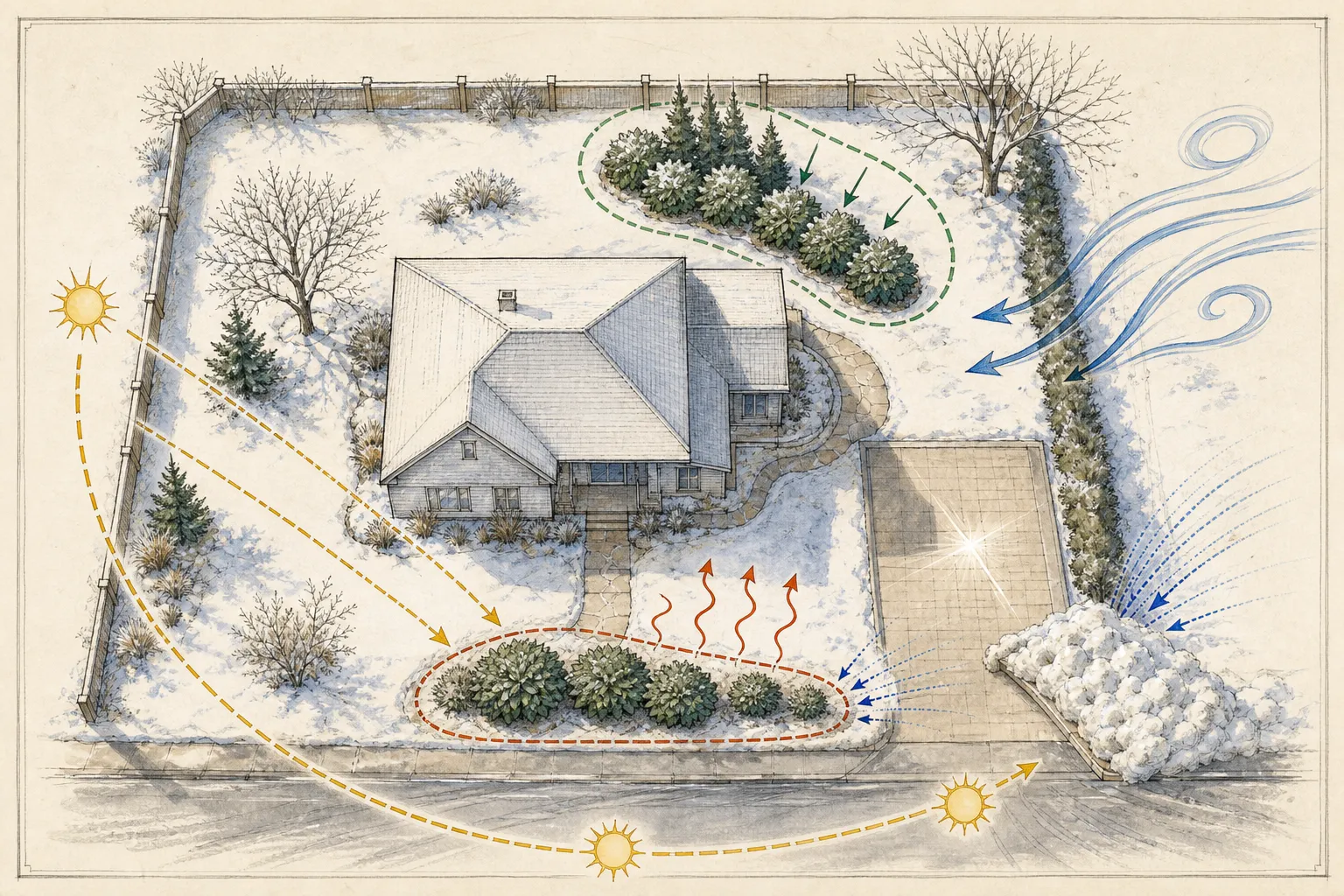
Choose a site with acidic, organically rich, moist but freely drained soil and protection from drying wind, harsh reflected heat, and deep shade. Foundation beds often combine lime leaching, roof drought, hot walls, and constrained roots—the opposite of the default woodland-edge setting. Test soil where pH is uncertain and correct the plant choice rather than attempting permanent chemical rescue of unsuitable ground.
The species can become a substantial shrub. Draw the named cultivar at mature spread, keep the crown away from paths and walls, and preserve air between Pieris and neighboring rhododendrons or evergreens. Use leaf mold or an appropriate shallow organic surface while keeping stems exposed. Avoid deep cultivation through the fine root system.
Toxicity is a central siting condition, not a footnote. Do not plant where clippings enter livestock areas, children may browse, or leaves mix with edible harvest. Handle and dispose of prunings responsibly. The shrub usually needs little pruning; a naturally scaled cultivar in the right position is safer and more attractive than a large plant held inside a narrow walkway.
- Family
- Ericaceae
- Range
- Eastern China, Taiwan, and Japan
- Soil pH
- 4.5–6
- Spread
- 5–8 ft · 1.5–2.4 m
Planting & careHow to grow japanese andromeda
Performance declines in hot dry alkaline or exposed sites. Confirm cultivar dimensions, hardiness, leaf color, and flower timing. In climates unlike the species’ preferred cool woodland-edge conditions, select a locally proven alternative rather than forcing the shrub with constant intervention.
- 1Verify soil and shelter
Measure pH where uncertain, test drainage, map wind, heat, roof runoff, and mature neighbors, and reject alkaline or chronically saturated sites.
- 2Choose a named mature size
Select a cultivar whose documented height, spread, flower, and foliage color fit without annual size reduction.
- 3Plant at correct grade
Set the root flare and upper root system at nursery grade, preserve the root ball, water thoroughly, and keep mulch away from stems.
- 4Establish even moisture
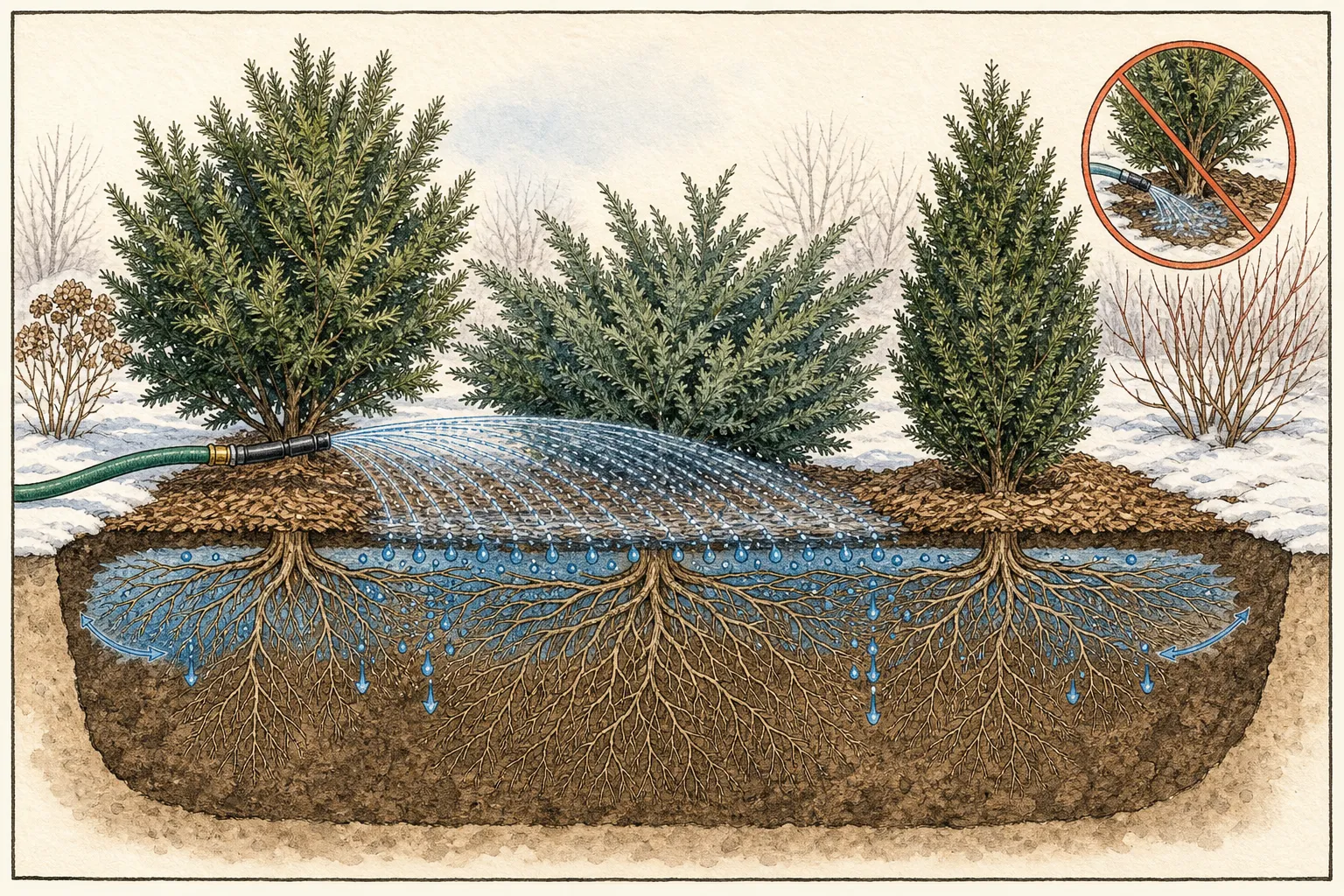
Water the complete root zone through establishment, protect from drought and reflected heat, label the cultivar, and keep the root surface undisturbed.
Pruning japanese andromeda
Prune lightly after flowering only when needed to remove dead, damaged, crossing, or badly placed growth and to preserve natural structure. Avoid hard routine shearing and do not remove developing flower buds later in the season. Deadhead only if practical and desired, using gloves and keeping toxic clippings contained. Replace or transplant an oversized shrub rather than repeatedly cutting it into a small foundation mound.
Seasonal care
Spring
Observe flowers and new growth, water during dry spells, make limited post-bloom cuts, and keep toxic clippings contained.
Summer
Protect roots from drought and heat, monitor leaf color and drainage, avoid cultivation, and check whether mature crowns retain open air.
Autumn
Water before freeze if dry, preserve visible flower buds, refresh a shallow compatible organic surface, and clear only diseased debris.
Winter
Inspect evergreen scorch, snow loading, bud health, and animal or salt exposure without pruning away the spring display.
Safety and garden spread
Common problems
Yellow leaves and weak growth
- Look for
- Alkaline soil, poor drainage, buried stems, damaged fine roots, drought, or inappropriate sun and heat.
- Action
- Test and diagnose the root environment, correct moisture, grade, mulch, and exposure, and replace the plant if the site cannot support acid conditions.
Brown leaf margins or winter scorch
- Look for
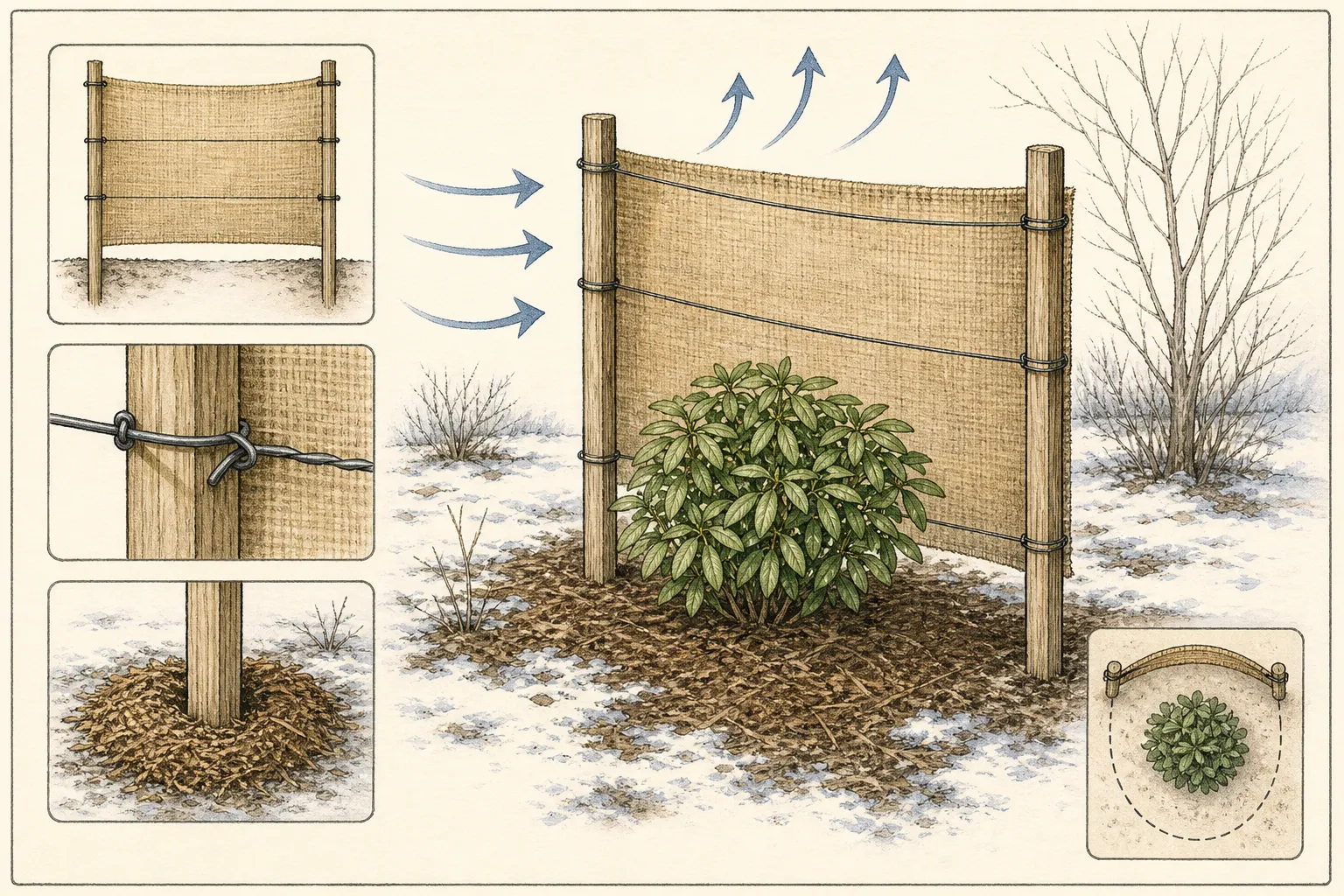
- Drying wind, frozen roots, winter sun, salt, reflected heat, or drought before freeze.
- Action
- Stabilize root moisture and shelter, remove the source of salt or heat, wait for growth to reveal living tissue, and prune only confirmed dead material.
Sparse flowers or congested crown
- Look for
- Deep shade, late pruning, removed buds, excess nitrogen, crowding, or a cultivar too large for the bed.
- Action
- Correct light and pruning timing, preserve buds, reduce competition selectively, and relocate an oversized plant instead of shearing it repeatedly.
Plant details
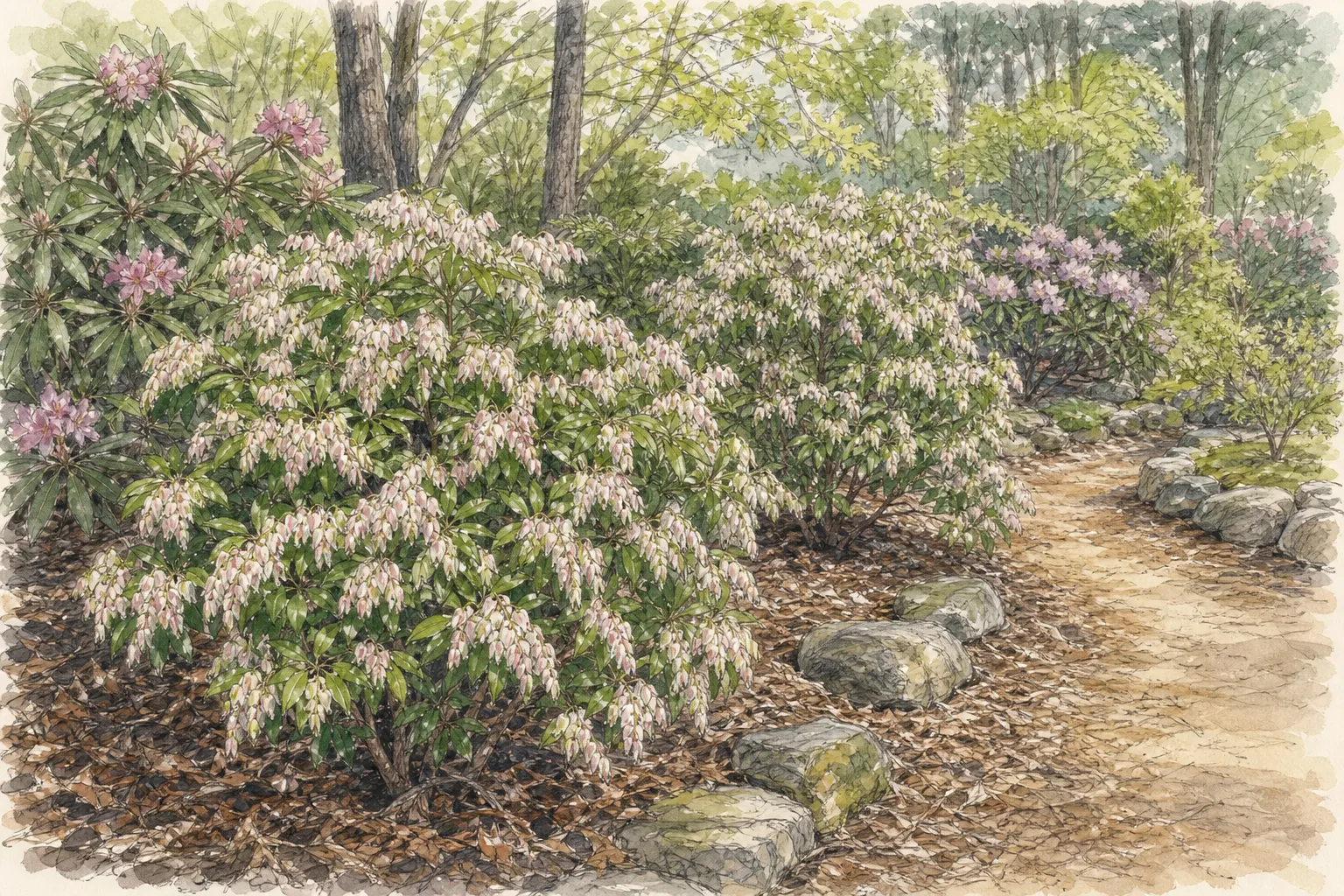
Mature Japanese andromeda shrubs in a sheltered acidic woodland-edge border with dappled light and leaf-mold surface
Related reading
Sources
- Japanese Pieris. NC State Extension Gardener Plant Toolbox. Source record · Accessed 2026-08-30.
- Pieris japonica. Missouri Botanical Garden. Source record · Accessed 2026-08-30.
- Pieris japonica (Thunb.) D.Don ex G.Don. Royal Botanic Gardens, Kew. Source record · Accessed 2026-08-30.
- Toxic and Non-toxic Plants: Pieris. ASPCA Animal Poison Control Center. Source record · Accessed 2026-08-30.