Grow · broadleaf evergreen winter exposure siting
Site Broadleaf Evergreens Away from Winter Exposure
Choose shelter, winter light, drainage, and mature space before planting broadleaf evergreen shrubs in exposed sites.
Published Last updated
In this guide
- Start with the actual shrub and its winter limit
- Read winter light from the shrub's point of view
- Map drying wind, reflected heat, and snow throw
- Reserve drainage and soil chemistry the plant can actually use
- Keep mature size and maintenance access out of the future failure
- Use structure for shelter instead of planning seasonal rescue
- Reject or redesign the site when exposure is built in
- Steps
Start with the actual shrub and its winter limit
Broadleaf evergreen is not one winter behavior. Boxwood, Meserve holly, Oregon grapeholly, pieris, and rhododendron all keep leaves through cold weather, but they do not tolerate the same combination of sun, wind, soil reaction, and root dryness. That matters before the hole is dug, because winter injury is often built into the placement rather than caused by a single bad storm. Iowa State and Colorado State both make the point in different regional climates: many broadleaf evergreen shrubs ask for protected exposure, steady root moisture, and well-drained soil long before the gardener starts thinking about burlap, anti-desiccants, or spring pruning.
Begin with the botanical name, the cultivar if available, and the hardiness pattern the plant already carries. A shrub rated hardy in a catalog can still fail where the site adds reflected heat, dry wind, plowed snow, or alkaline clay the plant cannot use. The question is not whether the shrub is evergreen, but whether that specific evergreen can hold leaf moisture while roots sit in cold ground. A site that demands yearly emergency protection from glare, wind, and salt is usually telling you the planting decision was wrong at the start.
Read winter light from the shrub's point of view
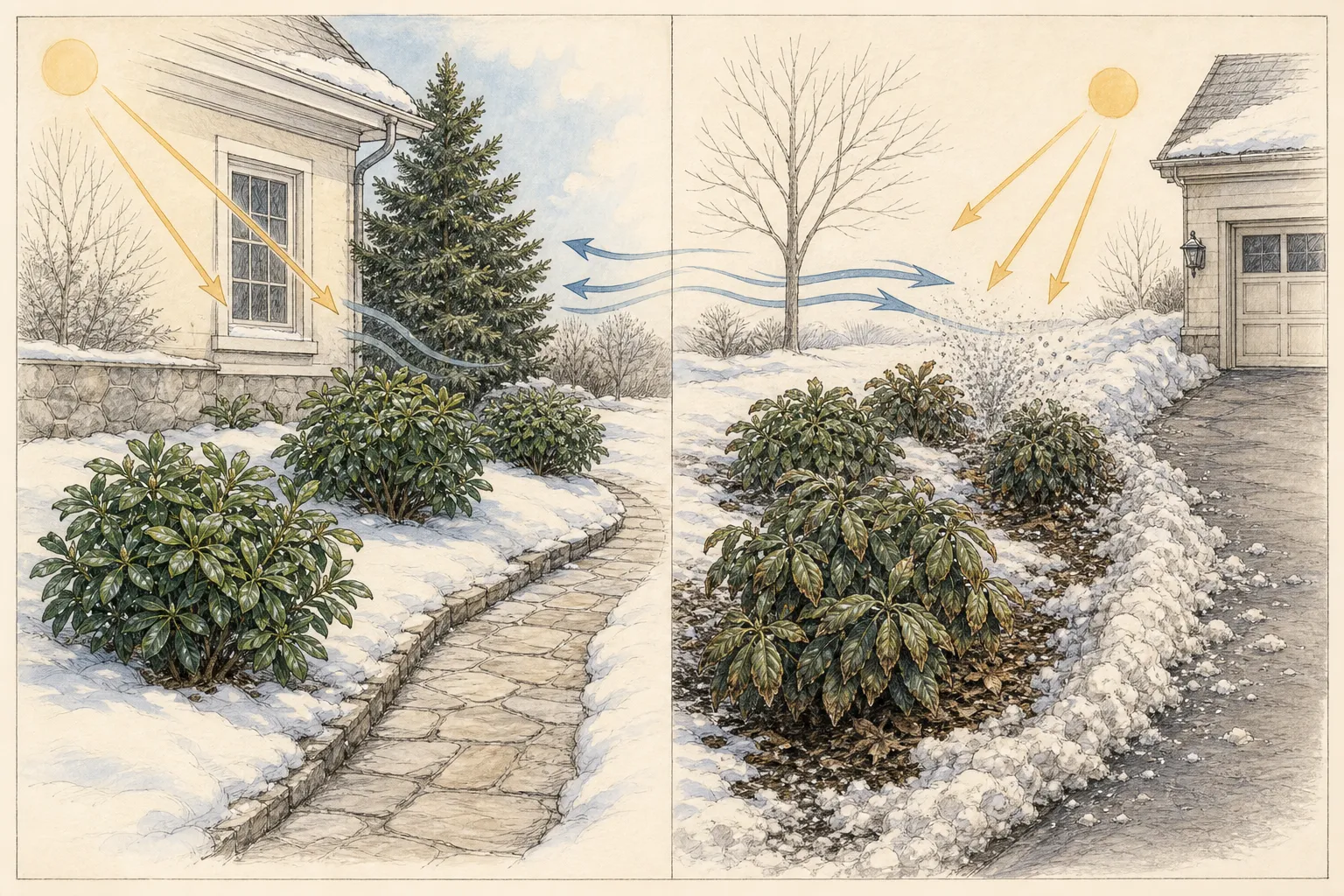
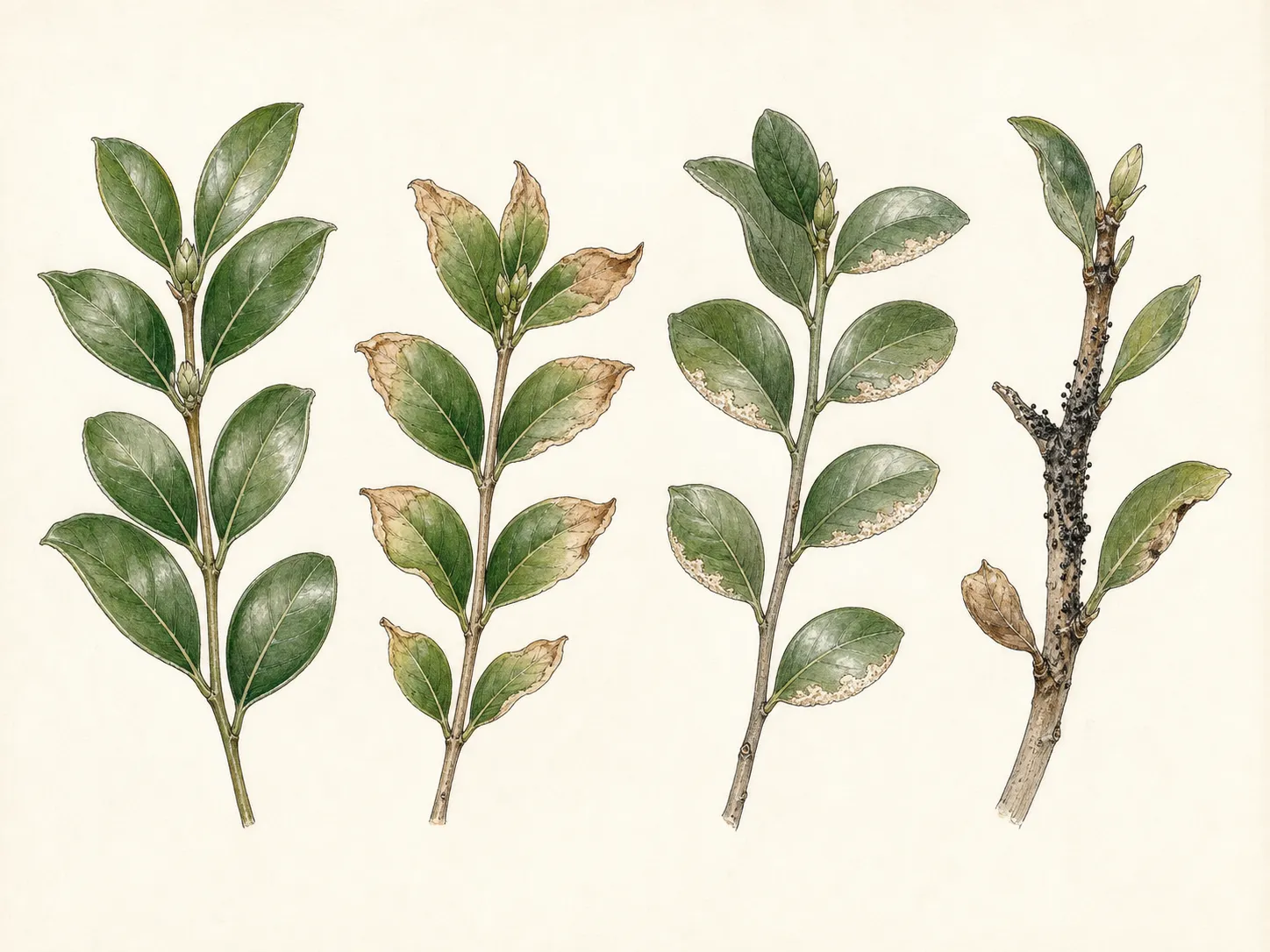
Summer beauty can hide a bad winter placement. A leafy deciduous canopy that softens a border in July disappears when broadleaf evergreens are under the greatest desiccation pressure. Low sun then hits foliage directly, often from angles the summer gardener barely notices, while frozen or semi-frozen soil slows replacement water from the root system. University of Maryland describes the classic injury pattern clearly: dry, warm, sunny, or windy winter days can pull moisture from evergreen leaves when the plant cannot move enough water upward from cold ground. If you place the shrub where winter light is strongest, you have already increased the spring diagnosis problem.
That is why east and north exposures keep recurring in northern and interior guidance. Colorado State warns that broadleaf evergreens often struggle on south or west exposures in Colorado because bright winter sun combines with cold and drying wind. Iowa State gives parallel siting advice for several broadleaf evergreen shrubs, often favoring protected east-side placements or situations with morning sun and afternoon shade. The point is not to memorize one universal compass direction. It is to identify where winter light is moderated on your property and where it is amplified by open sky, pavement, pale walls, or missing overhead cover.
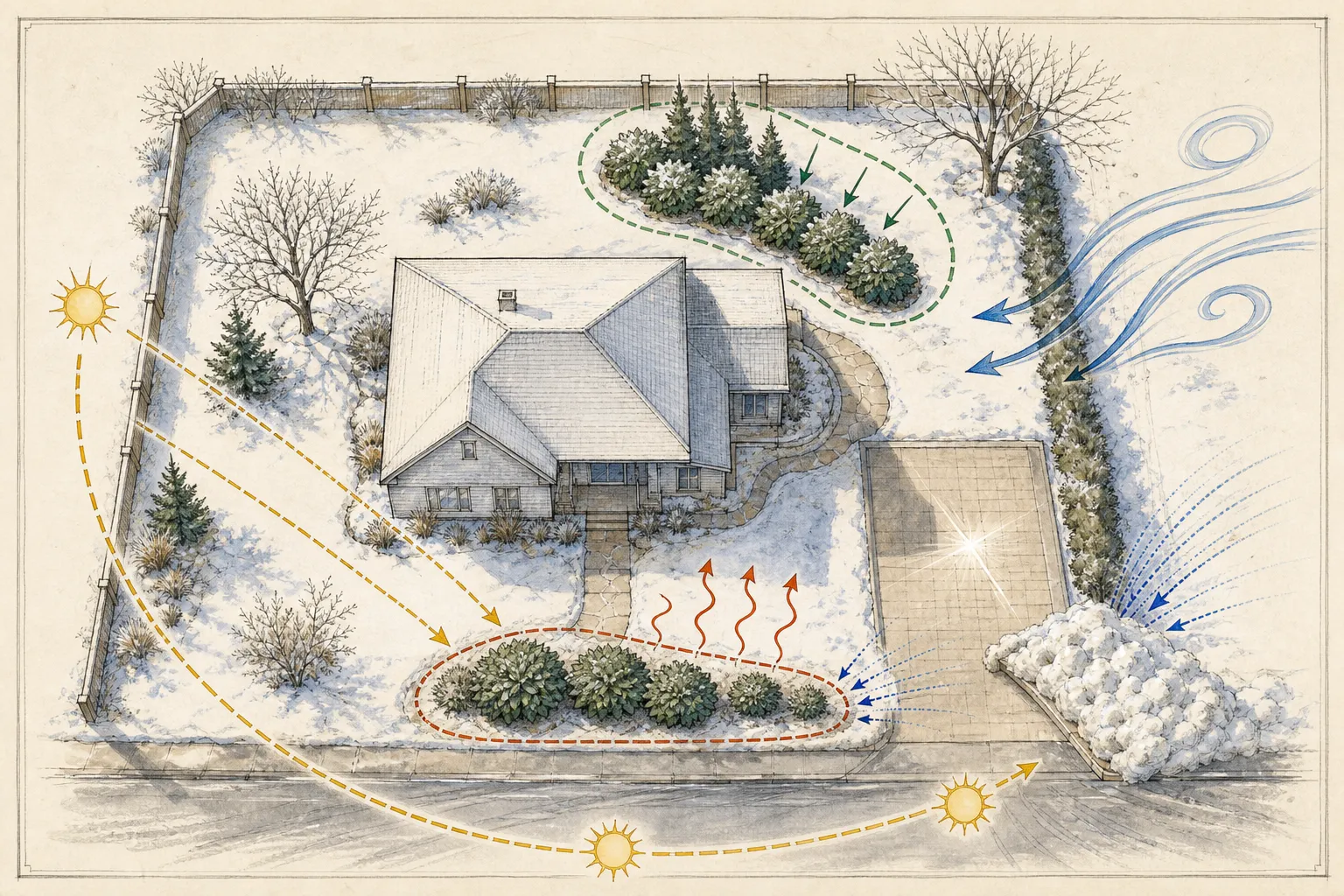
It is worth making one more distinction before planting. Winter light does not only decide whether foliage burns; it also decides how quickly snow and frozen surface layers cycle through thaw and refreeze around the bed. A site that warms hard every bright afternoon and locks again at night can push a moisture-sensitive broadleaf evergreen through repeated stress even when air temperatures alone seem tolerable. By contrast, a quieter exposure with moderated morning light often produces a steadier winter rhythm. When two beds seem otherwise equal, choose the one with the calmer daily pattern rather than the flashier patch of winter brightness.
Map drying wind, reflected heat, and snow throw
Wind is not just a comfort issue. It increases moisture loss from leaves exactly when the root system is least able to refill them. A shrub that would tolerate bright winter light in a still courtyard may burn badly on a corner lot that catches prevailing wind from open pavement or a field edge. Before planting, stand in the bed after leaf fall and note which direction storms and dry winter gusts actually arrive from. Then add the path of shoveled or plowed snow, splash from deicing salts, and the hard reflective surfaces that brighten foliage on cold afternoons. Those forces rarely line up by accident; they usually repeat the same way every winter.
Many broadleaf evergreen failures are really combinations of exposures. A driveway edge might deliver glare from the plowed surface, salt-laden runoff near the root zone, and a dirty snow ridge that traps branches all at once. A south-west foundation corner can add open afternoon sun and a wind tunnel between the house and a fence. Those are not subtle penalties for shrubs that already depend on balanced leaf water status. If the site map shows several winter stresses converging in one bed, do not assume mulch or a light wrap will make the problem disappear. Move the plant to the quieter part of the property instead.
Reserve drainage and soil chemistry the plant can actually use
Protected exposure is not enough if the root zone alternates between drought and poor aeration. Colorado State notes that broadleaf evergreens generally need more consistent soil moisture than many narrow-leaved evergreens, while also insisting on good drainage and soil aeration. Iowa State gives similar warnings in more species-specific language, especially for acid-loving shrubs such as rhododendrons. The combination matters: a wet, compacted basin may keep soil physically moist yet still leave roots stressed, and a dry alkaline bank may be bright and tidy but wrong for the plant from day one.
Check drainage in more than one spot because foundation beds, tree-root zones, and filled soil near paving rarely behave evenly. If roof water repeatedly empties into the intended planting area, decide whether the discharge can be rerouted before the shrub arrives. If the soil chemistry is a known mismatch, treat that as a siting problem, not a promise to amend forever. Some species tolerate neutral to slightly alkaline conditions; others want distinctly acidic soil. The future maintenance load should already be visible before planting. If the bed requires constant chemical or hydraulic correction simply to approximate the shrub's basic needs, it is the wrong bed.
This is also the section where local limits belong on the page. In one region, a protected masonry wall may make an acid-loving shrub more comfortable by reducing wind. In another, the same wall may intensify reflected heat or trap snowmelt from the roof edge. The usable rule is therefore conditional: protected exposure must still be paired with an uncompromised root zone. Shelter that comes with wet feet, chronic runoff, or incompatible soil chemistry is not shelter in the horticultural sense. It is simply a trade that moves the failure from the leaves to the roots.
Keep mature size and maintenance access out of the future failure
Broadleaf evergreens are often placed too close to walks, doors, or paving because they look composed while young. Then the shrub reaches its real width, catches shoveled snow, blocks winter access, or forces repeated shearing that opens the canopy to more burn. Colorado State explicitly ties mature size to siting, and that is more than a neatness rule. A shrub planted where it must be cut back from a driveway every year is also planted where plow spray, foot traffic, and reflected heat will be most intense. The maintenance route is part of the winter exposure map, not an afterthought.
Leave room to inspect the root zone, refresh mulch without burying stems, place a temporary screen if one is ever truly needed, and move snow without pushing it onto the plant. Those service needs are easiest to respect before planting and hardest to recover afterward. The border should allow a person to work around the shrub in late autumn or thaw weather without stepping through another planting pocket or compacting wet soil. If the only way to maintain the plant is to force every winter task into the same narrow strip beside pavement, the site has already failed the shrub even if it looks elegant on planting day.
Use structure for shelter instead of planning seasonal rescue
The best winter protection is often permanent structure used wisely: a house wall that blocks prevailing wind without trapping salt runoff, a fence that calms exposure without creating a hot reflected pocket, or established deciduous trees that cut summer heat while still allowing a manageable level of winter light. University of Georgia's site-analysis guidance is useful here even though it is not a broadleaf-evergreen article. It tells the gardener to record microclimates, drainage, and the way existing plants shape exposure before drawing the final planting plan. Existing trees and walls can help a new shrub become established, but only if their effects are mapped rather than guessed.
That kind of shelter is fundamentally different from the yearly emergency habit of wrapping, tying, and correcting. Seasonal protection can still have a place for a recent planting or an unusual event, but it should be the exception. A site that naturally buffers winter stress asks far less of the gardener and keeps the shrub's form intact. If a bed can only hold a broadleaf evergreen when multiple temporary interventions are scheduled every year from November to March, the problem is not lack of diligence. The problem is that the site never truly belonged to that shrub.
Existing structure should therefore be evaluated as part of the bed, not as scenery behind it. If a fence breaks wind but also creates a snow trap, note both effects. If a deciduous canopy softens afternoon sun yet still leaves enough open sky for early winter brightness, that may be an excellent compromise. If a wall protects one side of the shrub while leaving the planting open to salt splash from the other, the site is only half solved. Broadleaf evergreen siting improves when these mixed effects are described honestly on the map instead of averaged into a vague impression of protection.
Reject or redesign the site when exposure is built in
Sometimes the most skilled planting decision is refusal. A corner that catches plowed snow, winter road spray, afternoon glare, and open wind may still be a useful place in the garden, just not for a moisture-sensitive broadleaf evergreen. Use it for hardier structure, a deciduous shrub, a grass, or a bed that accepts the real winter conditions rather than denying them. Conversely, if the broadleaf evergreen is non-negotiable because it provides the winter shape the design needs, then move the design to the bed that can support it. Plant choice and site choice have to negotiate with each other honestly.
This is where publication-wide advice should stay conditional. Iowa, Colorado, Wisconsin, Maryland, and your own garden do not share one winter exactly. The safe translation is to preserve the source-backed pattern: moderate winter light, deflect drying wind, avoid exposed south-west punishment in cold climates, give the roots steady but draining moisture, and reserve enough room for mature access. Once those conditions are not available, stop promising that one more input will make the shrub succeed. A different plant or a different bed is the cleaner horticultural answer, and usually the more beautiful one by the second winter.
Steps
- Level
- moderate
- Time
- One planning session plus one winter site walk
- Tools
- Site plan or printed property sketch, Compass or phone compass, Flags or stakes for mature outlines, Soil probe or trowel, Camera or phone for winter observations
- Materials
- Plant tag or cultivar record, Drainage test water source, Mulch only after a site is confirmed
- 1Identify the exact shrub
Confirm the botanical name, cultivar, hardiness, mature size, and soil preference before evaluating the bed. Broadleaf evergreen is not a sufficient planting instruction. A rhododendron, boxwood, and Meserve holly can all keep leaves through winter while asking for very different soil reaction, moisture, and shelter.
- 2Walk the property after leaf fall
Visit the intended area when deciduous canopies are open and winter light reaches the beds honestly. Note where bright low sun hits, where buildings block it, and where open sky or pale pavement increases glare. Photograph the route at two or three times on a clear day so the later decision is based on patterns, not memory. Return on a windy day if possible so you can compare visual openness with the actual feel of exposure in the bed.
- 3Mark windward and salt-prone edges
Add prevailing winter wind, plowed snow direction, shoveled pile locations, and any deicing splash to the site map. If the intended bed also serves as a snow-storage edge or traffic corridor, treat that as a siting failure for moisture-sensitive broadleaf evergreens rather than a maintenance note.
- 4Test the root-zone conditions
Check drainage in several spots, note roof runoff or downspout discharge, and compare the soil reaction with the shrub's actual needs. Use the test to decide whether the bed already fits the plant. Do not assume a future amendment program will permanently solve a structural mismatch in drainage or pH.
- 5Lay out the mature footprint
Stake the shrub's mature outline and then test winter access around it. Leave room for mulch renewal, temporary screening if ever needed, snow clearing, and inspection without forcing traffic through the bed. If the mature plant would sit in the shoveled edge or need constant cutting back from paving, move the location now.
- 6Compare the protected option with the exposed one
Choose between beds only after you have compared winter light, wind, drainage, salt exposure, and mature access on the same page. A protected east or north-side exposure often wins in cold climates, but the correct answer is the place where winter stress is moderated and the root zone still drains. If the comparison still depends on a planned yearly wrap, screen, or salt workaround, the more protected option has not really won yet.
- 7Plant only when the site works without annual rescue
Commit to the location only if the bed can support the shrub through ordinary winters without assuming yearly emergency wrapping, repeated burn repair, or root-zone correction. If that standard is not met, redesign the border or change the shrub before planting. A site that already works is the real winter protection. The best site is the one that lets ordinary watering, mulching, and access do most of the winter protection work.
Plants in this guide
Related reading
Sources
- Broadleaf Evergreen Shrubs for Iowa. Iowa State University Extension and Outreach. Source record · Accessed 2026-08-19.
- Evergreen Shrubs. Colorado State University Extension. Source record · Accessed 2026-08-19.
- Winter Damage on Landscape Plants. University of Maryland Extension. Source record · Accessed 2026-08-19.
- Keep Watering in Fall to Protect Evergreens from Winter Burn. University of Wisconsin-Madison Extension. Source record · Accessed 2026-08-19.