Plant problems · broadleaf evergreen winter burn
Diagnose Broadleaf Evergreen Winter Burn Before Pruning
Read injury distribution, buds, stems, salt exposure and drainage before removing browned evergreen foliage or treating a disease that is not present.
Published Last updated
In this guide
Map exposure before naming the disorder
Photograph the whole shrub before touching it. Mark compass side, height, snow line and nearby reflective walls or pavement. Schedule the work when soil thaws and buds reveal whether stems can resume growth. Confirm the choice by inspecting which side, height and tissue age browned, whether buds are alive, and how damage aligns with snow, wind, walls or roads. The safe finish is reached when living framework is retained and the actual exposure or root cause is corrected.
Winter burn often concentrates on exposed outer and upper foliage while sheltered interior tissue remains green. Uniform collapse suggests another process.
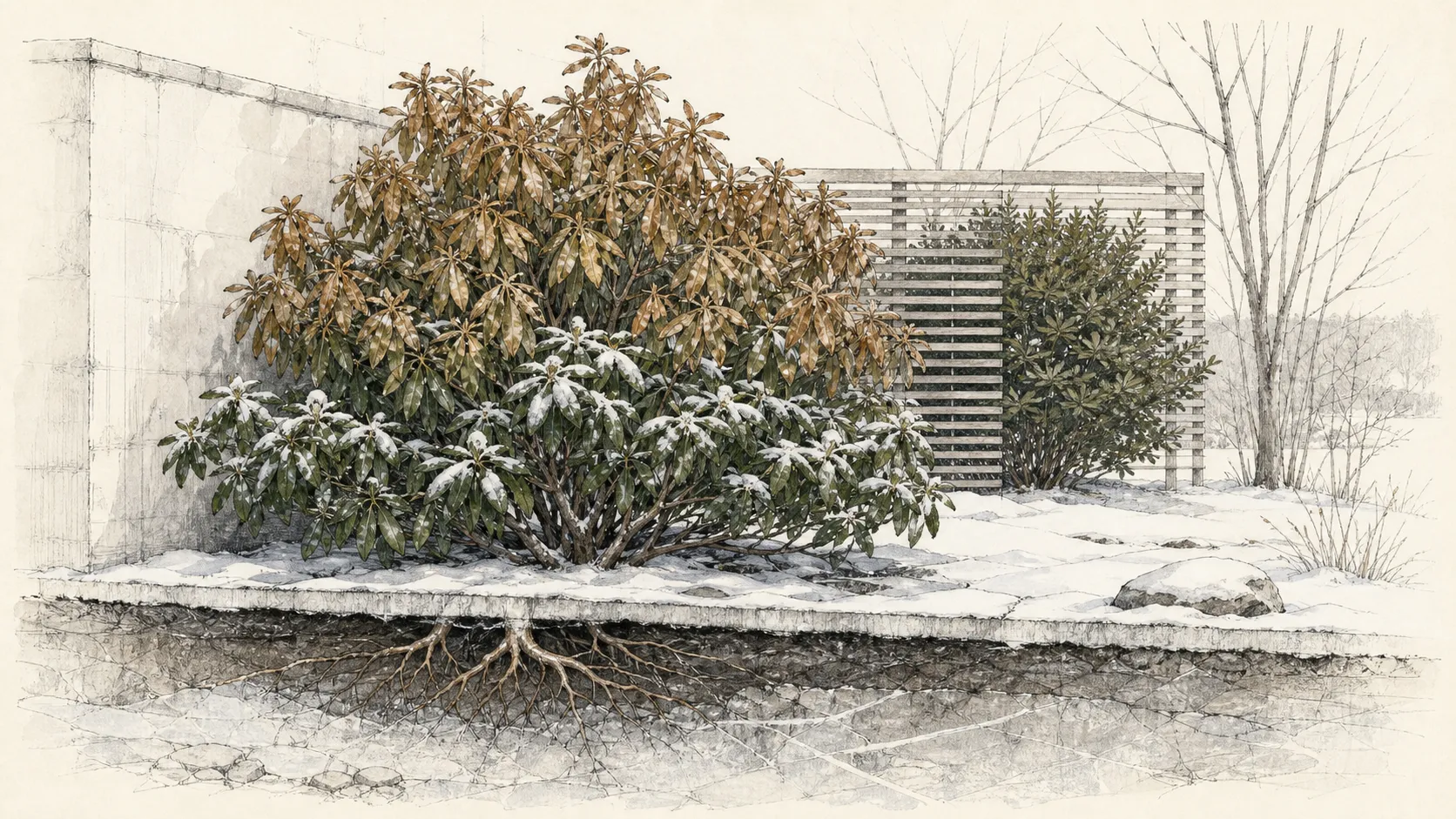
Compare several shrubs of the same species. A repeated windward pattern differs from one isolated failing root zone. In this case, success means living framework is retained and the actual exposure or root cause is corrected. Let the next inspection test whether living framework is retained and the actual exposure or root cause is corrected; the workday shows only the starting condition.
A same-angle photograph makes map exposure before naming the disorder measurable. Record which side, height and tissue age browned, whether buds are alive, and how damage aligns with snow, wind, walls or roads now, then repeat the view after weather or active growth shows whether living framework is retained and the actual exposure or root cause is corrected.
Start with a whole-shrub map. Winter desiccation usually concentrates on the side exposed to prevailing wind, winter sun, reflected heat, or a missing snow cover, while sheltered interior leaves remain greener. Mark compass direction, snow line, nearby walls, roads, and plowed-snow piles before touching foliage. University of Maryland identifies azalea, rhododendron, holly, cherry laurel, boxwood, and mountain laurel as vulnerable broadleaf evergreens. A random or steadily expanding pattern deserves a wider differential than “winter burn.”
Normal winter bronzing differs among species and cultivars. Compare the suspect shrub with its own protected foliage and a known healthy plant of the same name before treating any seasonal purple or bronze color as dead tissue.
Choose the route from the injury map
Compare exposed and sheltered foliage, the snow line, nearby salt routes and the occupied root zone before calling browning winter burn. A static exposure pattern differs from lesions that keep advancing after growth resumes. Preserve living buds and framework while the boundary becomes clear. Use the matched row below to choose observation, site correction or diagnostic sampling.
Compare the tissue boundary
Winter-desiccated leaves often tan from margins or tips while the stem and protected base remain alive. Check the transition with a hand lens.
Salt splash or runoff follows the road, walk or drainage edge and may injure lower facing foliage. Soil accumulation can prolong decline. Map the browned side, injury height, tissue age, bud viability, snow line, wind, walls, roads, and runoff. Wait for confirmed stem death before pruning, and send progressive lesions for diagnosis.
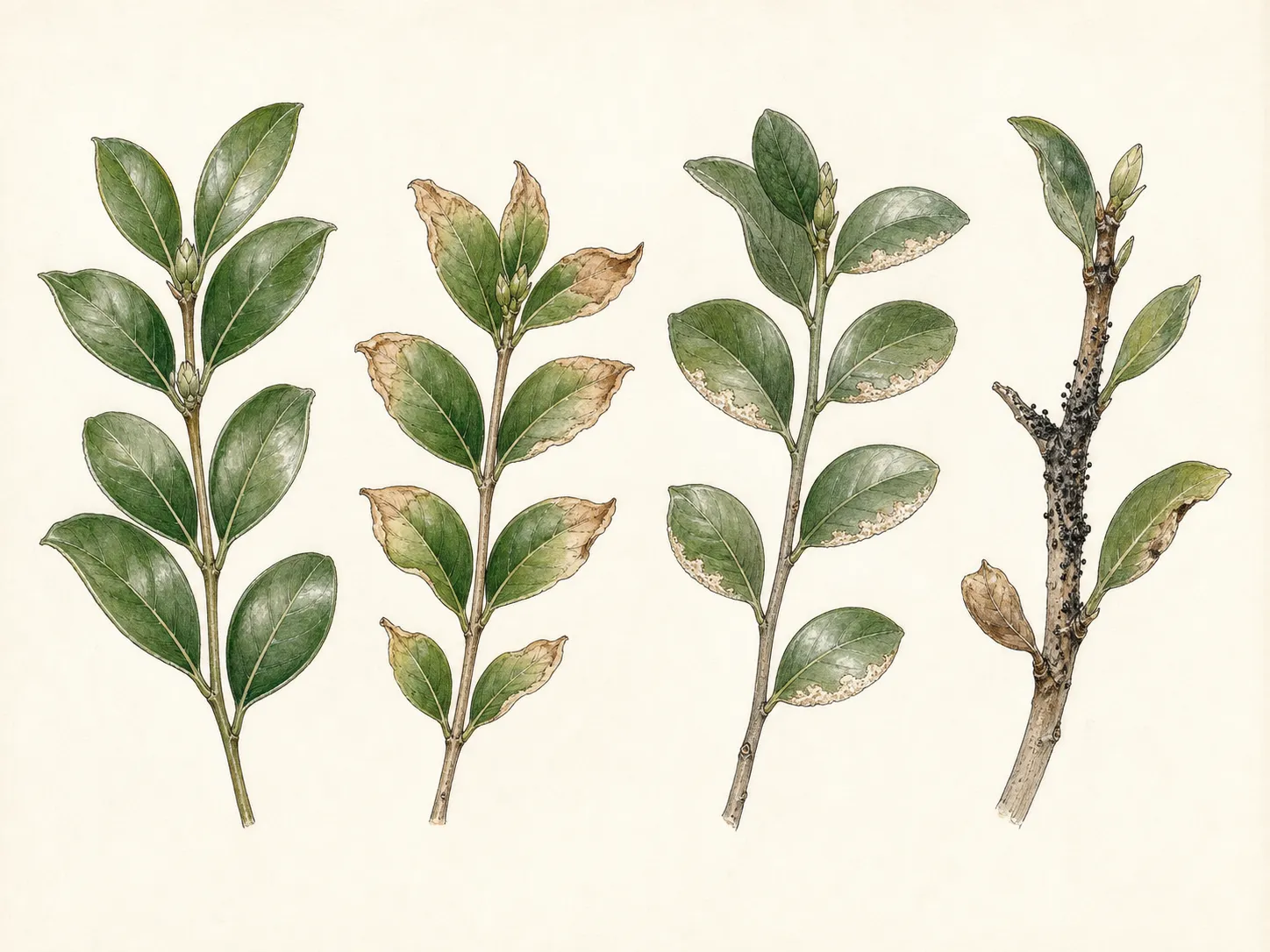
Localized lesions, black fruiting structures or dieback moving past exposure lines justify a disease diagnosis. Color alone cannot identify a pathogen. The finished work must allow living framework is retained and the actual exposure or root cause is corrected. Weather and new growth can clarify which side, height and tissue age browned, whether buds are alive, and how damage aligns with snow, wind, walls or roads during a measured pause.
The transition from brown to green tissue carries more evidence than the worst leaf. Winter-scorched leaves commonly brown at tips and margins and may curl or droop after water loss from frozen soil. Salt injury can mimic scorch but follows spray, runoff, or contaminated snow. Discrete lesions, cankers, or fruiting structures suggest a pathogen, while uniform decline can reflect root failure. Compare the same height and tissue age on exposed and protected sides, and photograph the boundary for a later spring comparison.
De-icing salt deserves its own map. Foliar salt spray often reaches a consistent height on the road-facing side, while contaminated snow or runoff can create root-zone injury farther downslope. Salt can desiccate buds, new growth, and roots, according to the Maryland source. Treat roadside browning as salt injury only when the source pattern and soil diagnosis support it; amendments follow that diagnosis. Redirect future snow storage and runoff first, then ask local Extension whether testing or leaching is appropriate for that soil.
Test buds and stems for life
Open a small terminal bud and compare it with a protected bud. Firm green internal tissue indicates potential recovery. Separate seasonal timing from cosmetic urgency. The useful window is when soil thaws and buds reveal whether stems can resume growth.
Scratch only a tiny inconspicuous stem area when bud evidence is unclear. Green cambium supports waiting; dry brown tissue confirms more loss. Compare that setting with which side, height and tissue age browned, whether buds are alive, and how damage aligns with snow, wind, walls or roads.
Check along the branch because a dead tip may end above living lateral buds. Retain framework that carries living buds or green stem tissue. Stop once living framework is retained and the actual exposure or root cause is corrected.
Leaf death and stem death are not equivalent. Wait for bud swelling, then inspect several shoots across the pattern. A light scratch on a young twig can reveal green living tissue, but one green point does not prove the entire branch is sound. University of New Hampshire notes that buds often survive even when rhododendron leaves are damaged. Bend only small twigs gently and avoid repeated scraping. Mark questionable shoots and revisit them after nearby healthy buds have opened.
Read the root zone and water history
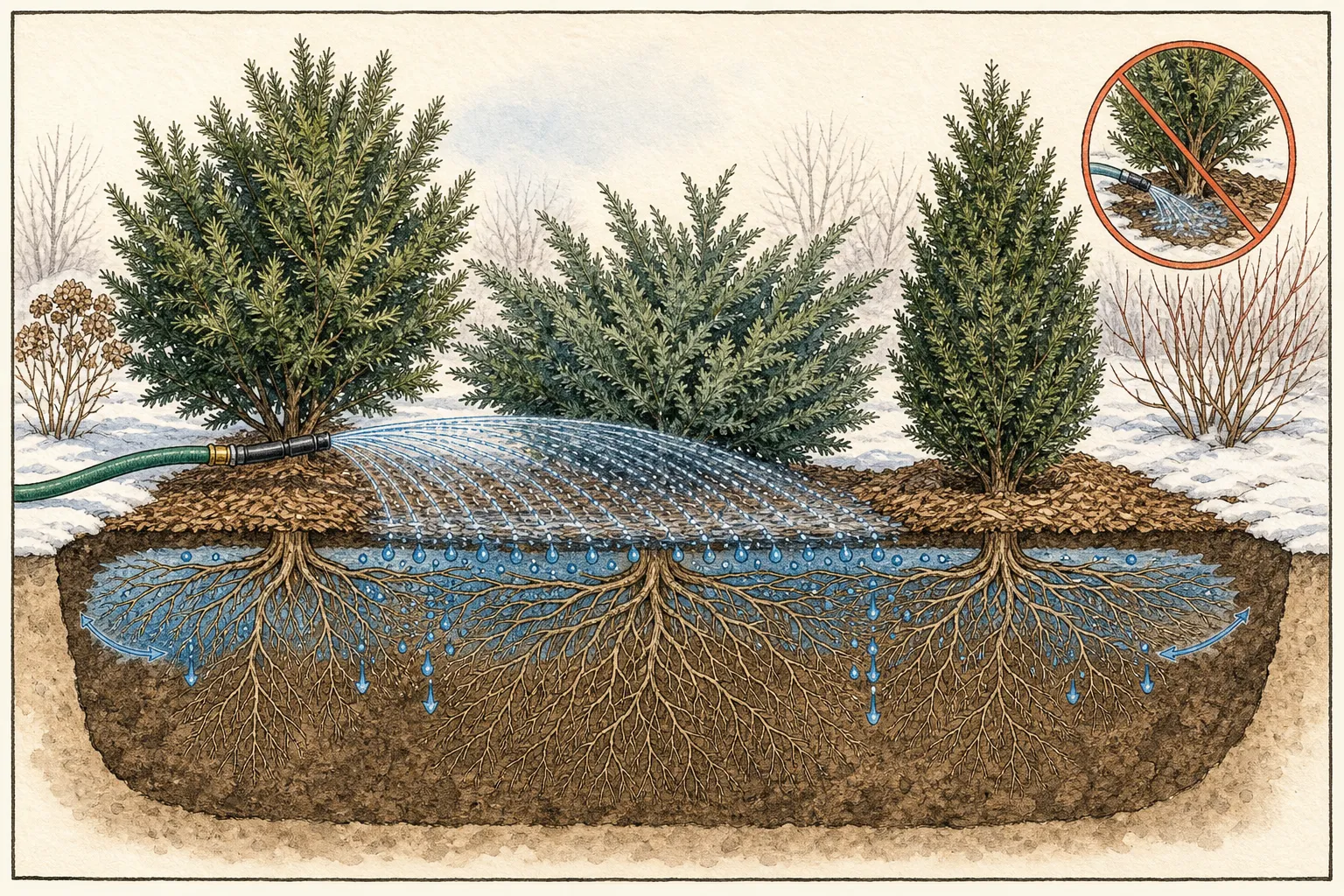
Frozen soil can prevent water uptake while persistent leaves continue losing moisture. Exposed broadleaf evergreens are especially vulnerable. Frozen or dry soil can limit water uptake while evergreen leaves continue to lose moisture in sun and wind. Keep winter desiccation as a working diagnosis only when the exposure pattern, weather history, and living buds agree.
Inspect drainage, buried flare, mulch depth and autumn drought. Saturated roots can also brown foliage and should not receive automatic watering. Record which side, height and tissue age browned, whether buds are alive, and how damage aligns with snow, wind, walls or roads before the work begins.
Note recent planting and root-ball moisture differences. A dry nursery ball can remain dry inside wetter surrounding soil. Winter sun, frozen soil, wind, de-icing salt, drainage, and species hardiness produce different injury patterns.
Root-zone correction begins only after stem viability and progressive disease have been separated.
Winter burn begins as a water-balance problem, so inspect water supply below ground. Pull excess mulch from the stem base, locate the original root ball, and compare its moisture with surrounding soil. Newly planted shrubs can have a dry root ball inside damp backfill; established shrubs can suffer in saturated or compacted soil. Test drainage and look for buried stems, girdling roots, vole injury, and de-icing runoff. Correcting wind exposure will not rescue a root system that cannot supply the canopy.
Disease and winter injury can occur together. Stressed tissue may be colonized after the cold event, so the date of first browning does not settle causation. Look for a lesion margin, sunken bark, fruiting bodies, or fresh spots on new leaves. Sample at the active boundary and include photographs of the whole shrub and site. A dead dry twig alone is poor diagnostic material. Keep pruning tools away from healthy shrubs until the sample result clarifies whether sanitation is needed.
Compare autumn irrigation records with winter precipitation and soil moisture at thaw. This separates a prewinter moisture deficit from damage caused mainly by a short exposed weather event.
Wait for the spring response
Keep browned foliage until buds show which stems can extend. Premature pruning removes stored resources and hides the original pattern. Wait for buds and new leaves to show which shoots survived. A brown leaf does not prove that its supporting stem is dead, and early shearing can remove viable buds needed to refill the canopy.
Monitor whether injury remains static or progresses into new growth. Static old damage supports weather injury; expansion needs diagnosis. Use which side, height and tissue age browned, whether buds are alive, and how damage aligns with snow, wind, walls or roads to decide whether the task is corrective, preventive, or unnecessary. That distinction controls timing and scale.
Protect only from ongoing stress that can be changed safely. A temporary wind screen may help, while sealed wraps trap heat. Use temporary wind screening, autumn moisture, and species-appropriate siting to reduce recurrence. Salt-shaped injury, advancing lesions, or a failing root system needs its own correction, and remain visible before cosmetic pruning.
Delay cosmetic pruning until spring growth shows the living boundary. Brown leaves may drop or be masked by new foliage, and viable buds on bare-looking shoots can refill part of the canopy. Assessment should wait until new growth begins, as the Maryland guidance recommends. During the wait, supply normal water only when soil is dry at root depth and avoid high-nitrogen fertilizer. If lesions advance, stems soften, or the entire shrub continues to wilt, shift from weather observation to a diagnostic sample.
Prune confirmed dead tissue selectively
Follow dead tips back to a living lateral bud or branch union. Make a clean cut without leaving long stubs.
Broad shearing creates a uniform shell but may cut below viable buds and expose more interior foliage. Preserve natural branching.
Sanitize tools when a disease has been diagnosed, not as a substitute for diagnosis. Dispose of affected material by local guidance. Include which side, height and tissue age browned, whether buds are alive, and how damage aligns with snow, wind, walls or roads.
Prune only stems confirmed dead, cutting back to a live bud, branch union, or sound side shoot appropriate to the species. Avoid hedge shearing because it removes surviving outer buds and leaves a dense shell. Disinfect tools when disease is suspected and follow laboratory sanitation advice. A severely thinned shrub may need more than one season to recover; retain living structure even when the two sides remain asymmetrical. If the main framework is dead, compare replacement with site conditions before buying the same plant.
When pruning is finally justified, retain the natural branch collar and avoid leaving long dead stubs. Cut a little at a time and reassess the outline after each confirmed dead shoot. Broadleaf evergreens differ in their ability to break from older wood, so species guidance determines how far renewal can proceed. A boxwood, rhododendron, and cherry laurel should not receive one generic reduction. Mark any bare sector that still has living buds and allow the season's growth to show whether it can refill.
Correct the exposure for next winter
Improve establishment watering from soil evidence before freeze, then stop chronic saturation. Autumn moisture matters more than emergency winter watering on frozen soil. Track which side, height and tissue age browned, whether buds are alive, and how damage aligns with snow, wind, walls or roads.
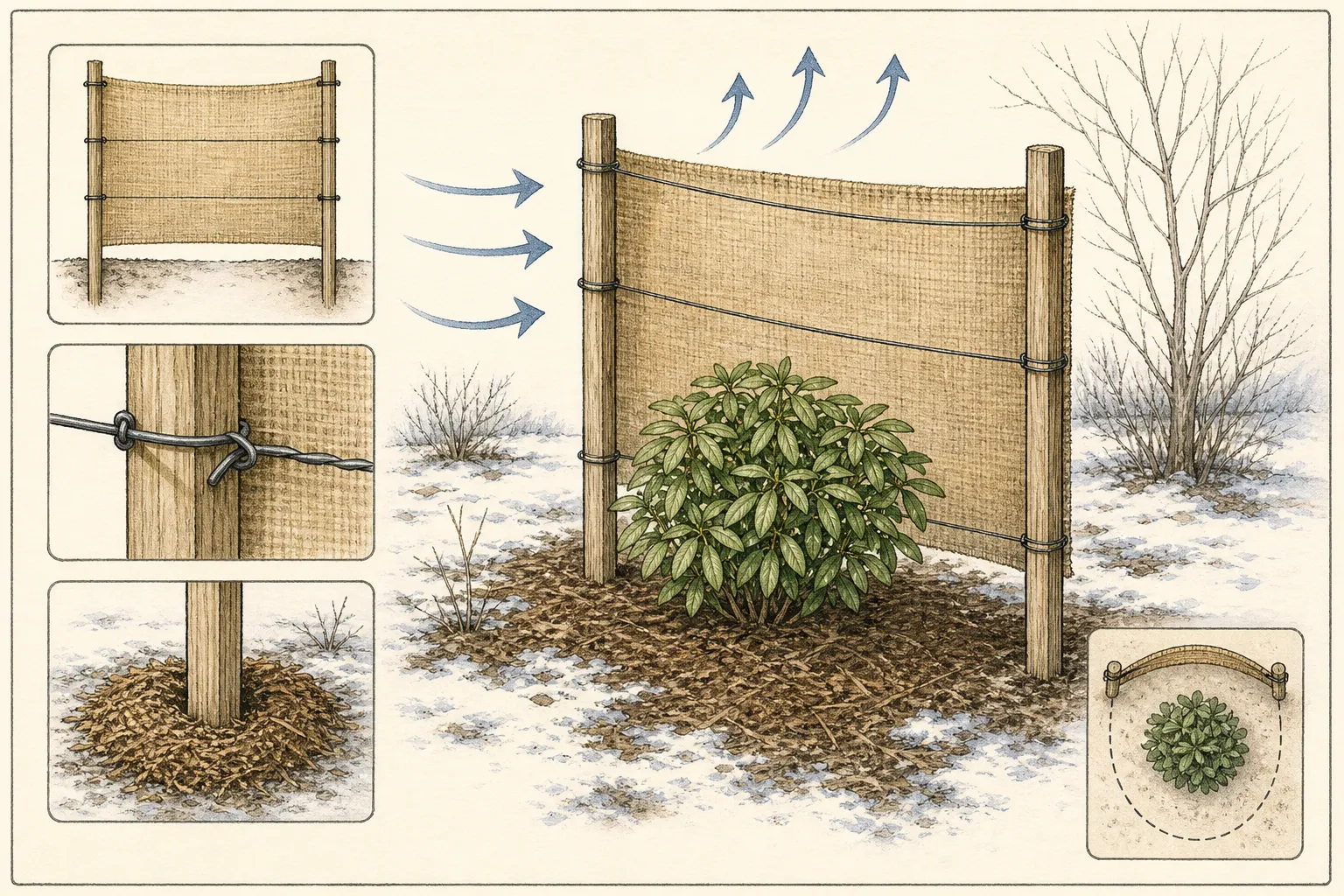
Use placement, neighboring structure or a breathable screen to reduce drying wind and bright winter sun. Place winter screening so summer air movement remains open.
Select hardier or more exposure-tolerant plants when the microclimate cannot be changed. Repeated annual wrapping is a warning about site fit.
Prevention combines plant choice, soil moisture, and exposure. Select a species and cultivar hardy for the site, avoid exposed south- and west-facing winter positions for vulnerable broadleaf evergreens, and maintain autumn moisture until the ground freezes. A burlap screen placed away from foliage can reduce wind; sealed wrapping can trap heat and abrade leaves. Redirect salt spray and contaminated snow. Mulch the root zone lightly without covering stems. Record which face burned so the next winter measure addresses a demonstrated pathway.
Replacement is a site decision, not an admission that every browned shrub is dead. If repeated injury occurs on the same face despite adequate autumn moisture, compare the cultivar's hardiness with the exposure and choose a smaller-leaved or more locally reliable evergreen. Preserve enough distance from walls and pavement to reduce reflected heat and salt. A barrier must not block air in summer or trap snow against branches. Evaluate prevention the following spring from bud survival, not from leaf color during the coldest week.
Build the final diagnosis from four columns: exposure pattern, tissue viability, root-zone condition, and progression after warm weather. Winter burn fits when exposed leaves scorch, buds or stems remain alive, roots can recover, and the boundary stops advancing. Salt fits an infrastructure path; disease fits lesions or continued spread; root failure fits whole-plant water stress and poor anchorage or drainage. More than one column can be positive. Correct each confirmed pathway separately and retain photographs through one growth flush. If the pattern still cannot be explained, send a representative sample before choosing fertilizer, fungicide, or a severe cut.
Diagnosis
Tan leaf margins and tips concentrated on the exposed face while protected interior foliage stays green. Winter burn usually concentrates on the south-, southwest-, or wind-facing surface and may stop near a snow line. Marginal scorch with green sheltered foliage supports desiccation more strongly than uniform browning.
- Check
- Map compass side, snow line, wall reflection and wind exposure, then inspect buds and stem tissue on both damaged and protected faces. Photograph all sides, mark the snow line, and compare outer leaves, interior leaves, buds, and a small scratch on young stem tissue. Green cambium or swelling buds justify waiting.
- Cause
- Winter desiccation occurred while sun and wind drove water loss and frozen or dry roots could not replace it. Broadleaf evergreens at a hardiness limit or in exposed sites are especially vulnerable.
- Action
- Wait for budbreak, retain living framework, prune only confirmed dead tips, and reduce future winter exposure while maintaining appropriate autumn moisture. Wait until spring growth declares the living boundary, then prune only dry stems back to a viable bud or branch. Supply normal moisture during dry weather and plan wind or sun protection before next winter.
Lower foliage browns along a road, walk or runoff edge and may show a sharp source-facing pattern. Salt injury often aligns with a road, walk, plowed-snow pile, or splash height. The sharp directional pattern matters because both foliar spray and salty runoff can desiccate tissue.
- Check
- Trace splash, plowed snow and drainage routes; compare injury height with the source and consider a soil or tissue test through local Extension. Follow the route from pavement or a snow pile to the foliage and root zone. A local Extension laboratory can advise whether soil or tissue testing is useful before amendments are attempted.
- Cause
- De-icing salts contacted foliage or accumulated in the root zone, creating a distribution that follows infrastructure. De-icing salt drew water from leaves or roots. Repeated applications and plowed contaminated snow can create a cumulative source-facing injury pattern.
- Action
- Redirect contaminated snow or runoff, use less damaging de-icing practice where possible, and seek local soil guidance before attempting leaching or amendment. Keep contaminated snow and drainage away from the bed and reduce salt use where safe alternatives fit the site. Flush foliage with fresh water after exposure and seek local soil guidance before leaching.
Individual shoots darken around lesions or tiny fruiting structures and the boundary advances in moist weather. A disease remains plausible when discrete lesions, cankers, or fruiting bodies occur and the damaged boundary keeps advancing after normal spring growth resumes.
- Check
- Inspect the transition with magnification and submit a fresh sample when signs indicate a pathogen; base diagnosis on a fresh transition sample as well as whole-site photographs. Collect a fresh sample that includes living and affected tissue, not a fully dead twig. Magnification and laboratory diagnosis are needed before choosing sanitation or a disease treatment.
- Cause
- A leaf or twig pathogen may have colonized stressed tissue or may be the primary problem. Progression during moist spring weather separates it from a static winter event.
- Action
- Obtain a diagnosis, remove confirmed affected tissue with clean cuts, improve species-appropriate air movement, and follow disease-specific local guidance. Follow the confirmed diagnosis: remove specified tissue with clean cuts, dispose of it as locally advised, and correct crowding or irrigation only when those conditions contribute to the disease.
The whole shrub wilts or browns with poor root anchorage, saturated soil, buried stems or a dry root ball. Uniform decline, a loose root ball, soft buried stems, or water standing around the shrub points below ground. Root stress can produce leaf scorch even when the winter exposure looks severe.
- Check
- Open the mulch, locate the flare, compare root-ball and surrounding moisture, and test drainage before assigning the foliage symptom to weather. Pull mulch back to expose the stem base, compare moisture inside the original root ball with surrounding soil, and test how quickly a filled inspection hole drains.
- Cause
- Waterlogged soil, a dry container root ball, deep planting, girdling roots, or recent establishment limited the canopy's water supply before or during winter.
- Action
- Correct mulch and irrigation, address drainage or root defects where recoverable, and replace the shrub if the site cannot provide a compatible root zone. Expose the correct planting depth, correct irrigation, and improve drainage where roots can recover. A shrub in an irreconcilably wet, dry, or undersized site is better replaced with a compatible species.
Related reading
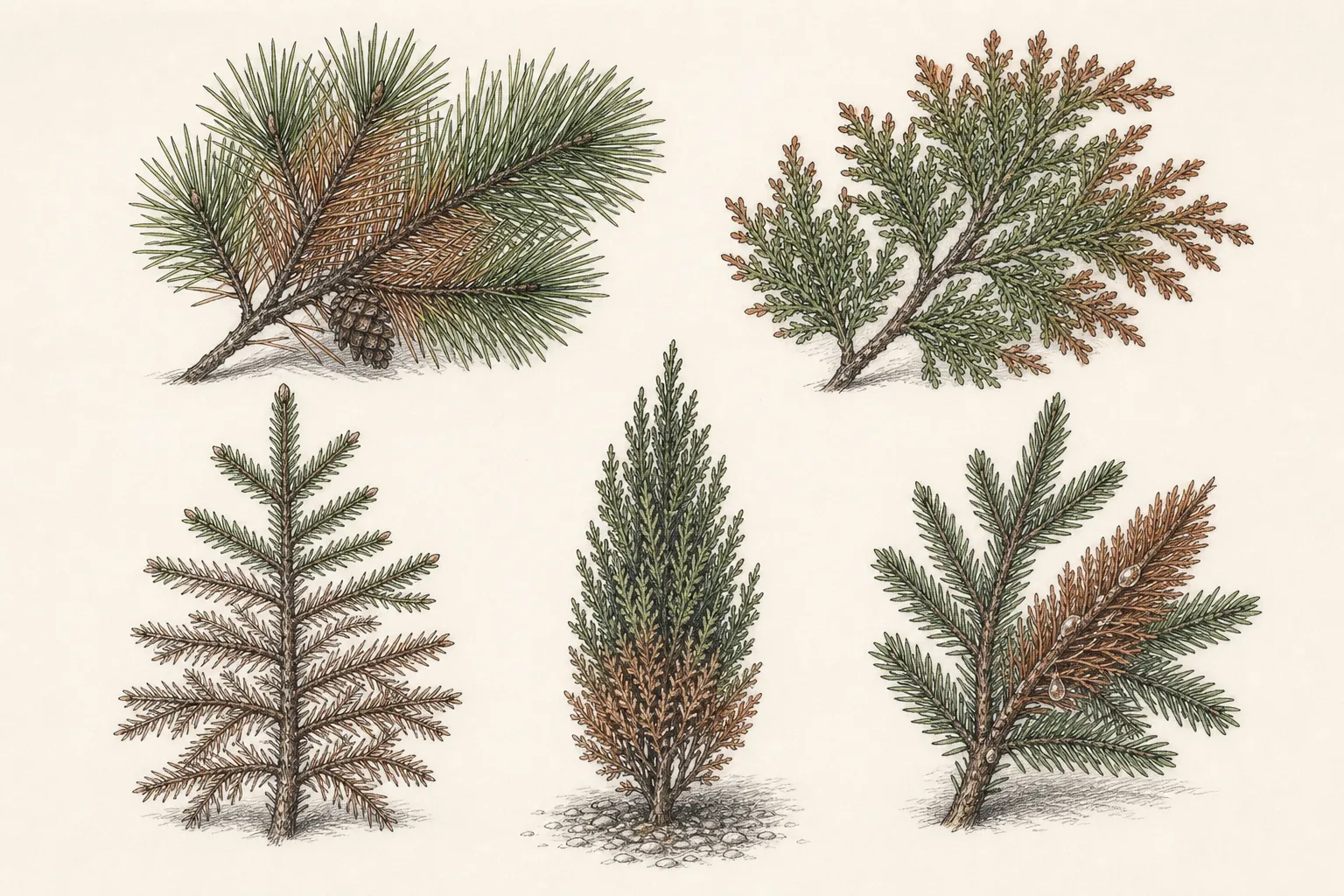
Sources
- Winter Damage on Landscape Plants. University of Maryland Extension. Source record · Accessed 2026-08-30.
- Choosing Evergreens for Your Landscape. University of Minnesota Extension. Source record · Accessed 2026-08-30.
- Arborvitae Foliage Turns Brown. University of Minnesota Extension. Source record · Accessed 2026-08-30.
- Rhododendrons and Other Broadleaved Evergreens Showing Signs of Winter Damage. University of New Hampshire Extension. Source record · Accessed 2026-08-30.