Grow · evergreen shrub pre freeze watering
Water Evergreen Shrubs Before the Ground Freezes
Deeply water evergreen shrubs through a dry autumn, match the soak to the root zone and soil, and stop once frozen ground turns more water into ice rather than reserve moisture.
Published Last updated
In this guide
- Treat fall watering as stored winter moisture, not a final chore
- Water dry accessible roots, then verify the result
- Decide which shrubs truly need pre-freeze attention
- Probe the root zone before you reach for the hose
- Soak the root area slowly and broadly
- Match the watering program to soil texture and recent weather
- Stop when the ground is frozen or the bed becomes a hazard
- Read spring browning as feedback, not automatic proof of failure
- Steps
Treat fall watering as stored winter moisture, not a final chore
Evergreen shrubs keep losing water long after many gardeners mentally close the season. University of Maryland states the central winter fact plainly: evergreen foliage remains alive through winter and should be deeply watered in fall before the ground freezes when precipitation has been insufficient. The reason is physiological, not sentimental. Leaves continue to transpire, especially on bright, windy days and during mild spells, while chilled soil slows the shrub's ability to replace that loss. When a shrub enters winter already short of moisture, spring browning is often the visible result of a deficit that began weeks earlier.
That does not mean every evergreen bed needs a hose because the calendar reached November. The useful question is whether the root zone is still drying faster than rainfall is replenishing it. Purdue frames the task in the same practical way when it advises watering before winter injury becomes visible: the goal is to reduce desiccation risk, not to flood cold soil. A single heavy rain may already have done the job in one garden while another, under roof overhangs or in sandy soil, is still dry. The reserve has to be measured at the bed, not inferred from a regional forecast.
The wording matters because many winter-prep mistakes begin with routine instead of observation. Gardeners who treat fall watering as one symbolic final soak often miss the beds that stayed dry under eaves, beside paved driveways, or around recent plantings with under-filled root balls. Others keep watering mechanically after the ground has locked up and convert the bed edge into ice. The correct autumn rhythm sits between those two habits: read the soil, supply what the roots can still use, and stop when the plant can no longer benefit from additional water.
Water dry accessible roots, then verify the result
Probe the occupied root zone before choosing a pre-freeze soak. Moist soil needs no additional watering; dry soil can receive a slow application while it still accepts water. Recheck beneath the surface afterward. Runoff, frozen ground or persistent saturation changes the decision to waiting or correcting the water route, even if evergreen foliage looks exposed.
Decide which shrubs truly need pre-freeze attention
Not every evergreen shrub faces the same winter demand. Recently planted shrubs are usually the first priority because their roots occupy a smaller volume of soil and have not yet fully colonized surrounding ground. Wisconsin's winter-burn guidance distinguishes between established plants and those planted within the past several years for precisely that reason. A mature plant that has rooted into a broad bed often tolerates a dry week better than a recent transplant with a tight nursery ball still drying from the center outward. If you only have time to check part of the property, start with younger plantings and the beds that browned in previous springs.
Exposure changes the ranking. Beds along pavement, open corners, wind funnels, or sunny south-facing walls usually need closer attention than protected house-side borders or shaded woodland edges. Illinois points out that evergreen shrubs keep respiring and losing water while many deciduous plants have slowed down, which helps explain why shrubs near hard reflective surfaces show damage so quickly. The more the site encourages sun, wind, and reflected heat during winter, the more important it becomes to enter winter with a fully charged root zone rather than a half-dry one.
Soil and bed geometry belong in the same decision. Sandy or sharply draining soil loses useful moisture faster than a heavier loam; a wide mulched bed holds it differently from a narrow strip pinched between a wall and a walk. A shrub under a deep roof overhang may receive little natural recharge from autumn rain even when the yard as a whole looks wet. By contrast, a low spot that already stays moist can become a drainage problem if you keep adding water out of habit. Pre-freeze watering is not a species-only rule. It is species plus rooting history plus bed exposure plus soil behavior.
Probe the root zone before you reach for the hose
The soil surface is a poor witness. Leaf litter or mulch can look damp while the root zone below remains dry, and a dark crust after cold nights can look wetter than it is. Use a trowel, soil probe, or long screwdriver to check several points under and just beyond the shrub canopy. Nebraska's winter tree and shrub guidance uses the screwdriver test for winter irrigation decisions, and the logic translates well to evergreen shrub beds: if the tool enters easily and comes out with real moisture and crumb structure, the bed may not need water yet. If it meets hard dry resistance or the soil is dusty beneath the top layer, the shrub is telling you more clearly than the weather app can.
Check more than once around the same shrub. Water can bypass the center of a root ball, especially in recent plantings, while the surrounding backfill appears wetter. Beds with slope or nearby hardscape also dry unevenly. A border against a drive may be dry on the pavement side and adequately moist on the garden side. The point of probing is to decide whether additional water will be stored where roots can use it. If you do not inspect below the mulch, you may end up watering the appearance of the bed rather than the biology of the shrub.
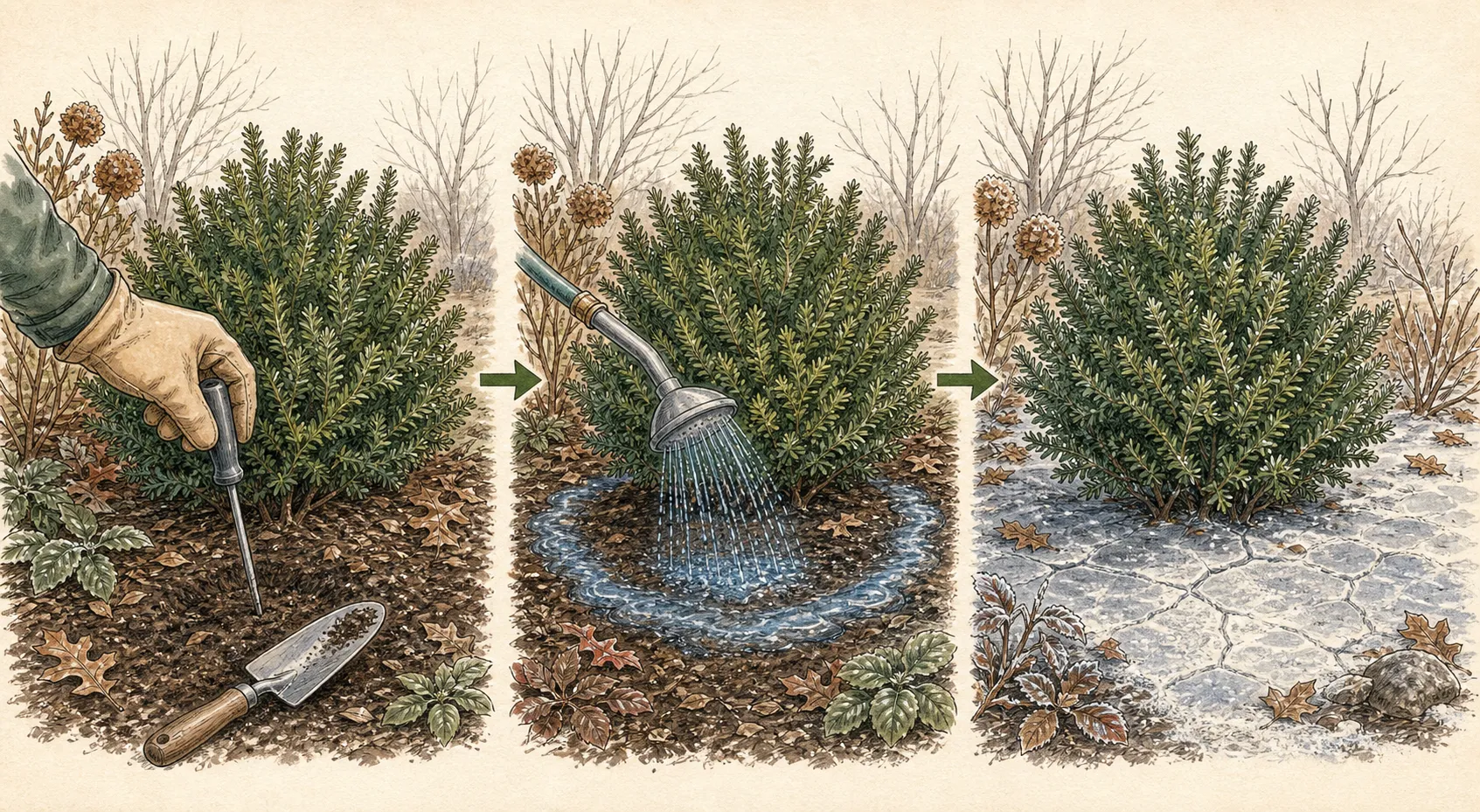
This inspection stage is also the moment to notice problems watering alone cannot fix. If the shrub is already sitting in compacted soil, if runoff is diverting every autumn rain past the roots, or if mulch is banked against stems while the outer root area is bare, watering might need to be paired with a design correction. A careful probe keeps you from turning every winter-burn fear into a hose session. Sometimes the better answer is to spread mulch properly, adjust runoff, or admit that the plant is exposed beyond what extra autumn water can solve.
Soak the root area slowly and broadly
Once the bed actually needs water, apply it over the occupied root zone rather than at the trunk base alone. Wisconsin recommends watering from trunk to dripline under its conditions, and that principle is the reliable one to preserve even when the exact amount varies by region and soil. Evergreen shrub roots occupy a broad shallow area, and the feeder roots that matter most for uptake are rarely concentrated right against the stems. A slow hose, soaker, or gentle shower setting lets water move downward instead of racing away across mulch or hard soil. You are trying to wet the working soil profile, not create a quick puddle for the sake of feeling productive.
The pace is as important as the volume. Fast water often sheds from dry mulch, runs down a slope, or opens channels that leave parts of the root zone surprisingly untouched. A slower soak gives the bed time to accept the water and makes it easier for you to notice whether it is infiltrating or escaping. If a recent planting still has a distinct root-ball interface, circle the watering pattern so both the original root mass and the surrounding soil are moistened. A dry nursery ball sitting inside wetter backfill can still enter winter undercharged even when the bed around it looks fine.
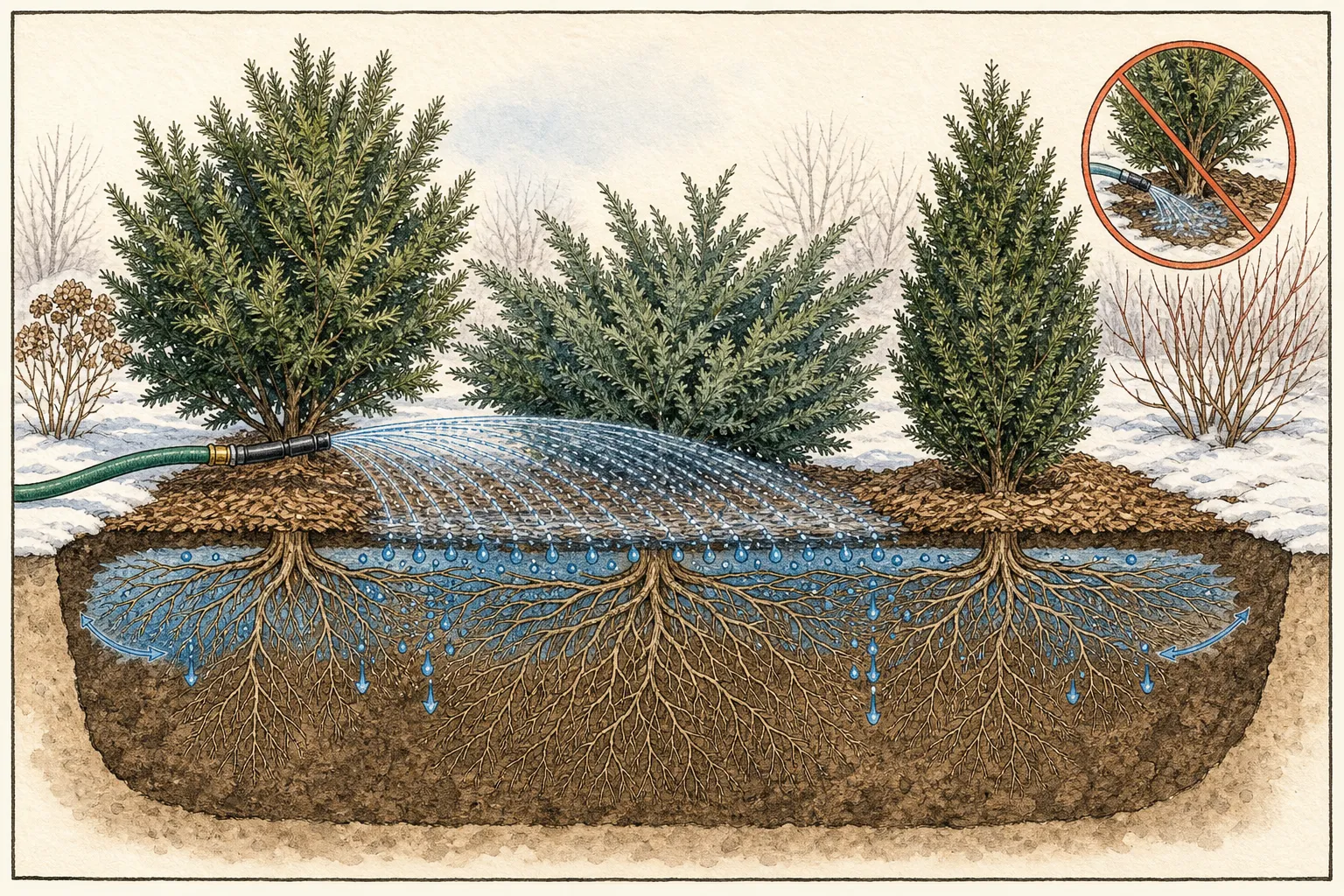
Mulch should help hold that moisture, but it cannot substitute for it. Maintain a thin even layer over the root zone and keep it clear of the stems so the water can enter while air still reaches the crown area. If the bed needs multiple passes to absorb water without runoff, take them. Autumn watering is one of the few times when patience matters more than force. A shrub that receives a complete slow soak once or twice before freeze is better prepared than one sprayed repeatedly and shallowly because the gardener was in a hurry.
Match the watering program to soil texture and recent weather
Published recommendations diverge in their numbers because soils diverge in reality. Wisconsin gives practical weekly quantities in the absence of rain, while Purdue suggests intervals such as every seven to ten days in dry autumn conditions. Those figures are useful examples, not portable commandments. A sandy border that drains quickly can need a more frequent recharge than a heavier loam receiving the same weather. Recently planted shrubs may also need a higher total than long-established shrubs because their roots have not expanded into the surrounding bed. The safe transfer from the sources is not the number itself but the method: start with actual dryness, account for soil texture, and measure whether the water stayed where roots can use it.
Rainfall does not always cancel the need to water. Beds under eaves or beside broad evergreen canopies can stay dry while the open garden is wet. Conversely, a run of cool rainy weather can make extra irrigation unnecessary even if the forecast sounds threatening. Illinois calls the task a balancing act for good reason. Too little water raises desiccation risk, but too much water in cold soil reduces oxygen, encourages smearing around roots, and can create freeze-thaw hazards around walks and the crown area. The shrub needs usable moisture, not a ritual display of care.
This is where notes earn their keep. Record the date, recent weather, approximate duration of the soak, and what the probe showed before and after watering. By the second or third season, you will usually know which beds dry under roof overhangs, which slopes never store enough water, and which shrub borders remain adequately moist without help. That record is more valuable than a copied calendar because it tracks the exact landscape the shrub inhabits, not a hypothetical average yard.
Stop when the ground is frozen or the bed becomes a hazard
There is a clear point at which more water stops helping. Once the soil surface and the upper root zone have frozen hard enough that water cannot infiltrate, the next application becomes ice, runoff, or both. Illinois and Maryland both imply the same boundary in different words: keep watering while the roots can still use the moisture, not after frozen ground has taken that option away. If the hose creates glare ice along a walk, if water sheets off the bed instead of entering it, or if the probe cannot penetrate because the soil has locked up, the fall watering window has closed.
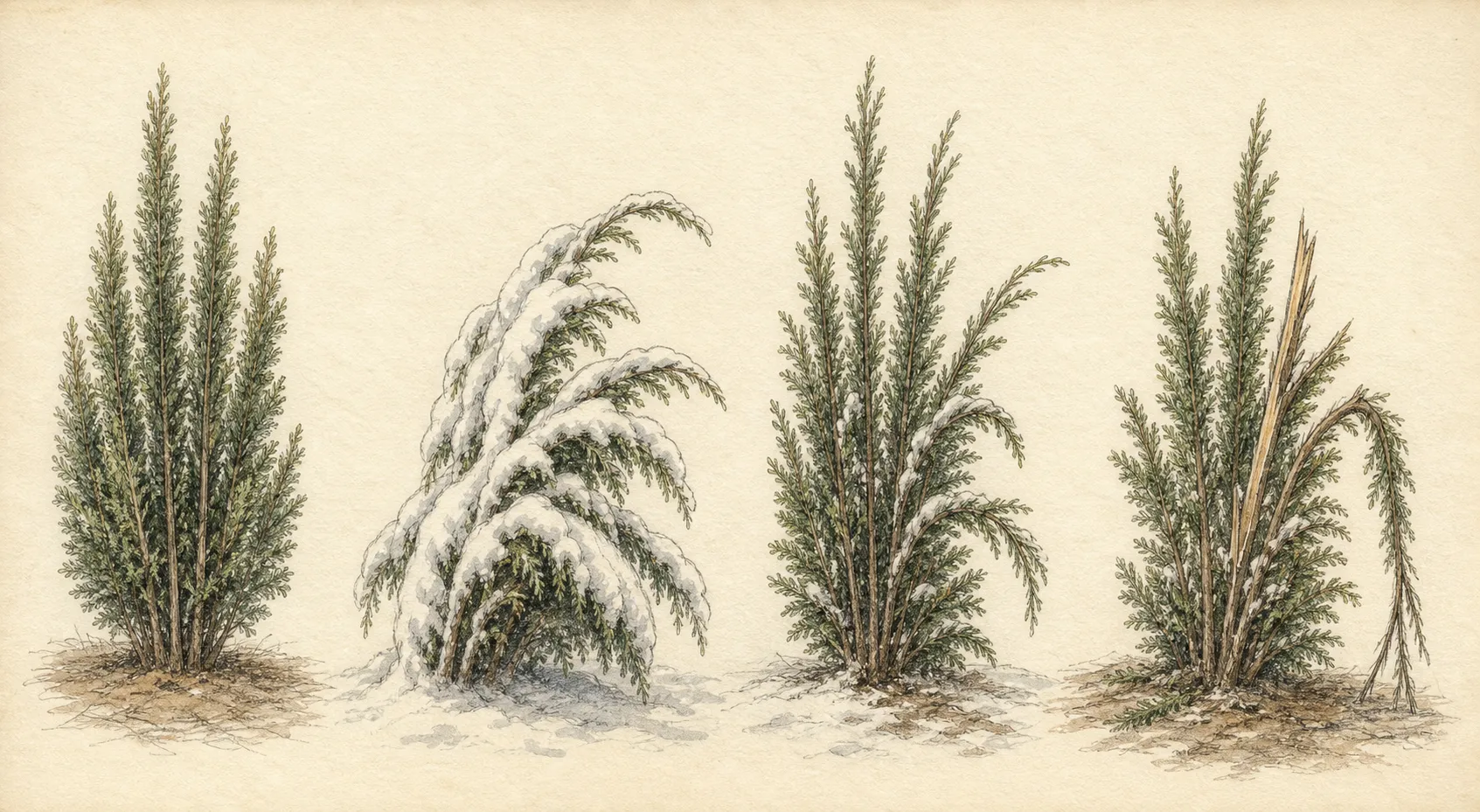
That stopping rule protects the gardener as much as the shrub. Late-season irrigation around paths, steps, and drive edges can quickly turn into a slip hazard, especially in exposed front-yard beds. It can also shift the problem from drought stress to branch breakage if the added ice captures snow or encourages heavy crusting around the plant. Winter preparation should leave the bed safer and calmer than it was before. If the only way to add more water is to create hazardous surfaces or saturated crown soil, you are no longer helping the shrub prepare for winter.
A frozen stop date does not mean the shrub is abandoned until spring. It means the preparation phase has ended and the monitoring phase has begun. From that point forward, your job is to watch how the plant carries the stored moisture through winter and to note whether the bed dries, burns, or remains stable. The next watering decision belongs to a thaw or to the following autumn, not to the urge to keep doing something after the soil has already said no.
Read spring browning as feedback, not automatic proof of failure
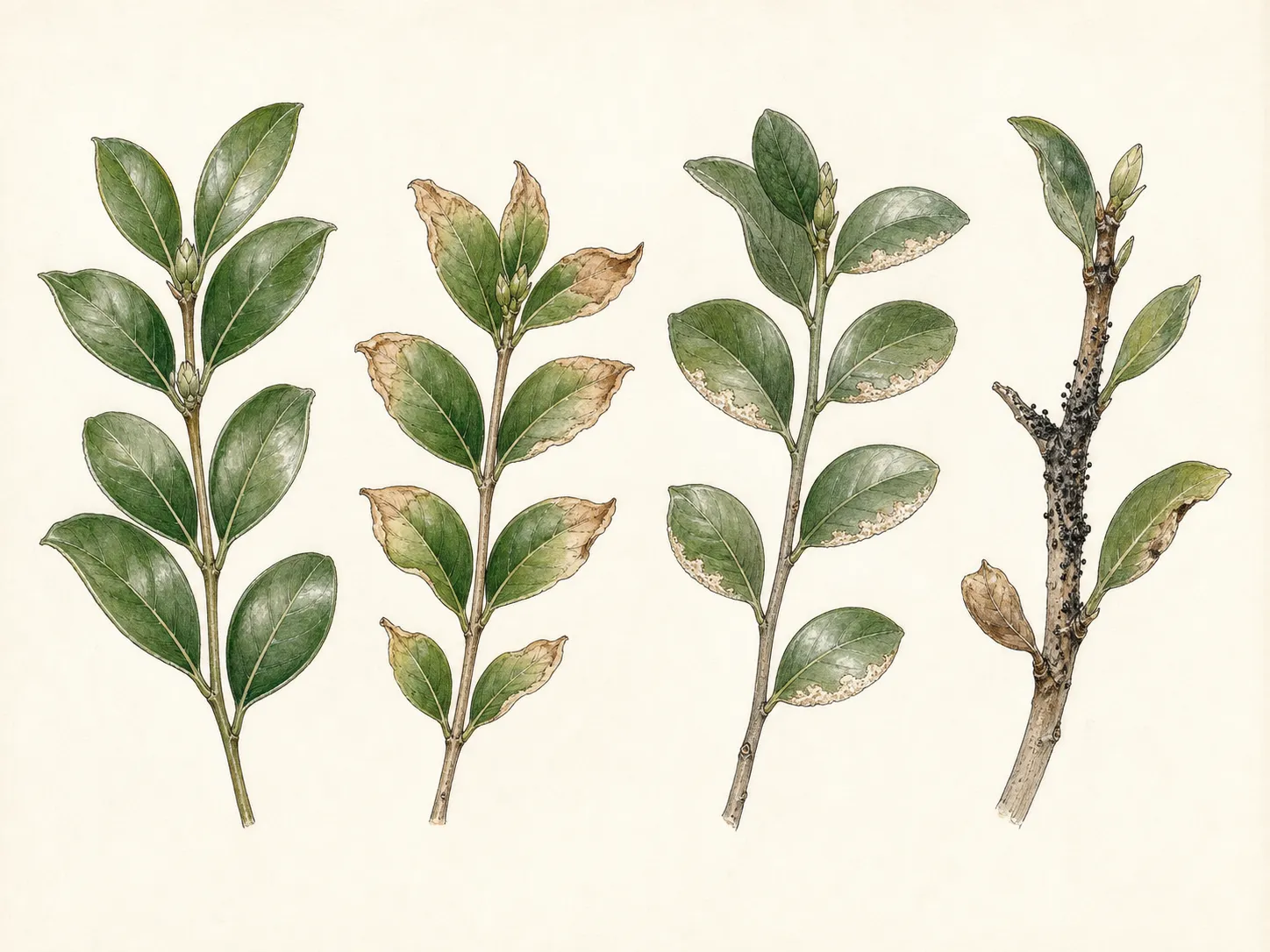
When an evergreen shrub browns in spring, do not assume the problem was either entirely solved or entirely caused by autumn watering. Water status matters, but winter burn is also shaped by exposure, reflected light, wind, recent planting, and the individual shrub's siting. Wisconsin lists all of those contributors together for a reason. A shrub that entered winter well watered can still burn if it sits in an exposed glare pocket, and a sheltered shrub can come through a modestly dry fall without visible damage. The spring foliage tells you to review the whole system, not just the hose schedule.
Use the record you kept in fall to interpret what you are seeing. If a recently planted shrub was watered carefully yet the root ball was later found dry inside, the method needs adjustment next autumn. If only the drive-side foliage browned while the house-side remained sound, the site may need snow-routing or wind-shelter work more than additional water. If the bed stayed evenly green, that success should simplify the future routine rather than inspire a heavier one. A winter-prep method is best when it becomes clearer with evidence, not more complicated through anxiety.
The long-term goal is not to create a fussy autumn ceremony. It is to build a shrub border in which pre-freeze watering is targeted, intelligible, and proportionate to real need. Once you know which shrubs dry fastest, how the bed stores moisture, and when the soil truly freezes, the task becomes a short sequence with a definite stop. That is the kind of garden care worth keeping: precise enough to prevent damage, restrained enough not to invent new problems, and local enough to remain true from one winter to the next.
Steps
- Level
- easy
- Time
- 15 to 45 minutes per bed, plus inspection time
- Tools
- Soil probe, screwdriver, or trowel, Hose with gentle shower head or soaker hose, Mulch rake or gloved hands, Notebook or phone for weather and moisture notes
- Materials
- Water source that can be shut down before freeze, Existing mulch for the root zone if needed, Plant labels for recent shrub installations
- 1Rank the shrubs by risk
Start with newly planted shrubs, dry beds under eaves, sunny or windy exposures, and any evergreen border that browned in previous springs. Established shrubs in protected moist beds can be checked later. The order matters because pre-freeze watering is most valuable where roots occupy less soil or where winter leaf moisture loss is routinely amplified.
- 2Probe several points around each shrub
Check beneath the mulch, inside the old root-ball zone if the plant is recent, and at the outer canopy edge. Look for real moisture, not only a dark surface. If the probe enters easily and the soil remains evenly moist below the top layer, postpone watering. If the soil is dry or resistant, move to the next step.
- 3Clear the root zone for infiltration
Pull mulch lightly back from the stems if it has drifted against them and smooth any crust that would cause water to run off. Do not dig or disturb roots. The point is to let a slow soak enter the bed evenly and to keep the crown area airy while the rest of the root zone stores moisture.
- 4Apply a slow, broad soak
Water from near the trunk out toward the dripline so the whole occupied root area receives moisture. Use a slow hose or soaker pace rather than a hard spray. If the water begins to run off, pause and let it settle, then resume. Recently planted shrubs may need special attention both over the original root ball and beyond it.
- 5Recheck the soil after watering
Wait briefly, then probe again in more than one place. Confirm that moisture moved into the upper root zone rather than sitting only on the surface or in one depression. If parts of the bed remain dry while other parts puddle, adjust the application pattern before assuming the shrub is fully prepared for winter.
- 6Repeat only while the soil still accepts water
Use rainfall, soil texture, and recent planting age to decide whether another soak is needed later in the dry fall. Do not keep a fixed calendar. Continue only while the root zone is usable and the soil is not frozen. Once infiltration stops or the bed edge becomes icy, end the watering phase.
- 7Carry the record into spring
Note which shrubs were watered, what the soil felt like, and how each bed looked in spring. Use that record to simplify next autumn. The goal is to know exactly which border dries first, which one stays charged naturally, and where siting changes would reduce the need for special winter preparation.
Plants in this guide
Related reading
Sources
- Watering Trees and Shrubs. University of Maryland Extension. Source record · Accessed 2026-08-19.
- Water Now to Minimize Winter Injury. Purdue University Extension. Source record · Accessed 2026-08-19.
- Keep Watering in Fall to Protect Evergreens from Winter Burn. University of Wisconsin-Madison Extension. Source record · Accessed 2026-08-19.
- Watering Trees, Shrubs in the Fall and Winter is a Balancing Act. University of Illinois Extension. Source record · Accessed 2026-08-19.