Grow · snow splayed evergreen shrub recovery
Recover a Snow-Splayed Evergreen Without Binding It into a Bundle
Wait for safe thaw, distinguish bent from broken stems, release snow correctly, make selective cuts, and support only branches that can recover their natural position.
Published Last updated
In this guide
- Make the site safe before touching the shrub
- Distinguish attached bending from broken structure
- Wait for the attachment points to thaw
- Classify each stem after thaw
- Remove broken wood with selective cuts
- Use support only for sound recoverable stems
- Support recovery through the root zone
- Redesign recurring snow traps
- Decide when replacement is the safer recovery
- Steps
Make the site safe before touching the shrub
A spread evergreen can conceal ice, broken branches, bent stakes, wires, and a slippery root zone. Keep people and pets outside the branch radius and inspect from several directions. If the shrub is beneath a damaged tree, roof edge, utility, or hanging limb, do not begin garden recovery underneath it. Secure the wider hazard first with the responsible professional or utility.
Photograph the plant with snow in place, including its normal side, damaged side, stem bases, nearby structures, and the direction of drift. Record snow type, depth, wind, thaw, and any impact from a shovel or roof slide. Wet snow loaded gradually differs from a rigid ice fall or a branch struck by equipment. The history helps explain whether stems are flexed, fractured, or repeatedly exposed by the site.
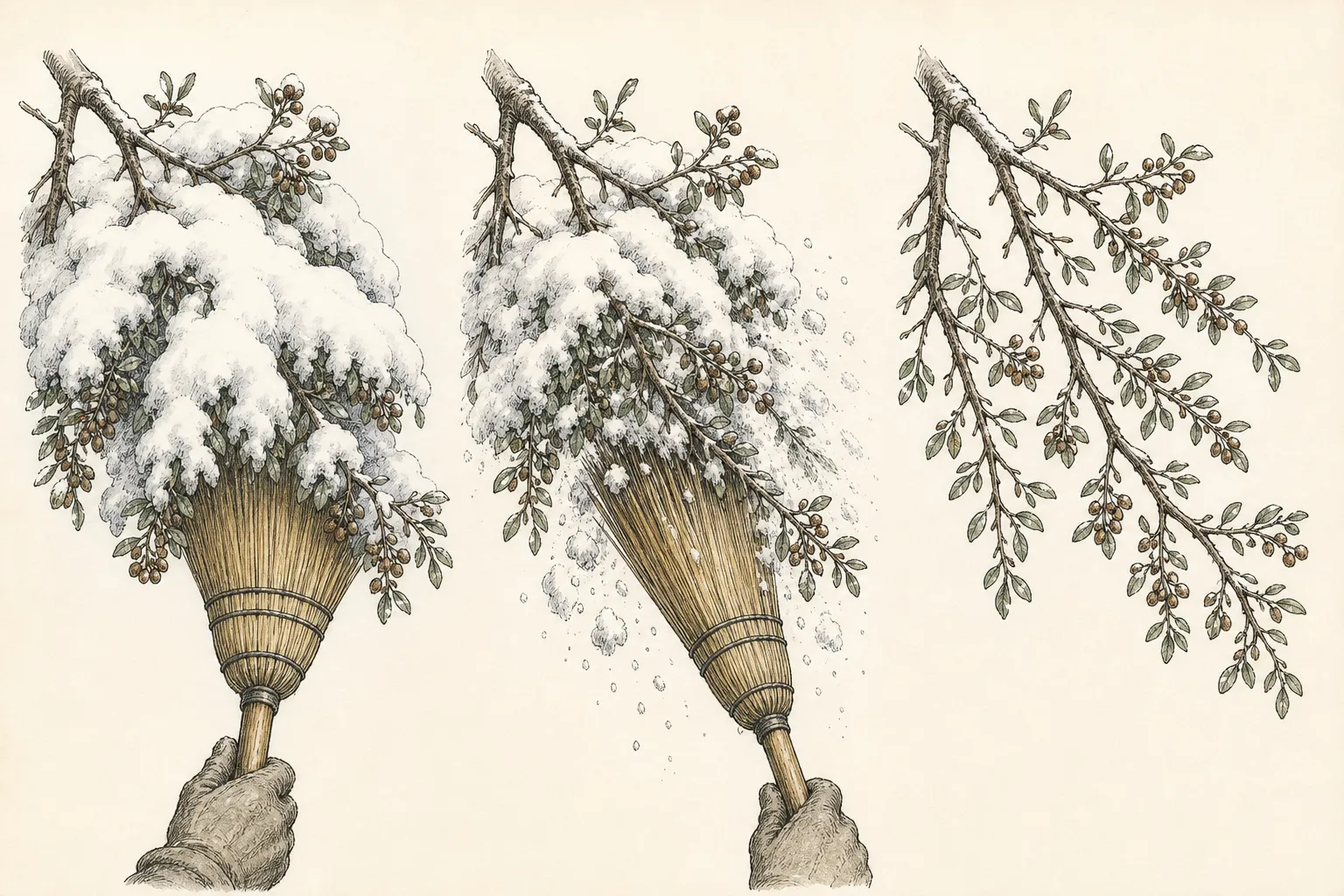
Do not shake, beat, or kick frozen evergreen branches. Cold wood and foliage can be brittle, and a branch capable of recovering after thaw can break under a sudden blow. If loose snow can be reached safely during the storm, lift gently upward from below with a soft broom rather than pressing down from above. Leave ice attached and wait for natural melting. Avoid wading into the crown. Foot pressure can snap hidden lower stems and compact wet soil over roots. Use the existing path or work from the outside. If access requires climbing a ladder, leaning over a drop, or entering a loaded canopy, stop. A small ornamental shrub can wait for thaw; personal injury and additional structural damage are not acceptable costs of restoring its outline.
Distinguish attached bending from broken structure
Let frozen stems and ice release before judging recovery. Sound attached growth may be guided gradually; split attachments, root-plate movement or an unresolved overhead load require a different response. Date any temporary support when it is installed and plan its inspection and removal. Compare natural rebound before tying the shrub permanently into its old outline.
Wait for the attachment points to thaw
After snow and ice release, allow frozen branches to regain ordinary flexibility before lifting them. A stem that remains low for a day is not automatically permanently deformed. Temperature, species, age, branch thickness, and duration of load affect rebound. Mark the damaged area and observe it through a mild interval rather than tying the still-frozen crown upright immediately.
Check soil state as well. A root plate heaved or tilted by snow load is more serious than splayed foliage. Look for new gaps around the trunk, lifted roots, leaning main stems, and movement in wind. Restrict access and consult a qualified arborist for a large shrub or tree with root movement, codominant stem failure, or a target such as a path or building.
Remove only loose snow that can be moved without bending branches against their natural direction. Work upward and outward, supporting the branch with the tool rather than striking it. Do not pour hot water or use salt, heaters, or chemicals to melt ice from foliage. Rapid heat and chemical exposure can create more injury while runoff enters the root zone. Let the crown drain and become visible. Dense wet foliage can hide cracks at narrow unions and bark torn by a wire or old tie. Use daylight and move only one branch at a time. Keep a written map or colored removable tags for bent, cracked, broken, and uncertain stems. The map prevents a later cosmetic cleanup from removing sound growth simply because it looks misplaced.
Classify each stem after thaw
A bent stem has continuous bark and wood at the attachment, no opening split, and some tendency to return. It may remain out of position temporarily. A cracked stem shows separated bark or wood fibers but remains partly attached. A broken stem is detached or hanging by a small strip. A split union opens between major stems and can affect the structural future of the whole plant.
Inspect from origin to tip. A branch can be sound at the base but broken under snow near the end, or appear intact outside while its attachment has split. Move it only enough to see the union and stop if the crack opens. Do not test strength by pulling. Mark the branch and assess what it could strike if it fails before deciding whether home pruning is appropriate.
Look for old defects. Included bark, a previous heading cut, internal deadwood, a tight string, codominant stems, or repeated snow pockets can explain why one area failed. Recovery should not simply push branches back into the same weak configuration. Record the defect and consider selective reduction, replacement, or professional structural work after immediate damage is managed. Compare the evergreen’s natural habit. Columnar arborvitae, broad yew, rounded boxwood, and layered conifers distribute snow differently and tolerate pruning differently. Identify species and cultivar before cutting into old wood, because some evergreens do not readily reshoot from bare interior stems. A visual gap may be preferable to a low cut that never refills.
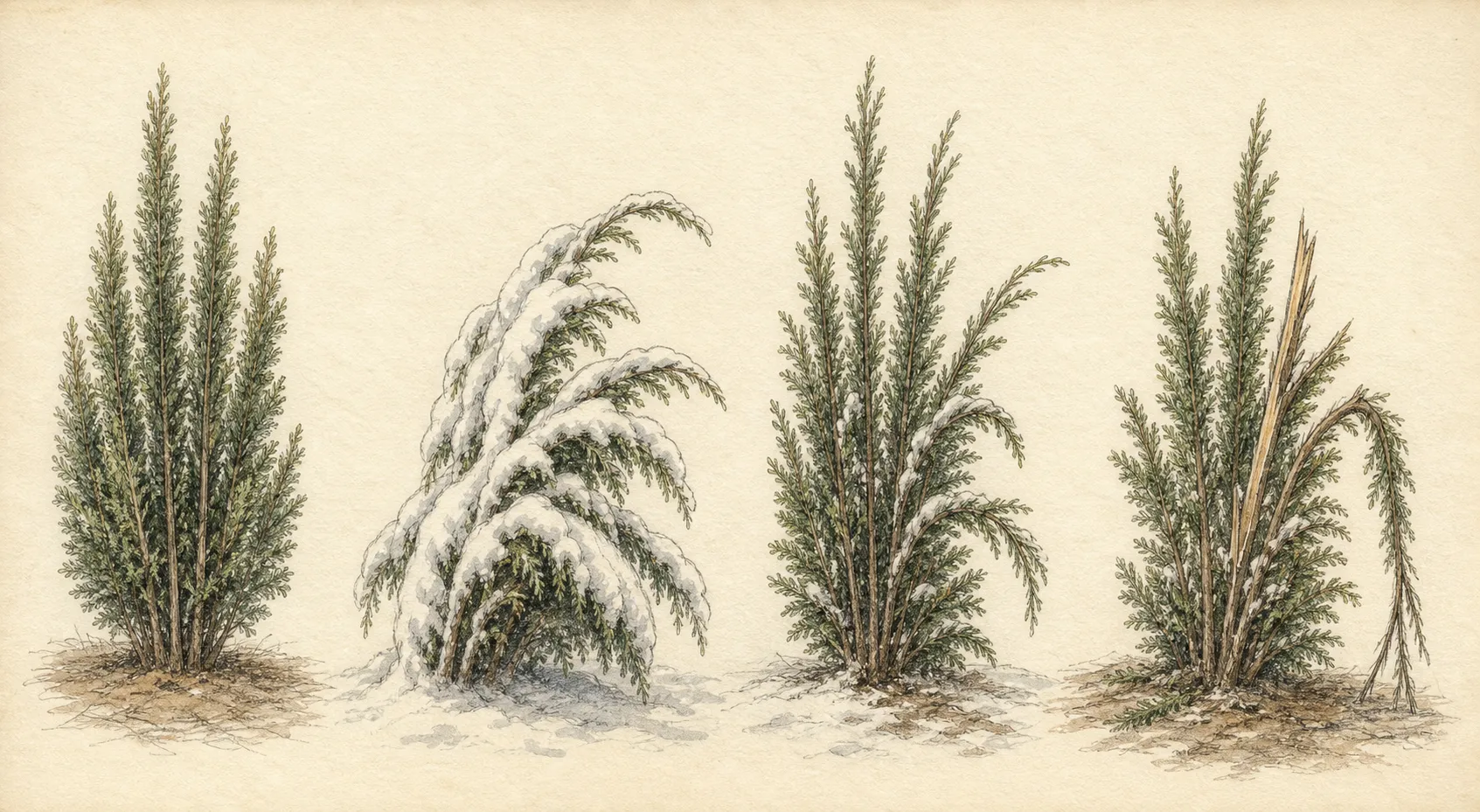
Remove broken wood with selective cuts
Begin with branches that are clearly broken, detached, or hanging over a target and within safe hand-tool reach. Trace each to a suitable lateral, branch collar, or stem origin. Use a clean sharp tool sized to the wood. Support the loose section so it does not strip bark during the final fibers. Do not leave a long stub intended to hold a tie or hide a gap.
For a heavy branch, use an Extension-supported three-cut sequence to prevent bark tearing, or refer the work when control is uncertain. Never stand beneath the branch. Powered saws, climbing, ladders, rigging, and major loaded stems require training and protective systems beyond ordinary shrub maintenance. Restrict the fall zone and choose professional help before the cut becomes an emergency.
Remove cracked stems when the split cannot close, the retained connection is small, decay is present, or failure would strike a target. A lightly cracked valuable stem may warrant professional evaluation rather than a home bolt, tape, or sealant. Do not paint wounds or wrap a fracture with impermeable material. Plants compartmentalize injury; household bandaging cannot restore continuous wood. Limit cosmetic pruning. After damaged wood is removed, step back and preserve sound branches even when the outline is uneven. Evergreens need foliage to support recovery, and broad shearing can expose brown interiors or remove future growth points. Let one growing season show the plant’s response before making additional size or symmetry cuts unrelated to the storm.
Use support only for sound recoverable stems
Temporary support can help sound flexible stems return toward their natural position, but it should not close a split or conceal a failed union. Select only branches with intact attachment and bark. Lift gradually until resistance increases, then stop short of forcing the former outline. If fibers crack, bark buckles, or the crown moves at the root plate, release tension and reassess.
Use broad soft material that spreads pressure and remains visible for inspection. Loop branches individually or in small structural groups rather than cinching the whole shrub into one rigid bundle. Preserve air and light within the crown. Tight cord, wire, hose over wire, and narrow plastic can girdle bark or disappear into foliage as spring growth expands.
Anchor support to a sound part of the plant or an independent stake placed without damaging major roots or utilities. Do not pull the crown toward a weak fence, downspout, or handrail. Keep ties outside paths and mark them clearly. A support that creates a trip or catches a coat transfers the hazard rather than solving it.
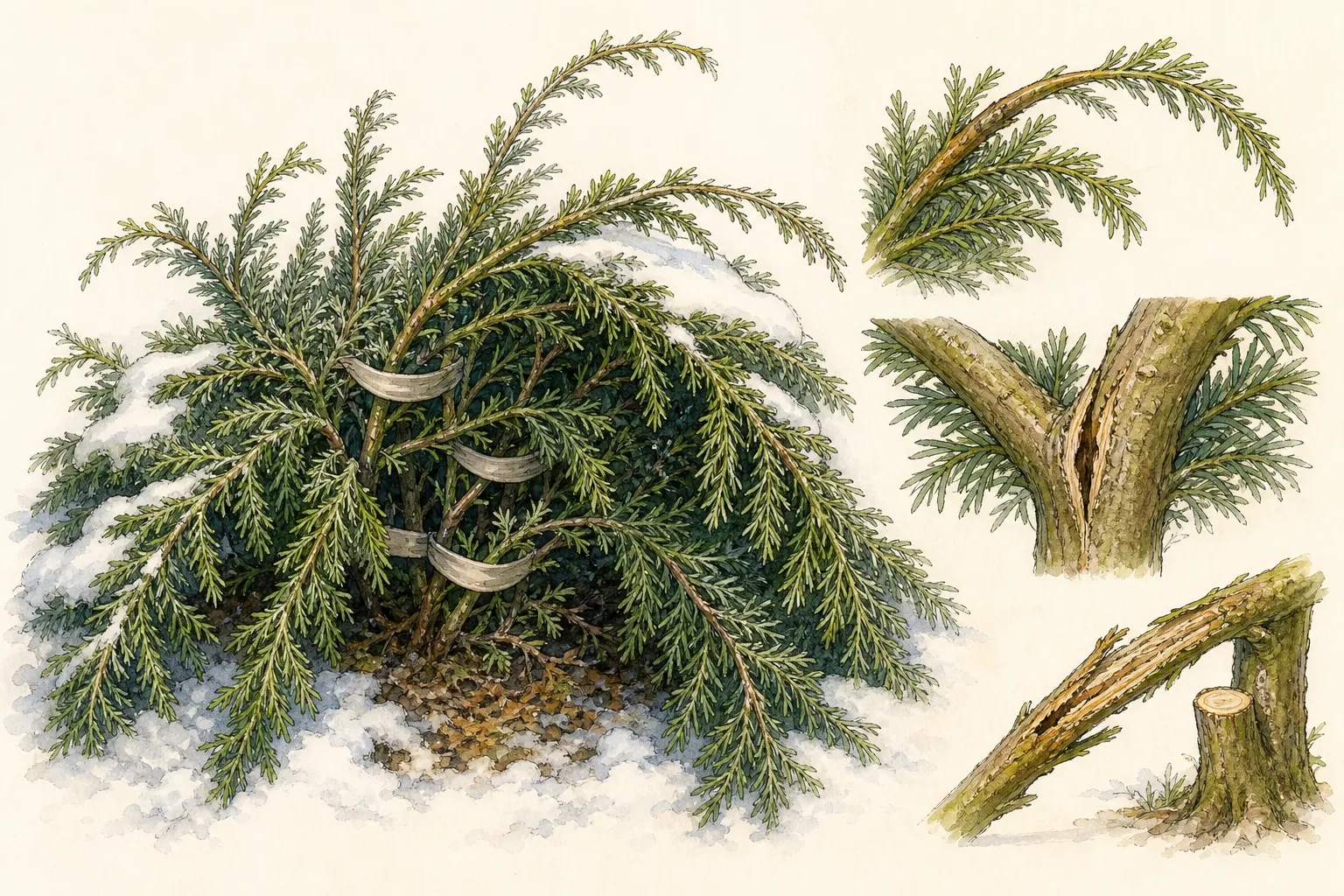
Label every tie with installation and removal review dates. Check after wind, thaw, and new growth. Loosen or remove it as soon as the branch holds an acceptable position, generally within the shortest practical period. Temporary support left through stem expansion becomes a hidden constriction. If the plant repeatedly collapses without binding, its form or site may require redesign rather than permanent corseting.
Support recovery through the root zone
Inspect soil moisture when the ground is unfrozen. Winter sun and wind can desiccate evergreen foliage while roots remain cold, but waterlogged thawed soil also limits roots. Apply water only when the root zone is dry enough to need it and allow drainage. Do not fertilize storm damage reflexively; salts and soft growth do not repair fractured wood.
Maintain a broad shallow mulch ring where suitable, keeping material away from trunks and stem bases. Mulch moderates moisture and prevents mower injury, but a deep pile hides cracks, rodents, and the root flare. Restore grade disturbed by snow equipment without burying roots. Keep deicing salt and contaminated snow away from the recovery zone where possible.
Protect the plant from a second mechanical event. Redirect snow storage, mark the crown for plow operators, and move flexible hoses, decorations, or winter covers that press on branches. A temporary wind or snow screen may help only if structurally safe and open enough not to collapse onto the plant. Do not build a roof that sheds a concentrated load onto neighboring shrubs.
Watch for delayed browning, bud failure, bark separation, and dieback beyond the original injury. Winter foliage damage may appear after weather moderates. Preserve fixed photographs and avoid cutting all discolored tips before the live boundary is clear. Seek local diagnostic help when browning spreads independently of the mapped damage or when cankers and pests are suspected.
Redesign recurring snow traps
After one season, compare the recovered outline, tie marks, new growth, and gaps with pre-storm photographs. A healthy shrub may fill a selective opening; a split major framework may remain unstable; some conifers will not replace bare old interior wood. Decide whether to retain, selectively train, replace, or redesign from actual recovery rather than the immediate shock of a damaged winter silhouette.
Map where snow arrived. Roof valleys, plow routes, prevailing wind, fence eddies, and narrow gaps between buildings concentrate loads. Move a young shrub during the locally appropriate season if the species and root ball permit. For established plants, alter snow placement or choose a replacement form that sheds snow better and fits without binding.
Use preventive tying only when current regional guidance supports it for the plant and system, and install it before snow with broad materials and planned removal. Avoid compressing foliage into a dense wet column. Structural pruning while young, appropriate spacing, and selecting a naturally suitable cultivar are stronger long-term measures than making every winter crown dependent on rope.
Record the event in the plant file: snow type, failure point, cuts, support, removal date, and next-year response. The goal is not to erase evidence but to prevent recurrence. A garden that expects local winter loads uses plant habit, mature scale, and snow routes as design constraints, allowing evergreens to remain recognizable plants rather than permanently tied objects.
Decide when replacement is the safer recovery
Replacement becomes reasonable when a major framework has split, the root plate moved, most live foliage must be removed, the species cannot reshoot from the remaining bare wood, or the same snow route collapses the crown repeatedly. Compare the plant’s landscape value, target risk, recovery time, and future support burden. Remove a large or structurally compromised plant with qualified help rather than keeping it bound indefinitely to preserve its former outline.
Choose a successor by natural habit, mature width, branch flexibility, site drainage, winter exposure, and the mapped source of snow. A narrower cultivar is not automatically stronger, and a broad shrub may shed snow better when it has room. Move the planting center outside roof fall, plow storage, and wind eddies where possible. The replacement should solve the site relationship, not merely reproduce the original photograph.
Steps
- Level
- moderate
- Time
- 30–90 minutes after safe thaw, with seasonal follow-up
- Tools
- Camera and removable tags, Clean bypass pruners or loppers sized to the branch, Soft broom for loose snow only, Gloves and eye protection, Qualified help for loaded or overhead defects
- Materials
- Broad soft temporary support where warranted, Visible date label, Sound independent stake only where roots and utilities permit
- 1Secure the wider hazard
Keep people out, check roofs, trees, utilities, ice, footing, root-plate movement, and hanging branches, and obtain qualified help before working beneath any unresolved load.
- 2Let frozen wood thaw
Do not beat, shake, heat, salt, or force branches. Lift only loose reachable snow gently upward and allow ice and frozen stems to release naturally.
- 3Map attachment condition
After thaw, trace stems and tag bent, cracked, broken, split, and uncertain attachments. Identify species and natural habit before deciding whether old bare wood can recover.
- 4Prune only unrecoverable damage
Remove clearly broken safe-reach branches at a suitable lateral, collar, or origin with a clean controlled cut. Preserve sound foliage and refer heavy, overhead, split, or loaded work.
- 5Lift sound stems gradually
Move intact flexible branches only until resistance increases. Stop for cracking, bark buckling, root movement, or an opening union; temporary support cannot repair failed wood.
- 6Install broad dated support
Support individual stems or small groups loosely, preserve air, keep ties visible and outside paths, and mark a near review and removal date. Never bind the whole crown permanently.
- 7Protect roots and monitor
Manage measured moisture, shallow mulch, salt, snow storage, and mechanical contact. Photograph delayed browning, dieback, and tie response before additional pruning.
- 8Correct the recurring snow route
After one growing season, use the mapped source of load and recovery to decide on plant relocation, cultivar replacement, structural training, or snow-management redesign.
- 9Compare natural rebound before tying
Photograph the thawed crown, wait through a mild interval, and compare each intact stem with the species’ normal habit. Support only stems that show sound attachments and a plausible return. An uneven outline alone is not evidence that the whole shrub needs binding.
- 10Inspect old defects beneath the load
Look for included bark, heading cuts, dead interior wood, embedded ties, weak codominant stems, and repeated snow pockets. Record the defect so recovery does not push the branch back into the same failure pattern or hide a structural split under foliage.
- 11Schedule tie removal at installation
Write review dates for thaw, bud break, and early shoot expansion on a visible label. Loosen or remove broad support as soon as stems hold an acceptable position. If the plant cannot stand without recurring restraint, reassess pruning, site, habit, and replacement.
- 12Evaluate one full growing season
Compare new growth, delayed dieback, interior gaps, tie pressure, and the recovered silhouette before cosmetic pruning. Preserve healthy foliage, refer progressive structural defects, and use the mapped snow route to decide whether preventive design changes are needed before the next winter.
Related reading
Sources
- Winter Damage on Landscape Plants. University of Maryland Extension. Source record · Accessed 2026-08-19.
- Protecting Trees and Shrubs in Winter. University of Minnesota Extension. Source record · Accessed 2026-08-19.
- Pruning Trees and Shrubs. University of Minnesota Extension. Source record · Accessed 2026-08-19.