Grow · freestanding burlap wind screen new shrub
Build a Freestanding Burlap Wind Screen for New Shrubs
Protect newly planted shrubs from drying wind and bright winter exposure with a breathable freestanding burlap screen instead of wrapping the foliage into a damp, damaged bundle.
Published Last updated
In this guide
- Know when a screen is better than wrapping
- Decide which side actually needs the barrier
- Build the structure outside the foliage and root disturbance zone
- Make the screen breathable and incomplete on purpose
- Secure it for winter movement, not for permanent occupancy
- Remove it promptly and use the result as diagnosis
- Skip the screen when the bed is asking for a different answer
- Steps
Know when a screen is better than wrapping
A freestanding burlap screen is for exposure problems, not for every shrub that happens to be green in winter. The method is most useful when a newly planted shrub faces bright low sun, drying wind, or a windward open edge before the root system has fully established. That is why Iowa State presents screens as one way to reduce moisture loss from susceptible evergreens and immediately warns against wrapping the burlap around the plant like a blanket. The purpose is to calm the environment around the shrub while keeping the foliage dry, visible, and ventilated, not to press fabric against living leaves and stems.
Wrapping often feels safer because it looks complete, but it solves the wrong problem. Wind does not need to be defeated by contact with the plant itself. A fabric wrap can trap snow, keep foliage damp longer, abrade leaves and buds in motion, and make it harder to see whether branches are bending, browning, or rotting underneath. A freestanding barrier, by contrast, interrupts the worst of the wind and glare while preserving air space. That air space is the entire point of the construction. If the fabric touches the shrub, you have built a winter covering, not a wind screen.
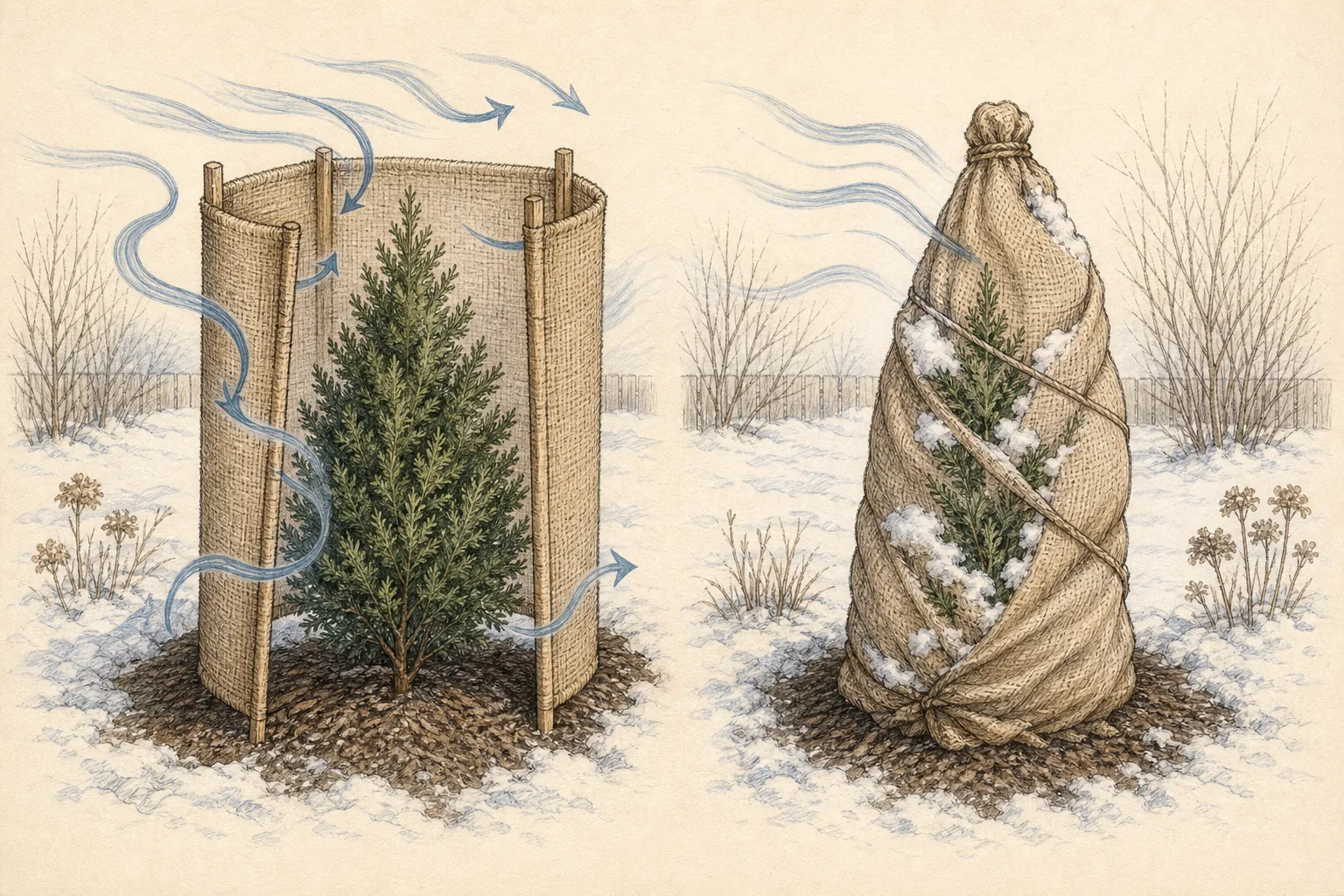
Use the screen when the plant is worth protecting but the exposure is not yet corrected permanently. That can mean a recent transplant, an unusually exposed first winter, or a site that will become calmer once other woody structure fills in. It does not mean every evergreen deserves seasonal carpentry forever. If the shrub will need a screen every year simply to survive the bed, the real decision may be to move the shrub or redesign the border rather than refine the same temporary structure indefinitely.
Mark the windward exposure and the shrub's full foliage outline before setting posts. The freestanding panel must remain clear of that foliage as it moves, with its top open. Inspect clearance, ties and lean after the first strong weather event. Remove the screen when the relevant winter exposure ends; recurring damage also calls for a site assessment.
Decide which side actually needs the barrier
The useful screen faces the stress, not the gardener. Before setting posts, stand in the bed during the weather you are trying to moderate and identify the windward side, the direction of brightest winter glare, and any salt-laden or plowed snow coming from a walk or drive. Wisconsin links winter burn not only to dry fall soil but also to winter sun, drying winds, poor siting, and recent planting. That list is a siting diagnosis as much as a protection checklist. If the damage pressure comes from one dominant direction, screen that direction first instead of enclosing the plant by default.
The barrier may need to shade bright south-west exposure in one garden and deflect a prevailing open-field wind in another. In some front-yard sites both forces arrive together because reflected pavement light and wind share the same corridor. Map those forces before construction. A panel placed beautifully on the wrong side can leave the shrub just as exposed while creating a false sense of security. The fabric does not work by existing; it works by standing between the plant and the specific winter stress you identified.
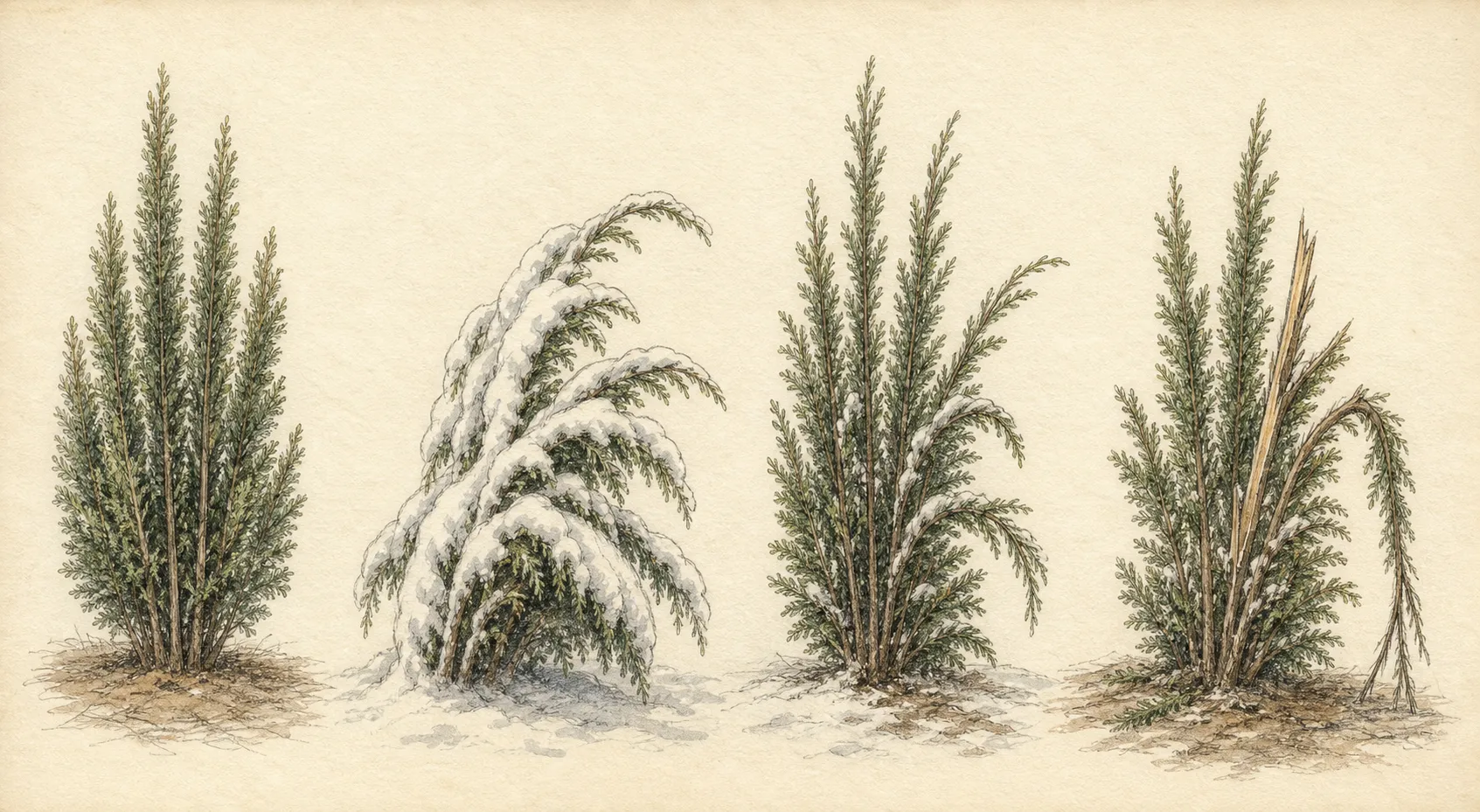
Full encirclement is not usually the starting answer. A shrub that already suffers from all-sided wind over open snow may justify a more enclosing arrangement, but many beds need only one or two panels and an open top. Begin with the smallest screen that solves the site problem you actually observed. The more structure you add, the more you must inspect for snow load, trapped debris, loose ties, and hidden branch breakage. A focused barrier is easier to place correctly and easier to remove on time in spring.
Build the structure outside the foliage and root disturbance zone
The safest screen is laid out around the shrub, not through it. Iowa State specifies that a simple screen can be made from posts, woven wire support, and burlap, and it adds one critical measurement: keep the screen at least six inches away from the foliage. That clearance prevents rubbing, reduces retained moisture, and preserves the very air space the barrier is supposed to create. Do not interpret six inches as an upper limit. A larger shrub or an awkward winter load may justify more distance as long as the screen still interrupts the exposure effectively.
Stake placement also needs to respect the root zone and the gardener. Push posts where they can stand securely without tearing into the root ball of a recent planting or forcing you to work from unstable footing. Wisconsin's burlap-tent guidance recommends stakes a few inches taller than the plant; that is a useful starting proportion because a barrier lower than the shrub cannot protect its upper foliage while a structure towering far above it adds leverage and wind load without equivalent benefit. The construction should feel measured, not monumental.
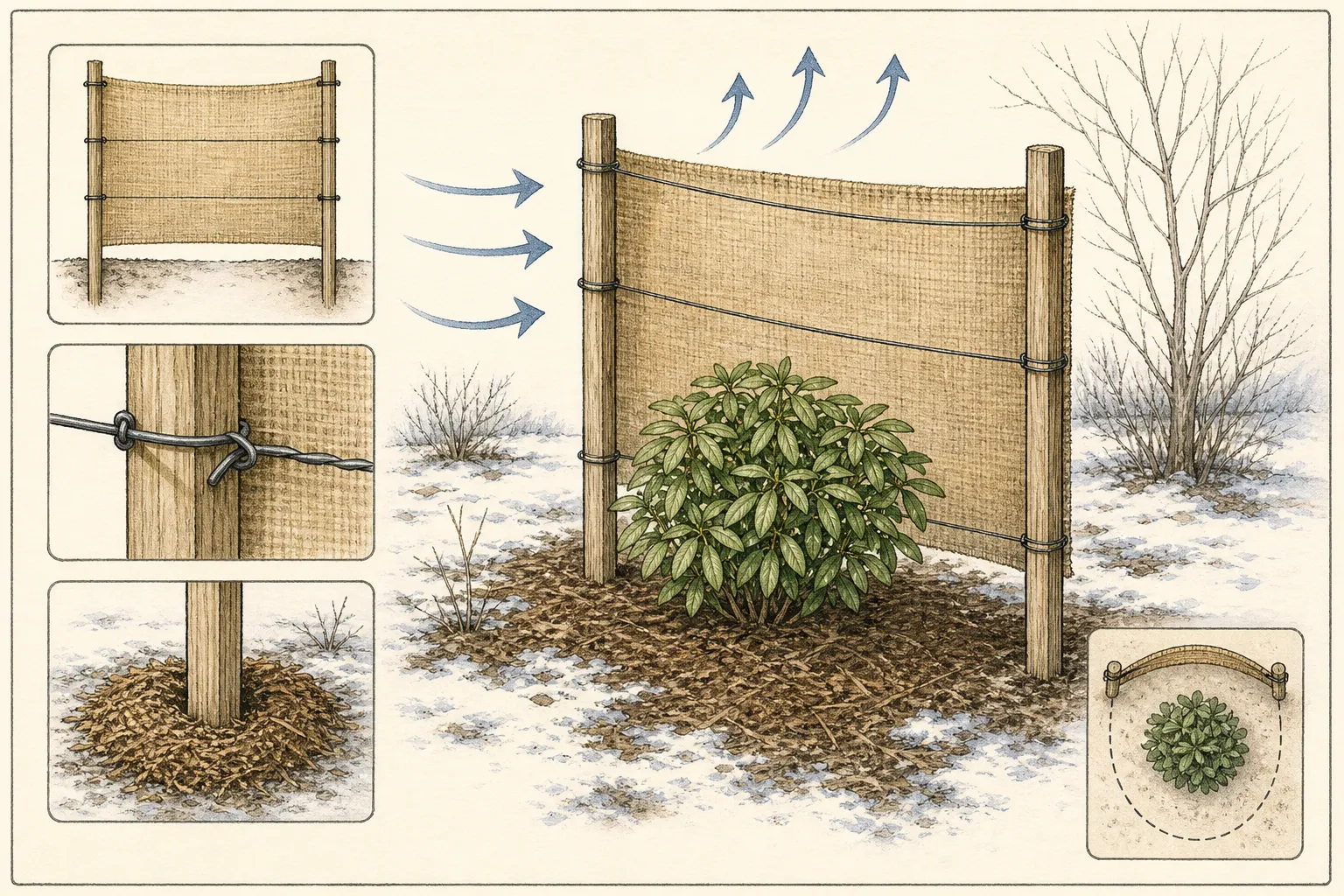
If the bed is so narrow that you cannot keep posts clear of foliage and still leave stable footing around the shrub, stop and reconsider the method. A screen crammed into a tight foundation strip often causes as many problems as it prevents. Likewise, if the soil is too frozen to set posts without heaving the plant or if utilities are uncertain near a path edge, wait or choose another protection method. The structure works only when it can be installed without creating root disturbance, stem abrasion, or access hazards of its own.
Make the screen breathable and incomplete on purpose
Burlap works because it reduces the force of wind and light without creating a sealed winter chamber. That is why a support layer such as wire or taut runs between posts is useful: it holds the fabric upright so the plant is not asked to support the barrier. A screen that sags inward, stays wet against foliage, or collects heavy snow in deep folds is no longer doing the quiet partial job intended by the method. Keep the panel stretched and readable. You should be able to look at the finished structure and immediately understand where air will still move and where the main exposure has been reduced.
Leave the top open. A shrub does not need a roof simply because it needs shelter from the windward side. Open tops allow rising warmth, falling precipitation, and easy inspection of the crown and branch structure. They also reduce the chance that the screen will become a snow-catching trap. A complete hood or top wrap can turn a simple protective plane into a damp, loaded enclosure that bends or breaks the shrub beneath it. In winter protection, partial is often more correct than complete because the plant still needs ventilation and a visible route for moisture to leave.
Do not make the fabric prettier than the principle. A screen stitched into decorative folds, lashed tightly around the plant, or crowded with extra panels may look intentional while behaving badly. The best screen is the one that still looks slightly plain because it is honest about its purpose. It stands between the shrub and the exposure, then gets out of the way of everything else the plant and gardener still need to do.
Secure it for winter movement, not for permanent occupancy
Winter structures move. Fabric loosens, ground freezes and thaws, and snow settles against the lower edge. Build with that movement in mind. Use ties that hold the burlap to the support without cutting it loose in the first storm, but do not cinch the fabric so tightly that every gust transfers directly to the posts or tears the weave. The finished panel should feel firm, not rigid. If the first windy day would either collapse it or turn it into a sail, revise the construction before calling the job complete.
Inspect the screen after the first snow, wind event, and thaw. The inspection is part of the build, not a separate bonus task. A post that leans toward the shrub, a lower edge packed with drifting snow, or a tie that has slipped into the foliage is an immediate correction item. Temporary winter structures always reveal their weak point quickly. That is a virtue if you are watching. It becomes a problem only when the gardener assumes the structure is finished and invisible until spring.
A wind screen should also coexist with the rest of the winter garden. It cannot block the only route for snow clearing, force ice-prone detours, or make it impossible to inspect the bed for animal damage, runoff, or broken stems. A structure that protects the shrub while endangering the gardener or the rest of the bed has not actually succeeded. Protective work must remain compatible with winter access, because the same season that dries foliage also sends you back into the landscape repeatedly for other tasks.
Remove it promptly and use the result as diagnosis
A burlap screen is a seasonal intervention, not a permanent architectural feature. Remove it when the exposure it answered has passed and the risk of winter burn or drying wind has meaningfully receded in your region. Leaving it in place into active growth reduces light, complicates maintenance, and can mislead you about the shrub's real suitability for the site. The goal is to help the plant through a vulnerable period, then allow normal air movement and spring evaluation to resume.
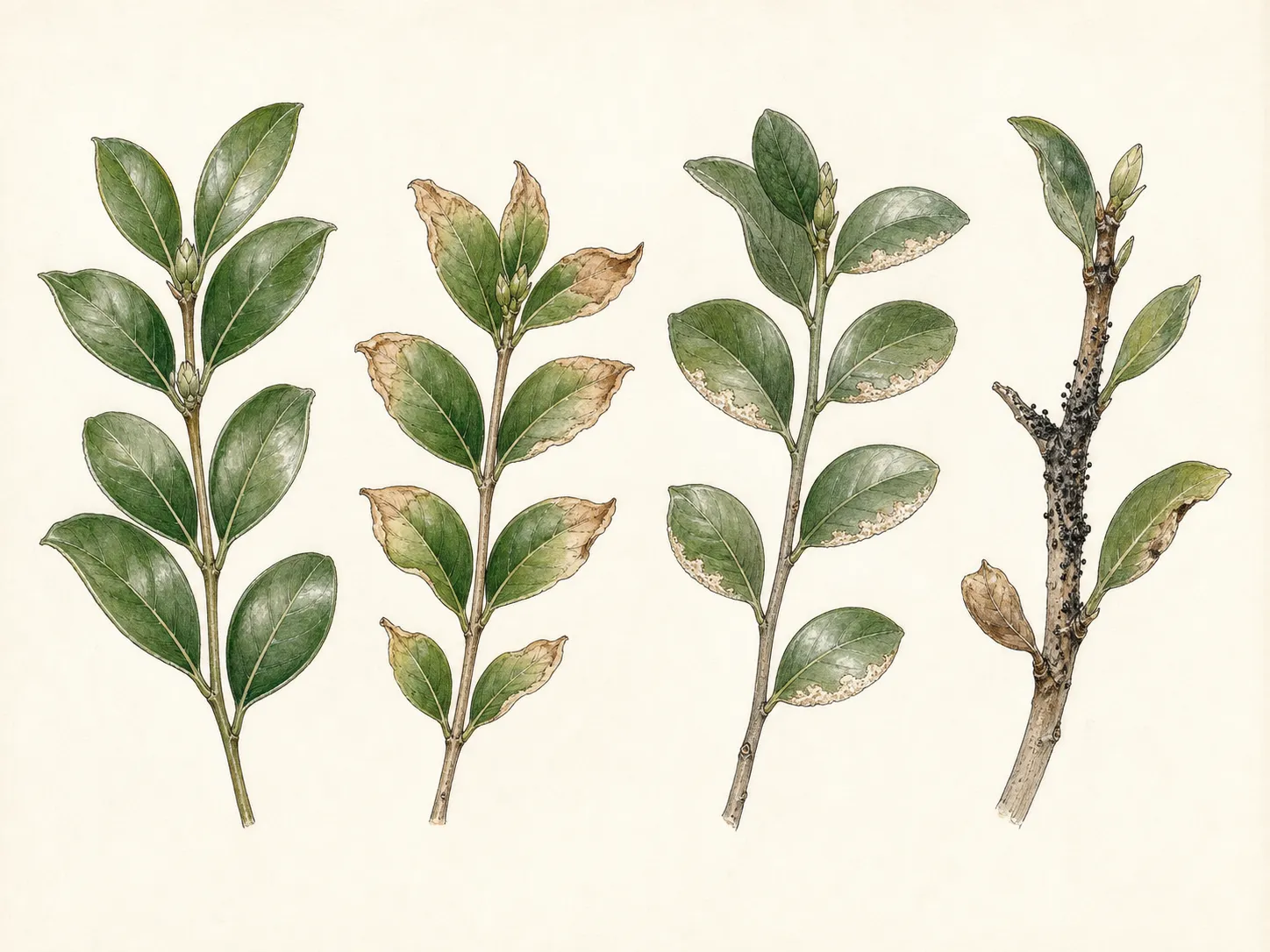
The weeks after removal are useful diagnostic time. If the shrub comes through winter cleanly, the screen may have been appropriate for a recent planting or a specific season of establishment. If the same bed still produces browning, salt splash, or chronic wind injury, the site problem may be larger than seasonal screening. Use the outcome to decide whether the shrub is now established enough to do without help, whether the exposure needs structural redesign, or whether the plant itself is wrong for the location. Protection is evidence-gathering as much as it is prevention.
Store the screen only if it remains worth reusing. Torn burlap, bent wire, rotted stakes, or ties that no longer hold are not archival treasures. Winter protection works best when the materials are plain, strong, and disposable once their useful life ends. Do not make next year's shrub depend on this year's fatigued structure simply because it exists in the shed.
Skip the screen when the bed is asking for a different answer
There are sites a burlap screen should not try to save. If the bed catches salted slush, repeated plow impact, chronic pooling, or all-day open-field wind from several directions, the screen may only hide the larger design failure. Likewise, a shrub that is already too tender for the region or poorly matched to the soil is not fixed by a winter panel. Temporary protection works best when the plant and site are fundamentally compatible and only one winter factor needs moderation. Once multiple incompatibilities stack up, the cleanest answer is almost always relocation or replacement.
The method should also remain proportionate to the plant. A newly planted specialty shrub near an entry can justify a careful screen through its first winters. A mass planting of routine shrubs along a difficult frontage usually calls for a tougher plant palette, revised snow handling, or structural wind buffering instead. If you find yourself designing elaborate screens for every shrub in the same border, the border is teaching you something more important than carpentry. It is telling you what kind of plants that exposure actually wants.
A good winter screen therefore ends with an honest question: are you protecting a sound planting through establishment, or are you compensating for a permanent mismatch? Keep the screen for the first situation. Redesign for the second. That distinction preserves both the shrub and the gardener from years of work that looks caring but never actually resolves the site.
Steps
- Level
- moderate
- Time
- 30 to 75 minutes to build and place one screen
- Tools
- Wooden posts or stakes, Woven wire or support wire, Hand pruners or snips for ties, Mallet or post driver, Tape measure
- Materials
- Burlap, Weather-safe ties or cable ties, Marker flag or bed note for spring removal
- 1Confirm that the shrub needs screening
Choose the method only for a newly planted or exposure-sensitive shrub facing a real winter stress such as dry wind, glare, or open exposure. Do not build by habit. If the bed suffers from plow impact, chronic salt runoff, or poor drainage, solve those conditions first or choose a different plant rather than expecting fabric to compensate.
- 2Identify the stress direction
Stand in the bed and mark the windward side, the direction of low winter sun, and any nearby drive or walk that throws snow or salt. Build the barrier for that exposure. A screen placed decoratively but on the wrong side of the shrub adds work without solving the cause of damage.
- 3Set posts clear of the foliage
Place the posts far enough away that the fabric will remain at least several inches off the foliage when tied in place. Keep the structure slightly taller than the shrub. Avoid tearing into the recent root ball or placing posts where winter footing will be unsafe. The air space is part of the protection, not a finishing detail.
- 4Attach support and burlap as a freestanding panel
Use wire or another support to hold the burlap upright between posts. Stretch the fabric enough to remain readable in wind, but do not turn it into a rigid sail. Keep the top open and never wrap the burlap around the plant itself. The goal is to interrupt exposure while preserving ventilation.
- 5Check movement after the first weather event
Inspect the screen after the first hard wind or snowfall. Tighten slipped ties, clear snow packed against the lower edge, and correct any lean toward the shrub. Temporary structures always reveal weak points early; fix them immediately so the plant is not pressed or abraded by the shelter intended to protect it.
- 6Remove as the season turns
Take the screen down when the relevant winter exposure has passed and the shrub no longer needs that added moderation. Record whether the shrub came through cleanly, browned anyway, or revealed a larger site problem. The removal date is part of the method because a screen left into spring becomes a new source of stress.
- 7Use the result to judge the bed
If the shrub stabilizes after establishment, the screen did its temporary job. If the bed keeps demanding elaborate winter protection, redesign the site or the plant palette. A freestanding burlap screen is a measured seasonal tool, not proof that the original planting location was correct.
Plants in this guide
Related reading
Sources
- Protecting Trees and Shrubs in Winter. Iowa State University Extension and Outreach. Source record · Accessed 2026-08-19.
- Build a Better Windscreen for Your Evergreens This Winter. Michigan State University Extension. Source record · Accessed 2026-08-19.
- Keep Watering in Fall to Protect Evergreens from Winter Burn. University of Wisconsin-Madison Extension. Source record · Accessed 2026-08-19.