Lungwort
Pulmonaria saccharata
A profile of Pulmonaria saccharata, the spotted-leaved rhizomatous perennial for cool, evenly moist shade.
Published Last updated
At a glance
- Light
- Part shade to shade
- Water
- Medium; even moisture with drainage
- Soil
- Humus-rich, moisture-retentive, well-drained soil
- Hardiness
- Zones 3–8
- Bloom
- Early to mid-spring
- Height
- 12–18 in · 30–45 cm
In this guide
Overview
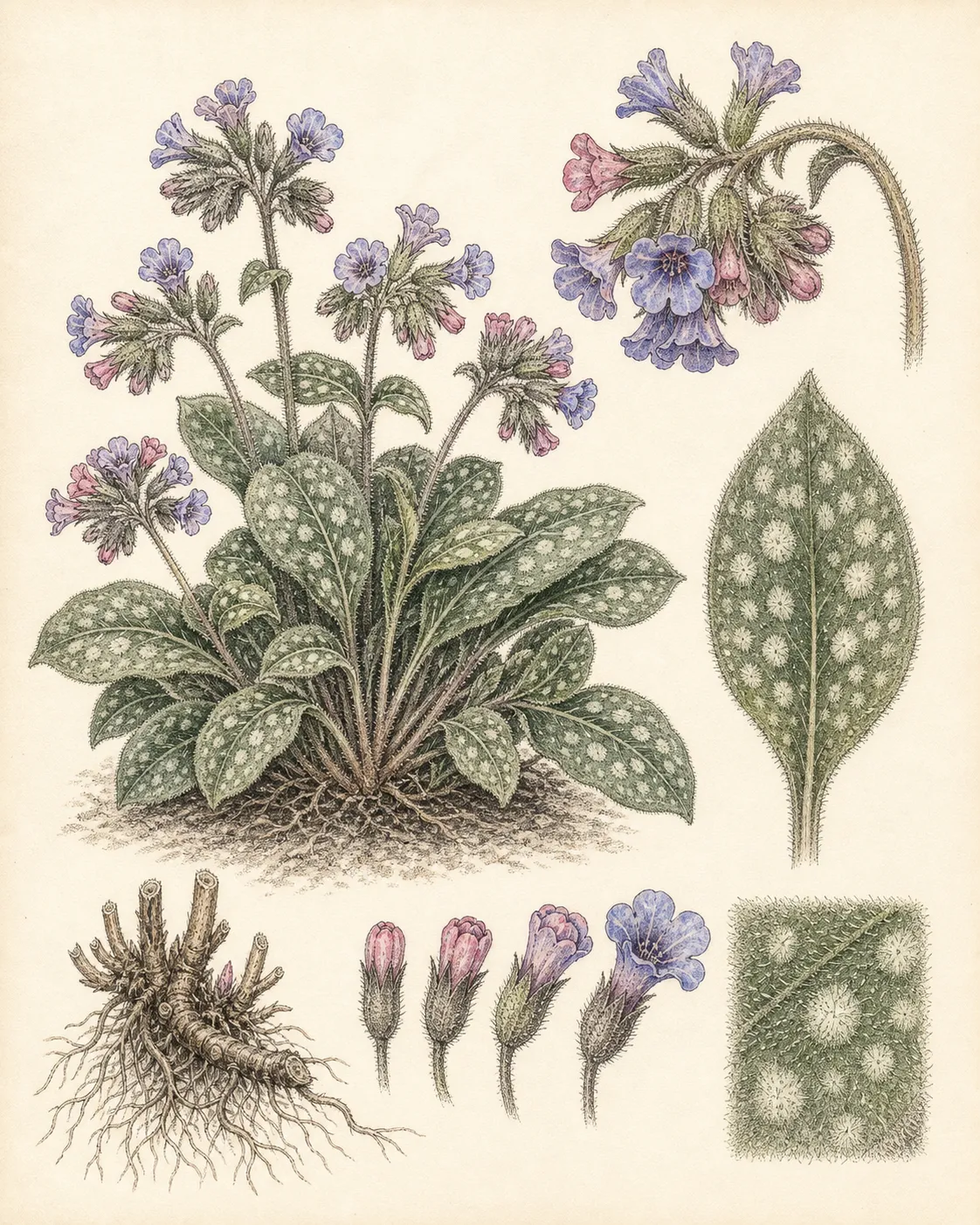
Pulmonaria saccharata is a rhizomatous perennial in the borage family. A basal clump of bristly green leaves is heavily spotted or blotched with silver-white markings. Flowering stems rise above the foliage in early to mid-spring, carrying funnel-shaped flowers that often open pink and mature blue, so both colors can appear together.
The basal foliage is usually 8–12 in high, while flowering stems may reach 12–18 in. Creeping rootstocks slowly widen a clump to about 18–24 in; Missouri Botanical Garden describes that spread as slow rather than invasive. Use it as a ground layer or path edging where the patterned leaves can be seen closely.
Cool, humus-rich, evenly moist soil in part shade to full shade gives the most dependable foliage. The roots need drainage as well as moisture: dry soil and hot sun cause wilt or scorch, while wet poorly drained soil can lead to root rot. Beneath trees, check moisture below the surface because the canopy can intercept rain.
Cultivars differ in silver coverage, mature size, flower color, and summer leaf quality. Keep the botanical and cultivar label; a generic image of lungwort does not establish that a plant is P. saccharata or predict its final leaf pattern.
Old foliage can look ragged after flowering or during summer heat. Remove individual damaged leaves when fresh basal growth is available, but do not cut a drought-stressed clump to bare crowns. Divide overcrowded plants in autumn and reset each section at its previous crown depth.
Powdery mildew and slugs are occasional problems. Improve spacing and moisture consistency before reaching for a treatment, and ask a local diagnostic service to confirm persistent disease. Any pesticide must be used according to its label and regional guidance.
- Family
- Boraginaceae
- Range
- Southeastern France under the current Kew taxon treatment
- Soil pH
- 6–7.5
- Spread
- 18–24 in · 45–60 cm
Planting & careHow to grow lungwort
Horticultural references sometimes describe a broader France-to-Italy range. Garden performance declines in prolonged heat, hard afternoon sun, drought, and stagnant wet soil.
- 1Choose cool open shade
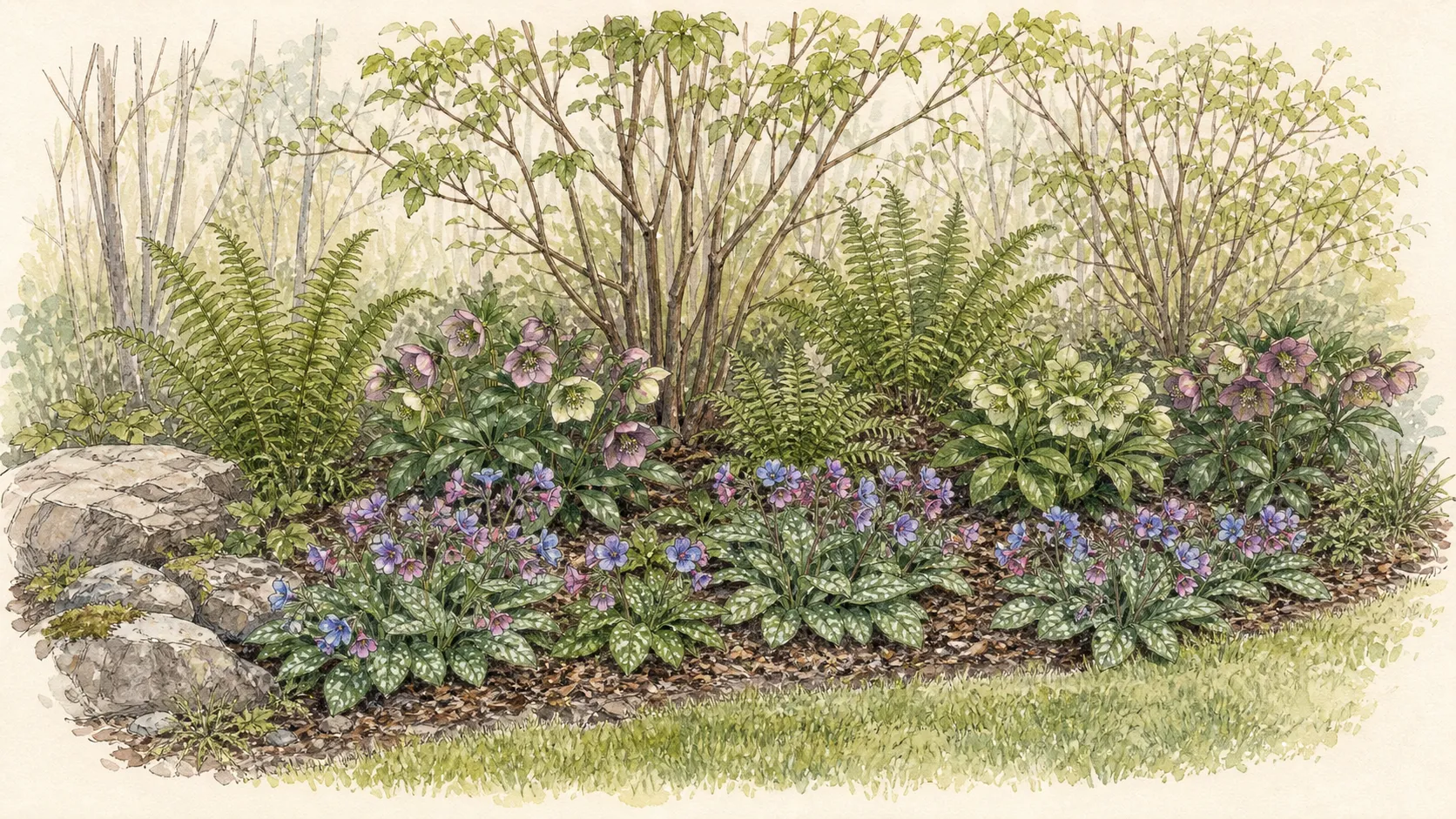
Use part shade to full shade with protection from hot afternoon sun. Check whether tree roots or eaves leave the site drier than its appearance suggests.
- 2Prepare moisture-retentive drainage
Add finished organic matter across the bed where needed, while preserving a soil structure that drains after rain. Do not place the crown in a permanently wet pocket.
- 3Allow the clump to widen
Space plants for an 18–24 in mature patch rather than closing every gap immediately. Leave enough airflow to inspect the foliage for mildew and slugs.
- 4Set the crown at its former depth
Place the crown level with the surrounding soil, spread the roots without burying emerging shoots, and keep coarse mulch outside the crown.
- 5Water evenly through establishment
Soak the planted root zone, then water again when the soil is beginning to dry below the surface. Keep it moist, not saturated.
- 6Keep the foliage visible
Pair with compatible shade plants that will not overrun the low clump, and position taller companions where they do not trap stale air around the leaves.
Pruning lungwort
Lungwort needs leaf cleanup, not woody pruning. Remove spent flower stems if seed is unwanted and cut out winter-damaged or mildew-marked leaves when fresh basal foliage can replace them. During hot dry weather, retain sound leaves and avoid cutting the clump down to exposed rhizomes and crowns.
Seasonal care
Spring
Enjoy the pink-to-blue flower sequence, keep crowns evenly moist, remove spent stems if seed is unwanted, and clear only damaged foliage.
Summer
Protect foliage from drought and hot afternoon sun, remove badly scorched leaves selectively, and watch for powdery mildew or slugs.
Autumn
Divide overcrowded clumps while soil is workable, replant rooted sections at their former depth, and water them in without covering the crowns.
Winter
Leave sound semi-evergreen foliage in mild climates, clear collapsed leaves that hold wet against crowns, and check that winter drainage remains open.
Safety and garden spread
Common problems
Heat or drought scorch
- Look for
- Leaves wilt, crisp at the margins, or collapse first on the brightest or driest side.
- Action
- Check moisture below the surface, water the root zone deeply, and improve afternoon shade. Remove only leaves that will not recover.
Powdery mildew
- Look for
- A white powdery coating expands across leaves, often after crowding, drought stress, or still humid weather.
- Action
- Remove badly affected leaves, improve spacing and moisture consistency, and seek local diagnosis before selecting a labeled treatment.
Slug feeding
- Look for
- Irregular holes and scraped patches appear on new leaves, with slime trails or feeding concentrated near damp cover.
- Action
- Reduce hiding places, inspect after dark, and use the least disruptive locally recommended control only after confirming slugs.
Root or crown rot
- Look for
- A clump collapses despite wet soil, with soft crown tissue or dark decaying roots.
- Action
- Lift affected material, discard rotten tissue, and correct drainage before replanting sound divisions. Ask a diagnostic service about spreading losses.
Sources
- Pulmonaria saccharata. North Carolina State Extension. Source record · Accessed 2026-08-30.
- Pulmonaria saccharata. Royal Horticultural Society. Source record · Accessed 2026-08-30.
- Pulmonaria saccharata. Missouri Botanical Garden. Source record · Accessed 2026-08-30.
- Pulmonaria saccharata. Royal Botanic Gardens, Kew. Source record · Accessed 2026-08-30.