Dwarf Fothergilla
Fothergilla gardenii
A practical species profile of Fothergilla gardenii, with identification, garden placement, soil and seasonal care guidance.
Published Last updated
At a glance
- Light
- Full sun to partial shade
- Water
- Moderate; avoid dry alkaline sites
- Soil
- Moist, acidic, well-drained soil rich in organic matter
- Hardiness
- Zones 5–8
- Bloom
- Spring
- Height
- 1.5–6 ft; selections vary · 45–180 cm; selections vary
In this guide
Overview
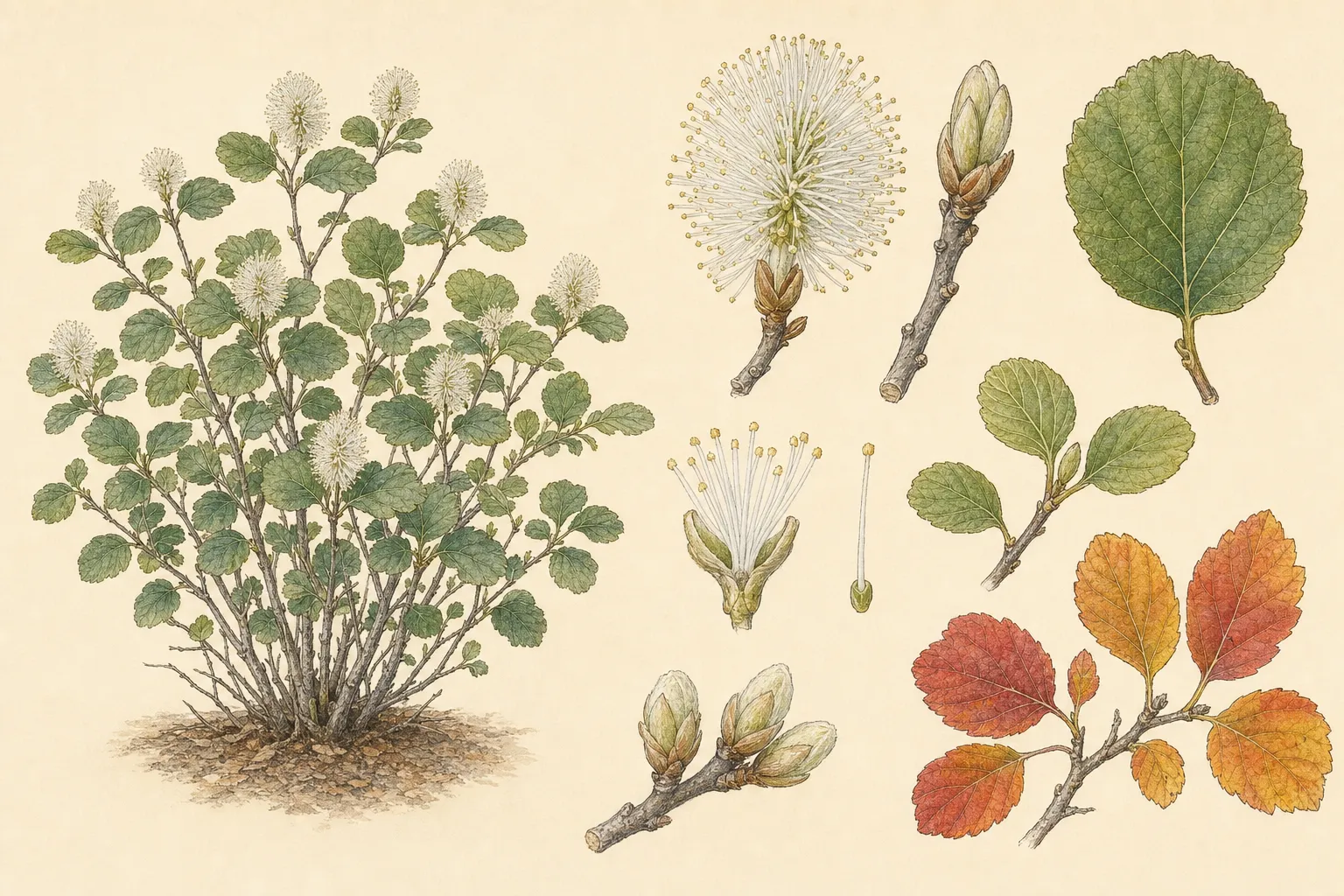
Dwarf fothergilla is a slow-growing, rounded deciduous shrub in the witch-hazel family. Its spring flower spikes have no petals; a bottlebrush of white stamens creates the showy, honey-scented display before the blue-green leaves expand. In autumn, the leathery foliage can combine yellow, orange, scarlet, and red on one plant.
The accepted species is Fothergilla gardenii, native from North Carolina through South Carolina to Georgia according to Kew. Nursery fothergillas may be named cultivars or hybrids with F. major, and their mature height can differ markedly. Keep the full botanical and cultivar name rather than applying the word dwarf to every plant of fothergilla parentage.
The retained NC State page contains a wide size envelope: its structured section describes about 1.5–3 feet tall and 2–4 feet wide, while the narrative gives up to 6 feet. Cultivar and regional evidence should narrow that range for a real planting. In the absence of a reliable label, reserve the larger footprint and avoid a low-window position that requires permanent reduction.
Full sun brings the strongest flower display and autumn color, but some afternoon shade can protect the shrub in hot, dry summers. Rich, slightly acidic soil with organic matter and drainage is the preferred garden condition. The species tolerates occasional wetness and some drought once established, yet those tolerances do not replace careful watering of a new root ball.
Root suckers can turn one rounded shrub into a colony. That spread suits a native mass or informal low hedge; it conflicts with a tight specimen bed. Define the allowed colony edge before planting and remove outlying suckers at their origin while small instead of clipping the canopy into a formal shell.
NC State reports no significant insect or disease problems. The main maintenance decisions are therefore site fit, label accuracy, sucker boundaries, and the timing of any optional pruning. A healthy, correctly placed plant needs little cutting beyond dead or damaged stems and selective post-bloom correction.
- Family
- Hamamelidaceae
- Range
- North Carolina, South Carolina, and Georgia
- Soil pH
- 5–6.5
- Spread
- 2–6 ft before colony spread · 60–180 cm before colony spread
Planting & careHow to grow dwarf fothergilla
Kew records the accepted species as native from North Carolina to Georgia, while NC State places it in coastal-plain wet savannas, pocosins, baygalls, and bogs and lists Zones 5–8. NC State's narrative and structured data give different mature-size ranges, so 1.5–6 feet is the documented envelope; a complete cultivar label is required for a tighter design commitment.
- 1Verify the complete plant name
Record whether the plant is Fothergilla gardenii, a named cultivar, or a hybrid. Use the nursery's supported mature size only when the identity is complete; otherwise reserve up to 6 feet in height and width plus access to manage suckers.
- 2Balance sun and summer protection
Choose full sun for maximum flowering and fall color, or partial shade where hot afternoon exposure would dry the plant. Keep the shrub out of dense shade if the spring and autumn displays are primary design goals.
- 3Check acid soil and drainage
Use a soil test before attempting to change pH. Select rich, organic soil that stays moist and drains, recognizing that tolerance of occasional wet soil is different from a planting hole that remains full of stagnant water.
- 4Set the woody base at the surface
Dig a broad hole no deeper than the root mass, correct serious circling roots, and set the upper structural roots at finished grade. Keep soil and mulch off the lower stems so the original base and future sucker origins stay visible.
- 5Establish the complete root ball
Water after backfilling, then compare moisture inside the container root mass with the surrounding bed through the first seasons. Extend a light organic mulch over the root zone without piling it around stems.
- 6Mark the colony boundary
Decide where suckers may root and maintain an accessible edge around that area. Record spring bloom, summer leaf color, autumn color, and new sucker positions before deciding that the shrub needs fertilizer, pruning, or relocation.
Pruning dwarf fothergilla
Dwarf fothergilla normally needs little pruning. Remove dead or damaged stems at their origin and take unwanted root suckers outside the planned colony. When a live size or congestion correction is necessary, make selective thinning cuts immediately after the spring flowers finish; the retained RHS guidance for early-flowering deciduous shrubs uses that window so the plant has the rest of summer to make the next display. Do not shear the rounded shrub or shorten every stem, because that erases its natural outline without controlling the roots that form a colony.
Seasonal care
Spring
Enjoy the white stamen display before or with leaf emergence and compare bloom across sun and shade. After flowers fade, make any necessary selective thinning cuts and remove outlying suckers. Keep new plantings evenly moist.
Summer
Monitor blue-green foliage and root-depth moisture through heat, especially in full sun. Preserve the new growth that follows spring flowering, maintain mulch away from stems, and trace sucker spread instead of shearing the canopy.
Autumn
Record the yellow, orange, and red foliage and compare it with cultivar expectations and light exposure. Mark colony boundaries while suckers remain visible, and water recently planted shrubs during dry autumn weather until the soil cools.
Winter
Inspect the leafless rounded form, lower stems, and any winter-heaved roots. Mark dead or damaged wood for removal and leave optional live pruning for the post-bloom window. Check that snowmelt drains without burying or saturating the woody base.
Safety and garden spread
The retained NC State, RHS, and Kew profiles carry no poison warning for Fothergilla gardenii. Pollinator use of the flowers does not establish edibility; keep leaves, capsules, suckers, and pruning debris out of routine human or pet ingestion.
Common problems
Sparse flowers or muted autumn color
- Look for
- A healthy shrub in deep shade with few spring flower spikes and foliage that colors less strongly than the same cultivar in better light.
- Action
- Confirm cultivar identity and compare the daily light pattern. Increase light through careful site selection or relocation, while retaining afternoon protection in hot regions; fertilizer does not substitute for light.
Unwanted sucker colony
- Look for
- New rooted stems expanding beyond the intended specimen, hedge, or massing area.
- Action
- Trace outlying suckers to their origin and remove or transplant them while small. Maintain the planned access edge, and choose a non-colonizing shrub if the site cannot accommodate continuing root-sucker control.
Establishment wilt or dieback
- Look for
- A new root ball that dries while surrounding soil remains moist, or a planted base sitting below grade in a water-filled hole.
- Action
- Compare moisture inside and outside the original root mass, correct the watering pattern, and restore the upper roots to finished grade if buried. Seek local diagnosis for continuing dieback; NC State otherwise reports no significant routine pest or disease problems.
Plant details
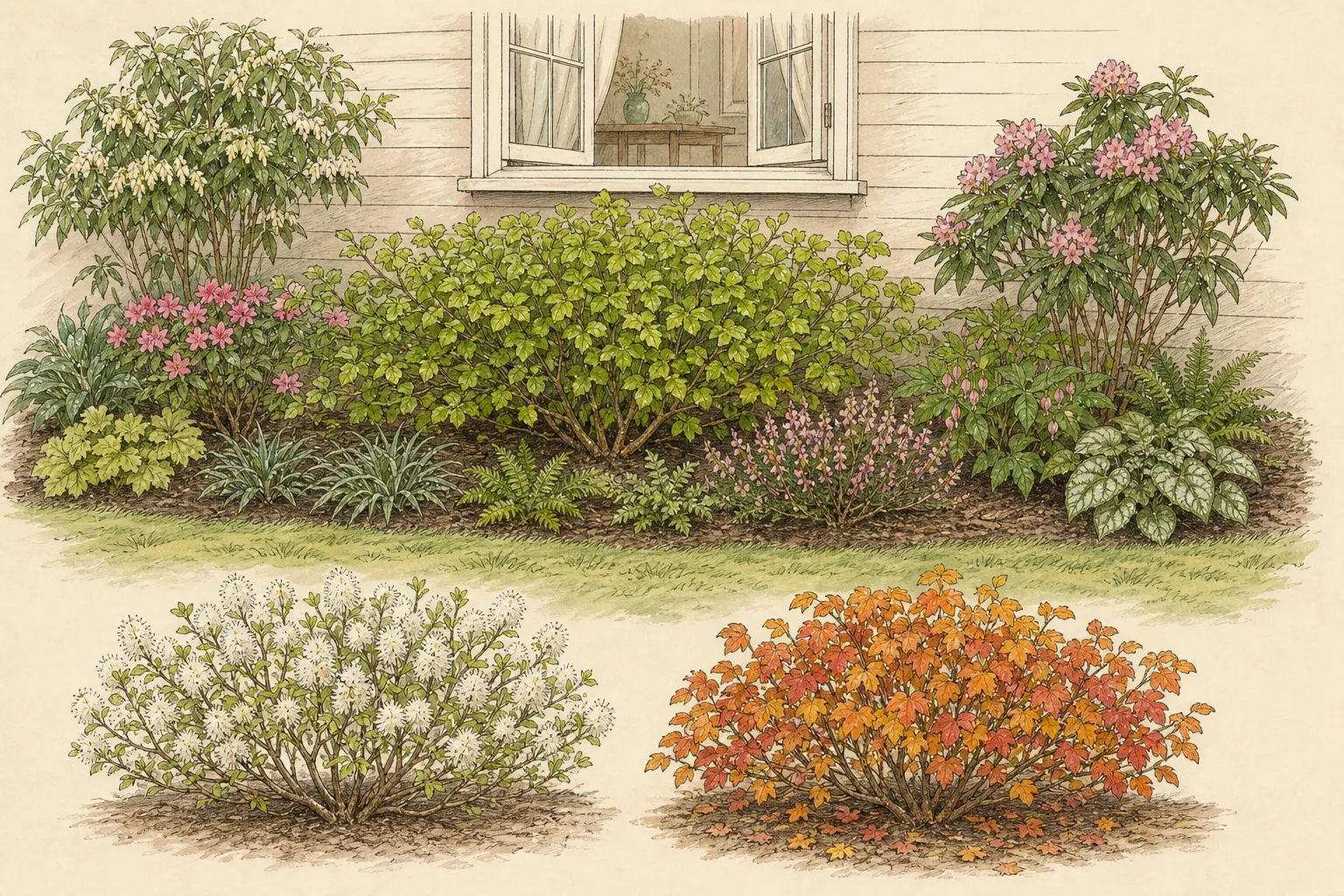
Garden placement study showing mature Dwarf Fothergilla in an ornamental planting
Related reading
Sources
- Fothergilla gardenii. Royal Horticultural Society. Source record · Accessed 2026-08-30.
- Fothergilla gardenii L.. Royal Botanic Gardens, Kew. Source record · Accessed 2026-08-30.
- Fothergilla gardenii. North Carolina Extension Gardener Plant Toolbox. Source record · Accessed 2026-08-30.
- Shrubs: pruning early-flowering. Royal Horticultural Society. Source record · Accessed 2026-08-30.