Lamb’s Ear
Stachys byzantina
A mat-forming perennial grown for woolly silver rosettes, requiring full sun, open air, and well-drained soil to avoid wet-weather leaf and crown rot.
Published Last updated
At a glance
- Light
- Full sun to light afternoon shade in hot regions
- Water
- Low to moderate after establishment
- Soil
- Average to lean, very well-drained soil
- Hardiness
- Zones 4–8
- Bloom
- Late spring to midsummer
- Height
- 0.5–1.5 ft · 15–45 cm
In this guide
Overview
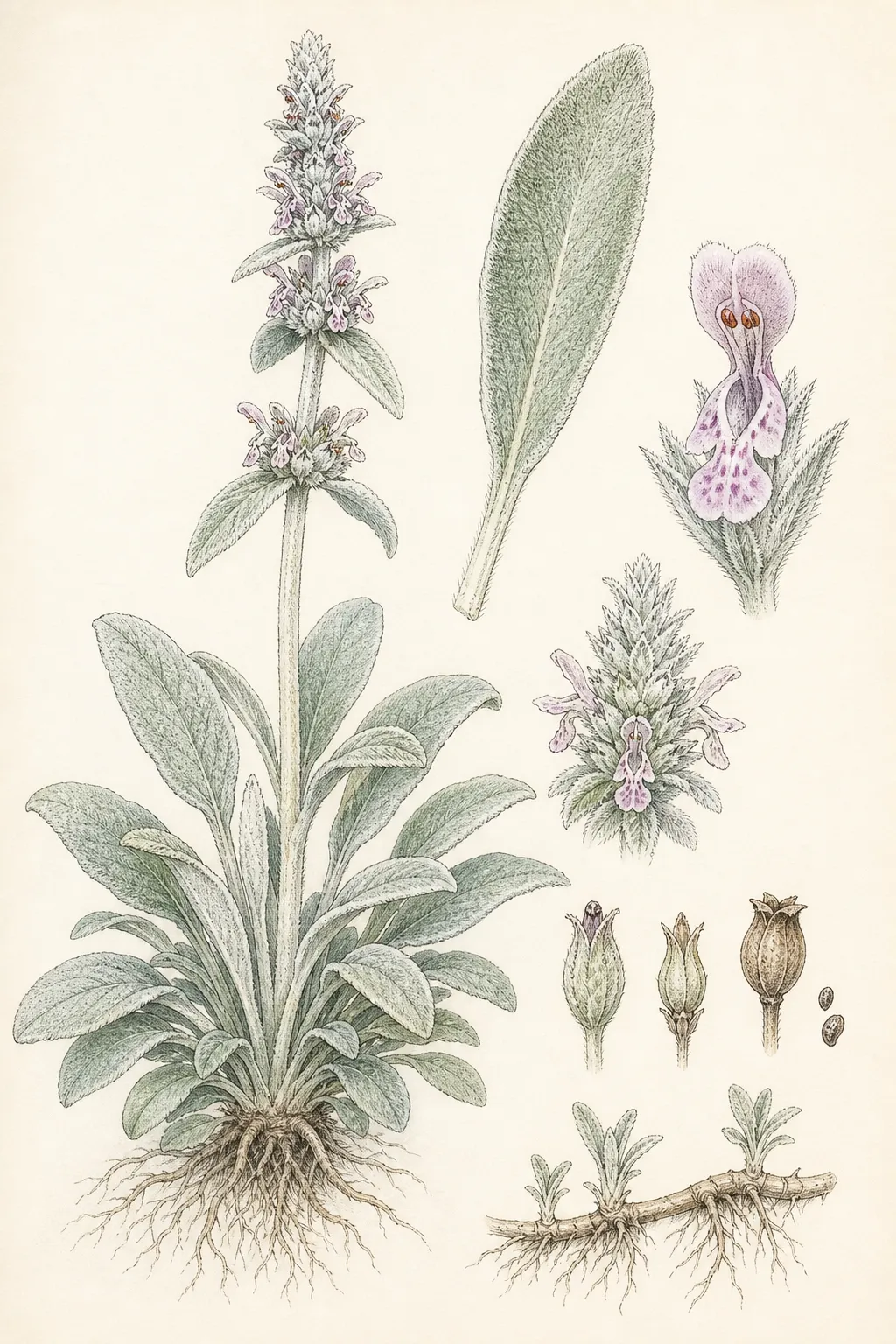
Lamb’s ear makes dense rosettes of thick oblong leaves covered in soft white wool. Upright woolly stems carry small pink-purple flowers in summer, although foliage cultivars such as ‘Silver Carpet’ may flower little. The silver leaf mat, not a woody branch framework, is the plant’s defining structure.
Use it along a dry sunny edge or in a gravel garden where the mat can spread without receiving lawn runoff or foot traffic. Foliage is usually 6–12 in high, while flowering stems can reach about 18 in; rooted stems may extend the patch 1–2 ft or more.
Full sun, moving air, and very well-drained average soil keep the woolly leaves dry. Constant overhead watering, deep organic mulch, and humid stagnant corners invite leaf rot. Established plants tolerate drought better than saturated soil.
Set the rosettes at their nursery grade and leave their centers exposed. Water only enough to establish roots, then allow the surface to dry. Creeping stems root at the nodes and knit adjacent rosettes into a mat.
Cut finished flower stalks at their bases and remove decayed leaves only in dry weather. When an old mat develops bare or rotting patches, divide it in spring, discard tired central pieces, and replant healthy young rosettes at fresh spacing.
- Family
- Lamiaceae
- Range
- Crimea and northern Turkey through the Caucasus to northern Iran
- Soil pH
- 6–8
- Spread
- 1–2 ft · 30–60 cm
Planting & careHow to grow lamb’s ear
Foliage may remain evergreen in mild, relatively dry winters or die back in colder or wetter climates. High humidity, overhead irrigation, and prolonged rain raise the risk of leaf rot, so humid regions need especially open spacing and fast drainage.
- 1Allow a broad silver mat
Reserve at least 1–2 ft for the spreading rosettes and keep the mat away from wet lawn edges and foot traffic. Flower spikes may rise to about 18 in.
- 2Prioritize sun and drainage
Use full sun or light afternoon shade in a hot region, and verify that average to lean soil drains promptly after rain. Avoid lawn runoff and humid, enclosed corners.
- 3Set rosettes at nursery grade
Keep each rosette center at the original soil level, backfill with freely draining site soil, water once thoroughly, and leave the woolly crown uncovered.
- 4Reduce water after rooting
Water newly planted rosettes when the root ball begins to dry, then reduce irrigation as they root. Established mats perform best when the surface dries between soakings.
- 5Keep woolly crowns dry
Use gravel or very shallow mulch outside the rosettes. Deep organic mulch holds moisture against woolly leaves and hides early decay.
- 6Renew the mat as needed
Inspect the mat after wet weather and lift unwanted rooted edge pieces. Renew bare centers in spring rather than shearing healthy rosettes.
Pruning lamb’s ear
Snip flower stems at their base after bloom or earlier for a foliage-only design. Comb out dead leaves in dry weather, remove rotting rosettes promptly, and never shear wet foliage into a dense mat of cut tissue.
Seasonal care
Spring
On a dry day, comb out dead leaves and divide mats with bare centers. Replant the healthiest rooted rosettes about 1 ft apart and keep their centers exposed.
Summer
Water only when the root zone is dry, avoid wetting foliage, and cut spent flower stalks at their bases after pollinator activity ends.
Autumn
Remove rotting leaves and rooted sections that cross the planned edge. Avoid heavy feeding or late division that produces soft growth before winter.
Winter
Check that rain and snowmelt drain away from the mat. Leave sound evergreen rosettes intact and remove wet collapsed foliage only when conditions are dry.
Safety and garden spread
The retained institutional profiles do not identify a specific poisoning hazard for Stachys byzantina. Do not treat ornamental plants as food, and wash after handling decayed foliage.
Common problems
Leaf or crown rot
- Look for
- Woolly leaves turn soft and dark after prolonged rain, and rosette centers loosen in damp soil.
- Action
- Stop overhead watering, remove decayed tissue on a dry day, and improve drainage and airflow. Replant only sound rosettes with their centers exposed.
Powdery or spotted foliage
- Look for
- A white coating or discrete lesions develop where the mat stays humid and crowded.
- Action
- Thin congested rosettes, keep foliage dry, and remove badly affected leaves. Confirm the diagnosis locally before using any labeled treatment.
Congested or open-centered crown
- Look for
- New growth is packed around the edge while the center weakens, or neighboring plants merge into the crown.
- Action
- Divide in spring, discard the bare or decayed center, and reset healthy young rosettes at their original depth with open spacing.
Growth beyond the allotted patch
- Look for
- Creeping stems root beyond the intended edge or seedlings appear around flowering forms.
- Action
- Lift complete rooted edge sections and deadhead before seed ripens where volunteers are unwanted. Maintain the chosen mat boundary by hand.
Plant details
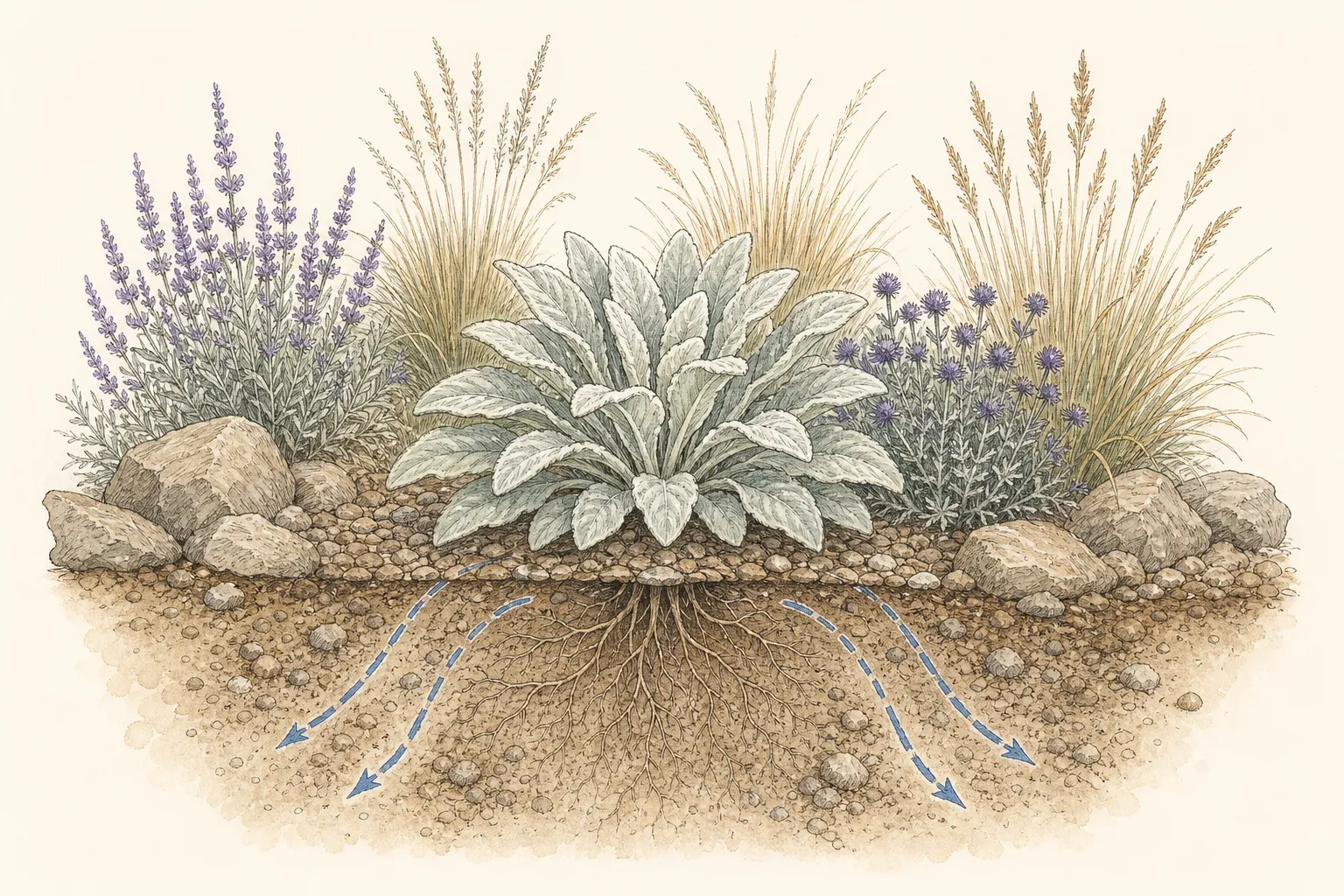
Garden study showing the placement and growth habit of Lamb’s Ear
Sources
- Stachys byzantina. NC State Extension. Source record · Accessed 2026-08-30.
- Stachys byzantina. Royal Horticultural Society. Source record · Accessed 2026-08-30.
- Stachys byzantina K.Koch. Royal Botanic Gardens, Kew. Source record · Accessed 2026-08-30.