Orange Coneflower
Rudbeckia fulgida
A rhizomatous eastern U.S. perennial with rough basal leaves and golden-orange daisies, valued for long late-season bloom and persistent seed heads.
Published Last updated
At a glance
- Light
- Full sun to light partial shade
- Water
- Moderate during establishment, then low to moderate
- Soil
- Average, well-drained loam or clay
- Hardiness
- Zones 3–9
- Bloom
- Midsummer through autumn
- Height
- 2–3 ft · 60–90 cm
In this guide
Overview
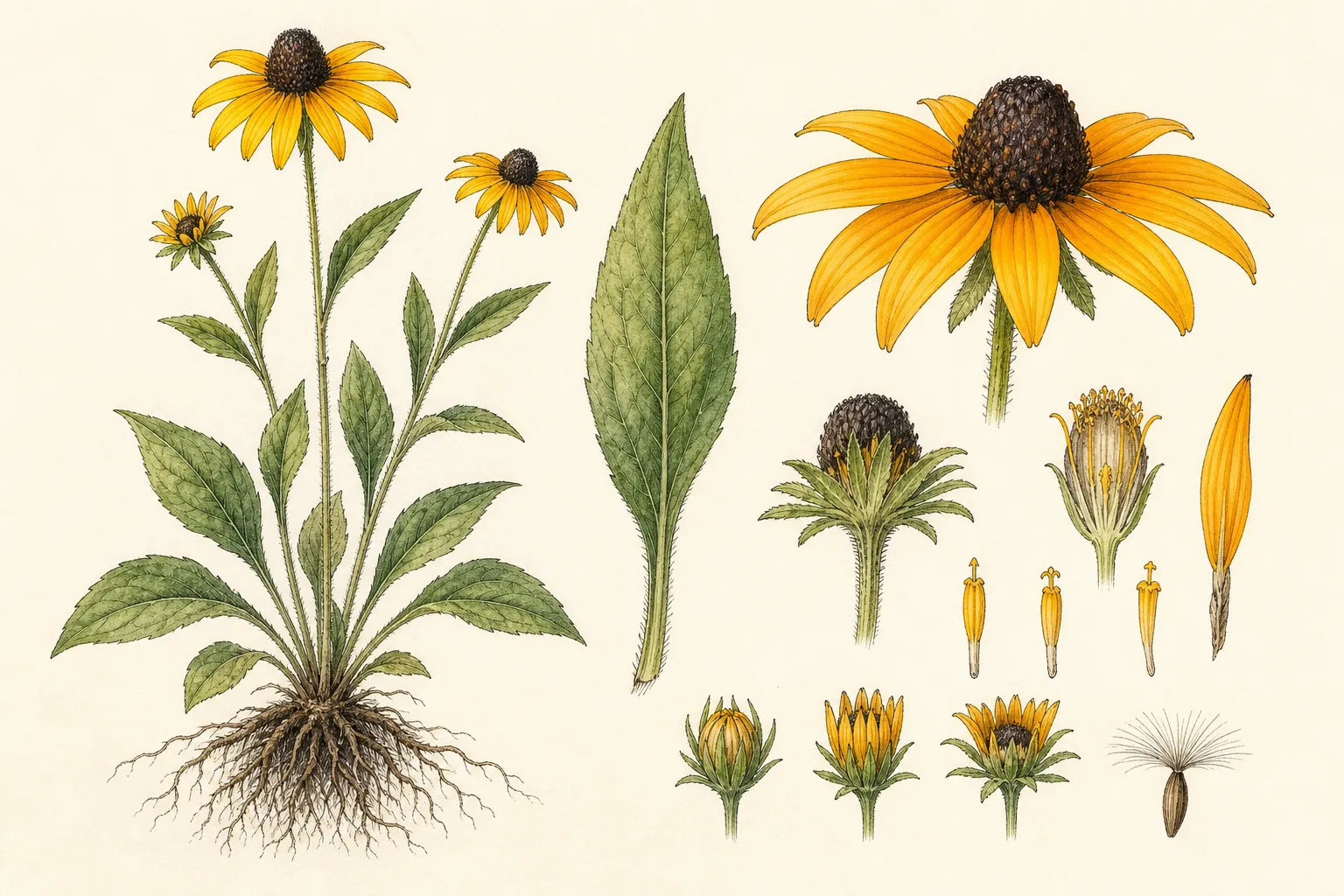
Golden-orange ray florets surround a dark brown, flattened cone on branching stems above rough basal and stem leaves. Unlike annual black-eyed Susans, Rudbeckia fulgida returns from a perennial rhizomatous crown and can retain a low basal rosette through mild winters.
Full sun produces the densest flowering, although light partial shade is tolerated. Average moist but well-drained soil is sufficient, and established roots withstand short dry periods. Permanently soggy soil and excess nitrogen produce weaker plants than ordinary lean garden soil.
Use a group through the middle of a sunny border, allowing roughly 2–3 ft in height and 1.5–2.5 ft in spread. Rhizomes gradually widen the clump, so keep the colony edge accessible rather than wedging it among small slow-growing neighbors.
Set the crown at the same grade as the nursery plant, water regularly during the first season, and leave the basal rosette visible above mulch. Divide established clumps in spring or autumn if the center becomes crowded or flowering declines.
Deadheading keeps the planting tidy and may prolong bloom. Alternatively, retain firm seed heads for birds and winter structure, then cut old stems before new spring shoots elongate. Remove unwanted seedlings early where seed heads were left standing.
- Family
- Asteraceae
- Range
- Illinois and the eastern United States
- Soil pH
- 5.5–7.5
- Spread
- 1.5–2.5 ft · 45–75 cm
Planting & careHow to grow orange coneflower
Plants sold under this common name are often named cultivars, and their mature size and flowering period may differ from the wild species. Basal foliage may remain green through mild winters, while colder sites carry the plant as a dormant crown.
- 1Allow the rhizomes to widen
Give each rhizomatous clump 1.5–2.5 ft of width and keep its edge reachable for later division. Place the 2–3 ft stems behind lower border plants.
- 2Choose sun and draining soil
Choose full sun or light partial shade in average loam or clay that drains after rain. Reject a permanently soggy pocket and avoid routine high-nitrogen feeding.
- 3Set the crown at nursery grade
Plant at the depth shown by the nursery root ball, backfill with the site soil, water thoroughly, and keep the basal rosette above mulch.
- 4Water through the first season
Keep soil evenly moist during the first season. Once rooted, water during prolonged drought rather than maintaining a constantly wet surface.
- 5Expose the basal rosette
Keep mulch outside the crown so basal leaves remain exposed and winter moisture does not collect around buried tissue.
- 6Choose the seed-head finish
Choose whether seed heads will remain for birds and winter structure. Deadhead earlier where seedlings or a tidier late-season outline are preferred.
Pruning orange coneflower
Remove faded stems to a lower bud if rebloom and neatness are priorities. Leave a chosen share of sound seed heads for winter structure, then cut all old growth near the crown in late winter.
Seasonal care
Spring
Cut remaining old stems before shoots elongate, divide an aging clump if needed, and protect the persistent basal rosette from cultivation.
Summer
Water young plants during dry spells and deadhead for a tidier, longer display. Inspect new growth for aphids and slugs before damage expands.
Autumn
Leave sound cones for birds or cut faded stems to the basal rosette. Divide and reset vigorous sections early enough for roots to establish before freezing.
Winter
Keep the basal rosette and crown free of heaped mulch and standing water. Leave firm seed heads only while they remain useful and upright.
Safety and garden spread
The retained institutional profiles do not identify a specific poisoning hazard for Rudbeckia fulgida. Do not treat ornamental plants as food, and supervise children and pets around garden material.
Common problems
Sparse flowering
- Look for
- The plant makes foliage but few flower stems, or bloom is limited to the brightest edge.
- Action
- Check for shade, excess nitrogen, or a congested old center. Increase light, reduce feeding, or divide the clump in spring, then judge flowering over the next full season.
Leaning or splayed stems
- Look for
- Flowering stems fall outward, expose the center, or need support despite normal weather.
- Action
- Increase light, reduce excess nitrogen and irrigation, and divide a crowded clump. Stake only after the cultural cause has been addressed.
Powdery foliage
- Look for
- White powdery patches develop on leaves during humid weather or where stems are crowded.
- Action
- Open the clump, remove badly affected debris, and water the soil during drought. Confirm the diagnosis before using any locally labeled control.
Congested or open-centered crown
- Look for
- New growth is packed around the edge while the center weakens, or neighboring plants merge into the crown.
- Action
- Divide in spring or autumn, retain vigorous outer sections, and reset them at the original crown depth with room for the rhizomes to widen.
Plant details
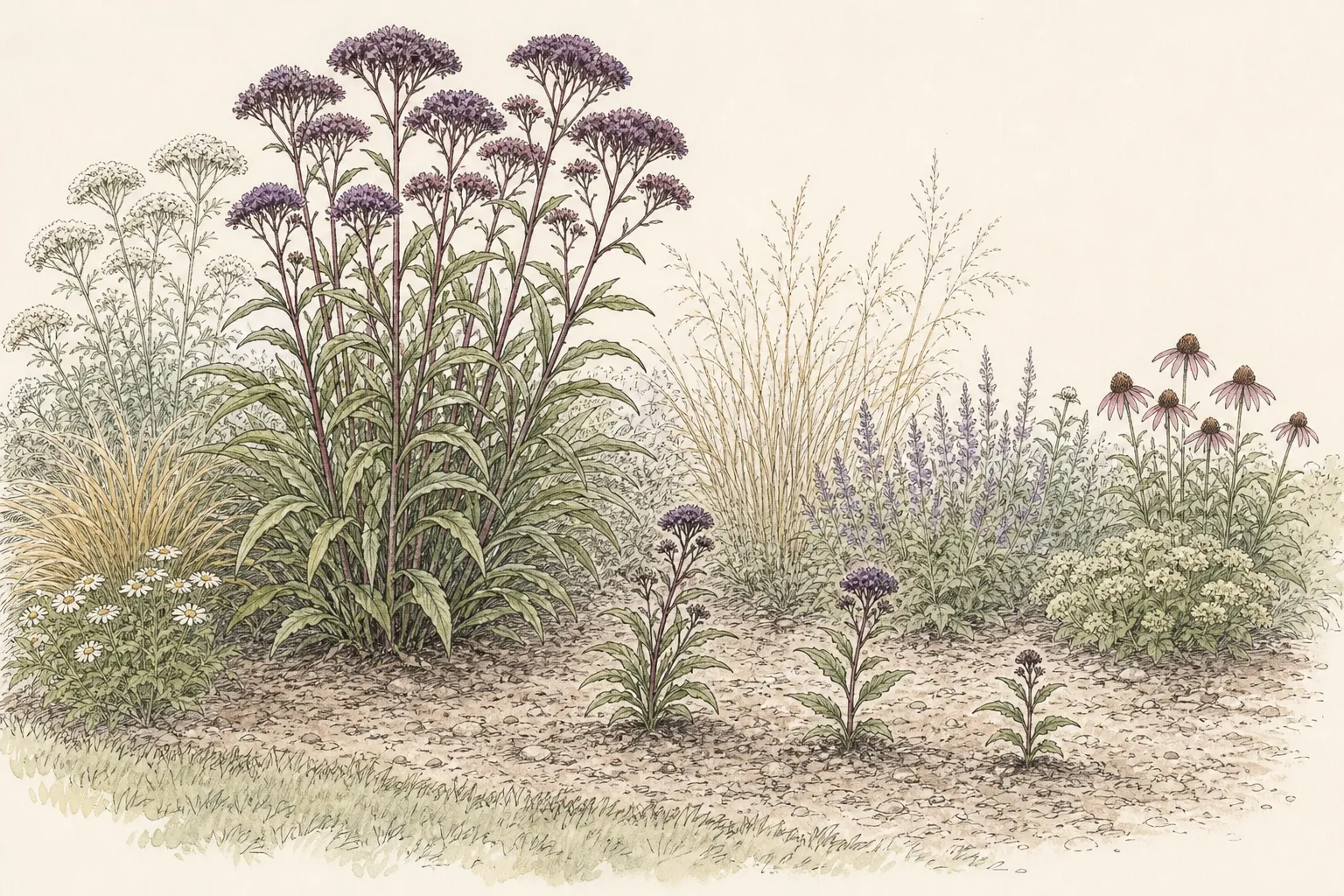
Garden study showing the placement and growth habit of Orange Coneflower
Sources
- Rudbeckia fulgida. NC State Extension. Source record · Accessed 2026-08-30.
- Rudbeckia fulgida. Royal Horticultural Society. Source record · Accessed 2026-08-30.
- Rudbeckia fulgida Aiton. Royal Botanic Gardens, Kew. Source record · Accessed 2026-08-30.