European Wild Ginger
Asarum europaeum
European wild ginger is a slow, evergreen woodland groundcover with glossy kidney-shaped leaves and hidden spring flowers; this profile covers shade culture, division, foliage care, and toxicity.
Published Last updated
At a glance
- Light
- Partial to full shade
- Water
- Medium to wet; keep consistently moist but well drained
- Soil
- Humusy, slightly acidic, moist but well-drained soil
- Hardiness
- Zones 4–7
- Bloom
- Mid- to late spring
- Height
- 3–6 in · 8–15 cm
In this guide
Overview
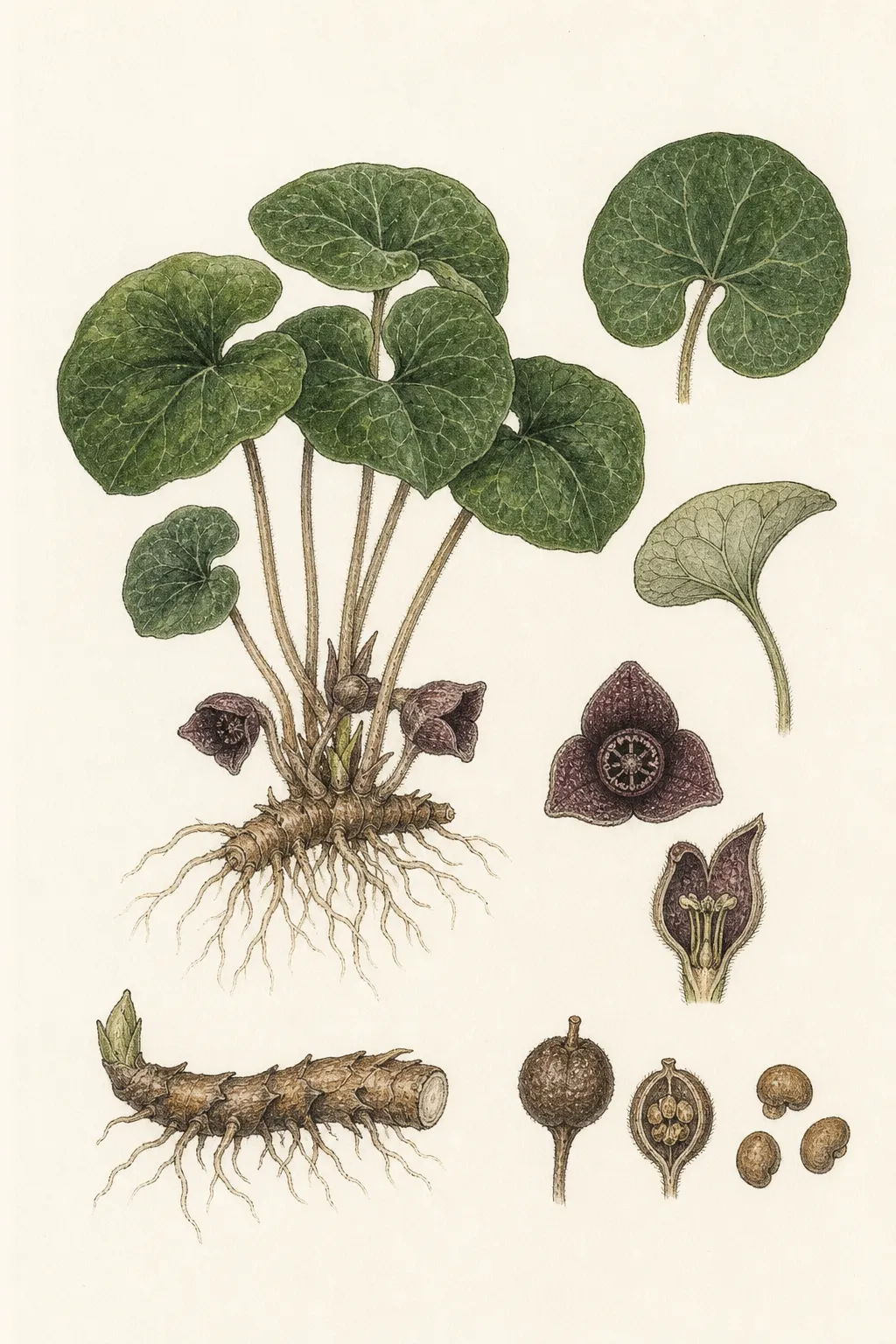
Asarum europaeum is an evergreen, rhizomatous perennial in the birthwort family. Long-stalked glossy leaves are kidney- to heart-shaped and form a mat only a few inches high. The small flowers begin green and deepen toward purple, but they remain hidden beneath the foliage at soil level.
Use the plant as a quiet ground layer beneath deciduous shrubs, beside ferns, or along a shaded path. A settled patch is about 1–1.5 ft across and enlarges slowly, so several divisions are needed for immediate coverage.
Humus-rich, moist but well-drained acid-to-neutral soil and partial to full shade match the institutional cultivation guidance. Dry root competition stalls the carpet, while hot, humid summers can thin it. Persistent saturation is not a substitute for even moisture.
Set a container plant at its existing grade and keep mulch between, not on top of, the leaf bases. The rhizomes lie near the surface, so hand weed until the mat closes rather than hoeing through it.
No routine pruning is required. In early spring, remove individual winter-battered leaves only if they obscure new growth, and divide the patch at the same time if an edge needs moving. Close shearing cuts petioles and creates an unnecessarily ragged surface.
Despite its common name, this plant is unrelated to culinary ginger. The RHS classifies it as toxic to people and pets if eaten and recommends gloves for handling; grow and label it strictly as an ornamental.
- Family
- Aristolochiaceae
- Range
- Europe to Central Siberia
- Soil pH
- 5.5–7
- Spread
- 1–1.5 ft and slowly expanding · 30–45 cm and slowly expanding
Planting & careHow to grow european wild ginger
The evergreen carpet is most dependable in cool, sheltered shade. Missouri Botanical Garden notes poor performance in the hot, humid Deep South, and exposed winter sites may leave otherwise sound leaves weather-damaged.
- 1Plan a low woodland carpet
Plan for a 3–6 in-high mat that slowly reaches 1–1.5 ft across. Keep a clear collar around tree trunks and the crowns of taller companion plants.
- 2Choose sheltered woodland shade
Use partial to full shade with humus-rich, acid-to-neutral soil. Confirm that the upper root zone remains moist through dry weather and drains after heavy rain.
- 3Keep the shallow rhizomes at grade
Set the root ball at its nursery depth, backfill gently, and water it thoroughly. Do not bury the leaf bases or place a deep mound of mulch over the rhizomes.
- 4Moisten the shallow root zone
Keep the upper soil consistently moist while divisions establish. Check beneath the leaves before irrigating so a damp surface does not hide dry soil at root depth.
- 5Hand weed while the carpet closes
Pull weeds carefully instead of cultivating through the shallow rhizomes. A thin layer of leaf mold between plants can conserve moisture without burying them.
- 6Label the patch as non-edible
Keep the botanical label visible so the word ginger does not invite sampling. Wear gloves for division or cleanup and wash hands afterward.
Pruning european wild ginger
No routine pruning is needed. Remove individual winter-damaged leaves in early spring if necessary, and divide or lift complete rhizome sections then; do not shear the evergreen mat.
Seasonal care
Spring
Look under the leaves for the small ground-level flowers. Remove only battered old leaves, divide an encroaching patch now, and check fresh foliage for slugs or snails.
Summer
Keep the shallow root zone evenly moist and shaded. In hot, humid regions, watch for thinning or rust rather than trying to force growth with fertilizer.
Autumn
Retain healthy evergreen leaves and renew a light leaf-mold mulch between plants. Mark any section that needs spring division instead of cutting the mat now.
Winter
The foliage may remain green but flatten or weather in exposed sites. Leave sound leaves in place, keep deicing salt and piled mulch off the patch, and remove damage in spring.
Safety and garden spread
Common problems
Heat-thinned or scorched carpet
- Look for
- Leaves lose gloss, brown at the margins, or thin out during hot summer weather.
- Action
- Check shade and moisture in the shallow root zone. Restore even moisture and reduce reflected heat; this cool-woodland species may remain a poor fit for hot, humid climates.
Slug or snail feeding
- Look for
- Irregular holes, rasped leaf surfaces, and slime traces appear under the low canopy.
- Action
- Confirm the feeder after dark, remove dense debris that creates hiding places, and use a locally appropriate targeted control only if damage warrants it.
Rust or leaf gall
- Look for
- Orange-brown pustules, distorted patches, or swellings persist beyond ordinary winter weathering.
- Action
- Remove badly affected leaves, avoid overhead watering late in the day, and obtain local diagnosis before treating because the retained sources describe these as occasional problems.
Rhizome decline in saturated soil
- Look for
- A section softens, yellows, or detaches where water stands around the shallow rhizomes.
- Action
- Stop routine irrigation, clear mulch from the leaf bases, and correct drainage. Replant only firm divisions in moist but well-drained soil.
Plant details
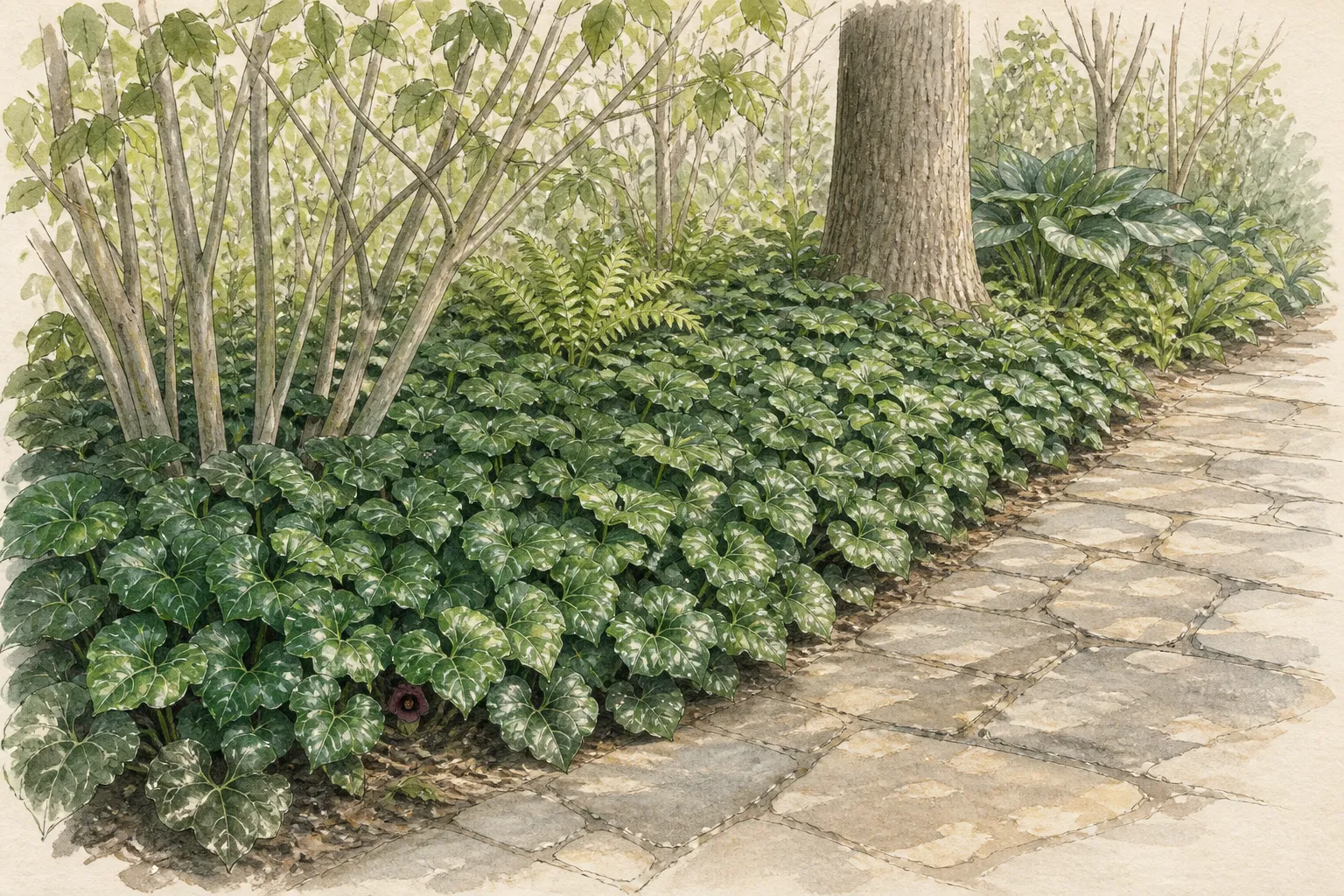
Garden study showing the placement and growth habit of European Wild Ginger
Sources
- Asarum europaeum plant profile. Royal Horticultural Society. Source record · Accessed 2026-08-30.
- Asarum europaeum Plant Finder record. Missouri Botanical Garden. Source record · Accessed 2026-08-30.
- Asarum europaeum taxonomy and distribution. Royal Botanic Gardens, Kew. Source record · Accessed 2026-08-30.