Japanese Anemone
Eriocapitella hupehensis
Japanese anemone is a late-flowering, root-spreading perennial for reliably moist, well-drained borders in sun or light shade.
Published Last updated
At a glance
- Light
- Full sun to partial shade; protect from hot, drying exposure
- Water
- Consistently moist while actively growing; never waterlogged
- Soil
- Fertile, humus-rich, moisture-retentive, well-drained soil
- Hardiness
- Zones 4–8
- Bloom
- Late summer to autumn
- Height
- 1.5–2.5 ft · 45–75 cm
In this guide
Overview
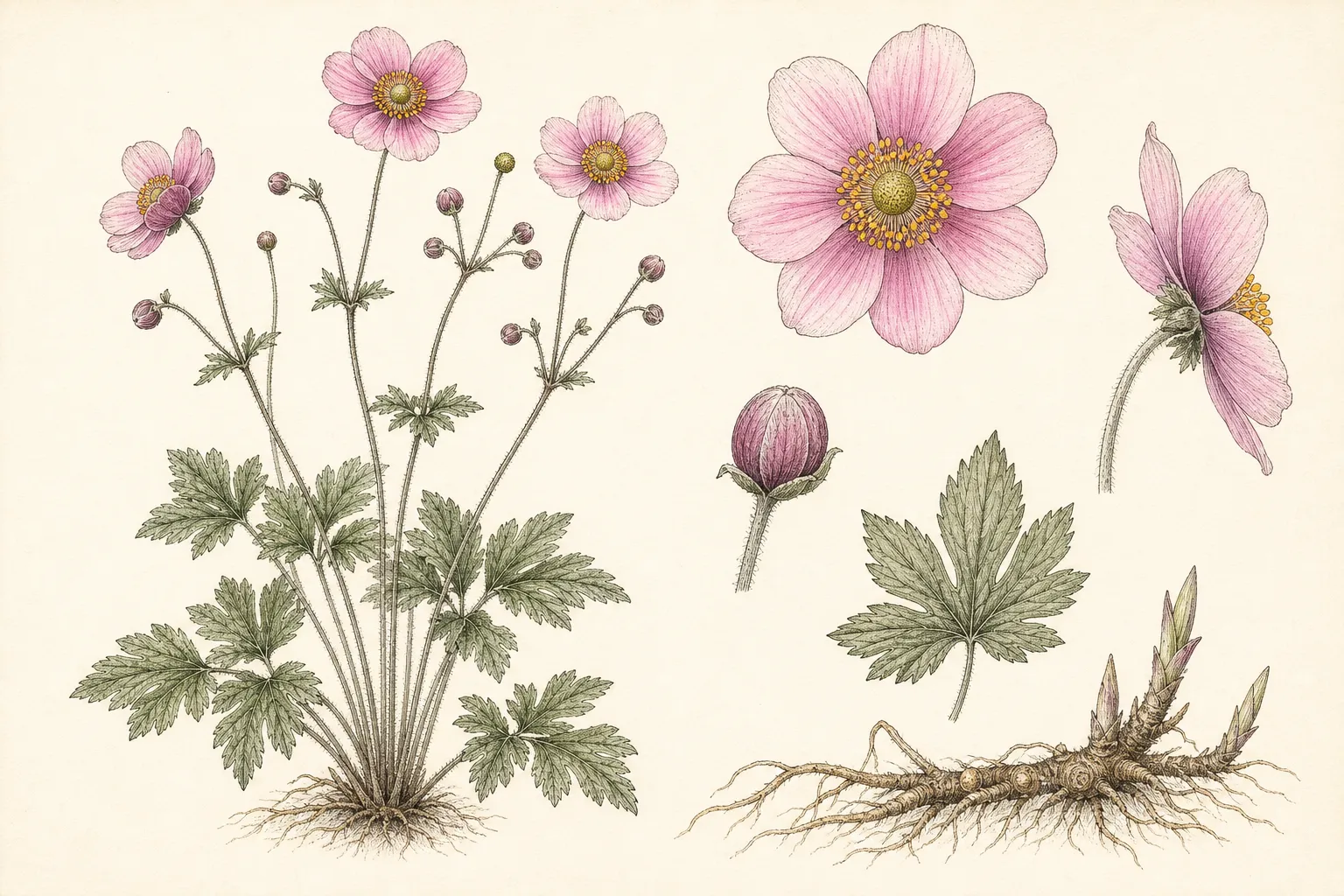
Eriocapitella hupehensis, still widely sold under the synonym Anemone hupehensis, makes a low clump of three-parted basal leaves. Wiry branching stems lift pink, mauve or white cup-shaped flowers above the foliage from late summer to frost.
The plant suits a middle or rear border where its moving flower stems can rise through lower companions. Light shade and shelter from strong wind help the stems stay upright, but deep shade reduces flowering and hot, dry exposure scorches leaves.
Fibrous suckering roots enlarge the clump after a slow establishment period. Site it where a colony is useful, or inspect the bed edge each spring and remove escaped root pieces before they establish among smaller plants.
The perennial disappears below ground in winter. Its roots need moisture during growth but also free drainage through cold weather, so a chronically wet winter site is a poor substitute for regular summer watering.
- Family
- Ranunculaceae
- Range
- Nepal through China and Myanmar to Taiwan
- Soil pH
- 5.5–7.5
- Spread
- 1–1.5 ft · 30–45 cm
Planting & careHow to grow japanese anemone
Guidance fits temperate gardens in USDA zones 4–8. Hot, dry exposure can scorch foliage, while cold, wet winter soil can kill roots; regional behavior and spread still require local review.
- 1Choose a sheltered border position
Allow about 1.5–2.5 feet of flowering height and place the clump where light shade or gentle sun will not dry the foliage.
- 2Prepare moisture-retentive soil
Use fertile soil that holds even moisture yet drains after rain; reject low spots that remain cold and saturated in winter.
- 3Set the herbaceous crown level
Plant the crown at the depth it occupied in the nursery pot, firm soil around the fibrous roots, and leave the stem bases uncovered.
- 4Water through establishment
Soak the root zone after planting and check it during dry spells; established plants flower poorly in very dry soil but decline in standing water.
- 5Plan for root spread
Leave an accessible margin around the clump so suckers can be lifted before they enter neighboring crowns, paths or paving joints.
Pruning japanese anemone
The flowering stems are herbaceous and die after the season. Wearing gloves, cut them to the base after flowering or once frost has finished them; remove spreading root pieces separately if the colony exceeds its boundary.
Seasonal care
Spring
Watch for the basal leaf clump, top-dress with organic matter without burying the crown, and lift unwanted suckers while their positions are easy to see.
Summer
Keep the soil consistently moist, especially in hot weather, and provide discreet support if shade or wind causes the developing flower stems to lean.
Autumn
Enjoy flowers through the first frosts, then use gloves to cut old stems after bloom; continue watering only if autumn soil becomes dry.
Winter
The top growth is absent, so protect the dormant roots by keeping the site drained and leaving a light mulch over, but not packed onto, the crown.
Safety and garden spread
Spreads vigorously
Established Japanese anemones can spread readily through their roots. Reserve space and remove unwanted root growth from neighboring crowns.
Common problems
Leaf scorch and weak flowering
- Look for
- Brown leaf margins, limp foliage or few flowers during hot, dry weather.
- Action
- Restore steady root-zone moisture and, if the site receives harsh afternoon sun, move the plant during dormancy to light shade with better soil moisture.
Flopping flower stems
- Look for
- Long stems leaning from dense shade or wind before the flowers open.
- Action
- Increase light without exposing the plant to drying heat, add support before stems fall, and avoid rich feeding that produces soft growth.
Leaf spots or chewing damage
- Look for
- Expanding spots, powdery growth, rust-colored pustules, holes or ragged leaf margins.
- Action
- Remove badly affected material, improve air movement and identify the pest or disease before using any control; slugs, weevils and foliar diseases are among the documented possibilities.
Suckers beyond the clump
- Look for
- New shoots appearing from root pieces among neighboring perennials or outside the intended bed.
- Action
- Lift the entire escaped root section; small pieces left in the soil can produce another plant, so recheck the area during the next growing season.
Plant details
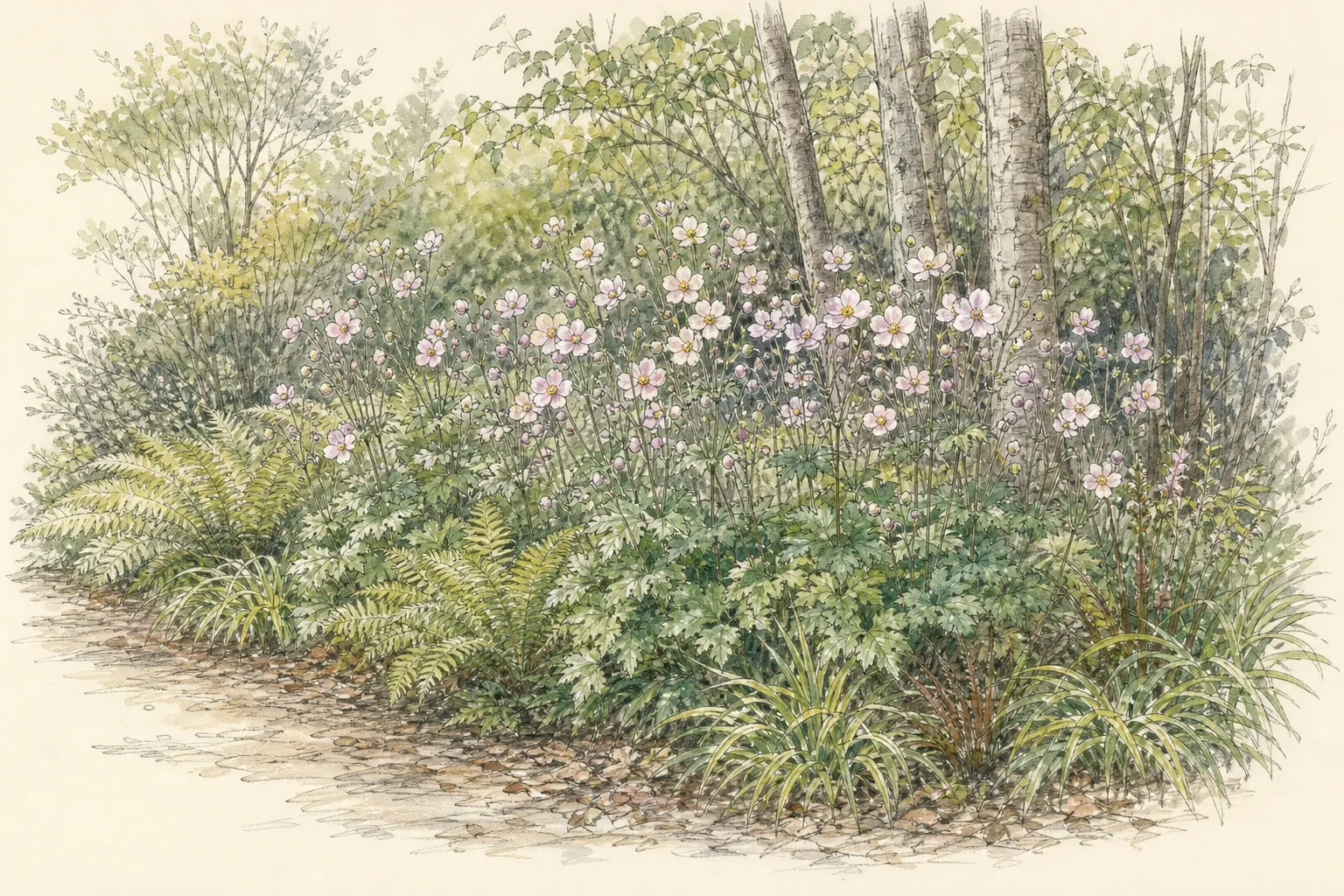
Garden placement study showing mature Japanese Anemone in an ornamental planting
Sources
- Japanese anemones. Royal Horticultural Society. Source record · Accessed 2026-08-30.
- Eriocapitella hupehensis. North Carolina Extension Gardener Plant Toolbox. Source record · Accessed 2026-08-30.
- Eriocapitella hupehensis taxonomy and distribution. Royal Botanic Gardens, Kew. Source record · Accessed 2026-08-30.
- Eriocapitella hupehensis. Bernice Pauahi Bishop Museum. Source record · Accessed 2026-08-30.
- How to grow Japanese anemones. Royal Horticultural Society. Source record · Accessed 2026-09-07.