Sweet Box
Sarcococca confusa
A species-focused guide to sweet box's fragrant winter flowers, sheltered-shade placement, underground shoots, black fruit and light spring pruning.
Published Last updated
At a glance
- Light
- Partial to full shade
- Water
- Moderate; avoid prolonged drought
- Soil
- Humus-rich, moist, well-drained soil
- Hardiness
- Zones 7–9
- Bloom
- Winter
- Height
- 3–5 ft · 90–150 cm
In this guide
Overview
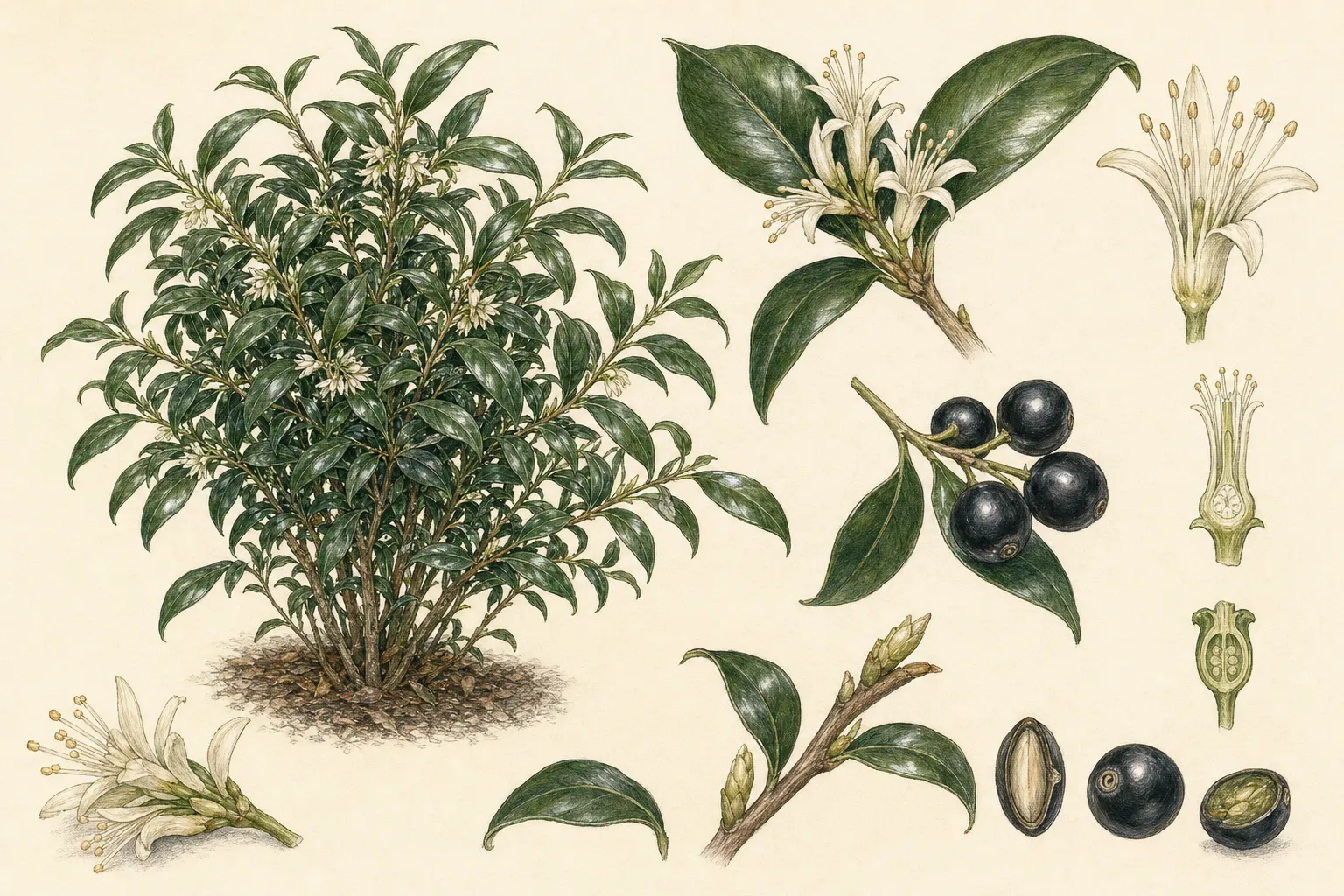
Sweet box is a densely branched broadleaf evergreen shrub with narrow, glossy leaves. Small petal-less white flowers are easy to overlook, but their fragrance carries through winter. The fruit ripens slowly from red to shiny black, often remaining on the plant while another flowering season begins.
A mature Sarcococca confusa is commonly 3–5 feet tall and broad, with some references allowing a little more height. Place it beside a shaded doorway or path where winter scent will be noticed, leaving enough depth for its arching shoots instead of pressing it against the route.
Partial to full shade is ideal. Established plants tolerate dry shade, but new shrubs need moisture during dry spells; foliage can yellow or look poor in a very dry position or full sun. Shelter from drying wind helps the evergreen leaves remain presentable.
Rich, moisture-retentive soil supports establishment as long as it is not soggy. In a dry, poor bed, incorporate organic matter across the planting area and mulch the surface after watering rather than filling one narrow hole with a different soil texture.
Sweet box slowly broadens by underground shoots. Let those shoots knit a shaded mass where ground coverage is wanted, or separate a sucker in early spring for propagation. Its normal spread is different from the fast above-ground runners of a herbaceous groundcover.
Routine pruning is unnecessary. If a shrub exceeds its space, shorten it in spring after the winter flowers finish. Sarcococca confusa normally has black mature fruit; persistent red fruit is a reason to recheck whether the plant is S. ruscifolia.
- Family
- Buxaceae
- Range
- South-central China, including Sichuan and Hubei
- Soil pH
- 5.5–7.5
- Spread
- 3–5 ft · 90–150 cm
Planting & careHow to grow sweet box
Kew currently accepts Sarcococca confusa as native to south-central China, while older horticultural accounts questioned its wild origin. The species is also confused in commerce with red-fruited Sarcococca ruscifolia. Keep the botanical label and use fruit color and other characters to verify an uncertain plant.
- 1Place the winter fragrance
Reserve a roughly 3–5-foot mound beside a shaded entrance or path, but set it back far enough that arching shoots will not require constant clipping.
- 2Choose sheltered shade
Use partial or full shade protected from drying wind; a sunny position is suitable only where soil moisture remains dependable.
- 3Set the root ball level
Place the top of the root ball even with the surrounding soil, loosen circling roots, and keep added soil and mulch below the evergreen stem bases.
- 4Water the first seasons
Water well after planting and during dry spells for the first couple of seasons. Once roots are established, additional water is usually unnecessary in ordinary shaded ground.
- 5Improve a dry bed broadly
Where shade soil is poor, add well-rotted organic matter across the future root area and apply a surface mulch after planting, leaving the shrub's base uncovered.
- 6Verify black fruit
Keep the Sarcococca confusa label and watch fruit mature to black; a shrub that consistently holds red ripe fruit may have been sold under the wrong species name.
Pruning sweet box
Sarcococca confusa generally needs no pruning. Remove a damaged shoot when necessary, or reduce an overlarge shrub in spring after the scented winter flowers finish. Avoid annual shearing; select a smaller species or cultivar if the available depth cannot hold the natural arching mound.
Seasonal care
Spring
After flowering, make any necessary size correction and separate a well-rooted sucker if propagation is wanted. Mulch a dry site and water new divisions as growth resumes.
Summer
Check first- and second-year plants during dry spells, especially under thirsty trees. Yellowing or scorched evergreen leaves call for a light-and-moisture review.
Autumn
Plant or move sweet box while soil is workable, water it in thoroughly, and clear the path edge before winter fragrance begins rather than pruning during bloom.
Winter
Enjoy the scented white flowers, inspect evergreen leaves for drying-wind injury, and note whether aging fruit turns black as expected for S. confusa.
Safety and garden spread
Common problems
Pale or scorched foliage
- Look for
- Evergreen leaves turn yellow, bleach, or develop brown margins in exposed sun, drying wind, or very dry shade.
- Action
- Check root-zone moisture and exposure, water a young plant deeply, and move it to a more sheltered shaded site if stress repeats.
Soggy-site decline
- Look for
- Weak growth, yellowing, or stem loss while the root ball remains waterlogged rather than merely moist.
- Action
- Stop scheduled watering, restore drainage around the root zone, and relocate the shrub if the shaded site cannot shed excess water.
Wrong species label
- Look for
- Mature fruit remains red instead of turning black, or the habit and leaves disagree with the Sarcococca confusa description.
- Action
- Compare the specimen with institutional descriptions before relabeling it; S. ruscifolia is commonly confused with S. confusa in horticulture.
Underground shoots cross a boundary
- Look for
- New rooted stems arise beyond the intended evergreen mound or into a neighboring small perennial.
- Action
- Separate the unwanted sucker with its roots in early spring, replant it elsewhere if useful, and reset the edge without shearing the whole shrub.
Plant details
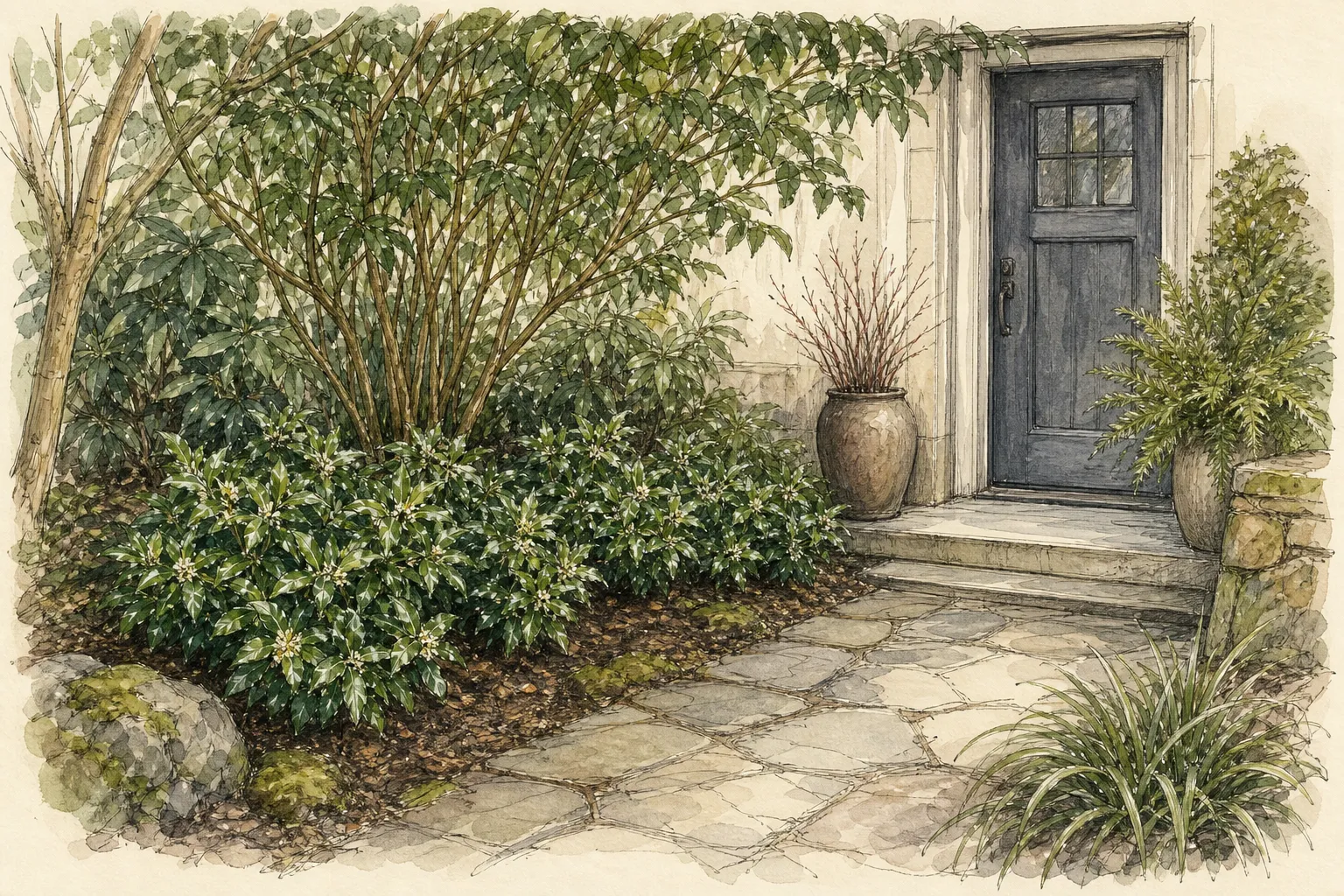
Garden placement study showing mature Sweet Box in an ornamental planting
Sources
- Sarcococca confusa Sealy. Royal Botanic Gardens, Kew. Source record · Accessed 2026-08-20.
- Sarcococca confusa. Cambridge University Botanic Garden. Source record · Accessed 2026-08-20.
- Sarcococca confusa. Oregon State University. Source record · Accessed 2026-08-20.