Switchgrass
Panicum virgatum
A deep-rooted North American warm-season grass with upright summer foliage, airy seed panicles and persistent tan winter stems.
Published Last updated
At a glance
- Light
- Full sun; partial shade can weaken the upright habit
- Water
- Moisture through establishment; drought tolerant once deeply rooted
- Soil
- Adaptable average to moist soil; avoid excessively fertile beds
- Hardiness
- Zones 3–9
- Bloom
- Airy flowers in late summer; persistent stems into winter
- Height
- 2.5–5 ft · 75–150 cm
In this guide
Overview
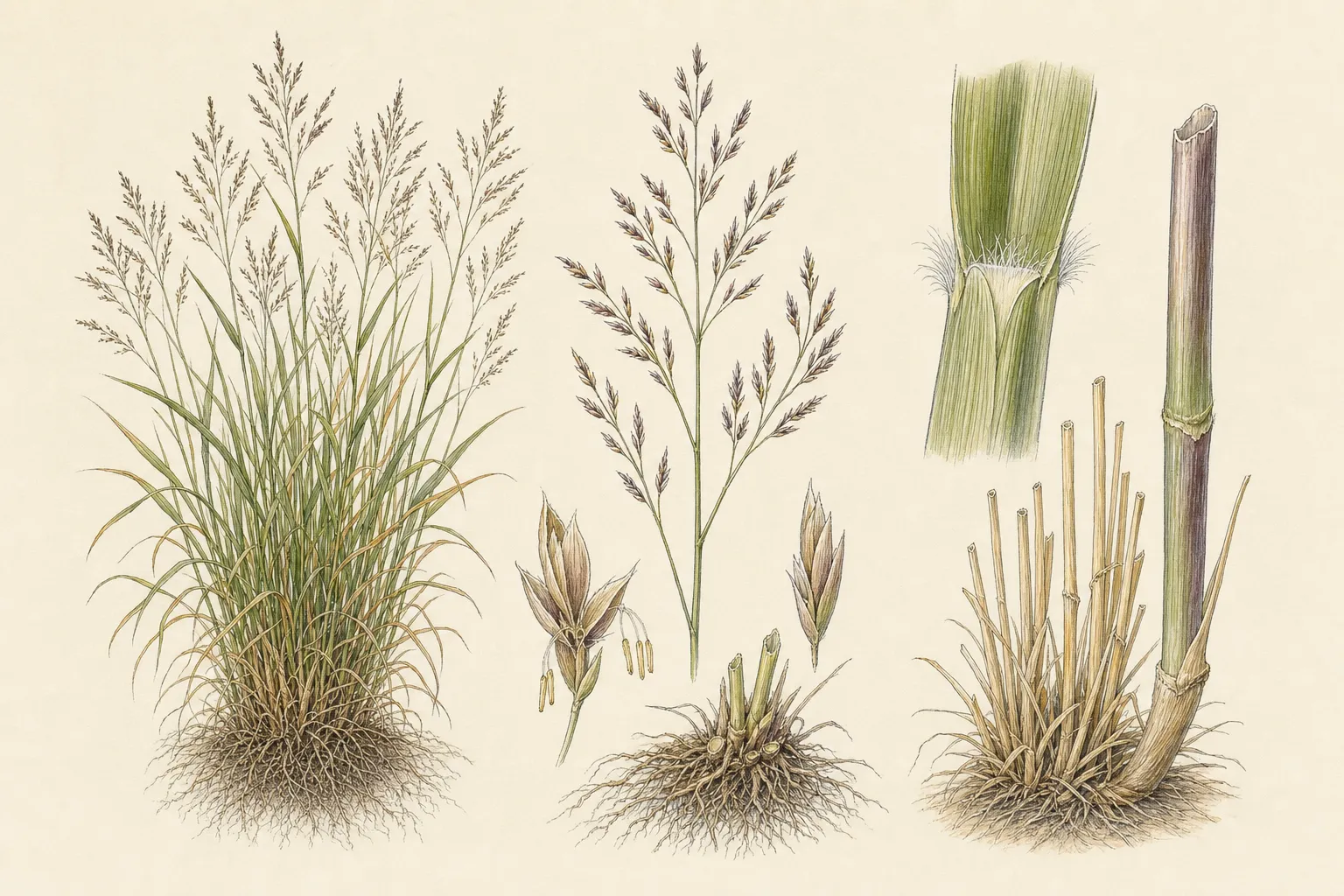
Panicum virgatum is a warm-season perennial prairie grass that waits for warm soil before growing in late spring. Stiff round stems rise from a deep-rooted clump or short rhizomes, carrying narrow blades and open, pink-tinged panicles in midsummer.
The green foliage often takes on red tones before turning yellow or copper in autumn. Tan stems and seed plumes persist into winter, providing a vertical screen and food for seed-eating birds when most herbaceous borders have collapsed.
Full sun, average soil and restrained fertility produce the strongest upright habit. Partial shade or rich soil can lengthen and weaken stems, and taller cultivars may need support even when the species is otherwise healthy.
Cultivars differ markedly in height, leaf color, moisture response and stiffness. Seedlings from a named cultivar will not reproduce it faithfully, so divide a cultivar for true-to-name plants and monitor self-sown species seedlings where they are not wanted.
- Family
- Poaceae
- Range
- North America
- Soil pH
- 4.5–8
- Spread
- 2–3 ft · 60–90 cm
Planting & careHow to grow switchgrass
Guidance fits temperate North American gardens in USDA zones 3–9. Species plants may self-sow under favorable conditions, and local ecotypes and cultivars differ in height, moisture response and winter stiffness.
- 1Choose the mature form
Match the cultivar to the design, allowing roughly 2.5–5 feet of species height plus its airy panicles and enough width for a 2–3-foot clump.
- 2Use full sun and ordinary soil
Plant in full sun in average to moist ground; avoid adding rich amendments that encourage floppy growth.
- 3Set the grass crown at grade
Place the herbaceous crown level with the surrounding soil, spread the roots outward, and keep the bases of the emerging culms uncovered.
- 4Establish before relying on drought tolerance
Water the full root zone through the first growing seasons; reduce supplemental water only after the deep root system is established.
- 5Plant after the soil warms
For divisions or transplants, favor late spring as growth begins; very early spring and autumn planting are slower because this warm-season grass needs warm soil.
Pruning switchgrass
Leave the dry culms and seed plumes standing through winter, then cut the entire clump to a few inches above the crown in early spring before new green shoots emerge. Cutting live summer foliage removes that season’s form and bloom.
Seasonal care
Spring
Cut last year’s tan stems to a few inches before new shoots appear; divide crowded clumps as warm-season growth starts, not while the soil is still cold.
Summer
Water young plants during dry periods, leave established roots to use their drought tolerance, and avoid fertilizer that can make the tall culms lodge.
Autumn
Let foliage turn yellow, copper or red and retain the ripening panicles; remove unwanted seedlings while small if the species is sowing beyond its place.
Winter
Keep sound tan stems standing for structure and bird food, accepting temporary bending after snow and postponing the annual cut until early spring.
Safety and garden spread
The retained horticultural sources do not identify a specific ornamental-garden toxicity hazard; this profile does not address forage or livestock use.
Common problems
Flopping or lodging stems
- Look for
- Tall culms leaning apart before or during flowering, especially in shade or rich soil.
- Action
- Increase sunlight where possible, stop high-nitrogen feeding and choose a stiffer or shorter cultivar rather than repeatedly cutting live stems.
Slow spring emergence
- Look for
- A tan dormant clump after cool-season grasses nearby are already green.
- Action
- Wait for the soil to warm before judging the crown dead; switchgrass is a warm-season grass and naturally starts late in spring.
Unexpected seedlings
- Look for
- Variable young grasses appearing outside the original clump after seed ripens.
- Action
- Remove seedlings before they root deeply; they may differ from the parent cultivar, so use spring division when matching plants are required.
Crowded older clump
- Look for
- A dense crown with declining vigor or dead material at the center.
- Action
- Lift and divide the clump in spring as growth begins, retaining vigorous outer sections and replanting them at crown level.
Plant details
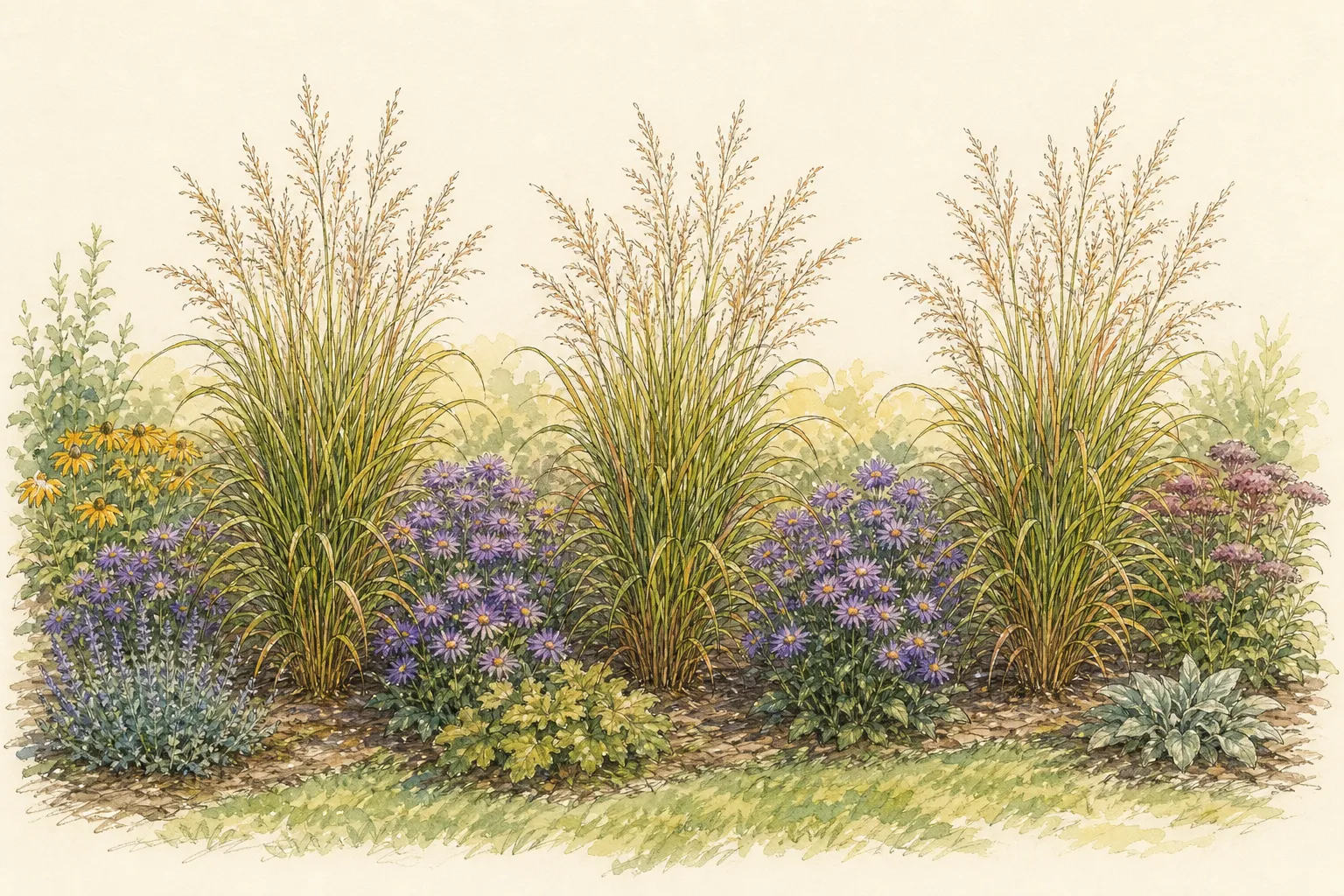
Garden placement study showing mature Switchgrass in an ornamental planting
Sources
- Switchgrass cultivation profile. Oklahoma State University Extension. Source record · Accessed 2026-08-20.
- Panicum virgatum horticultural guidance. University of Wisconsin Extension. Source record · Accessed 2026-08-20.
- Panicum virgatum taxonomy and distribution. USDA PLANTS Database. Source record · Accessed 2026-08-20.