Autumn Crocus
Colchicum autumnale
A practical species profile of Colchicum autumnale, with identification, garden placement, soil and seasonal care guidance.
Published Last updated
At a glance
- Light
- Full sun to partial shade
- Water
- Moderate in spring; relatively dry during summer dormancy
- Soil
- Fertile, well-drained soil
- Hardiness
- Zones 4–9
- Bloom
- Autumn flowers; leaves emerge in spring
- Height
- 6–8 in tall when flowering · 15–20 cm tall when flowering
In this guide
Overview
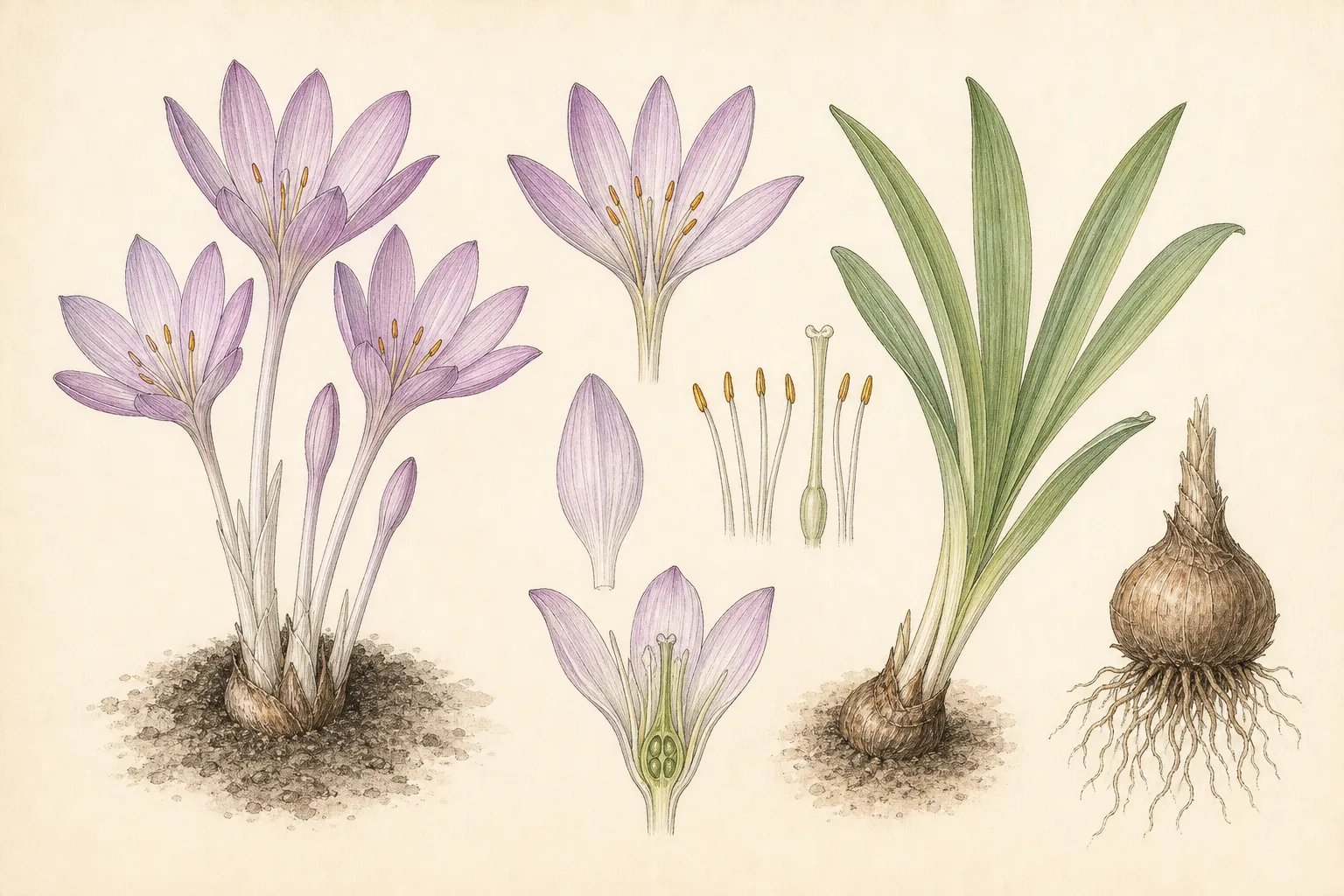
Autumn crocus is a cormous herbaceous perennial, not a woody crocus and not the source of culinary saffron. Its broad green leaves emerge in spring around the developing seed capsule, yellow and disappear by early summer, and are absent when pink-purple to white flowers rise directly from the soil in late summer or autumn. That split annual cycle is the key to recognizing and managing the plant.
The underground storage organ is a corm. NC State specifies planting mature corms about 2¾–4 inches (7–10 cm) deep. There is no trunk flare, branch framework, or flower-bearing wood to position or prune. Planting work is done with intact, clearly labeled corms while wearing gloves, then the position is marked so summer dormancy is not mistaken for an empty bed.
Full sun to partial shade and rich, well-drained loam support the display. Spring moisture feeds the leaves, while the dormant corm tolerates a comparatively dry summer. A bed that stays saturated can damage the corm; a site that is dry through active spring growth is also unsuitable. Read drainage across both phases rather than assigning one watering schedule to the whole year.
Let the spring foliage complete its work. The leaves can reach about 10 inches long and may look coarse among low companions, but cutting or tying them while green reduces the energy returned to the corm. Remove foliage only after it has yellowed and died naturally in early summer.
Division belongs in June or July after the leaves have died down. Larger corms can return to their permanent position at the documented depth; smaller offsets can be grown on until they reach flowering size. A colony that no longer flowers well should first be checked for premature leaf removal, crowding, shade, and drainage before it is lifted.
Every part is highly poisonous, especially the corm. Colchicine poisoning can be fatal, contact dermatitis is recorded, and the common names autumn crocus and meadow saffron create a dangerous opportunity for misidentification. Do not grow, store, or label the corms where they could be confused with edible bulbs, saffron crocus, or food crops.
- Family
- Colchicaceae
- Range
- Europe
- Soil pH
- 4.5–7.5
- Spread
- 6–8 in · 15–20 cm
Planting & careHow to grow autumn crocus
NC State lists autumn crocus for Zones 4–9 and describes its native habitat as European meadows and damp woodland clearings. The plant tolerates its leafless summer dormancy but still needs a site that is not chronically dry and does not hold water around dormant corms. In warm or wet-summer regions, use local bulb guidance to confirm planting time and drainage rather than treating summer drought tolerance as a universal dry-garden prescription.
- 1Confirm the corm label
Keep the full name Colchicum autumnale with the corms from purchase through planting. Separate them from edible bulbs and Crocus sativus, and wear gloves whenever handling corms, roots, foliage, flowers, or divided offsets.
- 2Choose a visible, draining position
Select full sun or partial shade in fertile soil that drains after rain. Place the corms where broad spring leaves can remain until they die naturally and where the low, leafless autumn flowers will not be hidden by vigorous neighbors.
- 3Plant at the corm depth
Set mature corms about 2¾–4 inches (7–10 cm) below the finished soil surface, matching the retained NC State guidance. Use the corm—not a nonexistent crown or trunk flare—as the depth reference, and keep the planting bed free of standing water.
- 4Mark the dormant planting
Add a durable label or map after backfilling so the corms are not dug up or overplanted when no foliage is visible in summer. The marker should also carry a clear poison warning where other people maintain the garden.
- 5Water by growth phase
Settle newly planted corms, then provide useful moisture during active spring leaf growth without saturating the bed. Reduce irrigation after foliage dies and the corm enters summer dormancy; do not keep an empty-looking patch wet by calendar.
- 6Protect the spring leaves
Allow every healthy leaf to yellow on its own. Record the leaf phase, early-summer dieback, and autumn flowering during the first year so later absences can be distinguished from the normal seasonal cycle.
Pruning autumn crocus
Autumn crocus has no woody stems to shape. Keep the broad spring leaves intact until they yellow and die in early summer, then remove the loose dead foliage while wearing gloves. Spent autumn flowers may be lifted after they collapse, but trimming does not control corm depth or improve flowering. Divide crowded clumps in June or July after leaf dieback, resetting sound mature corms 2¾–4 inches deep and growing smaller offsets on separately.
Seasonal care
Spring
Expect broad leaves and the seed capsule, not flowers. Keep the soil usefully moist but draining and protect the foliage from mowing, tying, or early removal. Check labels so emerging leaves are not confused with an edible Allium or another bulb crop.
Summer
After foliage has fully yellowed, clear it with gloves. Lift and divide in June or July if crowding requires it, planting large corms directly and growing small offsets on. During dormancy, avoid repeated irrigation and keep the marked bed from being accidentally dug.
Autumn
Watch for leafless flower tubes rising from the marked corm positions. Protect the low flowers from foot traffic, remove collapsed blooms if desired with gloves, and investigate missing flowers through spring-leaf history, crowding, light, and drainage rather than pruning.
Winter
The corm remains underground with no branch outline to inspect. Keep the planting label and poison warning legible, prevent winter water from pooling over the bed, and leave the soil undisturbed until the spring leaves return.
Safety and garden spread
Common problems
Leaves appear but flowers do not
- Look for
- A marked clump that produces spring foliage yet gives few or no leafless blooms in autumn.
- Action
- Review whether leaves were cut before yellowing, whether the clump is crowded or deeply shaded, and whether the bed stays wet in dormancy. Divide only after natural early-summer leaf dieback and reset sound corms at 2¾–4 inches.
Soft or missing corms
- Look for
- Failure of a previously marked clump to produce spring leaves, soft tissue when a corm is carefully lifted, or recurring loss in saturated soil.
- Action
- Stop routine watering into wet ground, discard decayed corms with gloves, and correct drainage before replanting. Do not replace losses until the site can drain through the summer dormant period.
Slug or smut damage
- Look for
- Chewed corm or emerging tissue, or spring leaves showing the darkened or distorted symptoms described for fungal smut rather than normal yellowing.
- Action
- Confirm the affected organ and obtain a local diagnosis before treatment. Remove badly affected material with gloves, improve sanitation and drainage as advised, and use only regionally current controls that are labeled for the diagnosed problem.
Poisoning or identity concern
- Look for
- An unlabeled corm, possible ingestion, sap contact followed by skin irritation, or a plant being mistaken for saffron crocus or an edible bulb.
- Action
- Treat exposure as urgent: stop handling, preserve the label or a sample without further contact, and contact the appropriate poison center, veterinarian, or emergency service. Never taste a plant for identification, and discard uncertain corms safely rather than moving them into a food-growing area.
Plant details
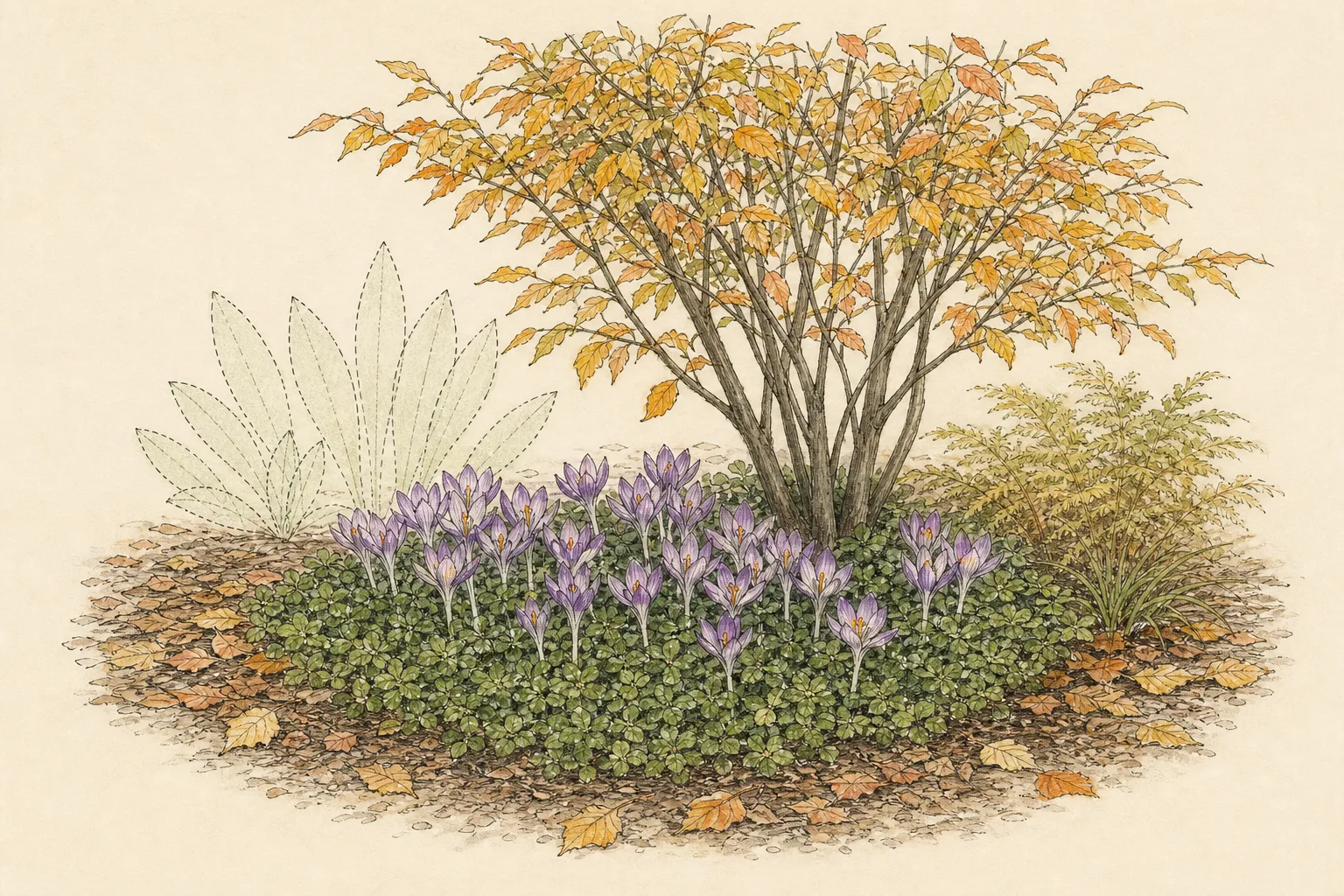
Garden placement study showing mature Autumn Crocus in an ornamental planting
Sources
- Colchicum autumnale L.. Royal Botanic Gardens, Kew. Source record · Accessed 2026-08-30.
- Colchicum autumnale. North Carolina Extension Gardener Plant Toolbox. Source record · Accessed 2026-09-07.
- Colchicum autumnale. Royal Horticultural Society. Source record · Accessed 2026-08-30.