Common Snowdrop
Galanthus nivalis
A species profile of Galanthus nivalis, the small white late-winter bulb for moist, well-drained soil beneath deciduous shrubs and trees.
Published Last updated
At a glance
- Light
- Full sun to partial shade, especially beneath deciduous woody plants
- Water
- Moist during active growth; do not allow permanent waterlogging or severe summer desiccation
- Soil
- Humus-rich, moist but well-drained clay, loam, chalk, or sand
- Hardiness
- Zones 3–7
- Bloom
- Late winter to early spring
- Height
- 4–10 in · 10–25 cm
In this guide
Overview
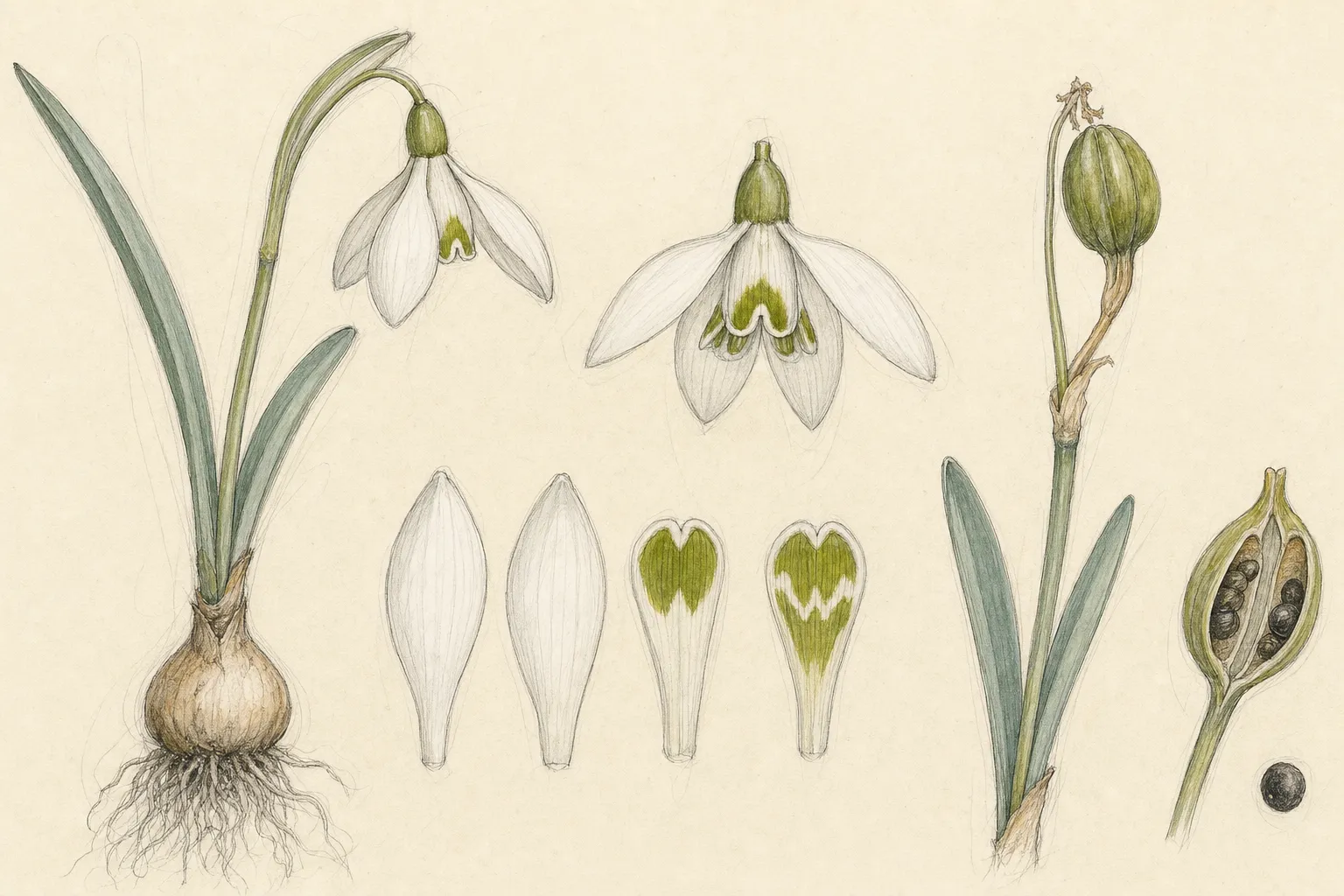
Galanthus nivalis is a small bulb whose detail is easily lost at standing distance. A leafless scape bends to carry one nodding white flower. Three longer outer tepals open around three shorter inner segments, usually marked green near the tip. Two or three narrow gray-green leaves rise from the bulb. Those features separate a common snowdrop from unrelated plants sold under similar seasonal names.
The preferred garden rhythm is bright winter and spring light followed by summer shade beneath deciduous trees or shrubs. Soil should be humus-rich and drain while retaining some moisture. Permanently wet ground can rot bulbs, but very dry sandy ground in hard sun also shortens the planting. Observe the site through a full year before treating “under a tree” as a single uniform condition.
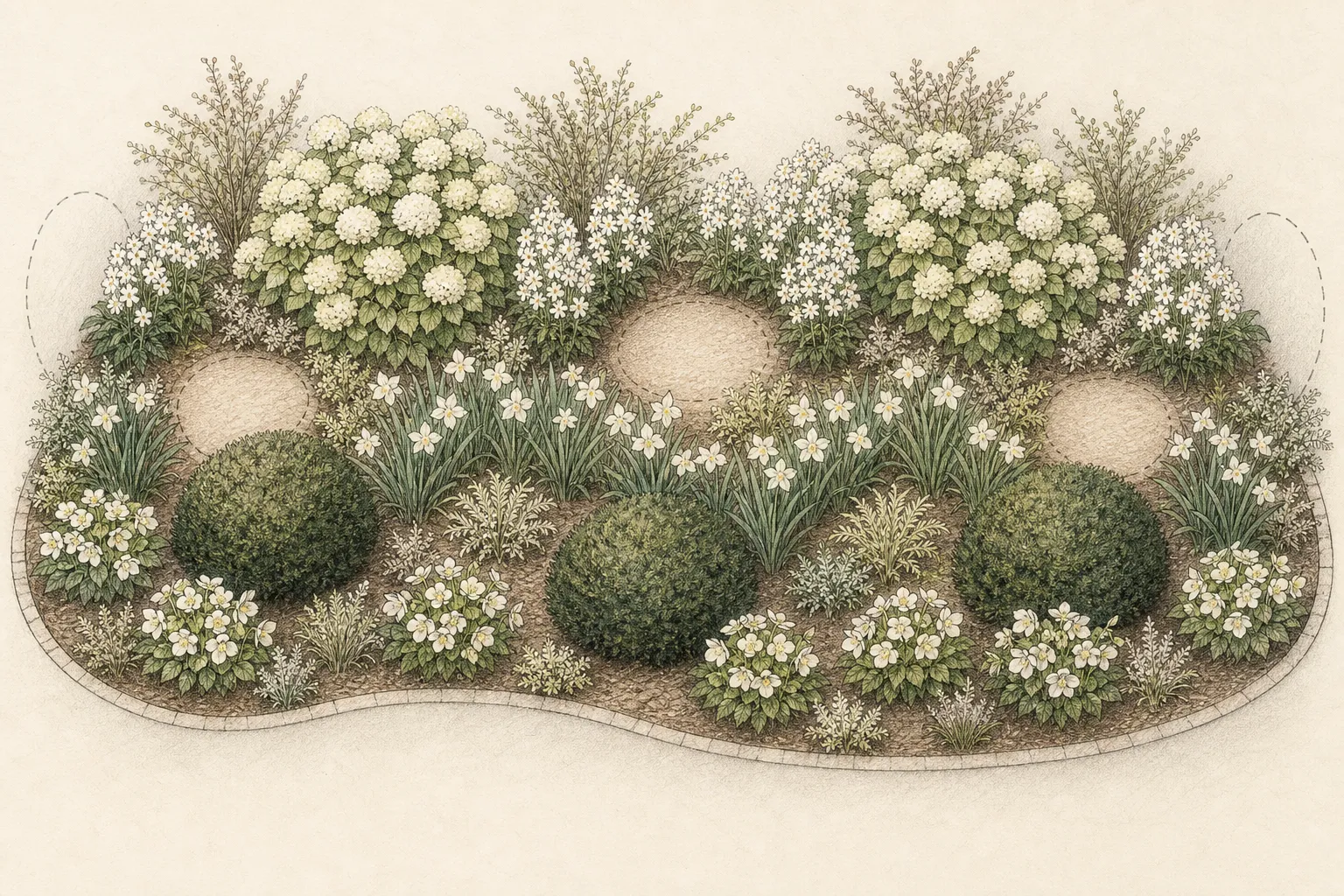
Snowdrops expand by bulb offsets and seed. A nursery clump may take years to become a visible drift, and the final pattern reflects soil, pollination, disturbance, and local climate. Plant several small, irregular groups in places seen from a winter path. Leave bare soil or leaf-litter intervals so each nodding flower reads against a quiet ground plane.
The bulbs are prone to drying during storage. Buy from a reputable nursery and plant promptly at the supplier’s recommended depth. Plants sold while in leaf can be moved after flowering by experienced gardeners, but roots and bulbs should not be left exposed. Local guidance differs on the best commercial form, so use regional nursery practice rather than folklore as a universal rule.
Leaves continue to feed the bulb after flowers fade. Let them yellow naturally before removal. Mowing, braiding, or cutting green foliage reduces the return. Mark the planting before summer dormancy and keep later digging, aggressive groundcovers, and heavy mulch away from the bulbs. The quiet dormant surface is part of the design contract.
Galanthus nivalis contains alkaloids and is harmful if eaten. It is not a plant for edible beds, and detached bulbs can resemble small culinary alliums to an uninformed person. Wear gloves for division, label stored material, and dispose of damaged bulbs where children and pets cannot reach them. Nursery propagation also avoids damage to wild populations.
- Family
- Amaryllidaceae
- Range
- Much of continental Europe and southwestern Asia; naturalized in Britain and parts of North America
- Soil pH
- 5.5–7.5
- Spread
- 3–6 in per clump · 8–15 cm per clump
Planting & careHow to grow common snowdrop
Confirm local invasive status and sourcing rules before naturalizing. Never collect bulbs from wild or protected populations; buy nursery-propagated stock.
- 1Select seasonal light
Choose ground open to winter light and lightly shaded after deciduous leaf-out. Avoid dense evergreen roots, standing water, and exposed soil that bakes dry.
- 2Buy propagated stock
Use a reputable nursery and retain the botanical label. Do not purchase material of uncertain wild origin or dig plants from woods and roadsides.
- 3Plant without storage delay
Set fresh bulbs promptly at the depth recommended for the stock and soil. Arrange several irregular clumps rather than a continuous line.
- 4Protect the active foliage
Keep foot traffic, rakes, mowers, and thick mulch away while leaves are green. Their photosynthesis supports the following year’s flower.
- 5Mark summer dormancy
Place a discreet permanent marker beyond the bulb group and add the location to a garden map before the foliage disappears.
- 6Divide as foliage dies back
When foliage is dying back, lift only congested groups that need renewal or relocation, separate sound bulbs with gloves, and replant immediately at their former depth.
Pruning common snowdrop
No pruning is required. Remove the spent flower only if seed is unwanted, and retain all green foliage until it yellows and releases naturally. Avoid mowing over naturalized groups before dormancy.
Seasonal care
Spring
Observe flower markings and clump density, leave green foliage untouched, and divide established congested groups only as the leaves begin to die back.
Summer
Respect dormancy, protect the mapped bulb area from excavation and severe drying, and keep aggressive companion roots out of the clumps.
Autumn
Plant fresh nursery bulbs promptly, restore a light leaf-mold surface where useful, and avoid burying the bed beneath coarse deep mulch.
Winter
Clear only matted debris that blocks emerging shoots, approach from a path to avoid trampling, and note where meltwater stands.
Safety and garden spread
Common problems
Flowers disappear over time
- Look for
- Leaves return but flowers become sparse, or the entire marked clump weakens.
- Action
- Review premature mowing, summer drought, deep shade, waterlogging, and crowding. Correct the evidenced condition and allow another cycle before replanting.
Bulb or basal rot
- Look for
- Soft bulbs, collapsing shoots, yellowed foliage at emergence, or sour wet soil.
- Action
- Remove affected material with gloves, improve drainage, avoid excess irrigation, and seek local diagnosis where losses spread.
Grey mold
- Look for
- Gray fungal growth, distorted shoots, or flowers and leaves collapsing in cool damp conditions.
- Action
- Remove affected material, reduce crowding and splash, and follow current regional disease guidance rather than applying a routine fungicide.
Spread beyond the design
- Look for
- Seedlings or offset clumps crossing paths or entering sensitive nearby habitat.
- Action
- Deadhead before seed maturity where needed, lift boundary bulbs after flowering, and check local guidance before allowing naturalization.
Plant details
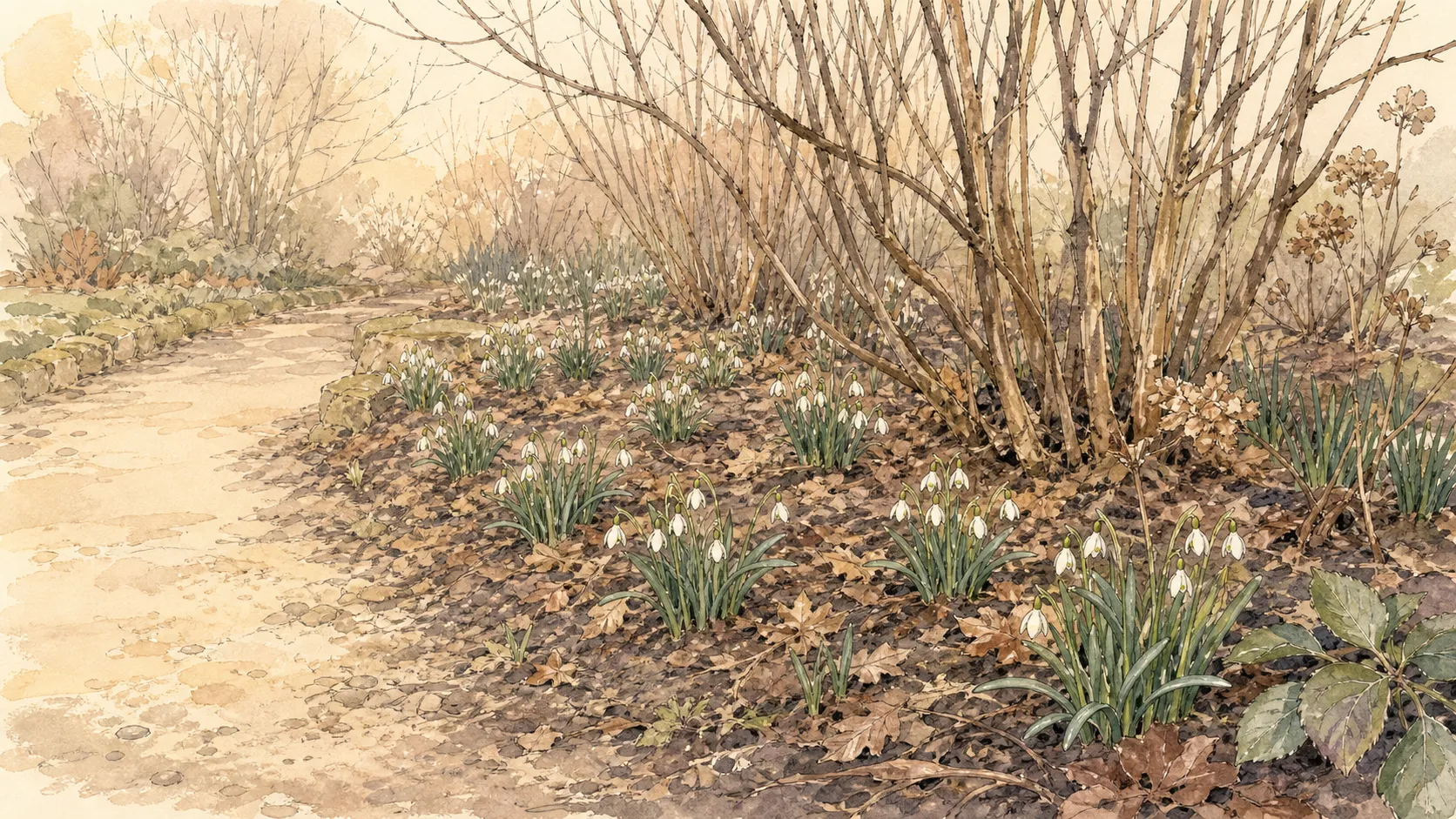
Common snowdrops in small irregular clumps beneath leafless deciduous shrubs beside a late-winter path
Related reading
Sources
- Common Snowdrop. North Carolina Extension Gardener Plant Toolbox. Source record · Accessed 2026-08-30.
- Galanthus nivalis. Royal Horticultural Society. Source record · Accessed 2026-08-30.
- Galanthus nivalis. Royal Botanic Gardens, Kew. Source record · Accessed 2026-08-30.