Cornelian Cherry Dogwood
Cornus mas
Grow Cornus mas as a durable late-winter flowering small tree or large shrub, allowing its broad mature crown, early yellow bloom, fruit, and multiseason structure to shape the site.
Published Last updated
At a glance
- Light
- Full sun to partial shade; flowering and crown density are generally strongest with ample light
- Water
- Medium; establish with even moisture, then avoid both prolonged drought and chronic saturation
- Soil
- Adaptable to clay, loam, sand, and a broad pH range when drainage is sound
- Hardiness
- Zones 4–8
- Bloom
- Late winter to early spring before leaves, followed by red fruit in summer and possible autumn color
- Height
- 15–25 ft · 4.6–7.6 m
In this guide
Overview
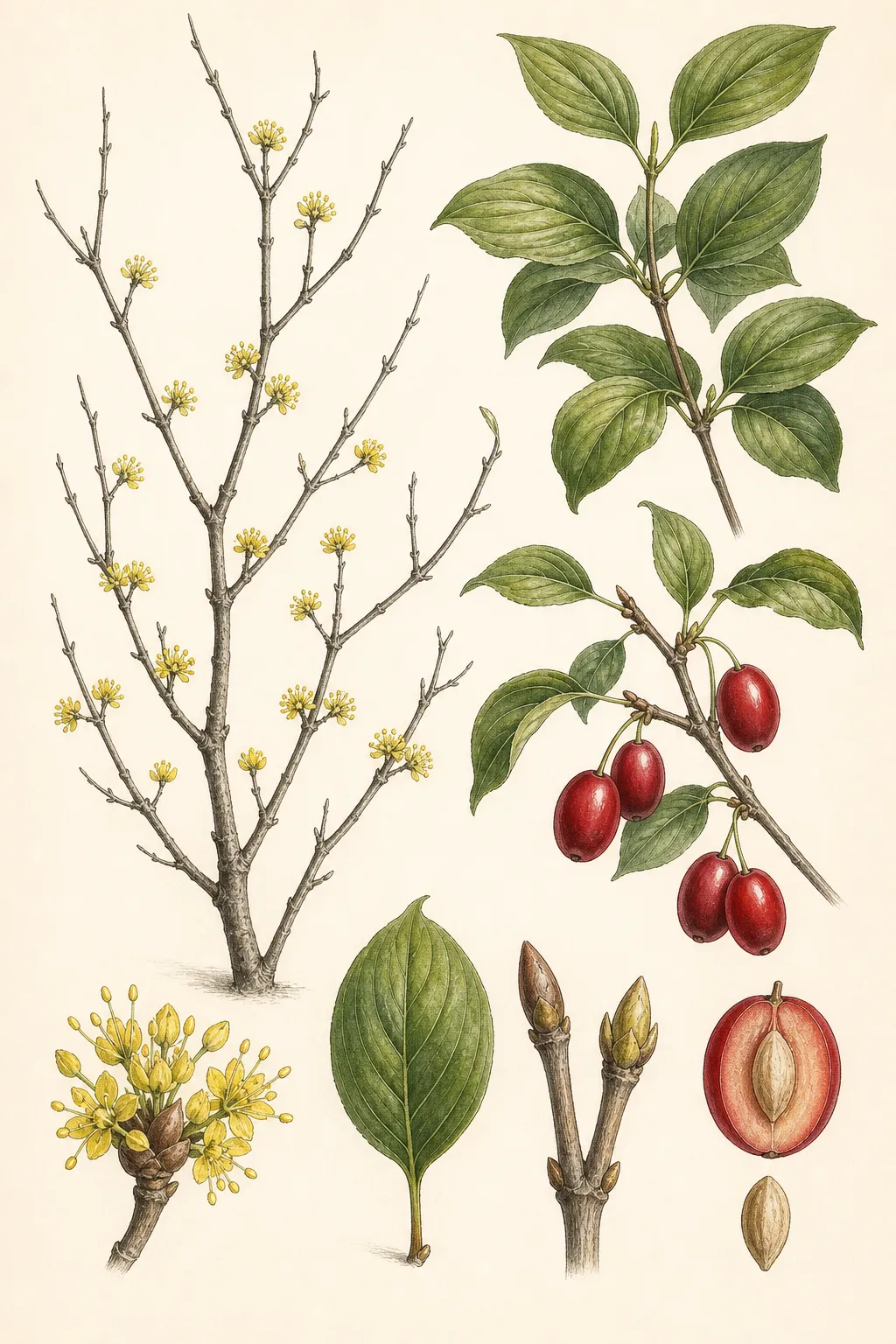
Cornelian cherry dogwood opens clusters of small yellow flowers on bare branches near the end of winter, before many woody ornamentals begin. Its value is not confined to bloom: a multi-stem or small-tree framework, summer foliage, red fruit, and autumn change can make it a permanent anchor. The individual flowers are modest, so mass, backdrop, and viewing distance matter.
Plan the actual mature outline. A nursery plant can look narrow, but the species commonly becomes fifteen to twenty-five feet high with a substantial spread. It fits a mixed shrub border, lawn edge, broad hedge, or small-tree position better than a shallow foundation bed. Preserve root flare, branch architecture, and a service route rather than relying on annual shearing.
The species adapts to many soils when drainage is adequate and can grow in sun or partial shade. A sunny position may support stronger flowering and fruit, while harsh drought or compacted waterlogged soil undermines establishment. Select the exact cultivar for form and fruit, and decide whether a single- or multi-stem habit serves the site before formative pruning begins.
Use early bulbs or restrained low companions outside the trunk base, allowing spring light beneath the deciduous crown. Dark evergreens can clarify yellow flowers, but crowns should remain separated. Where fruit drop on paving or public circulation would be troublesome, move the tree or choose a less-fruiting cultivar rather than treating the path as a permanent cleanup zone.
- Family
- Cornaceae
- Range
- Europe to the Caucasus and adjacent western Asia
- Soil pH
- 5.5–8
- Spread
- 15–20 ft · 4.6–6.1 m
Planting & careHow to grow cornelian cherry dogwood
Give the species the space of a small tree or broad shrub. Verify local hardiness, cultivar size, fruiting behavior, and any ecological guidance. Flowering time varies with winter temperature, and late cold can affect an unusually advanced display.
- 1Choose the full woody role
Decide whether the plant will be a multi-stem shrub, small tree, hedge component, or background anchor and draw the mature crown and roots.
- 2Prepare a draining site
Check sun, soil, compaction, runoff, utilities, path clearance, and neighboring crowns; correct site conflicts before planting.
- 3Plant at root-flare grade
Set the root flare and upper roots correctly, address circling roots under current woody-plant guidance, backfill, water, and keep mulch away from stems.
- 4Establish a formative record
Water through establishment, label the cultivar, preserve one intended form, and make only necessary formative cuts with clean tools.
Pruning cornelian cherry dogwood
Cornelian cherry belongs to RHS pruning group 1: a well-placed plant needs little or no routine pruning. Remove dead, damaged, congested, crossing, or badly directed growth with selective cuts, and establish a single- or multi-stem form gradually while branches are young. Because the yellow flowers open on the existing bare framework, wait until the late-winter display has finished before optional shape correction; cutting flowered shoots also reduces that summer's potential fruit. Remove unwanted root suckers promptly at their origin, retain the natural rounded crown, and avoid shearing or taking a large share of the canopy in one season.
Seasonal care
Spring
Observe flower timing and cold injury, water new plants, protect the root flare, and make only documented formative or safety cuts.
Summer
Monitor establishment moisture, fruit and path conflicts, crown growth, and leaf health; avoid cultivation and deep mulch over roots.
Autumn
Record foliage color, water before freeze in dry weather, inspect branch structure after leaf fall, and clear only diseased or hazardous debris.
Winter
Watch bud development and the flowering sequence, preserve open views and branch architecture, and avoid warm-spell pruning by calendar habit.
Safety and garden spread
NC State and Missouri Botanical Garden identify the ripe dark-red drupes as edible, while noting their tart flavor and common use in preserves. This ornamental profile is not food-preparation or individual medical advice: confirm the species, ripeness, pesticide history, and a food-safe preparation source before eating fruit. The retained sources do not establish the other plant parts as food or provide pet-feeding guidance.
Common problems
Poor flowering
- Look for
- Deep shade, recent heavy pruning, weak growth, immature plant, late cold, or a cultivar and climate mismatch.
- Action
- Verify light, age, flowering wood, and weather history; correct health and site limits before adding fertilizer or making more cuts.
Crowded or misshapen crown
- Look for
- Branches pressed against structures, repeated one-sided cuts, crossing stems, or a plant that was placed in a narrow bed.
- Action
- Use selective structural pruning when appropriate, but transplant or replace a fundamentally oversized plant rather than maintaining it by permanent shearing.
Leaf spots or dieback
- Look for
- Expanding lesions, dead twigs, cankers, honey-fungus signs, or repeated decline associated with wet, damaged, or compacted roots.
- Action
- Improve the diagnosed site condition, remove affected tissue under current guidance, sanitize tools, and seek local diagnosis when symptoms are extensive.
Plant details
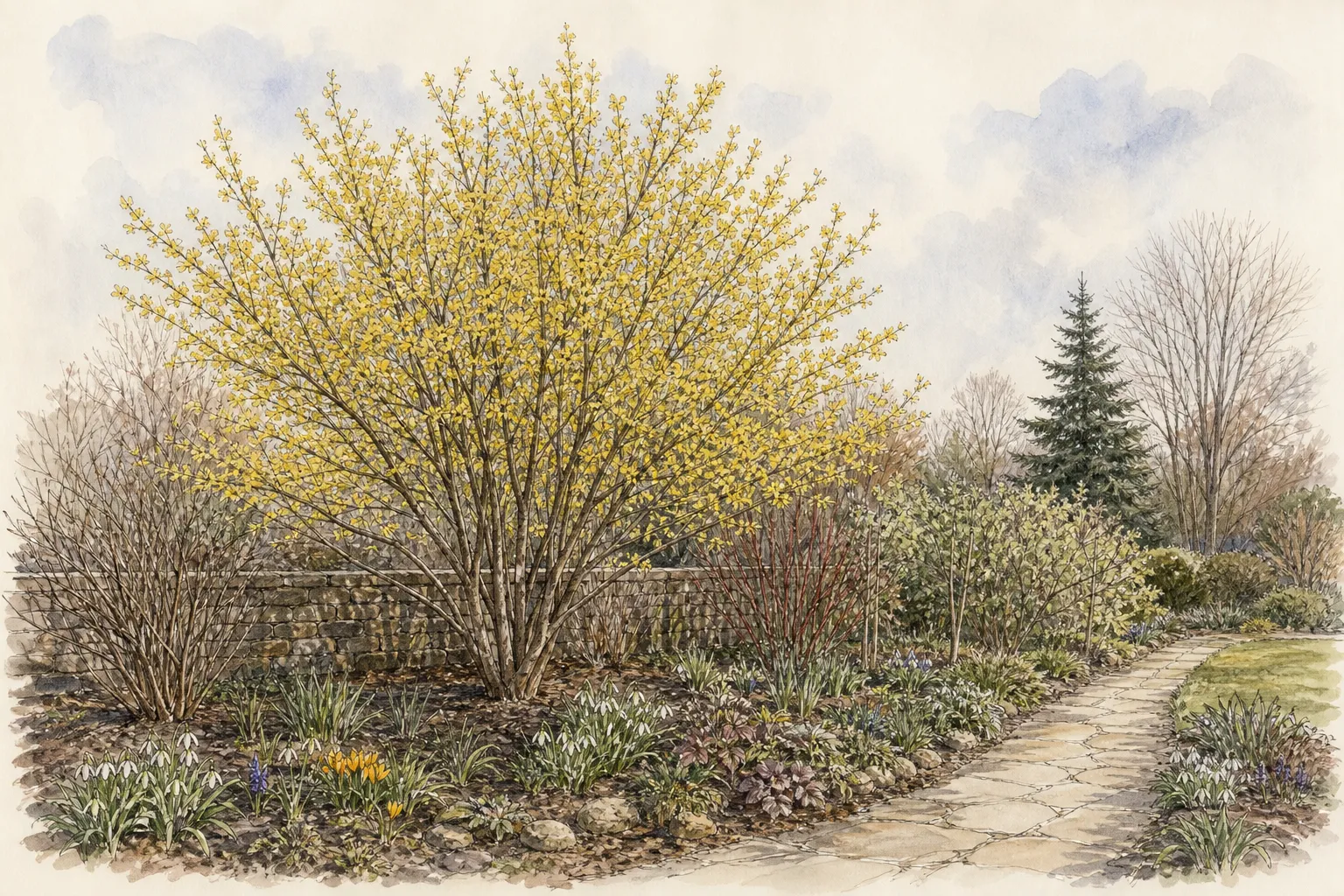
Mature multi-stem Cornelian cherry dogwood flowering yellow at the back of an ornamental border with bulbs and a clear path
Related reading
Sources
- Cornelian Cherry Dogwood. NC State Extension Gardener Plant Toolbox. Source record · Accessed 2026-08-30.
- Cornus mas. Missouri Botanical Garden Plant Finder. Source record · Accessed 2026-08-30.
- Cornus mas. Royal Horticultural Society. Source record · Accessed 2026-08-30.
- Cornus mas L.. Royal Botanic Gardens, Kew. Source record · Accessed 2026-08-30.