Garden Phlox
Phlox paniculata
A tall eastern North American perennial with fragrant domed flower clusters, best grown in fertile moist soil with sun, airflow, and mildew-aware care.
Published Last updated
At a glance
- Light
- Full sun to light afternoon shade
- Water
- Moderate and even at the root zone
- Soil
- Fertile, moisture-retentive, well-drained soil
- Hardiness
- Zones 4–8
- Bloom
- Midsummer to early autumn
- Height
- 2–4 ft · 60–120 cm
In this guide
Overview
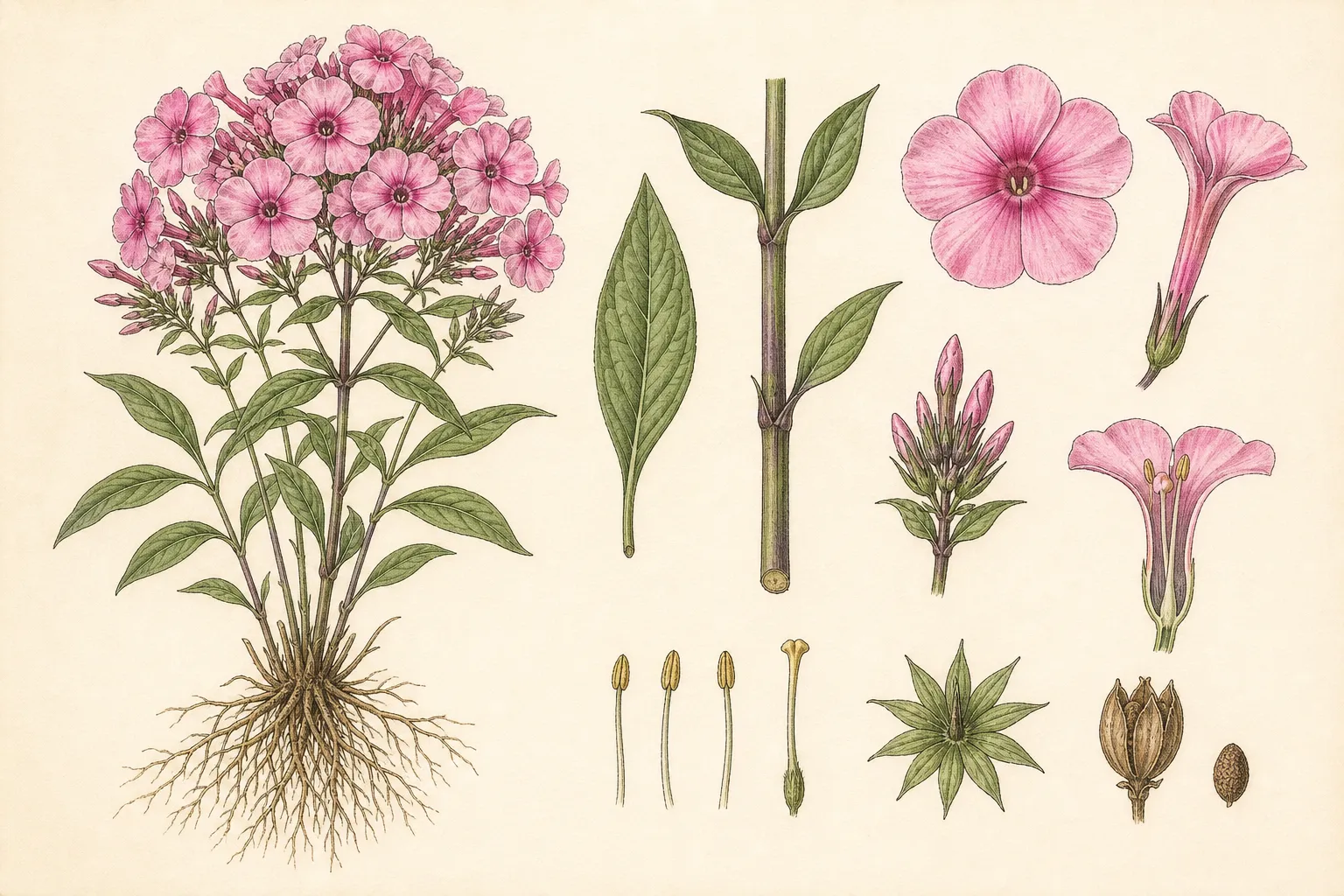
Garden phlox is an upright, clump-forming perennial. Opposite lance-shaped leaves line stems that end in broad domed panicles of fragrant tubular flowers, usually from midsummer into early autumn. It is taller and later than creeping phlox; use the botanical name and cultivar label because garden selections vary greatly in height, color, and mildew resistance.
Full sun gives the heaviest flowering, while light afternoon shade can help where summers are hot. The root zone should stay evenly moist in fertile, well-drained soil. Drought stresses the foliage and favors spider mites, but a saturated crown can rot. Water at soil level and leave enough space for air to move between stems.
A typical plant reaches 2–4 ft high and 2–3 ft wide, making it a middle or back-of-border perennial rather than a groundcover. Repeat one cultivar in a loose group and keep lower neighbors outside the crown so they do not trap humid air against the foliage.
Set the root ball at its container grade and use the cultivar’s mature width for spacing. Water the root ball and surrounding soil thoroughly, then apply a thin mulch outside the stem cluster to keep roots cool without closing the crown. Avoid repeatedly wetting the leaves late in the day.
Deadhead above a strong pair of leaves to prolong the display and prevent seedlings that will not come true to cultivar. Divide in spring or autumn if an older crown becomes crowded or loses vigor. After frost, cut stems to the base and remove diseased debris from the garden to reduce carryover of powdery mildew.
- Family
- Polemoniaceae
- Range
- North-central and eastern United States
- Soil pH
- 6–8
- Spread
- 2–3 ft · 60–90 cm
Planting & careHow to grow garden phlox
Cultivars differ substantially in mature height, flower color, fragrance, bloom time, and powdery-mildew resistance. In hot climates, light afternoon shade can reduce stress, but deep shade and crowded airless sites increase disease and reduce flowering.
- 1Choose the cultivar first
Select a cultivar with a mature height suited to the border and documented resistance to powdery mildew where that disease is common. Keep its label with the plant.
- 2Provide sun, moisture, and airflow
Use full sun or light afternoon shade in fertile soil that remains evenly moist yet drains after rain. Avoid stagnant corners and dense overhanging foliage.
- 3Set the crown at container grade
Place the root ball at the same depth it grew in the pot. Backfill, water thoroughly, and leave the stem bases visible rather than burying them under amended soil or mulch.
- 4Water the root zone
Maintain even moisture during establishment and dry summer weather. Direct water to the soil so the foliage does not stay wet unnecessarily.
- 5Mulch without closing the clump
Use a thin mulch to cool the roots, keeping it away from the stem cluster. Preserve open space between neighboring mature plants.
- 6Plan disease cleanup
Inspect leaves through summer, deadhead faded panicles, and remove infected stems and leaves after frost rather than leaving diseased debris over winter.
Pruning garden phlox
Deadhead each faded panicle above a strong pair of leaves to prolong bloom and prevent off-type seedlings. Cut all stems to the ground after frost and remove diseased debris. Thin weak, crowded shoots in spring rather than shearing the flowering canopy.
Seasonal care
Spring
Remove any remaining dead stems, divide a crowded crown if needed, and thin weak shoots before the canopy closes. Check spacing against the named cultivar’s mature width.
Summer
Keep the root zone evenly moist, deadhead faded panicles, and inspect lower and interior leaves for powdery growth or spider-mite stippling during hot dry weather.
Autumn
After frost, cut stems to the base and remove powdery-mildew or leaf-spot debris. Divide sound crowns in early autumn only where roots can re-establish before hard freezing.
Winter
Check that meltwater drains away from the dormant crown and that mulch has not covered it. Review cultivar performance before replacing disease-prone plants in spring.
Safety and garden spread
The retained institutional profiles do not identify a specific poisoning hazard for Phlox paniculata. Do not treat ornamental plants as food, and keep cuttings away from unsupervised children and pets.
Common problems
Powdery coating on leaves
- Look for
- White-gray patches expand over the leaf surface, often first in a crowded or shaded part of the clump.
- Action
- Improve spacing and light, maintain root-zone moisture during drought, and remove infected debris after frost. Replace persistently susceptible plants with resistant cultivars; use a labeled control only after local confirmation.
Spider-mite stress
- Look for
- Leaves develop fine pale stippling, bronze in hot dry weather, and may carry delicate webbing on their undersides.
- Action
- Confirm mites with a close inspection, reduce drought stress by watering the soil, and avoid broad treatments that harm predators. Follow current local guidance if damage continues.
Few flowers or weak stems
- Look for
- The clump stretches toward light, produces small panicles, or falls outward despite normal weather.
- Action
- Check for deep shade, excess nitrogen, crowding, or an aging crown. Improve the evidenced condition and divide only if the center has lost vigor.
Root or crown rot
- Look for
- Stems wilt while soil remains wet, roots darken, or crown tissue softens and pulls apart.
- Action
- Stop routine irrigation, expose the crown, and correct drainage. Discard irrecoverable tissue and replant sound divisions only at their original depth in a better-drained position.
Plant details
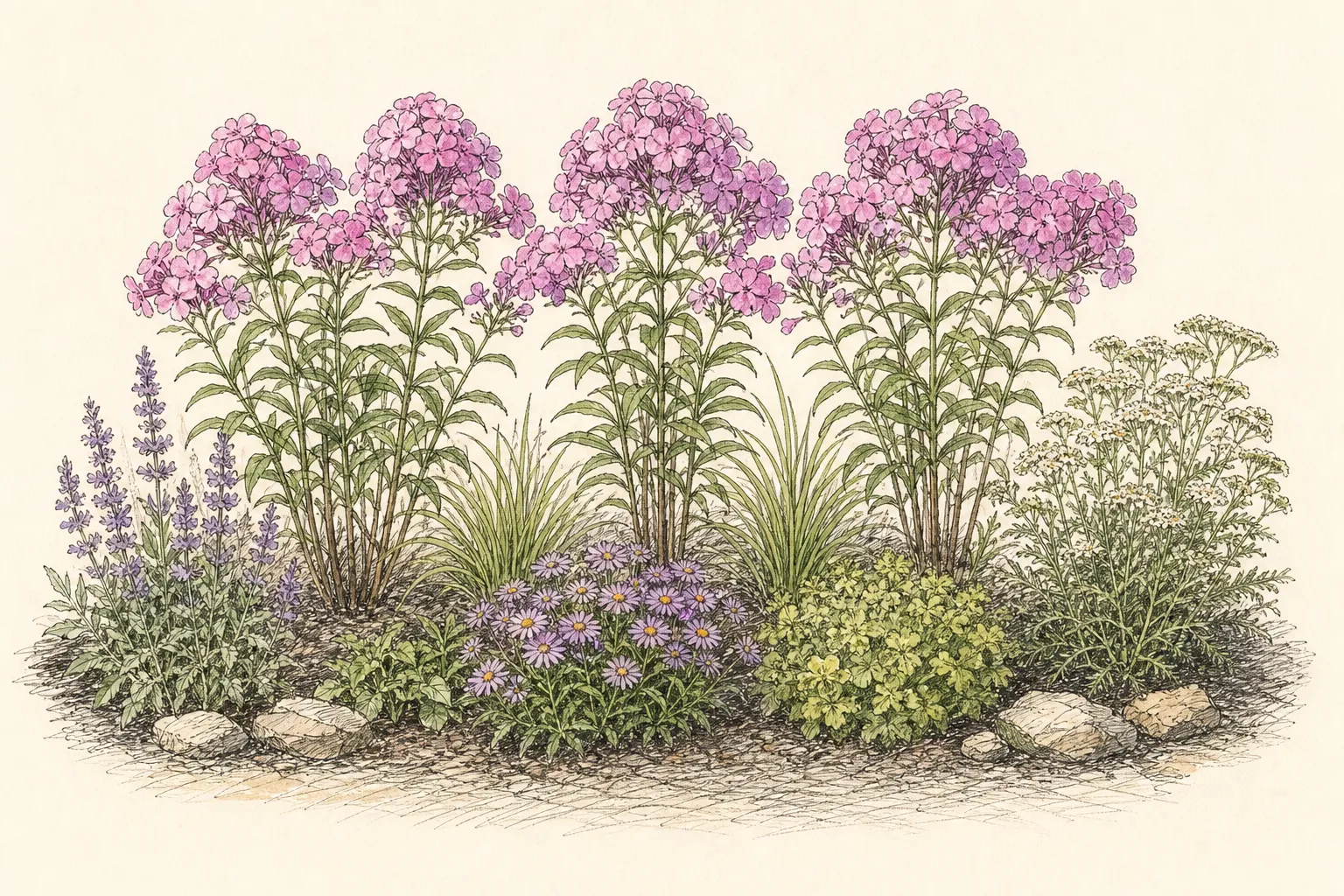
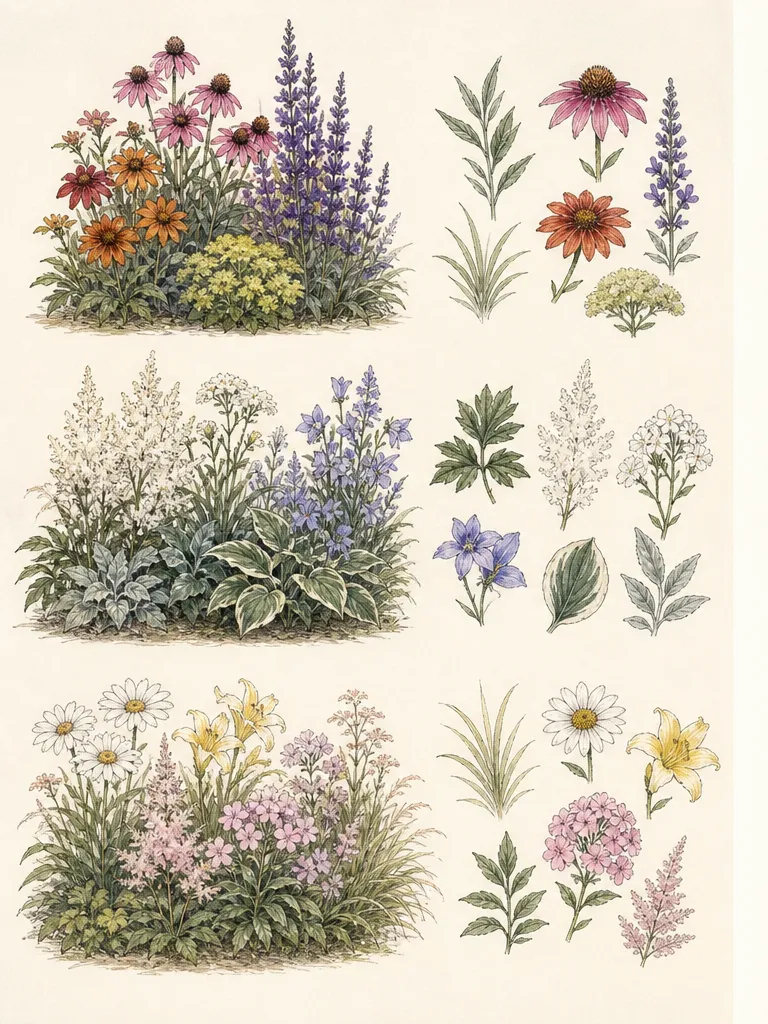
Garden study showing the placement and growth habit of Garden Phlox
Related reading
Sources
- Phlox paniculata. NC State Extension. Source record · Accessed 2026-08-30.
- Phlox paniculata. Royal Horticultural Society. Source record · Accessed 2026-08-30.
- Phlox paniculata L.. Royal Botanic Gardens, Kew. Source record · Accessed 2026-08-30.