Globe Thistle
Echinops ritro
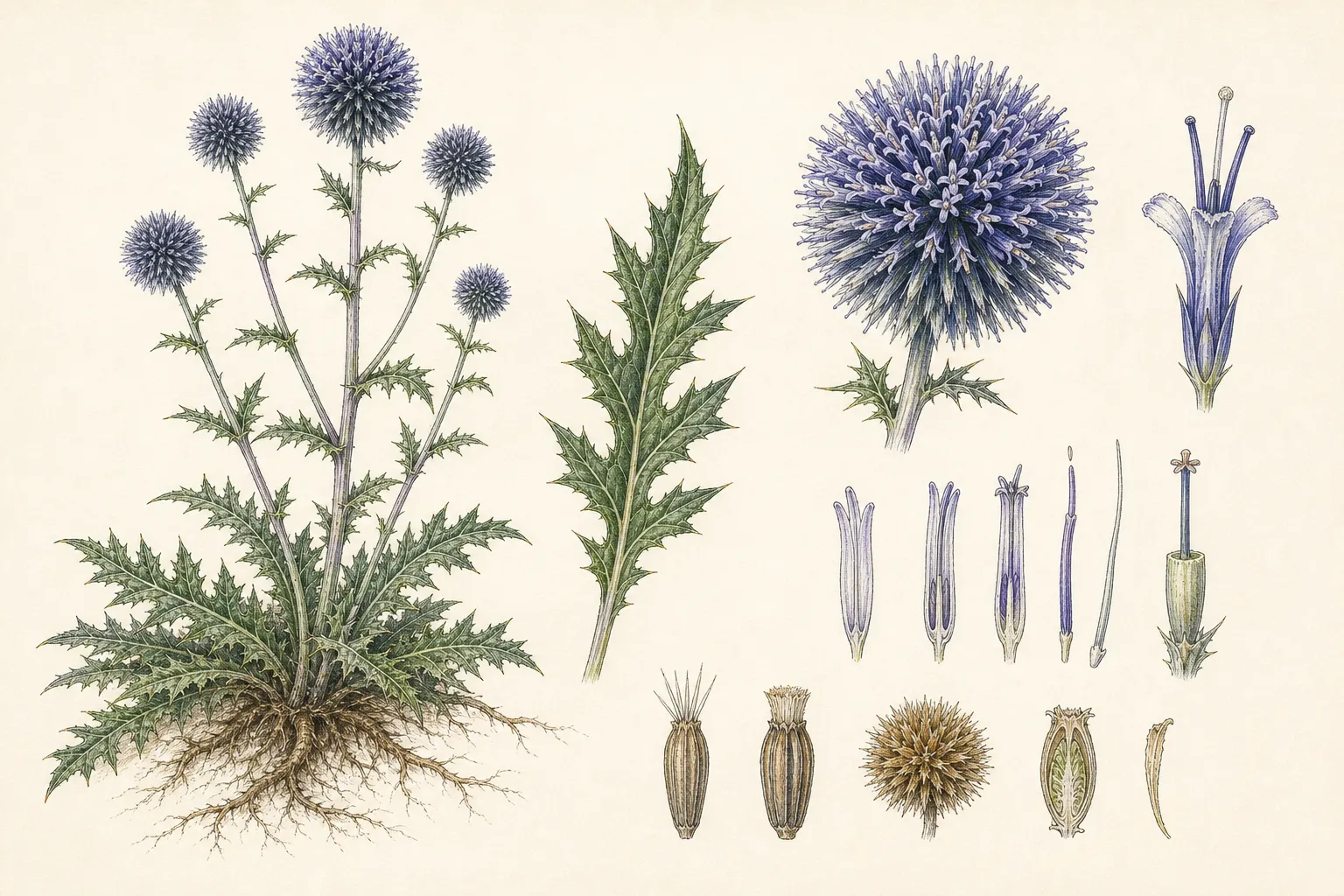
Identify globe thistle by its spiny gray-green foliage and steel-blue flower globes, then grow its taprooted clump in lean, freely drained sun.
Published Last updated
At a glance
- Light
- Full sun
- Water
- Low to moderate after establishment
- Soil
- Lean to average, well-drained soil
- Hardiness
- Zones 3–8
- Bloom
- Midsummer to early autumn
- Height
- 3–4 ft · 90–120 cm
In this guide
Overview
Globe thistle is a clump-forming herbaceous perennial, not a true thistle. Stiff gray-white stems carry spherical steel-blue heads above deeply divided gray-green leaves whose pale undersides and prickly margins are useful identification features. The flowers open from midsummer into September and later become rounded seed heads.
A mature species plant is typically 3–4 ft tall and 2–2.5 ft wide. Place it toward the middle or back of a sunny border where its coarse basal leaves will not brush a narrow path. The rigid globes contrast well with fine grasses and looser daisy flowers, and young heads can also be cut for drying.
Full sun, lean fertility, and rapid drainage produce the firmest stems. NC State and Missouri Botanical Garden both warn against rich or soggy soil: excess fertility or shade encourages flopping, while persistent wetness can lead to root rot. Established plants tolerate dry intervals, so irrigation should follow soil moisture rather than a fixed schedule.
Echinops ritro develops a substantial taproot and is difficult to move or divide once established. Set a container-grown crown at the same grade as it grew in the pot, loosen only circling outer roots, and settle native soil around the root ball without burying the crown. Choose the permanent position before planting instead of planning routine division.
The species can reproduce freely from seed. Deadhead before seed ripens where volunteers would be a problem; leave selected heads only where winter structure and self-sowing are acceptable. Cutting spent heads can also encourage some repeat bloom, but the entire clump should not be sheared while green leaves are feeding the root system.
Cut dry stems to the base in late winter before the new basal growth elongates. Gloves make this work more comfortable because the leaves are coarse and spiny. Aphids, leaf miners, thrips, slugs, and snails are occasional rather than defining problems; drainage, air movement, and appropriately lean soil are the more important preventive controls.
- Family
- Asteraceae
- Range
- Europe to Mongolia, Türkiye, and western Asia
- Soil pH
- 5.5–8
- Spread
- 2–2.5 ft · 60–75 cm
Planting & careHow to grow globe thistle
Kew records introductions in New York and Washington, and extension sources note that the species self-seeds. Check local invasive-plant guidance before allowing seed to mature.
- 1Reserve the mature footprint
Allow 2–2.5 ft of width and up to 4 ft of flowering height. Keep the prickly basal leaves back from paths and choose a permanent position because the taproot makes later transplanting difficult.
- 2Choose lean, open sun
Use a site with at least six hours of direct sun and soil that drains promptly after rain. Do not enrich one planting hole with compost or fertilizer; rich soil promotes weak, leaning stems.
- 3Keep the crown at container grade
Dig wide enough for the root ball without bending the developing taproot. Set the crown at the same level as the surrounding soil, backfill with site soil, and water once to settle it; wear gloves around the spiny leaves.
- 4Establish without saturating
Keep the root ball lightly moist during establishment, then let the upper soil begin to dry between deep waterings. Never compensate for wilt by repeatedly watering soil that is already wet.
- 5Decide how much seed to keep
Before the first heads fade, decide whether seedlings are welcome. Clip unwanted heads before the seed darkens, or retain a limited number for winter form and monitor bare soil the following spring.
- 6Leave the taproot undisturbed
Mark the crown before winter cleanup and weed by hand close to the base. Divide or transplant only for a compelling reason, since established taproots recover less reliably than ordinary fibrous perennial roots.
Pruning globe thistle
Deadhead before seed ripens to limit volunteers and encourage possible rebloom, or retain selected heads for winter structure. Cut dry stems at the base in late winter; avoid routine division because the taproot is difficult to disturb.
Seasonal care
Spring
Watch for the basal rosette, clear winter debris without covering the crown, and check that water leaves the site after spring rain. Avoid moving the taprooted clump.
Summer
Let established soil dry slightly between waterings. Deadhead early heads for a tidier plant or possible rebloom, and correct shade or rich feeding if stems begin to lean.
Autumn
Remove ripening heads where seedlings are unwanted, or keep a deliberate few for the dried display. Leave green basal foliage intact while it continues feeding the taproot.
Winter
Leave sound seed heads standing if desired, but keep wet leaf piles off the crown. Cut all dry stems at the base before new spring growth makes access difficult.
Safety and garden spread
The retained institutional profiles do not identify a poisoning hazard, but the stiff, spiny leaf margins can scratch skin; wear gloves when planting or cutting stems.
Common problems
Leaning or splayed stems
- Look for
- Flowering stems fall outward, expose the center, or need support despite normal weather.
- Action
- Recheck light, fertility, irrigation, and crowding. Reduce excess inputs, thin early growth, and use discreet support only after the cultural cause is addressed.
Root rot or powdery mildew
- Look for
- The crown softens in wet soil, or a white powder develops where dense growth stays humid.
- Action
- Stop watering saturated soil, clear material resting on the crown, and improve drainage or air movement. Seek a local diagnosis before using any fungicide and follow the product label.
Unwanted seedlings
- Look for
- New prickly rosettes appear in open soil beyond the original taprooted clump.
- Action
- Pull seedlings while their roots are small and deadhead remaining plants before seed ripens. Do not dig through the established crown in search of runners; this species spreads chiefly by seed.
Occasional sap-feeding or chewing pests
- Look for
- Aphids cluster on shoots, mines mark leaves, or slugs and snails rasp young basal growth.
- Action
- Confirm the organism before acting, tolerate minor cosmetic damage, and use the least disruptive locally recommended control only when injury is increasing.
Plant details
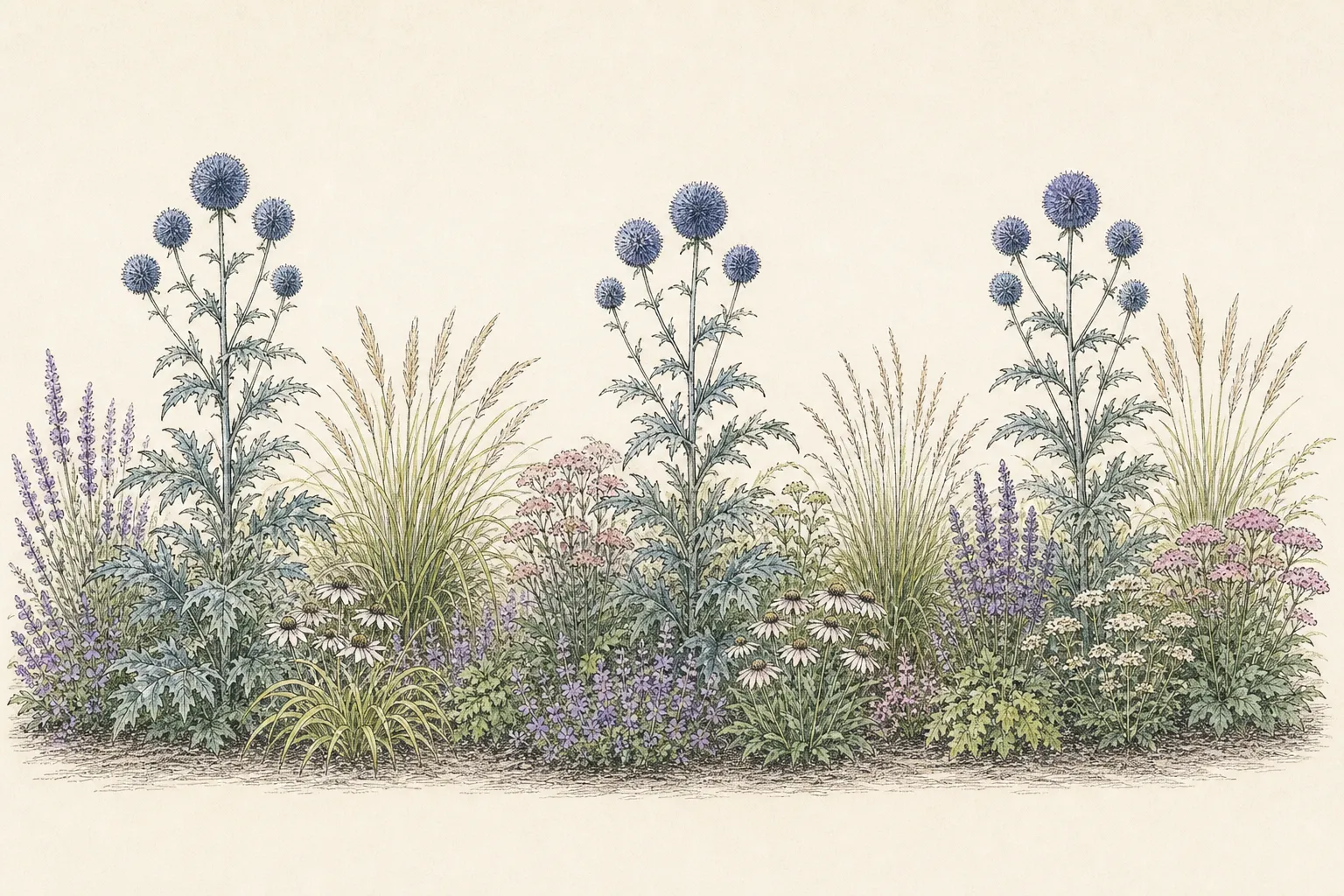
Garden study showing the placement and growth habit of Globe Thistle
Sources
- Globe Thistle cultivation profile. NC State Extension. Source record · Accessed 2026-08-30.
- Echinops ritro horticultural record. Missouri Botanical Garden. Source record · Accessed 2026-08-30.
- Echinops ritro taxonomy and native range. Royal Botanic Gardens, Kew. Source record · Accessed 2026-08-30.
- Echinops ritro plant profile. Royal Horticultural Society. Source record · Accessed 2026-08-30.