Sneezeweed
Helenium autumnale
A moisture-loving North American perennial with winged stems, late yellow flower heads, and practical guidance for moist borders, cutback, and safe handling.
Published Last updated
At a glance
- Light
- Full sun to partial shade
- Water
- High; keep consistently moist to occasionally wet
- Soil
- Fertile, moisture-retentive soil; avoid prolonged drought
- Hardiness
- Zones 3–8
- Bloom
- Late summer to autumn
- Height
- 3–5 ft · 90–150 cm
In this guide
Overview
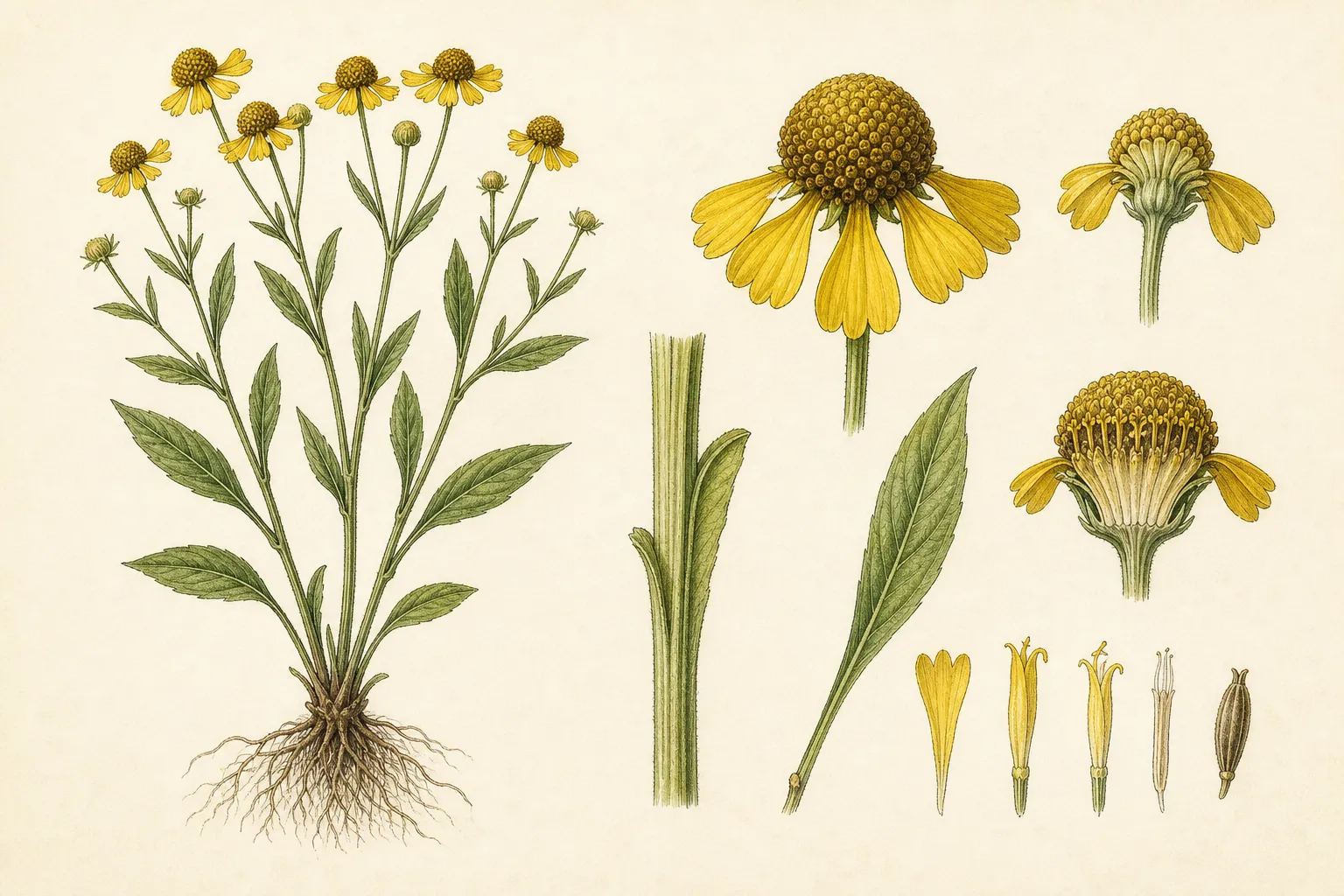
Helenium autumnale is an upright, clump-forming herbaceous perennial. Stalkless lance-shaped leaves run down the stems to form narrow wings, and branched tips carry yellow, notched rays around a raised central disc from late summer into autumn. Red, orange, and bicolored nursery plants are often named cultivars, so keep the label with the planting.
Choose height control before flower buds develop, accepting that an early cut can shift bloom later. Otherwise, support the herbaceous stems while they are still short and preserve the planned flowering time. Later deadheading, retained seed heads and dormant stem removal are separate choices. Keep moisture and crown condition in the assessment when a tall plant begins to lean or lose vigor.
A species plant commonly reaches 3–5 ft high and 2–3 ft wide. Place it in a sunny moist border, rain garden, or pond edge where neighboring grasses or a discreet ring support can steady the stems without hiding the flowers. Partial shade is tolerated, but reduced light can weaken the display and increase leaning.
This is not a dry-border daisy. North Carolina Extension places it in moist to wet soils and the RHS recommends fertile, humus-rich, moisture-retentive ground. Water deeply enough to keep the full root zone moist during active growth; a dry surface alone is not a reason to irrigate, but persistent wilt and dry soil below the surface call for water.
Set the herbaceous crown at the same soil level it occupied in the nursery container. Loosen circling container roots, backfill with the site soil, and keep mulch beside rather than over the crown. The plant tolerates seasonal wetness, while dense, airless soil that remains saturated deserves correction before planting.
An early-summer cutback before flower buds develop can produce shorter, more branched stems and may delay bloom. Otherwise, install support while shoots are still short. Deadheading can prolong flowering; divide a congested clump in spring or autumn when vigor and flower count begin to fall.
The common name comes from historical use of dried material as sneezing powder; the living plant is not an allergy remedy or edible herb. Flowers, leaves, and seeds can be harmful if eaten in quantity, and contact may irritate skin. Wear gloves for cutting and dispose of trimmings where children, pets, and livestock cannot reach them.
- Family
- Asteraceae
- Range
- North America
- Soil pH
- 5.5–7.5
- Spread
- 2–3 ft · 60–90 cm
Planting & careHow to grow sneezeweed
Helenium autumnale is native across much of North America, but named garden cultivars can differ in height, color, and need for support. Match the exact label to the available space, keep the root zone moist through local summer heat, and use regional guidance before planting near natural wetlands.
- 1Reserve a moist, accessible footprint
Allow 3–5 ft of height and 2–3 ft of width, plus access for a support ring, deadheading, and eventual division. Keep tall stems back from paths where wet foliage or leaning growth would obstruct passage.
- 2Choose sun without sacrificing moisture
Use full sun for the strongest flowering, or partial shade where summers are hot, provided the plant still receives enough light to remain upright. Confirm that the bed stays moist through a normal dry interval.
- 3Keep the crown at soil level
Plant the top of the herbaceous crown level with the surrounding soil. Spread loosened container roots into a hole wider than the root ball, backfill, and water once to settle the soil without burying the stem bases.
- 4Maintain moisture through establishment
Check below the surface and water whenever the young root ball begins to dry. After establishment, continue to prevent prolonged drought during stem extension and bloom; this species accepts occasional wetness better than a dry root zone.
- 5Mulch and support before stems rise
Apply a thin organic mulch around, not over, the crown to slow moisture loss. Put a ring or neighboring plant support in place during spring growth so mature stems do not have to be forced upright later.
- 6Decide whether to cut back early
If previous stems lodged, shorten new growth in early summer before buds form; otherwise let it reach species height. Record bloom timing and moisture stress so next year’s support and watering respond to this site.
Pruning sneezeweed
No woody pruning is required. For shorter, branched plants, cut emerging stems back in early summer before buds form; expect flowering to shift later. Deadhead individual flower clusters to extend bloom, or retain sound seed heads for winter structure. Cut the dead herbaceous stems near ground level in late winter before new shoots appear, wearing gloves throughout.
Seasonal care
Spring
Clear last year’s stems before new shoots lengthen, expose rather than bury the crown, and divide an overcrowded clump if flowering has declined. Install support while the stems are short and renew a thin mulch after the soil is workable.
Summer
Keep the root zone consistently moist. Make any height-reducing cut before buds develop, then stop cutting and let the branching stems flower. Watch for leaf spot, rust, powdery growth, or lodging and improve spacing and soil-level watering before choosing a treatment.
Autumn
Deadhead for a longer display or leave selected seed heads after flowering. Continue watering if autumn is dry, because the clump should enter dormancy with a moist root zone. Mark divisions while the crown is still visible.
Winter
The top growth is dormant. Leave sound stems temporarily for structure or remove them with gloves once they collapse; in either case, finish cleanup before spring shoots emerge and keep cut material away from children and animals.
Safety and garden spread
Common problems
Tall stems lean or lodge
- Look for
- The clump opens after wind or rain, especially in shade or where support was added only after stems elongated.
- Action
- Increase light if the site is too shaded, install support early next spring, or use an early-summer cutback before buds form. Avoid late cutting, which removes the season’s flowers.
Dry soil shortens the display
- Look for
- Lower leaves brown, stems wilt repeatedly, or buds stall while the soil below the surface is dry.
- Action
- Water the full root zone slowly, restore a thin mulch, and correct runoff or root competition. Do not compensate for chronic drought with fertilizer.
Leaf spot, rust, or powdery growth
- Look for
- Expanding dark lesions, orange pustules, or a white surface coating appears across multiple leaves rather than on one damaged stem.
- Action
- Remove badly affected fallen material, improve air movement, and direct irrigation at the soil. Confirm the diagnosis with a local extension service before using any labeled control.
Contact or ingestion exposure
- Look for
- Sap or plant debris contacts sensitive skin, or a person or animal may have eaten flowers, leaves, or seeds.
- Action
- Wash exposed skin and remove contaminated clothing. For suspected ingestion or significant symptoms, contact the appropriate poison-control service or veterinarian promptly and provide the botanical name.
Plant details
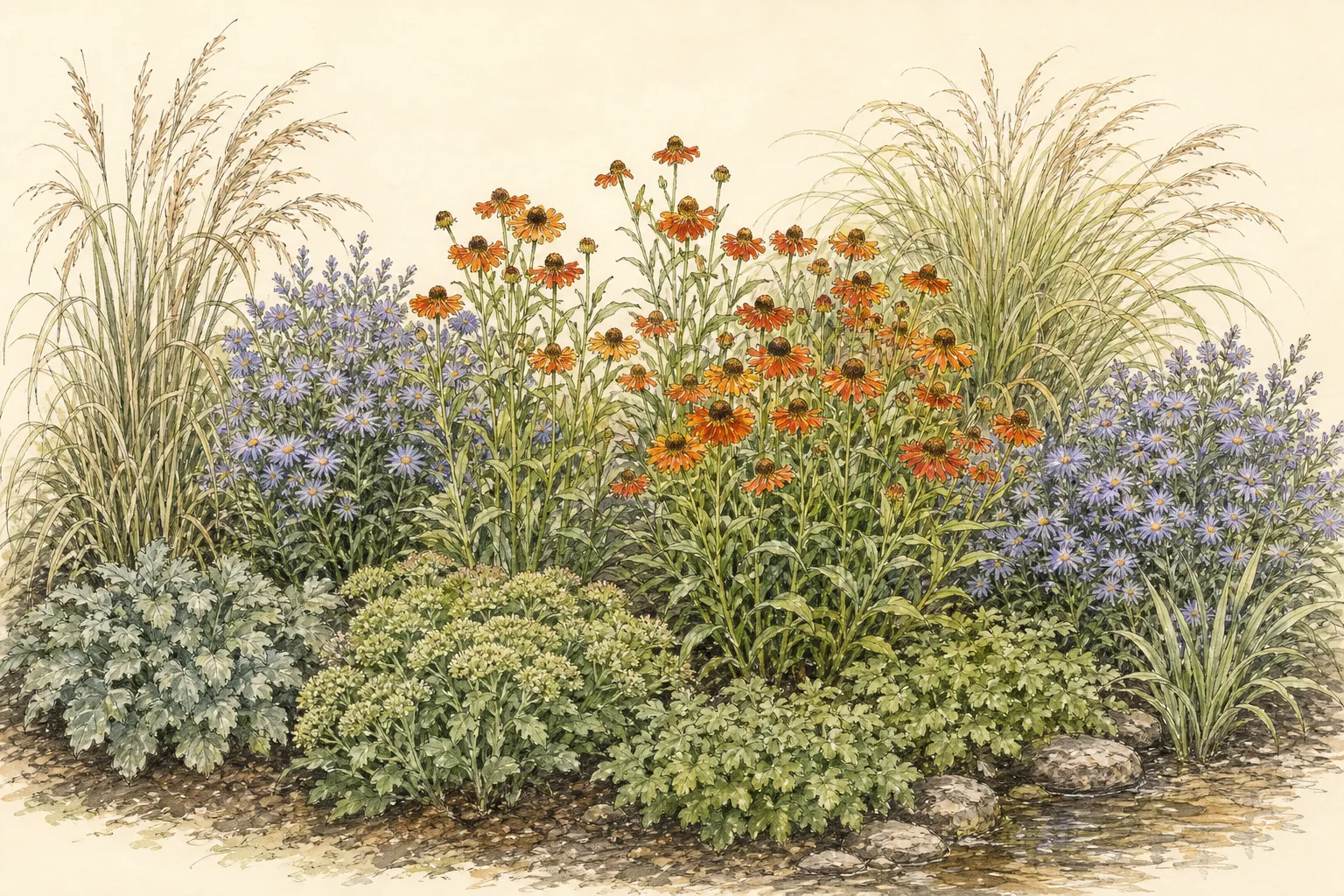
Garden placement study showing mature Sneezeweed in an ornamental planting
Sources
- Helenium autumnale. North Carolina Extension Gardener Plant Toolbox. Source record · Accessed 2026-08-30.
- Helenium autumnale L.. Royal Botanic Gardens, Kew. Source record · Accessed 2026-08-30.
- Helenium autumnale. Royal Horticultural Society. Source record · Accessed 2026-08-30.
- Helenium, Helenium autumnale. University of Wisconsin Extension. Source record · Accessed 2026-08-30.