Eastern Bluestar
Amsonia tabernaemontana
A long-lived eastern North American perennial with pale blue spring stars, willow-like leaves, yellow fall color, and milky sap that requires careful pruning.
Published Last updated
At a glance
- Light
- Full sun to partial shade
- Water
- Moderate; drought tolerant once established
- Soil
- Average, moist but well-drained soil
- Hardiness
- Zones 3–9
- Bloom
- Late spring to early summer
- Height
- 2–3 ft · 60–90 cm
In this guide
Overview
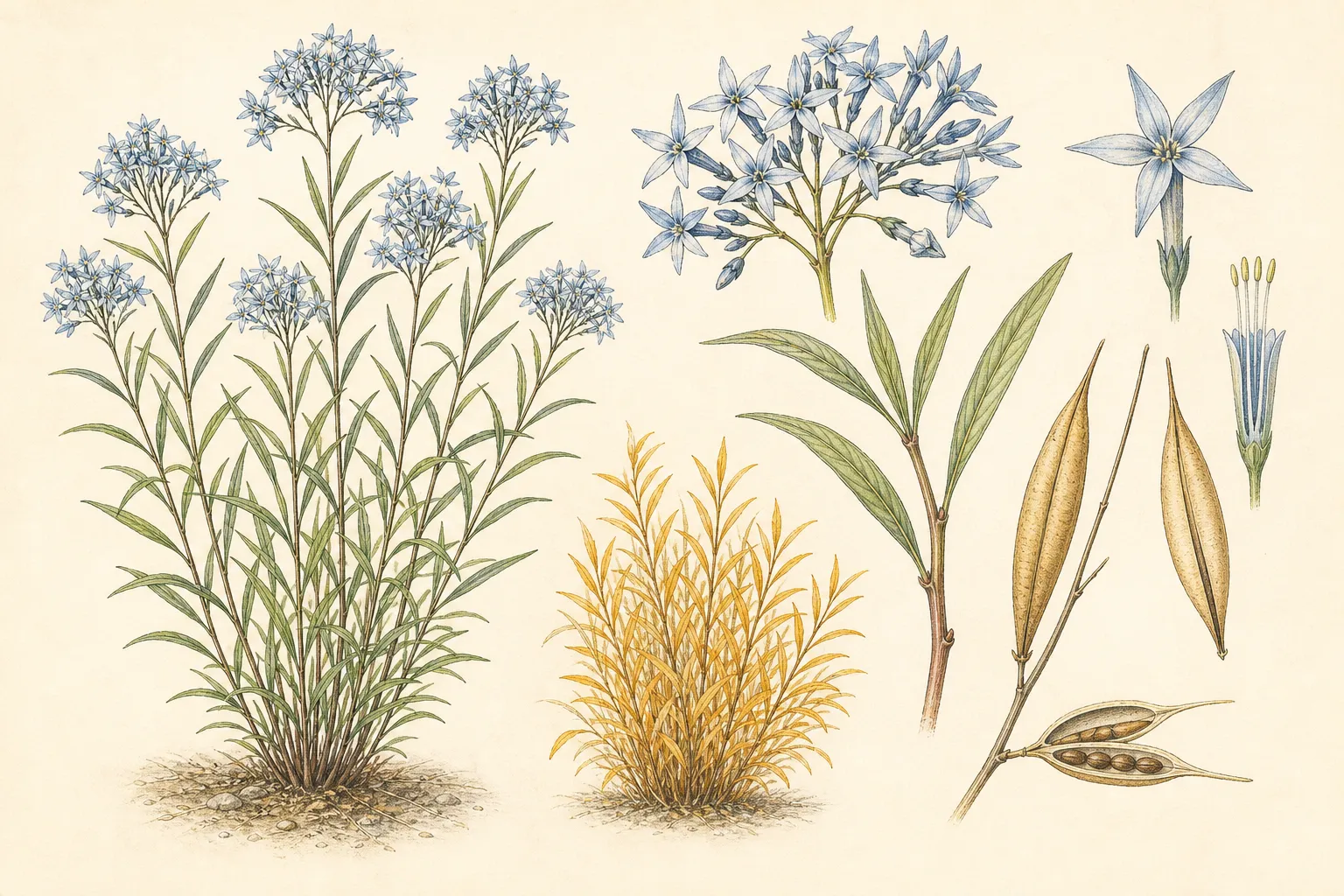
Amsonia tabernaemontana forms an upright, rounded herbaceous clump 2–3 ft high and wide. Loose terminal clusters of pale blue, five-pointed flowers open in late spring above narrow leaves; paired, elongated seed follicles follow, and the foliage can turn clear yellow before winter dormancy.
Choose between retaining the natural clump and shaping a loose post-bloom mound before cutting. Leaving stems preserves their seedpods; optional shortening serves a different outline. Division is a separate propagation or crowding decision, not an annual requirement. Keep the mature footprint and the site's light and drainage in view when deciding whether the clump actually needs intervention. Where self-seeding is unwanted, remove developing pods after bloom; volunteer seedlings do not by themselves create a need to divide the established crown.
Full sun produces the densest mound and strongest flowering. Partial shade is tolerated, but plants in shade or overly rich soil can open at the center and require support or shaping. Use the mature clump as a middle-border anchor or repeat it through a meadow-style planting where its summer foliage remains useful after bloom.
Moist loam is ideal, yet established roots tolerate clay and periods of drought when drainage is sound. Water a new plant whenever the root ball begins to dry, then lengthen the interval as roots expand. Persistent wetness and persistent drought are both different from the moist, well-drained conditions described by the retained garden references.
Set the crown at surrounding soil level and give the plant its permanent 2–3 ft footprint. Established clumps develop crowded roots and can be difficult to lift. Division is possible in early spring or autumn dormancy, with at least one visible bud on each section, but routine division is unnecessary.
Pruning after flowering is optional. Shortening stems by roughly one-third can make a shaded or loose plant bushier and rounder; leaving them intact preserves the natural vase-shaped habit and seedpods. Dead stems may be removed in autumn or left until late winter, because snow eventually lays them down.
Every cut leaf or stem can release white latex. Wear gloves while shaping, dividing, or clearing the clump, keep sap away from eyes, and wash exposed skin and tools afterward. This handling caution is separate from the plant’s value to pollinators and its resistance to browsing deer.
- Family
- Apocynaceae
- Range
- Central and eastern United States
- Soil pH
- 6–8
- Spread
- 2–3 ft · 60–90 cm
Planting & careHow to grow eastern bluestar
Species plants and named selections sold as bluestar can differ in leaf width, flower color, and mature outline. Verify Amsonia tabernaemontana on the label, favor full sun where summer moisture is adequate, and allow for a slow-growing, long-lived clump before choosing a permanent position.
- 1Choose a long-term 2–3 ft position
Reserve 2–3 ft of height and width for the mature clump. Leave access on one side for gloved pruning, but avoid a position that will require routine lifting once the dense root system is established.
- 2Use light to control the habit
Choose full sun for the firmest, most floriferous mound or partial shade where a looser outline is acceptable. Avoid pairing deep shade with rich feeding, a combination that encourages stems to flop.
- 3Set the herbaceous crown at grade
Dig wider than the container, loosen circling roots without tearing the crown apart, and set the crown level with the surrounding bed. Backfill with site soil and water to close large air pockets.
- 4Water until the root system expands
Keep the original root ball evenly moist during establishment. Once new growth and normal seasonal color show that roots have expanded, water deeply during extended dry periods rather than maintaining a constantly wet surface.
- 5Keep mulch off the shoots
Spread a light mulch outside the crown to moderate moisture and suppress annual weeds. Keep the emerging stems visible so their depth, condition, and any accidental sap-producing damage can be checked.
- 6Assess form after flowering
Wait until the first bloom has finished before deciding whether shaping is needed. If stems are open or floppy, first check shade and excess fertility, then shorten them by one-third with gloves if a rounder mound suits the design.
Pruning eastern bluestar
Wear gloves because cut stems release irritating white latex. Wisconsin Extension describes shortening stems by one-third to one-half after flowering for a bushier mound; skip this cut when the natural vase shape and seedpods are wanted. Remove the dead herbaceous stems in autumn or late winter before new shoots emerge. Established clumps do not need routine division.
Seasonal care
Spring
Remove any remaining dead stems with gloves before shoots lengthen. Divide only if necessary while the clump is dormant or just emerging, retaining a bud on every section, and water new divisions until active growth resumes.
Summer
After the blue flowers fade, either retain the seed follicles or make one shaping cut for a denser mound. Check moisture during long dry periods, especially in the first year, and avoid high-nitrogen feeding that can open the clump.
Autumn
Allow the leaves to develop their yellow fall color. Cut stems after the foliage dies if a clean bed is preferred, or leave the pale framework and pods into winter; use gloves for either choice.
Winter
The crown is dormant while the fibrous stems bleach and settle under snow. Check that winter water does not stand over the crown, and plan final stem removal before spring shoots make cleanup difficult.
Safety and garden spread
Common problems
Open or floppy growth
- Look for
- Stems lean outward and the center opens, most often in shade or heavily enriched soil.
- Action
- Reduce unnecessary fertilizer, increase light if feasible, and make a single post-bloom shaping cut. Support the current clump discreetly rather than repeatedly clipping new growth.
A division fails to re-establish
- Look for
- A recently moved section wilts, lacks a visible bud, or makes little new growth while an undisturbed clump remains healthy.
- Action
- Keep the division evenly moist without saturating it and verify that it includes sound crown tissue and a bud. Avoid further disturbance while roots recover.
Rust on leaves
- Look for
- Orange-brown pustules or expanding discolored areas recur across several leaves rather than appearing as isolated physical damage.
- Action
- Remove heavily affected fallen foliage, improve spacing, and water at soil level. Ask a local extension diagnostic service to confirm rust before applying a labeled treatment.
Latex contacts skin or eyes
- Look for
- White sap appears on cut stems, tools, gloves, or exposed skin, with possible irritation in a sensitive person.
- Action
- Stop work, rinse exposed skin, and wash tools and gloves. Flush eye exposure with clean water and seek poison-control or medical advice if irritation is significant or persists.
Plant details
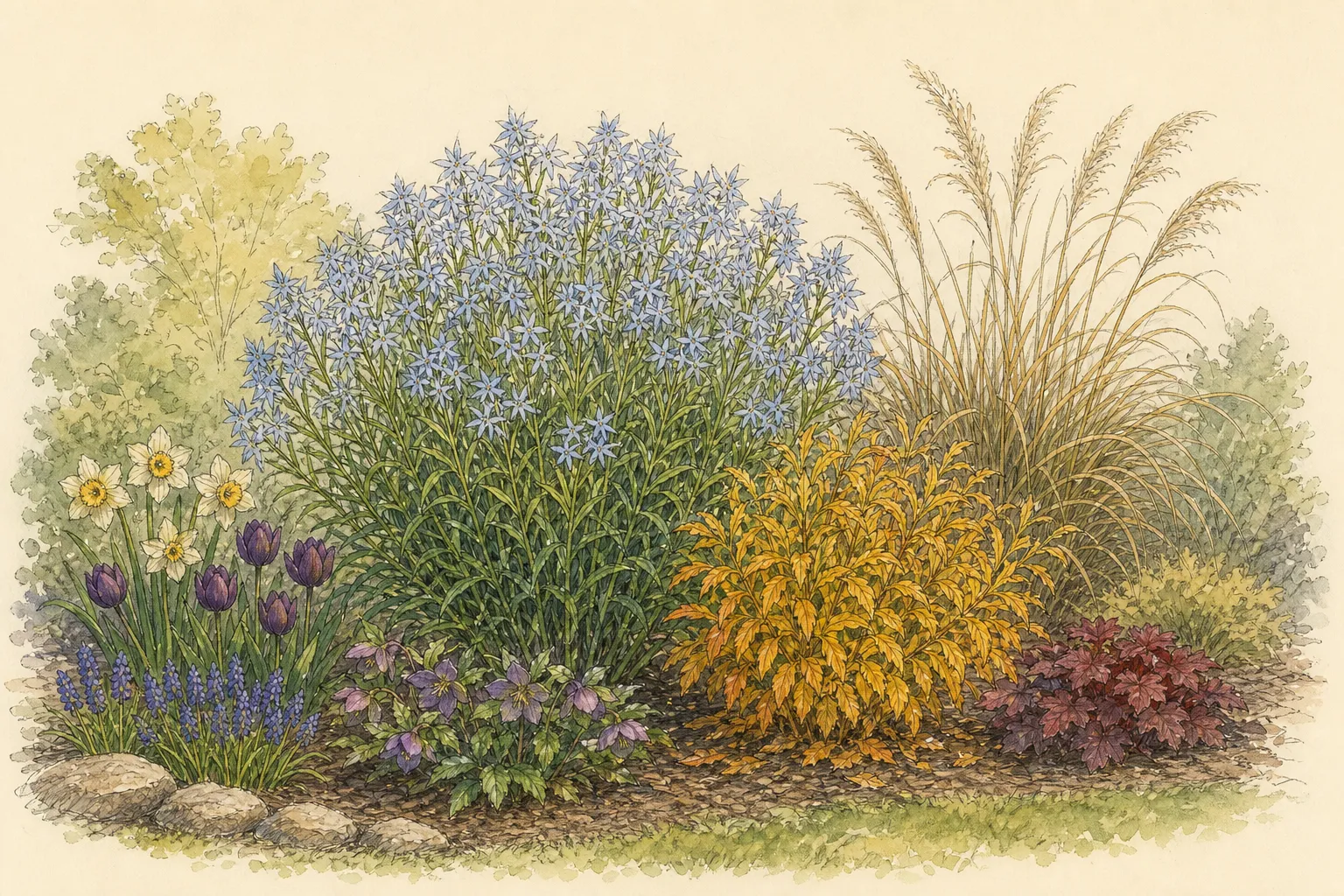
Garden placement study showing mature Eastern Bluestar in an ornamental planting
Sources
- Amsonia tabernaemontana. North Carolina Extension Gardener Plant Toolbox. Source record · Accessed 2026-09-09.
- Amsonia tabernaemontana Walter. USDA PLANTS Database. Source record · Accessed 2026-08-30.
- Amsonia tabernaemontana. Missouri Botanical Garden. Source record · Accessed 2026-08-30.
- Willowleaf bluestar, Amsonia tabernaemontana. University of Wisconsin Extension. Source record · Accessed 2026-09-09.